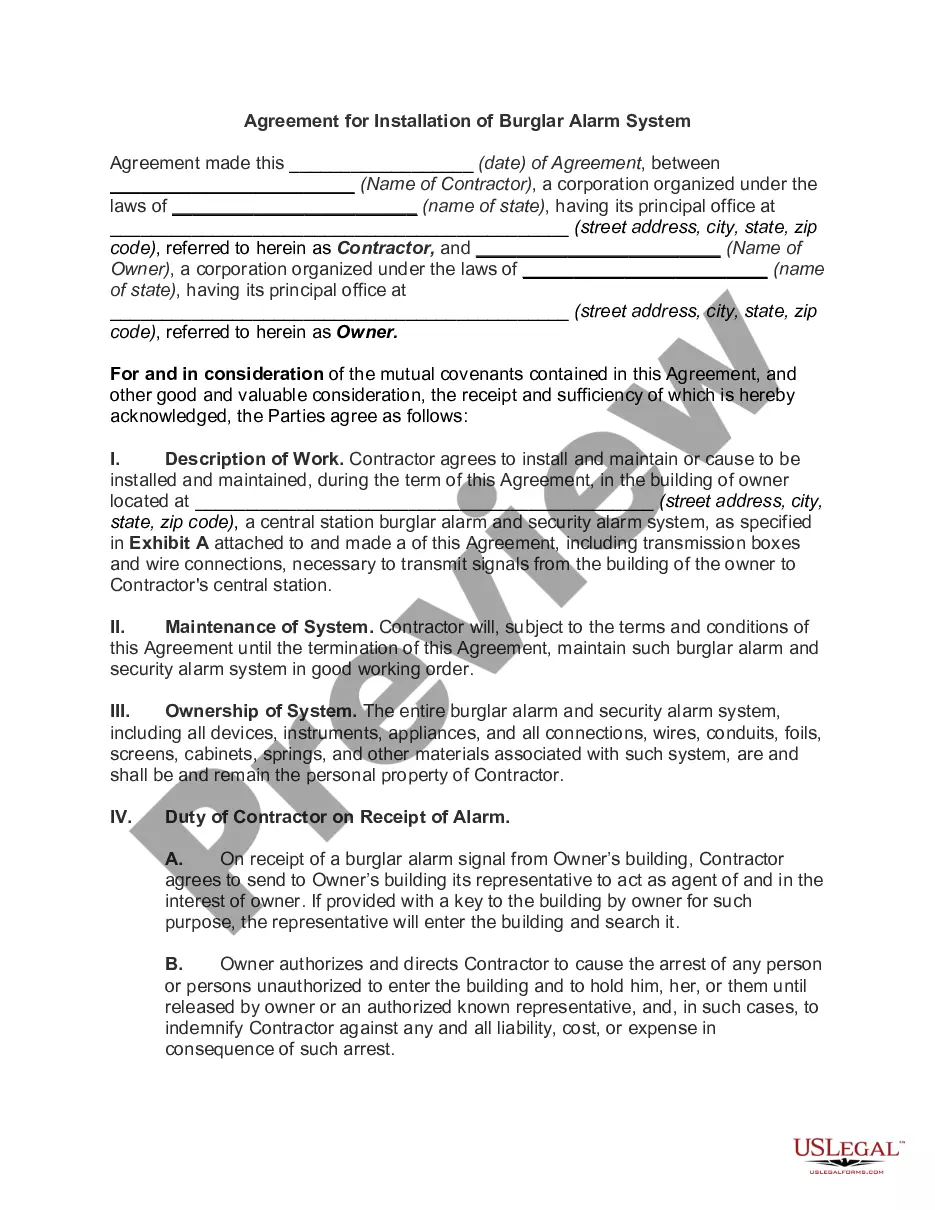
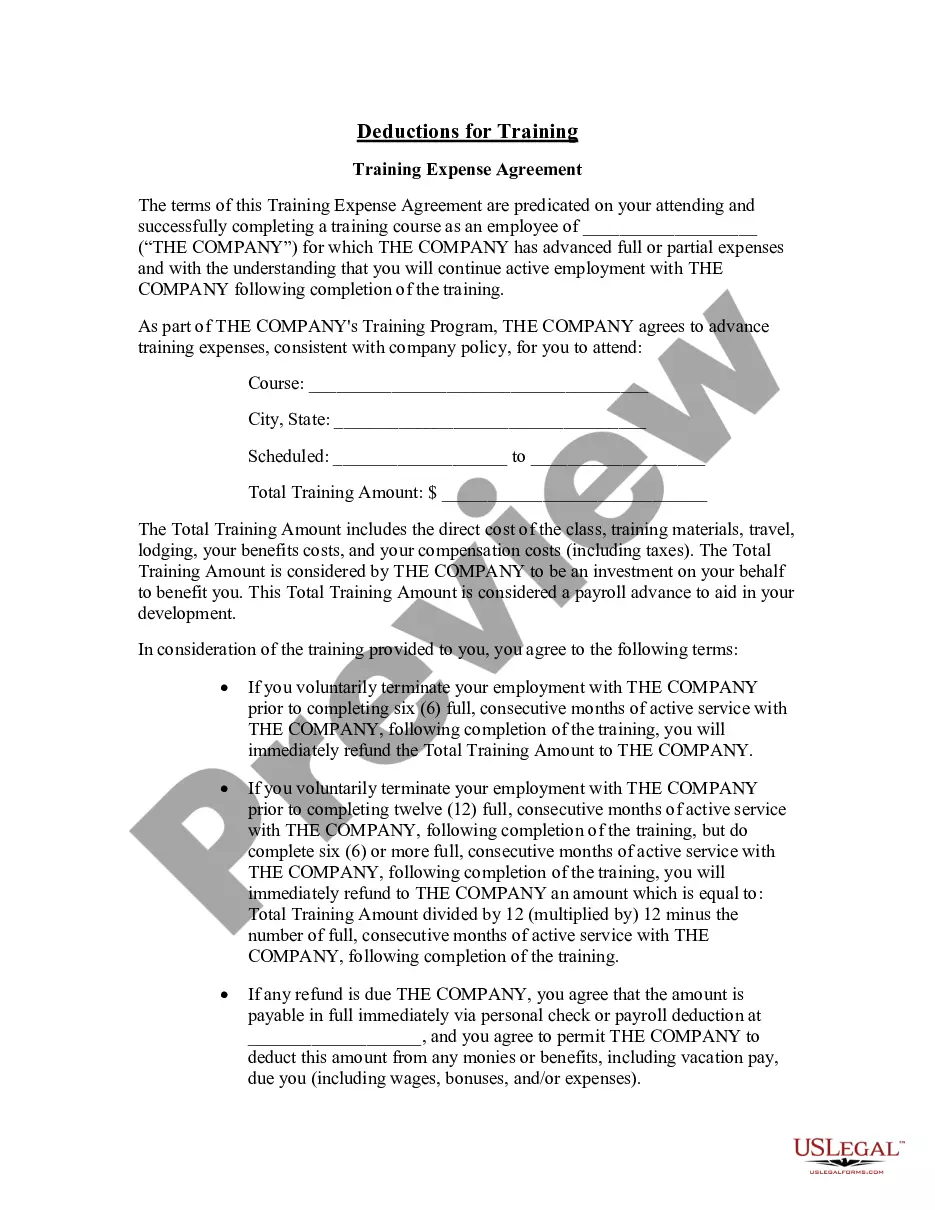
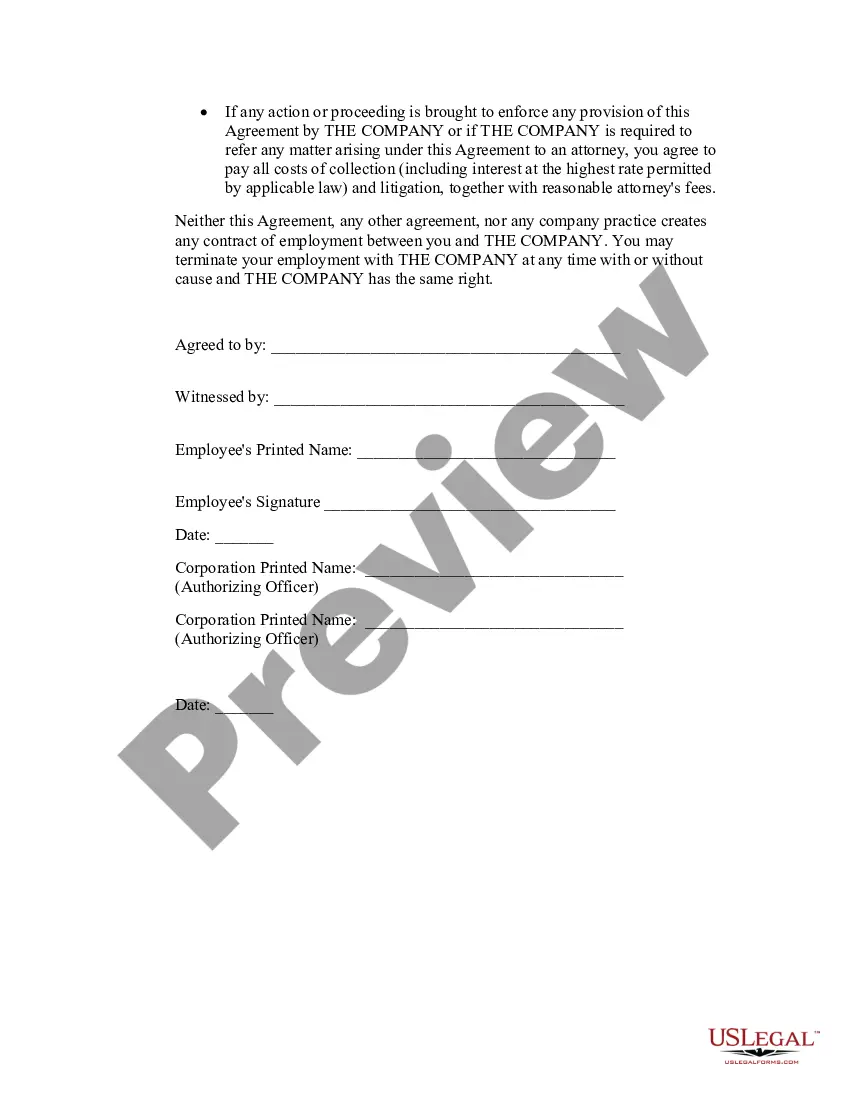
Nevada Training Expense Agreement
Description
Get your form ready online
Our built-in tools help you complete, sign, share, and store your documents in one place.
Make edits, fill in missing information, and update formatting in US Legal Forms—just like you would in MS Word.
Download a copy, print it, send it by email, or mail it via USPS—whatever works best for your next step.
Sign and collect signatures with our SignNow integration. Send to multiple recipients, set reminders, and more. Go Premium to unlock E-Sign.
If this form requires notarization, complete it online through a secure video call—no need to meet a notary in person or wait for an appointment.
We protect your documents and personal data by following strict security and privacy standards.
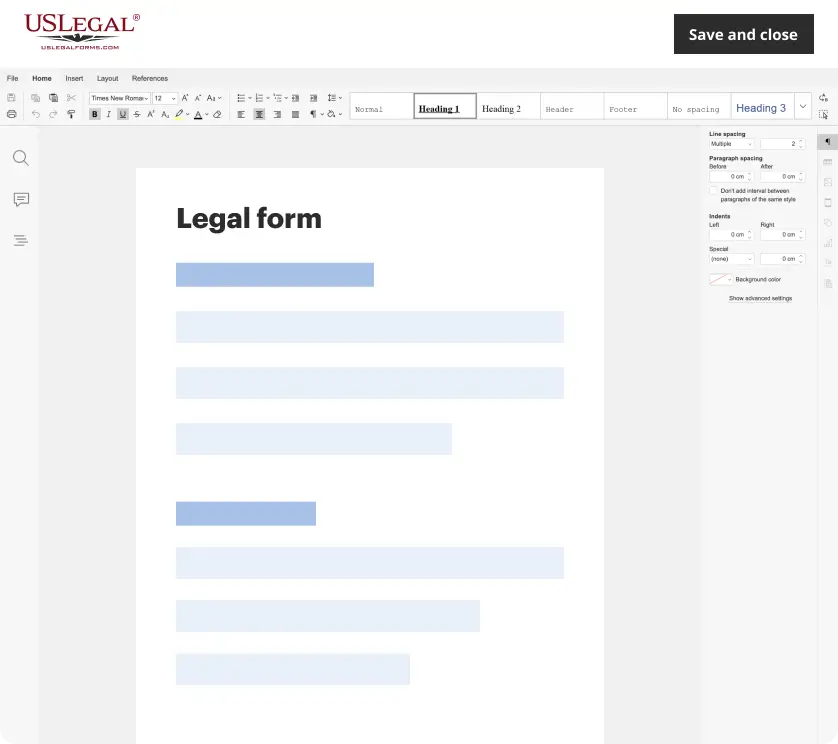
Make edits, fill in missing information, and update formatting in US Legal Forms—just like you would in MS Word.
Download a copy, print it, send it by email, or mail it via USPS—whatever works best for your next step.
Sign and collect signatures with our SignNow integration. Send to multiple recipients, set reminders, and more. Go Premium to unlock E-Sign.

If this form requires notarization, complete it online through a secure video call—no need to meet a notary in person or wait for an appointment.
We protect your documents and personal data by following strict security and privacy standards.
Looking for another form?






How to fill out Training Expense Agreement?
You can spend time online searching for the appropriate legal document template that meets the federal and state requirements you desire.
US Legal Forms provides a vast array of legal forms that are vetted by professionals.
You can easily download or print the Nevada Training Expense Agreement from their services.
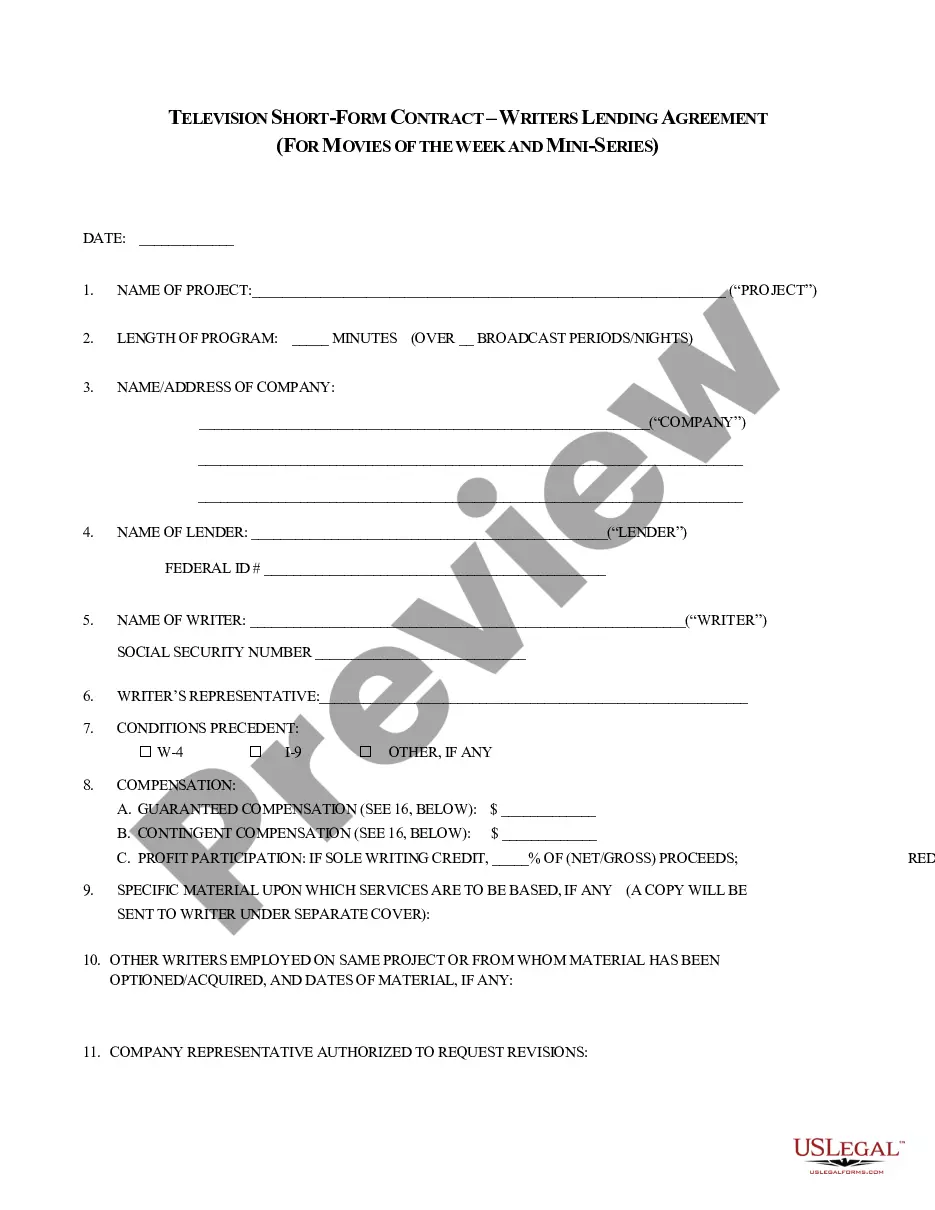
If available, use the Preview button to take a look at the document template as well.
- If you already have a US Legal Forms account, you may Log In and click the Download button.
- Following that, you can complete, modify, print, or sign the Nevada Training Expense Agreement.
- Every legal document template you obtain is yours permanently.
- To obtain another copy of any downloaded form, visit the My documents section and click the corresponding button.
- If you are using the US Legal Forms site for the first time, follow the simple instructions below.
- First, ensure you have selected the correct document template for your desired state/city.
- Check the form description to confirm you have selected the appropriate form.
Form popularity
FAQ
Employers can only deduct money for training courses if it was agreed in the contract or in writing beforehand. For example, an employer could ask someone to agree in writing before a training course to pay back costs if they leave within 6 months.
Employers can only deduct money for training courses if it was agreed in the contract or in writing beforehand. For example, an employer could ask someone to agree in writing before a training course to pay back costs if they leave within 6 months.
These agreements provide that the employer will pay for the employee to receive valuable work-related training or education in exchange for the employee's commitment to remain employed by the employer for a defined period of time.
In essence, a training contract is an agreement between an employer, such as a manager or supervisor, and an employee. It outlines all of the key skills or knowledge employees must acquire, how they will acquire it, and how the outcome will be assessed.
Employers sometimes attempt to recoup the cost of such training from employees through various means, but if an employer requires an employee to undergo training, it cannot force the employee to bear any portion of the cost, even if the employee resigns shortly after completing the training.
When must employees receive pay for training? Employees must be paid for training when it is required by the law or by their employer. This includes training while doing the job, shadowing and working a trial shift.
Unpaid internships are illegal under Ontario law unless they fall within an exception. One possible exception is a trainee.
Regulations state that employers must pay at least minimum wage for any travel or training that is considered to be time worked by the employee. (NAC 608.130(1)).
Legally, you do not have to pay employees if they request time off for training or study that isn't required for them to carry out their job.
According to the Employment Law Handbook, while some states may allow your employer to make you pay for training costs, federal labor law still requires your employer to pay you at your regular rate for the hours you spend completing required training.