Nevada Independent Contractor Agreement Between Licensed Counselor and Therapist and Licensed Counselor and Therapist Practicing as a Solo Practitioner

State:
Multi-State
Control #:
US-02565BG
Format:
Word; 
Rich Text
Instant download

Description

An independent contractor is a person or business who performs services for another person pursuant to an agreement and who is not subject to the other's control, or right to control, the manner and means of performing the services. The exact nature of the independent contractor's relationship with the hiring party is important since an independent contractor pays his/her own Social Security, income taxes without payroll deduction, has no retirement or health plan rights, and often is not entitled to worker's compensation coverage. The traditional tests to determine whether a worker is an employee or independent contractor involve the concept of control. The Internal Revenue Service (IRS) developed 20 factors used to determine whether a worker is an independent contractor under the common law. A "yes" answer to any of these questions would be evidence of an employer-employee relationship.

" Does the principal provide instructions to the worker about when, where, and how he or she is to perform the work?


" Does the principal provide training to the worker?

" Are the services provided by the worker integrated into the principal's business operations?

" Must the services be rendered personally by the worker?

" Does the principal hire, supervise and pay assistants to the worker?

" Is there a continuing relationship between the principal and the worker?

" Does the principal set the work hours and schedule?

" Does the worker devote substantially full time to the business of the principal?

" Is the work performed on the principal's premises?

" Is the worker required to perform the services in an order or sequence set by the principal?

" Is the worker required to submit oral or written reports to the principal?

" Is the worker paid by the hour, week, or month?

" Does the principal have the right to discharge the worker at will?

" Can the worker terminate his or her relationship with the principal any time he or she wishes without incurring liability to the principal?

" Does the principal pay the business or traveling expenses of the worker?

A "yes" answer to any of these questions would be evidence of an independent contractor relationship.


" Does the worker furnish significant tools, materials and equipment?

" Does the worker have a significant investment in facilities?

" Can the worker realize a profit or loss as a result of his or her services?

" Does the worker provide services for more than one firm at a time?

" Does the worker make his or her services available to the general public?
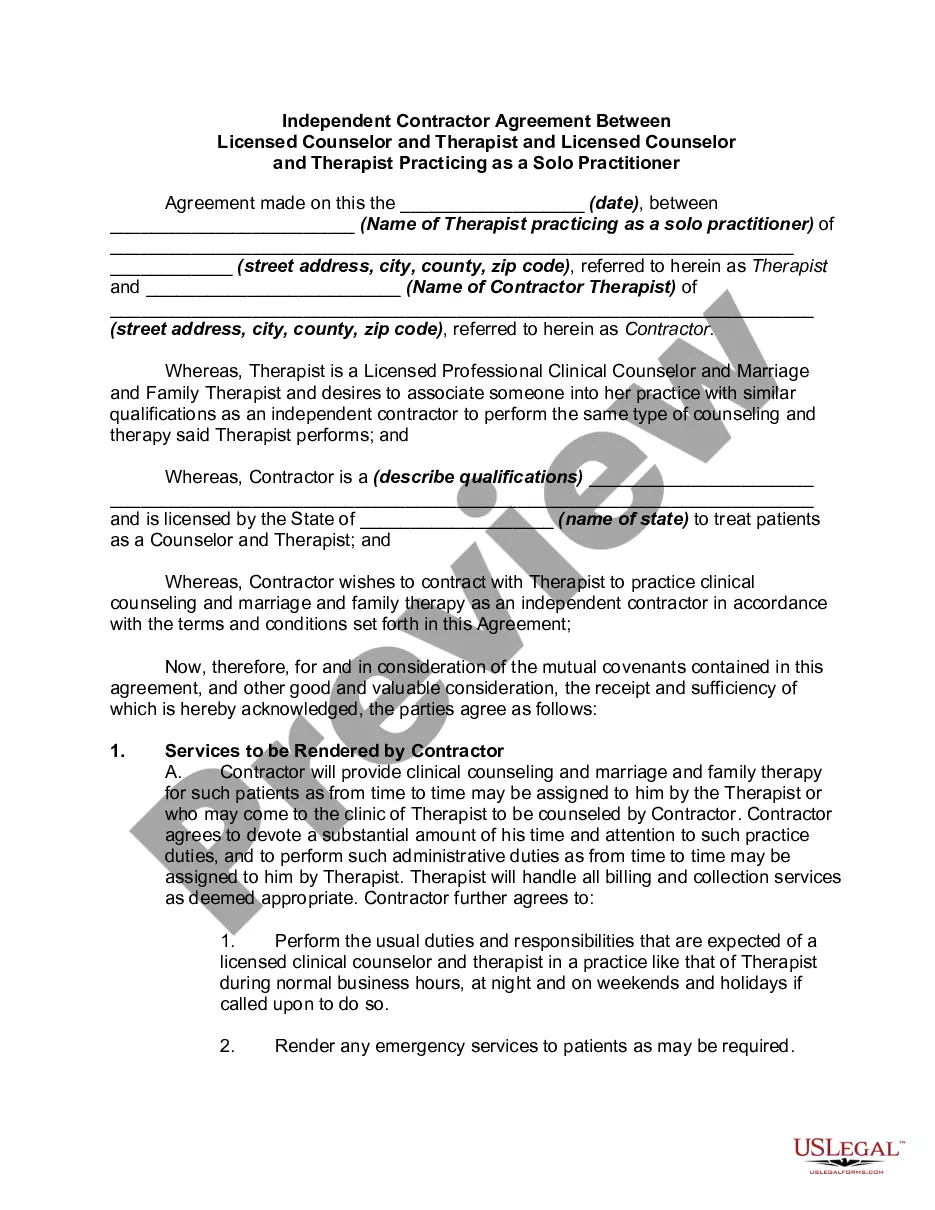
Free preview
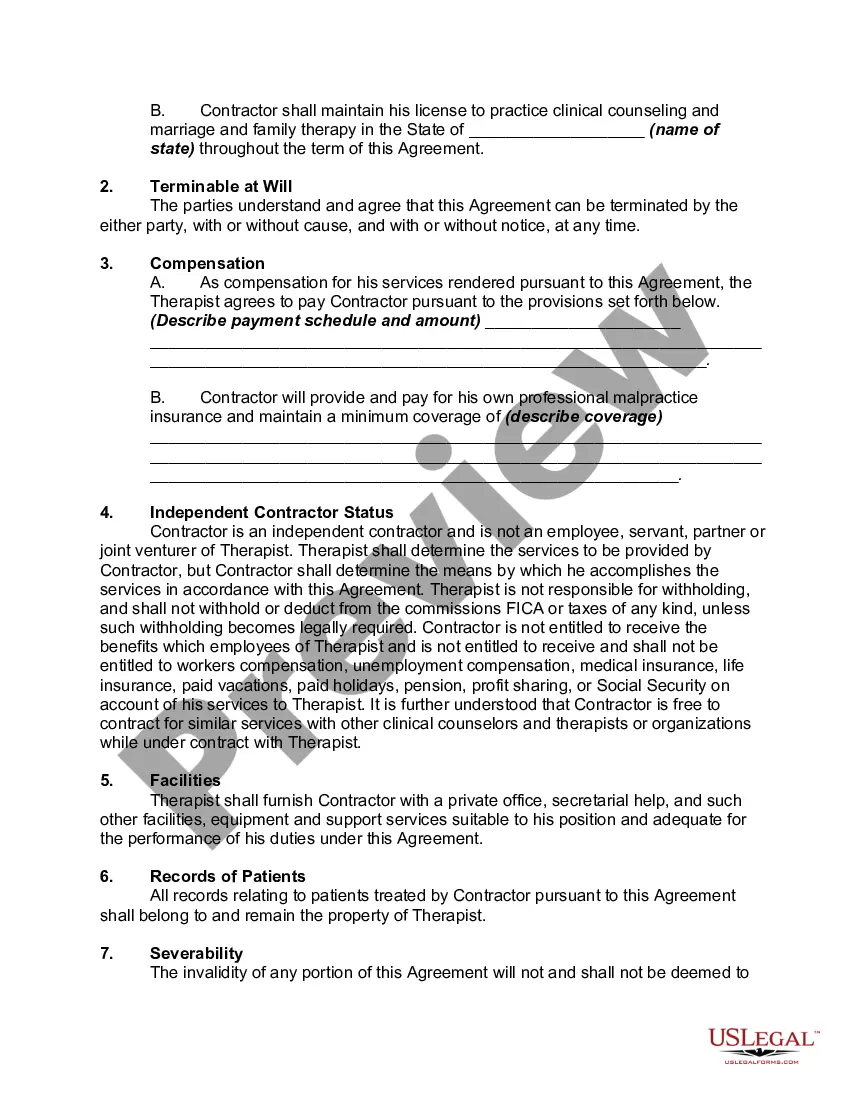
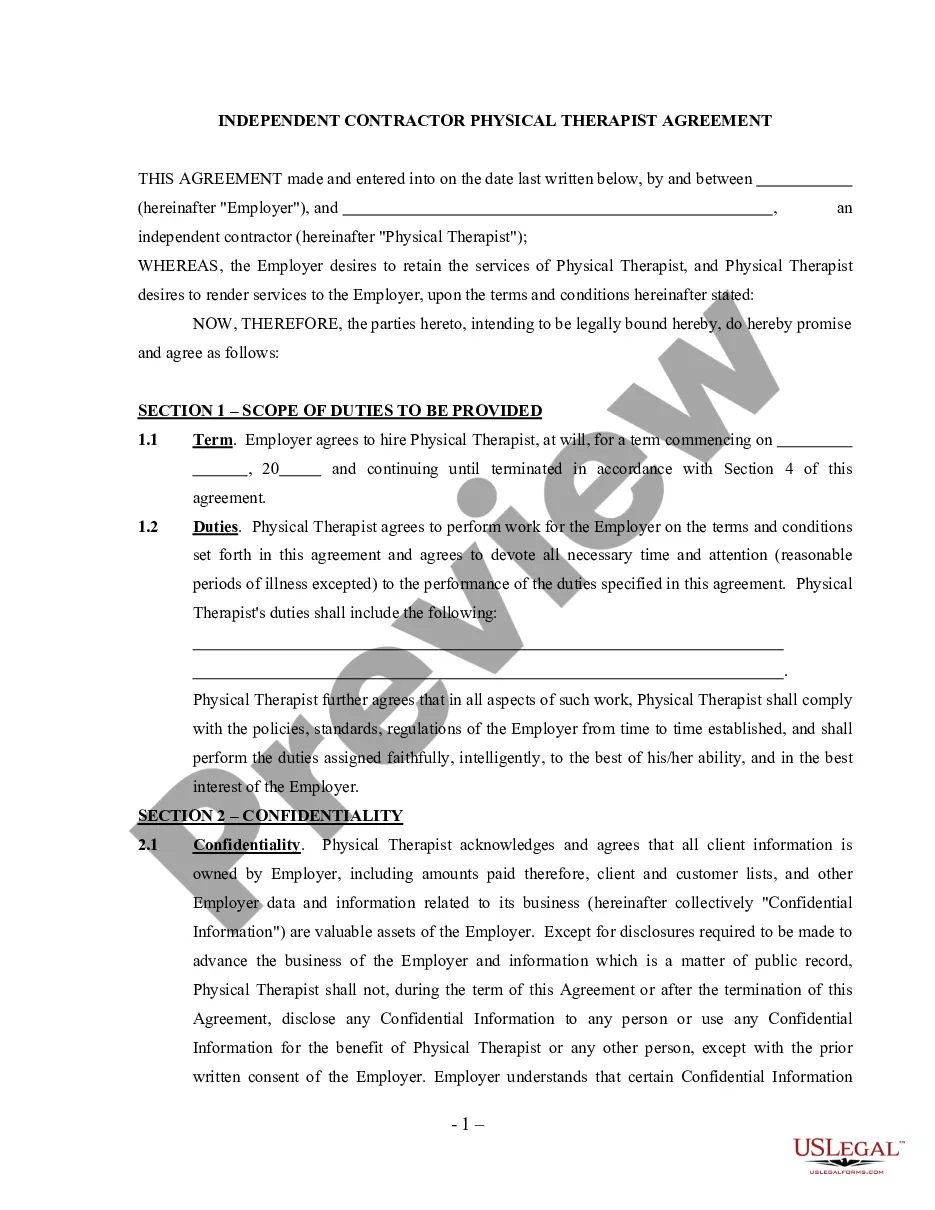
  • Preview Independent Contractor Agreement Between Licensed Counselor and Therapist and Licensed Counselor and Therapist Practicing as a Solo Practitioner
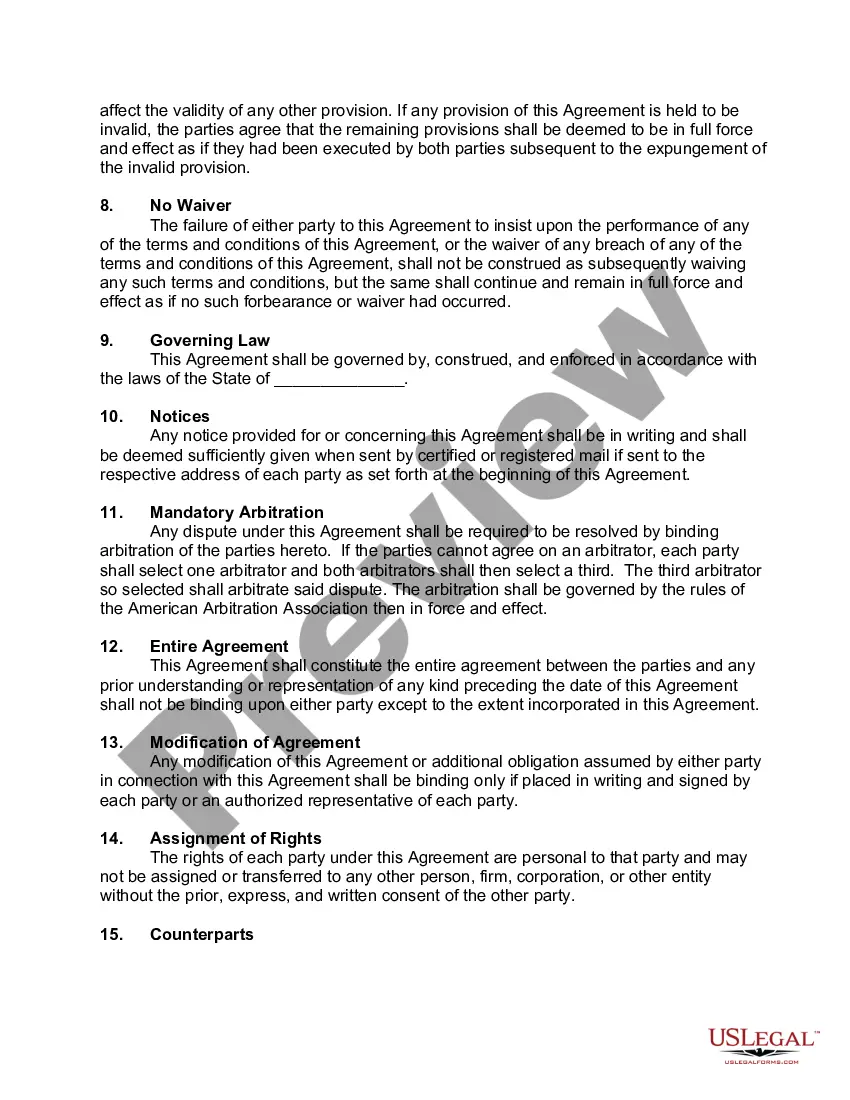
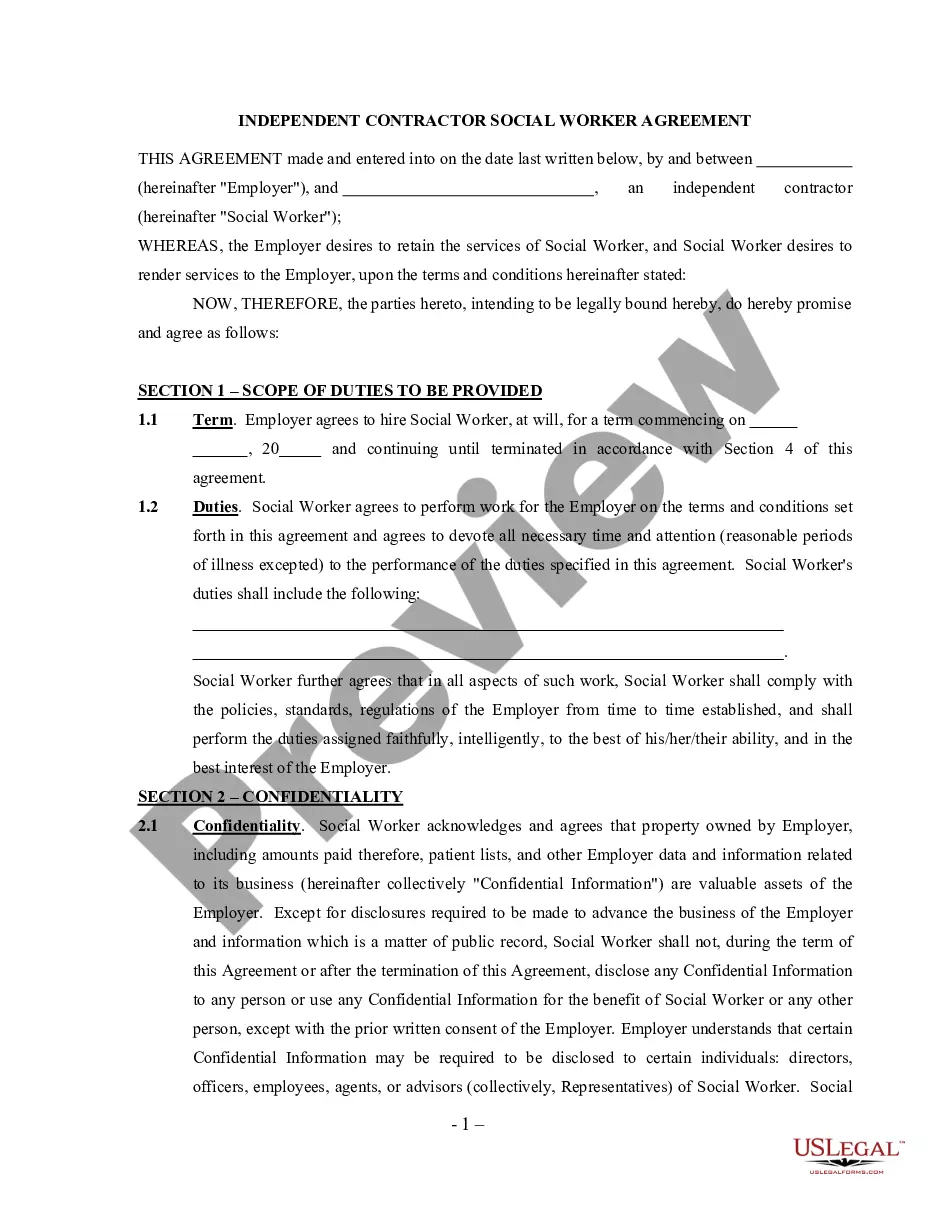
  • Preview Independent Contractor Agreement Between Licensed Counselor and Therapist and Licensed Counselor and Therapist Practicing as a Solo Practitioner
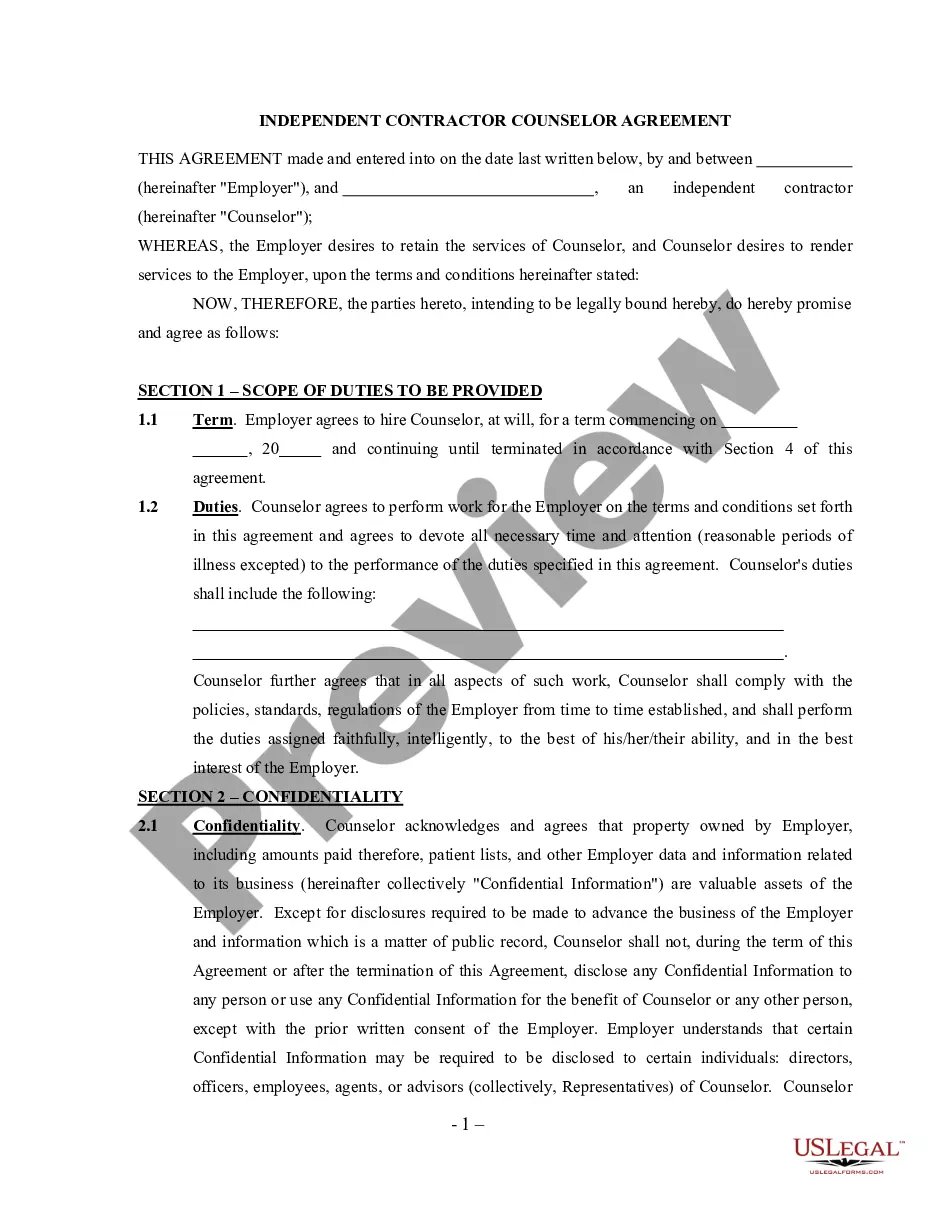
  • Preview Independent Contractor Agreement Between Licensed Counselor and Therapist and Licensed Counselor and Therapist Practicing as a Solo Practitioner
  • Preview Independent Contractor Agreement Between Licensed Counselor and Therapist and Licensed Counselor and Therapist Practicing as a Solo Practitioner

How to fill out Independent Contractor Agreement Between Licensed Counselor And Therapist And Licensed Counselor And Therapist Practicing As A Solo Practitioner?

Locating the appropriate valid document template can be challenging.

Certainly, there is a wide range of templates accessible online, but how can you find the valid form you need.

Utilize the US Legal Forms website.

If you are already registered, Log In to your account and click the Download button to access the Nevada Independent Contractor Agreement Between Licensed Counselor and Therapist and Licensed Counselor and Therapist Practicing as a Solo Practitioner. Use your account to browse the legal forms you have previously purchased. Visit the My documents tab of your account to obtain another copy of the document you need.

  1. The service offers thousands of templates, including the Nevada Independent Contractor Agreement Between Licensed Counselor and Therapist and Licensed Counselor and Therapist Practicing as a Solo Practitioner, suitable for business and personal needs.
  2. All documents are evaluated by professionals and comply with state and federal regulations.

Form popularity

FAQ

A licensed therapist usually holds a higher level of education and training compared to a licensed counselor. While both work in mental health, therapists may provide more intensive treatment and employ various therapeutic methods. It's essential to clarify these differences in your Nevada Independent Contractor Agreement Between Licensed Counselor and Therapist and Licensed Counselor and Therapist Practicing as a Solo Practitioner to ensure that all parties understand their roles and responsibilities.

While the terms 'counselor' and 'therapist' are often used interchangeably, they can refer to different roles within mental health services. Counselors typically focus on specific issues and offer guidance or support, while therapists often engage in deeper, therapeutic practices to address emotional challenges. Understanding these distinctions is important, especially when drafting a Nevada Independent Contractor Agreement Between Licensed Counselor and Therapist and Licensed Counselor and Therapist Practicing as a Solo Practitioner.

Yes, as an independent contractor in Nevada, you typically need a business license to legally operate. This requirement applies if you provide services such as counseling or therapy under the Nevada Independent Contractor Agreement Between Licensed Counselor and Therapist and Licensed Counselor and Therapist Practicing as a Solo Practitioner. Obtaining a business license helps you comply with local regulations, ensuring that you meet the standards required for your practice.

Yes, a Licensed Professional Counselor (LPC) can own their own practice. Establishing your practice allows you to create a personalized environment and establish your therapeutic style. However, ensure that you comply with state regulations and maintain the necessary liability insurance. When designing your practice framework, refer to the Nevada Independent Contractor Agreement Between Licensed Counselor and Therapist and Licensed Counselor and Therapist Practicing as a Solo Practitioner to ensure all legal requirements meet your business operations.

Counselors can use the term 'therapist' in certain contexts, but it often depends on their licensure and the specific regulations in Nevada. While many clients may benefit from seeing a counselor, it's crucial to ensure that the professional meets the required qualifications. Clarity about titles can prevent misunderstandings in the therapeutic relationship. When establishing this relationship, it is wise to consider the Nevada Independent Contractor Agreement Between Licensed Counselor and Therapist and Licensed Counselor and Therapist Practicing as a Solo Practitioner.

The choice between a counselor and a therapist depends on your individual needs and circumstances. If you seek help for situational issues, a counselor might be suitable. Alternatively, if you need therapy for deeper psychological issues, a licensed therapist could be more appropriate. Regardless of your choice, having a clear understanding of the Nevada Independent Contractor Agreement Between Licensed Counselor and Therapist and Licensed Counselor and Therapist Practicing as a Solo Practitioner can enhance the professional relationship.

The primary distinction lies in the focus of practice and required credentials. Licensed counselors often specialize in specific areas, such as marriage and family therapy, while licensed therapists may offer a broader range of services, including psychological assessments. Understanding these differences can help you select the appropriate professional for your situation. Always consider how the Nevada Independent Contractor Agreement Between Licensed Counselor and Therapist and Licensed Counselor and Therapist Practicing as a Solo Practitioner applies when entering into a professional relationship.

As a 1099 therapist, forming an LLC is not mandatory but often recommended for liability protection and tax purposes. An LLC can help separate your personal assets from your business liabilities, which adds a layer of security. Additionally, it can offer tax advantages that might be beneficial as you grow your practice. If you proceed with an LLC, ensure you comply with the Nevada Independent Contractor Agreement Between Licensed Counselor and Therapist and Licensed Counselor and Therapist Practicing as a Solo Practitioner.

Writing an independent contractor agreement involves outlining the specifics of the working relationship. Start by clearly defining the services to be provided, payment terms, and duration of the agreement. It is vital to include terms regarding confidentiality, liability, and termination clauses. For a well-structured agreement, consider using a template for the Nevada Independent Contractor Agreement Between Licensed Counselor and Therapist and Licensed Counselor and Therapist Practicing as a Solo Practitioner available on platforms like uslegalforms.

While the terms licensed counselor and licensed therapist are often used interchangeably, they can refer to different qualifications. Both professionals provide mental health support, but they may have different training and regulatory requirements. Familiarizing yourself with these differences can help you choose the right provider for your needs. For detailed guidance, consider the Nevada Independent Contractor Agreement Between Licensed Counselor and Therapist and Licensed Counselor and Therapist Practicing as a Solo Practitioner.

Trusted and secure by over 3 million people of the world’s leading companies

Nevada Independent Contractor Agreement Between Licensed Counselor and Therapist and Licensed Counselor and Therapist Practicing as a Solo Practitioner