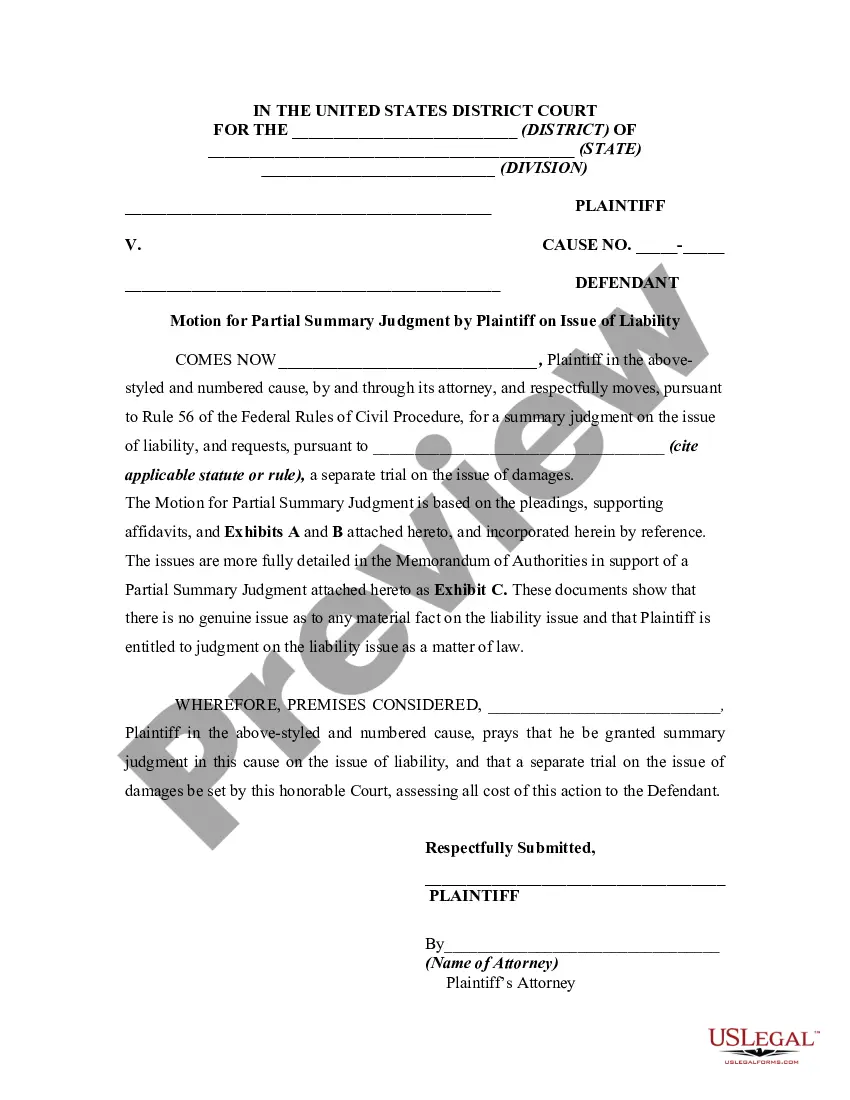
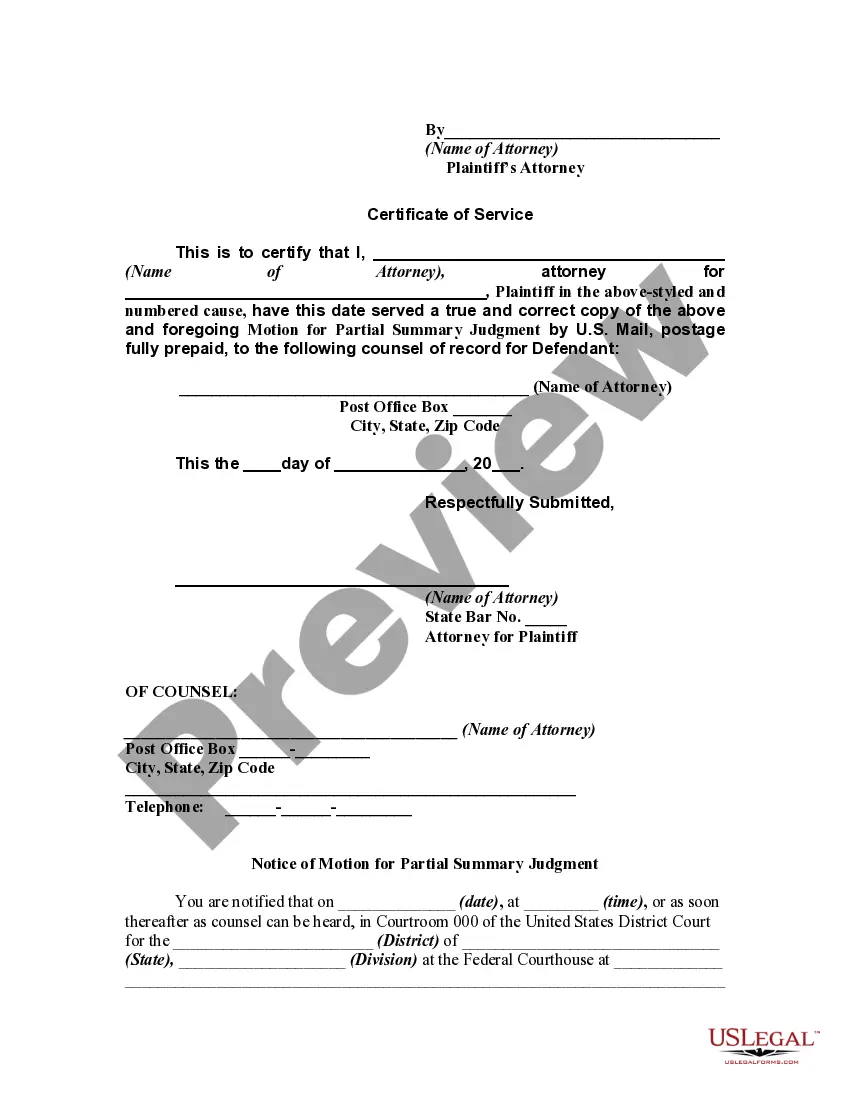
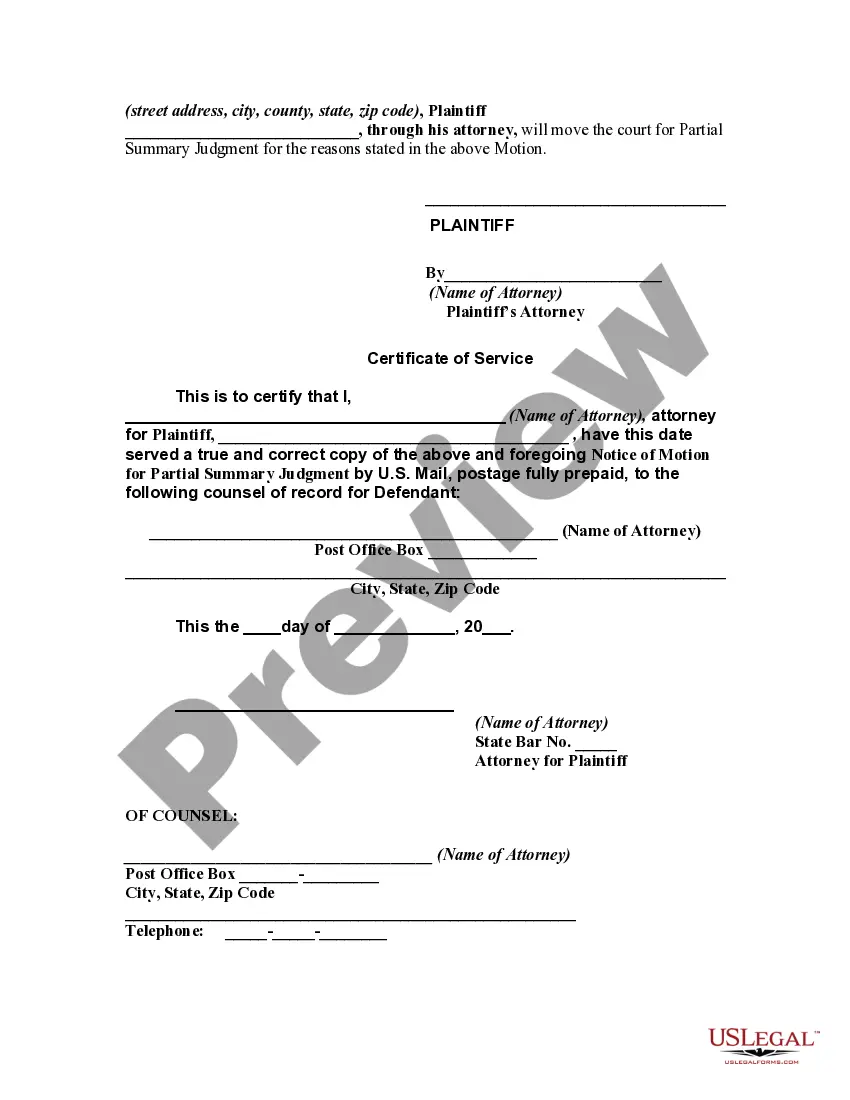
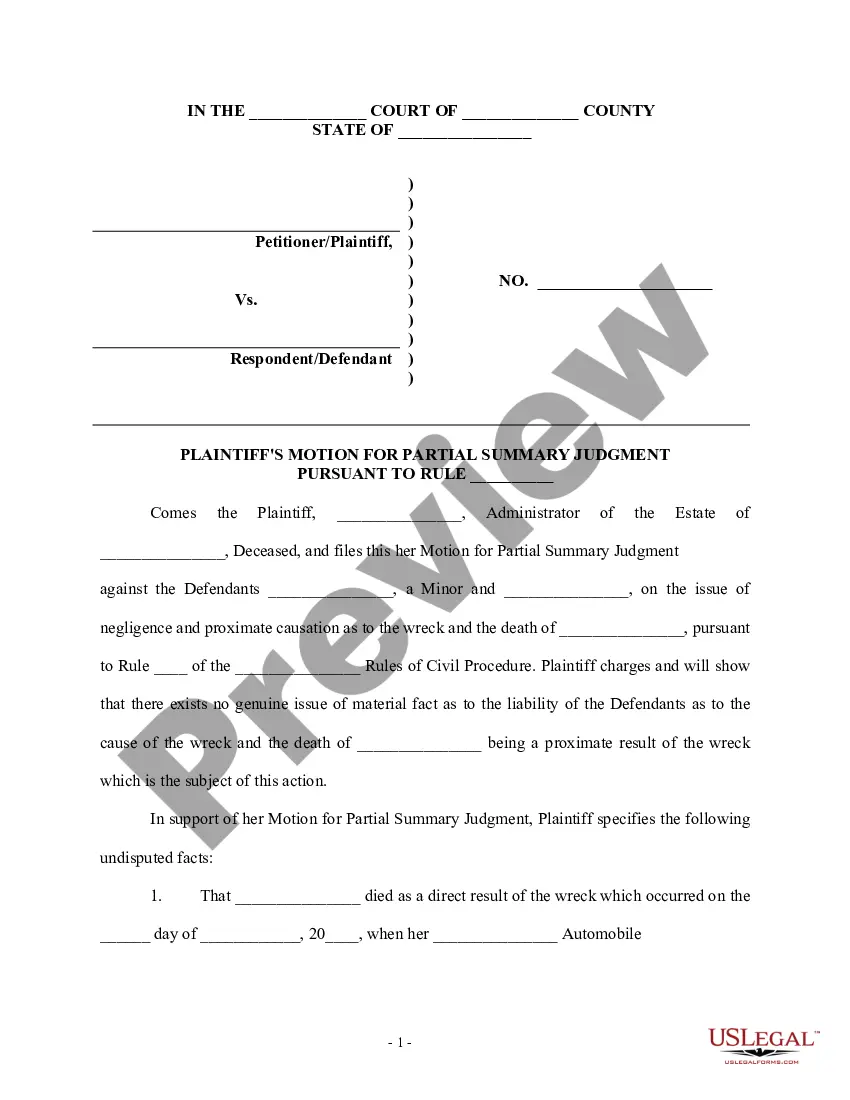
This form is a generic motion for partial summary judgment on the issue of liability. The motion adopts the "notice pleadings" format of the Federal Rules of Civil Procedure, which have been adopted by most states in one form or another.
Nevada General Form of Partial Motion for Summary Judgment by Plaintiff on Issue of Liability with Notice of Motion and with Request for Separate Trial on Issue of Damages
Category:
State:
Multi-State
Control #:
US-00918BG
Format:
Word;
Rich Text
Instant download
Description
Free preview
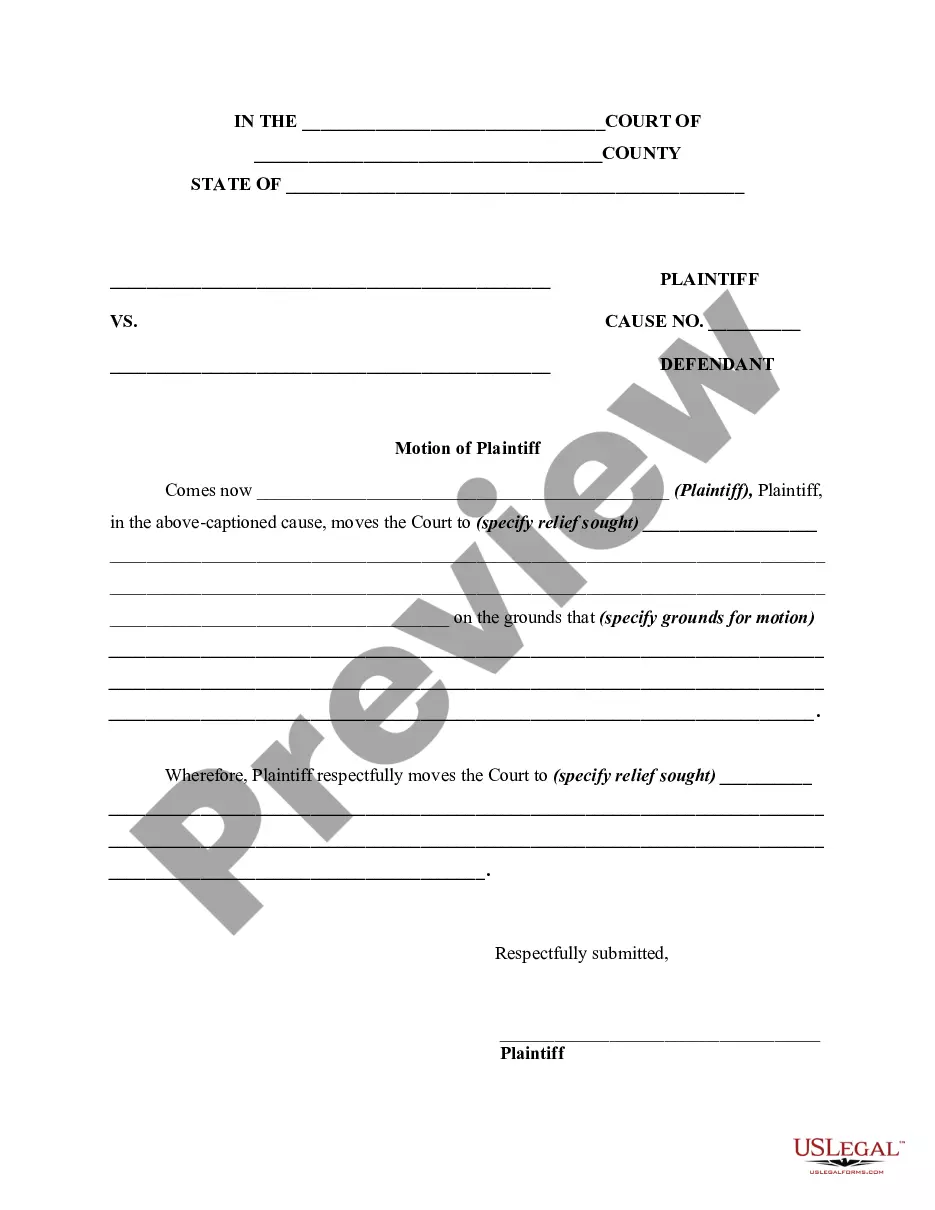
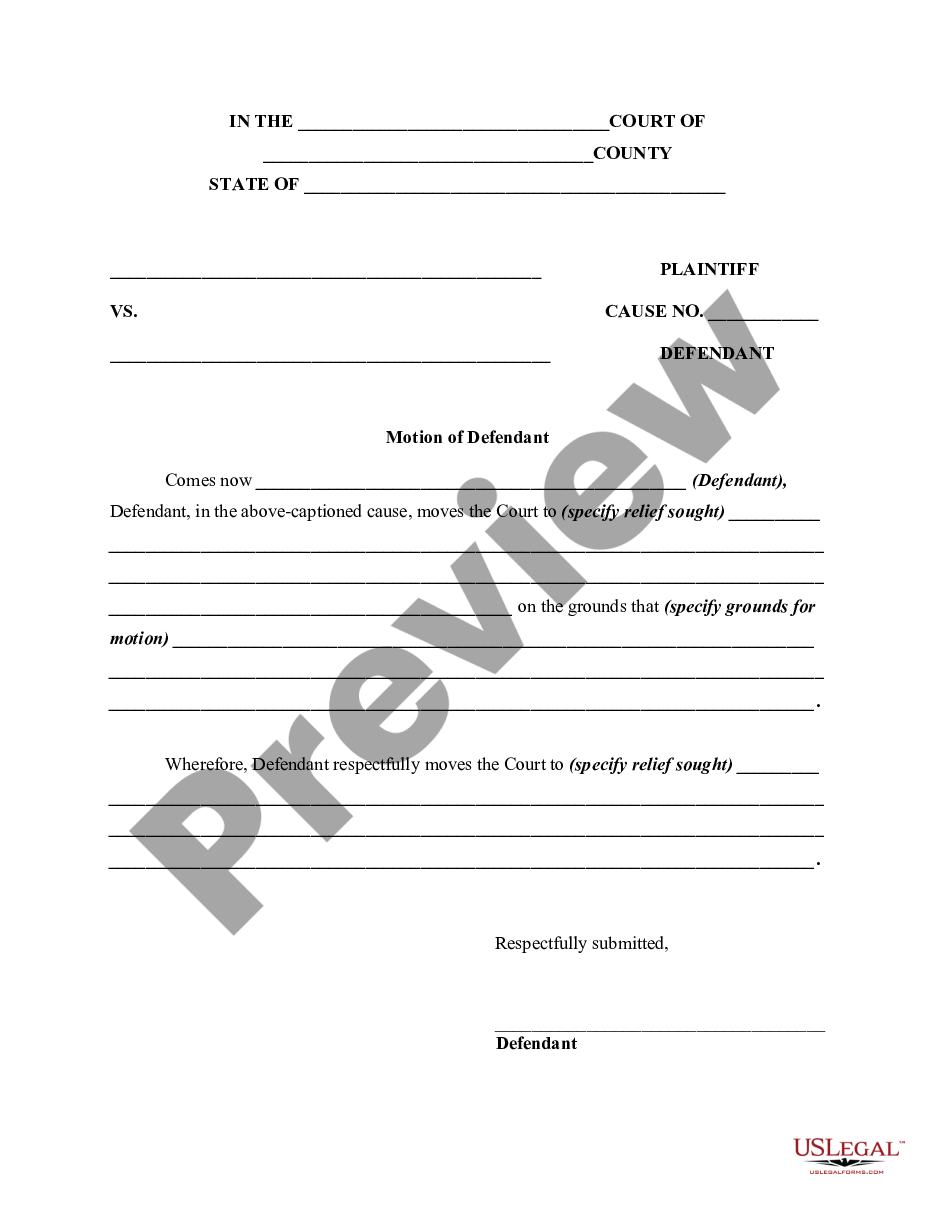
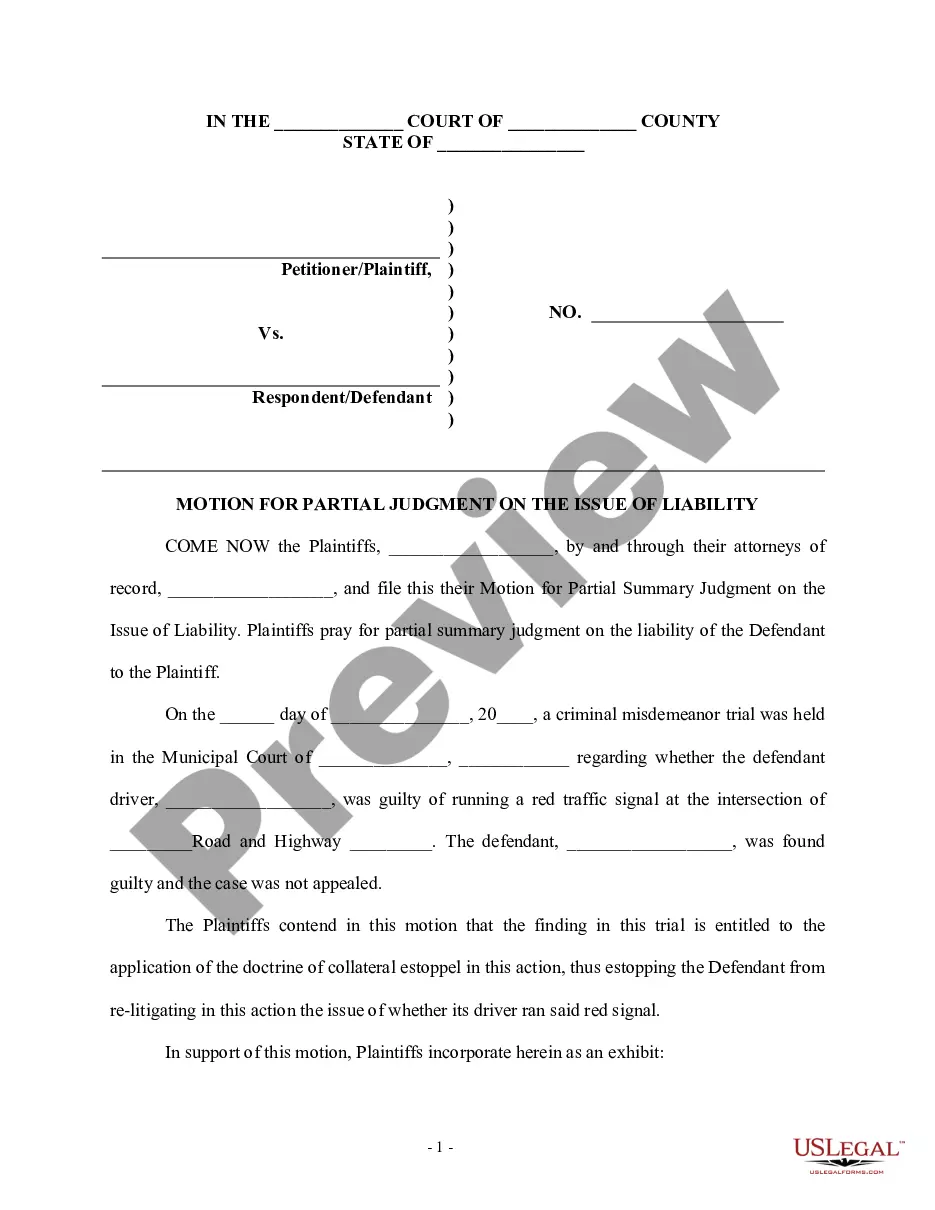
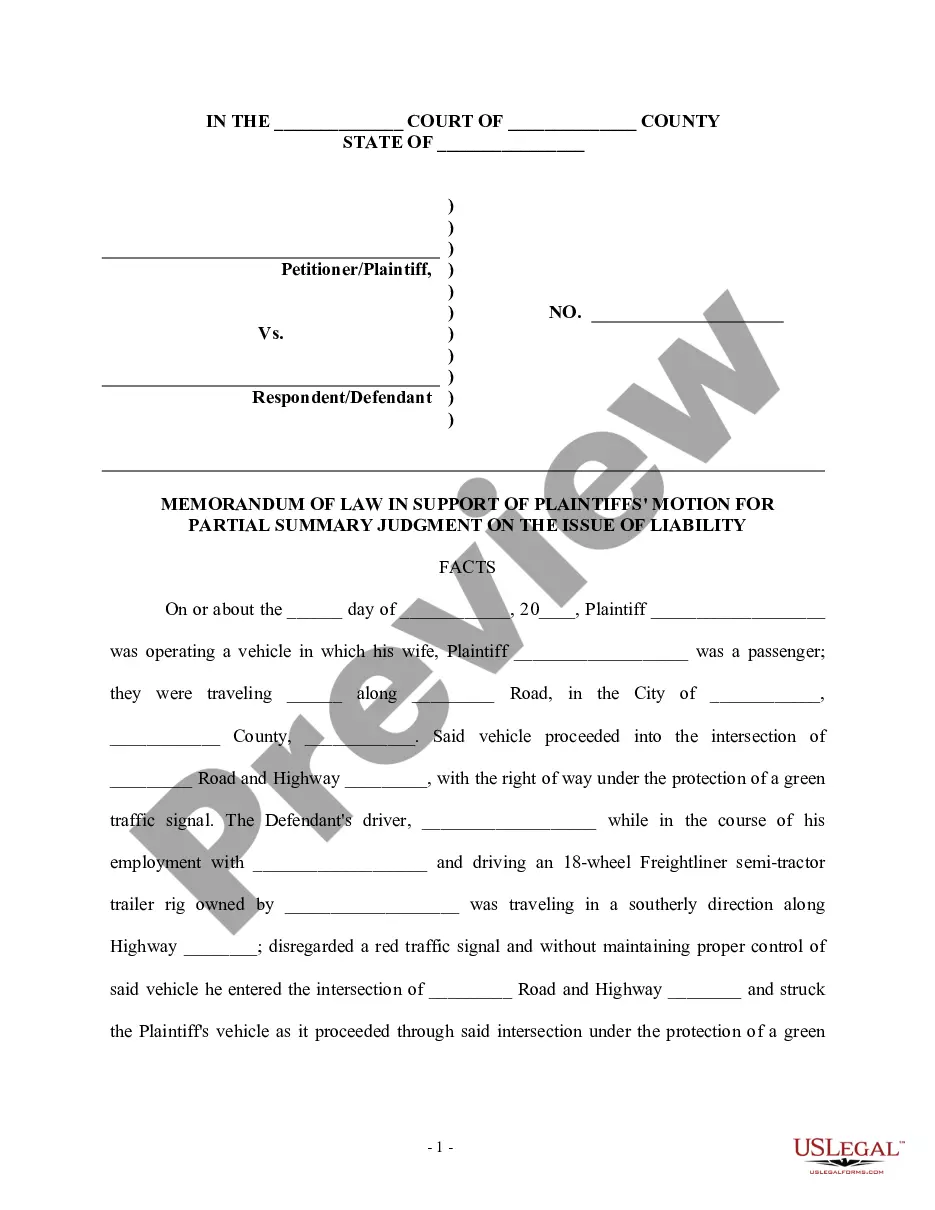

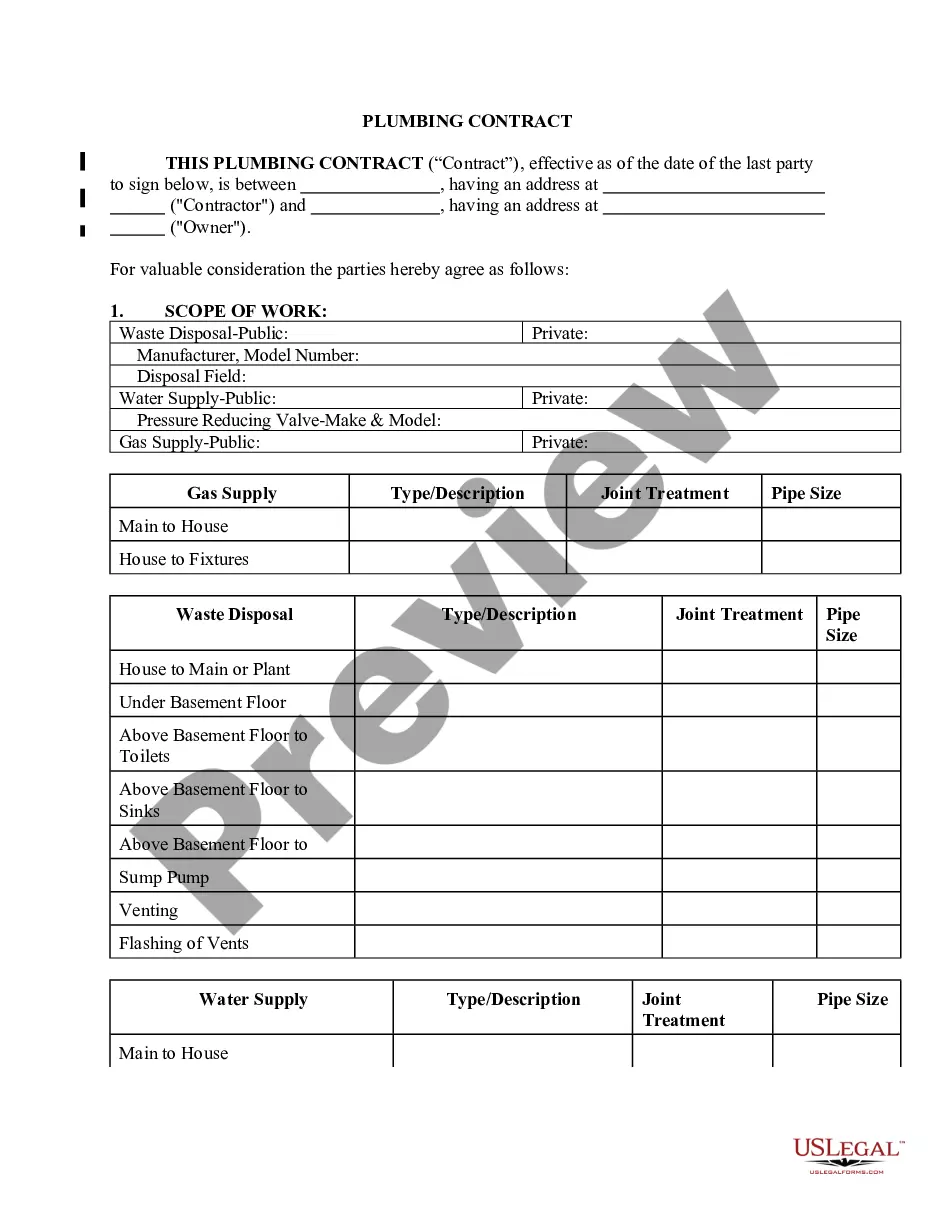
How to fill out General Form Of Partial Motion For Summary Judgment By Plaintiff On Issue Of Liability With Notice Of Motion And With Request For Separate Trial On Issue Of Damages?
Are you presently in a scenario where you need documents for both business or specific purposes consistently.
There are numerous legal document templates accessible online, but acquiring ones you can rely on isn't straightforward.
US Legal Forms offers thousands of template documents, such as the Nevada General Form of Partial Motion for Summary Judgment by Plaintiff on Issue of Liability with Notice of Motion and with Request for Separate Trial on Issue of Damages, which can be tailored to satisfy federal and state requirements.
Access all of the document templates you have purchased in the My documents menu.
You can obtain an additional copy of the Nevada General Form of Partial Motion for Summary Judgment by Plaintiff on Issue of Liability with Notice of Motion and with Request for Separate Trial on Issue of Damages anytime needed. Just click on the necessary form to download or print the document template. Utilize US Legal Forms, one of the most extensive collections of legal templates, to save time and prevent errors. The service provides professionally crafted legal document templates that you can use for a variety of purposes. Create an account on US Legal Forms and start making your life simpler.
- If you are currently familiar with the US Legal Forms website and have an account, simply Log In.
- After that, you can download the Nevada General Form of Partial Motion for Summary Judgment by Plaintiff on Issue of Liability with Notice of Motion and with Request for Separate Trial on Issue of Damages template.
- If you do not have an account and wish to start using US Legal Forms, follow these steps.
- Find the form you need and ensure it corresponds to the appropriate city/county.
- Use the Preview button to review the document.
- Check the description to ensure you have selected the correct form.
- If the form isn't what you are looking for, utilize the Search field to locate the form that meets your requirements.
- Once you find the right form, click on Buy now.
- Select the pricing plan you desire, fill in the required information to create your account, and pay for the order using your PayPal or Visa or Mastercard.
- Choose a suitable document format and download your copy.
Form popularity
FAQ
The court shall grant summary judgment if the movant shows that there is no genuine dispute as to any material fact and the movant is entitled to judgment as a matter of law. The court should state on the record the reasons for granting or denying the motion.
What Is a Partial Summary Judgement? In some cases, the court may grant a motion for partial summary judgment. The purpose of partial summary judgment is to simplify a trial by ruling on some claims, but not all. For example, the court might rule on some factual issues but leave others for trial.
When a motion for summary judgment is denied, the nonmoving party achieves a form of premium that enables a case to settle for an additional amount. Put simply, the settlement value of a case increases when a motion for summary judgment is denied. Thus, denials of summary judgment up the ante in the litigation game.
The chance of success in these cases is less than 10% [1]. Another study found that summary judgment is mostly granted in Title VII cases, for example, cases involving equal pay or employment discrimination [2]. When it comes to federal cases, summary judgments are filed in 17% of total cases.
The denial of a motion for summary judgment is generally an interlocutory decision only, and therefore not directly appealable. If the trial court's order overrules a motion for summary judgment, it is interlocutory in nature making it nonappealable.
Summary judgment is granted when the facts can be decided upon without needing to go to trial, where the opposing party would lose due to a lack of evidence. If it's not clear that there is no more evidence, then summary judgment must be denied.
Generally, it means that the court will not approve the motion.
Rule 56 - Summary Judgment (a)Motion for Summary Judgment or Partial Summary Judgment. A party may move for summary judgment, identifying each claim or defense-or the part of each claim or defense-on which summary judgment is sought.