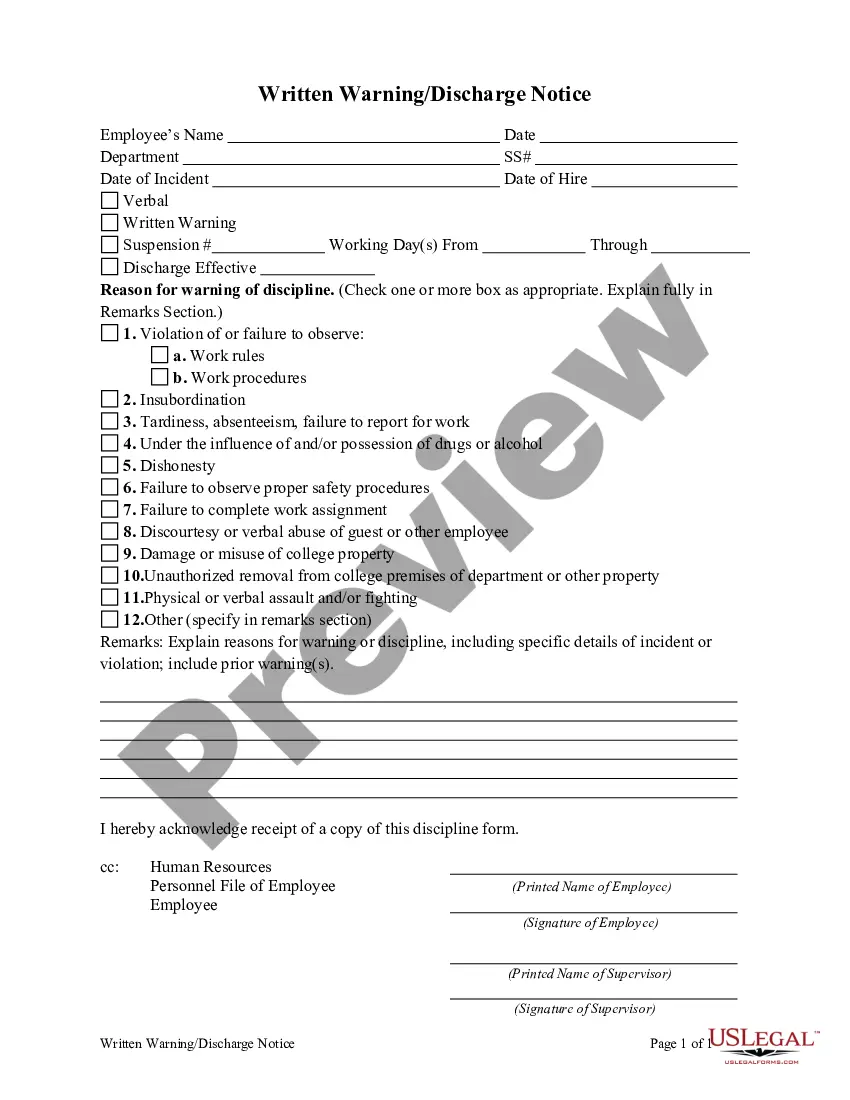
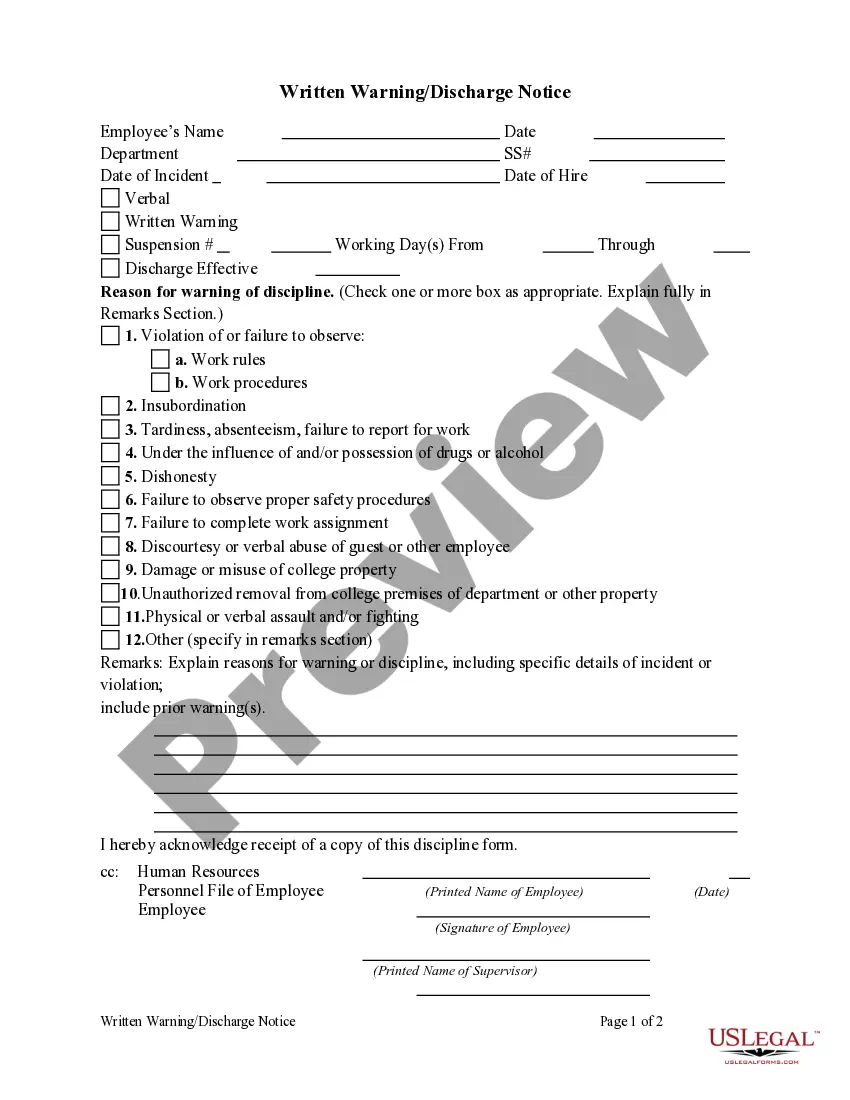
Nevada Written Warning/Discharge Notice
Description
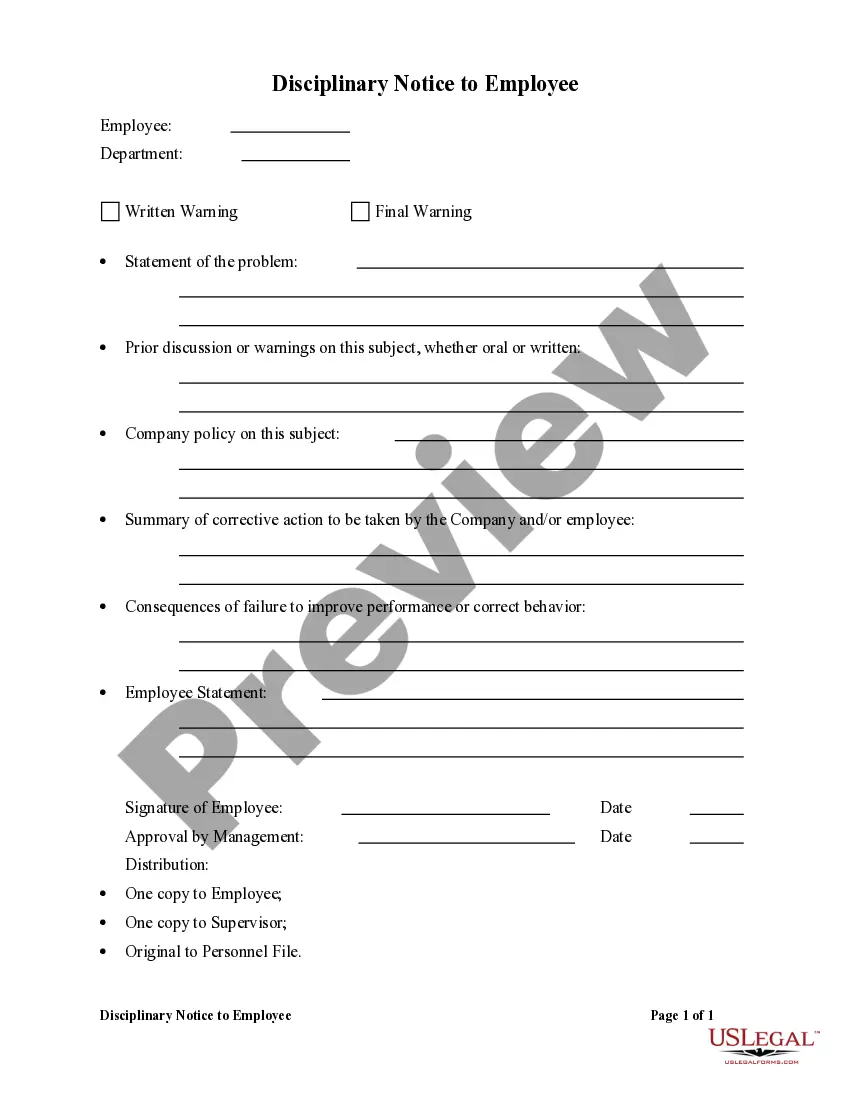
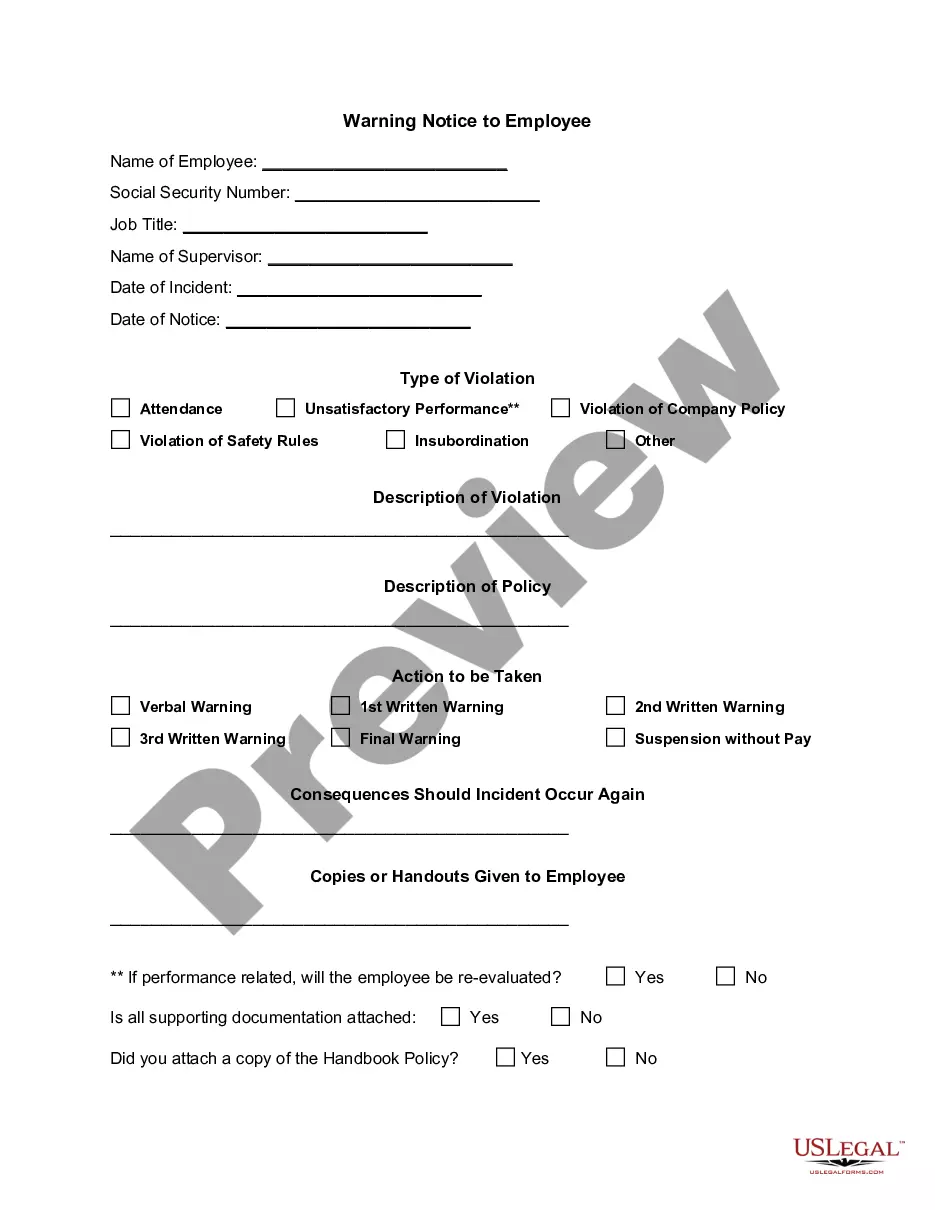
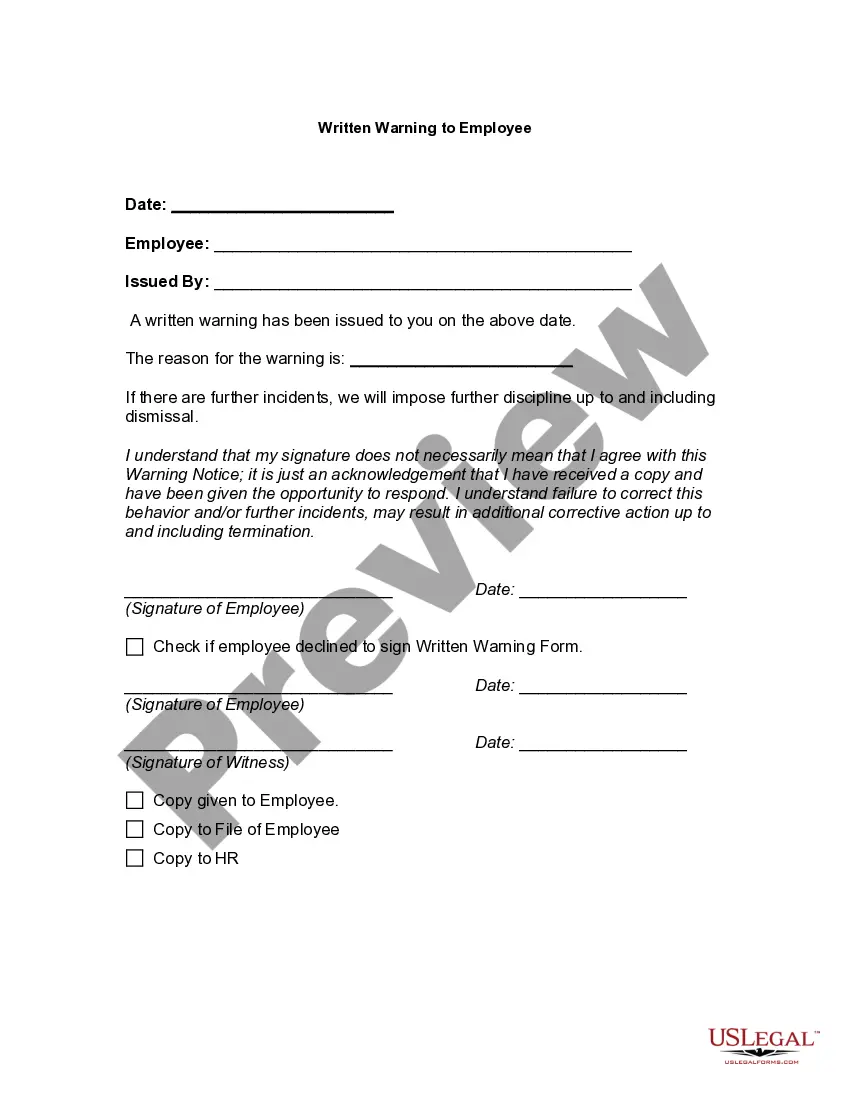
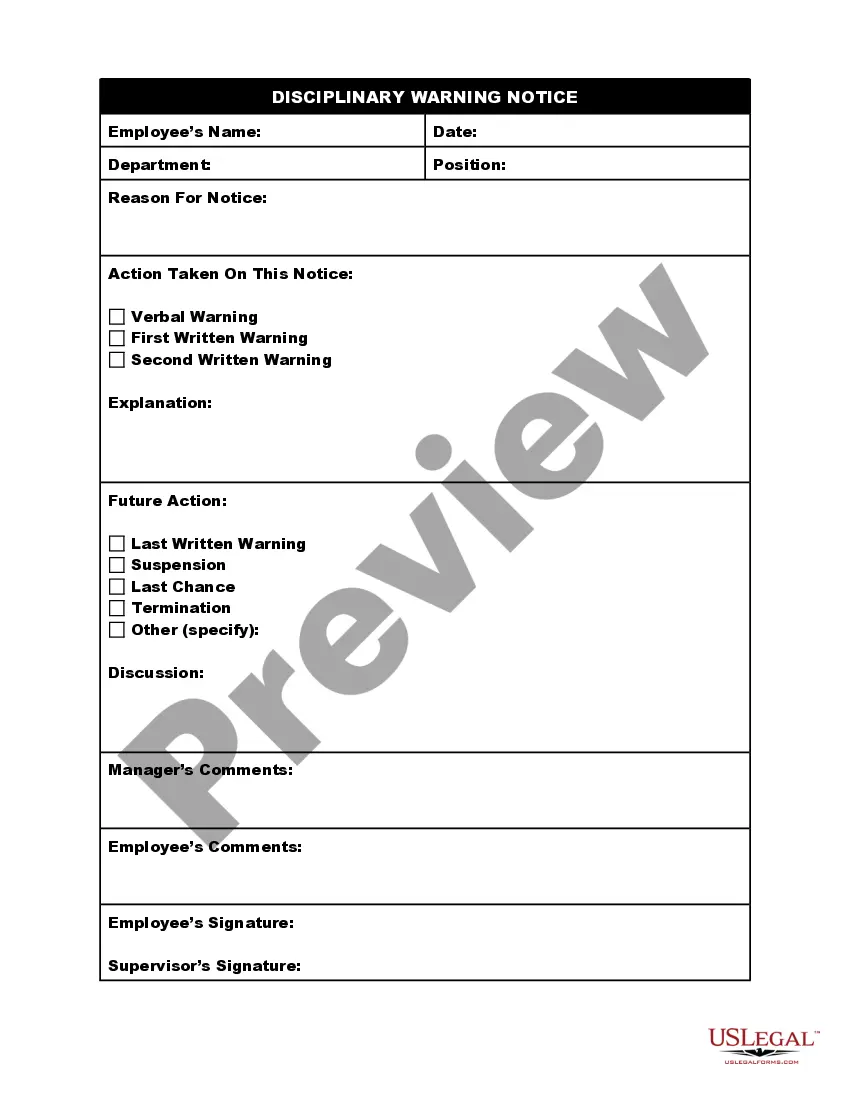
Get your form ready online
Our built-in tools help you complete, sign, share, and store your documents in one place.
Make edits, fill in missing information, and update formatting in US Legal Forms—just like you would in MS Word.
Download a copy, print it, send it by email, or mail it via USPS—whatever works best for your next step.
Sign and collect signatures with our SignNow integration. Send to multiple recipients, set reminders, and more. Go Premium to unlock E-Sign.
If this form requires notarization, complete it online through a secure video call—no need to meet a notary in person or wait for an appointment.
We protect your documents and personal data by following strict security and privacy standards.
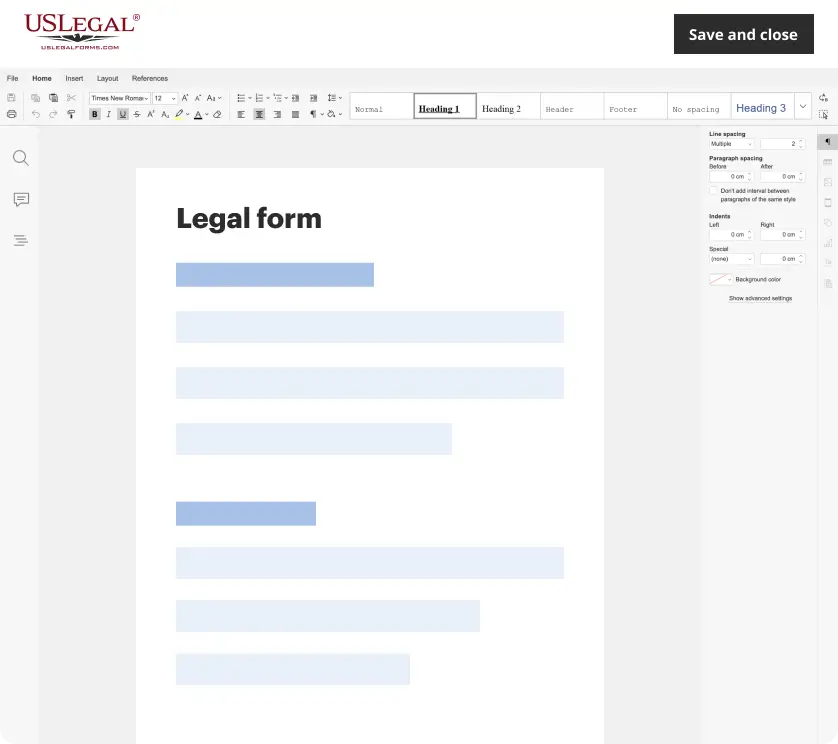
Make edits, fill in missing information, and update formatting in US Legal Forms—just like you would in MS Word.
Download a copy, print it, send it by email, or mail it via USPS—whatever works best for your next step.
Sign and collect signatures with our SignNow integration. Send to multiple recipients, set reminders, and more. Go Premium to unlock E-Sign.
If this form requires notarization, complete it online through a secure video call—no need to meet a notary in person or wait for an appointment.
We protect your documents and personal data by following strict security and privacy standards.
Looking for another form?



How to fill out Written Warning/Discharge Notice?
Selecting the ideal legal document template can be quite a challenge.
It goes without saying that there are numerous themes available online, but how can you obtain the legal form you require.
Utilize the US Legal Forms website. This service offers thousands of templates, including the Nevada Written Warning/Discharge Notice, that can be used for both business and personal purposes.
First, ensure you have selected the correct form for your area/state. You can view the form using the Preview button and read the form details to confirm it is suitable for you.
- All of the forms are reviewed by professionals and comply with federal and state regulations.
- If you are already registered, Log In to your account and click the Download button to access the Nevada Written Warning/Discharge Notice.
- Use your account to browse through the legal forms you may have purchased previously.
- Navigate to the My documents tab in your account and obtain another copy of the document you need.
- If you are a new user of US Legal Forms, here are simple guidelines for you to follow.
Form popularity
FAQ
After issuing a final written warning, the next step is to monitor the employee's performance to see if they meet the outlined improvements. Regular check-ins and open communication are crucial during this period. If the employee fails to meet the expectations set forth in the Nevada Written Warning/Discharge Notice, employers may need to consider additional actions, including termination.
Yes, a written warning is considered a form of disciplinary action in the workplace. It officially documents an employee's misconduct or performance issues while outlining necessary changes in behavior. By using the Nevada Written Warning/Discharge Notice, employers provide a formal record that supports future actions, should further discipline become necessary.
Rules for final warnings include ensuring each warning is backed by clear documentation and consistent application across all employees. It’s vital that the Nevada Written Warning/Discharge Notice outlines specific performance expectations and timelines for improvement. This transparency helps employees understand the seriousness of the situation and gives them a fair opportunity to rectify their conduct.
Delivering a final written warning requires a careful and thoughtful approach. Schedule a one-on-one meeting with the employee to maintain professionalism and respect. During this meeting, present the Nevada Written Warning/Discharge Notice, ensuring you explain the rationale behind the warning and clarify what steps the employee should take moving forward.
When presenting a written warning, ensure you do so in a private and comfortable environment to maintain respect and confidentiality. Begin the discussion by clearly stating the purpose of the meeting and referencing the Nevada Written Warning/Discharge Notice. It aids understanding if you outline specific behaviors that led to the warning, along with the expected improvements and timelines.
The final written warning procedure involves several important steps. Initially, management must gather all relevant documentation regarding the employee's performance issues. Then, you proceed to notify the employee in a private setting, using the Nevada Written Warning/Discharge Notice to clarify the situation and potential repercussions, hence ensuring the employee understands what is at stake.
The procedure for a final written warning typically begins with a thorough review of the employee's performance issues or misconduct. After documenting specific incidents, you should schedule a private meeting with the employee to discuss the concerns. During this meeting, present the Nevada Written Warning/Discharge Notice, outlining the behaviors that led to this decision, and clearly explain the consequences if improvements are not made.
The five core disciplinary procedures typically include verbal warning, written warning, suspension, demotion, and termination. Each step serves to inform the employee of the specific issues and provide them with a chance to improve. Utilizing a Nevada Written Warning/Discharge Notice at appropriate stages can help establish a clear record of disciplinary actions taken. This structured approach fosters accountability and can lead to a more positive work environment.
Nevada does not mandate a separation notice, but providing one can significantly benefit the employer and the employee. This notice can clarify references and eligibility for unemployment benefits. Including details in a Nevada Written Warning/Discharge Notice can help document the separation and reduce potential conflicts. Although it is not required, it is highly advisable to offer a notice for better record-keeping and communication.
Termination laws in Nevada follow the at-will employment doctrine, which means that either the employer or employee can end the relationship at any time, for almost any reason. However, if an employee is terminated based on discrimination or retaliation, it is unlawful. To mitigate disputes, employers should issue a Nevada Written Warning/Discharge Notice, outlining reasons for termination and ensuring transparency in the process. This practice can reduce confusion and protect both parties.