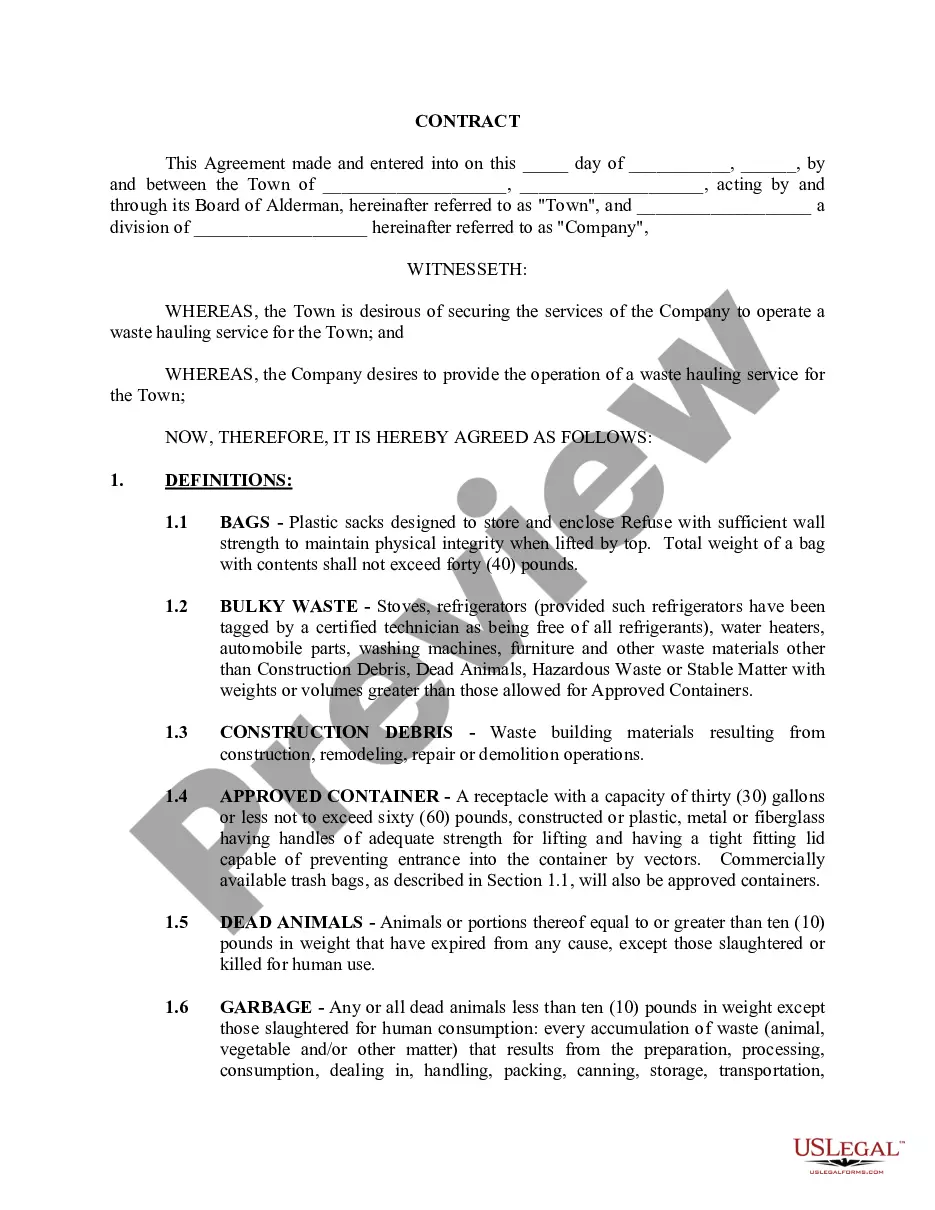
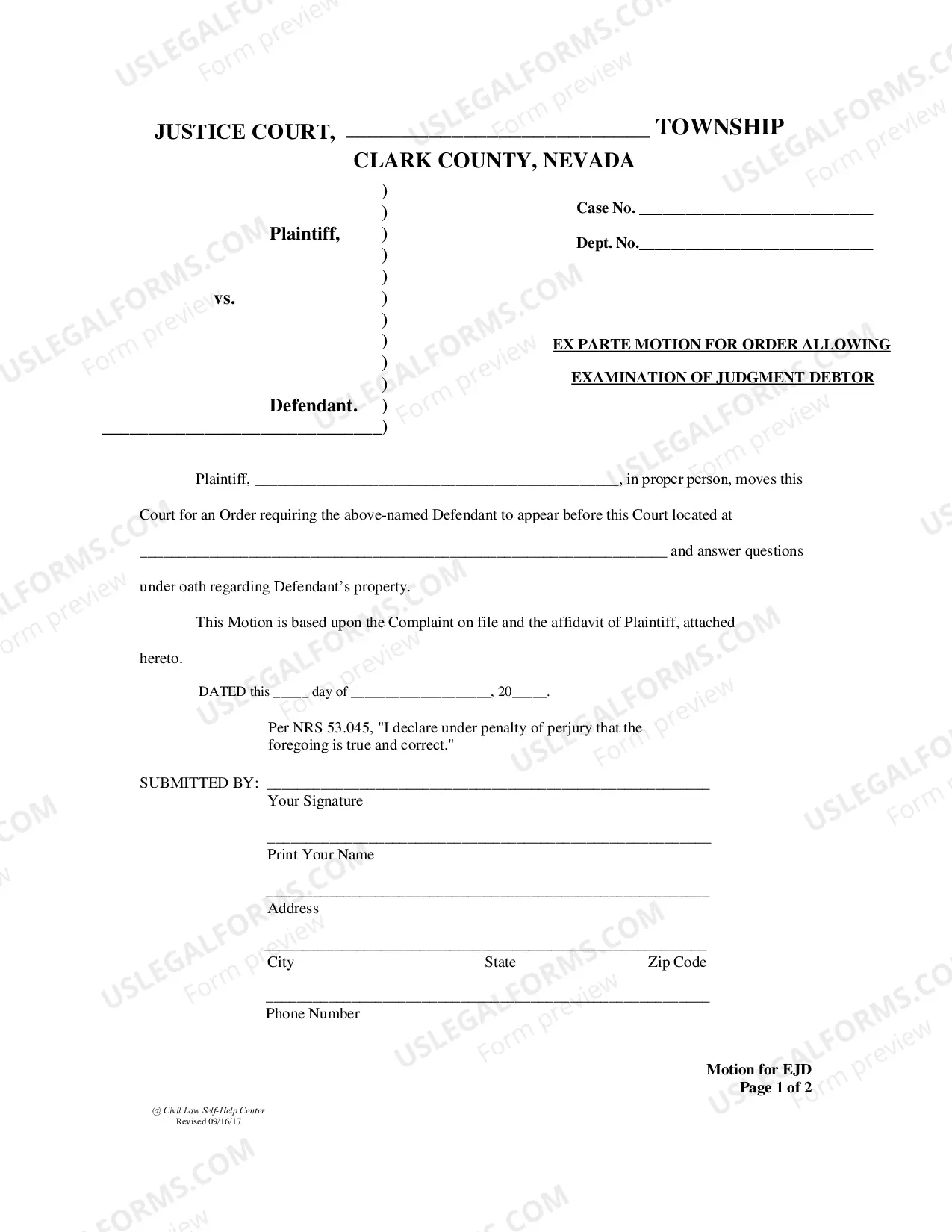
Nevada Sample Questions for Judgment Debtor Exam - Reference
About this form
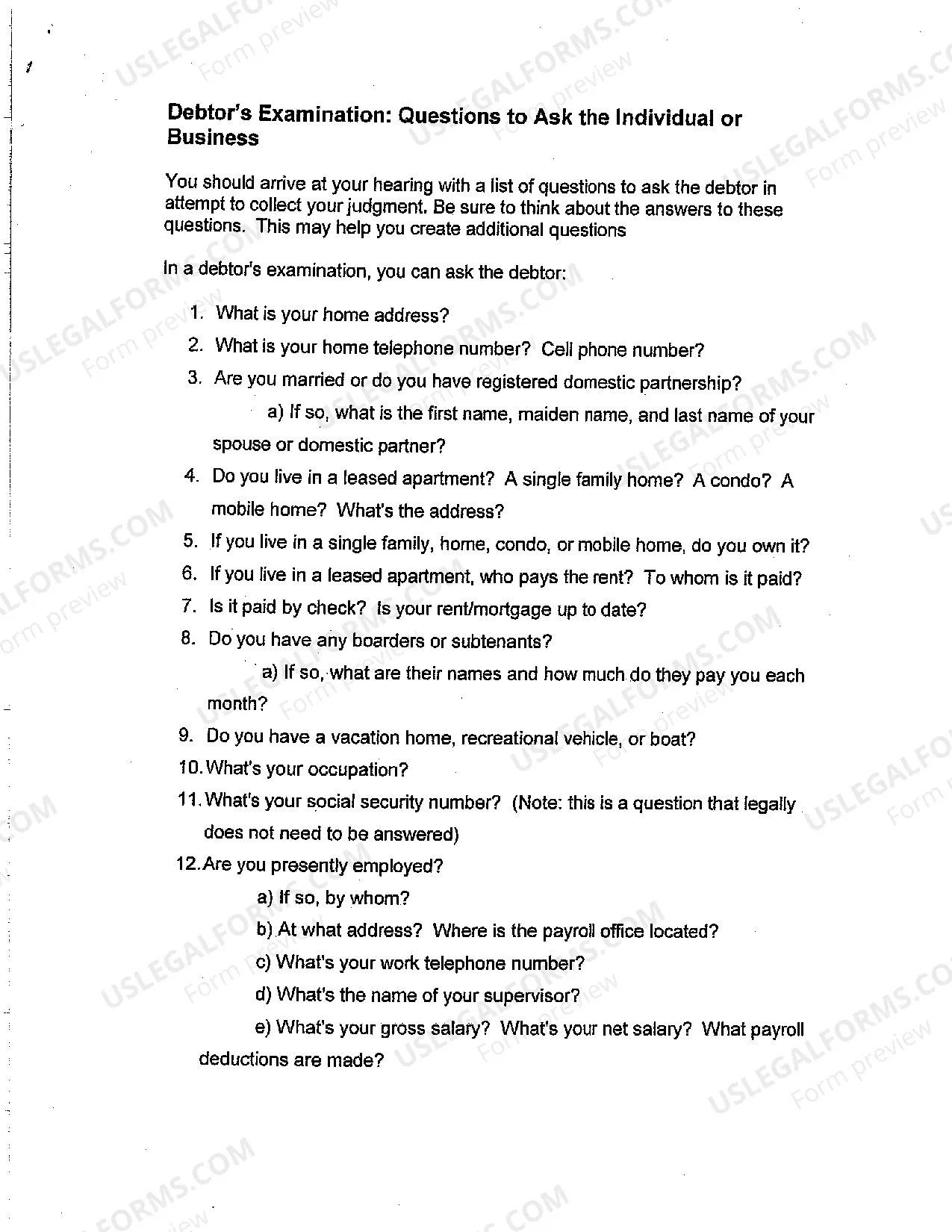
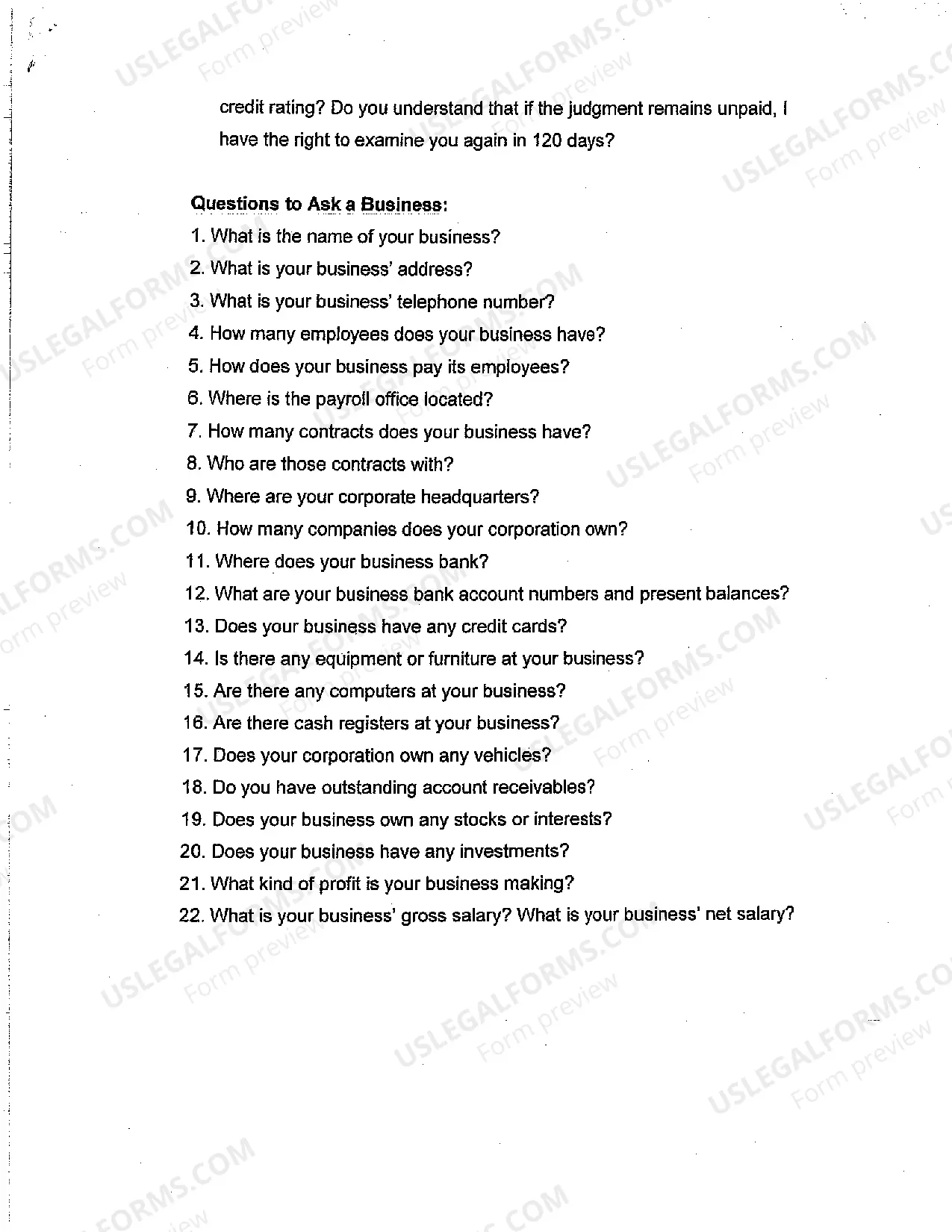
The Sample Questions for Judgment Debtor Exam - Reference is a document that provides a list of questions designed to help creditors gather information about the financial status of a debtor. This form is essential in a judgment debtor examination, as it aids in uncovering assets that may be subject to collection. Unlike other forms, this specific reference document is tailored to facilitate the questioning process during such examinations, ensuring that creditors have a structured approach to extracting crucial information.
What’s included in this form
- Prepared questions regarding the debtor's financial history.
- Categories for assets, income, and liabilities.
- Space for additional notes or observations during the examination.
When this form is needed
This form should be used when a creditor has obtained a judgment against a debtor and wishes to uncover the debtor's financial details during an examination. It is suitable for situations where the creditor intends to enforce a monetary judgment and needs to identify assets that may be subject to collection.
Who can use this document
Individuals and entities eligible to use this form include:
- Creditors who have received a court judgment against a debtor.
- Attorneys representing creditors in judgment debtor examinations.
- Any interested parties looking to collect on outstanding debts following a legal judgment.
Instructions for completing this form
- Review the prepared questions related to the debtor's financial status.
- Prepare to ask questions regarding the debtor's assets, income, and liabilities.
- Take detailed notes based on the debtor's responses during the examination.
Does this document require notarization?
This form usually doesn’t need to be notarized. However, local laws or specific transactions may require it. Our online notarization service, powered by Notarize, lets you complete it remotely through a secure video session, available 24/7.
Get your form ready online
Our built-in tools help you complete, sign, share, and store your documents in one place.
Make edits, fill in missing information, and update formatting in US Legal Forms—just like you would in MS Word.
Download a copy, print it, send it by email, or mail it via USPS—whatever works best for your next step.
Sign and collect signatures with our SignNow integration. Send to multiple recipients, set reminders, and more. Go Premium to unlock E-Sign.
If this form requires notarization, complete it online through a secure video call—no need to meet a notary in person or wait for an appointment.
We protect your documents and personal data by following strict security and privacy standards.

Make edits, fill in missing information, and update formatting in US Legal Forms—just like you would in MS Word.

Download a copy, print it, send it by email, or mail it via USPS—whatever works best for your next step.

Sign and collect signatures with our SignNow integration. Send to multiple recipients, set reminders, and more. Go Premium to unlock E-Sign.

If this form requires notarization, complete it online through a secure video call—no need to meet a notary in person or wait for an appointment.

We protect your documents and personal data by following strict security and privacy standards.
Common mistakes to avoid
- Failing to cover all relevant financial areas outlined in the questions.
- Not allowing sufficient time for the debtor to respond comprehensively.
- Neglecting to note down crucial information or answers during the examination.
Benefits of using this form online
- Convenience of downloading and printing the form at any time.
- Editability to tailor questions specific to individual debtor situations.
- Access to reliable templates created by licensed attorneys for better compliance.
Key takeaways
- The Sample Questions for Judgment Debtor Exam assists creditors in gathering vital financial information from debtors.
- Understanding when to use this form can leverage legal proceedings for debt collection.
- Completing the form accurately is crucial for a successful debtor examination.
Looking for another form?

Form popularity
FAQ
What is a debtor's exam? You must come to a debtor's examination if you're served Form SC-134 or EJ-125. At a debtor's examination, the other side can ask you about your financial situation. They can ask things like where you work, what you earn, where you bank, and what property you own.
Your questions at the examination might relate to such things as where the debtor works, where he banks, what types of property he owns, where that property is located, and the like.
A judgment debtor examination is a court proceeding created by law where the party who has obtained a judgment in court is entitled to ask questions of the person who owes that judgment. What do the questions cover? The questions are limited to inquiries about your property, assets, debts, and income.
Ohio law provides a way to question the person who owes you about his or her income and property so that you can get the information you need to collect your judgment. You may request an examination in aid of execution of judgment, which is commonly known as a ?Debtor's Exam.?
If the process is correctly followed, the renewed judgment will be valid for six years. Additionally, the judgment can essentially be continually renewed forever, following the same procedure of renewal prior to expiration of the renewed judgment.
The main ways to legally avoid appearing at a debtor examination are to pay off the debt or reach a settlement with the creditor that provides a way for paying back the debt. You also may be able to avoid the examination by filing for bankruptcy, which will trigger an automatic stay of collection efforts.