Nevada Quitclaim Deed from two Individuals to One Individual
Overview of this form
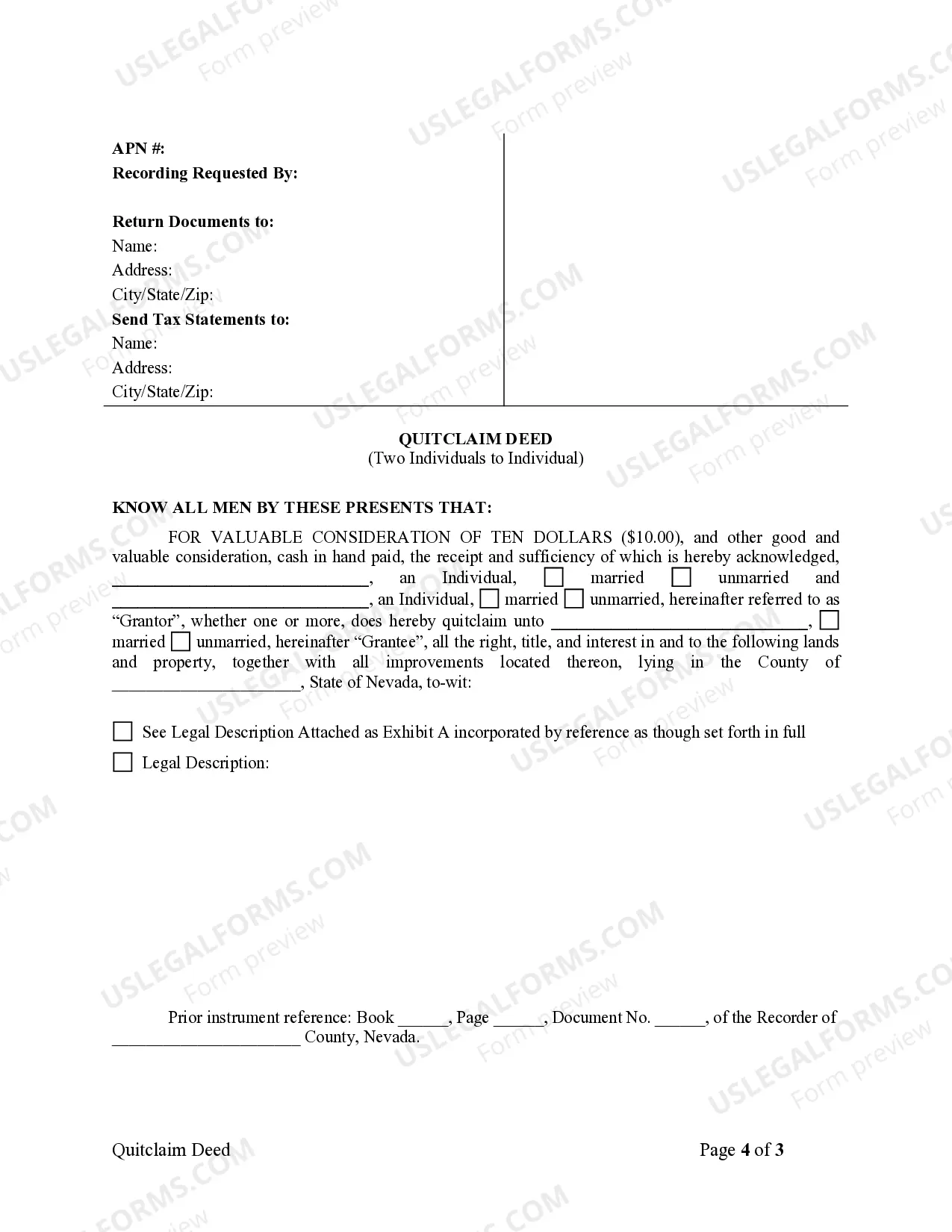
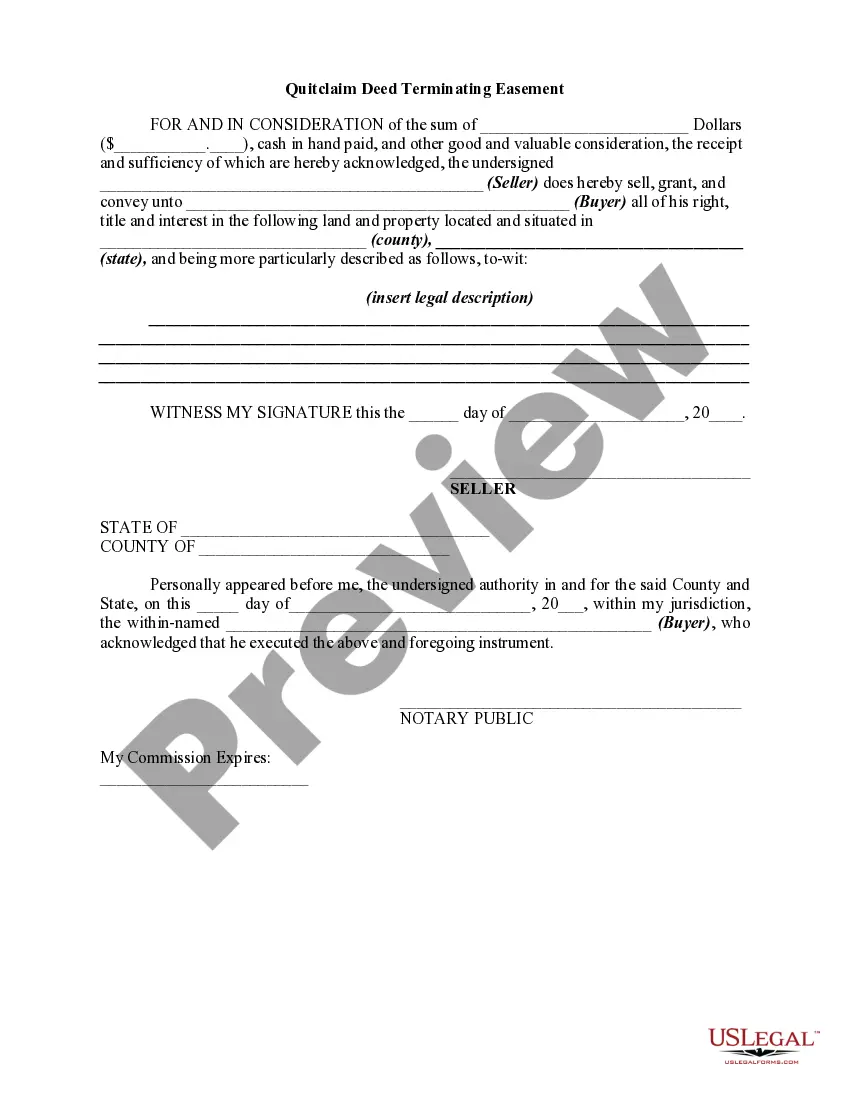
The Quitclaim Deed from two Individuals to One Individual is a legal document used to transfer ownership of real property. Unlike other deeds, a quitclaim deed does not guarantee that the property title is free of claims or disputes; it merely transfers whatever interest the grantors have in the property to the grantee. This makes it a straightforward option for transferring property, particularly among family members or in situations without financial consideration.
Main sections of this form
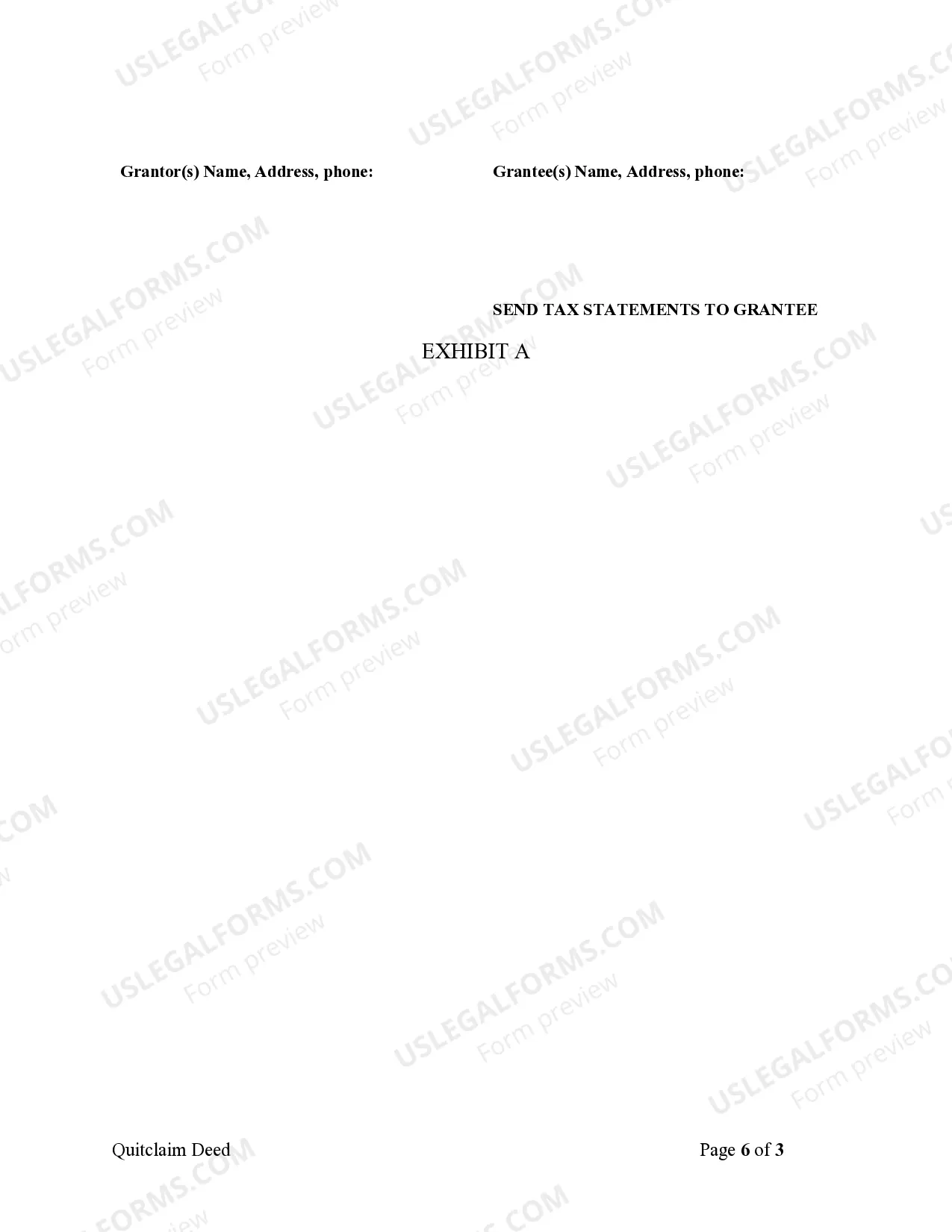
- Identification of grantors and the grantee, including full names and addresses.
- Description of the property being transferred, including its legal description.
- Statement of the intention to transfer ownership without any warranties.
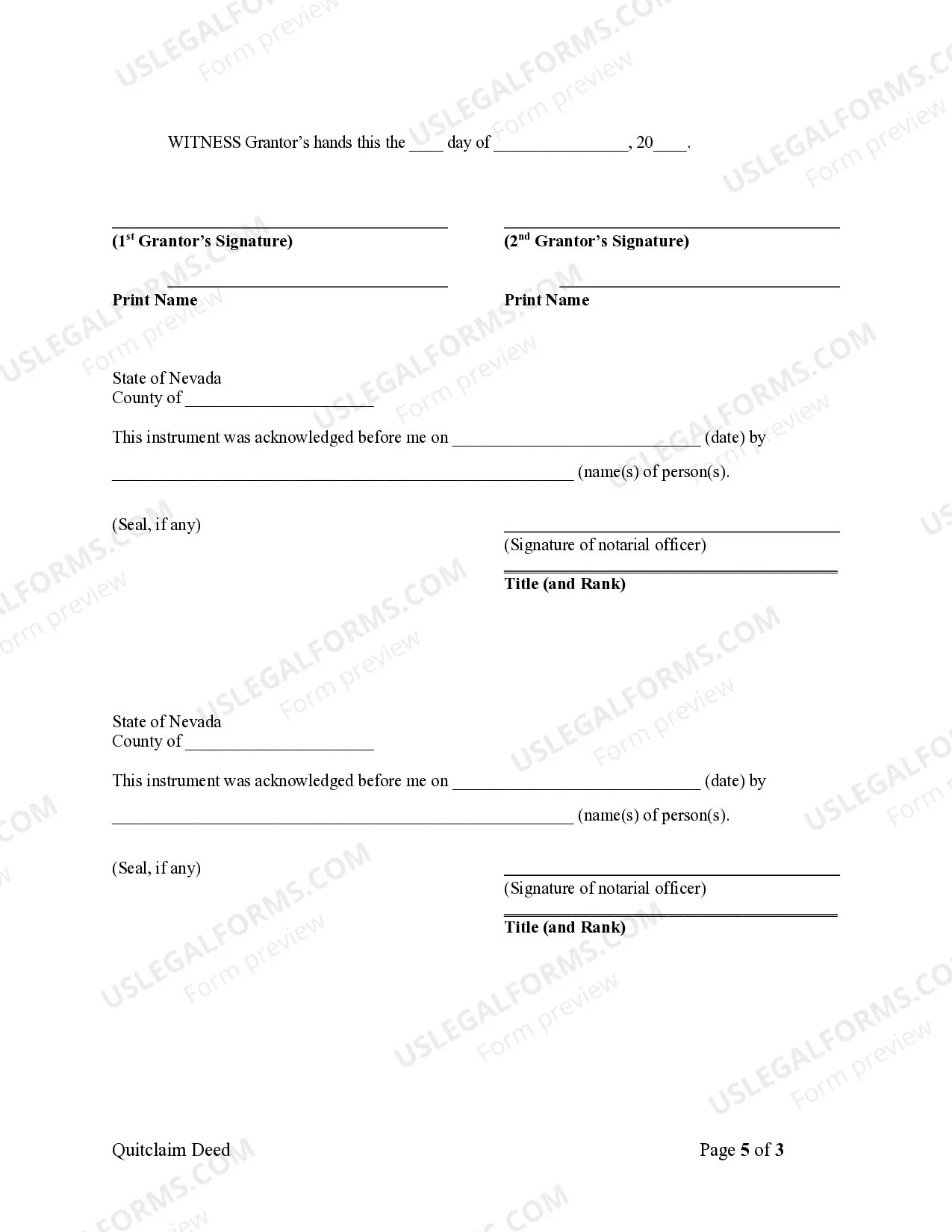
- Signatures of the grantors to confirm the transfer.
- Date of execution of the deed.




Situations where this form applies
You should use this quitclaim deed when two individuals wish to transfer their ownership interest in a property to a single individual. Common scenarios include family transfers, gifting property, or a divorce settlement where one party retains the property. This deed is appropriate when the transfer does not involve a purchase or sale and is often used for informal transactions.
Who needs this form
This form is intended for the following individuals:
- Two individuals who currently co-own a property.
- A single individual who is accepting the ownership transfer.
- Individuals involved in a situation where property ownership needs to be clarified, such as among family members.
How to prepare this document
- Start by identifying the two individuals transferring the property and the individual receiving it.
- Provide the legal description of the property being transferred, which can often be found on the original deed.
- Insert the date of execution in the designated area.
- Have both grantors sign the document in the appropriate sections.
- Ensure the document is dated and ready for filing if required by local law.
Notarization requirements for this form
This form needs to be notarized to ensure legal validity. US Legal Forms provides secure online notarization powered by Notarize, allowing you to complete the process through a verified video call, available anytime.
Get your form ready online
Our built-in tools help you complete, sign, share, and store your documents in one place.
Make edits, fill in missing information, and update formatting in US Legal Forms—just like you would in MS Word.
Download a copy, print it, send it by email, or mail it via USPS—whatever works best for your next step.
Sign and collect signatures with our SignNow integration. Send to multiple recipients, set reminders, and more. Go Premium to unlock E-Sign.
If this form requires notarization, complete it online through a secure video call—no need to meet a notary in person or wait for an appointment.
We protect your documents and personal data by following strict security and privacy standards.

Make edits, fill in missing information, and update formatting in US Legal Forms—just like you would in MS Word.

Download a copy, print it, send it by email, or mail it via USPS—whatever works best for your next step.

Sign and collect signatures with our SignNow integration. Send to multiple recipients, set reminders, and more. Go Premium to unlock E-Sign.

If this form requires notarization, complete it online through a secure video call—no need to meet a notary in person or wait for an appointment.

We protect your documents and personal data by following strict security and privacy standards.
Common mistakes to avoid
- Failing to include the complete legal description of the property.
- Not having all grantors sign the deed.
- Omitting the date of execution.
- Not reviewing local requirements for filing the deed with the county.
Benefits of completing this form online
- Convenient access to legal forms without needing to visit a law office.
- Ability to fill out the form electronically, saving time and effort.
- Forms are prepared by licensed attorneys, ensuring legal compliance.
- Easy modifications can be made before finalizing the document.
Looking for another form?

Form popularity
FAQ
Once you sign a quitclaim deed and it has been filed and recorded with the County Clerks Office, the title has been officially transferred and cannot be easily reversed. In order to reverse this type of transfer, it would require your spouse to cooperate and assist in adding your name back to the title.
A signed quit claim deed overrides a will, because the property covered by the deed is not part of the estate at your mother's death.The deed needed to be notarized to be valid.
Yes, you can use a Quitclaim Deed to transfer a gift of property to someone. You must still include consideration when filing your Quitclaim Deed with the County Recorder's Office to show that title has been transferred, so you would use $10.00 as the consideration for the property.
A quitclaim deed transfers title but makes no promises at all about the owner's title.A person who signs a quitclaim deed to transfer property they do not own results in no title at all being transferred since there is no actual ownership interest. The quitclaim deed only transfers the type of title you own.
Quitclaim deeds are most often used to transfer property between family members. Examples include when an owner gets married and wants to add a spouse's name to the title or deed, or when the owners get divorced and one spouse's name is removed from the title or deed.
A quitclaim deed affects ownership and the name on the deed, not the mortgage. Because quitclaim deeds expose the grantee to certain risks, they are most often used between family members and where there is no exchange of money.Quitclaim deeds transfer title but do not affect mortgages.
The drawback, quite simply, is that quitclaim deeds offer the grantee/recipient no protection or guarantees whatsoever about the property or their ownership of it. Maybe the grantor did not own the property at all, or maybe they only had partial ownership.
Discuss property ownership interests. Access a copy of your title deed. Complete, review and sign the quitclaim or warranty form. Submit the quitclaim or warranty form. Request a certified copy of your quitclaim or warranty deed.