Nevada Statutory Healthcare Declaration - Withholding or Withdrawing Life-Sustaining Treatment by an Appointee, Allowing Another to Make Decisions
About this form
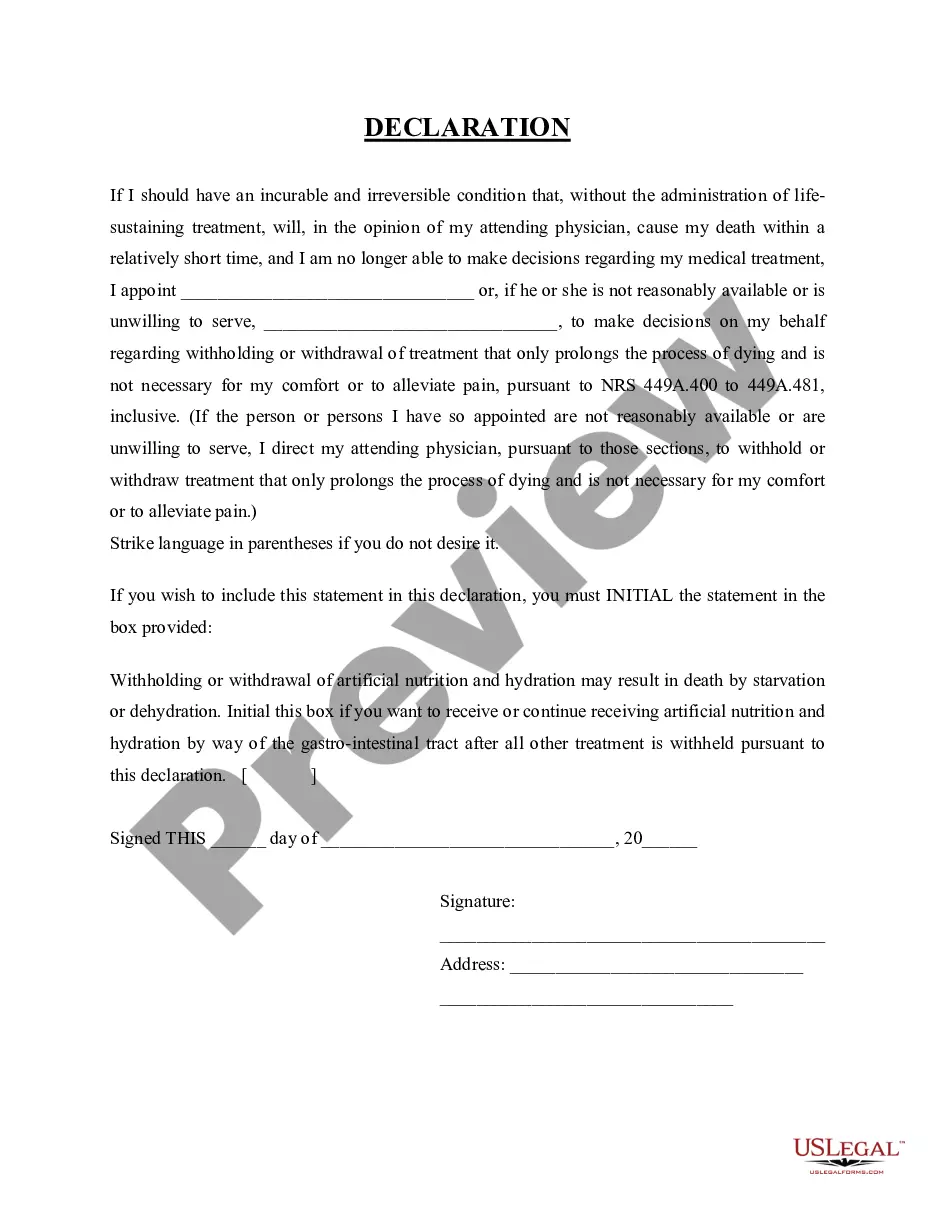
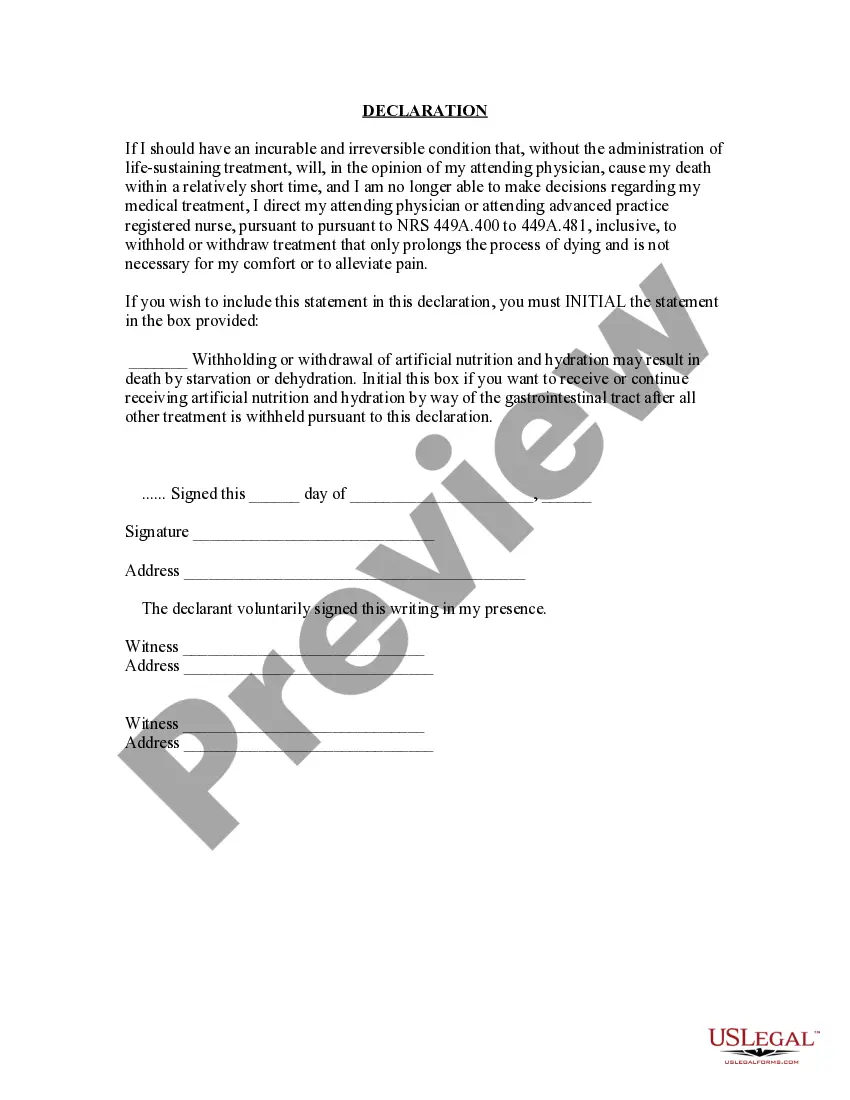
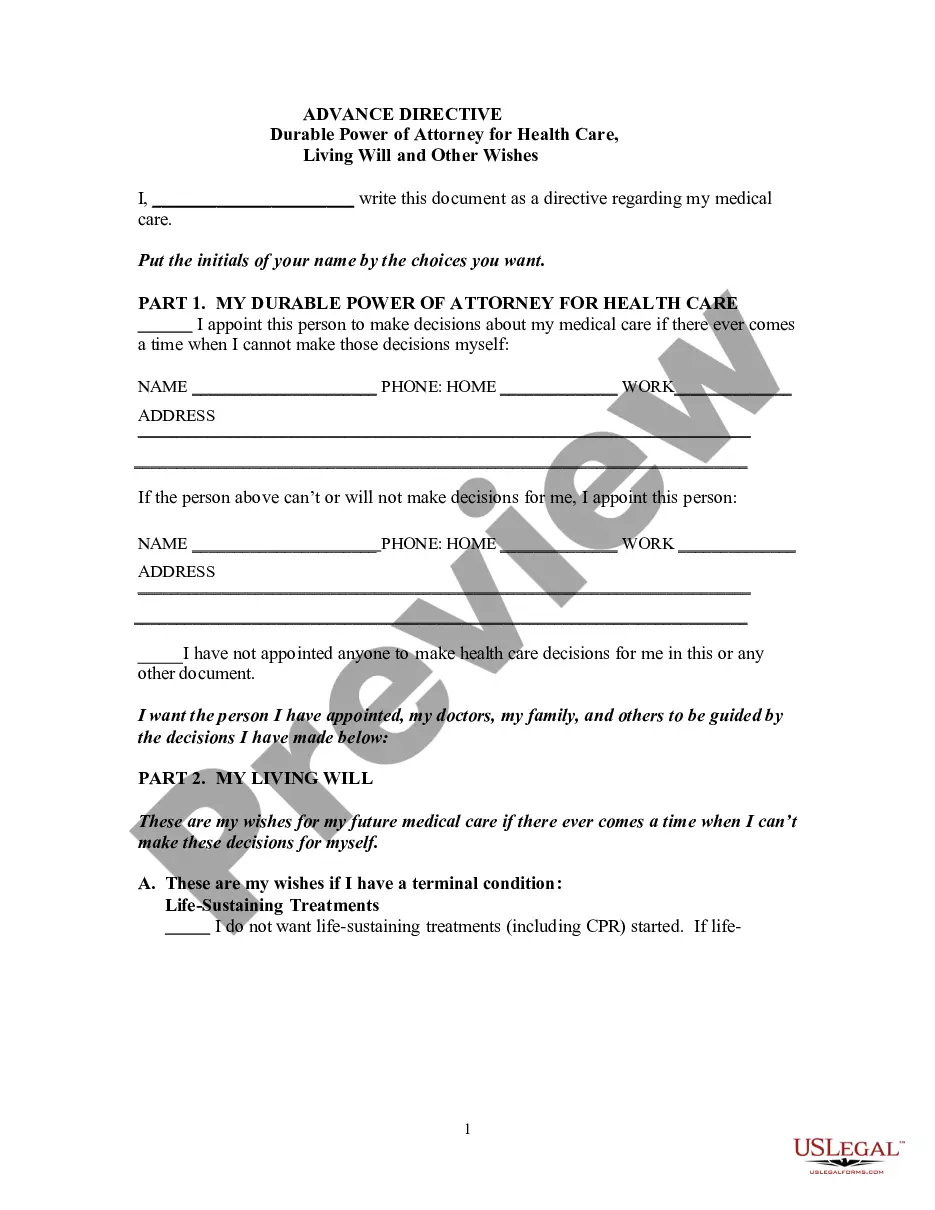
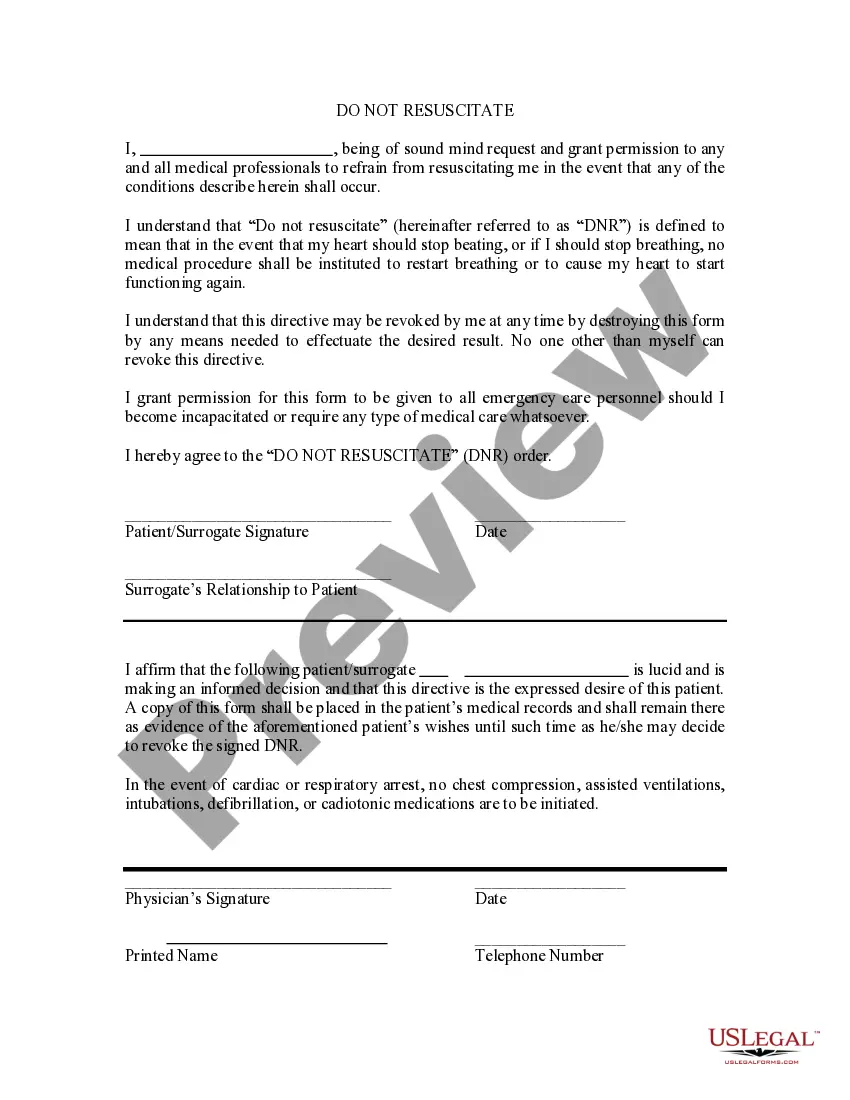
The Statutory Healthcare Declaration - Withholding or Withdrawing Life-Sustaining Treatment by an Appointee allows you to appoint an individual to make critical healthcare decisions on your behalf when you are unable to do so. This form is distinct from other healthcare directives as it specifically addresses life-sustaining treatments and provides directions for your physician. It ensures that your wishes regarding the withholding or withdrawal of treatments that only prolong the dying process are respected.
Form components explained
- Designation of an appointee to make healthcare decisions if you are incapacitated.
- Instructions on withholding or withdrawing life-sustaining treatment.
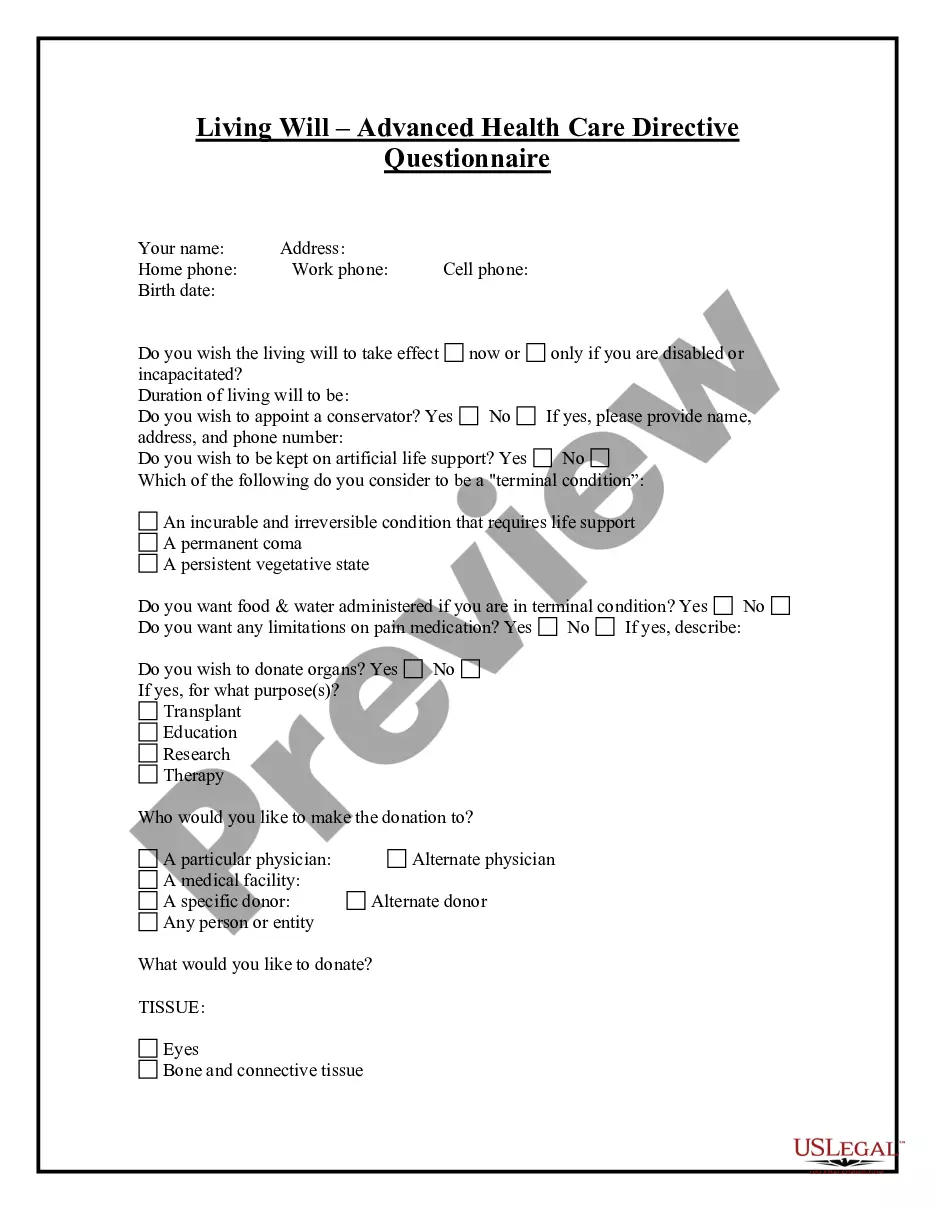
- Optional provisions regarding artificial nutrition and hydration.
- Signature sections for both the declarant (you) and witnesses.
- Address fields for your appointees and witnesses.

When this form is needed
This form is useful in scenarios where you are diagnosed with an incurable and irreversible condition and are no longer able to make your own medical decisions. If you want to ensure that specific directives regarding life-sustaining treatment are followed, this form provides a clear legal framework to communicate your wishes. It is particularly relevant for individuals seeking to prepare for potential medical emergencies or end-of-life situations.
Who needs this form
- Individuals who wish to appoint someone to make healthcare decisions on their behalf.
- Persons with serious medical conditions that may lead to incapacitation.
- Those who want to clarify their preferences regarding life-sustaining treatments.
- Anyone looking for a legally recognized method to communicate end-of-life care decisions.
How to complete this form
- Identify the individual(s) you wish to appoint as your decision-maker for healthcare.
- Clearly state your wishes regarding the withholding or withdrawing of specific treatments.
- Initial any optional statements regarding artificial nutrition and hydration if applicable.
- Sign and date the form to indicate your consent and understanding.
- Have the form witnessed and obtain signatures and addresses of witnesses.
Is notarization required?
Notarization is not commonly needed for this form. However, certain documents or local rules may make it necessary. Our notarization service, powered by Notarize, allows you to finalize it securely online anytime, day or night.
Get your form ready online
Our built-in tools help you complete, sign, share, and store your documents in one place.
Make edits, fill in missing information, and update formatting in US Legal Forms—just like you would in MS Word.
Download a copy, print it, send it by email, or mail it via USPS—whatever works best for your next step.
Sign and collect signatures with our SignNow integration. Send to multiple recipients, set reminders, and more. Go Premium to unlock E-Sign.
If this form requires notarization, complete it online through a secure video call—no need to meet a notary in person or wait for an appointment.
We protect your documents and personal data by following strict security and privacy standards.

Make edits, fill in missing information, and update formatting in US Legal Forms—just like you would in MS Word.

Download a copy, print it, send it by email, or mail it via USPS—whatever works best for your next step.

Sign and collect signatures with our SignNow integration. Send to multiple recipients, set reminders, and more. Go Premium to unlock E-Sign.

If this form requires notarization, complete it online through a secure video call—no need to meet a notary in person or wait for an appointment.

We protect your documents and personal data by following strict security and privacy standards.
Common mistakes
- Not clearly naming a primary and alternate appointee.
- Failing to initial the optional statements if intending to make use of them.
- Not signing and dating the form properly.
- Neglecting to complete the witness signatures correctly.
- Overlooking updates to the form if circumstances change.
Advantages of online completion
- Convenience of downloading and printing the form instantly.
- Editability to tailor the content as per your personal requirements.
- Access to legal templates drafted by licensed attorneys, ensuring reliability.
- Ability to store the document safely for future reference.
- Quick recovery and adjustment of documents as life circumstances evolve.
Main things to remember
- The Statutory Healthcare Declaration empowers your chosen appointee to make crucial healthcare decisions for you.
- Completing this form ensures your medical treatment preferences are communicated and respected.
- Pay careful attention to signing and witnessing requirements to validate the document.
- Utilizing online forms provides convenience and the ability to customize your legal documents easily.
Looking for another form?


Form popularity
FAQ
After I complete an advance directive, can I revoke it? Yes. You can revoke your living will or appointment of a health care representative at any time.
Talk to your agent. Talk to the person or persons you want to make decisions for you so they: Write your personal directive. You have 2 options: Sign it. You and a witness have to sign the personal directive to make it a legal document. Give out copies.
The name and contact information of your healthcare agent/proxy. Answers to specific questions about your preferences for care if you become unable to speak for yourself. Names and signatures of individuals who witness your signing your advance directive, if required.
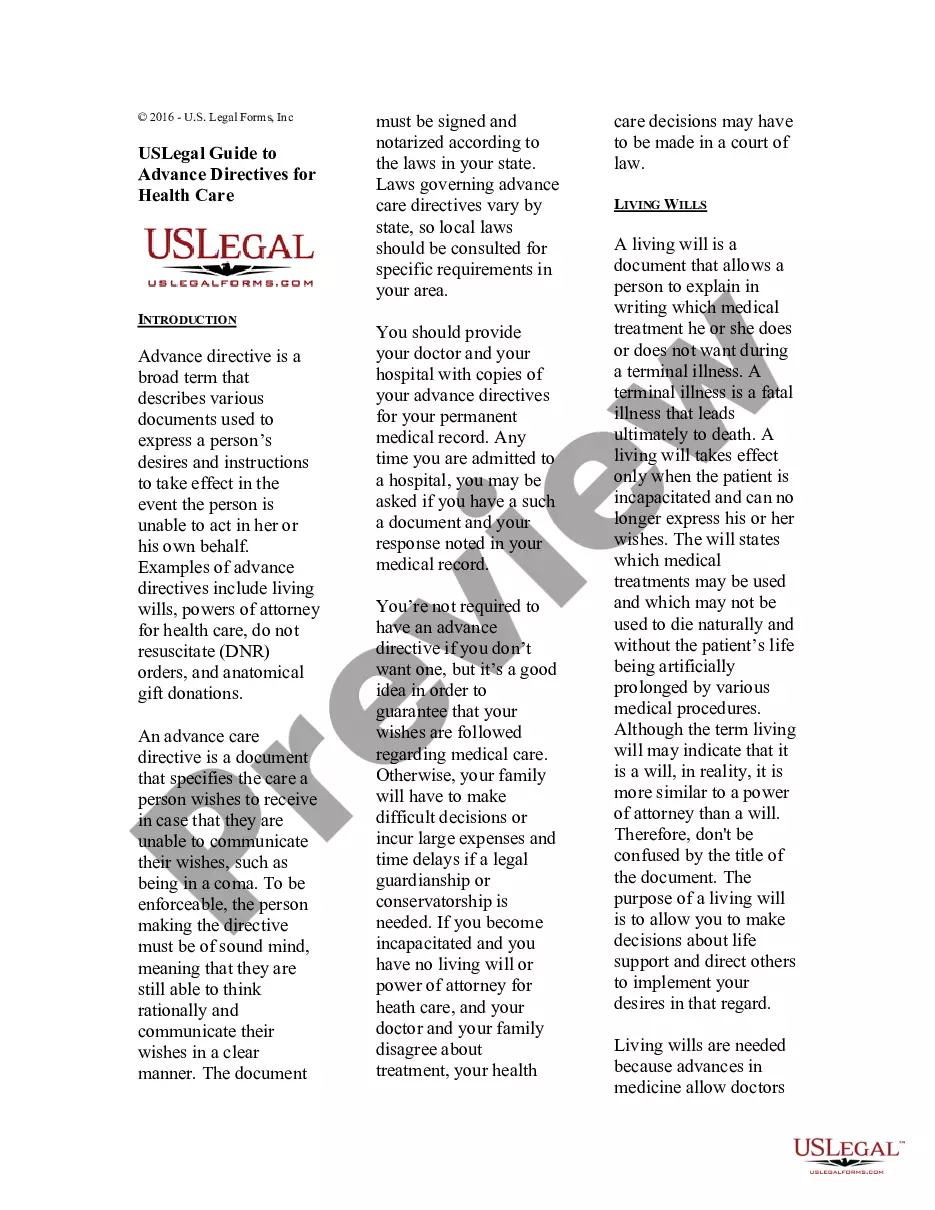
An advance directive also allows you to express your values and desires related to end-of-life care. You might think of it as a living documentone that you can adjust as your situation changes because of new information or a change in your health.
A breathing machine, CPR, and artificial nutrition and hydration are examples of life-sustaining treatments. Living willAn advance directive that tells what medical treatment a person does or doesn't want if he/she is not able to make his/her wishes known.
You can get the forms in a doctor's office, hospital, law office, state or local office for the aging, senior center, nursing home, or online. When you write your advance directive, think about the kinds of treatments that you do or don't want to receive if you get seriously hurt or ill.
A living will tells your health care provider what types of treatment you want or don't want should you become incapacitated.However, another type of advance directive a medical power of attorney puts these decisions in someone else's hands.
A person can change an Individual Healthcare Instruction by writing a new Advance Directive with the changes in it that she wants to make.A person can also revoke their Advance Directive orally, by telling their healthcare provider that they no longer want either the entire document or any parts of it enforced.
The living will. Durable power of attorney for health care/Medical power of attorney. POLST (Physician Orders for Life-Sustaining Treatment) Do not resuscitate (DNR) orders. Organ and tissue donation.