Nevada Notice of Option for Recording
Understanding this form
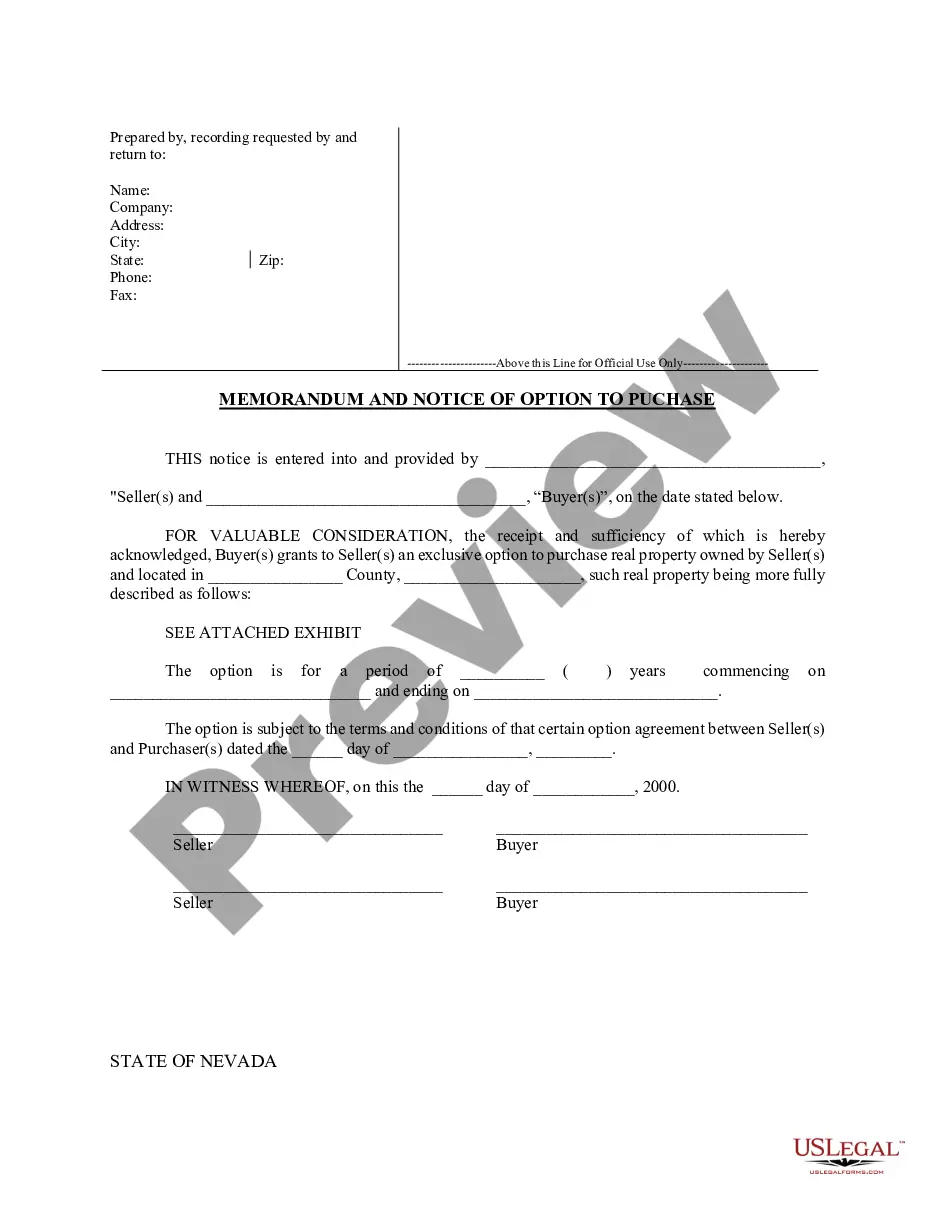
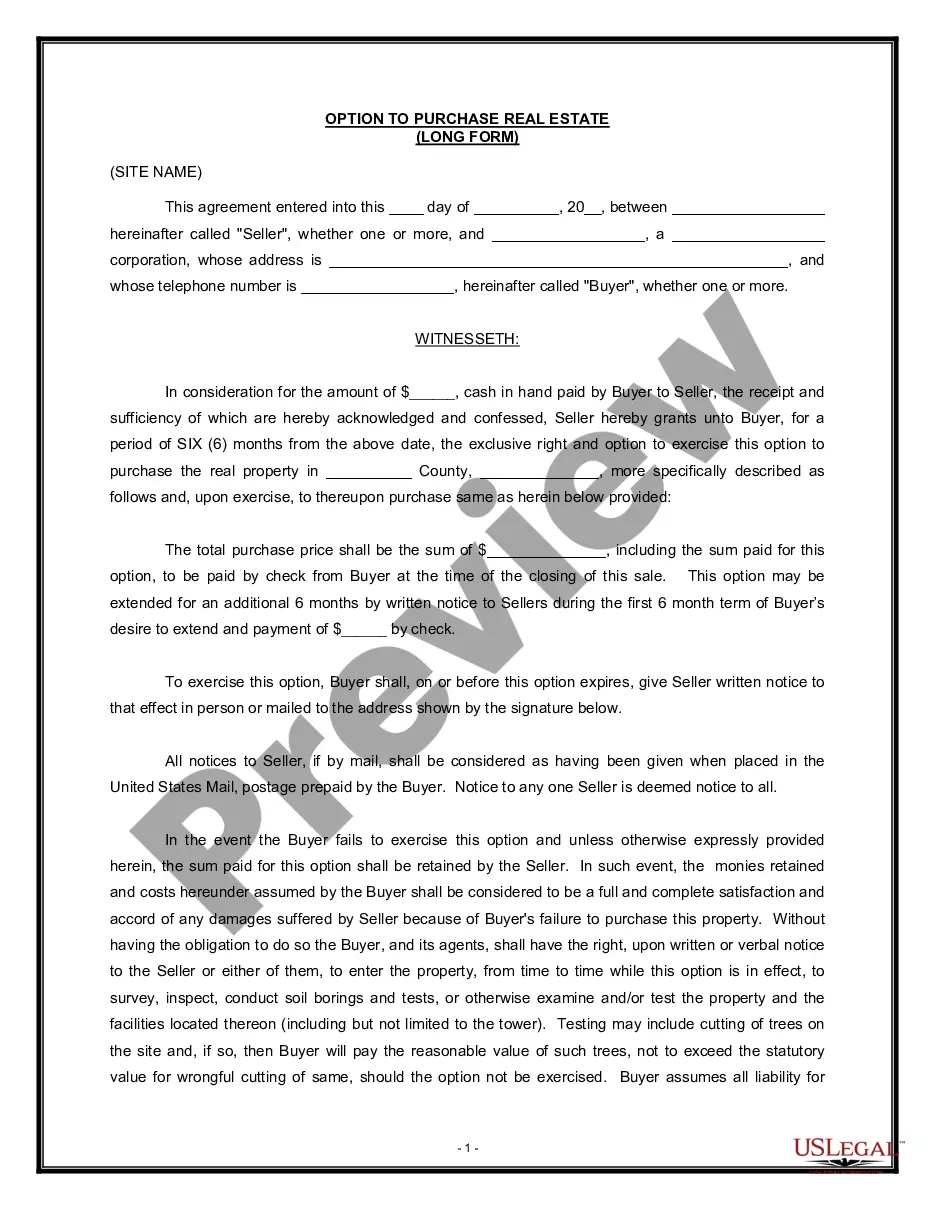
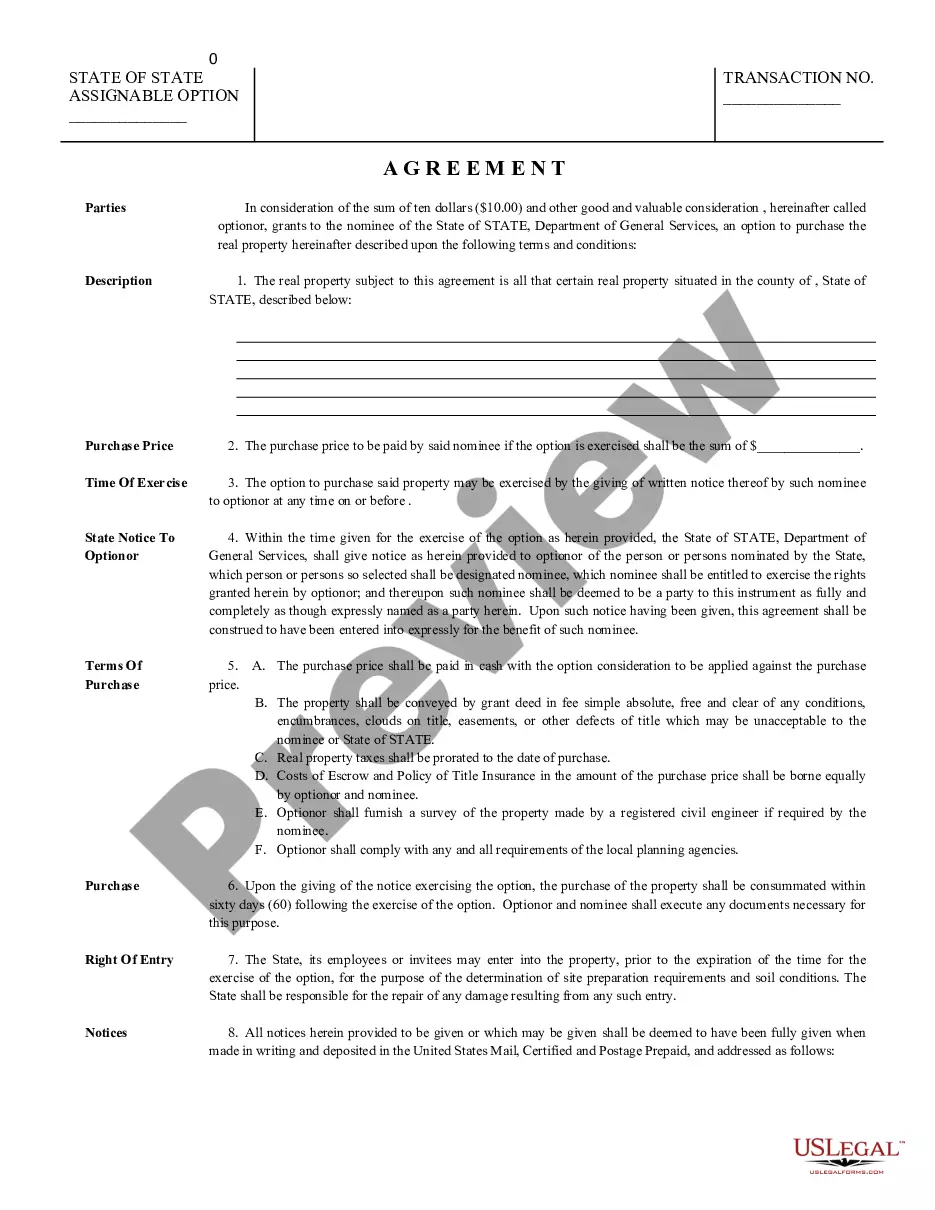
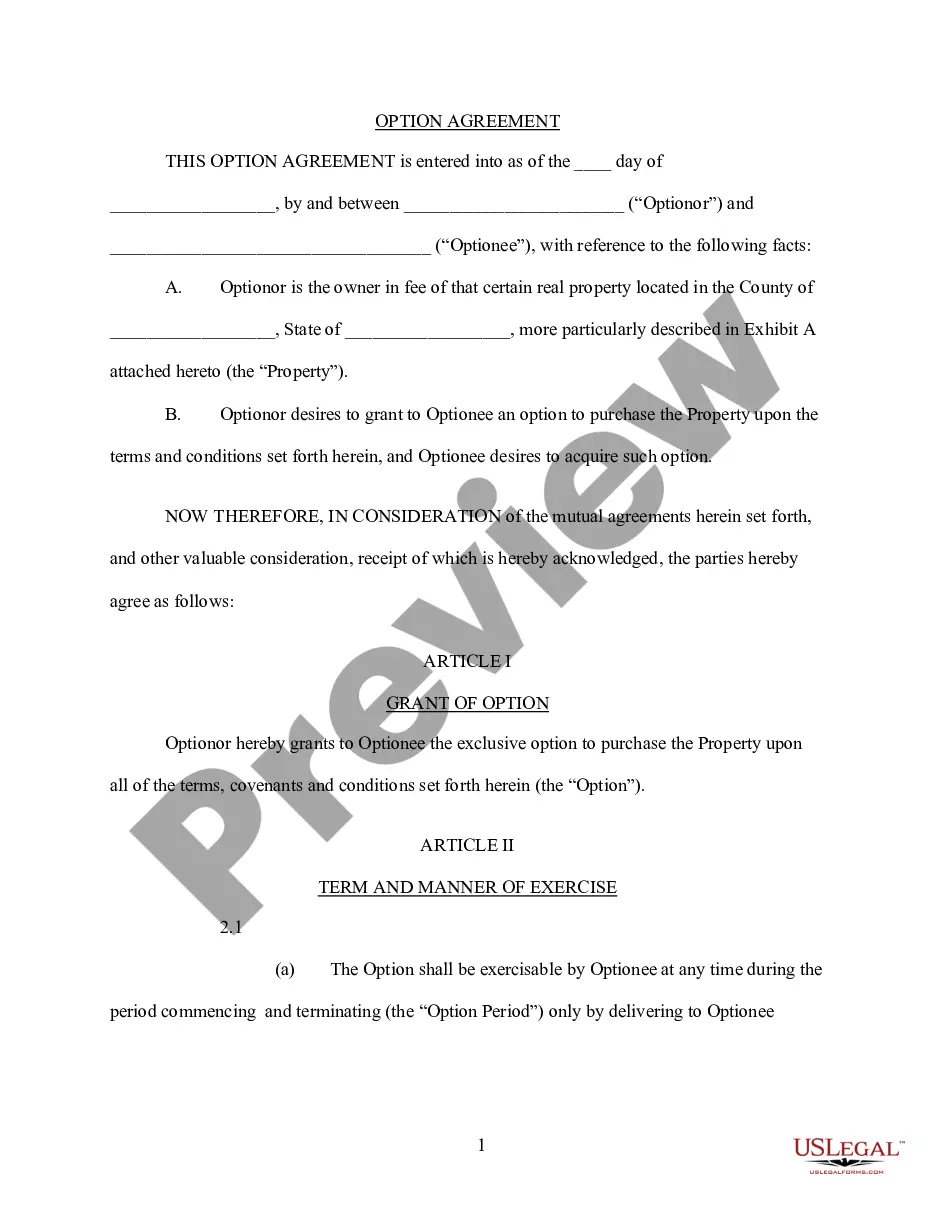
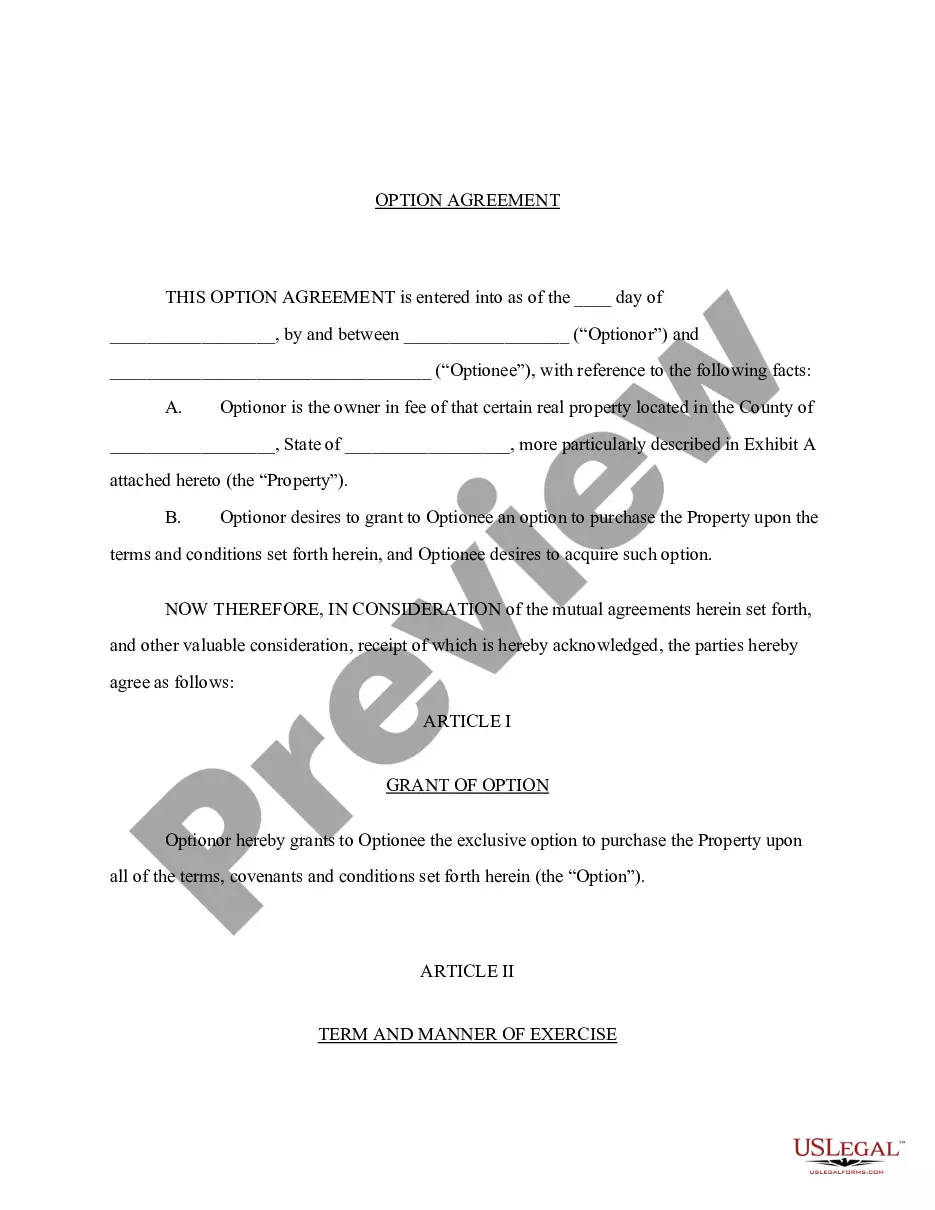
The Notice of Option for Recording is a legal document that provides official notice of an Option to Purchase on a parcel of real estate. This form is used instead of recording the entire Option Agreement, making it a more streamlined and efficient way to establish that a purchase option exists.
What’s included in this form
- Prepared by and recording requested by fields for identification.
- Details of the Seller(s) and Buyer(s) involved in the option.
- Description of the real property associated with the option.
- Time frame of the option, including start and end dates.
- Reference to the terms and conditions of the underlying option agreement.
- Signatures of the Seller(s) and Buyer(s) for validation.
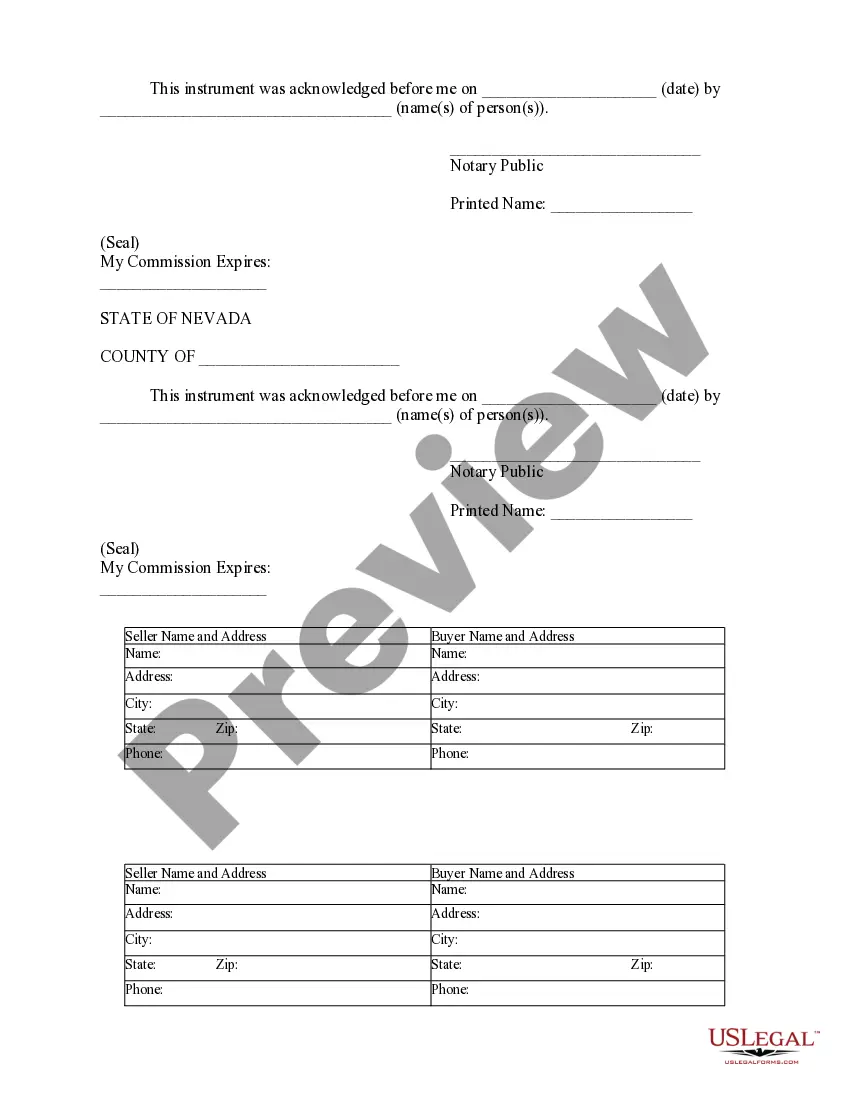
- Notary acknowledgment section for legal authenticity.

When to use this document
This form should be used when the Seller and Buyer have agreed upon an option to purchase real estate and wish to record that agreement in public records. It is especially useful when the option agreement is lengthy, as this notice provides a concise public record of the agreement without the need to file the entire document.
Who this form is for
- Real estate sellers wanting to formalize an option to purchase.
- Buyers interested in securing a purchase option on a property.
- Real estate agents or professionals assisting in the transaction.
- Legal representatives handling real estate transactions.
Instructions for completing this form
- Identify the parties involved by entering the Seller(s) and Buyer(s) names.
- Specify the real property location and its description in the designated section.
- Indicate the duration of the option by filling in the period and the dates accurately.
- Reference the existing option agreement, including the date it was made.
- Ensure all parties sign the document where indicated to validate it.
- Have the completed form notarized to meet legal requirements.
Notarization requirements for this form
Yes, this form must be notarized to be legally valid. Notarization ensures the authenticity of the signatures and the document itself, providing assurance in property transactions. US Legal Forms offers integrated online notarization services, making it easy to complete this process without leaving your home.
Get your form ready online
Our built-in tools help you complete, sign, share, and store your documents in one place.
Make edits, fill in missing information, and update formatting in US Legal Forms—just like you would in MS Word.
Download a copy, print it, send it by email, or mail it via USPS—whatever works best for your next step.
Sign and collect signatures with our SignNow integration. Send to multiple recipients, set reminders, and more. Go Premium to unlock E-Sign.
If this form requires notarization, complete it online through a secure video call—no need to meet a notary in person or wait for an appointment.
We protect your documents and personal data by following strict security and privacy standards.

Make edits, fill in missing information, and update formatting in US Legal Forms—just like you would in MS Word.

Download a copy, print it, send it by email, or mail it via USPS—whatever works best for your next step.

Sign and collect signatures with our SignNow integration. Send to multiple recipients, set reminders, and more. Go Premium to unlock E-Sign.

If this form requires notarization, complete it online through a secure video call—no need to meet a notary in person or wait for an appointment.

We protect your documents and personal data by following strict security and privacy standards.
Typical mistakes to avoid
- Failing to complete the property description accurately.
- Omitting the signatures of all relevant parties.
- Not specifying the correct dates for the option period.
- Neglecting to get the document notarized where required.
Why use this form online
- Convenience of accessing and completing the form from anywhere.
- Editable templates that allow you to tailor the form to your specific needs.
- Secure handling of your information for peace of mind.
Main things to remember
- The Notice of Option for Recording is important for notifying interested parties of a purchase option.
- Accurate completion of the form is crucial to avoid legal complications.
- Notarization is required for the document to be enforceable.
- Using the form online provides ease and accessibility.
Looking for another form?
Form popularity
FAQ
A recording act that gives priority of title to the party that records first, but only if the party also lacked notice of prior unrecorded claims on the same property. See Notice statute and Race statute. PROPERTY. property & real estate law. wex definitions.
For example, a buyer could encounter great difficulty in selling, insuring, or obtaining loans for a property if financial institutions and insurance companies cannot establish clear title. Worse, an unrecorded deed creates potential for a seller to engage in a subsequent sale of the same property to yet another buyer.
The most common documents are related to mortgages, deeds, easements, foreclosures, estoppels, leases, licenses, and fees, among other kinds of documents. The most important real estate documents list ownership, encumbrances, and lien priority.
Currently, Alaska, Arkansas, California, Colorado, District of Columbia, Georgia, Hawaii, Idaho, Indiana, Kentucky, Maine, Maryland, Michigan, Minnesota, Mississippi, Montana, Nebraska, Nevada, New Jersey, New York, North Dakota, Ohio (regarding mortgages, OH follows the Race statute), Oregon, Pennsylvania (regarding
1. C Explanation: Recording an instrument provides constructive notice to the public of the interest set forth in the recorded instrument. 2. A Explanation: A corporate seal may be added where a corporation is grantor, in order to indicate that the person who signed had authority to sign on behalf of the corporation.
Race-Notice Jurisdiction: A jurisdiction whose rule allows a subsequent bona-fide purchaser to prevail over an earlier purchaser if, and only if, the subsequent purchaser did not know of the earlier transfer and the subsequent purchaser's deed was recorded before the first purchaser's deed.
A recording act that gives priority of title to the party that records a claim first, even if the party had notice of an earlier unrecorded claim on the same property. See Notice statute and Race-notice statute.
A grant, bargain, and sale deed is commonly used in Nevada for a conveyance of real property.A certificate of the acknowledgement or proof of execution, signed by the person taking the acknowledgment or proof, and under the seal or stamp of that person, will entitle the deed to be recorded (NRS 111.310).
Title deeds do not have to be recorded. Recording is filing them in the county recorder's office and if recorded, the title deed acts as defacto notice to all third parties as to ownership in the property.