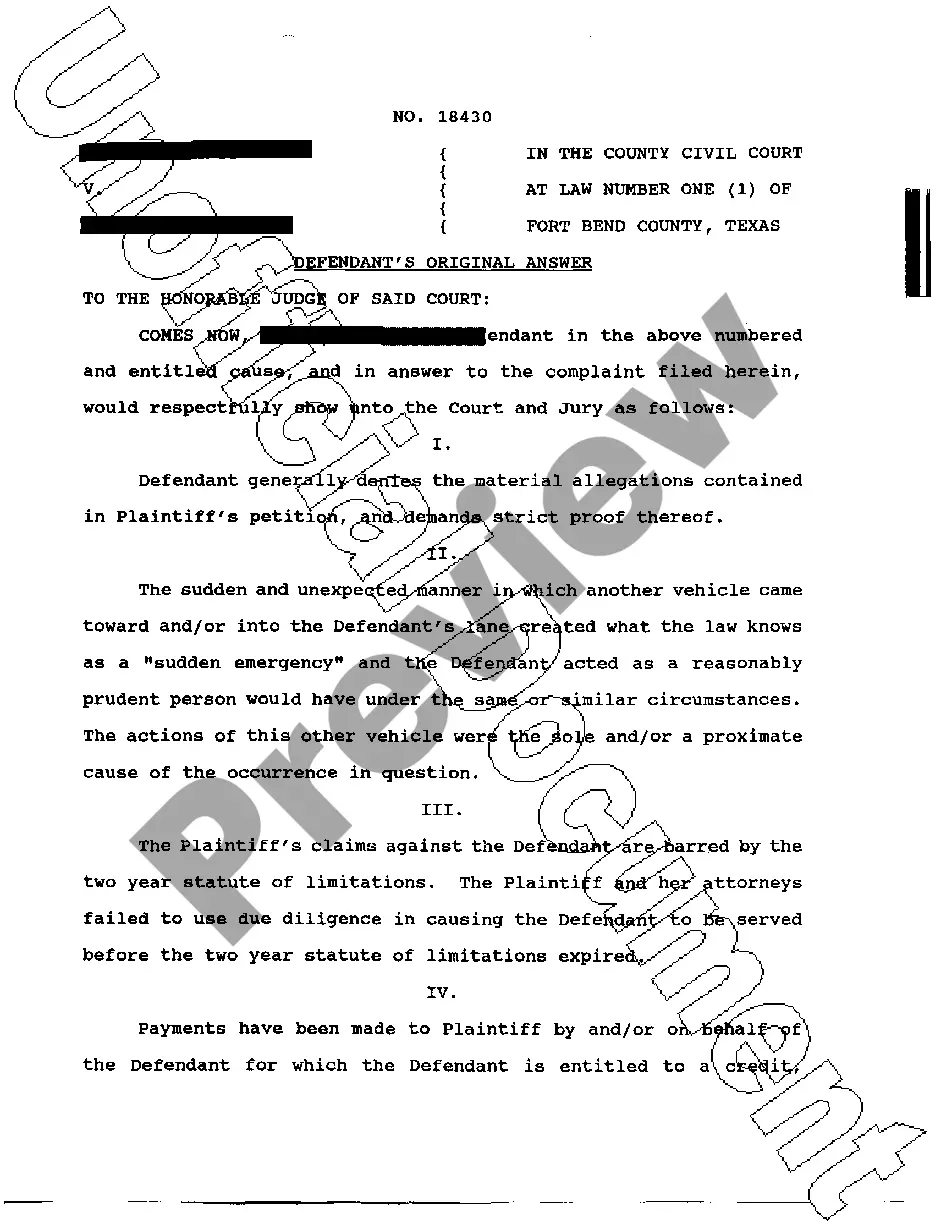
Nevada Living Trust for Individual Who is Single, Divorced or Widow (or Widower) with Children
What this document covers
This Living Trust is a legal document designed for individuals who are single, divorced, or widowed and have children. It allows you to create a revocable living trust that holds your assets during your lifetime and outlines how these assets will be managed and distributed upon your death. Unlike a will, a living trust avoids the probate process, streamlining asset transfer to your beneficiaries and ensuring privacy regarding your estate. This trust can be modified or revoked by the trustor at any time while they are alive, providing flexibility in estate planning.
Form components explained
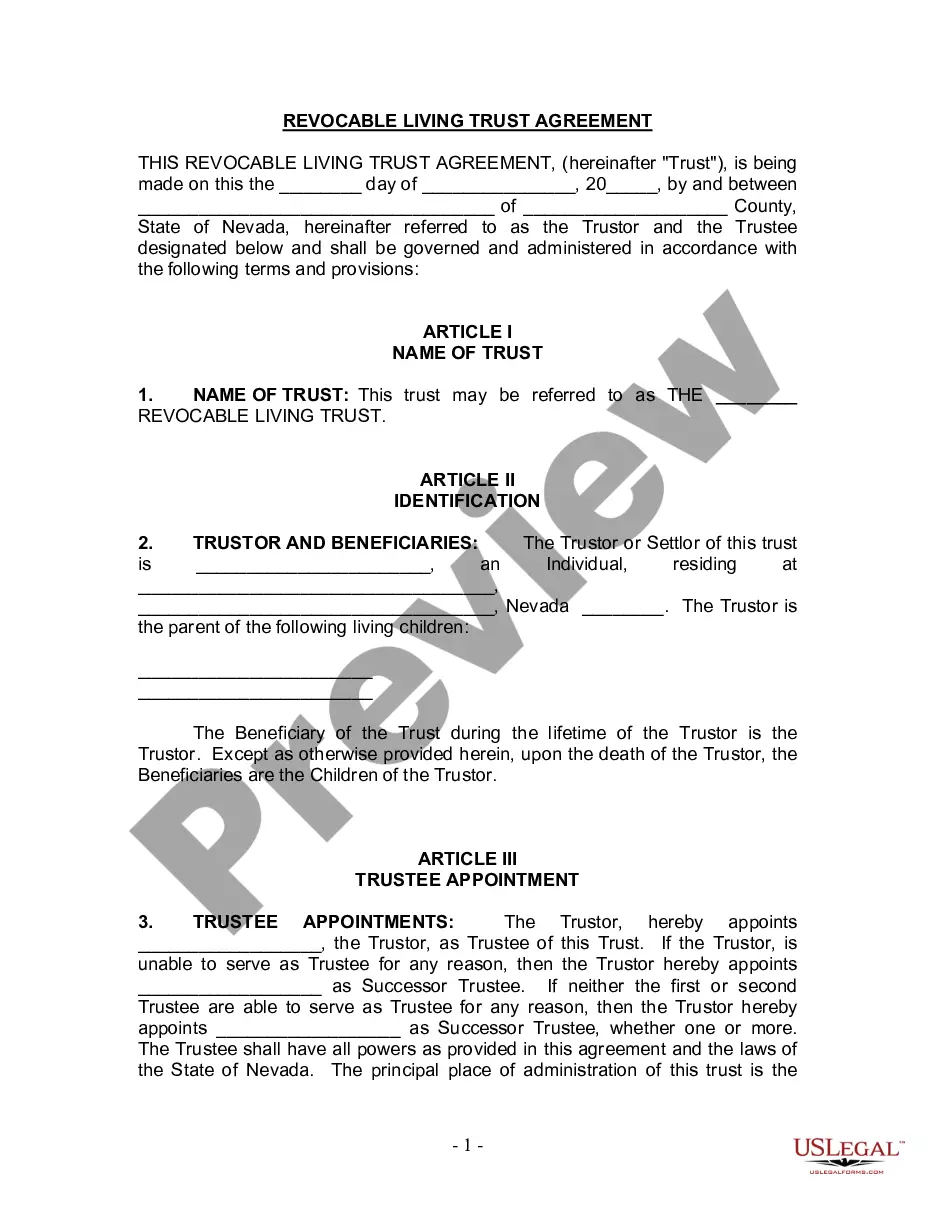
- Name of Trust: Identifies the trust name chosen by the trustor.
- Trustor and Beneficiaries: Specifies the trustor's identity and their children as beneficiaries.
- Trustee Appointment: Designates the trustor as the trustee and outlines successor trustee appointments.
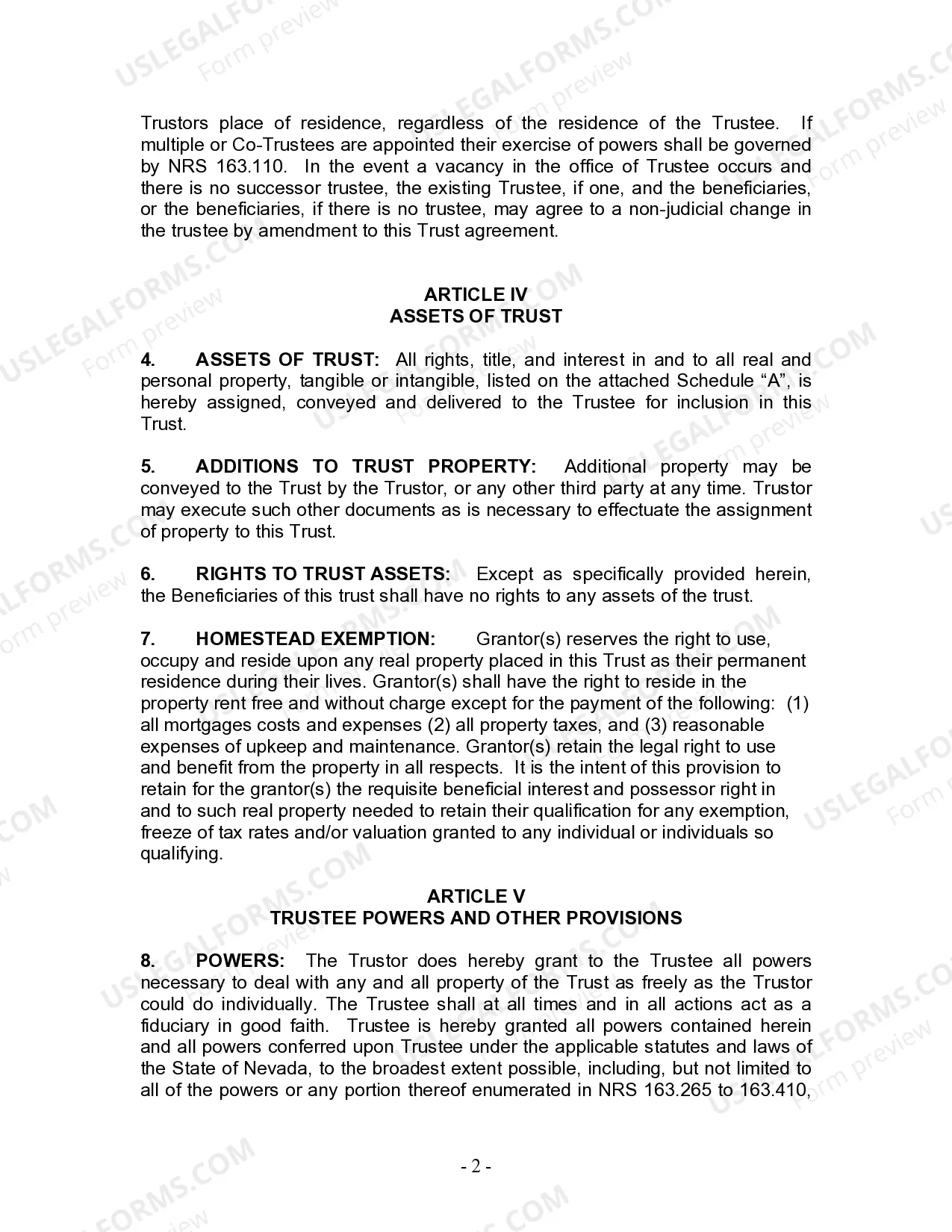
- Assets of Trust: Details the property and assets assigned to the trust and provisions for additional property transfers.
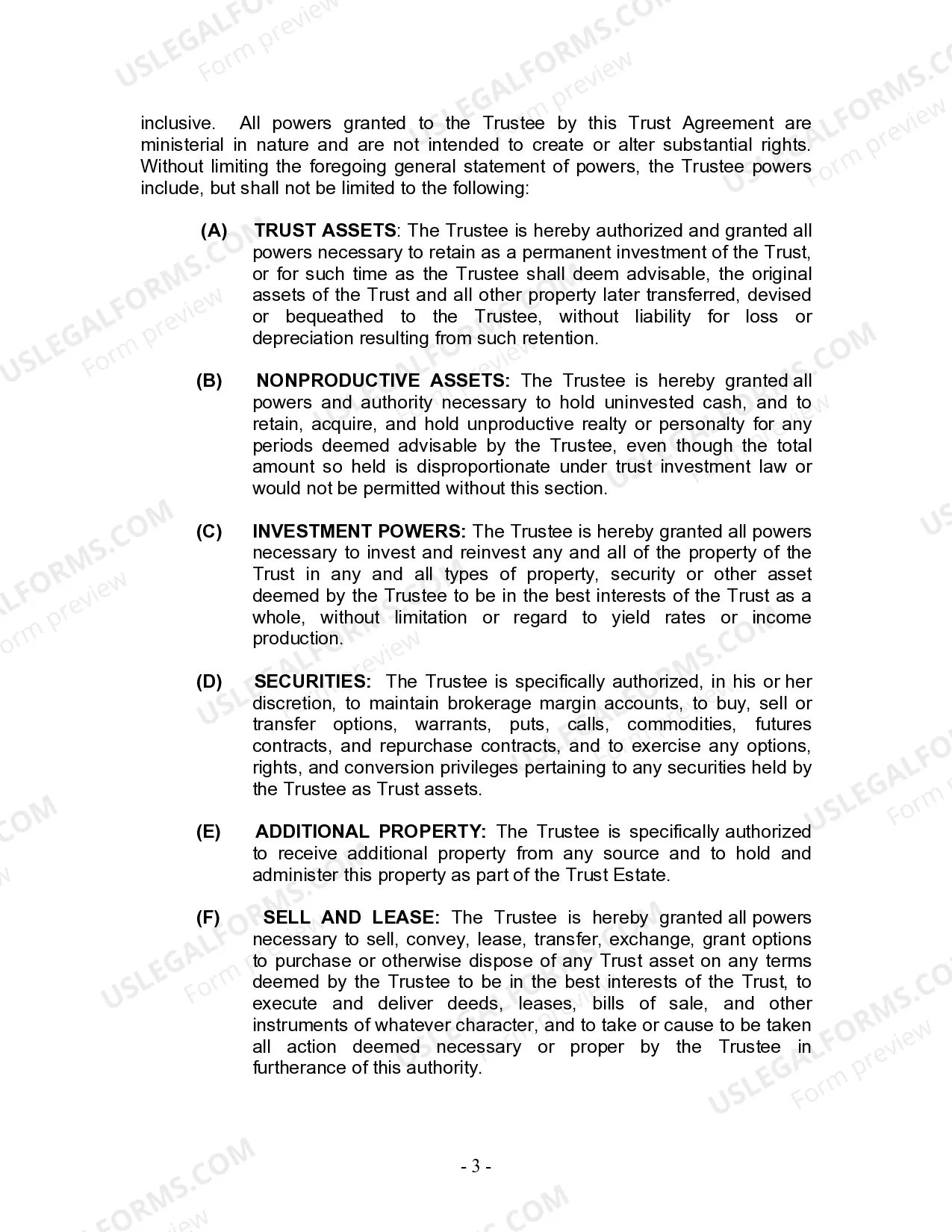
- Trustee Powers: Defines the authority and responsibilities of the trustee in managing trust assets.
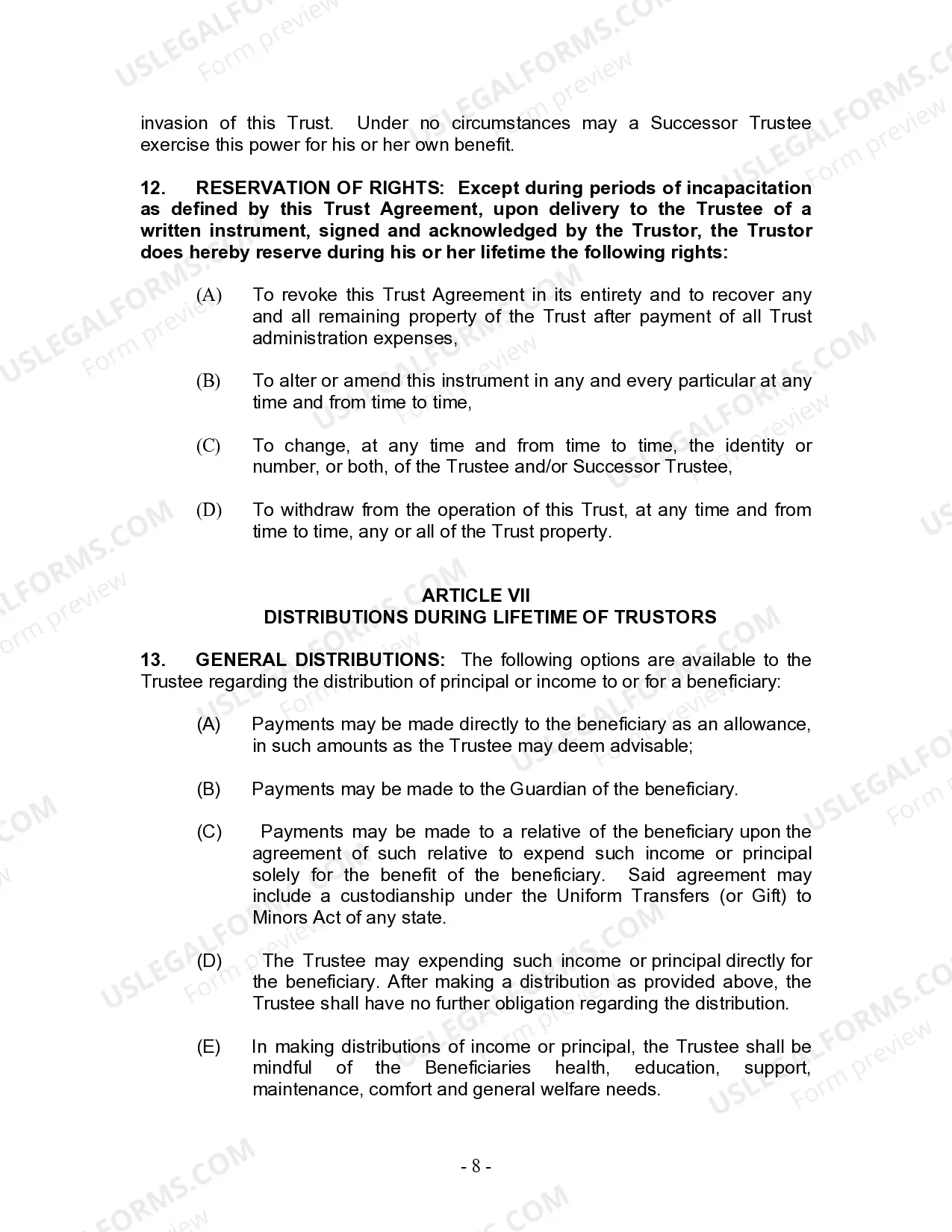
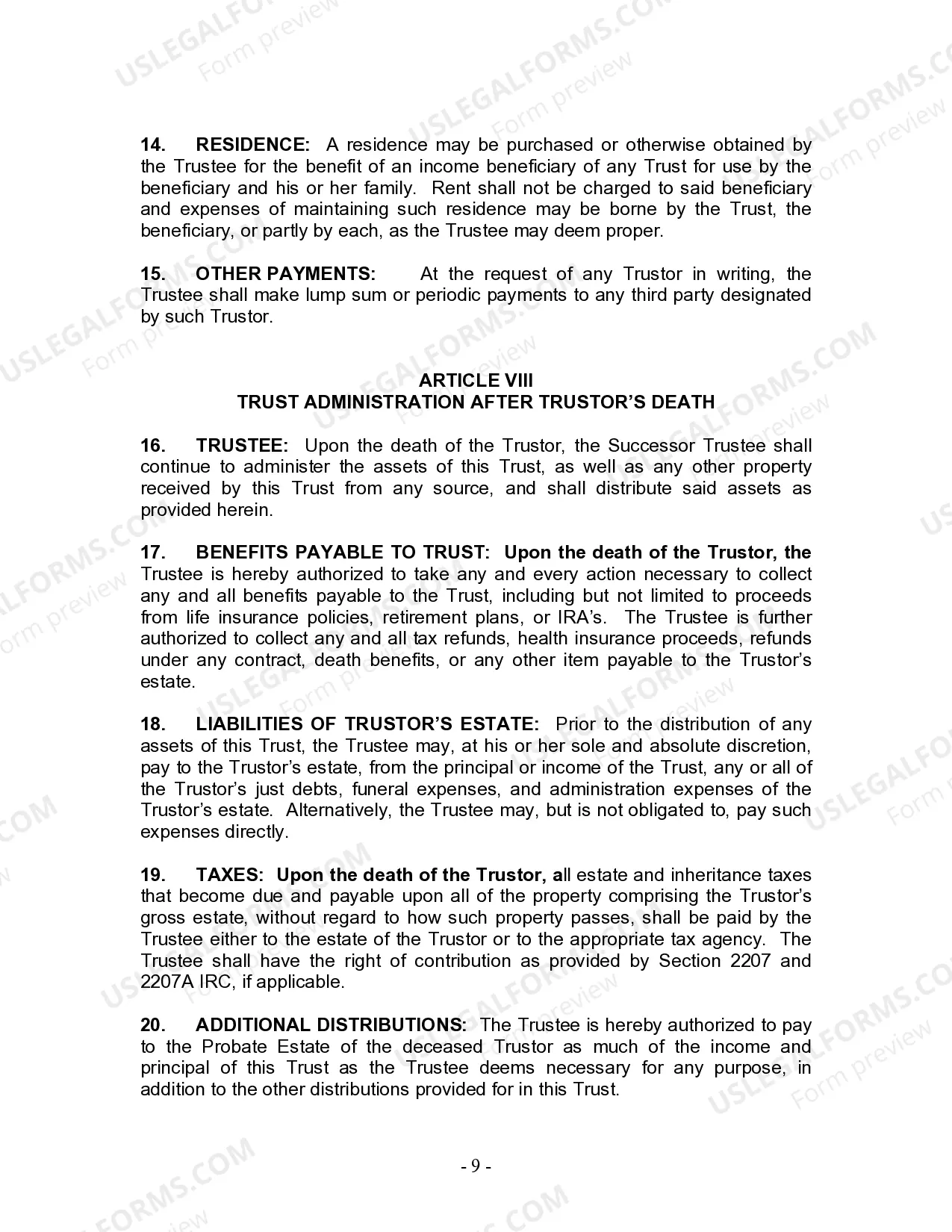
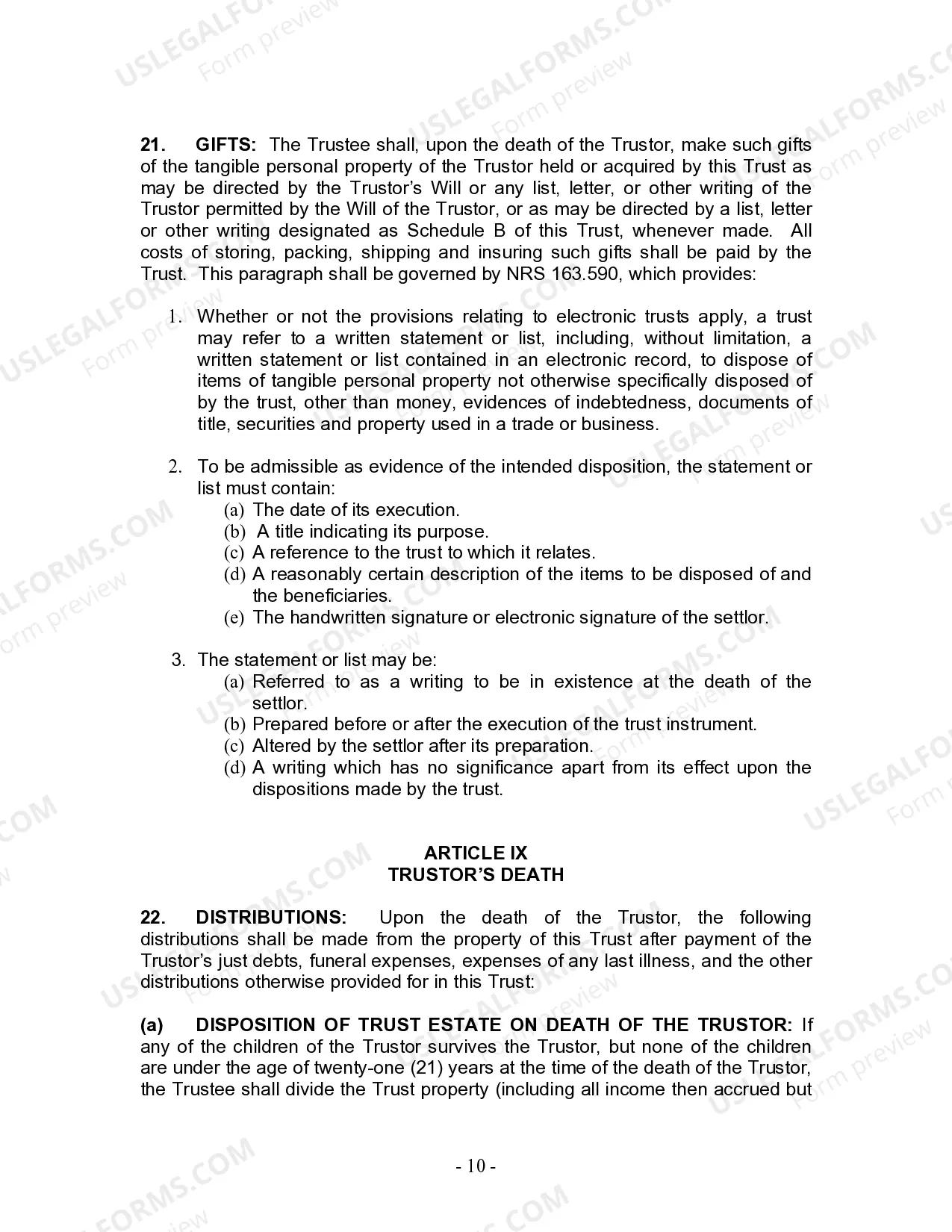
- Distribution upon Death: Outlines how and to whom trust assets will be distributed after the trustor's death.



Situations where this form applies
This form is ideal for individuals who want to ensure their children inherit their assets without the delays of probate. Use this living trust if you are single, divorced, or widowed and wish to have control over your asset distribution while simplifying the legal process for your beneficiaries. It is especially useful if you have minor children, as it provides a clear directive on asset management and guardianship.
Who should use this form
- Individuals who are single, divorced, or widowed.
- Parents with children who want to establish a clear asset distribution plan.
- Those seeking to avoid the probate process after their passing.
- Individuals who wish to maintain control over their assets during their lifetime.
Completing this form step by step
- Identify the parties involved: trustor (you), beneficiaries (your children), and appointed trustee.
- Specify the name of the trust and fill in the relevant details such as addresses.
- List all assets you wish to include in the trust on Schedule A.
- Complete the trustee appointment section, including any successor trustees.
- Sign and date the document in the presence of a notary if required.
Does this form need to be notarized?
Yes, this form must be notarized to be legally valid. US Legal Forms offers integrated online notarization, allowing you to complete the process securely via video callâavailable 24/7âeliminating the need to travel.
Get your form ready online
Our built-in tools help you complete, sign, share, and store your documents in one place.
Make edits, fill in missing information, and update formatting in US Legal Forms—just like you would in MS Word.
Download a copy, print it, send it by email, or mail it via USPS—whatever works best for your next step.
Sign and collect signatures with our SignNow integration. Send to multiple recipients, set reminders, and more. Go Premium to unlock E-Sign.
If this form requires notarization, complete it online through a secure video call—no need to meet a notary in person or wait for an appointment.
We protect your documents and personal data by following strict security and privacy standards.

Make edits, fill in missing information, and update formatting in US Legal Forms—just like you would in MS Word.

Download a copy, print it, send it by email, or mail it via USPS—whatever works best for your next step.

Sign and collect signatures with our SignNow integration. Send to multiple recipients, set reminders, and more. Go Premium to unlock E-Sign.

If this form requires notarization, complete it online through a secure video call—no need to meet a notary in person or wait for an appointment.

We protect your documents and personal data by following strict security and privacy standards.
Typical mistakes to avoid
- Failing to specify all assets intended for the trust.
- Not appointing a successor trustee, leading to potential management issues.
- Leaving out necessary signatures, especially from a notary.
- Not updating the trust when significant life changes occur (e.g., marriage, divorce, having more children).
Why use this form online
- Convenient access from anywhere, allowing for easy customization.
- Instant downloads enable immediate use without delays.
- Documents are prepared by licensed attorneys, ensuring legal accuracy.
- Simple instructions guide you through the completion process.
What to keep in mind
- A Living Trust helps manage your assets effectively during your lifetime and allows smooth distribution after your death.
- It is specifically designed for single, divorced, or widowed individuals with children.
- Filling out this form properly ensures that your wishes are respected and legally binding.
Looking for another form?



Form popularity
FAQ
According to the U.S. government, a child officially becomes an adult when they turn 18.That's not to say that kids in their late teens and early 20s can't take on these tasks, but it does mean that it's harder for them to do at least until around age 25 or so when this area of the brain fully develops.
The answer to this question in international and domestic law is clear: a child is anyone under the age of 18. But it took a legal challenge and a national campaign to ensure that 17-year-olds were given the same rights as other children in the police station.
Some age-related development periods and examples of defined intervals include: newborn (ages 04 weeks); infant (ages 4 weeks 1 year); toddler (ages 12 months-24 months); preschooler (ages 25 years); school-aged child (ages 613 years); adolescent (ages 1419).
A 14 year-old is a teenager and would not generally be referred to as a child. He or she will always be the child of his or her parents though.Again dependant upon where you live you are normally refered to as a child below 12 and a teenager during your teens but you do become an adult at the age of majority.