Nevada Notice of Default in Payment of Rent as Warning Prior to Demand to Pay or Terminate for Residential Property
Description
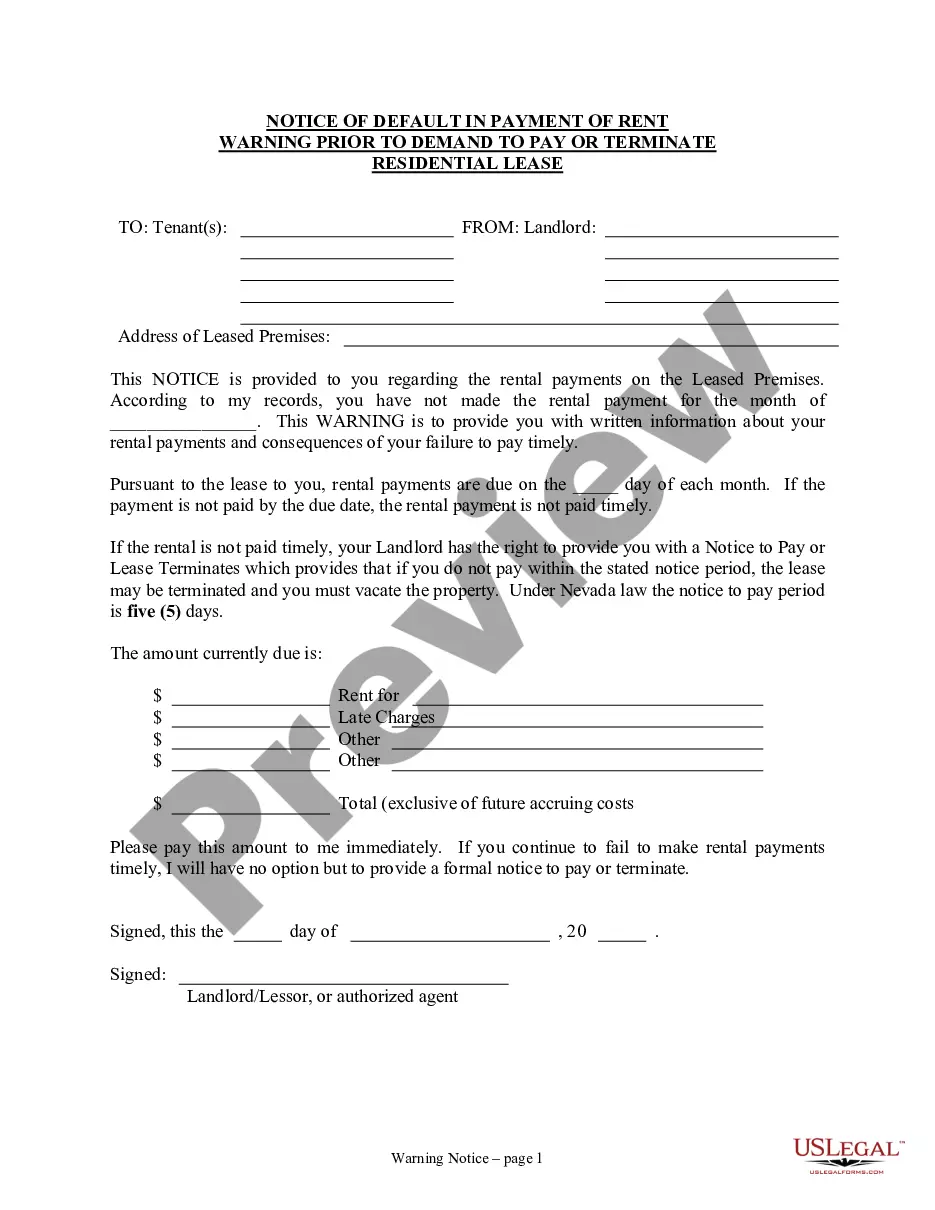
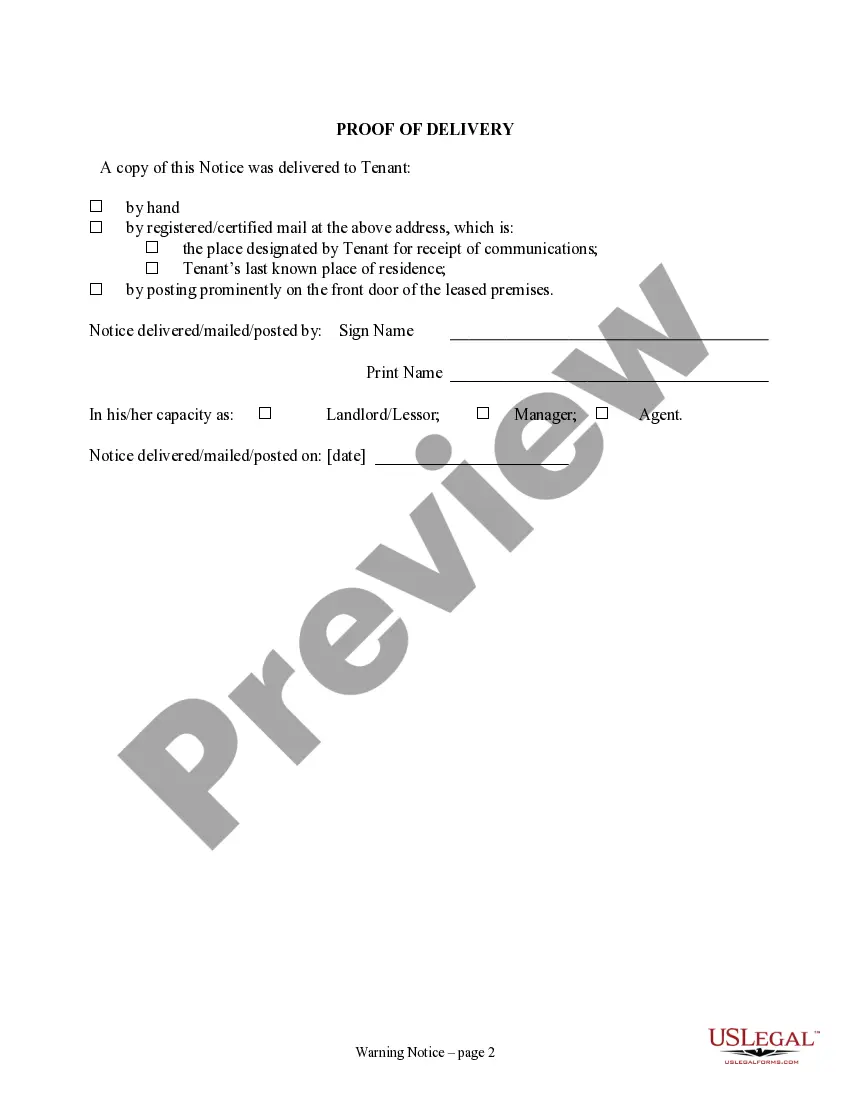
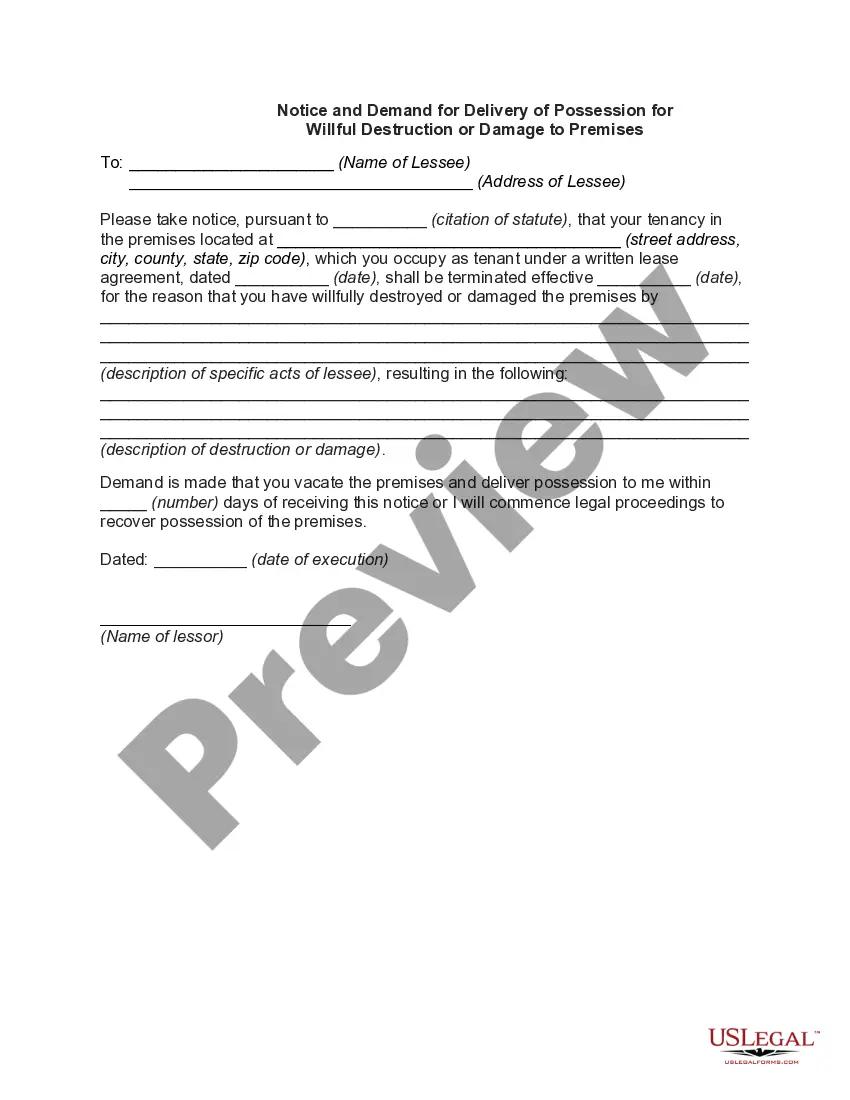
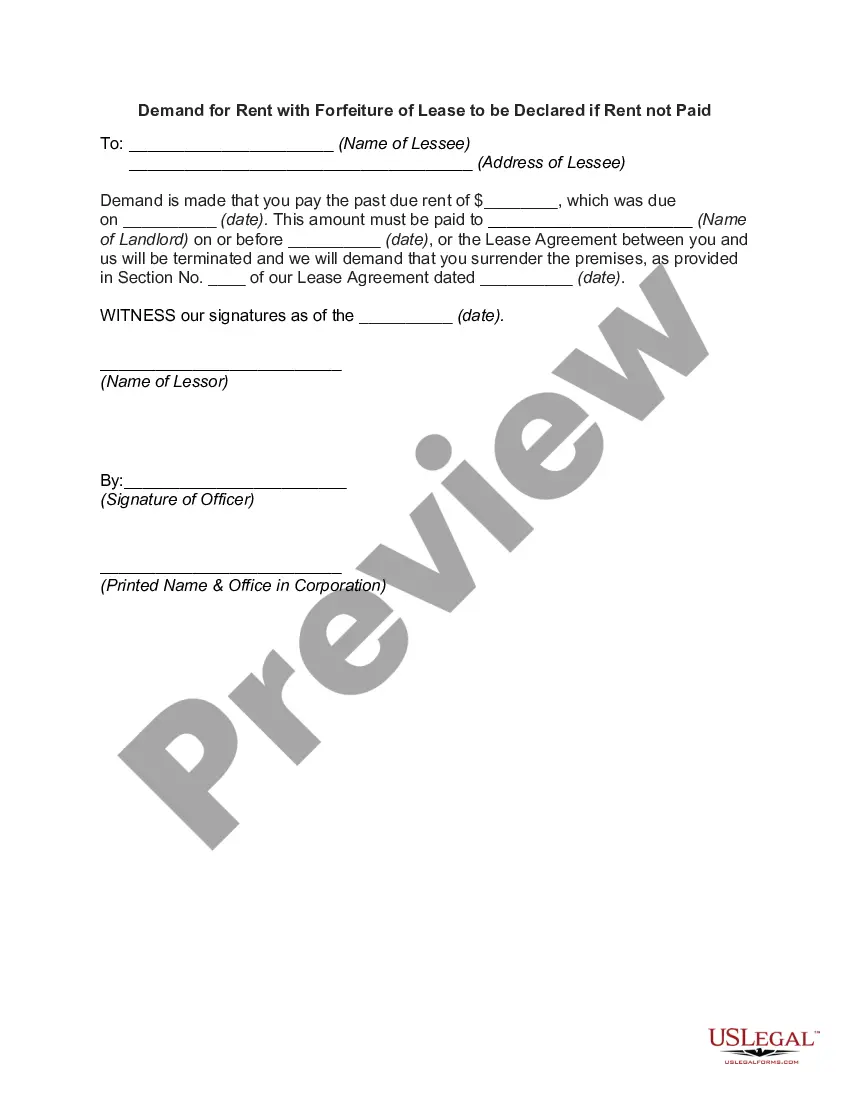
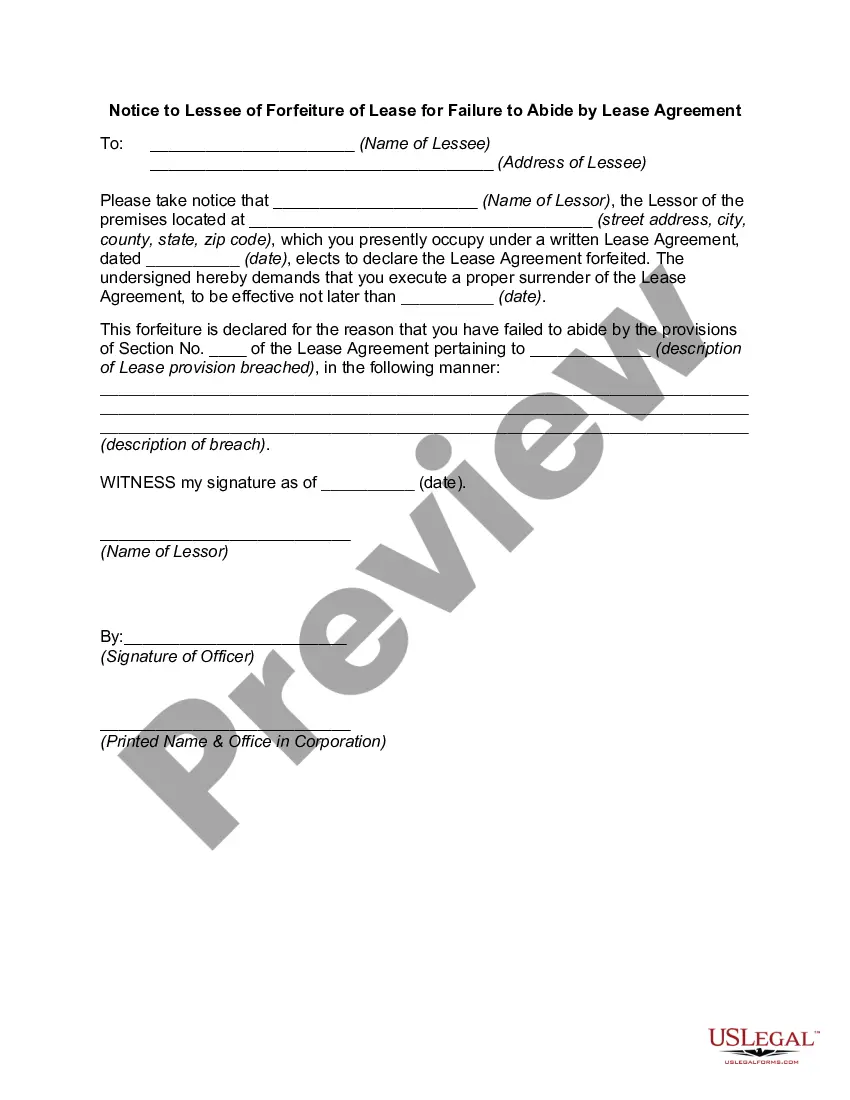


How to fill out Nevada Notice Of Default In Payment Of Rent As Warning Prior To Demand To Pay Or Terminate For Residential Property?
US Legal Forms is actually a special system where you can find any legal or tax form for submitting, including Nevada Notice of Default in Payment of Rent as Warning Prior to Demand to Pay or Terminate for Residential Property. If you’re tired with wasting time seeking suitable samples and spending money on papers preparation/legal professional service fees, then US Legal Forms is exactly what you’re looking for.
To enjoy all of the service’s advantages, you don't have to install any software but simply choose a subscription plan and create an account. If you have one, just log in and get the right sample, save it, and fill it out. Saved files are all stored in the My Forms folder.
If you don't have a subscription but need Nevada Notice of Default in Payment of Rent as Warning Prior to Demand to Pay or Terminate for Residential Property, take a look at the guidelines below:
- check out the form you’re looking at applies in the state you want it in.
- Preview the example and read its description.
- Click on Buy Now button to access the register webpage.
- Select a pricing plan and proceed signing up by entering some info.
- Select a payment method to finish the sign up.
- Save the file by selecting the preferred format (.docx or .pdf)
Now, complete the file online or print it. If you feel uncertain regarding your Nevada Notice of Default in Payment of Rent as Warning Prior to Demand to Pay or Terminate for Residential Property template, contact a lawyer to analyze it before you decide to send or file it. Get started hassle-free!
Form popularity
FAQ
Nevada Revised Statutes require a seven-day notice to the tenant, instructing the tenant to either pay the rent or "quit" (leave) the rental property. To evict a tenant for nonpayment of rent, the landlord must "serve" (deliver) a Seven-Day Notice to Pay Rent or Quit to the tenant.
If you accept the full or even partial late rent payment, your eviction process must be dismissed by the courts. Landlords are waiving their rights to the eviction process as originally filed. If you want to evict again, you must start over from the beginning, which is serving a new pay or quit notice.
Should You Accept Partial Rent Payments? It's okay to accept partial payments as long as you handle them correctly. You can sign an agreement with your tenant called an Agreement for Delayed or Partial Rent Payments. That way, your tenant understands that you expect the remainder of the payment by a certain date.
State law regulates several rent-related issues, including late and bounced-check fees, the amount of notice (at least 45 days in Nevada) landlords must give tenants to raise the rent, and how much time (five days in Nevada) a tenant has to pay overdue rent or move before a landlord can file for eviction.
The landlord can enter the rental property, without the tenant's consent, if there is an emergency. (NRS 118A.Show the unit to potential or actual purchasers, mortgage companies, tenants, workers, contractors, or other people with a true interest in inspecting the property. (NRS 118A.
A no-cause eviction is when a tenant hasn't done anything wrong and the landlord does not want to renew a lease. A landlord cannot use a no-cause eviction before a lease is up. Currently, property owners have to give tenants a 30-days notice for normal renters.
Nevada Revised Statutes require a seven-day notice to the tenant, instructing the tenant to either pay the rent or "quit" (leave) the rental property. To evict a tenant for nonpayment of rent, the landlord must "serve" (deliver) a Seven-Day Notice to Pay Rent or Quit to the tenant.