Nevada Time Share Quitclaim Deed - Three Individuals to Two Individuals
Overview of this form
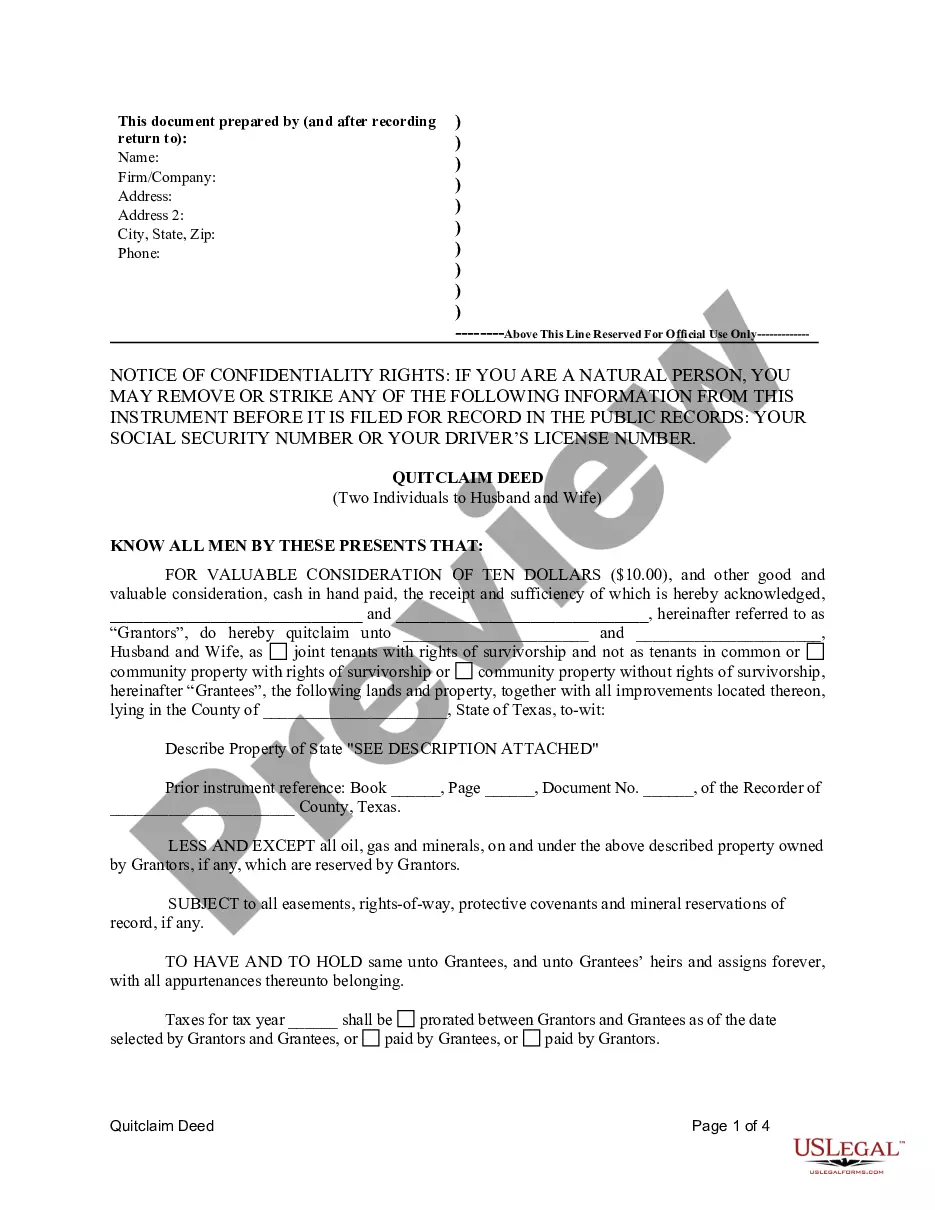
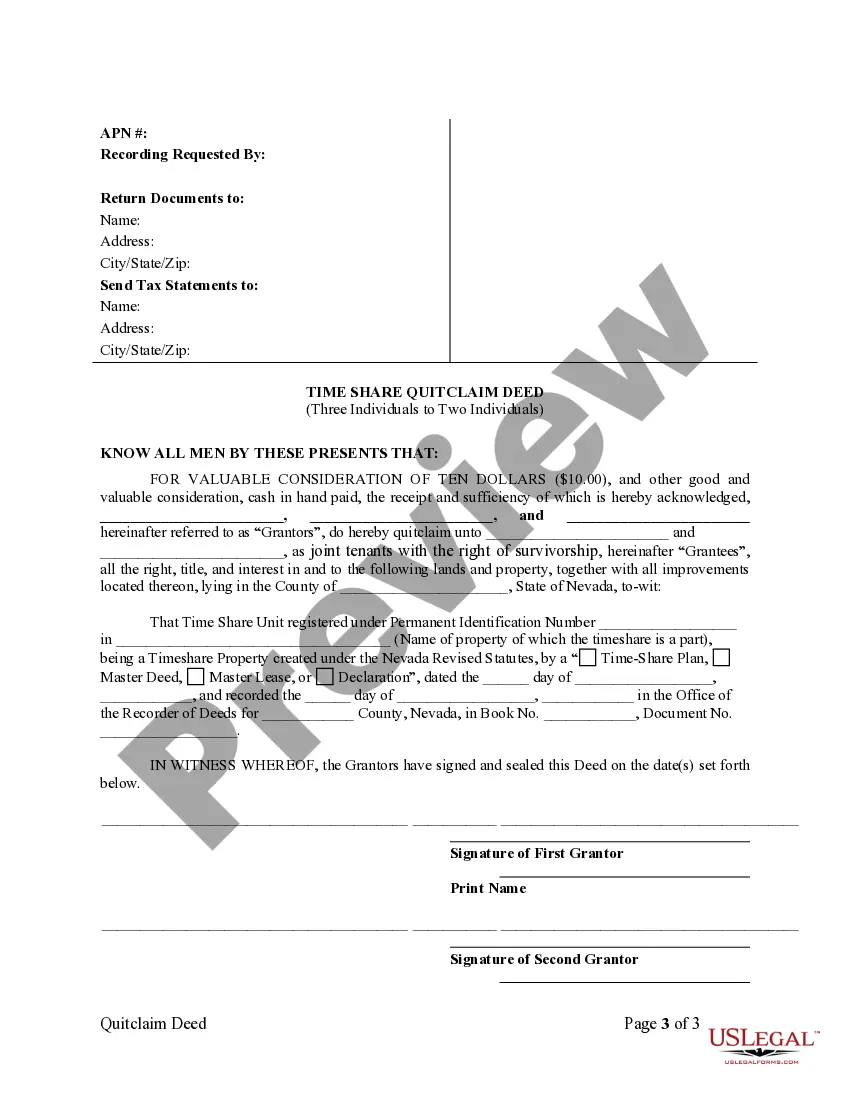
The Time Share Quitclaim Deed is a legal document that allows three individuals (Grantors) to transfer their ownership rights of a time share property to two other individuals (Grantees). This form specifically handles the nuances involved in conveying time share interests and can establish different forms of co-ownership such as tenants in common, joint tenants with right of survivorship, or community property. It is a vital tool for individuals looking to simplify the transfer process of time share ownership among multiple parties.
Main sections of this form
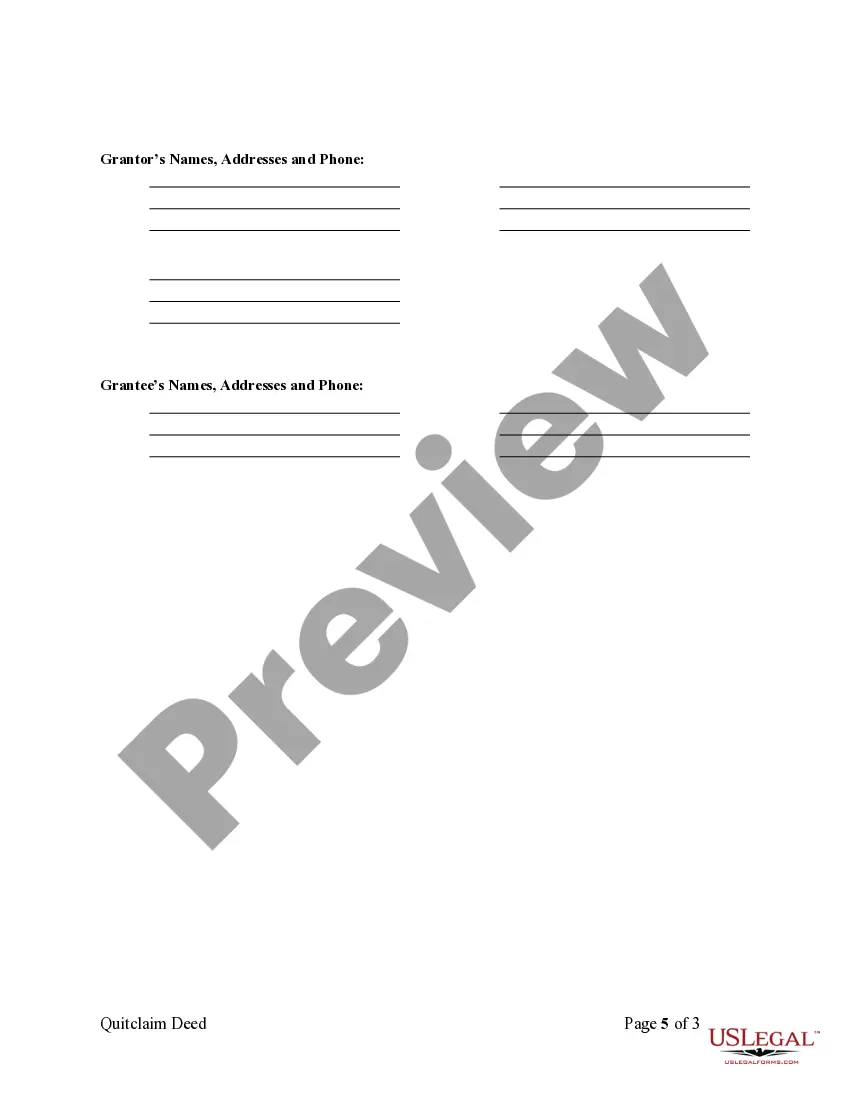
- Identification of Grantors: Names of the three transferring parties.
- Identification of Grantees: Names of the two receiving parties.
- Description of Property: Details of the time share unit, including its permanent identification number and associated property name.
- Ownership Structure: Designation of how the partnership between the Grantees will be structured (e.g., tenants in common).
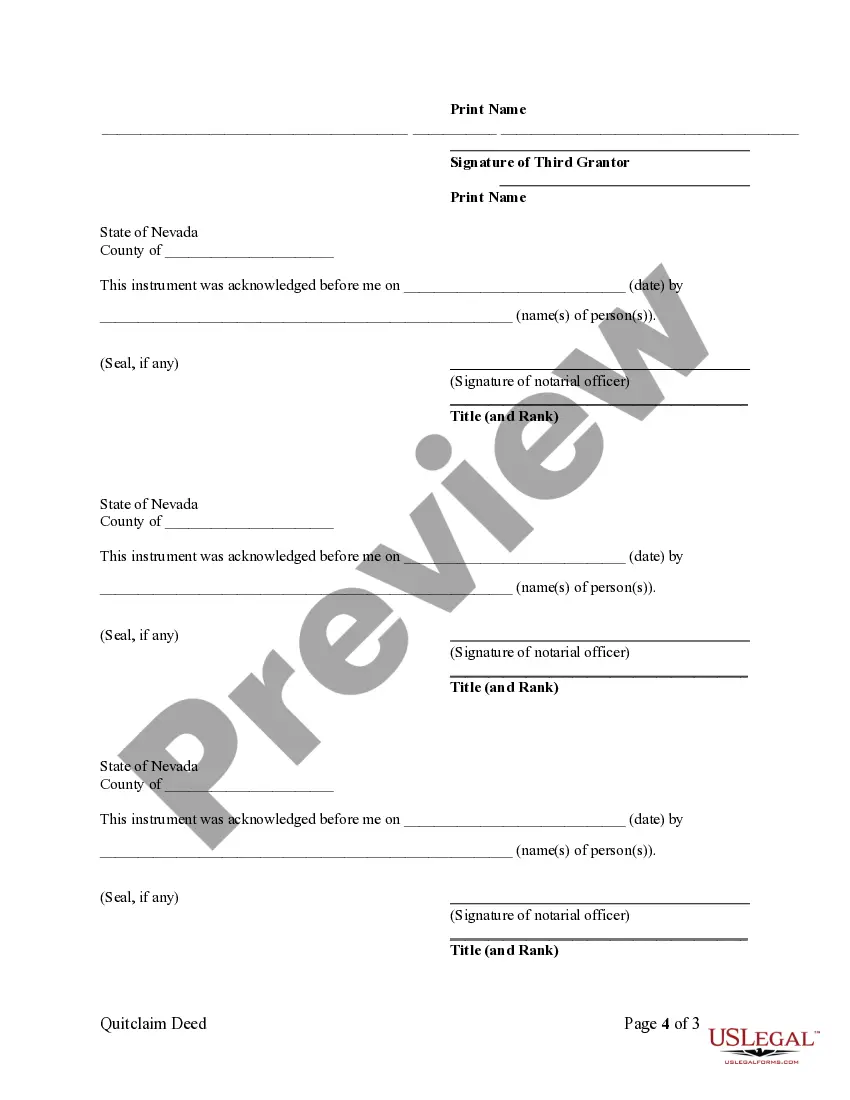
- Date and Signatures: The date when the deed is executed and required signatures of the Grantors.





Common use cases
Who this form is for
- Individuals needing to transfer their interests in a time share property.
- Those involved in a joint ownership where changes in possession are required.
- Legal representatives acting on behalf of the Grantors or Grantees.
Completing this form step by step
- Identify the parties: Fill in the names of the Grantors and Grantees.
- Specify the property: Enter the permanent identification number and name of the time share property.
- Select ownership type: Indicate how the Grantees will hold the property (e.g., tenants in common).
- Enter execution details: Provide dates and ensure all Grantors sign the document.
- Review for completeness: Verify that all necessary information is accurately filled out.
Does this document require notarization?
This form does not typically require notarization unless specified by local law. However, it is advisable to consult with legal experts or local regulations to confirm any notarization requirements for your specific situation.
Get your form ready online
Our built-in tools help you complete, sign, share, and store your documents in one place.
Make edits, fill in missing information, and update formatting in US Legal Forms—just like you would in MS Word.
Download a copy, print it, send it by email, or mail it via USPS—whatever works best for your next step.
Sign and collect signatures with our SignNow integration. Send to multiple recipients, set reminders, and more. Go Premium to unlock E-Sign.
If this form requires notarization, complete it online through a secure video call—no need to meet a notary in person or wait for an appointment.
We protect your documents and personal data by following strict security and privacy standards.

Make edits, fill in missing information, and update formatting in US Legal Forms—just like you would in MS Word.

Download a copy, print it, send it by email, or mail it via USPS—whatever works best for your next step.

Sign and collect signatures with our SignNow integration. Send to multiple recipients, set reminders, and more. Go Premium to unlock E-Sign.

If this form requires notarization, complete it online through a secure video call—no need to meet a notary in person or wait for an appointment.

We protect your documents and personal data by following strict security and privacy standards.
Common mistakes to avoid
- Failing to include all necessary Grantors and Grantees.
- Incorrectly describing the property or omitting key details.
- Not designating the correct ownership type for the Grantees.
- Leaving dates or signatures blank before finalizing the document.
Benefits of using this form online
- Convenience of downloading forms instantly from home.
- Editability allows customization to suit specific needs and circumstances.
- Reliable and up-to-date templates reflecting current legal standards.
What to keep in mind
- The Time Share Quitclaim Deed is used to transfer ownership among multiple parties.
- This deed allows for flexibility in how the Grantees hold the property.
- Properly completing and signing the form is essential for a valid transfer.
Looking for another form?

Form popularity
FAQ
The grantor must sign the deed according to the law in every state and county. The grantor's signature finalizes the transfer of ownership, and quitclaim deeds aren't considered valid unless the grantor signs them. A certified notary public must typically be present as the grantor signs.
A quitclaim deed is quick and easy because it transfers all of one person's interest in the property to another.The deed transfers all claims the seller has to the property, if any. If the seller has no interest in the real estate, no interest is transferred.
Once you sign a quitclaim deed and it has been filed and recorded with the County Clerks Office, the title has been officially transferred and cannot be easily reversed. In order to reverse this type of transfer, it would require your spouse to cooperate and assist in adding your name back to the title.
This can make it difficult to sell a home acquired with a quitclaim deed, but it certainly isn't impossible. To sell a home you received through a quitclaim deed, you will still need to transfer ownership using a warranty deed.
A quitclaim deed is dangerous if you don't know anything about the person giving you the property. You should be sure that a person actually has rights to a property before signing it over with a quitclaim deed.
Quitclaim deeds are most often used to transfer property between family members. Examples include when an owner gets married and wants to add a spouse's name to the title or deed, or when the owners get divorced and one spouse's name is removed from the title or deed.
The drawback, quite simply, is that quitclaim deeds offer the grantee/recipient no protection or guarantees whatsoever about the property or their ownership of it. Maybe the grantor did not own the property at all, or maybe they only had partial ownership.
In California, the statute of limitations is five years. Any challenge to the quitclaim must be based on either a procedural error or on undo duress.
But you might be wondering if an owner can transfer a deed to another person without a real estate lawyer. The answer is yes. Parties to a transaction are always free to prepare their own deeds.A quitclaim deed, for example, is far simpler than a warranty deed.