Nevada Writ of Execution
What this document covers
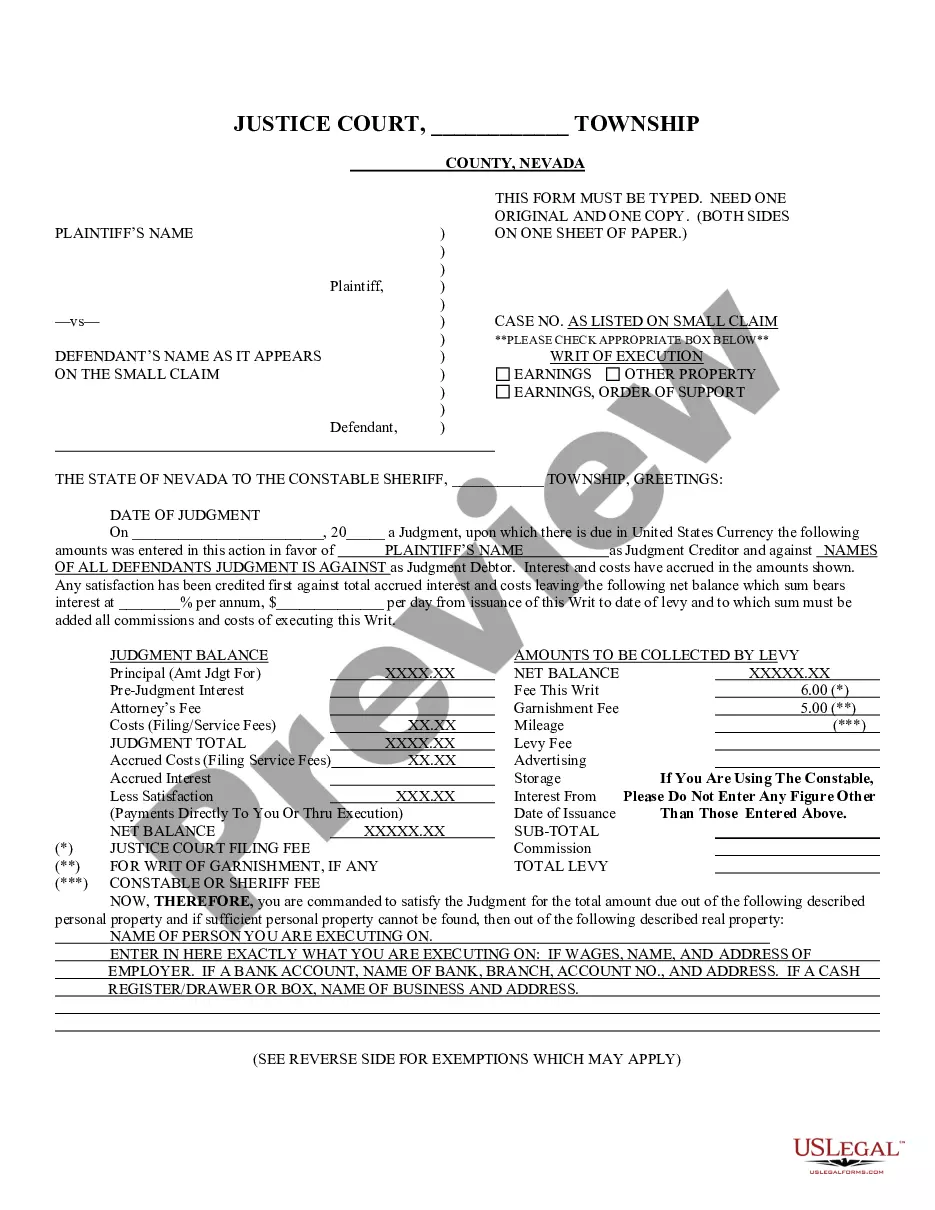
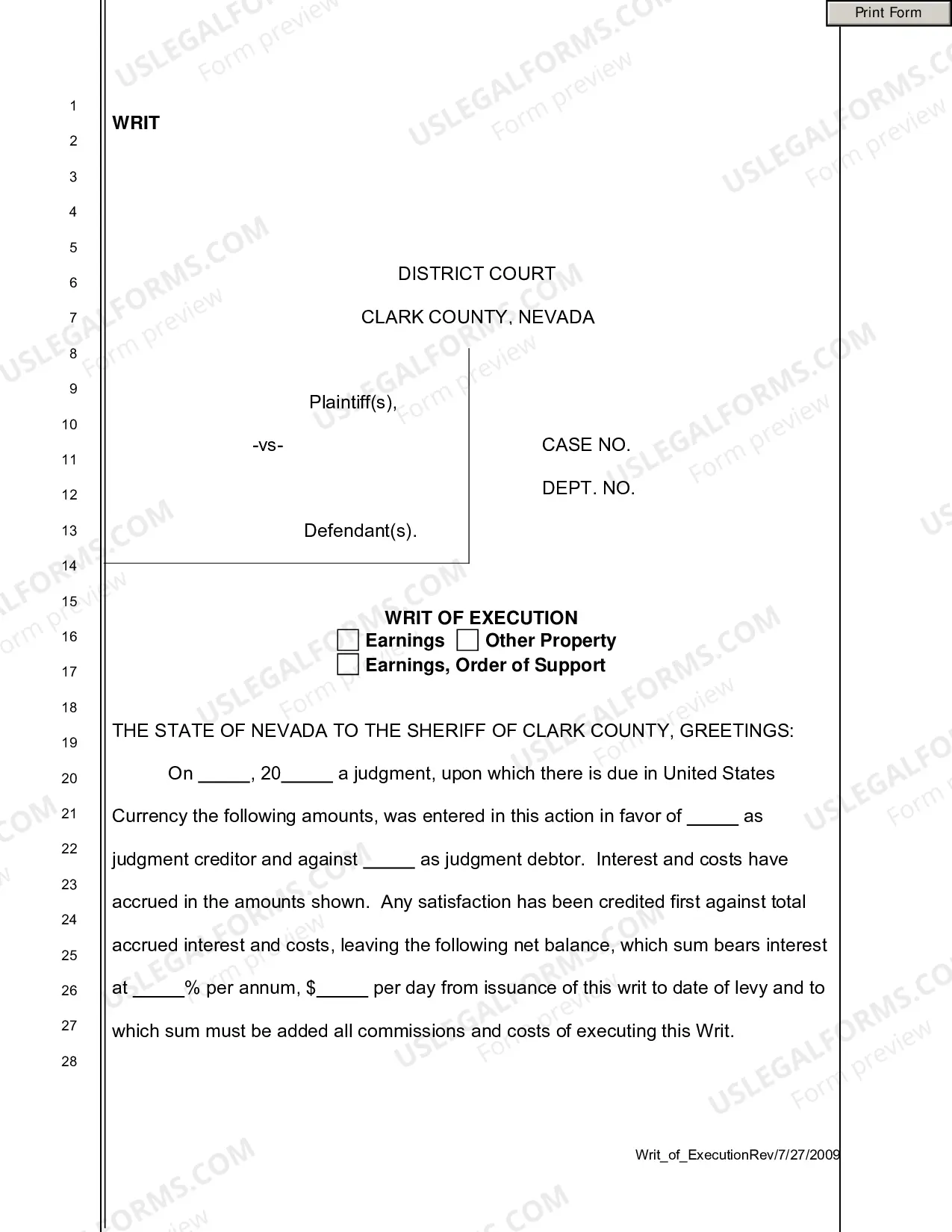
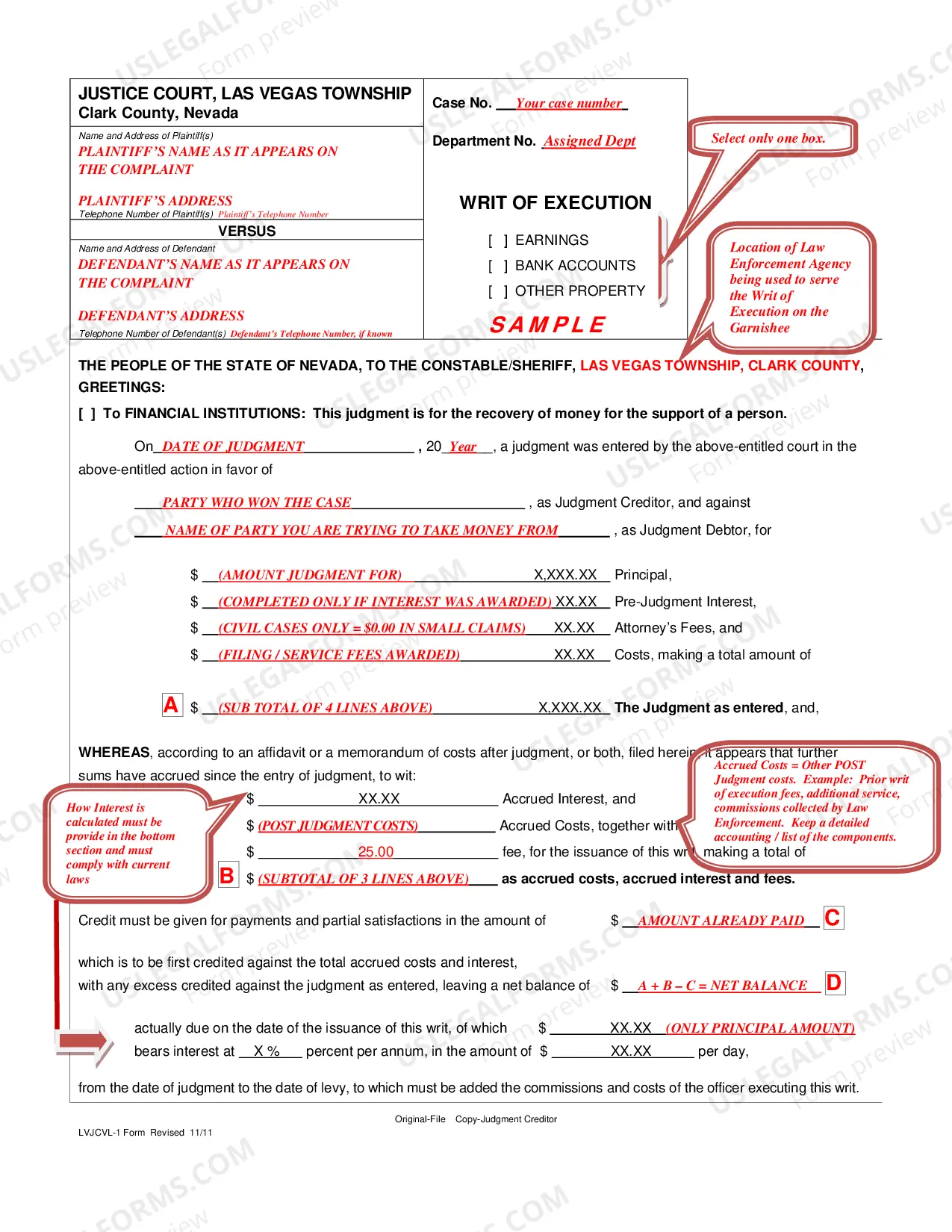
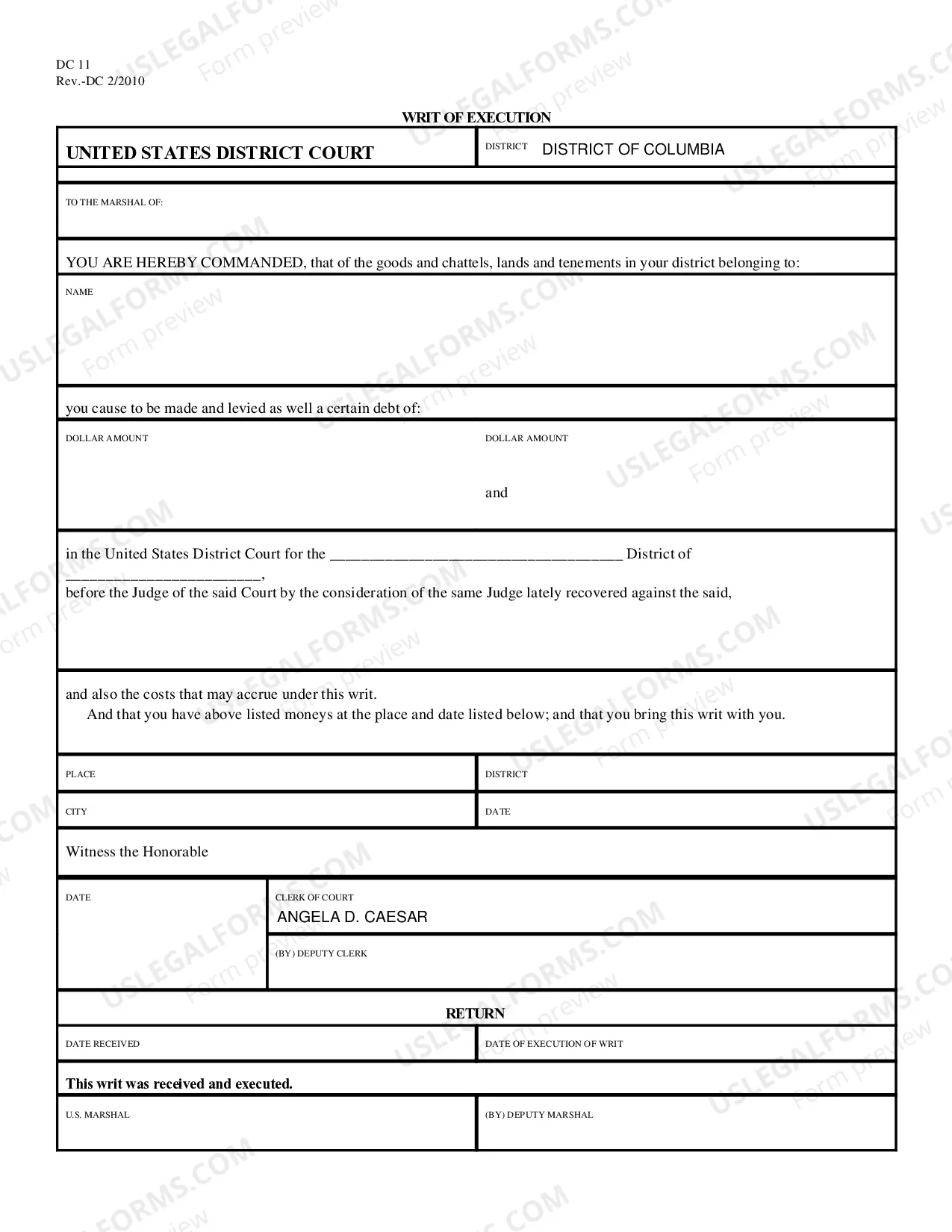
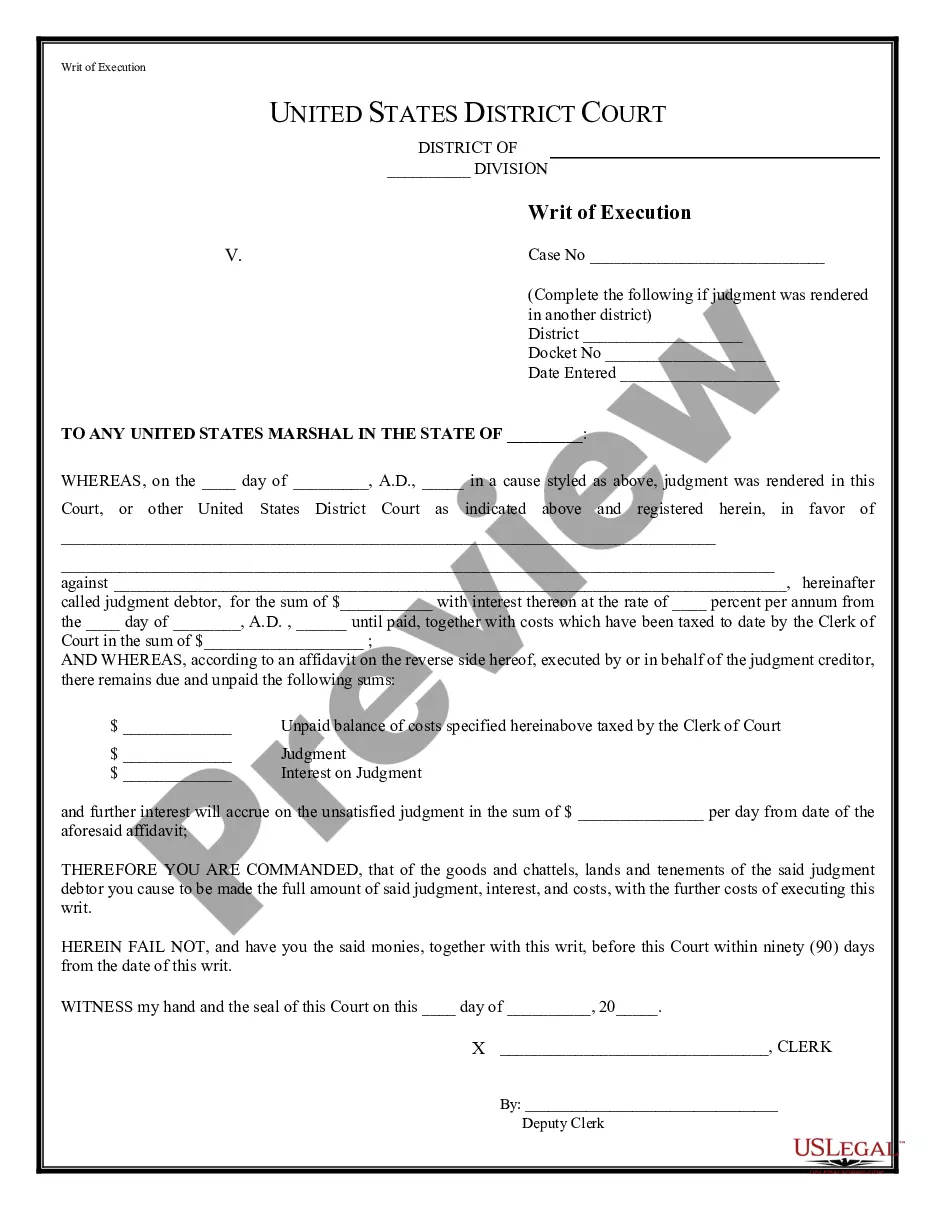
A Writ of Execution is a legal document issued by a court that enables a judgment creditor to enforce a monetary judgment against a debtor. In Nevada, this form is used specifically in small claims court to instruct law enforcement to seize the debtor's property or garnish their wages to satisfy a judgment. This form is crucial for creditors seeking to recover funds owed to them following a court ruling.
Key components of this form
- Date of judgment: Date on which the judgment was rendered.
- Judgment creditor: Name of the individual or entity entitled to receive payment.
- Judgment debtor: Name of the individual or entity required to pay the debt.
- Net balance: Total amount due including any accrued interest and costs.
- Property description: Details about the personal or real property against which the execution is directed.
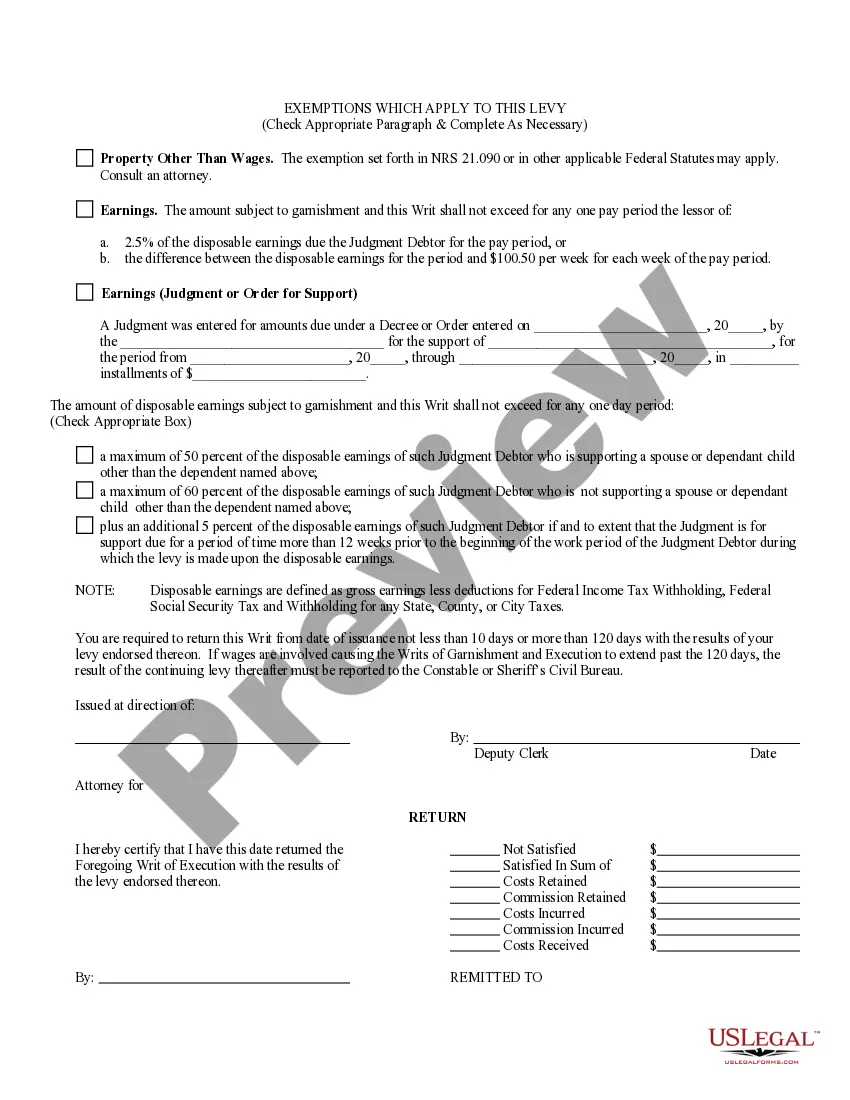
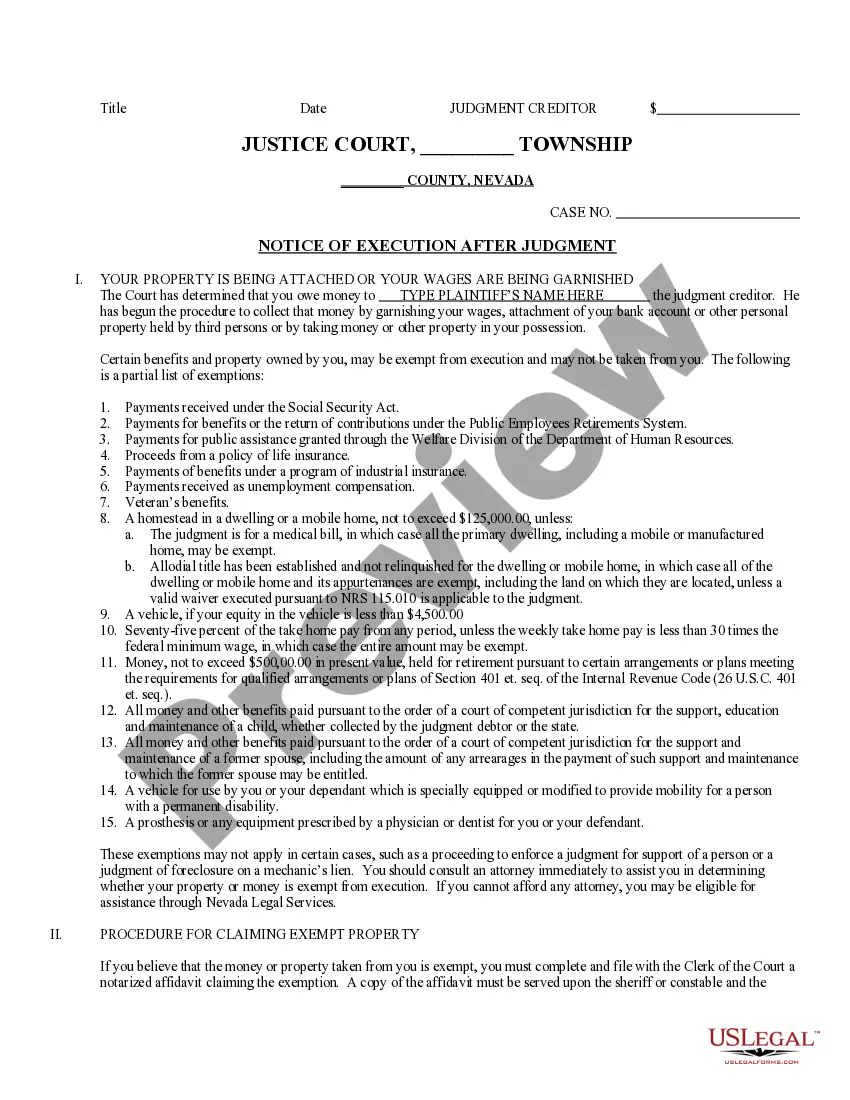
- Exemptions: Information regarding property and earnings that may be exempt from execution.

Situations where this form applies
This form should be used after a judgment has been entered in favor of a creditor. It is necessary when the debtor does not voluntarily pay the owed amount, allowing the creditor to seek enforcement through seizure of property or garnishment of wages. Common scenarios include unpaid loans, service debts, or unfulfilled contract obligations where a court ruling has already been obtained.
Who needs this form
- Individuals or businesses that have obtained a judgment in small claims court.
- Creditor entities seeking to recover debts owed to them.
- Attorneys representing creditors in the collection of judgments.
How to prepare this document
- Identify the parties involved: Fill in the names of the judgment creditor and judgment debtor.
- Specify the date of judgment: Enter the date the court issued the judgment.
- Calculate the net balance due: Include all amounts owed, including principal, interest, and fees.
- Describe the property: Provide detailed descriptions of the property being levied against.
- Check applicable exemptions: Review and note any exemptions that may apply to the debtor's property or earnings.
Notarization requirements for this form
This form usually doesn’t need to be notarized. However, local laws or specific transactions may require it. Our online notarization service, powered by Notarize, lets you complete it remotely through a secure video session, available 24/7.
Get your form ready online
Our built-in tools help you complete, sign, share, and store your documents in one place.
Make edits, fill in missing information, and update formatting in US Legal Forms—just like you would in MS Word.
Download a copy, print it, send it by email, or mail it via USPS—whatever works best for your next step.
Sign and collect signatures with our SignNow integration. Send to multiple recipients, set reminders, and more. Go Premium to unlock E-Sign.
If this form requires notarization, complete it online through a secure video call—no need to meet a notary in person or wait for an appointment.
We protect your documents and personal data by following strict security and privacy standards.

Make edits, fill in missing information, and update formatting in US Legal Forms—just like you would in MS Word.

Download a copy, print it, send it by email, or mail it via USPS—whatever works best for your next step.

Sign and collect signatures with our SignNow integration. Send to multiple recipients, set reminders, and more. Go Premium to unlock E-Sign.

If this form requires notarization, complete it online through a secure video call—no need to meet a notary in person or wait for an appointment.

We protect your documents and personal data by following strict security and privacy standards.
Typical mistakes to avoid
- Failing to complete all required sections, which can delay the execution process.
- Not entering amounts accurately, leading to disputes during enforcement.
- Ignoring applicable exemptions that could protect the debtor's assets.
Advantages of online completion
- Convenience of downloading and completing the form at your own pace.
- Editability allows tailoring of the template to meet specific needs.
- Access to professionally drafted templates ensures compliance with legal requirements.
Looking for another form?

Form popularity
FAQ
You may file the judgment with the Clark County Records Office at 500 Grand Central Parkway, Las Vegas Nevada, 89155. The judgment is valid for six years and you can re-file. When the property is sold or foreclosed upon, you may receive your money.
Respond to the Creditor's Demand Letter. Seek State-Specific Remedies. Get Debt Counseling. Object to the Garnishment. Attend the Objection Hearing (and Negotiate if Necessary) Challenge the Underlying Judgment. Continue Negotiating.
Served By: The writ is served by the U.S. Marshal or other person, presumably a law enforcement officer, specially appointed by the court pursuant to Federal Rule of Civil Procedure 4.1(a).
A writ of execution is a court order that puts in force a judgment of possession and directs law enforcement personnel to begin the transfer of property as the result of a legal judgment. Property may include assets, money, or real property.
The writ gives the Sheriff the authority to seize property of the judgment debtor and is valid for 180 days after its issuance. You must give the Sheriff signed, written instructions to levy on (seize) and sell, if necessary, specific property belonging to the debtor to satisfy your judgment.
A writ of execution (also known as an execution) is a court order granted to put in force a judgment of possession obtained by a plaintiff from a court. When issuing a writ of execution, a court typically will order a sheriff or other similar official to take possession of property owned by a judgment debtor.
In many situations, one of the best ways to collect a judgment after winning a case is to put a lien on the debtor's property. This gives you a claim to the property and, in some cases, the property will be sold at public auction in order to satisfy the debt that is owed.
You do not appeal, you must file a claim of exemption sheriff/marshal.Sheriff will mail a copy of the judgment creditor to stop a writ of Execution in California, court note!
The writ gives the Sheriff the authority to seize property of the judgment debtor and is valid for 180 days after its issuance. You must give the Sheriff signed, written instructions to levy on (seize) and sell, if necessary, specific property belonging to the debtor to satisfy your judgment.