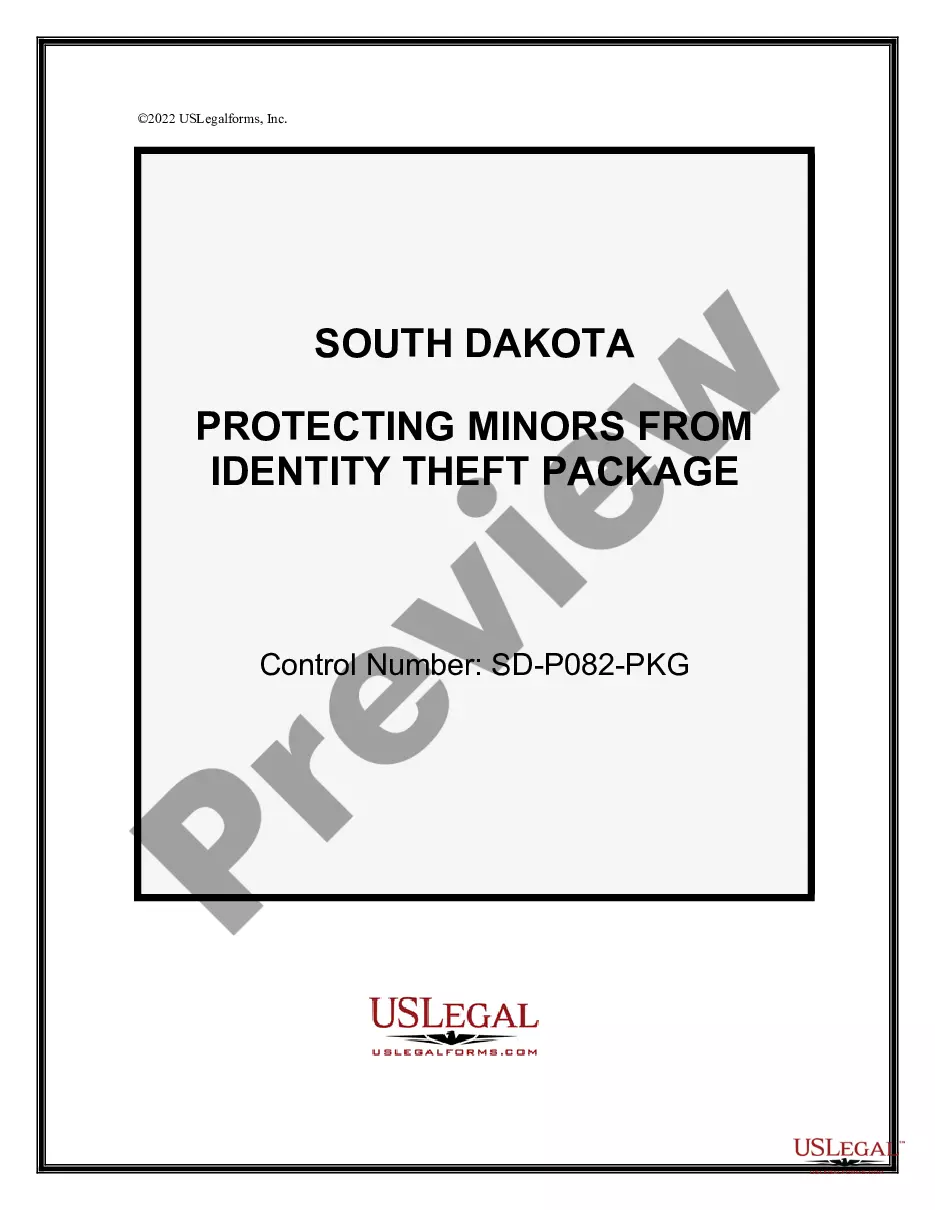
New Mexico Notice to Lienholder of Mobile Home Judgment - Mobile Home Park Act
What is this form?
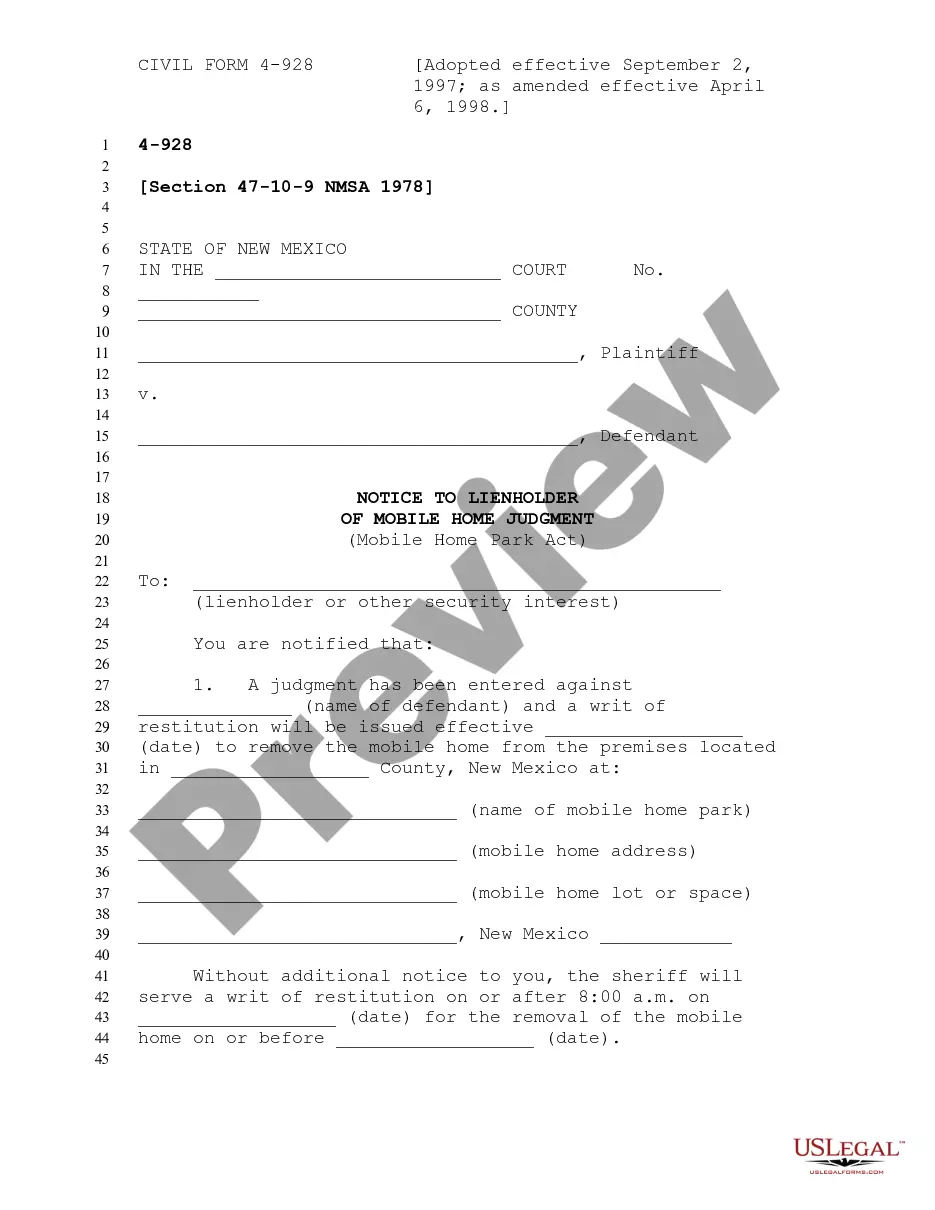
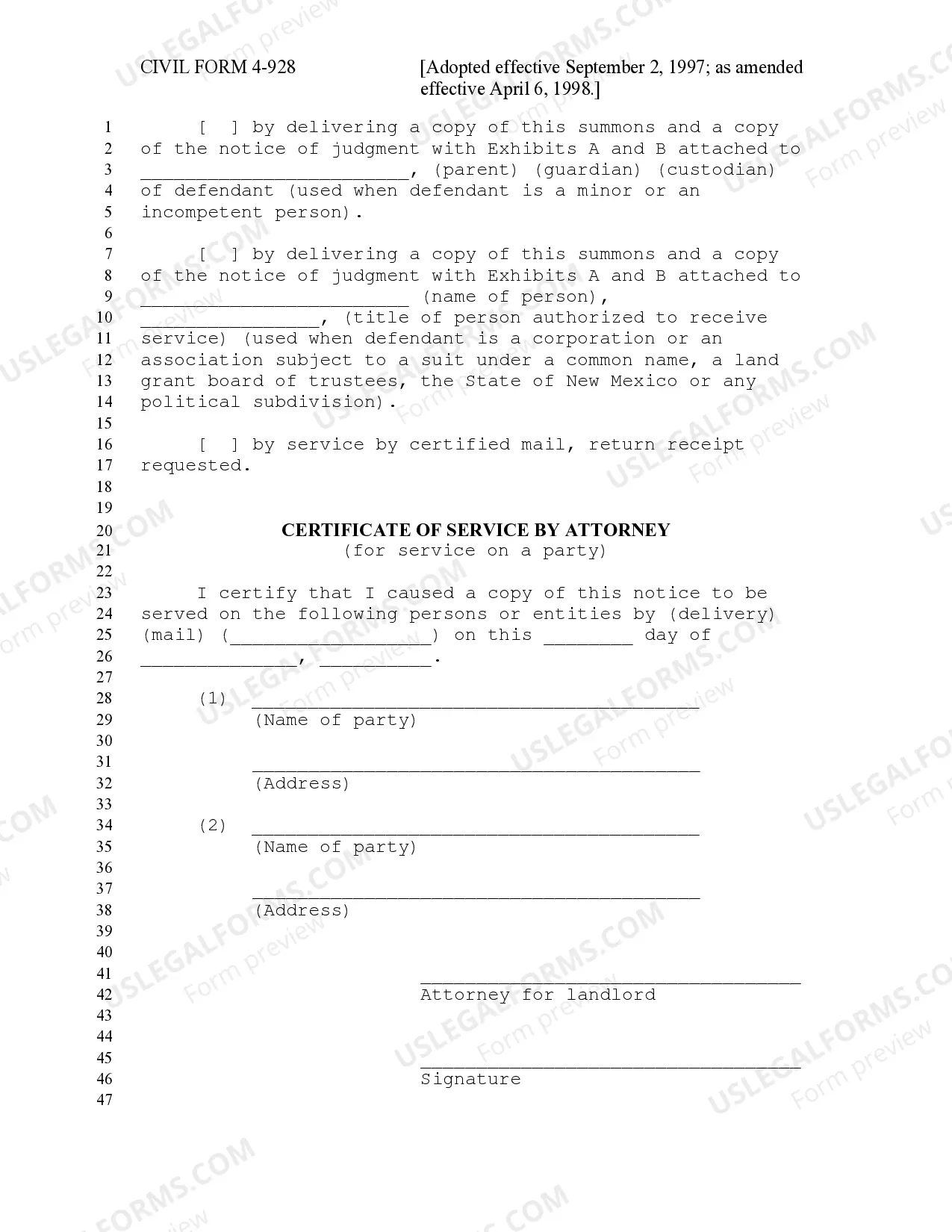
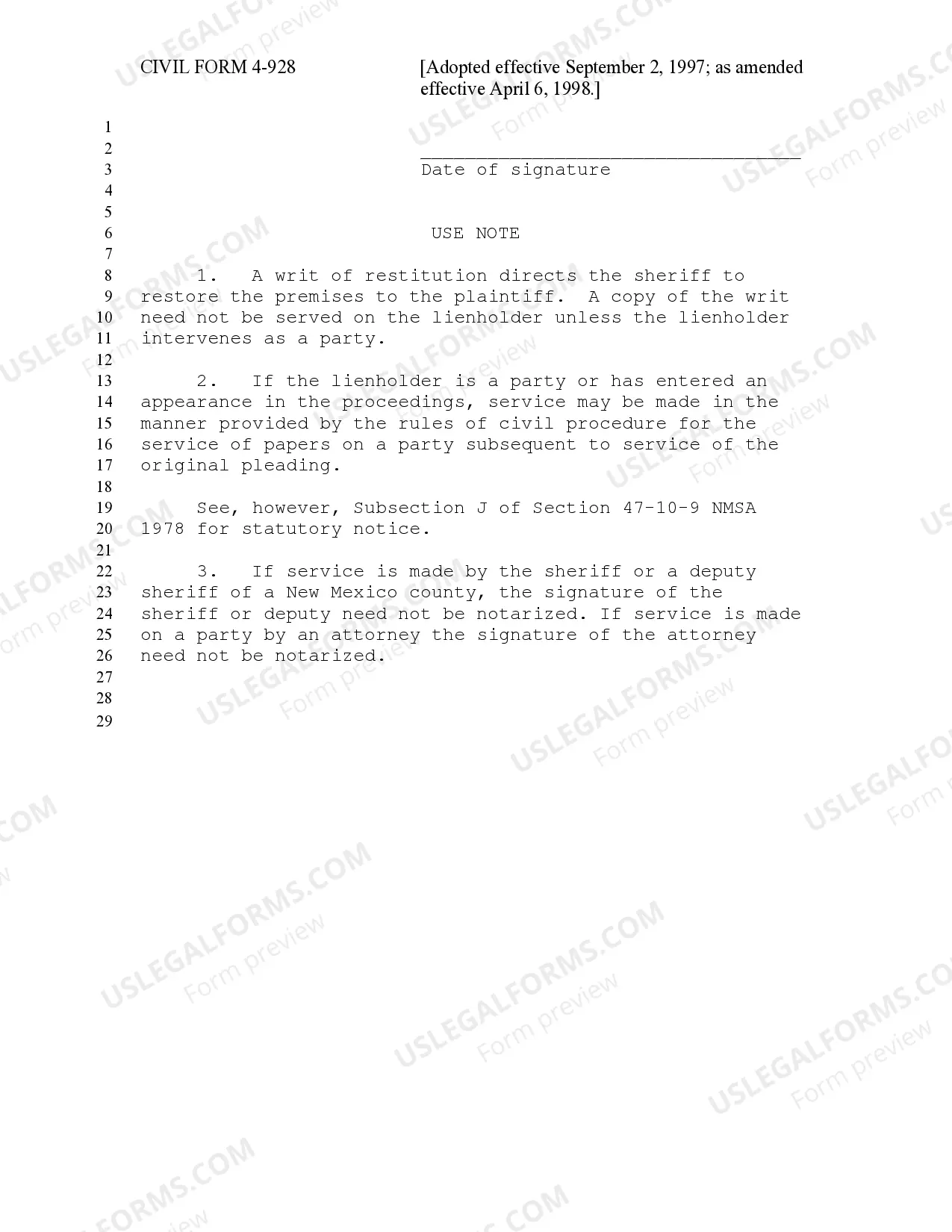
The Notice to Lienholder of Mobile Home Judgment is a legal document used in New Mexico to inform a lienholder about a judgment against the owner of a mobile home. It serves to notify the lienholder that a Writ of Restitution will be issued, leading to the mobile home's removal from the premises. This form is essential for complying with the Mobile Home Park Act, as it differs from other notices by specifically addressing lienholders and detailing their rights regarding the repossession of the mobile home.
Key components of this form
- A detailed header including court information and case number.
- The name of the lienholder receiving the notice.
- Identification of the defendant (owner of the mobile home).
- A statement of judgment and information about the Writ of Restitution.
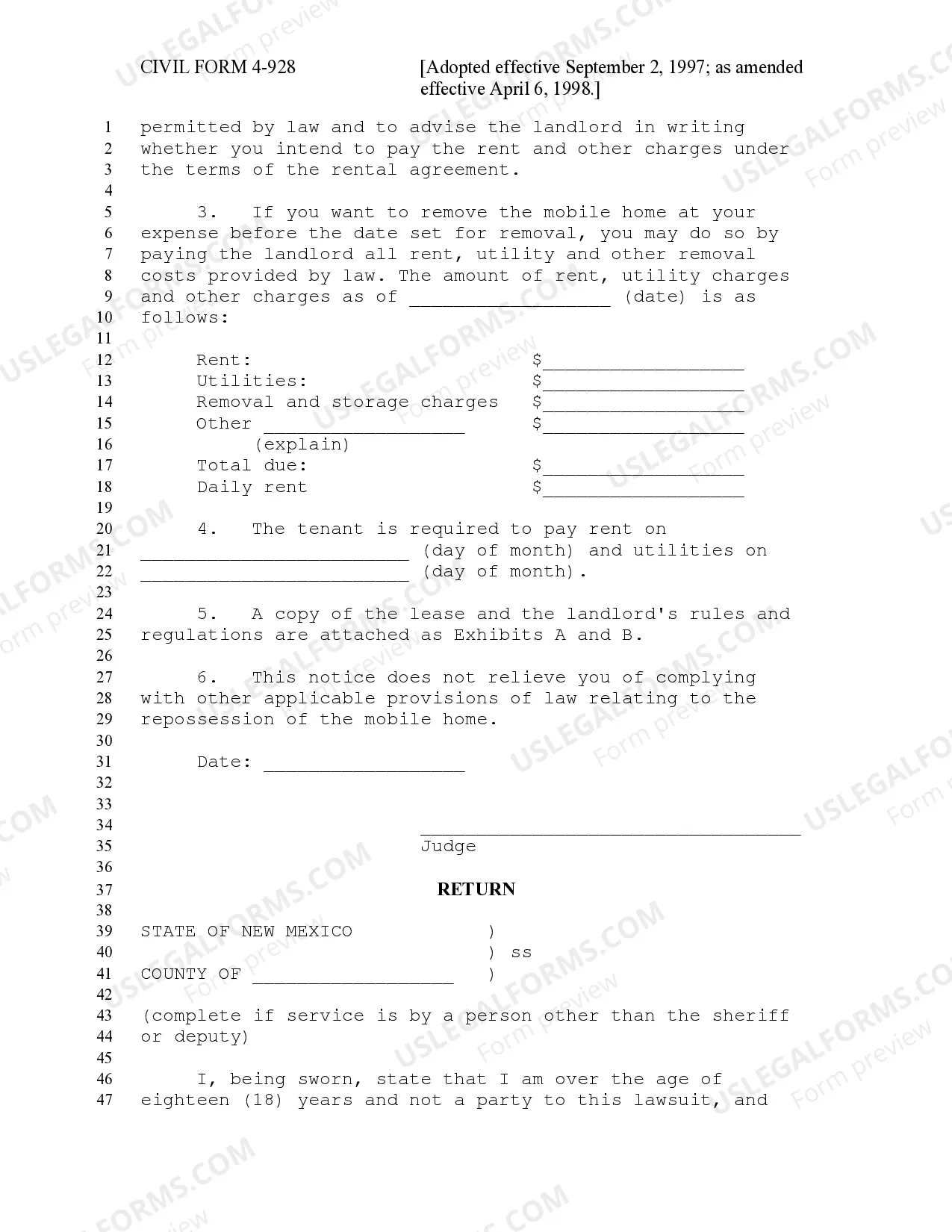
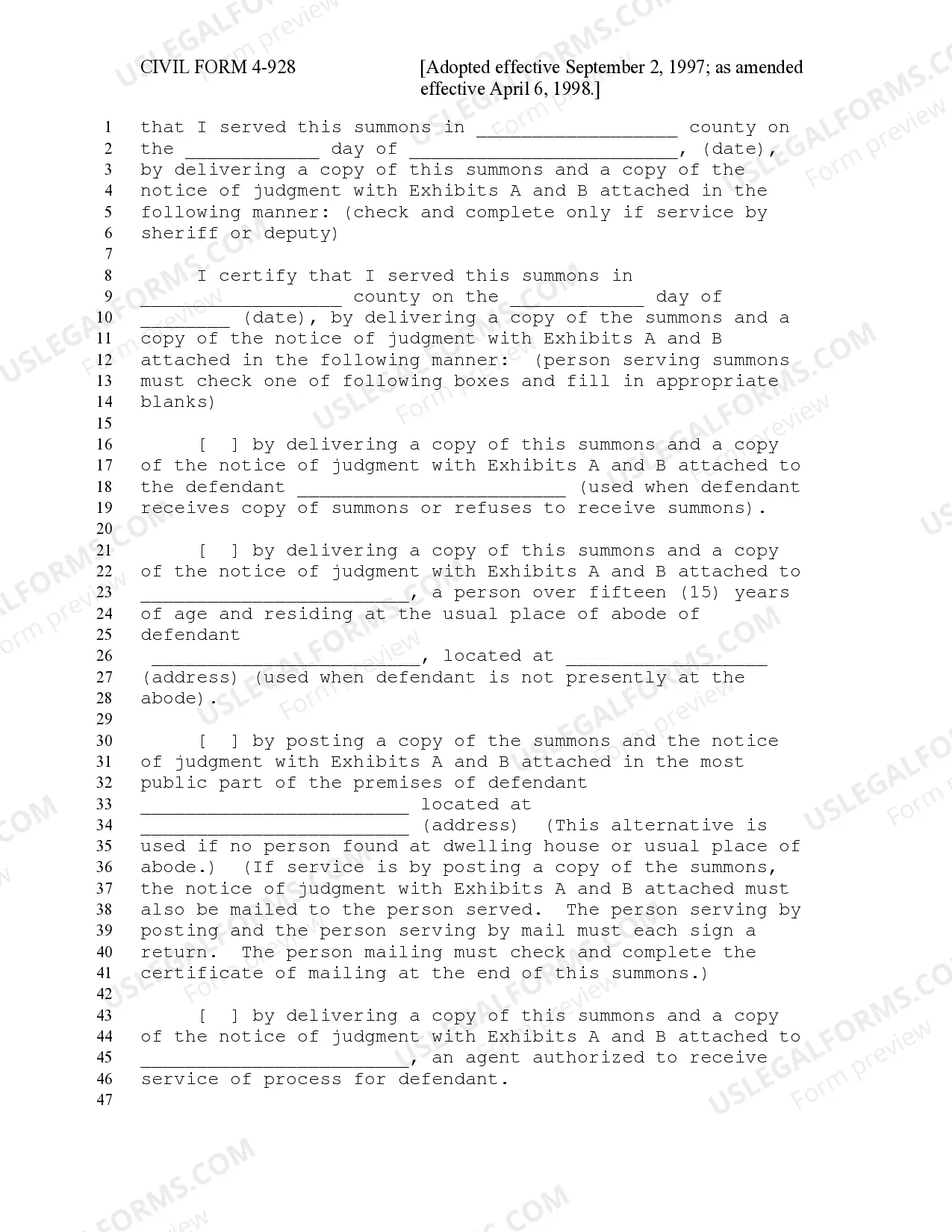
- Time frame for lienholder response and payment of outstanding charges.
- Details of the charges due, including rent and utility amounts.
- Attachment of lease and landlord rules as supporting documents.
Common use cases
This form should be used when a judgment has been entered against the owner of a mobile home in New Mexico, and a lienholder must be informed about the impending removal of the mobile home. It is applicable in situations where the mobile home is located in a mobile home park and is subject to repossession due to unpaid rent or other legal actions. Using this notice helps ensure that the lienholder is aware of their options and obligations under the law.
Who can use this document
- Lienholders with a security interest in a mobile home.
- Attorneys representing lienholders in mobile home repossession cases.
- Landlords managing mobile home parks and needing to inform lienholders of judgments.
How to prepare this document
- Identify the court and include the case number at the top of the document.
- Fill in the lienholder's name and details of the defendant-owner of the mobile home.
- Insert the date when the Writ of Restitution will take effect and provide property details.
- List the total amount owed, including rent, utilities, and any other charges, along with payment deadlines.
- Attach a copy of the lease and landlord's rules as specified in the form.
Does this document require notarization?
This form does not typically require notarization unless specified by local law. Ensure you check for any additional local requirements that may apply based on the specifics of the case.
Get your form ready online
Our built-in tools help you complete, sign, share, and store your documents in one place.
Make edits, fill in missing information, and update formatting in US Legal Forms—just like you would in MS Word.
Download a copy, print it, send it by email, or mail it via USPS—whatever works best for your next step.
Sign and collect signatures with our SignNow integration. Send to multiple recipients, set reminders, and more. Go Premium to unlock E-Sign.
If this form requires notarization, complete it online through a secure video call—no need to meet a notary in person or wait for an appointment.
We protect your documents and personal data by following strict security and privacy standards.

Make edits, fill in missing information, and update formatting in US Legal Forms—just like you would in MS Word.

Download a copy, print it, send it by email, or mail it via USPS—whatever works best for your next step.

Sign and collect signatures with our SignNow integration. Send to multiple recipients, set reminders, and more. Go Premium to unlock E-Sign.

If this form requires notarization, complete it online through a secure video call—no need to meet a notary in person or wait for an appointment.

We protect your documents and personal data by following strict security and privacy standards.
Common mistakes
- Failing to include accurate details about the mobile home and its address.
- Neglecting to specify the correct amounts owed, leading to potential disputes.
- Omitting the date of service or the required response time for the lienholder.
- Not including all necessary attachments, such as the lease and rules.
Why complete this form online
- Immediate access to a properly formatted legal document.
- Convenience of downloading and printing at any time.
- Editable fields allow for quick customization of specific details.
- Access to legal guidance ensures the form meets all state requirements.
Legal use & context
- Serves as formal notification to lienholders about legal action against a mobile home.
- Ensures rights of lienholders are protected under New Mexico law.
- Supports landlords in administrative processes related to eviction procedures.
What to keep in mind
- The form is mandatory for notifying lienholders of a judgment against a mobile home owner.
- Timely completion and submission are crucial to protect legal rights and avoid additional complications.
- Understanding the legal implications of the form ensures appropriate actions are taken by lienholders.
Looking for another form?
Form popularity
FAQ
In most cases, after your lien has been filed your customer resolves their account and you need to remove a lien. Once you have received payment in full, or a settlement amount, and the funds have cleared then you are obligated to remove the lien, You can contact Lien-Pro directly to remove liens.
The lien gives the creditor an interest in your property so that it can get paid for the debt you owe. If you sell the property, the creditor will be paid first before you receive any proceeds from the sale. And in some cases, the lien gives the creditor the right to force a sale of your property in order to get paid.
In most cases, the lien holder (the lender in this case) should send the release to be recorded within 30-90 days. If you aren't sure what the requirements are in your area, reach out to your real estate agent, title agent, or real estate attorney for guidance.
Pay off your debt. Fill out a release-of-lien form and have the lien holder sign it. Run out the statute of limitations. Get a court order. Make a claim with your title insurance company. Learn more:
If a vehicle is part of a financing agreement, the legal owner will be the individual or entity that provides the financing, and is referred to as the lienholder. The registered owner is responsible for maintaining compliance with DMV laws and regulations.
A lienholder is a lender that legally has an interest in your property until you pay it off in full. The lender which can be a bank, financial institution or private party holds a lien, or legal claim, on the property because they lent you the money to purchase it.
If you are financing your car through a bank, private lender, or dealership, they are the lienholder. The lienholder owns your car while you make payments on it. If you default on the loan, the lienholder can repossess the vehicle.
Pay off your debt. Fill out a release-of-lien form and have the lien holder sign it. Run out the statute of limitations. Get a court order. Make a claim with your title insurance company. Learn more: