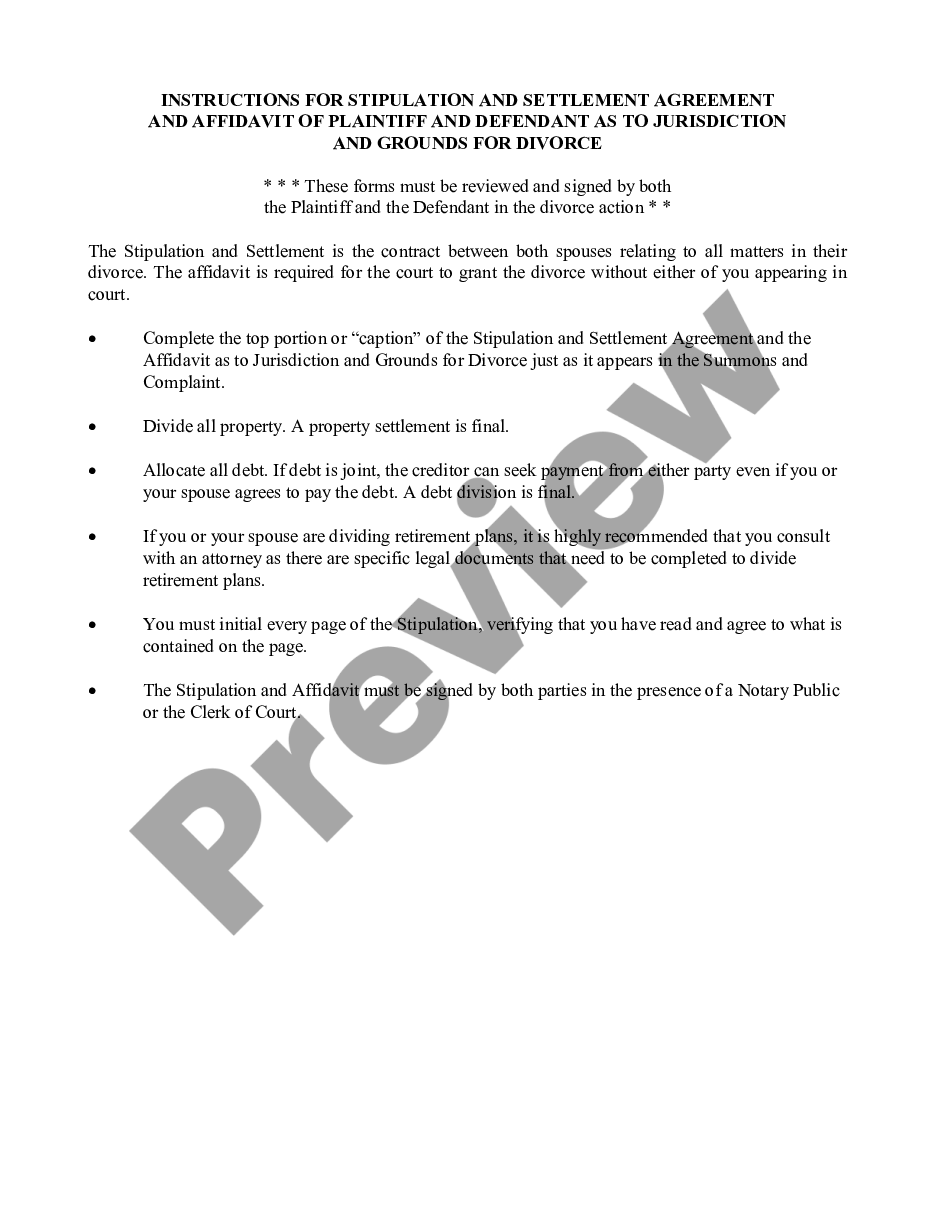
New Mexico Parenting Plan Developed and Agreed by Parties for their Child
What this document covers
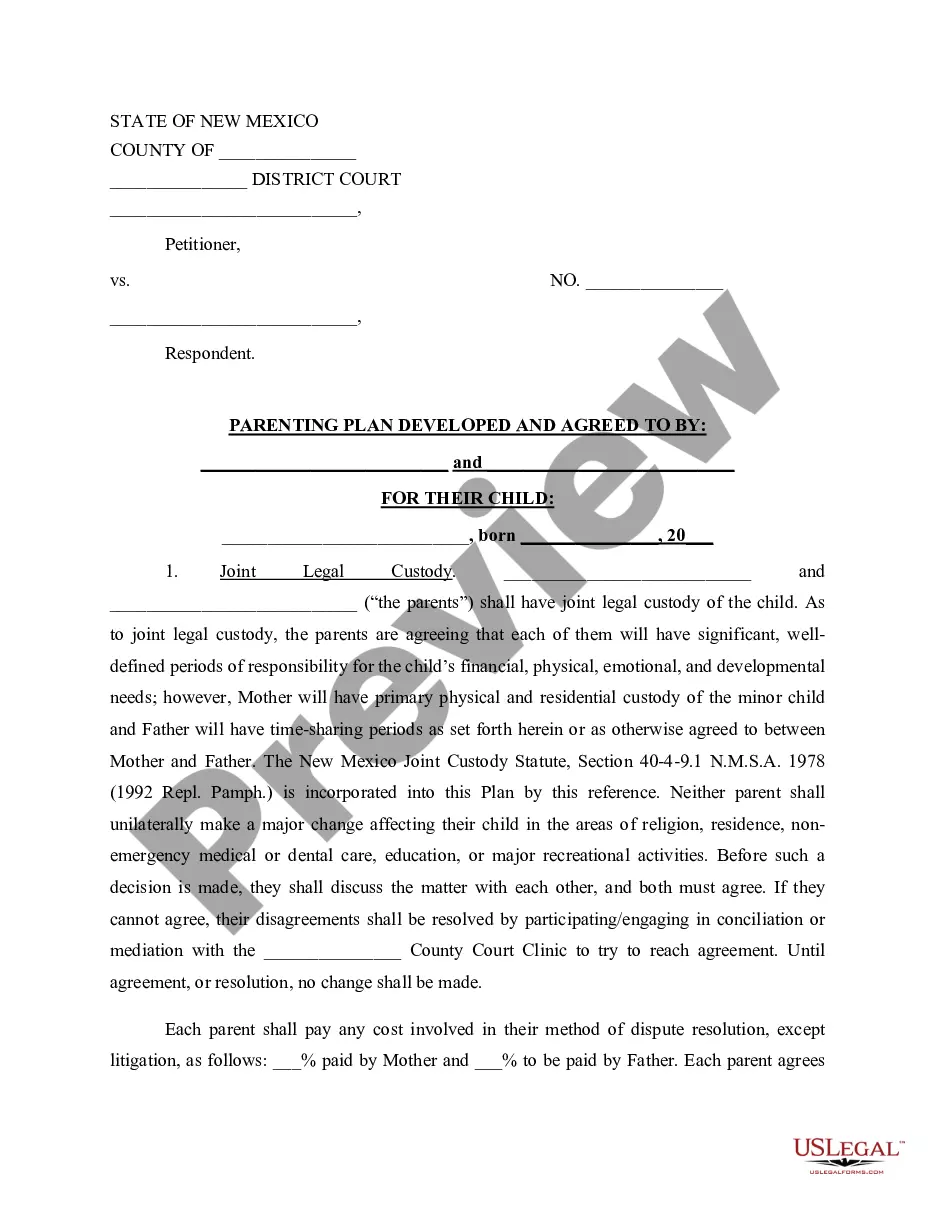
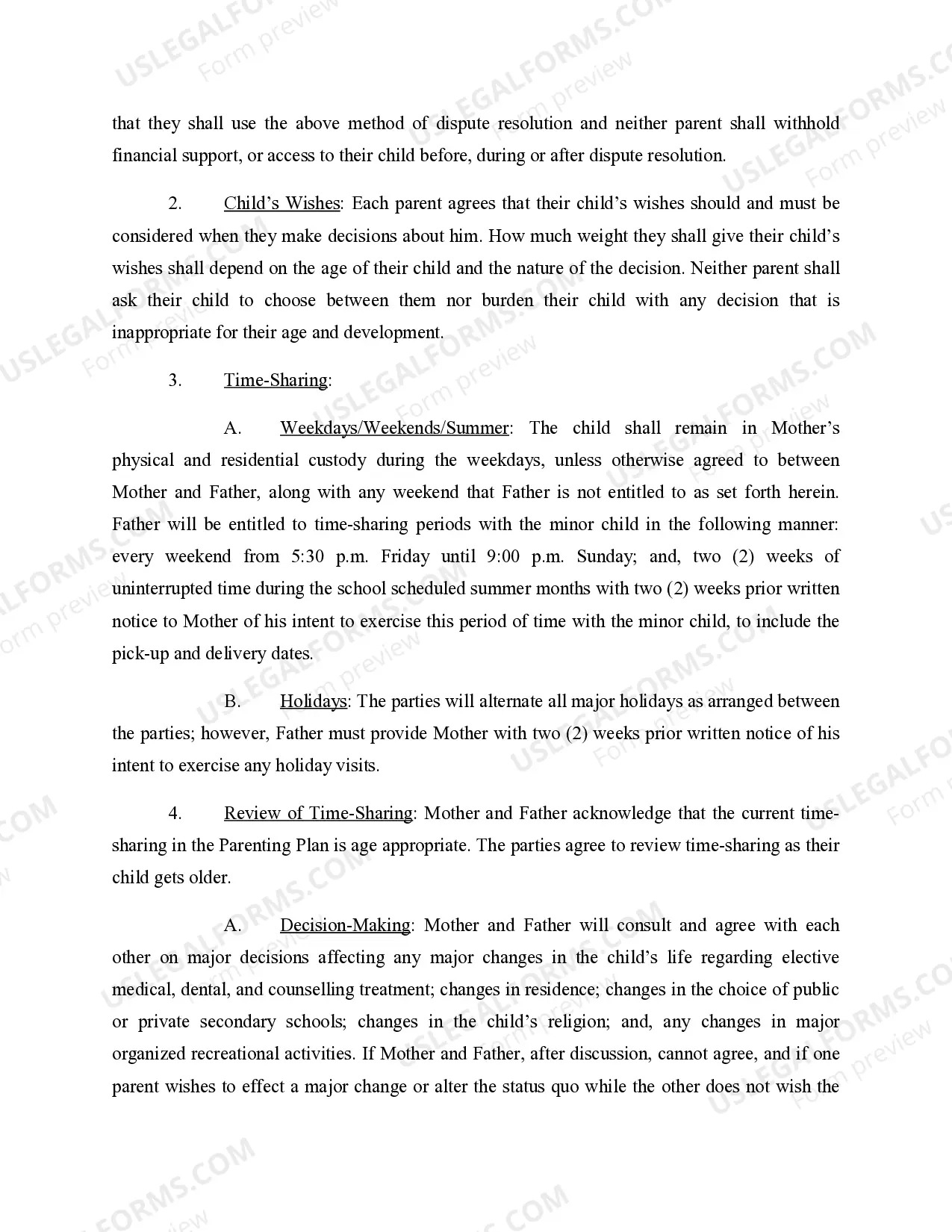
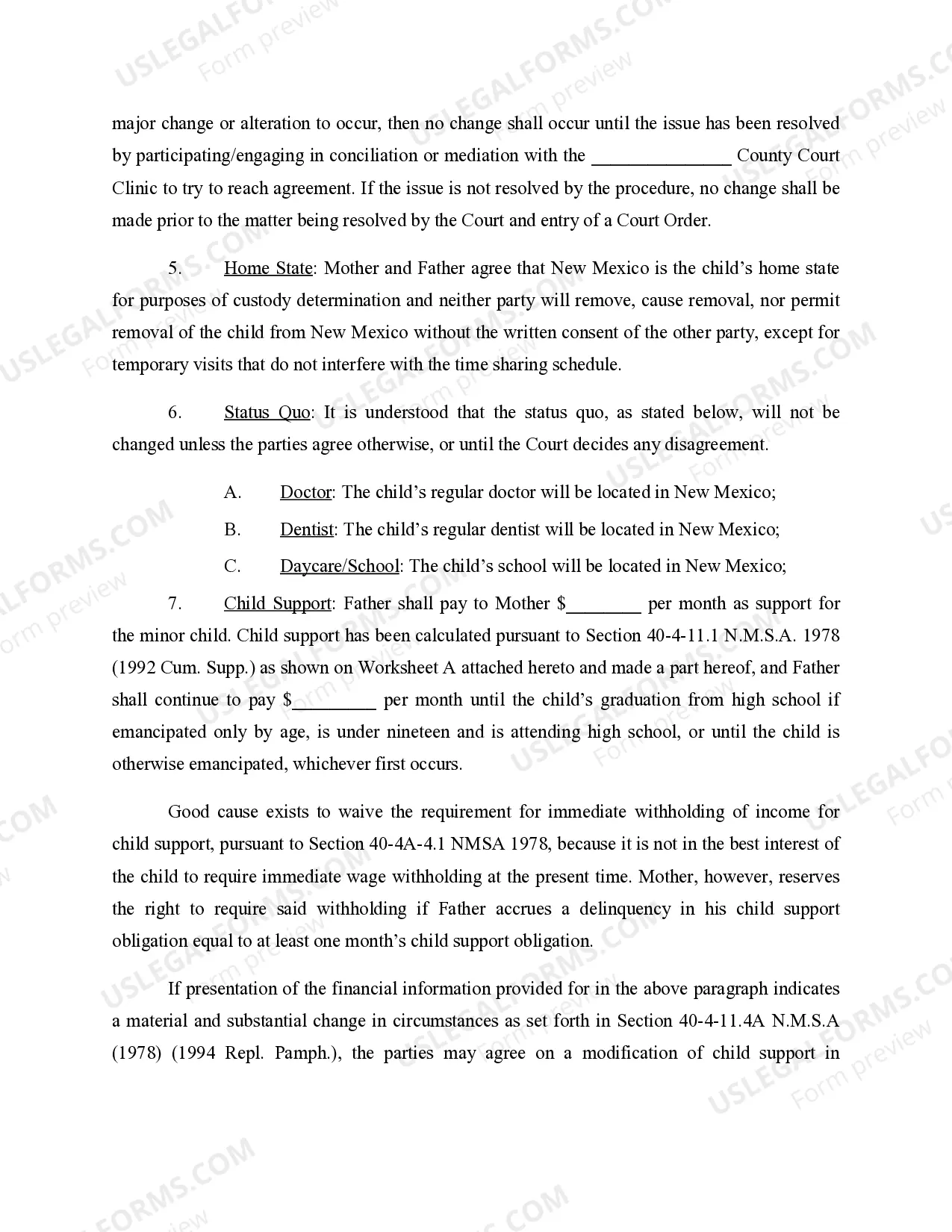
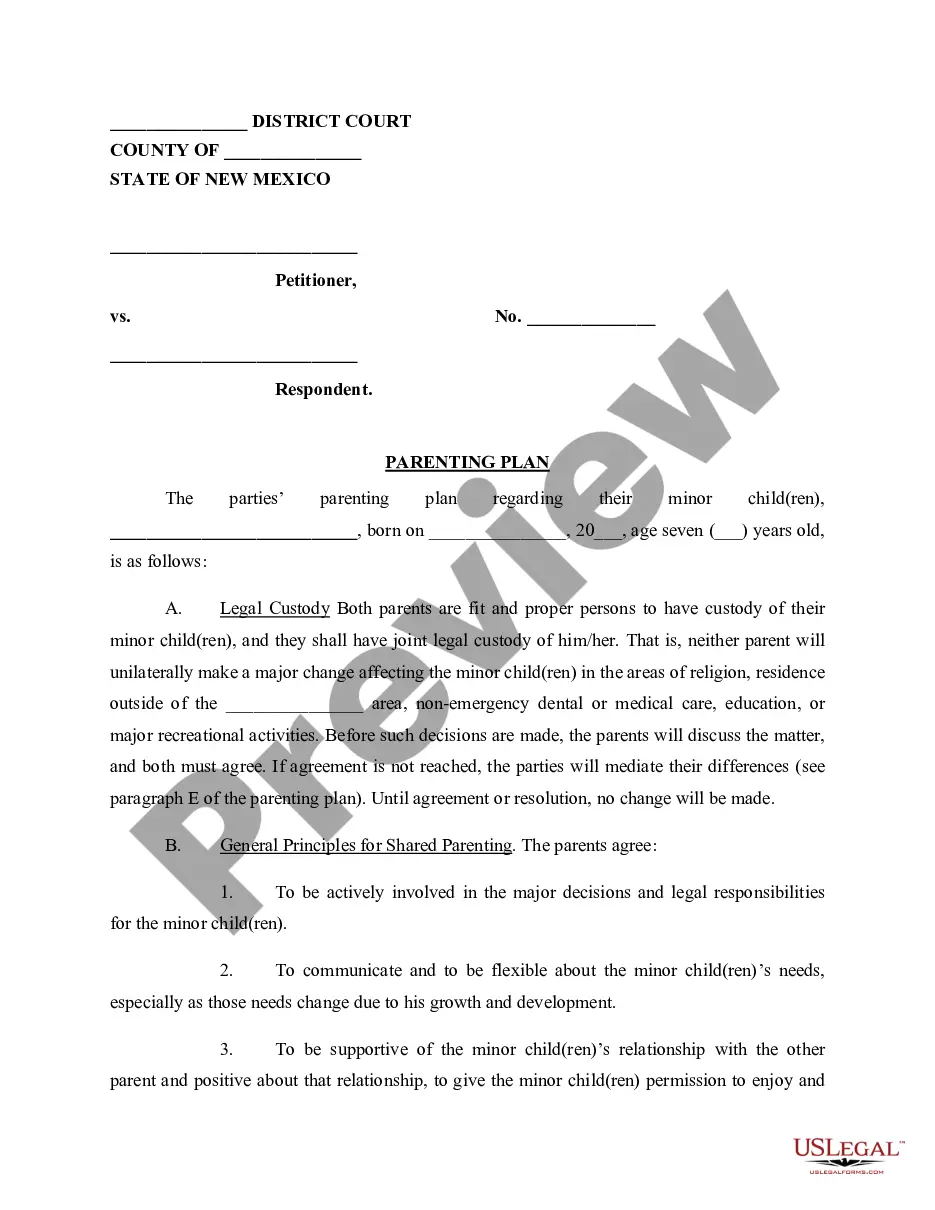
The Parenting Plan Developed and Agreed by Parties for their Child is a legal document used by parents who are separating to outline a mutual agreement on parenting arrangements for their children. This plan details aspects such as custody, time-sharing, and child support, ensuring both parents remain actively involved in the child's life. Unlike generic custody agreements, this form is tailored to reflect the specific dynamics of the parties involved, making it essential for fostering a cooperative parenting environment post-separation.
Main sections of this form
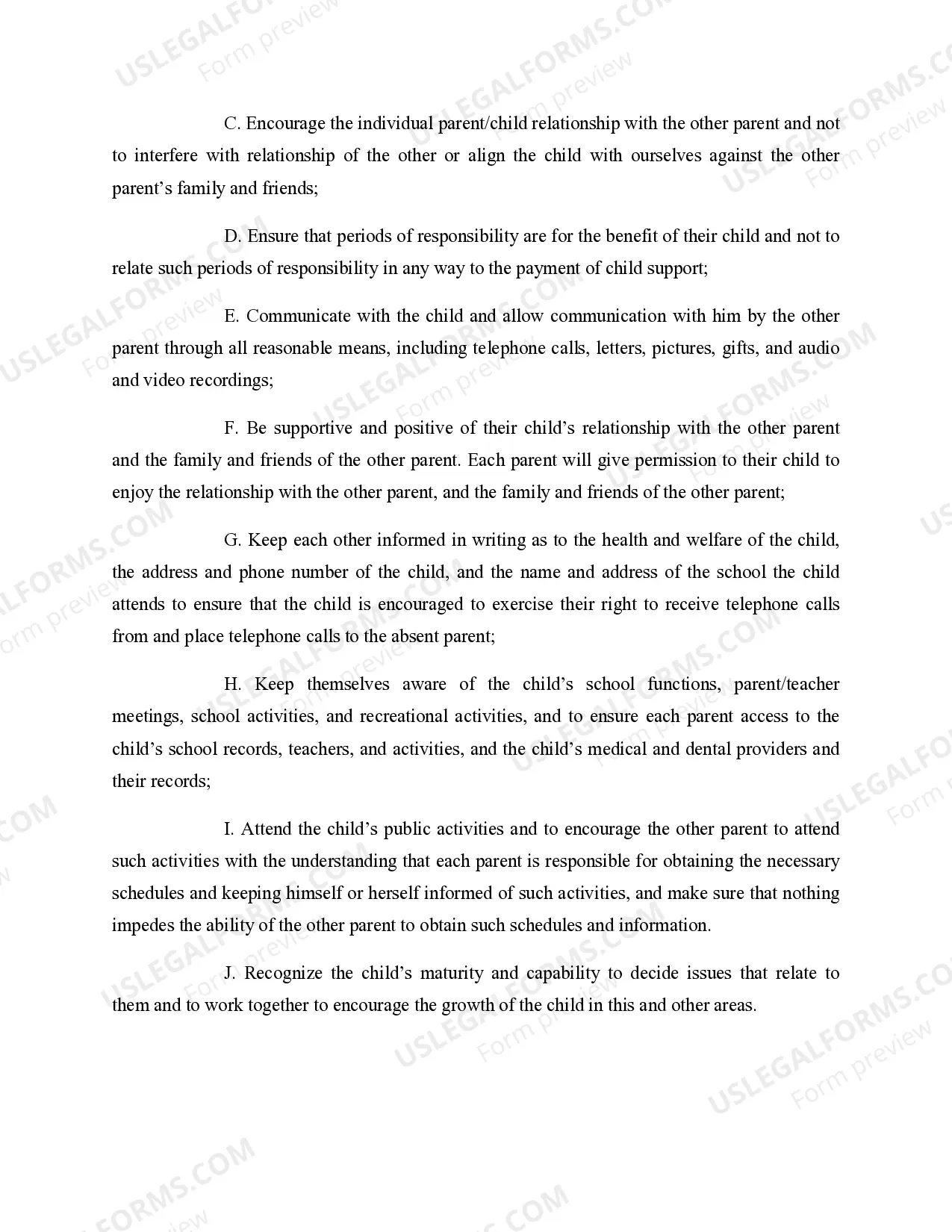
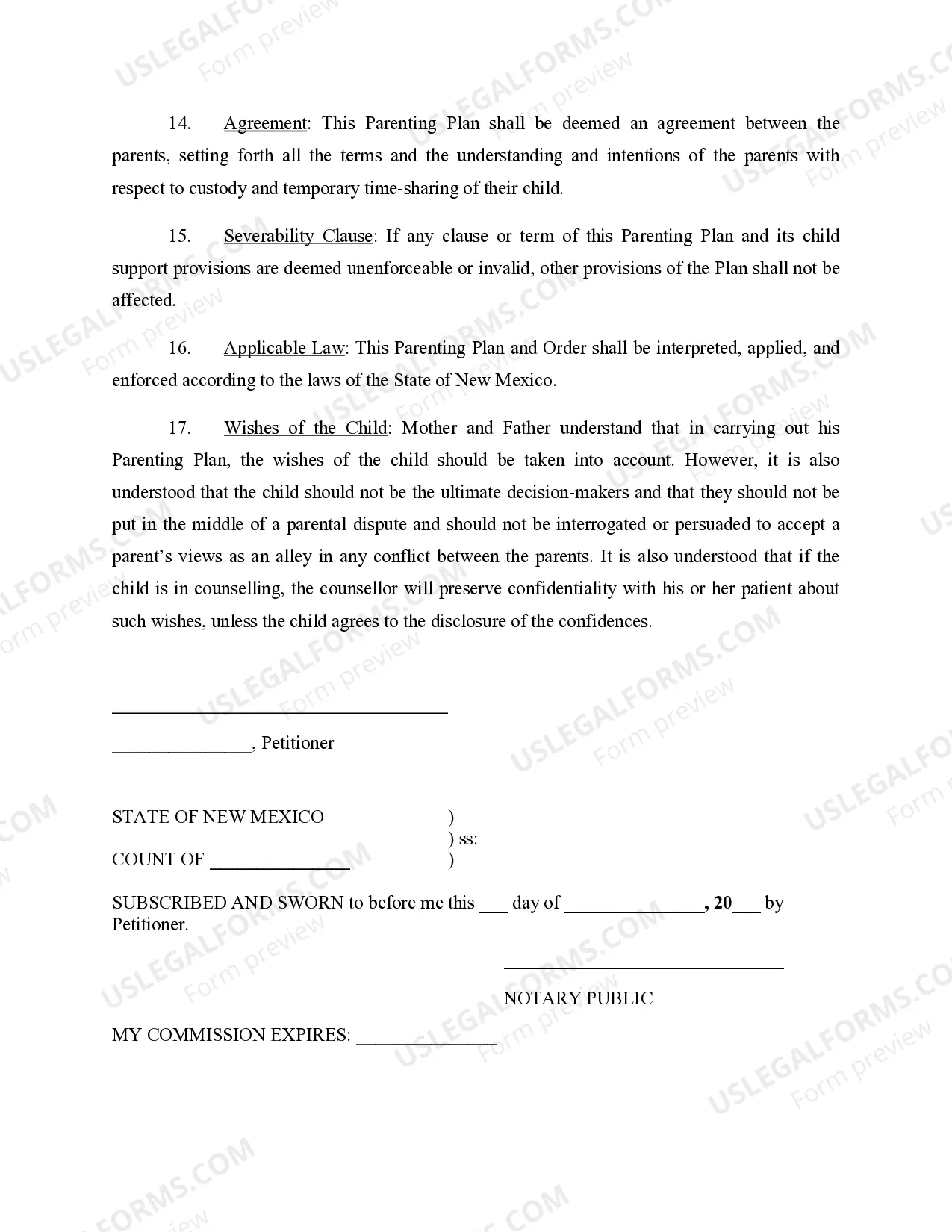
- Joint legal custody: Outlines shared decision-making responsibilities.
- Childâs wishes: Considers the child's preferences in decisions as appropriate for their age.
- Time-sharing schedule: Specifies custody arrangements, including weekdays, weekends, and holidays.
- Child support details: Defines monetary support obligations and payment terms.
- Notification requirements: Establishes communication protocols between parents regarding the childâs wellbeing.
- Emergency procedures: Addresses decision-making authority in emergency situations.

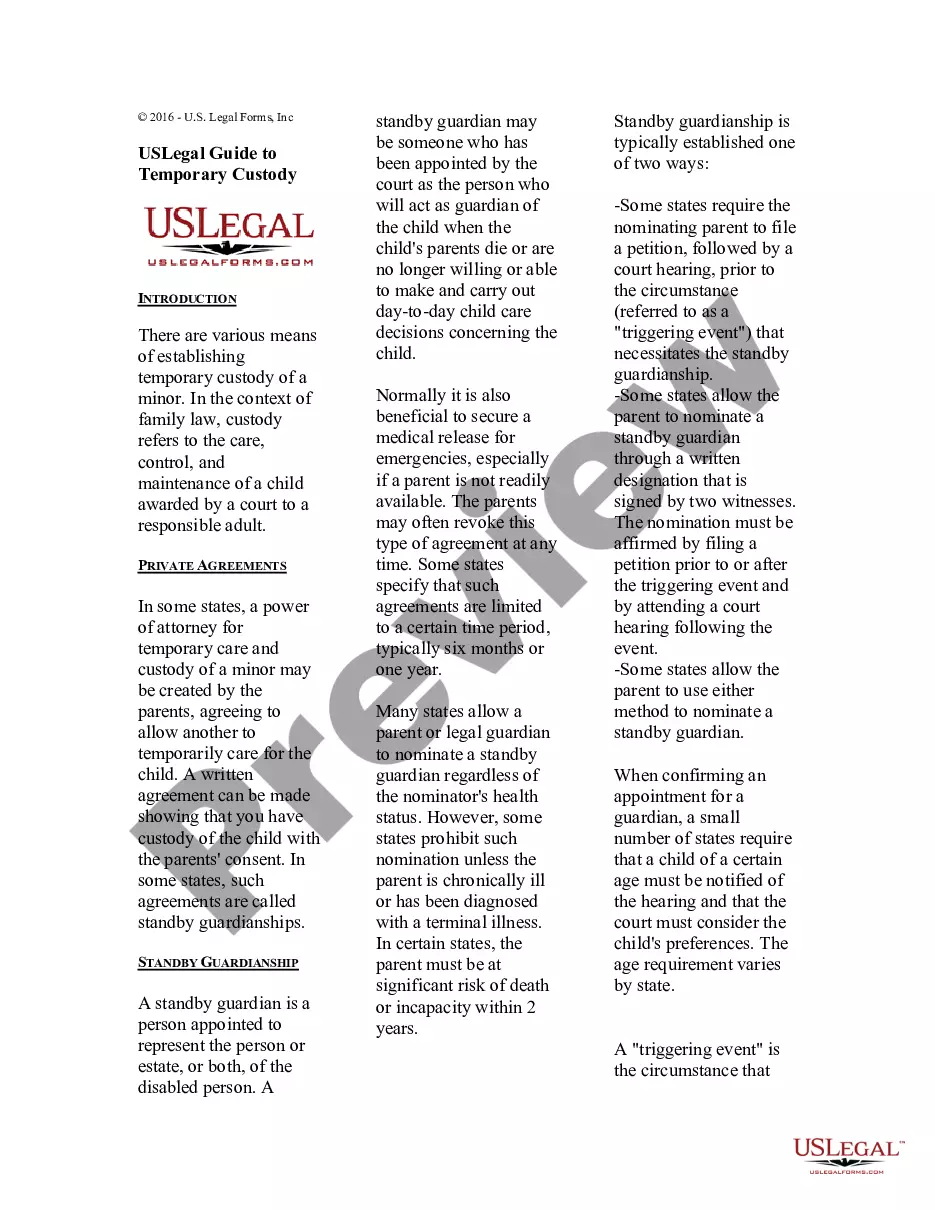
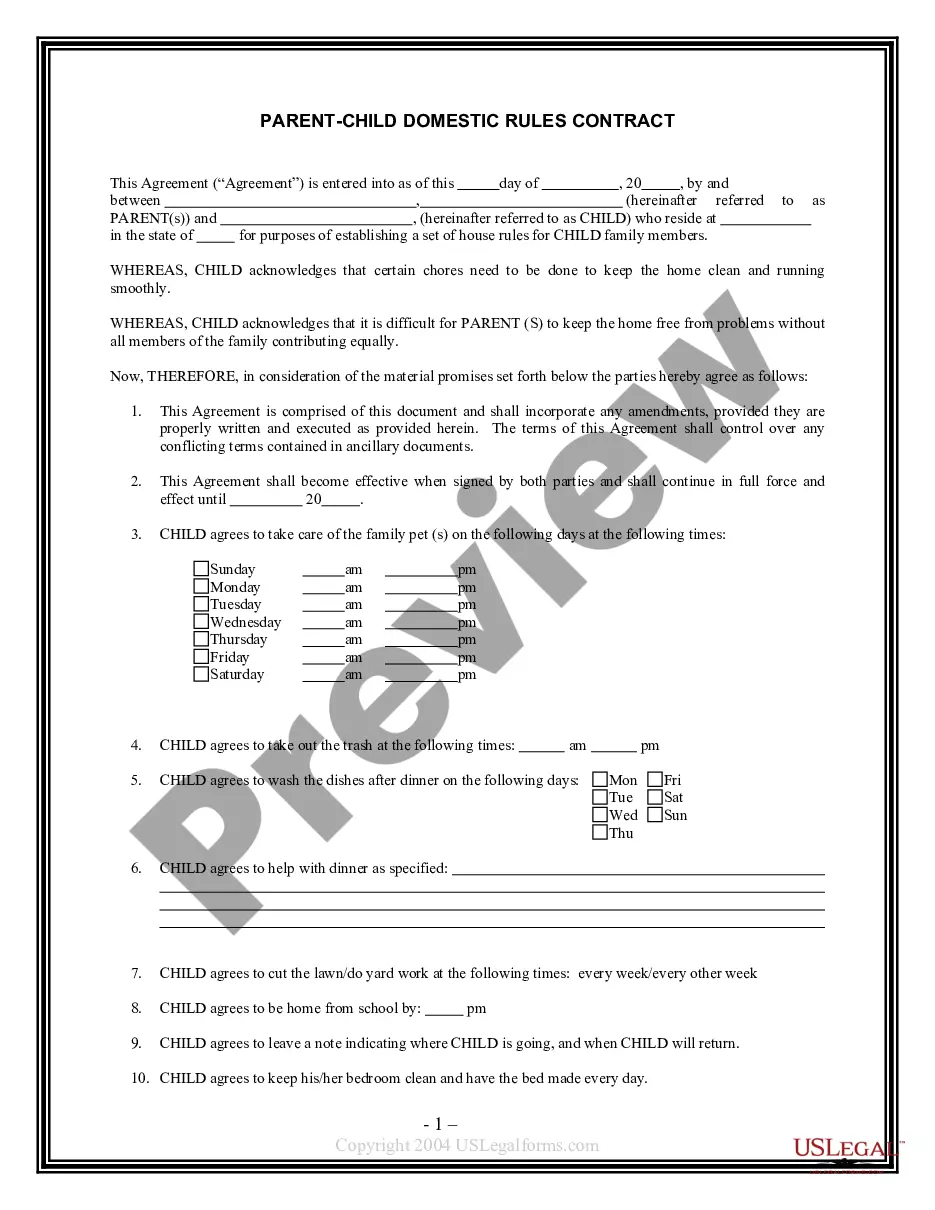
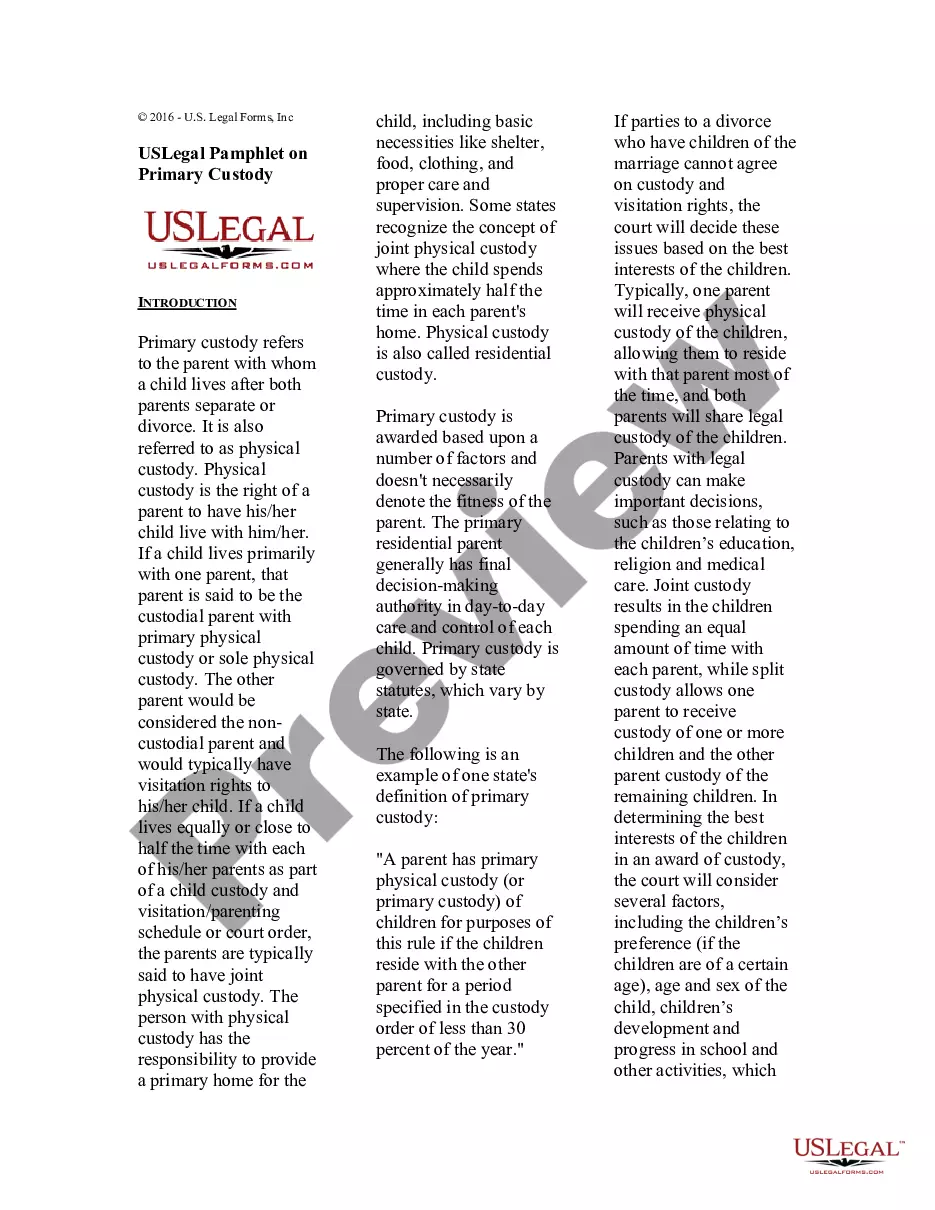
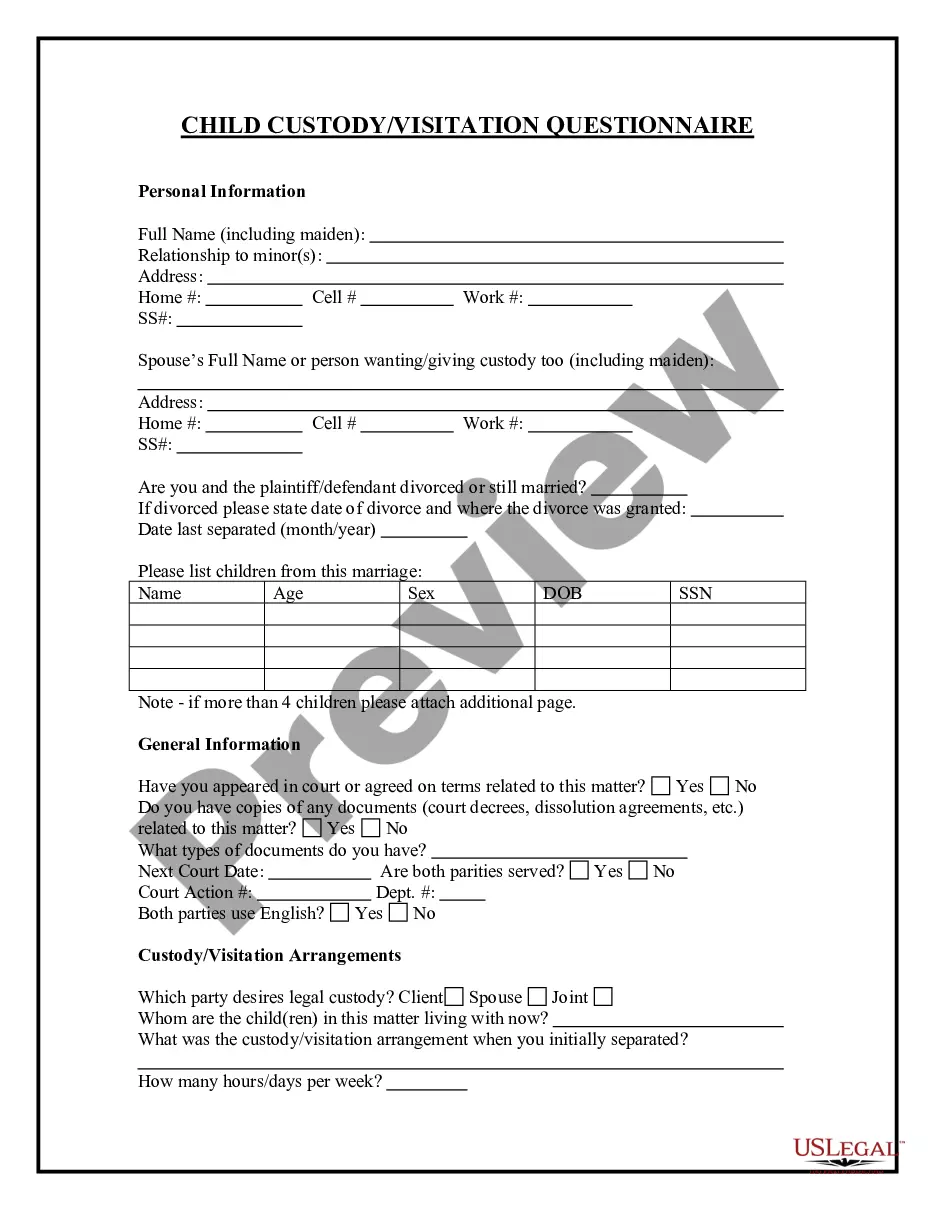
Situations where this form applies
This form is useful when parents are separating or divorcing and need a comprehensive plan to govern their shared responsibilities regarding their children. It helps to establish clear terms related to custody, visitation, and financial support, making it ideal for parents who want to avoid further disputes and ensure a smooth transition for their children during a challenging time.
Who should use this form
- Parents undergoing separation or divorce.
- Individuals wanting to formalize a co-parenting agreement.
- Guardians with shared custody arrangements.
Steps to complete this form
- Identify the parties: Enter the names of both parents and their roles.
- Specify the child: Name the child and include their date of birth.
- Detail custody arrangements: Fill in sections regarding legal and physical custody, emphasizing joint responsibilities.
- Outline time-sharing: Clearly define the visitation schedule, including weekdays, weekends, and holidays.
- Determine child support: Specify the amount of child support and any additional expenses, such as health care costs.
- Sign and notarize: Both parents should sign the form and have it notarized to ensure its legal validity.
Does this document require notarization?
Yes, this form must be notarized to be legally valid. The online notarization services provided by US Legal Forms ensure a secure and efficient process, allowing you to complete notarization through secure video calls at any time without having to travel.
Get your form ready online
Our built-in tools help you complete, sign, share, and store your documents in one place.
Make edits, fill in missing information, and update formatting in US Legal Forms—just like you would in MS Word.
Download a copy, print it, send it by email, or mail it via USPS—whatever works best for your next step.
Sign and collect signatures with our SignNow integration. Send to multiple recipients, set reminders, and more. Go Premium to unlock E-Sign.
If this form requires notarization, complete it online through a secure video call—no need to meet a notary in person or wait for an appointment.
We protect your documents and personal data by following strict security and privacy standards.

Make edits, fill in missing information, and update formatting in US Legal Forms—just like you would in MS Word.

Download a copy, print it, send it by email, or mail it via USPS—whatever works best for your next step.

Sign and collect signatures with our SignNow integration. Send to multiple recipients, set reminders, and more. Go Premium to unlock E-Sign.

If this form requires notarization, complete it online through a secure video call—no need to meet a notary in person or wait for an appointment.

We protect your documents and personal data by following strict security and privacy standards.
Avoid these common issues
- Failing to involve both parents in the drafting process, which can lead to conflicts later.
- Omitting critical details about holiday schedules or special events.
- Not updating the plan as circumstances change (e.g., child's age or needs).
- Neglecting to notarize the plan, making it less enforceable.
Benefits of using this form online
- Convenient access: Downloadable and editable forms provide flexibility in creating a customized agreement.
- Professional input: Templates drafted by licensed attorneys ensure legal accuracy.
- Easy to complete: A guided structure simplifies the process for individuals without legal backgrounds.
Looking for another form?




Form popularity
FAQ
Paternity is the legal equivalent of fatherhood, and in the state of New Mexico, it means a government agency or court has determined someone to be a child's father. However, in addition to this legal process, parents can also voluntarily establish paternity.
The most common arrangement is one in which one parent has sole physical custody, both parents have legal custody, and the noncustodial parent is granted visitation time.
When a parent violates a court-ordered or agreed-upon parenting plan, they run the risk of being held in contempt of court. Not only that, but they could face custody and visitation-related consequences if the court considers it to be a serious and consistent enough issue.
In New Mexico, is there a bias favoring mothers in custody cases? In child custody cases and any domestic proceedings involving the custody or visitation of children, the State of New Mexico does not favor one parent over another based on gender (NMSA § 40-4-9.1C).
Although the law specifically permits children at least 14-years-old to express an opinion, there is no specific age when a judge will listen to a child's opinion. California statutes also permit a child younger than 14 years old to testify regarding a custodial preference, unless the court decides it's not in the
1 attorney answer Although a child's wishes are one factor among many the court must consider in determining the child's best interests, a minor child never gets to "decide" which parent to live with.
A parenting agreement becomes legally binding once approved by a judge. There are, therefore, potential legal consequences that can pursued if one or both parents violate a court order.
If the child is 12 or older, the judge may consider the wishes of the child. The judge may consider the wishes of the child as long as the judge determines that the child is "of sufficient age and capacity."
New Mexico courts decide custody based on the best interests of the child. This is the same standard as most states. What's different in New Mexico is at 14 years old, a court considers the desires of the minor rather than determining custody based on the best interest standard.