New Mexico Declaration of Covenants and Restrictions
What this document covers
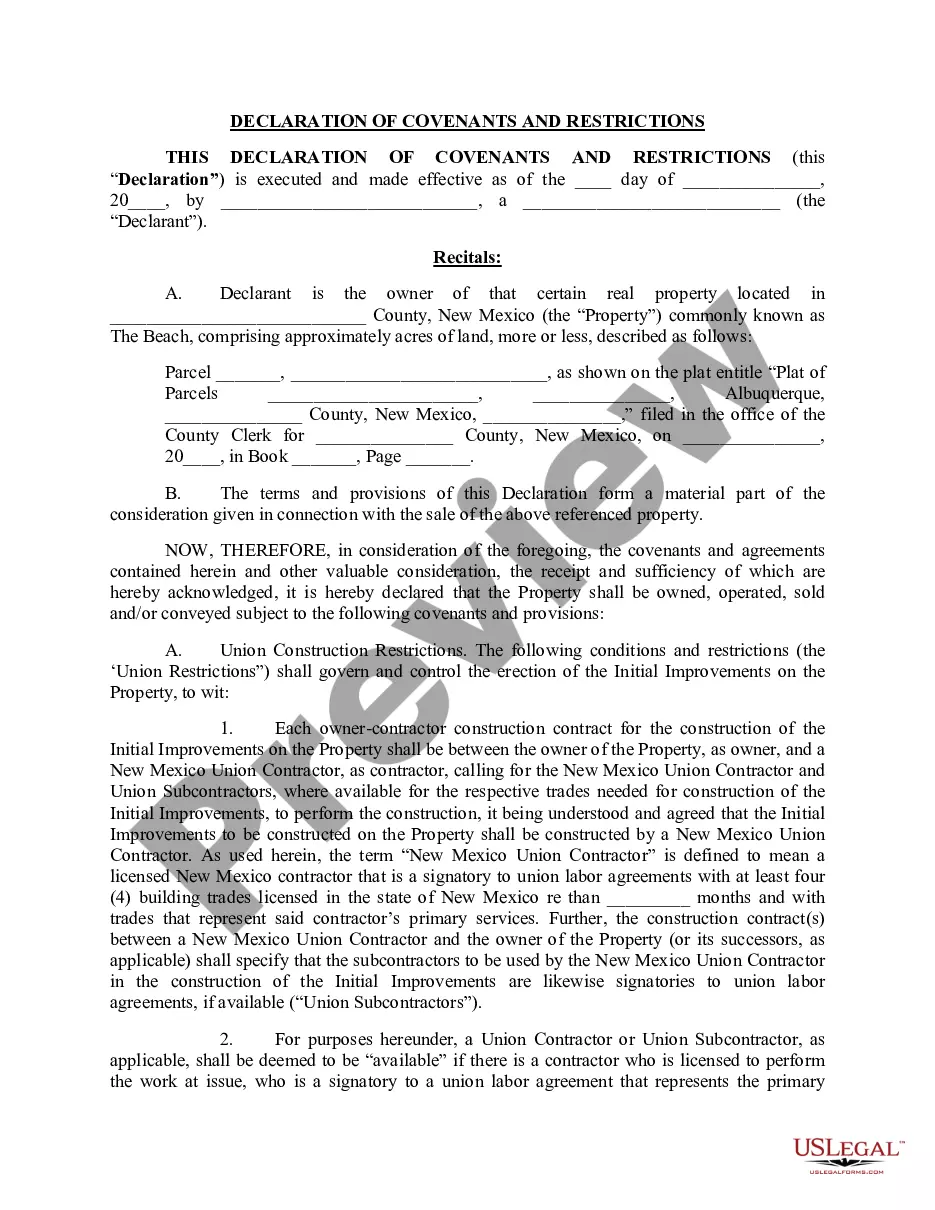
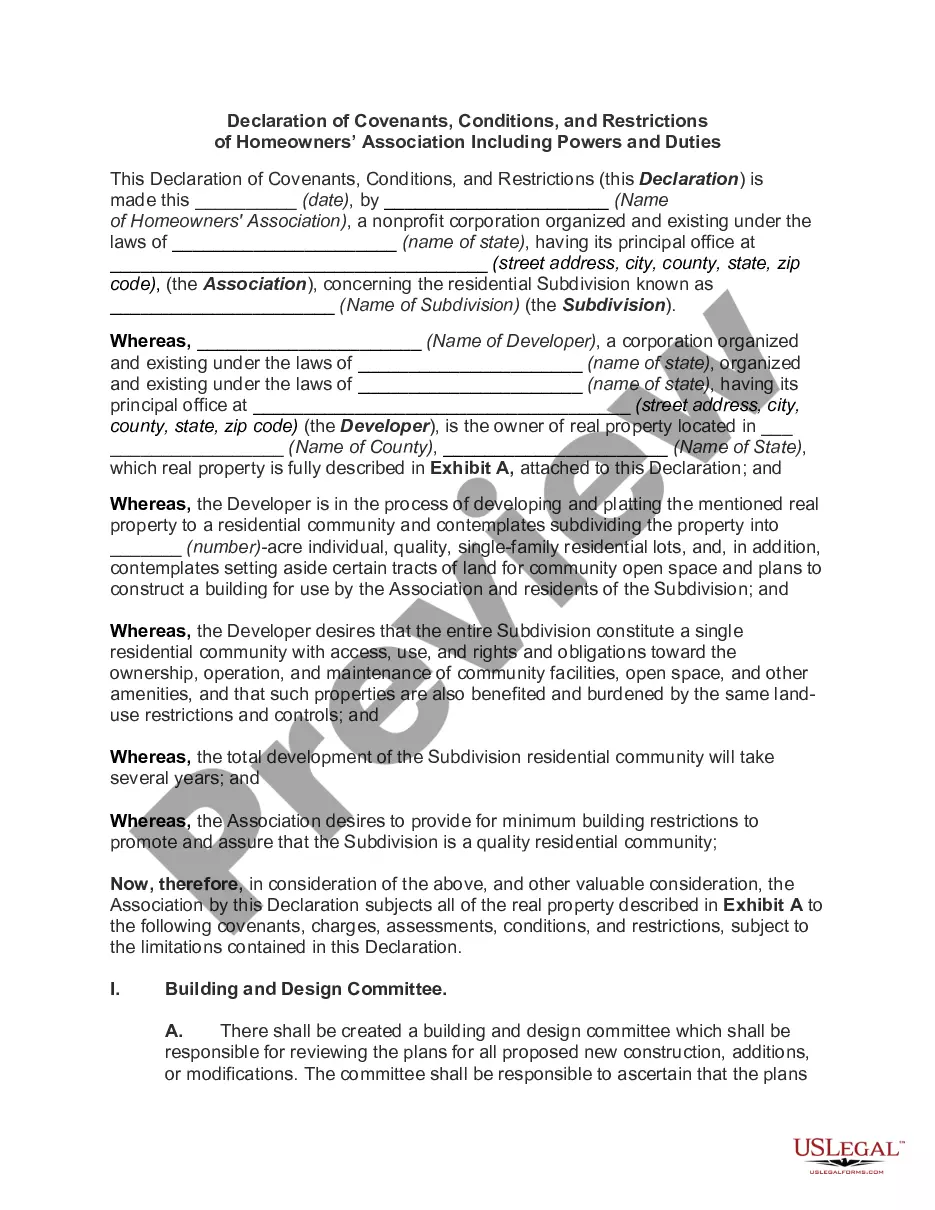
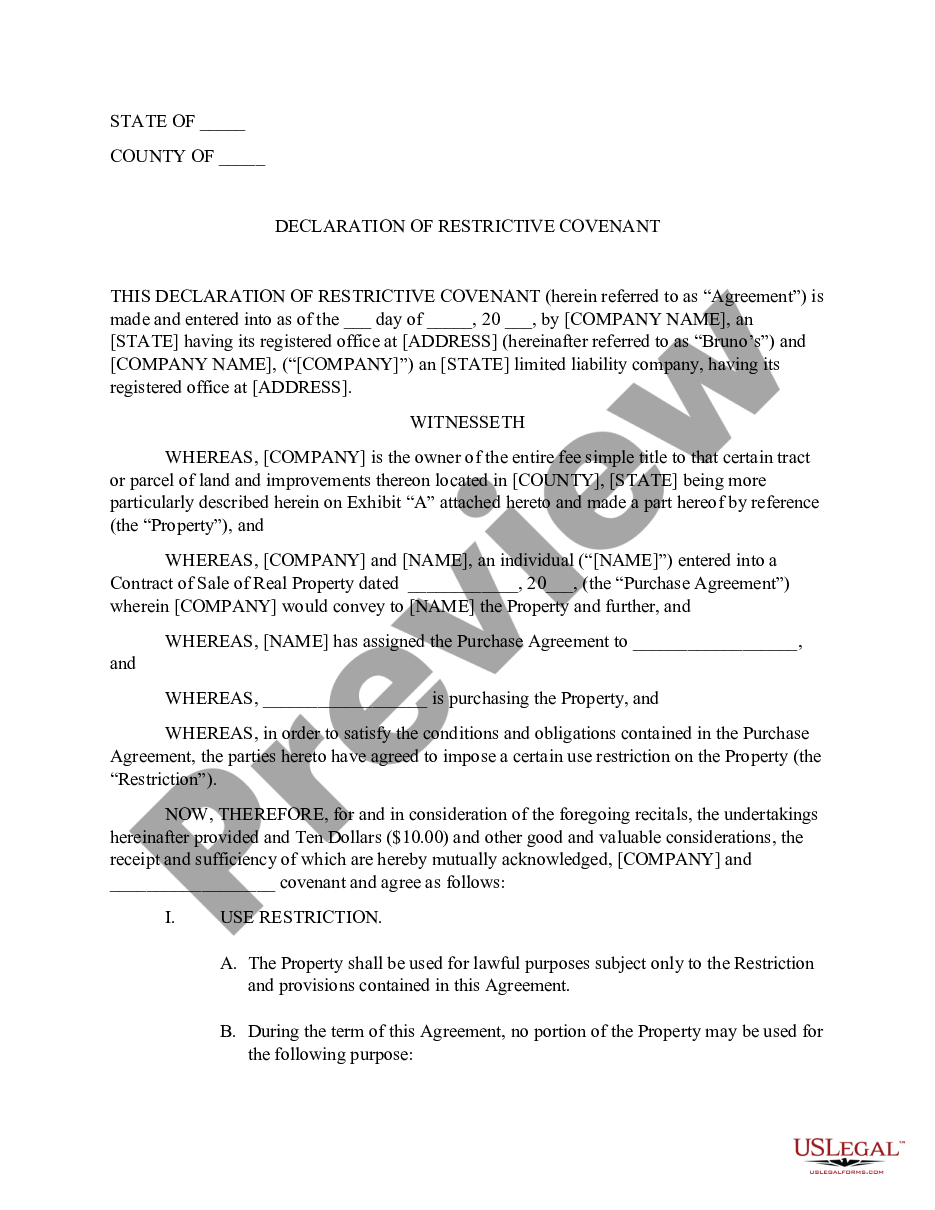
The Declaration of Covenants and Restrictions is a legal document that outlines specific rules and guidelines for the ownership and use of a parcel of land. This form is commonly employed in residential subdivisions or planned communities to maintain a consistent standard for property appearance and usage. Unlike general property deeds, this declaration imposes binding obligations on current and future owners, ensuring compliance with established restrictions and maintaining the propertyâs character.
Form components explained
- Identification of the Declarant and property details.
- Statements of Union Construction Restrictions on the property.
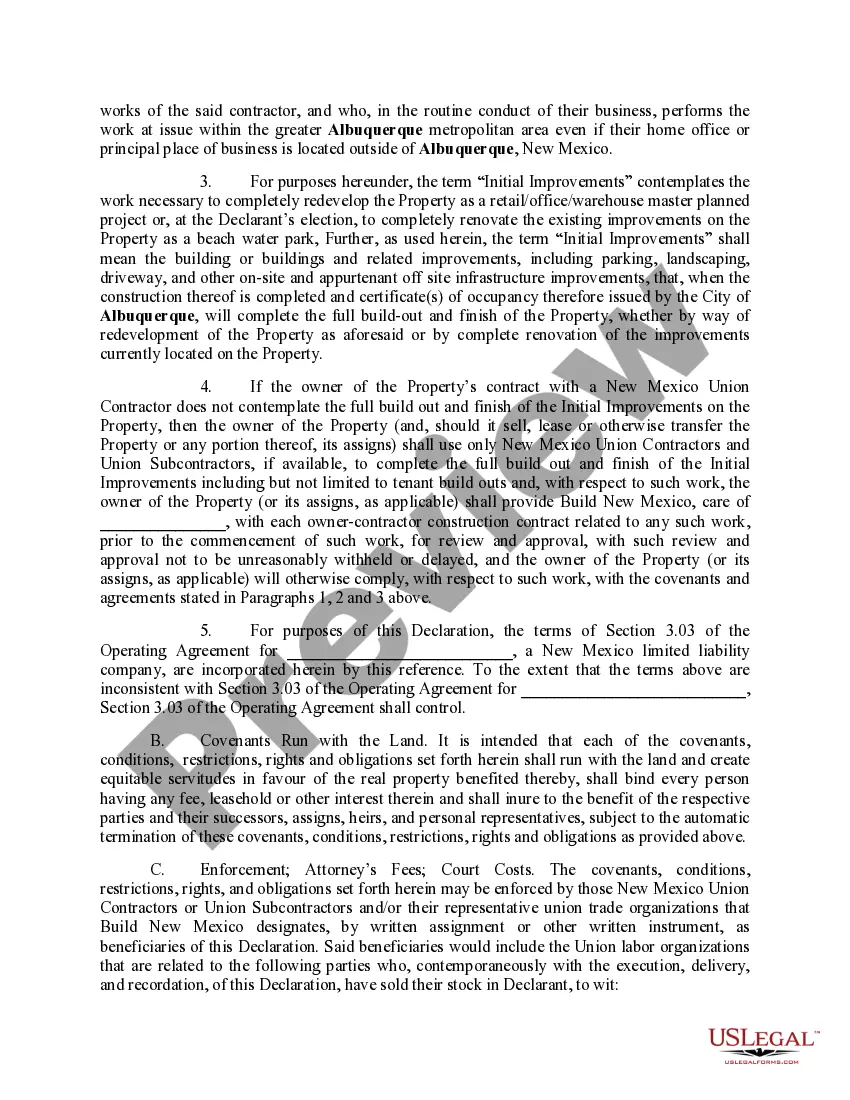
- Provisions for enforcement, including rights of designated beneficiaries.
- Covenants that run with the land, affecting all future owners.
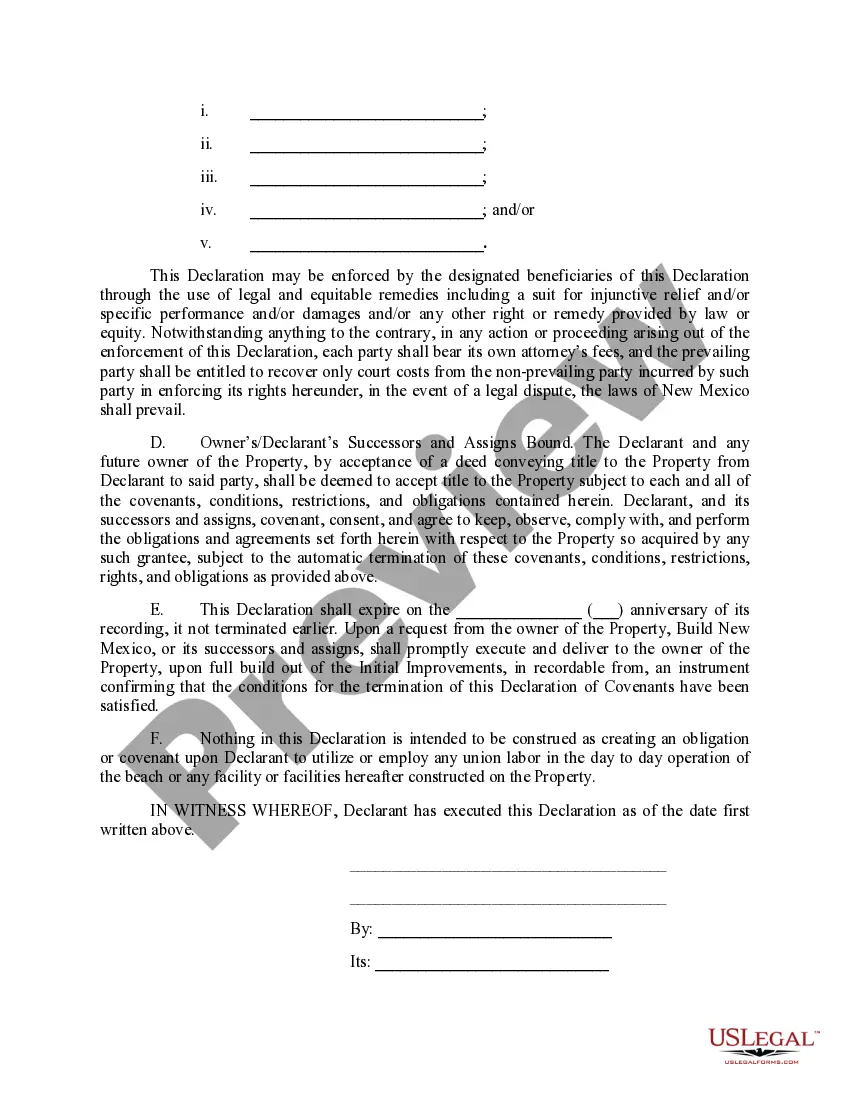
- Termination conditions and duration of the declaration.
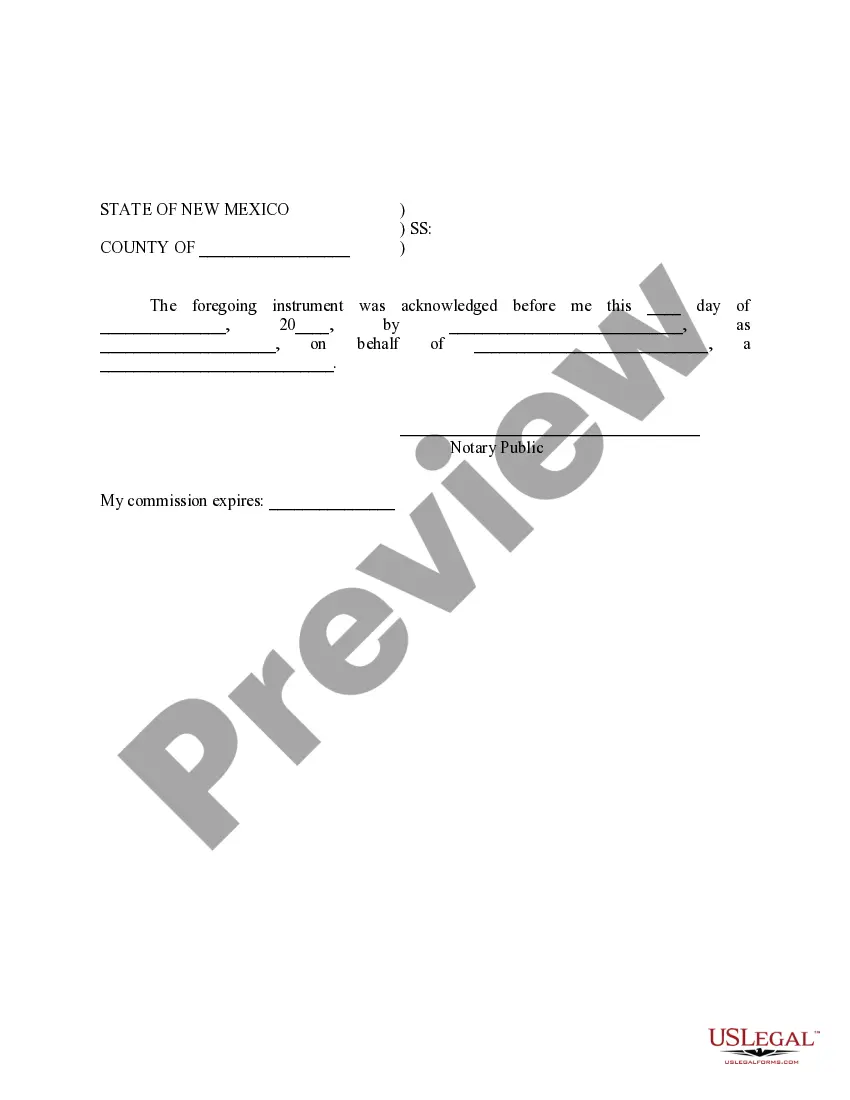
- Notarization requirements and acknowledgement by the Notary Public.
Common use cases
This form should be utilized when owners of property in a subdivision or similar development wish to establish or adhere to specific building and usage standards. It is particularly appropriate when planning to build new structures or make significant renovations, ensuring all development complies with community guidelines and protects the value of the neighborhood.
Who can use this document
- Property owners or developers in subdivisions or planned communities.
- Homeowners associations overseeing community regulations.
- Individuals or entities seeking to enforce property use restrictions.
Steps to complete this form
- Identify the declarant, which is usually the property owner or developer.
- Provide a detailed description of the property, including its legal description.
- Specify the construction and usage restrictions applicable to the property.
- Complete any necessary affirmations regarding the union labor agreements.
- Ensure the document is signed in the presence of a notary public for legal validity.
Does this form need to be notarized?
Yes, this form must be notarized to be legally valid. It requires the signatures of the declarant and acknowledgment by a notary public. US Legal Forms provides an integrated online notarization service that is available 24/7, allowing for secure video call notarization that meets legal standards without the need for in-person visits.
Get your form ready online
Our built-in tools help you complete, sign, share, and store your documents in one place.
Make edits, fill in missing information, and update formatting in US Legal Forms—just like you would in MS Word.
Download a copy, print it, send it by email, or mail it via USPS—whatever works best for your next step.
Sign and collect signatures with our SignNow integration. Send to multiple recipients, set reminders, and more. Go Premium to unlock E-Sign.
If this form requires notarization, complete it online through a secure video call—no need to meet a notary in person or wait for an appointment.
We protect your documents and personal data by following strict security and privacy standards.

Make edits, fill in missing information, and update formatting in US Legal Forms—just like you would in MS Word.

Download a copy, print it, send it by email, or mail it via USPS—whatever works best for your next step.

Sign and collect signatures with our SignNow integration. Send to multiple recipients, set reminders, and more. Go Premium to unlock E-Sign.

If this form requires notarization, complete it online through a secure video call—no need to meet a notary in person or wait for an appointment.

We protect your documents and personal data by following strict security and privacy standards.
Common mistakes to avoid
- Failing to provide a complete legal description of the property.
- Not including the signatures of all necessary parties.
- Overlooking the notarization requirement, resulting in an invalid document.
- Using vague language that may lead to misinterpretation of covenants.
What to keep in mind
- The Declaration of Covenants and Restrictions sets forth mandatory guidelines for property use.
- It is particularly useful for maintaining community standards and property values.
- Proper completion and notarization are essential for enforceability.
- Users must be aware of state-specific implications when drafting this document.
Looking for another form?

Form popularity
FAQ
What Happens When Covenants Expire. Once the HOA covenants expire, the board effectively becomes powerless. This means that the HOA cannot enforce the collection of assessments, cannot enforce architectural standards, and cannot regulate the use of common areas and common facilities.
Civil Code section 1365 provides a mechanism for extending the expiration date with a simple majority vote at no cost to the association. Even if CC&Rs; expire, no one is thrown into jail. The development and association do not cease to exist and are not prevented from doing business.
In other words, you may be able to remove your restrictive covenant- but there are no guarantees.If you can agree to have the covenant removed, a 'Deed of Release of Restrictive Covenant' should be drawn up and signed by the dominant and servient owners.
While bylaws are generally mutually agreed upon governing rules for an organization or business, covenants are usually long-term promises to do something or refrain from action that may last for several generations.
Restrictive covenant indemnity insurance can only be obtained when a covenant has been breached for at least 12 months without complaint, but once procured the policy will last in perpetuity and can usually be passed on to future owners of the property.
New Mexico is known primarily as a lien theory state where the property acts as security for the underlying loan.It should be noted that New Mexico does have a non-judicial foreclosure process however this is rarely used by lenders in a residential context.
Expiration or Termination Neighborhood covenants may be permanent, expire naturally, or have a declared term of existence.In such an example, the builder is no longer a party to the covenants, but they nonetheless will be binding among subsequent homeowners represented by the association.
Connecticut. Massachusetts. Maine. New Hampshire. New Jersey. Tennessee.
Some states, such as Florida and California, have a large body of HOA law. Other states, such as Massachusetts, have virtually no HOA law. Homeowners associations are commonly found in residential developments since the passage of the DavisStirling Common Interest Development Act in 1985.