New Jersey Last Will and Testament for Domestic Partner with Adult Children from Prior Marriage
About this form
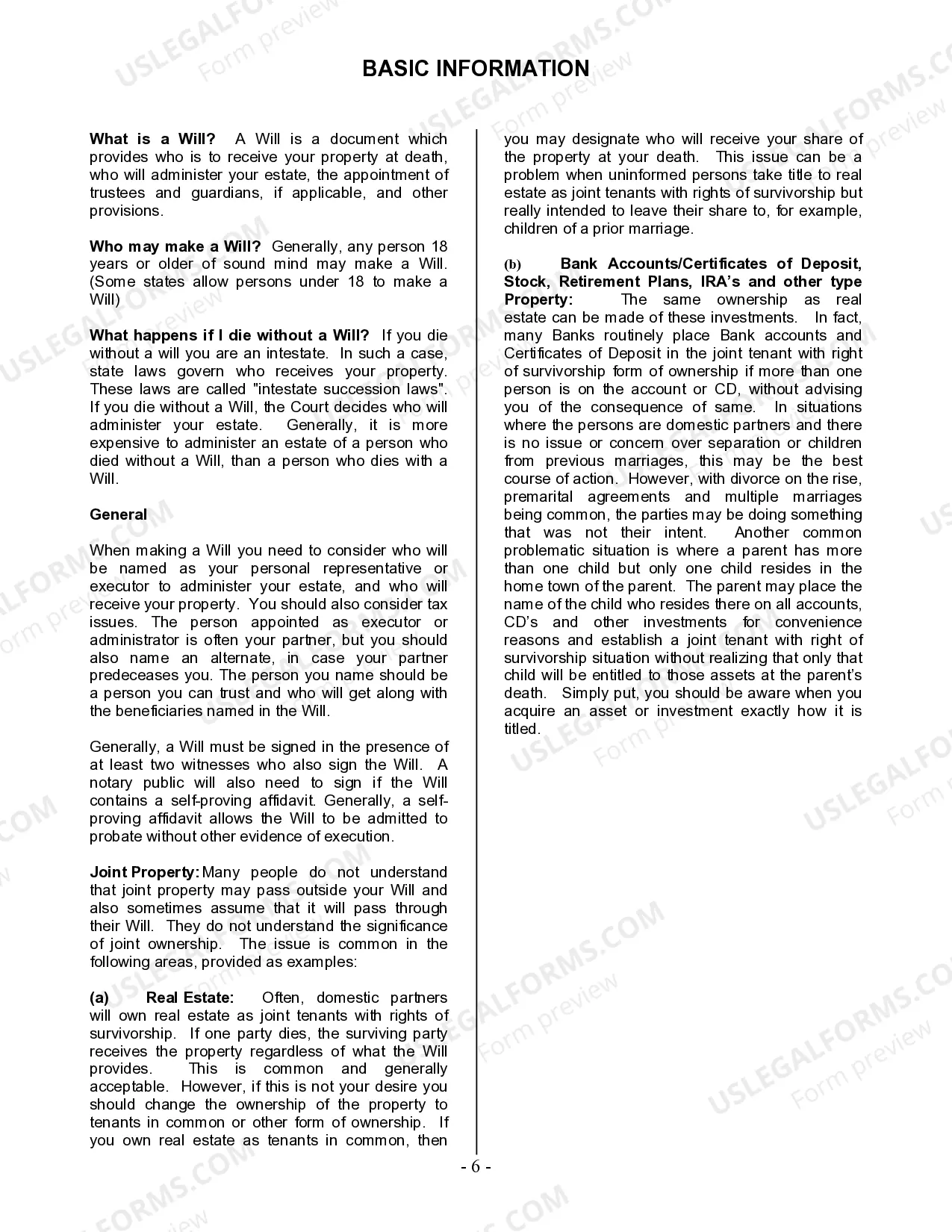
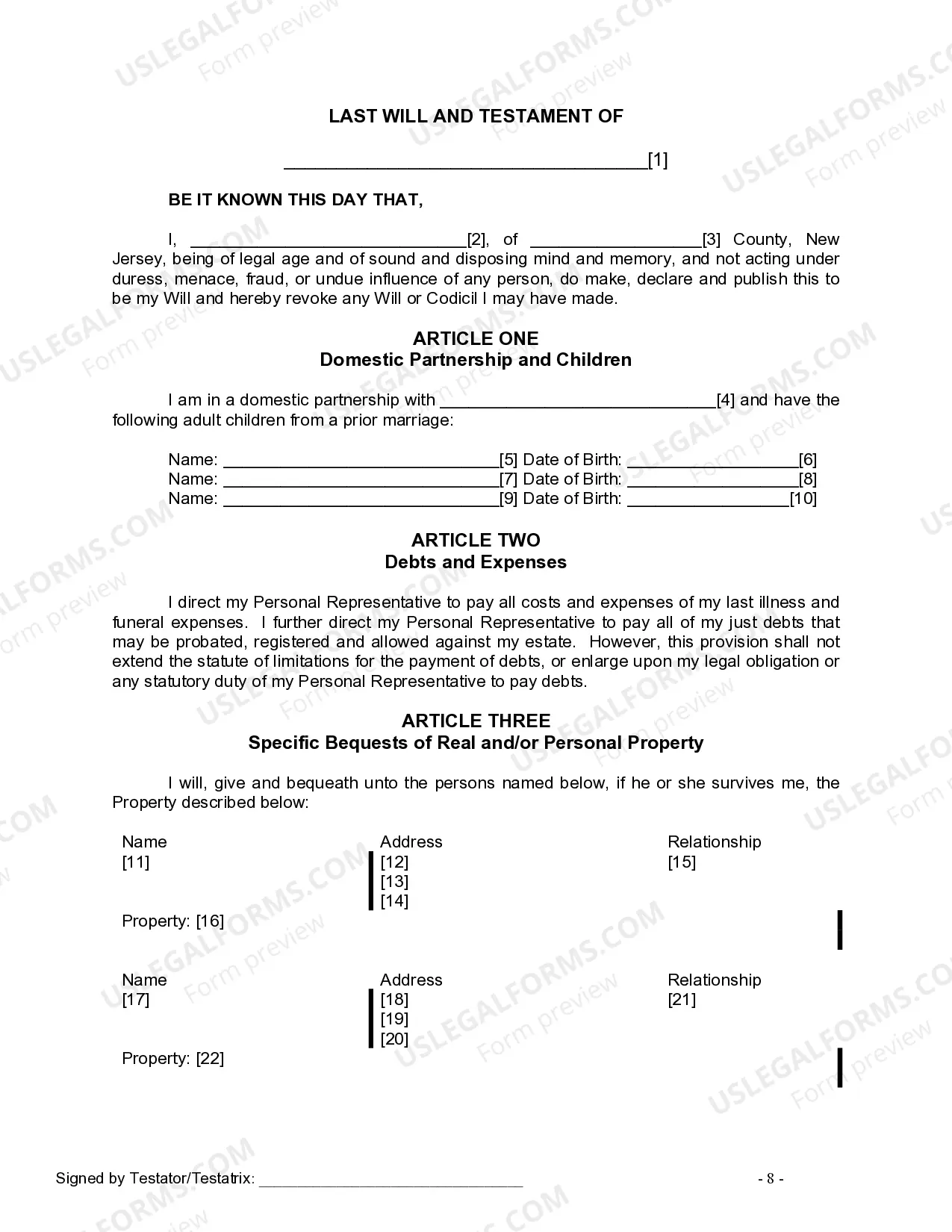
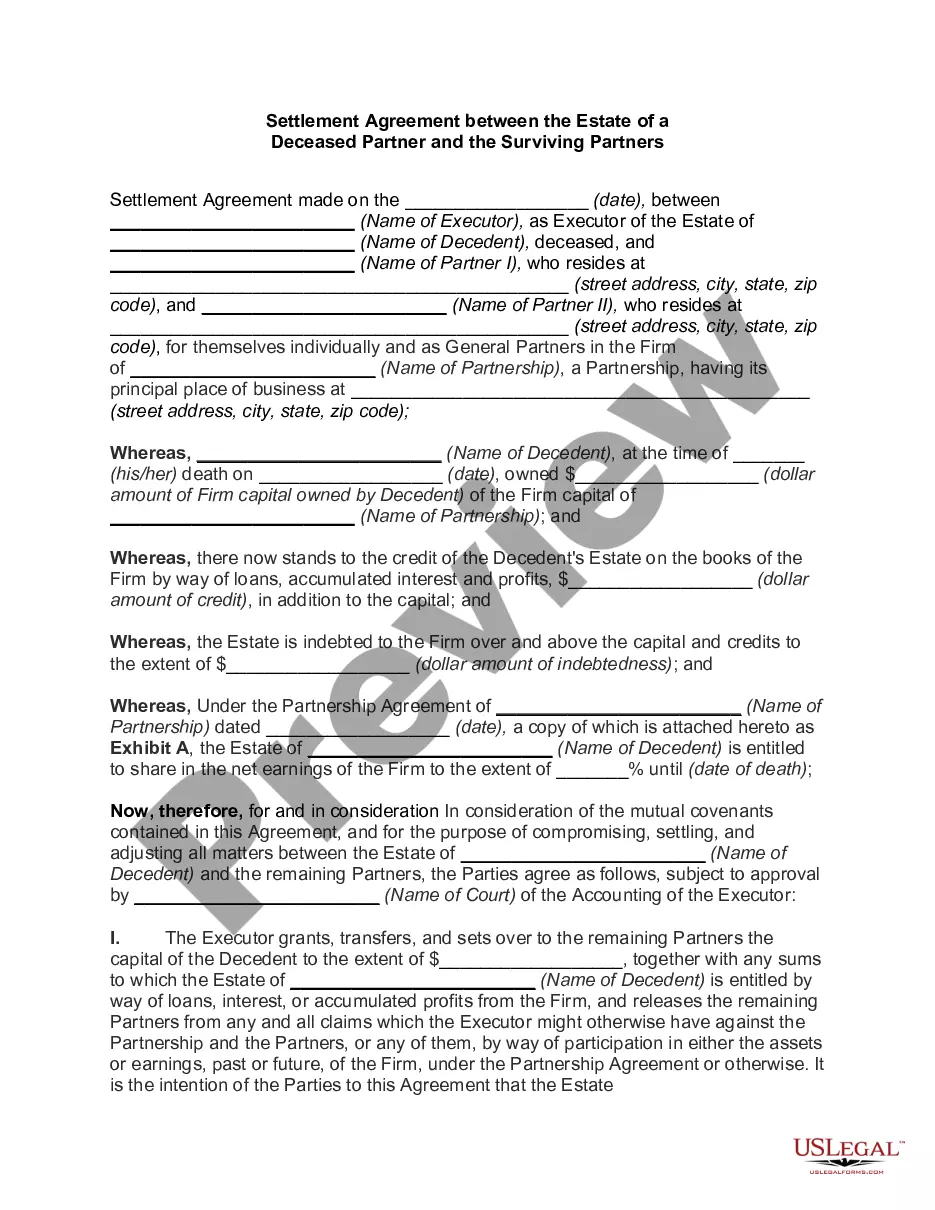
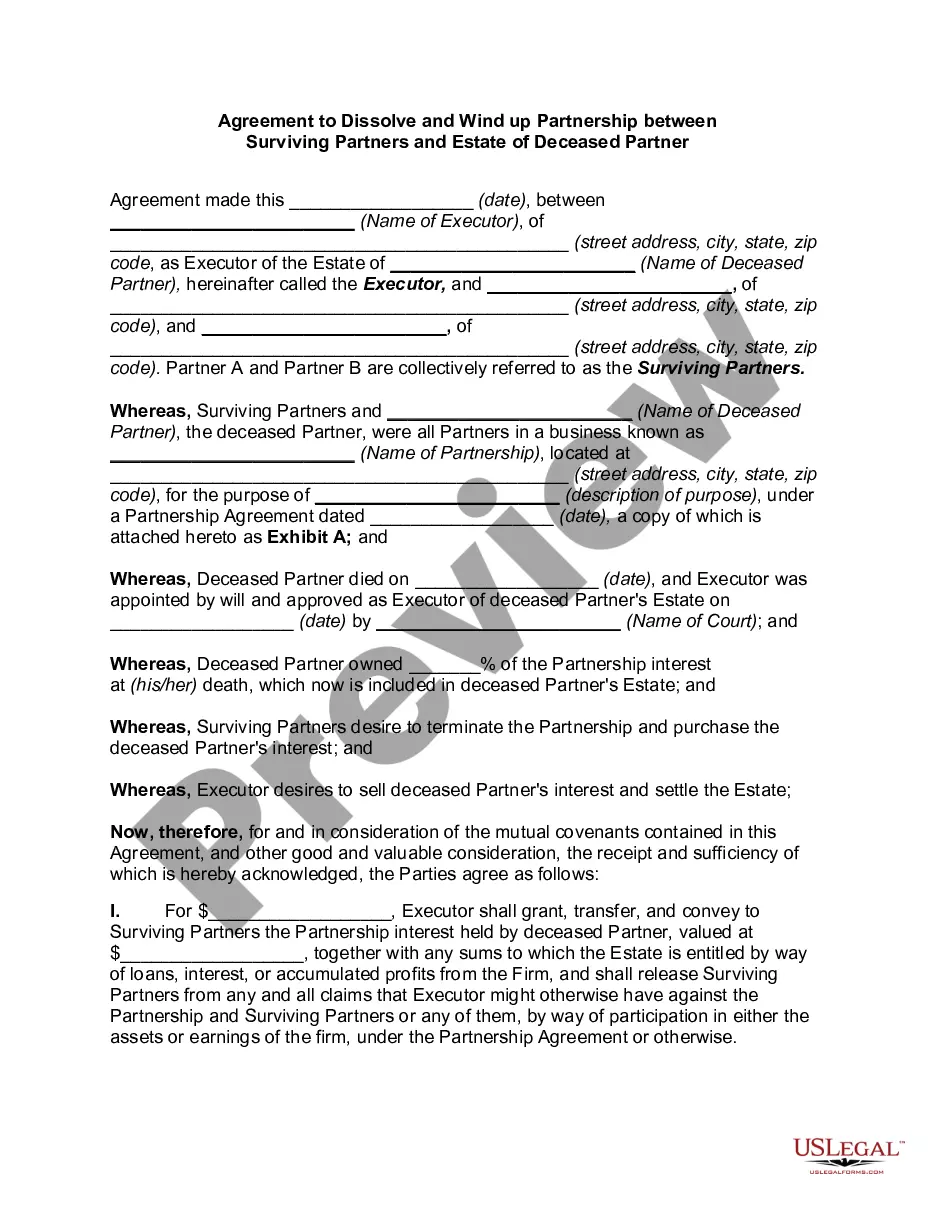
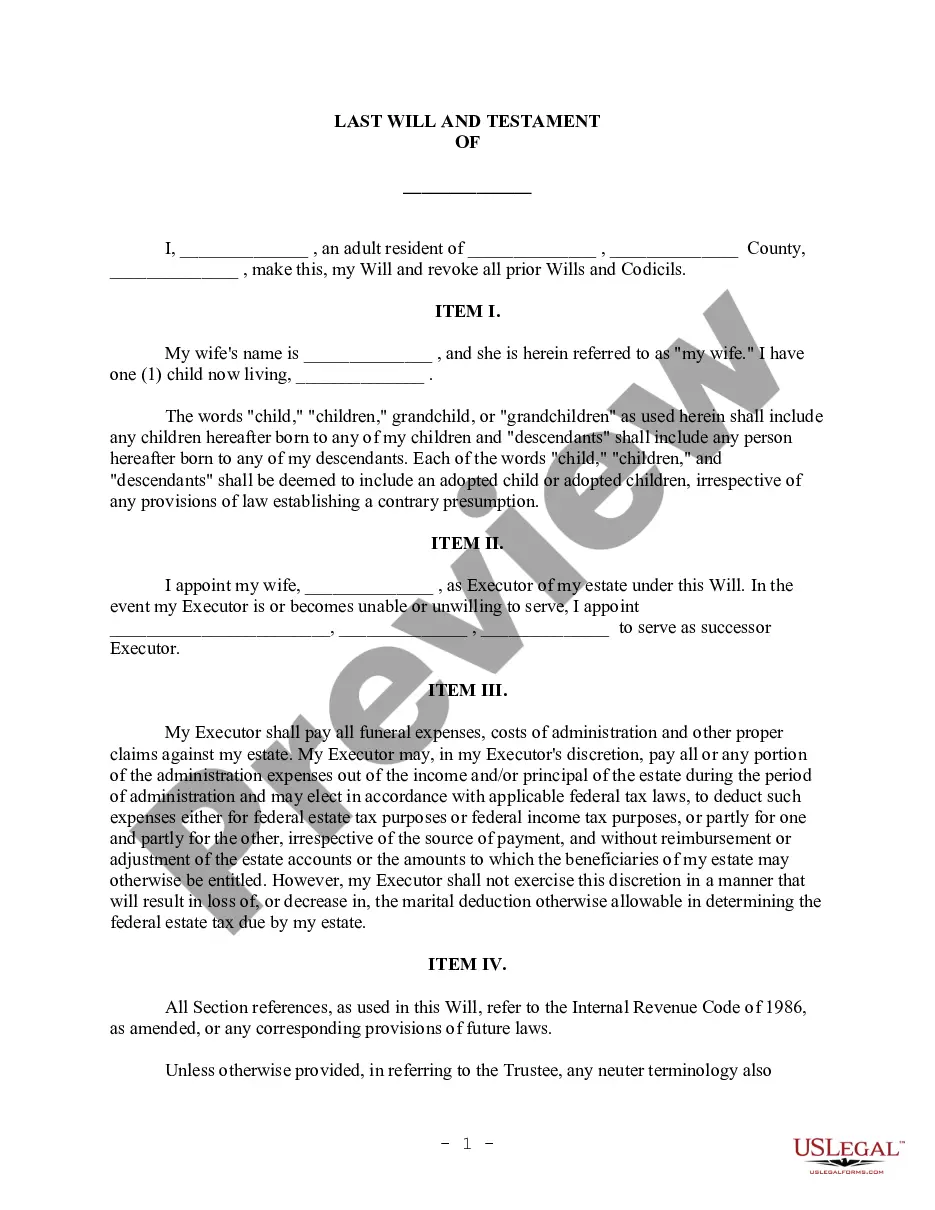
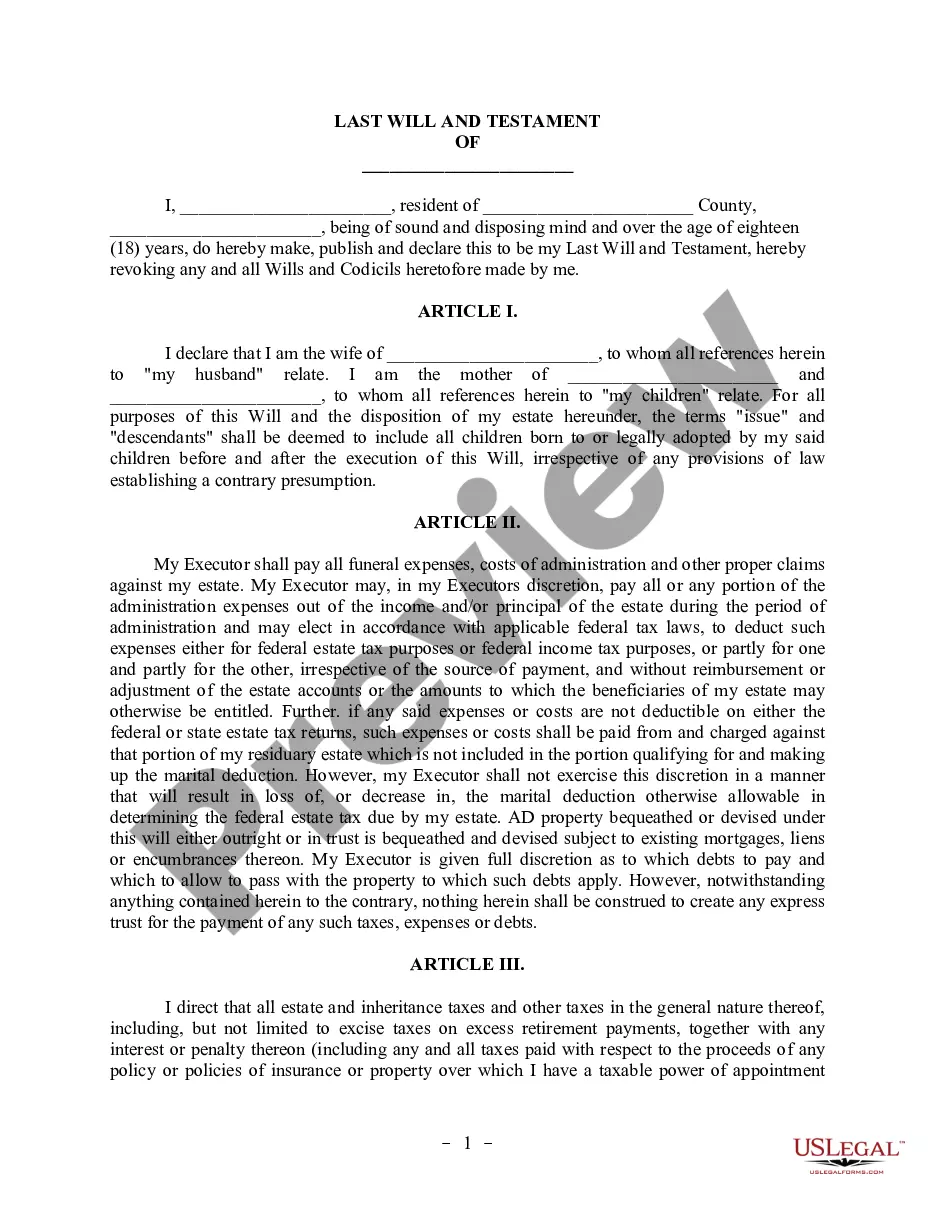
The Last Will and Testament for Domestic Partner with Adult Children from Prior Marriage is a legal document that outlines how your assets and property will be distributed upon your death. This form is specifically designed for individuals in domestic partnerships who have adult children from a previous marriage. It enables the appointment of a personal representative to execute your wishes and makes provisions for your partner and children, ensuring clarity in your estate planning process.
Key parts of this document
- Personal information of the testator, including name and county of residence.
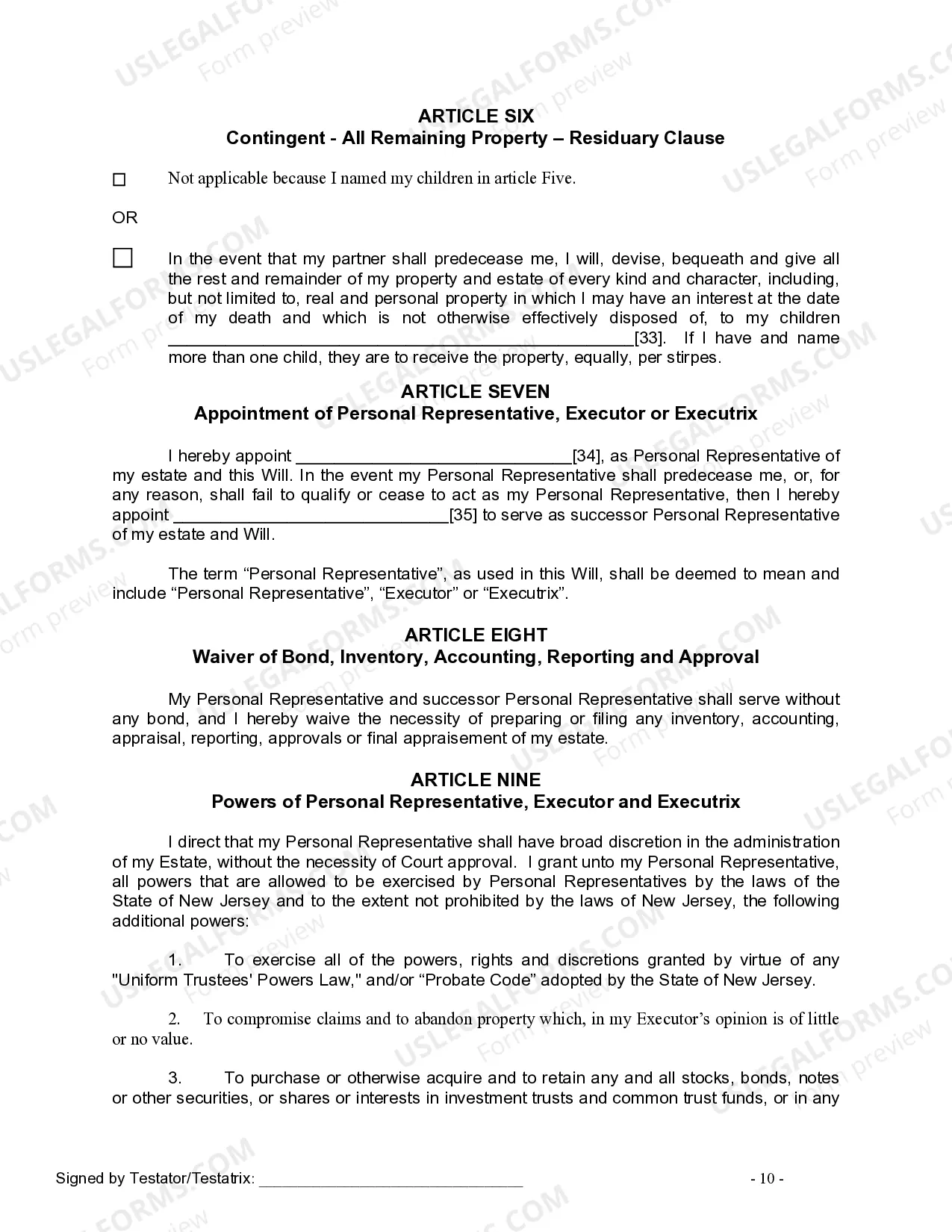
- Appointment of a personal representative or executor to manage the estate.
- Specifications for distributing property among the domestic partner and adult children.
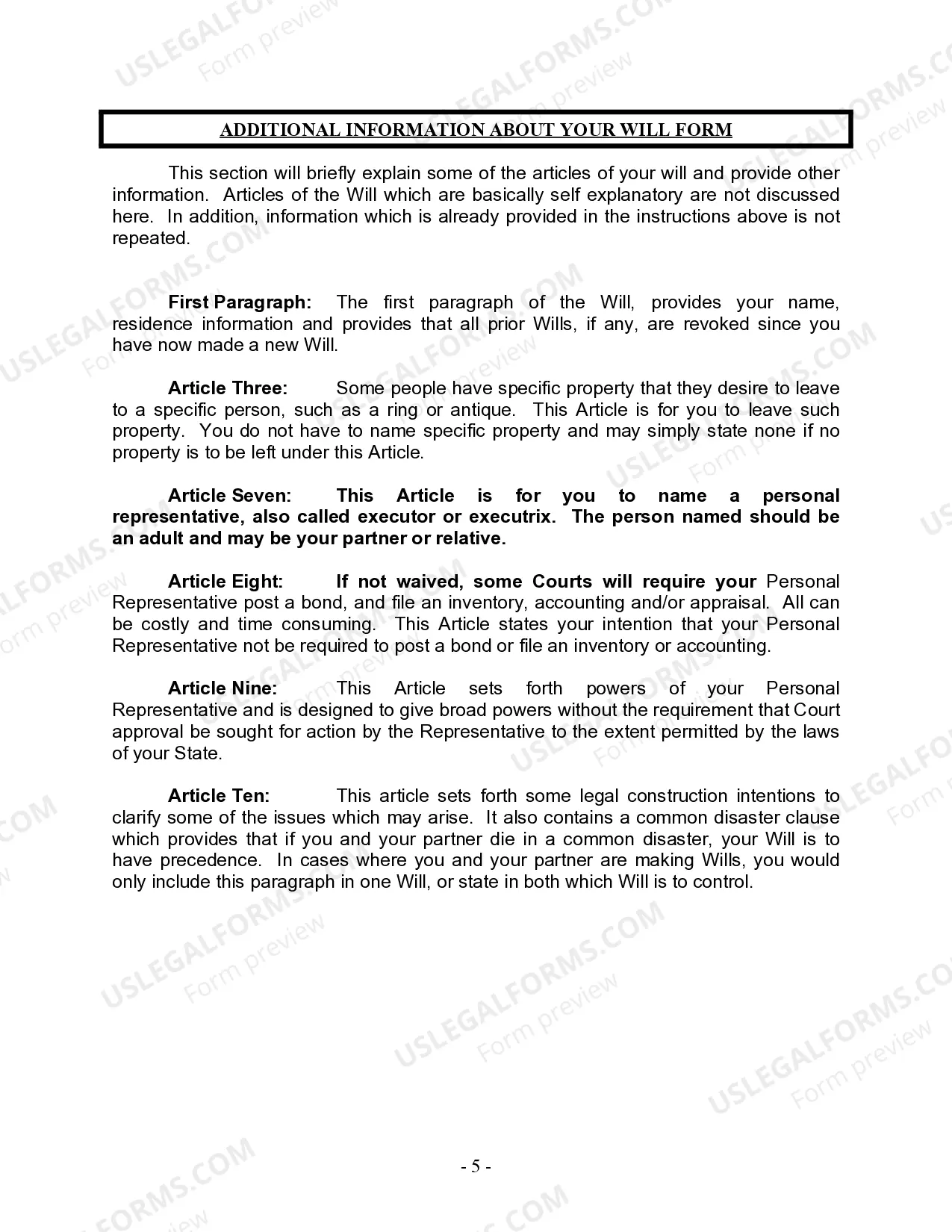
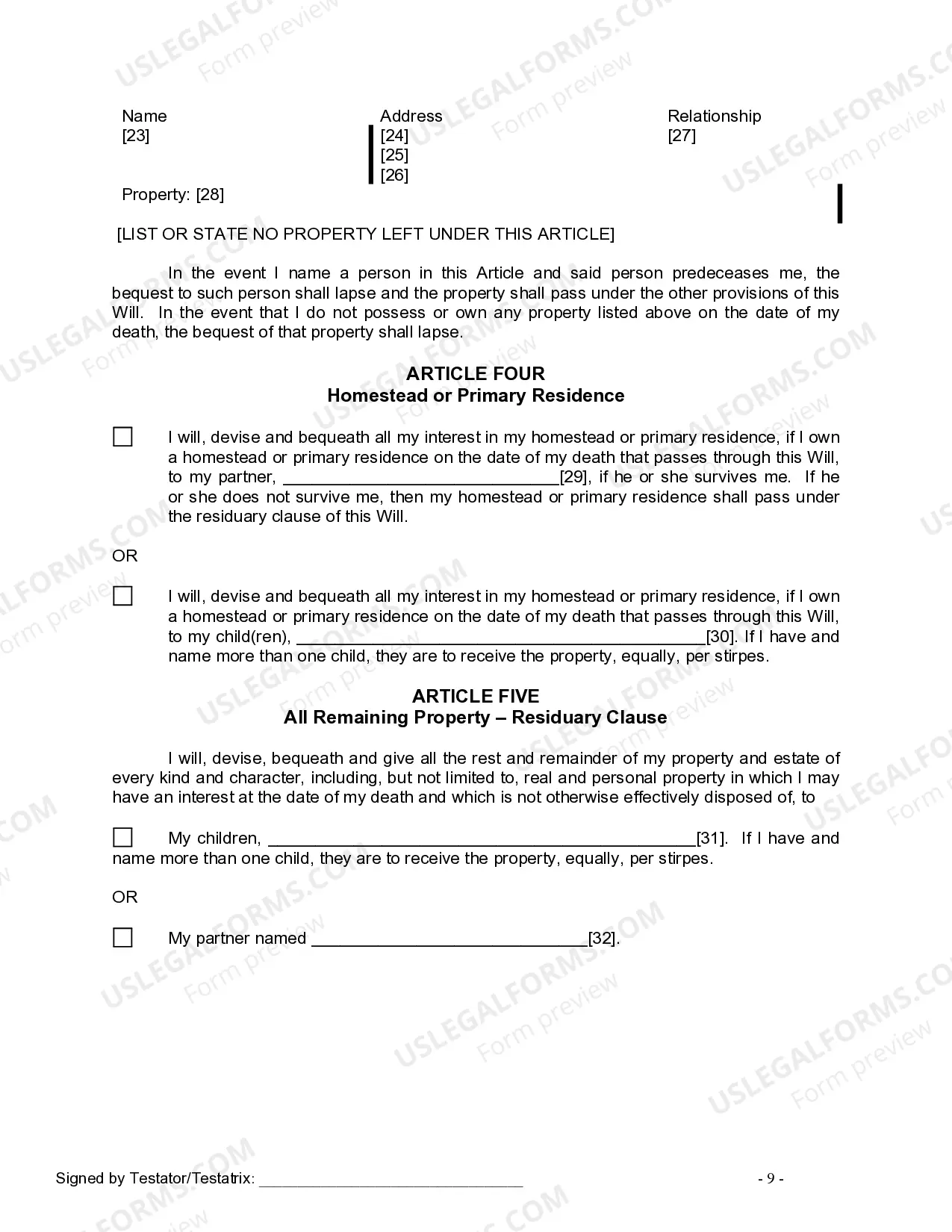
- Provisions for specific bequests of real or personal property.
- Homestead or primary residence distribution instructions.
- Self-proving affidavit for streamlined probate processing (if applicable).

When to use this form
This form is essential when you want to ensure your estate is distributed according to your wishes after your death. It is particularly useful for individuals in domestic partnerships with adult children from previous relationships. By creating a Last Will and Testament, you can avoid disputes among heirs and specify how your assets will be managed and distributed.
Who this form is for
- Individuals in a domestic partnership with adult children from a prior marriage.
- Anyone looking to clearly outline their wishes regarding asset distribution after death.
- People who want to appoint a personal representative to manage their estate.
- Those wishing to provide for both their partner and children in their estate planning.
Completing this form step by step
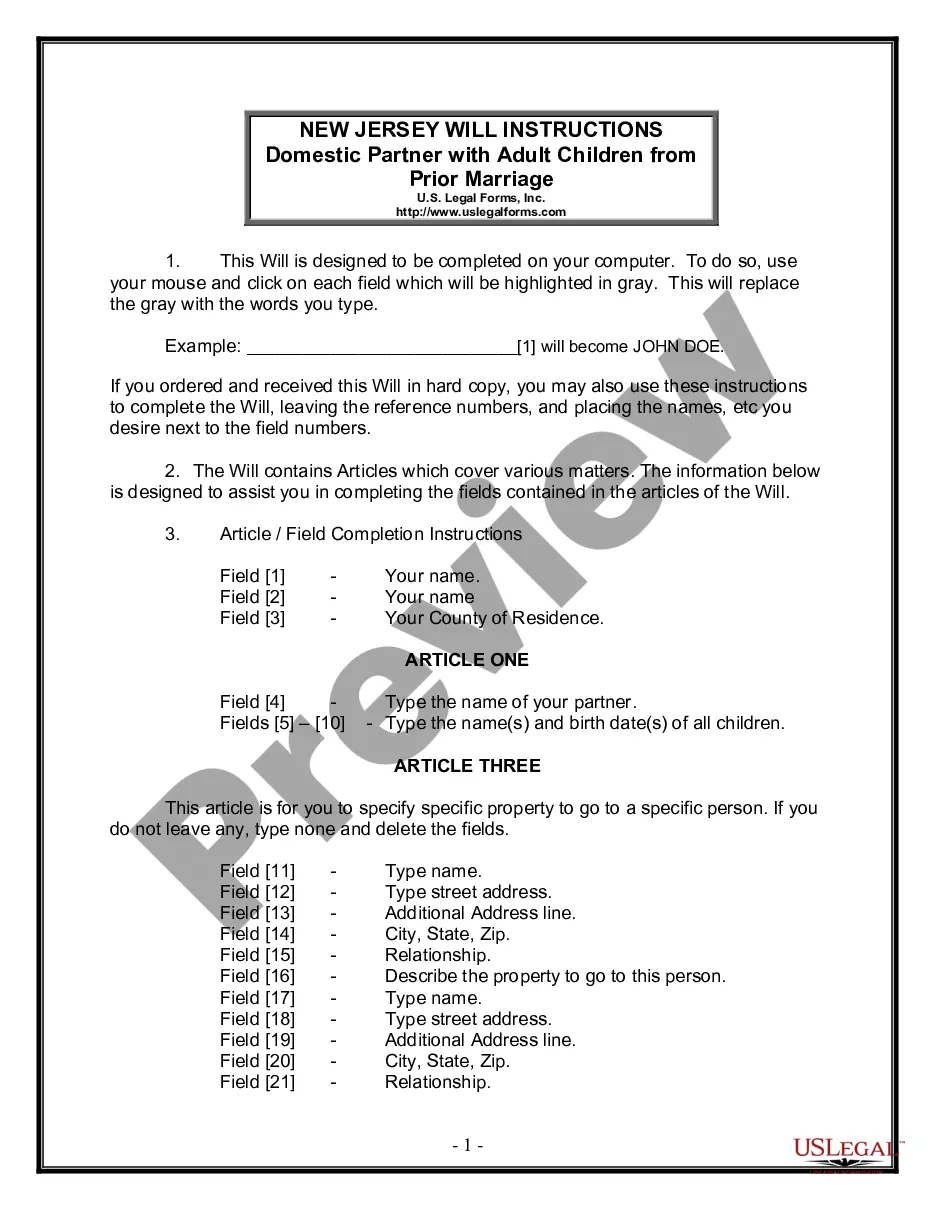
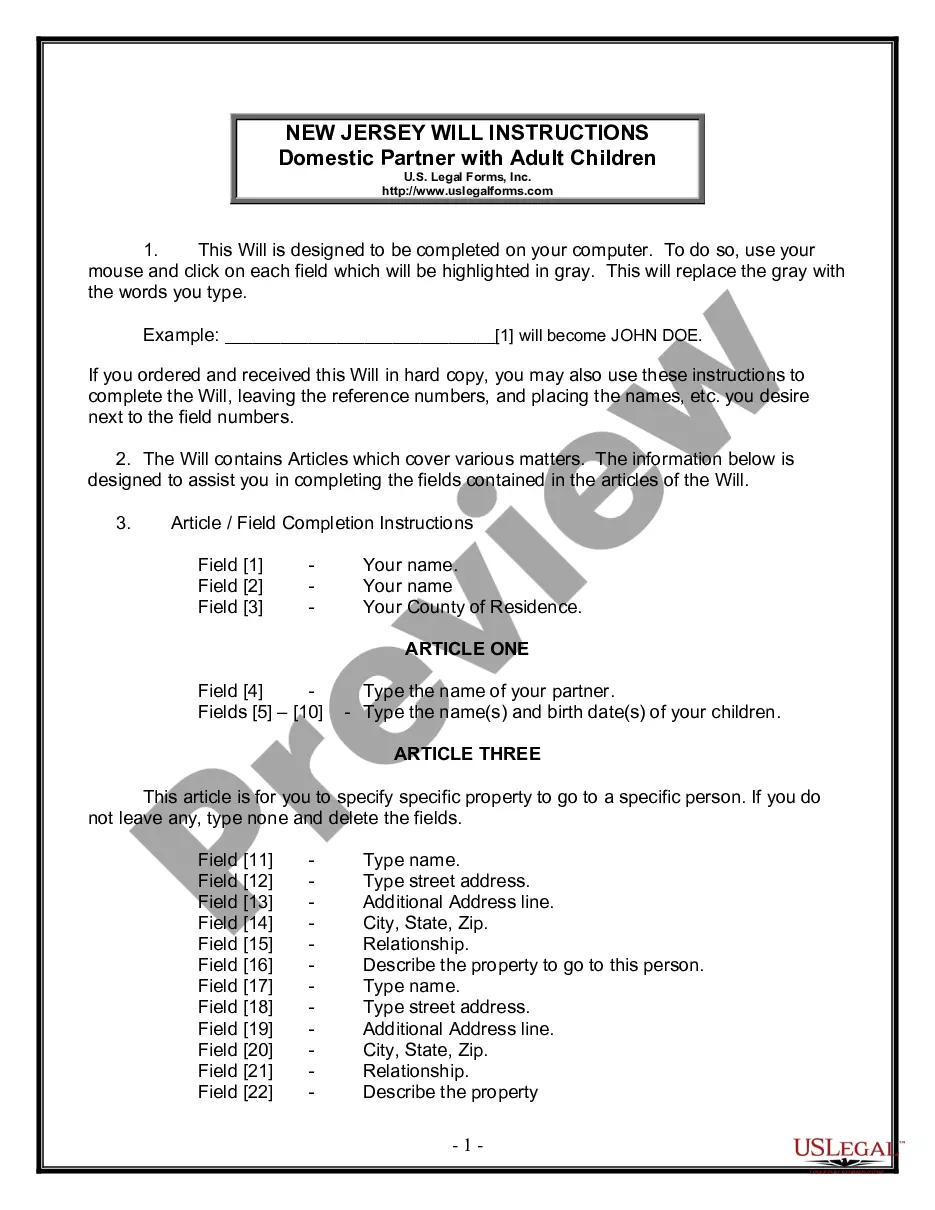
- Enter your personal information in the designated fields, including your name and county of residence.
- Identify your domestic partner's name and your adult children's names along with their birth dates.
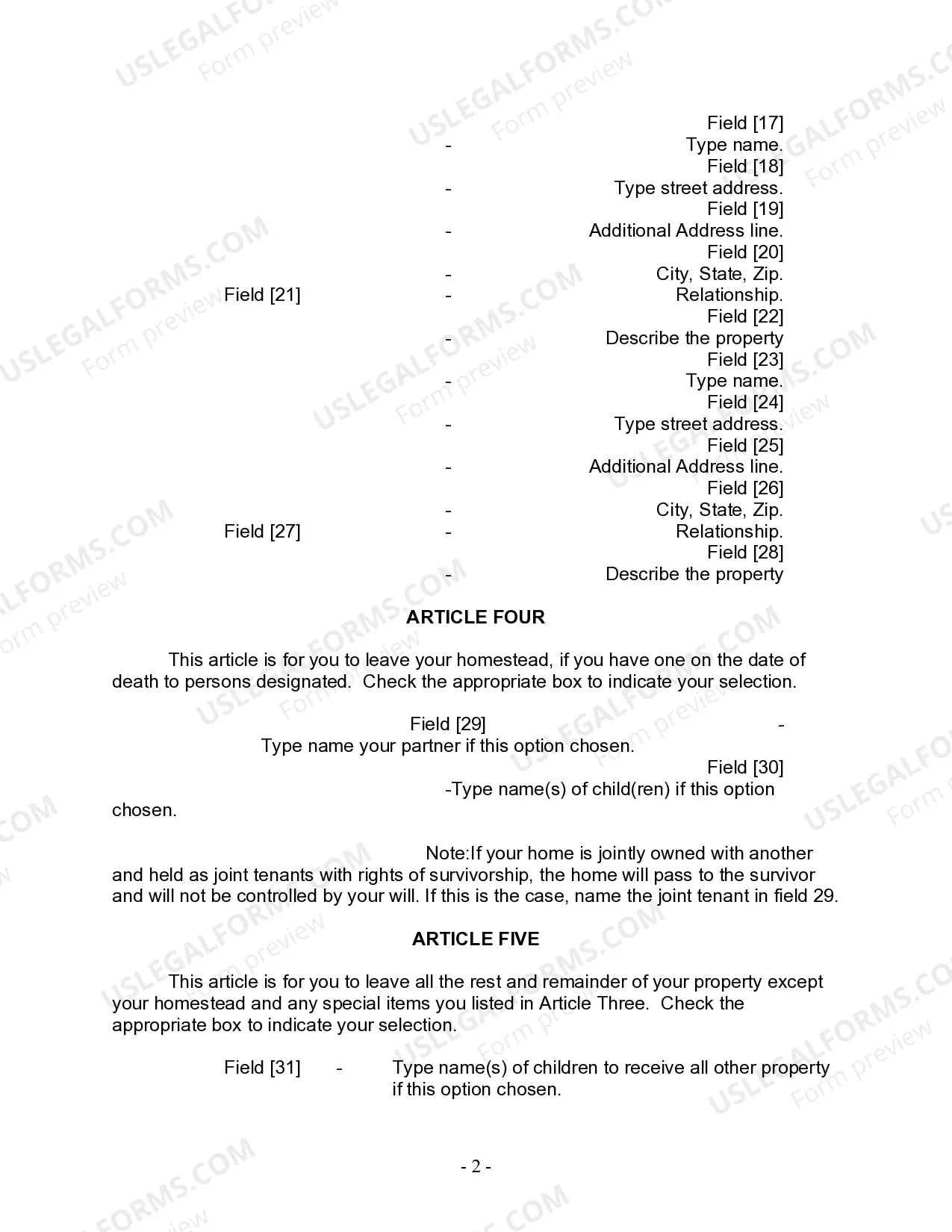
- Detail any specific property bequests you wish to make in the appropriate sections.
- Select how your homestead or primary residence will be distributed among your partner and children.
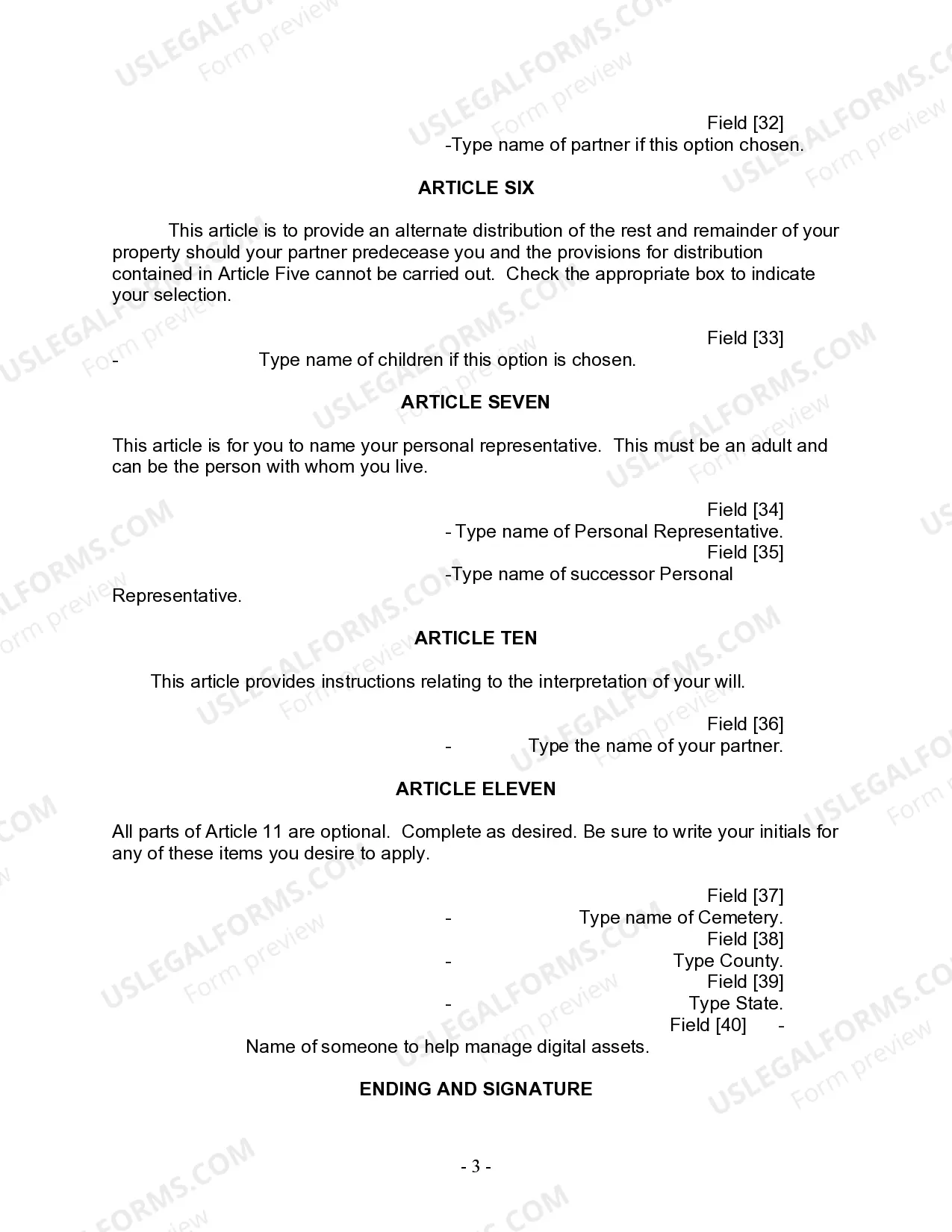
- Appoint a personal representative and a successor, ensuring they are trustworthy individuals.
- Sign the completed Will in front of two witnesses and a notary public if applicable.
Notarization guidance
This document requires notarization to meet legal standards. US Legal Forms provides secure online notarization powered by Notarize, allowing you to complete the process through a verified video call, available 24/7.
Get your form ready online
Our built-in tools help you complete, sign, share, and store your documents in one place.
Make edits, fill in missing information, and update formatting in US Legal Forms—just like you would in MS Word.
Download a copy, print it, send it by email, or mail it via USPS—whatever works best for your next step.
Sign and collect signatures with our SignNow integration. Send to multiple recipients, set reminders, and more. Go Premium to unlock E-Sign.
If this form requires notarization, complete it online through a secure video call—no need to meet a notary in person or wait for an appointment.
We protect your documents and personal data by following strict security and privacy standards.

Make edits, fill in missing information, and update formatting in US Legal Forms—just like you would in MS Word.

Download a copy, print it, send it by email, or mail it via USPS—whatever works best for your next step.

Sign and collect signatures with our SignNow integration. Send to multiple recipients, set reminders, and more. Go Premium to unlock E-Sign.

If this form requires notarization, complete it online through a secure video call—no need to meet a notary in person or wait for an appointment.

We protect your documents and personal data by following strict security and privacy standards.
Mistakes to watch out for
- Not having the Will signed by two witnesses or failing to have it notarized when required.
- Leaving out specific details when listing assets or heir names.
- Failing to update the Will after significant life events, such as marriage or the birth of children.
- Assuming joint property will automatically pass as willed, rather than according to title laws.
Why use this form online
- Convenience of completing the form at your own pace from home.
- Editability allows for simple updates as family circumstances change.
- Access to reliable templates drafted by licensed attorneys ensures legal compliance.
- Cost-efficiency compared to hiring a lawyer for straightforward Wills.
Looking for another form?
Form popularity
FAQ
What Makes a Handwritten Will Legally Binding? A written will is valid if it is: (1) in writing; (2) signed by the testator, i.e., the person making the will; and (3) signed by at least two witnesses who saw the testator sign the will or acknowledge the signature on the will.
Under New Jersey law, a handwritten Will can be valid as a writing intended as a Will if the material portions of the document are in the handwriting of the decedent and signed by the decedent.
No, in New Jersey, you do not need to notarize your will to make it legal. However, New Jersey allows you to make your will "self-proving" and you'll need to go to a notary if you want to do that. A self-proving will speeds up probate because the court can accept the will without contacting the witnesses who signed it.
In New Jersey, the will must be in writing. You must sign your own will, witnessed by two individuals over 18 (You must be at least age 18 as well.) Then, the witnesses must sign the document. If you wish to go the extra step, you can bring your two witnesses to a notary and do the signing there.
A. You don't have to have a lawyer to create a basic will you can prepare one yourself. It must meet your state's legal requirements and should be notarized.A do-it-yourself will that's poorly drafted can save you money but create a mess for your heirs when you're gone.
A will is legal in New Jersey if it is handwritten or typed by a competent adult and witnessed by two other people.
What makes a will valid in New Jersey? A person must be at least 18 years old and mentally competent to create a valid will. Generally, this means they understand the purpose of the will and know what they wish to happen to their property. The testator, as well as two witnesses, must sign a typed will.
Create the initial document. Start by titling the document Last Will and Testament" and including your full legal name and address. Designate an executor. Appoint a guardian. Name the beneficiaries. Designate the assets. Ask witnesses to sign your will. Store your will in a safe place.
A joint will is a legal document executed by two (or more) people, which merges their individual wills into a single, combined last will and testament. Like most wills, a joint will lets the will-makers name who will get their property and assets after they die. Joint wills are usually created by married couples.