New Jersey Waiver and Release From Liability For Minor Child for Overnight Church Function
Description
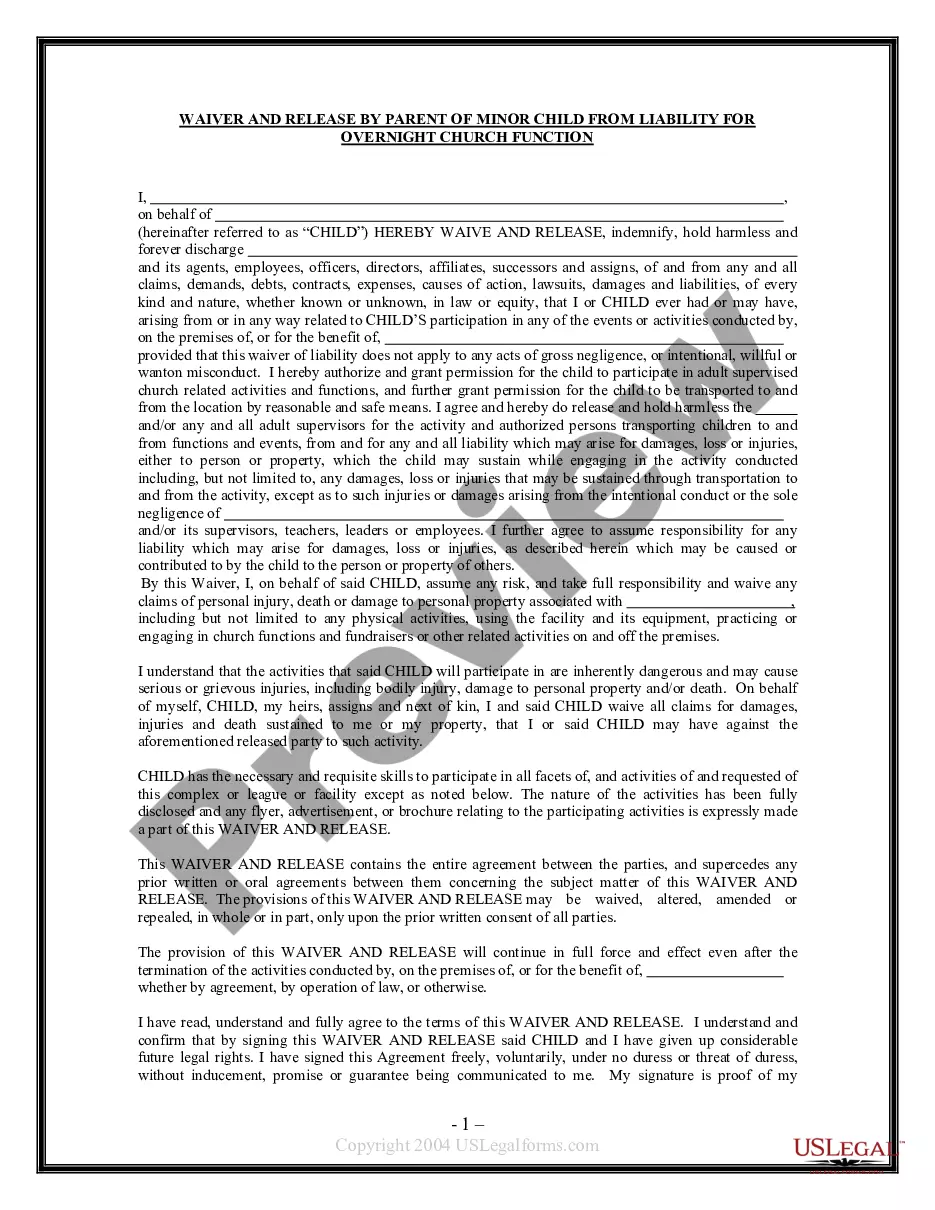
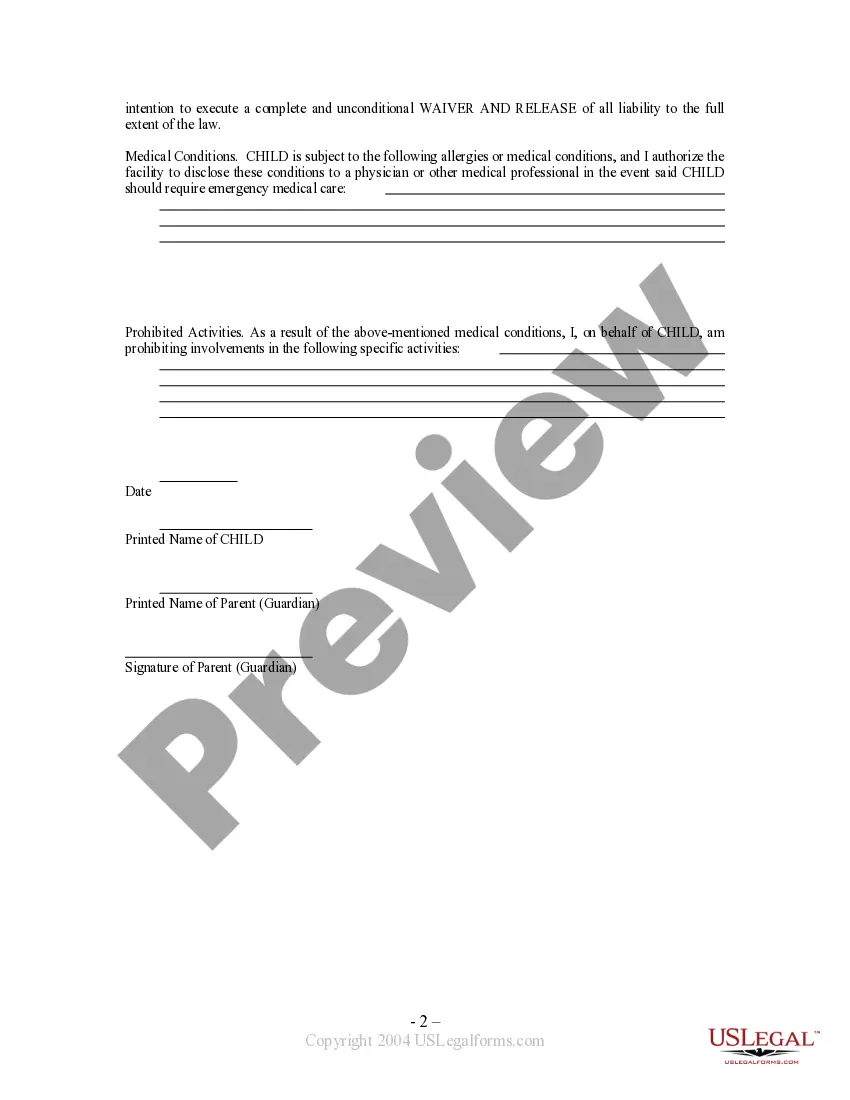
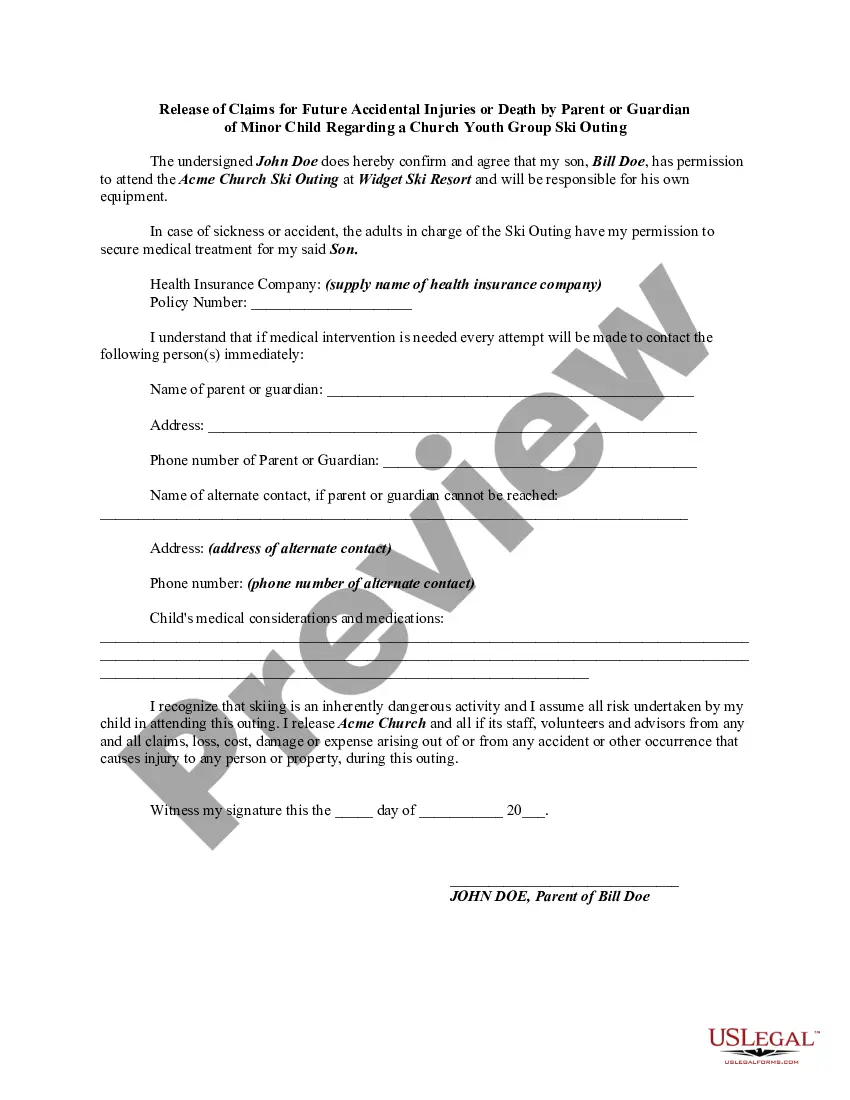
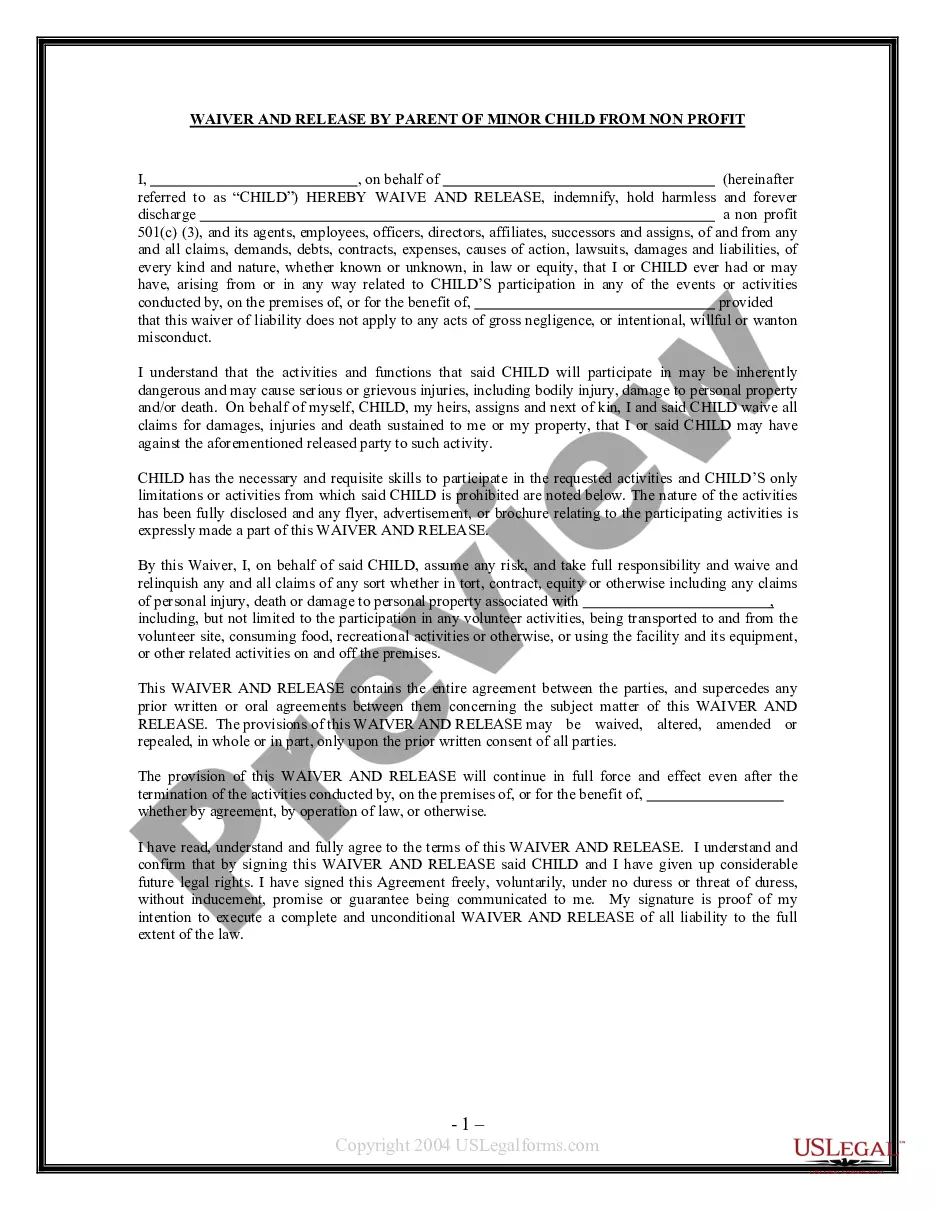
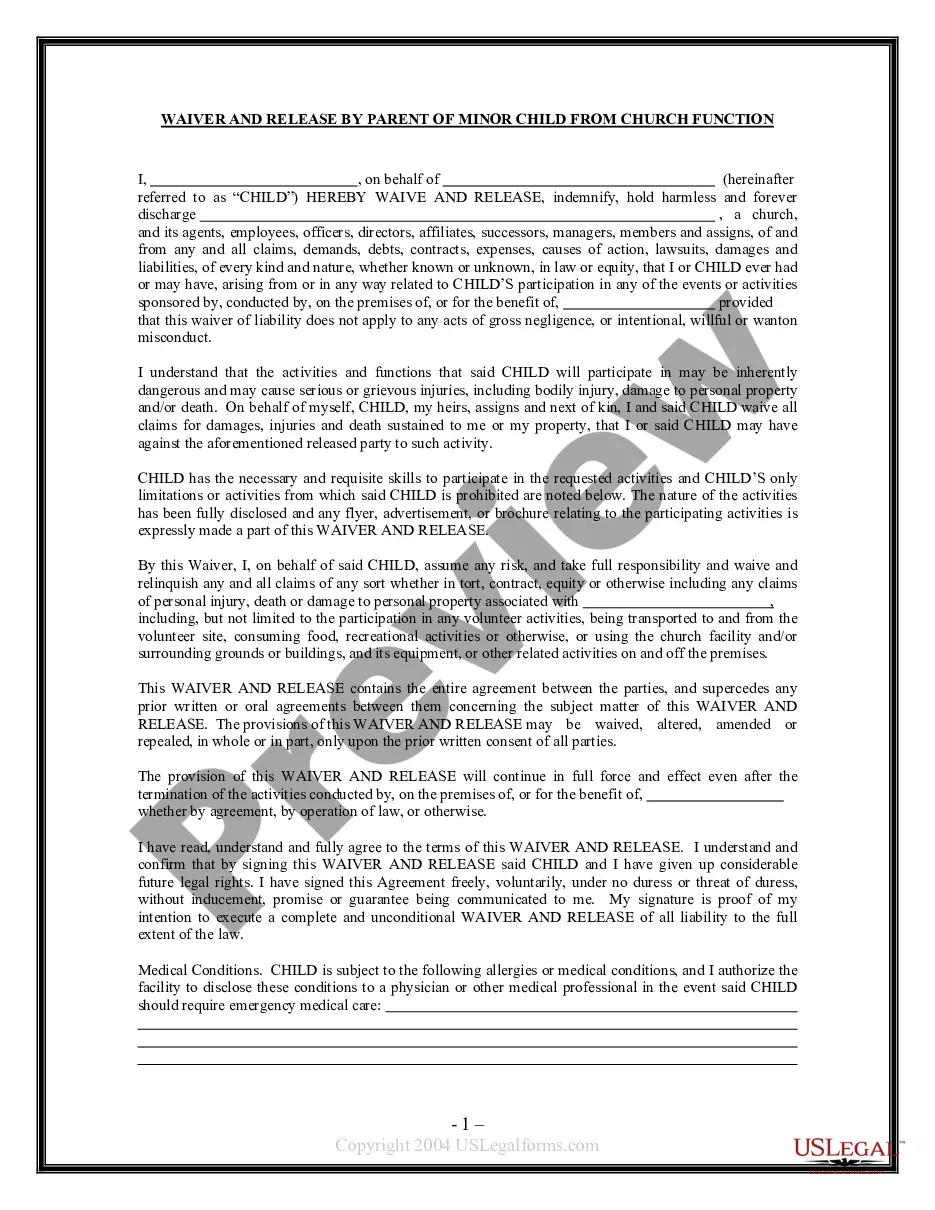
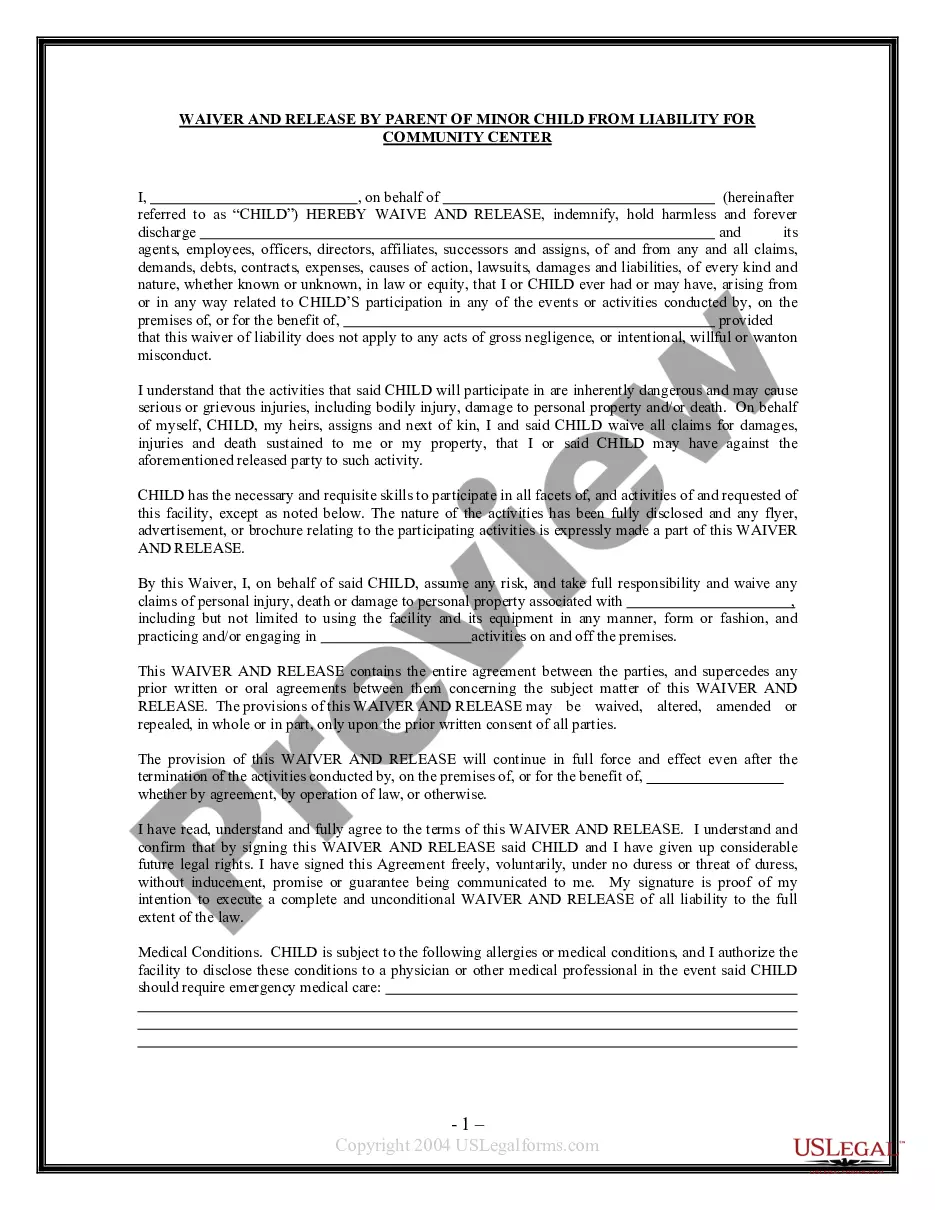
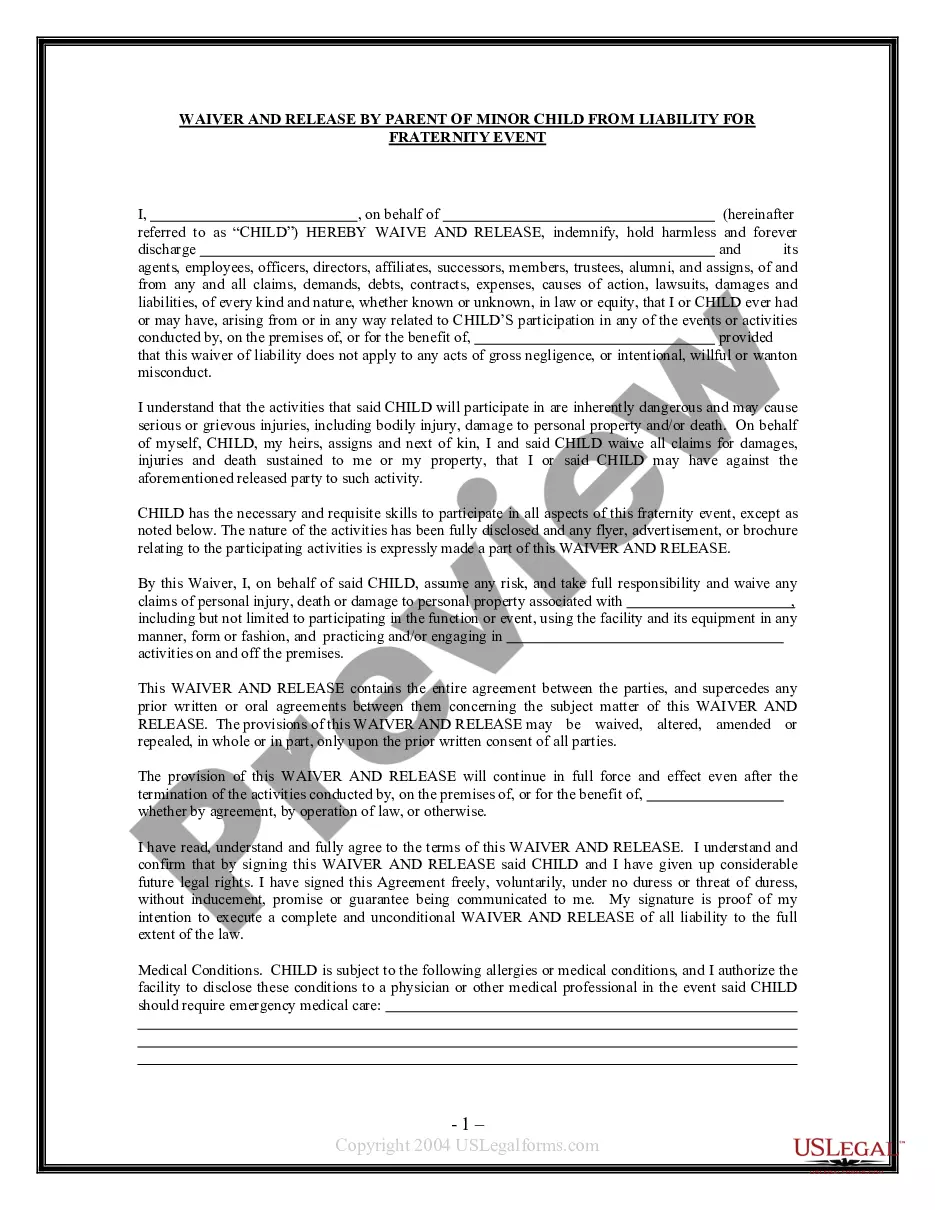
How to fill out Waiver And Release From Liability For Minor Child For Overnight Church Function?
If you wish to be thorough, acquire, or print sanctioned document templates, utilize US Legal Forms, the largest assortment of legal forms available online. Leverage the site’s user-friendly and convenient search to find the documents you need. Various templates for corporate and personal use are organized by categories and states, or keywords. Utilize US Legal Forms to locate the New Jersey Waiver and Release From Liability For Minor Child for Overnight Church Function in just a few clicks.
If you are already a US Legal Forms customer, sign in to your account and then click the Download button to obtain the New Jersey Waiver and Release From Liability For Minor Child for Overnight Church Function. You can also access forms you previously purchased in the My documents tab of your account.
If you are using US Legal Forms for the first time, follow the instructions below: Step 1. Ensure you have selected the form for the correct area/state. Step 2. Utilize the Preview option to review the form’s content. Don’t forget to read the details. Step 3. If you are unsatisfied with the form, use the Search field at the top of the screen to find alternative versions of the legal form template. Step 4. Once you have found the form you need, click the Download now button. Choose the payment plan you prefer and provide your details to register for an account. Step 5. Complete the transaction. You can use your credit card or PayPal account to finalize the purchase. Step 6. Choose the format of the legal form and download it to your device. Step 7. Fill out, edit, and print or sign the New Jersey Waiver and Release From Liability For Minor Child for Overnight Church Function.
- Every legal document template you obtain is yours indefinitely.
- You will have access to every form you acquired within your account.
- Click the My documents section and select a form to print or download again.
- Complete and download, and print the New Jersey Waiver and Release From Liability For Minor Child for Overnight Church Function with US Legal Forms.
- There are thousands of professional and state-specific forms you can use for your business or personal needs.
Form popularity
FAQ
AN AGREEMENT NOT TO SUE THE RELEASEES for any loss, injury, costs or damages of any form or type, howsoever caused or arising, and whether directly or indirectly from the participation of my minor child/ward in any aspect of the EVENT; and. 4.
A waiver is a legally binding provision where either party in a contract agrees to voluntarily forfeit a claim without the other party being liable. Waivers can either be in written form or some form of action.
What is the purpose of a waiver? A waiver is a legal agreement the primary purpose of which is to let you or another party modify or relinquish a right, privilege, or claim. The agreement can be a separate document on its own, such as if you sign a waiver form, or added to a contract as a waiver clause.
Waivers must be stored by the department supervising the activity for at least three years after the activity ends. Waivers signed on behalf of a minor must be retained for three years after the activity ends or until the minor turns 20, whichever is longer.
HOW LONG SHOULD I KEEP A RELEASE? The department sponsoring the activity must keep releases for at least three years after the activity ends. Releases signed by a parent or guardian on behalf of a minor must be retained for at least three years after the activity ends or until the minor turns 20, whichever is longer.
Within the United States, the most common types of waivers tend to fall into one of three categories criminal rights, procedural rights, and liability waivers.
A liability waiver, or release of liability, is a legal document that a company or organization has you sign in order to protect them from being sued in the event that you are injured.
Generally, a liability waiver document is a legally binding agreement that relinquishes the right of one party to pursue legal remedy for injuries accrued on the property, regardless of fault involved.
Liability waiver: designed to protect a facility from a lawsuit in the event of ordinary negligence. Agreement to participate: another form used by facilities, it does not provide a facility with liability protection, but does often outline the typical rules and expected behaviors, as well as outlining potential risks.
So, do liability waivers hold up in court? if you are injured as a result of ordinary negligence, the liability waiver may fully protect the defendant and leave you without legal recourse. If you are injured as a result of gross negligence, then you may have a case.