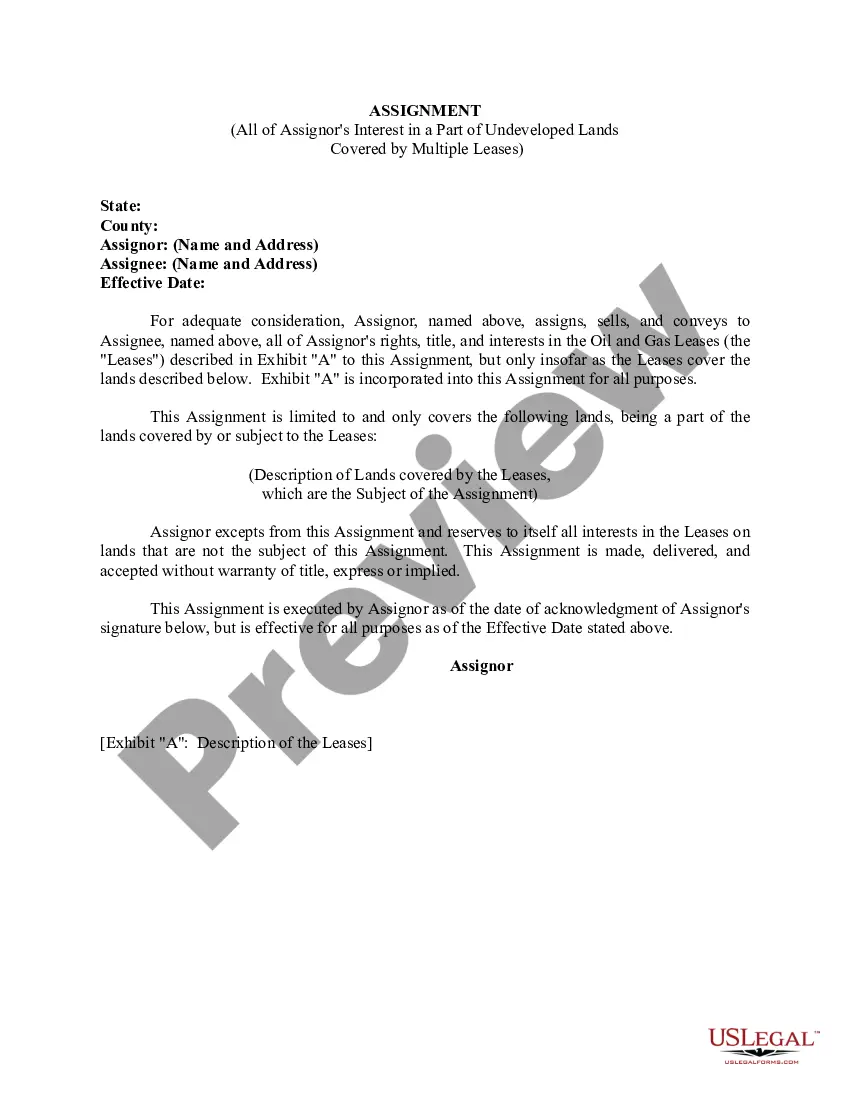
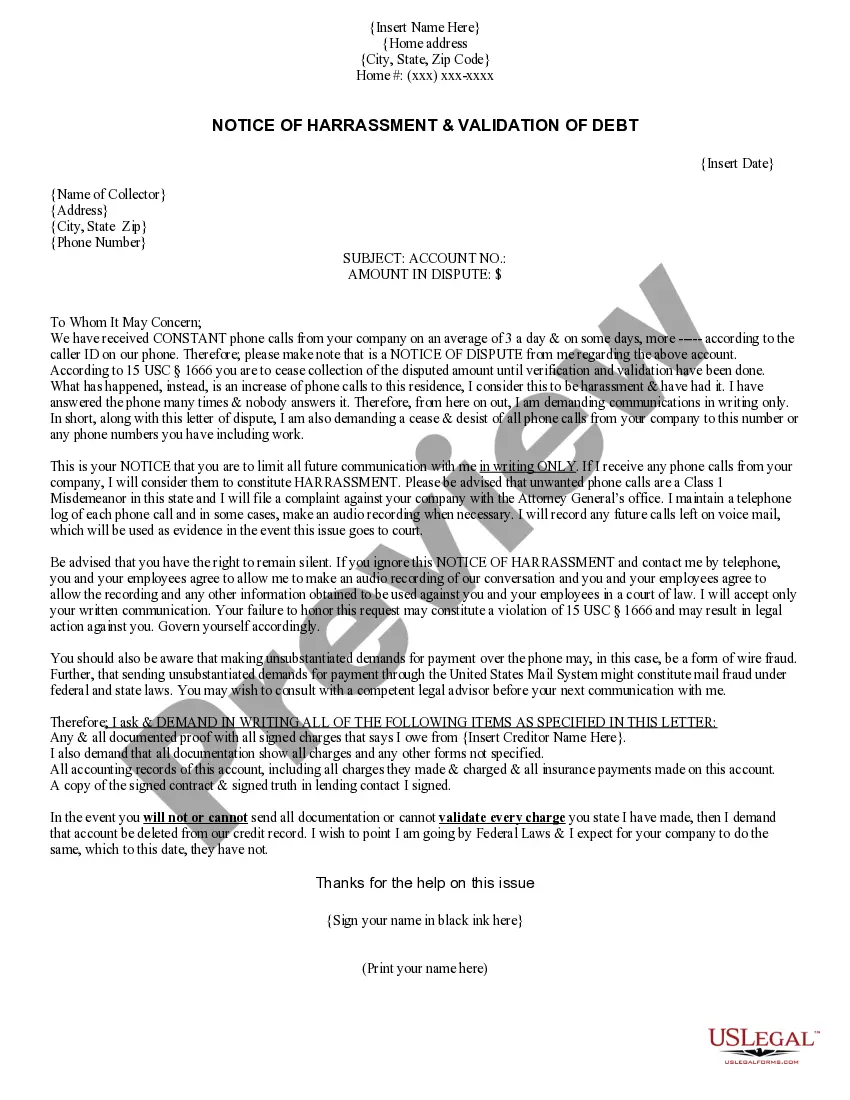
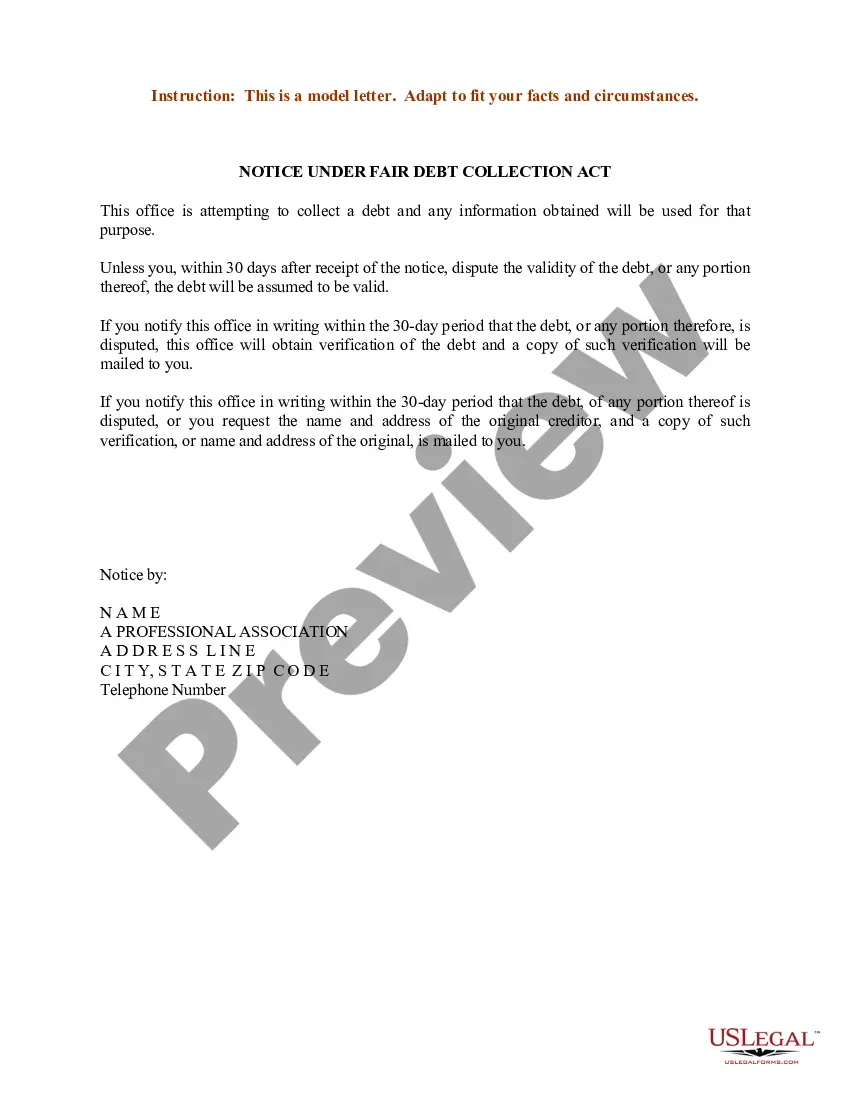
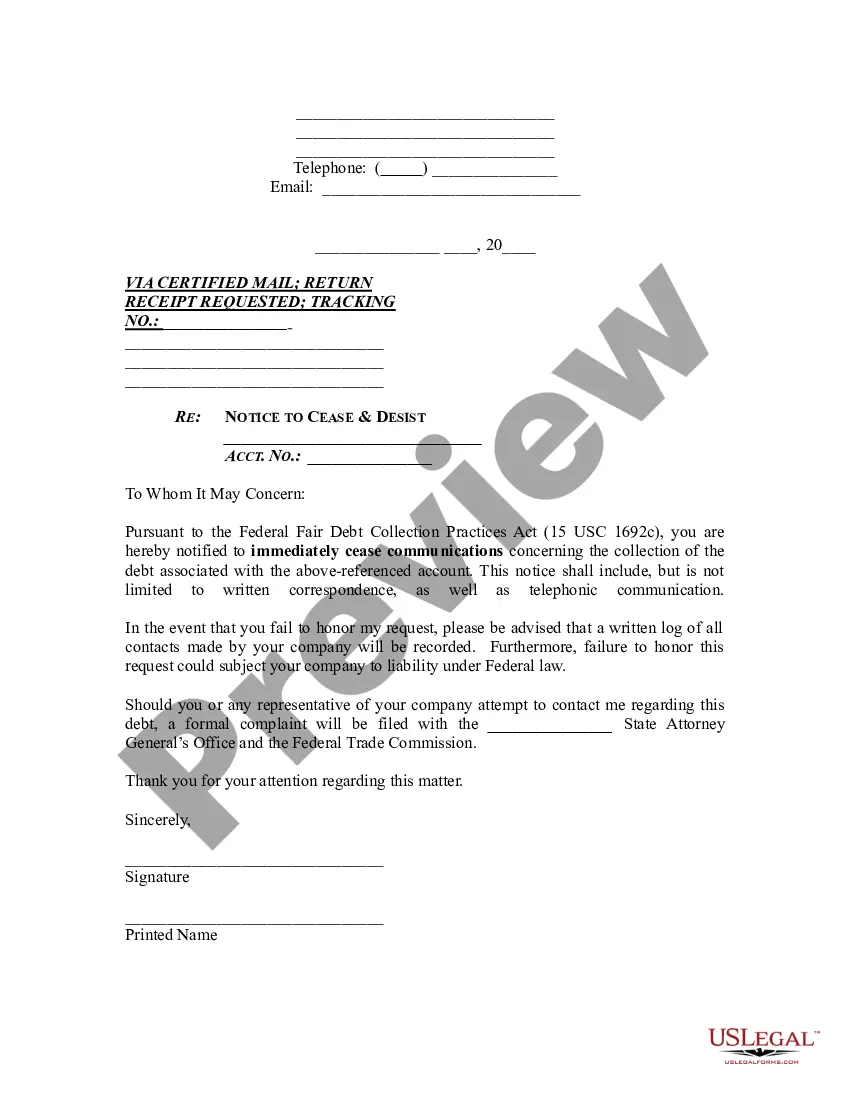
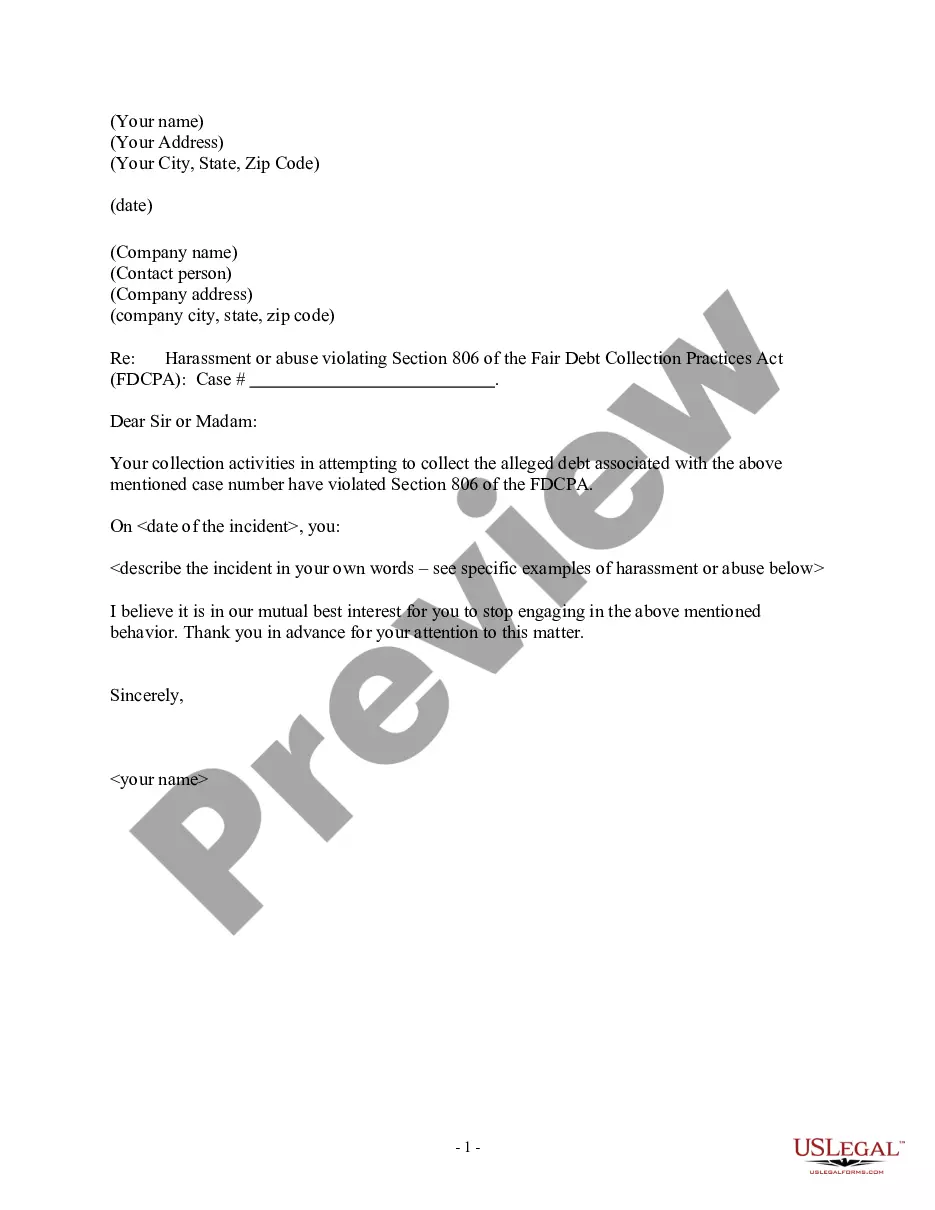
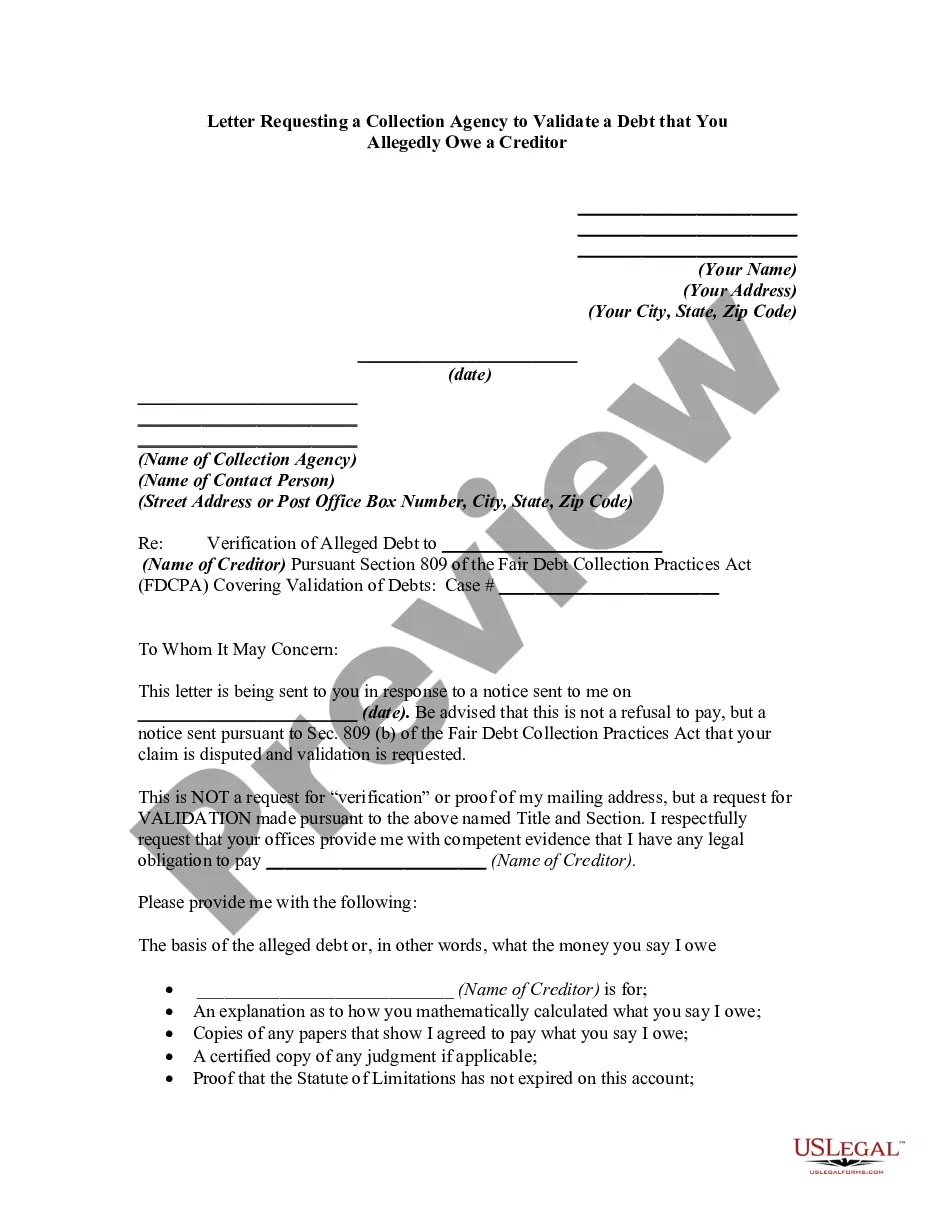
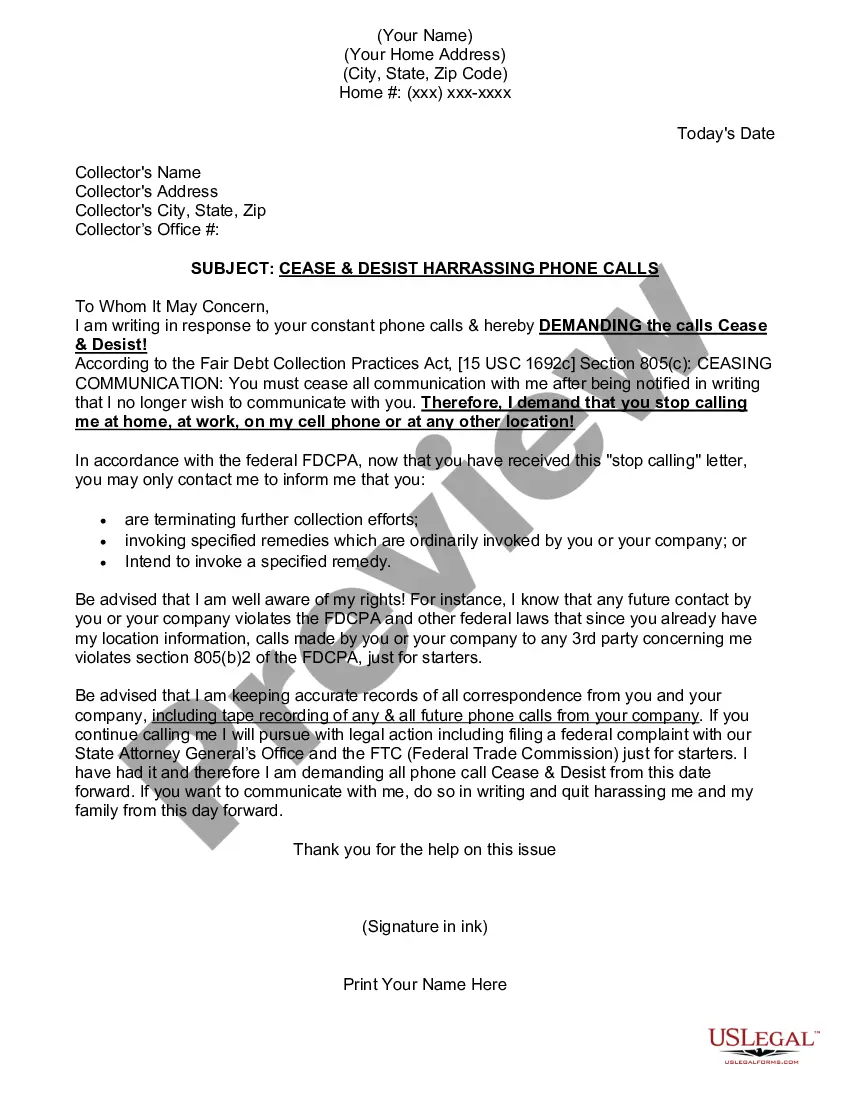
This NOTICE OF HARRASSMENT & VALIDATION OF DEBT is to be used when creditors call you repeatedly and mail you letters too. This form includes a cease and desist and a validation of debt, 2 letters in one.
New Jersey Notice of Harassment and Validation of Debt
Instant download
Description



How to fill out Notice Of Harassment And Validation Of Debt?
Are you in a situation where you require documents for either business or personal purposes on a daily basis.
There are numerous legitimate document templates available online, but finding ones you can rely on is not easy.
US Legal Forms offers a vast array of form templates, including the New Jersey Notice of Harassment and Validation of Debt, which are designed to comply with federal and state regulations.
- If you are already familiar with the US Legal Forms website and have an account, simply Log In.
- After that, you can download the New Jersey Notice of Harassment and Validation of Debt template.
- If you do not have an account and wish to use US Legal Forms, follow these instructions.
- Obtain the form you need and ensure it is for the correct state/region.
- Utilize the Review button to examine the form.
- Check the description to ensure you have selected the right form.
- If the form isn’t what you’re looking for, use the Search field to find the form that meets your needs and specifications.
- Once you find the appropriate form, click Buy now.
- Select the pricing plan you want, fill in the required information to create your account, and complete the purchase using your PayPal or Visa or Mastercard.
- Choose a preferred file format and download your copy.
- Find all the document templates you have purchased in the My documents section. You can download another copy of the New Jersey Notice of Harassment and Validation of Debt at any time, if needed. Just click on the required form to download or print the document template.
- Use US Legal Forms, the largest collection of legitimate forms, to save time and avoid errors. The service provides professionally crafted legal document templates that you can use for a variety of purposes. Create an account on US Legal Forms and start simplifying your life.
Form popularity
FAQ
Debt collection becomes harassment when a collector uses aggressive tactics, such as threats or excessive communication. You have rights that protect you from such behavior under the New Jersey Notice of Harassment and Validation of Debt. If you believe a collector is crossing the line, consider seeking assistance from platforms like uslegalforms to explore your options.
To respond to a debt validation letter, first, review the information provided to confirm its accuracy. You can then send a written request for further verification if you have doubts about the debt. Utilizing the New Jersey Notice of Harassment and Validation of Debt can help you understand your rights in this process.
A debt validation letter is sent to you as part of your rights under the Fair Debt Collection Practices Act. It serves as a formal way for the creditor to verify the debt they are collecting. If you are unsure about the legitimacy of the debt, knowing about the New Jersey Notice of Harassment and Validation of Debt can guide you in seeking clarity.
You received a debt validation notice because a creditor is required to inform you about the debt they claim you owe. This notice includes details about the amount owed and the creditor's information. Understanding your rights under the New Jersey Notice of Harassment and Validation of Debt can help you navigate this situation effectively.
To obtain a debt validation letter in the context of New Jersey Notice of Harassment and Validation of Debt, you should first request the letter from the debt collector. You can send a written request within 30 days of receiving the initial communication about your debt. This letter must include information about the debt, such as the amount owed and the name of the creditor. Using US Legal Forms can streamline this process, as they provide templates and guidance to help you create the necessary correspondence effectively.
Yes, debt validation is a beneficial step for anyone who wants to ensure that they are being treated fairly by debt collectors. By validating a debt, you can confirm its legitimacy and protect yourself from paying debts that may not be yours. Utilizing the New Jersey Notice of Harassment and Validation of Debt reinforces your position and empowers you to address any discrepancies confidently.
If you experience harassment from debt collectors, you can report them to the Federal Trade Commission (FTC) or the New Jersey Division of Consumer Affairs. These agencies take such complaints seriously and can investigate the matter further. Additionally, mentioning the New Jersey Notice of Harassment and Validation of Debt in your report may strengthen your case and help you seek relief.
To dispute the validity of a debt, you should send a written dispute letter to the debt collector within 30 days of receiving their first notice. In your letter, clearly state that you are disputing the debt and request validation. The New Jersey Notice of Harassment and Validation of Debt can guide you in forming your dispute, allowing you to assert your rights effectively.
Filing a debt validation claim involves sending a written request to the debt collector, asking for proof that you owe the debt in question. You can reference the New Jersey Notice of Harassment and Validation of Debt to ensure your request meets legal requirements. Once you send your request, the collector must halt collection activities until they provide the validation you requested.
To file harassment against a debt collector in New Jersey, you first need to document all instances of harassment, including dates, times, and the nature of the communication. Next, you can submit a complaint to the New Jersey Division of Consumer Affairs or seek help from an attorney specializing in debt collection issues. Utilizing the New Jersey Notice of Harassment and Validation of Debt can provide you with the necessary framework to protect your rights and take action.