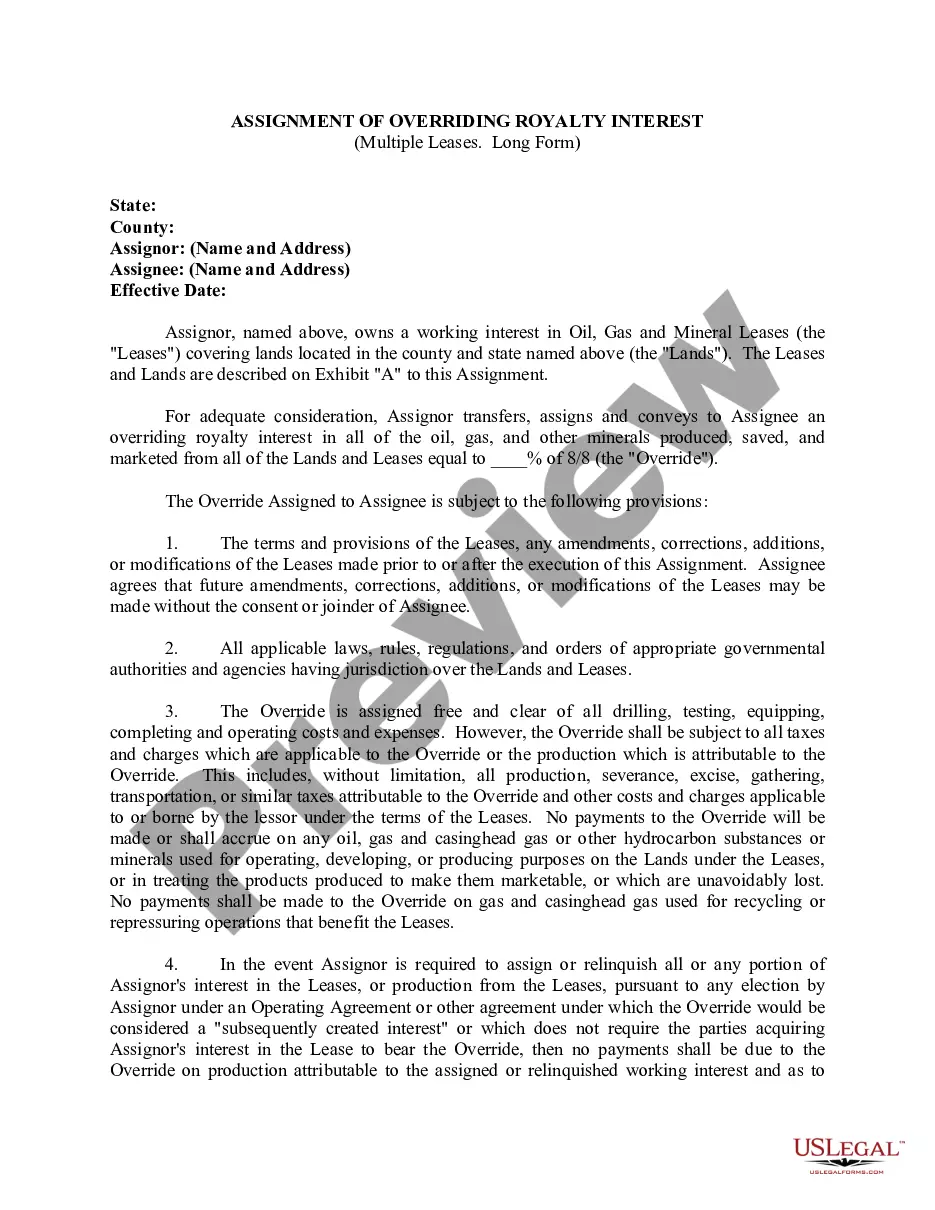
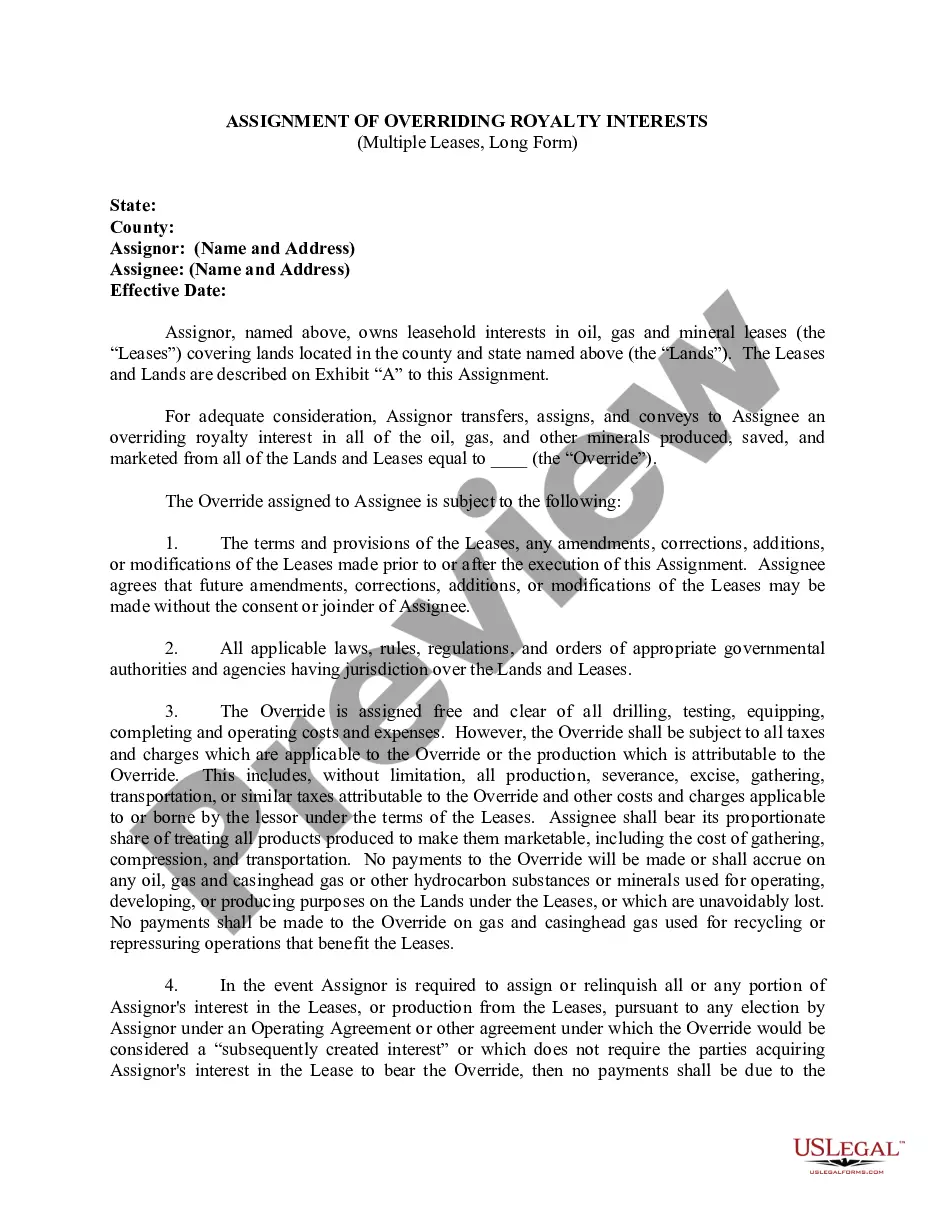
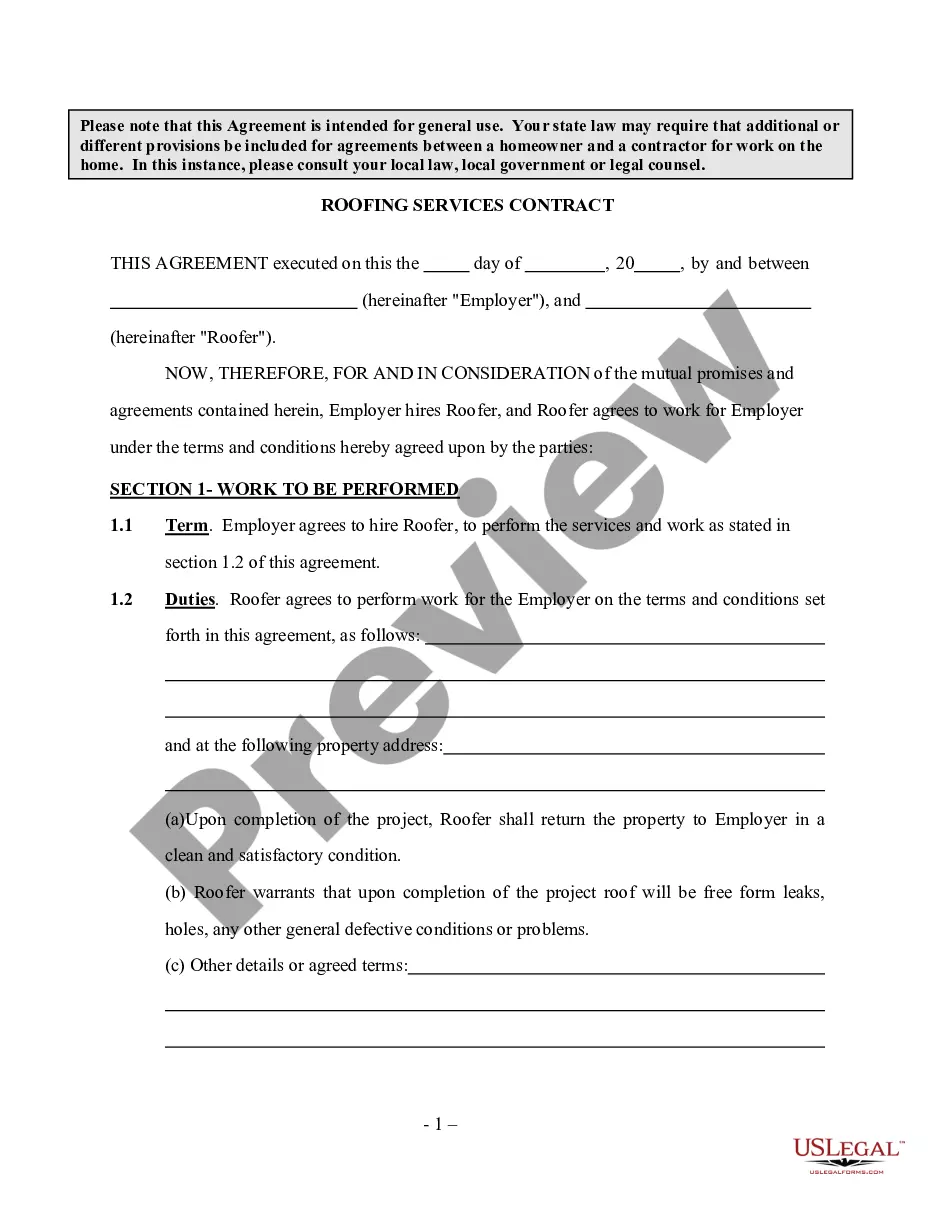
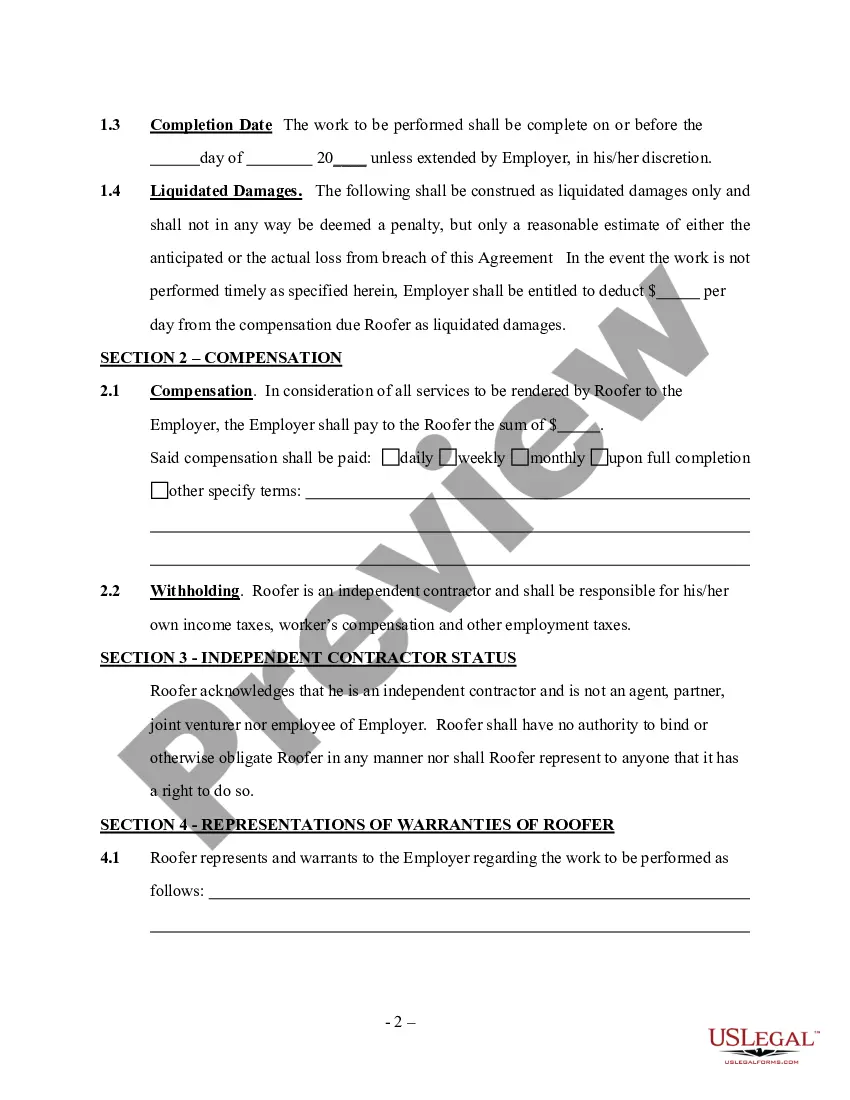
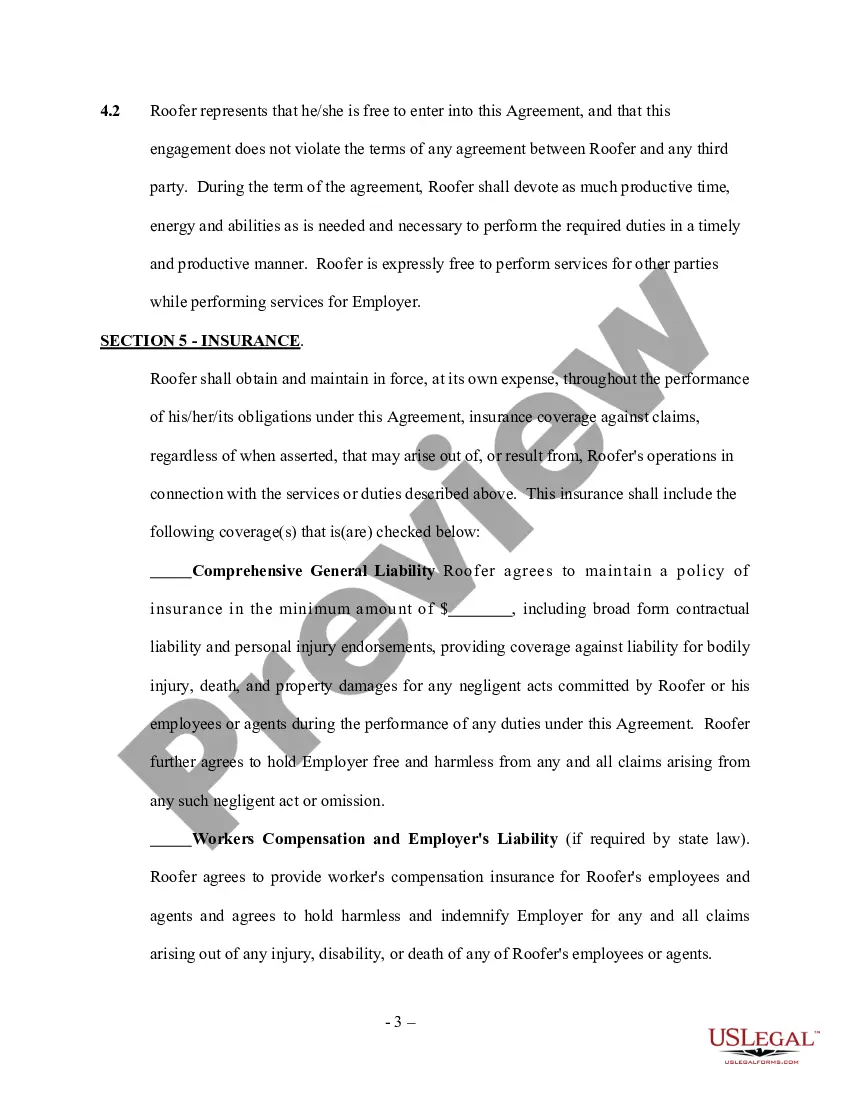
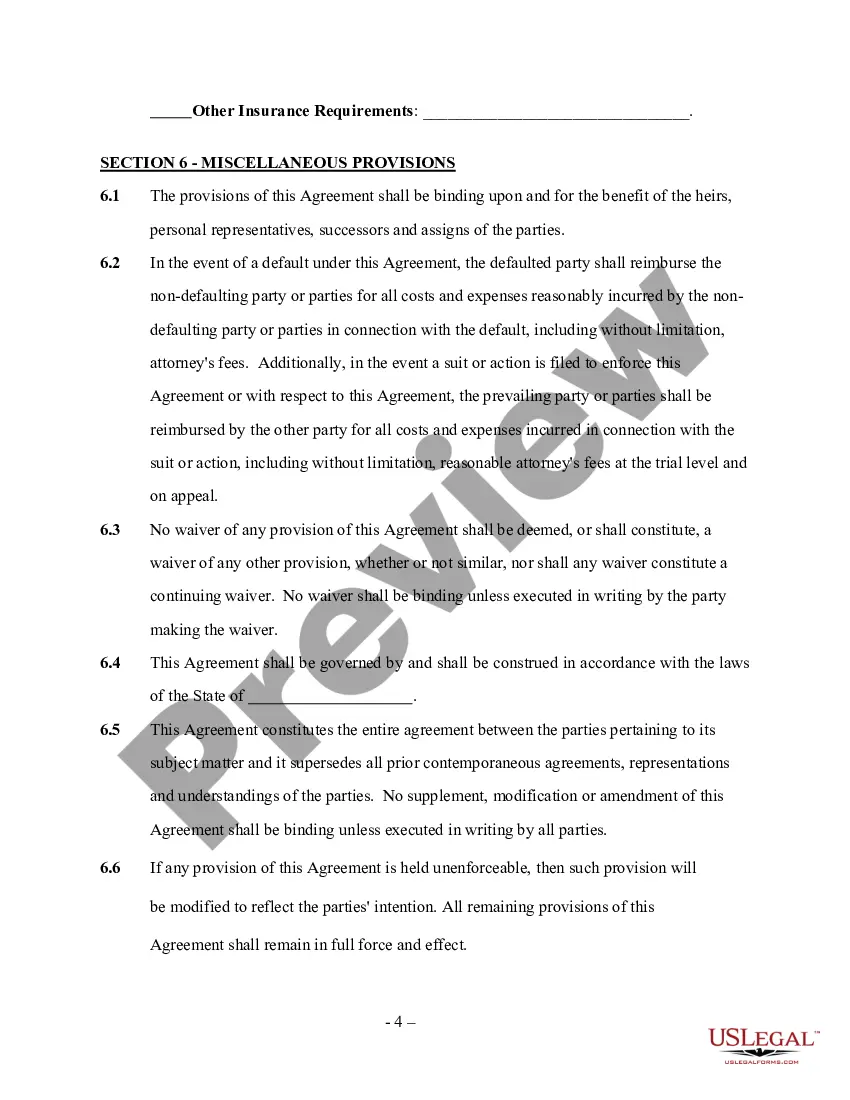
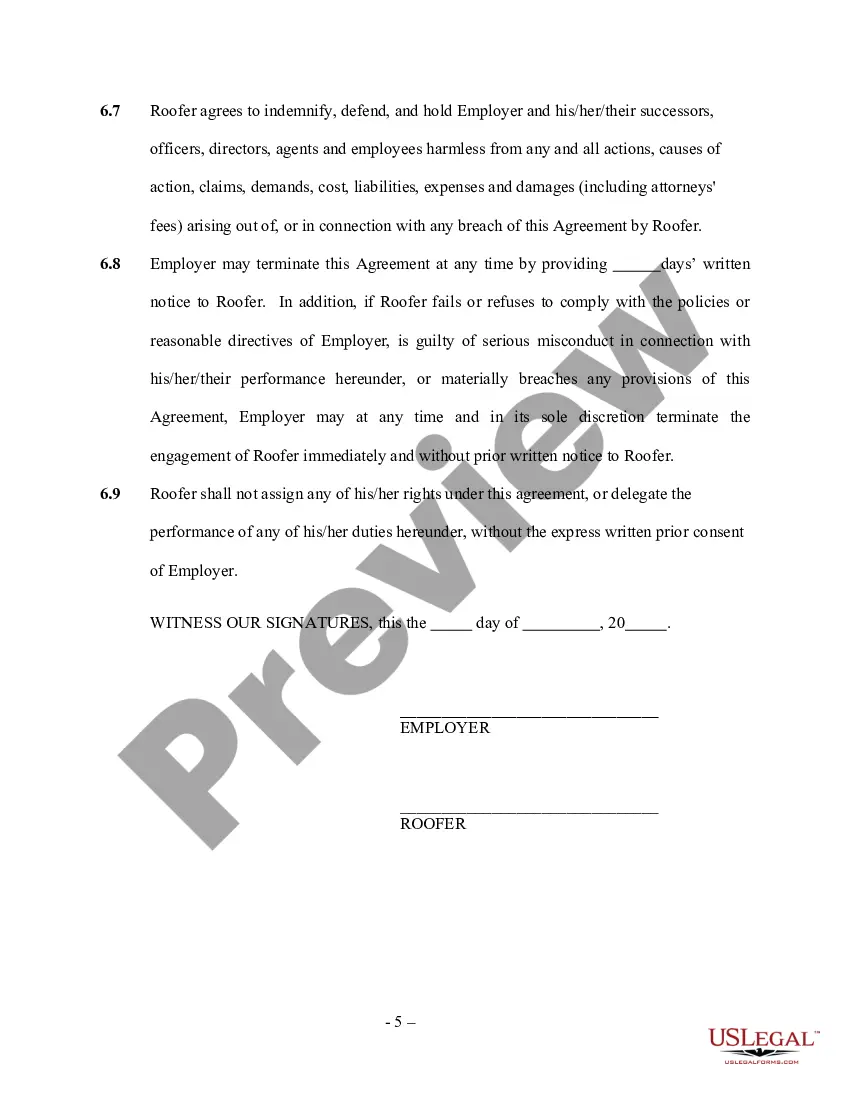
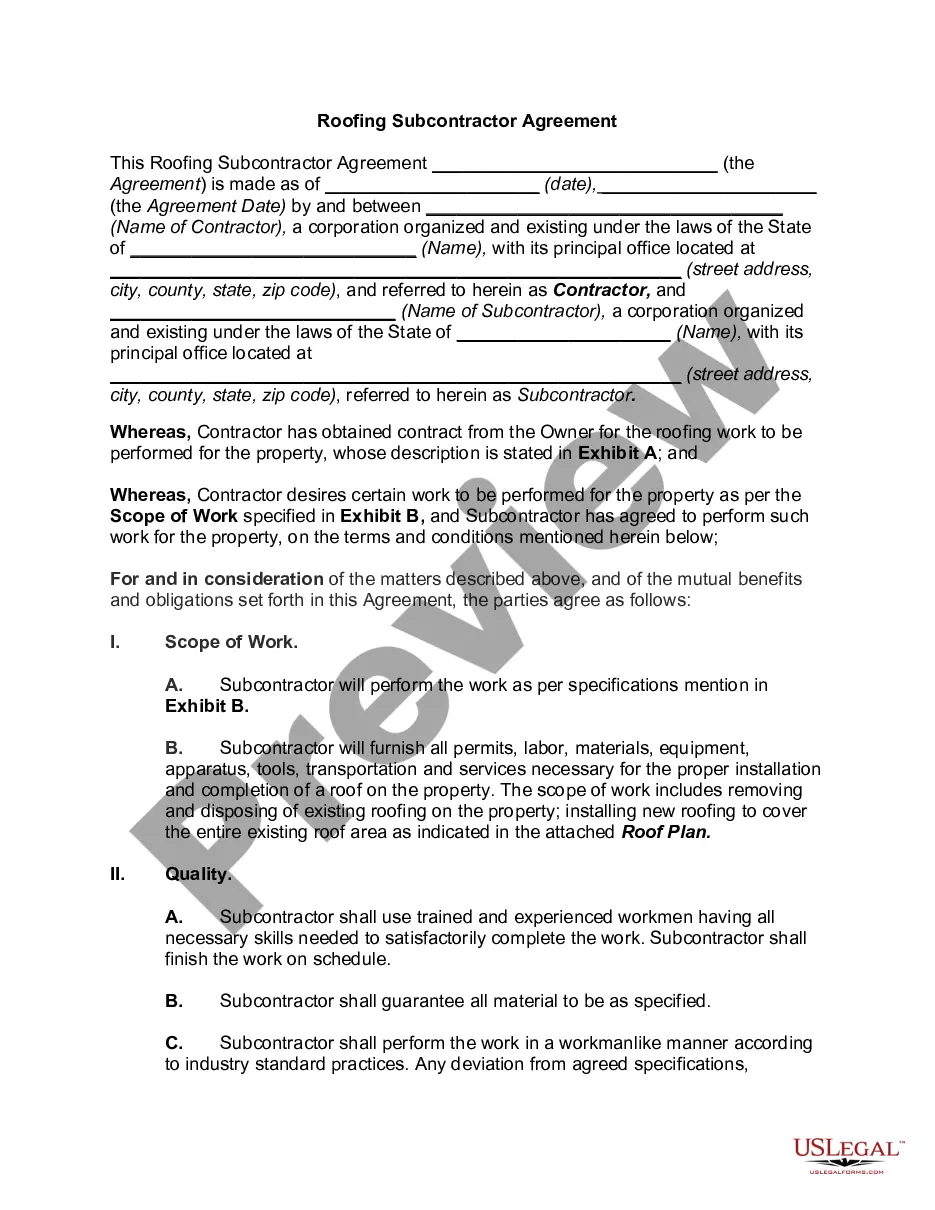
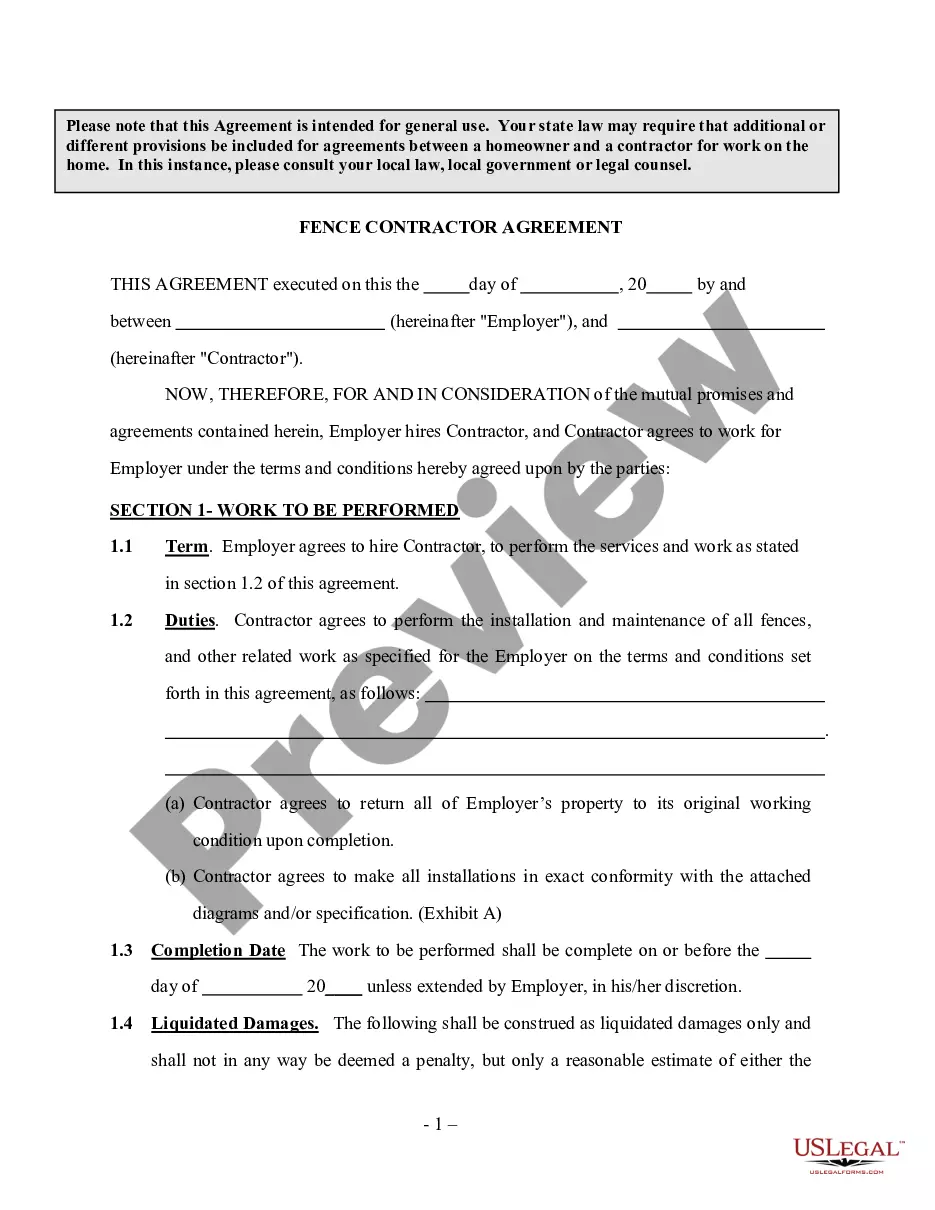
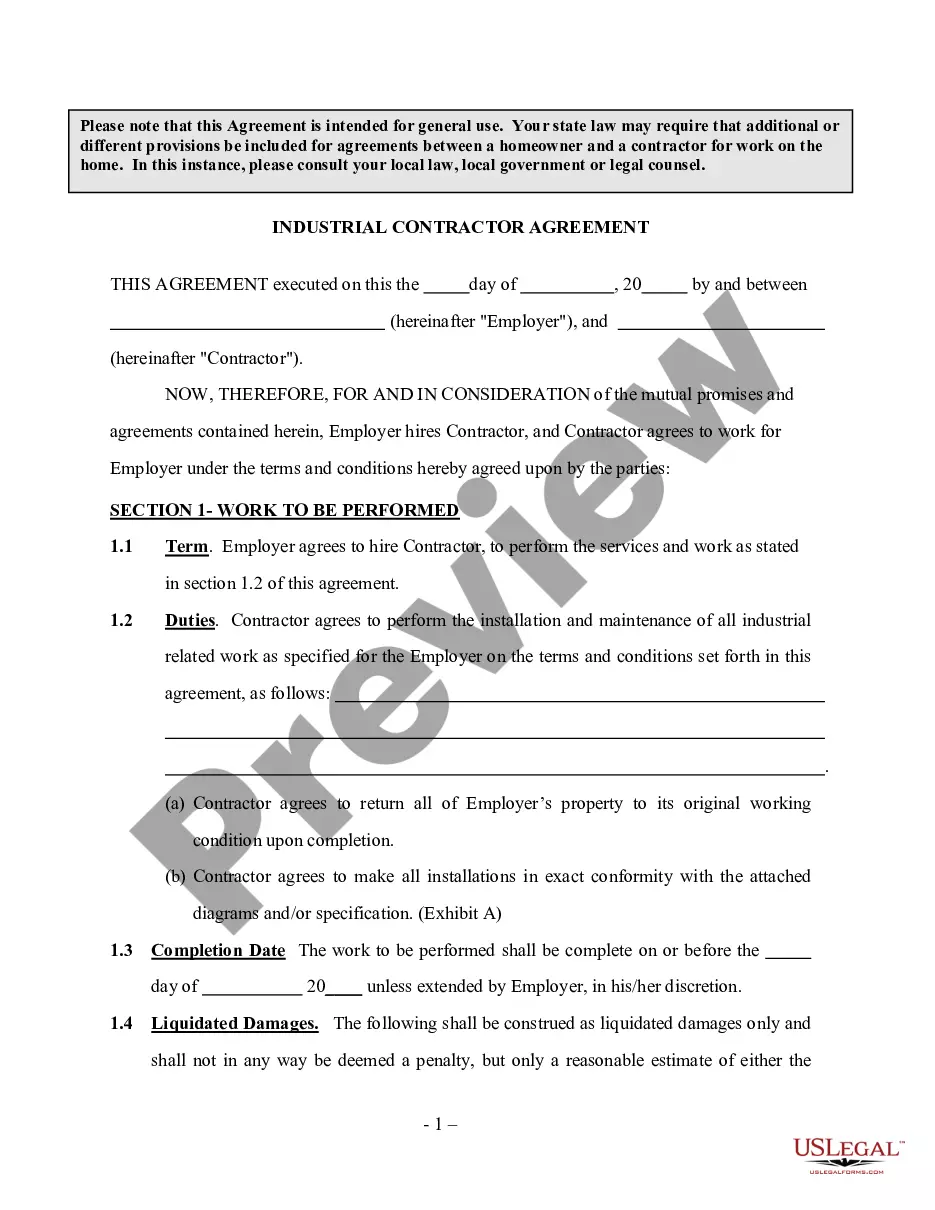
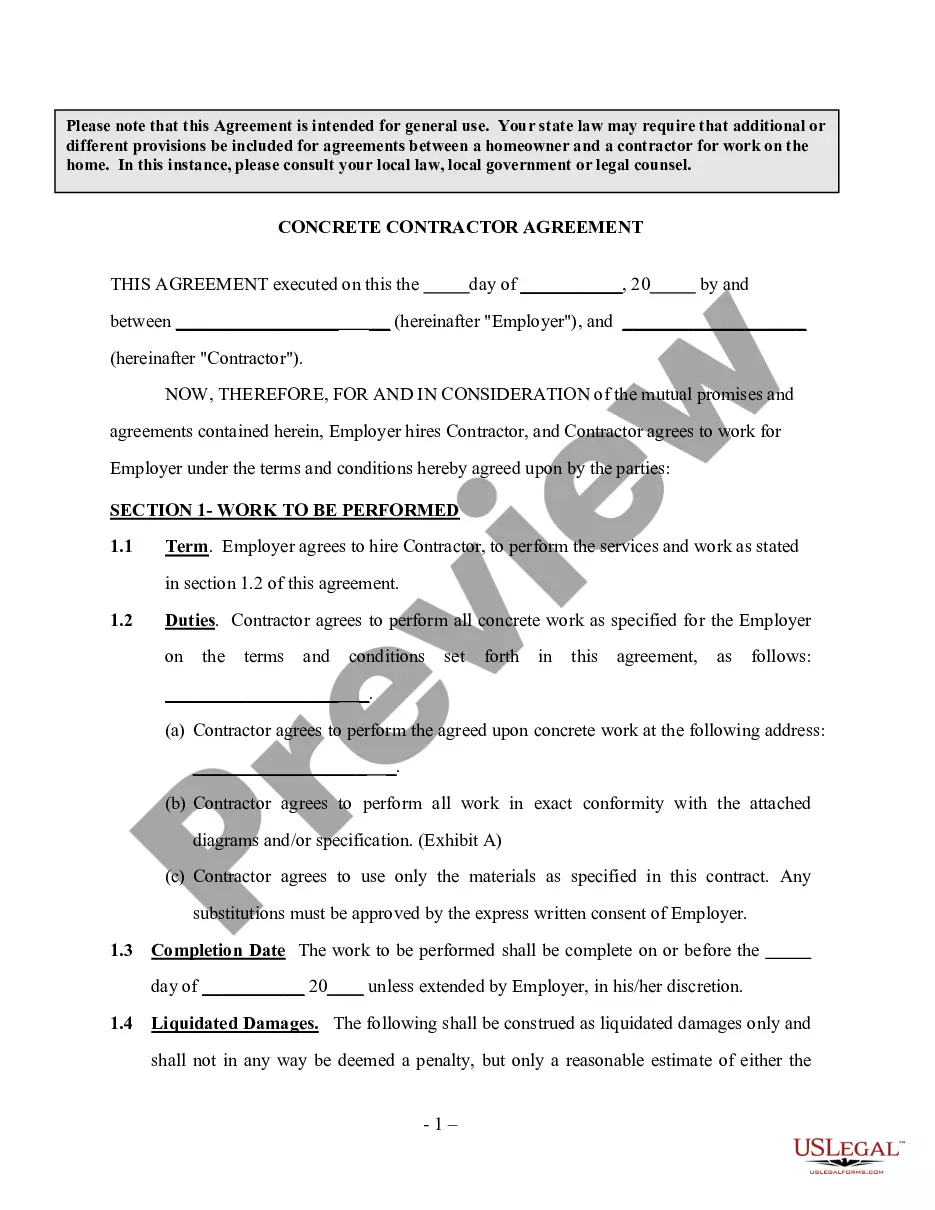
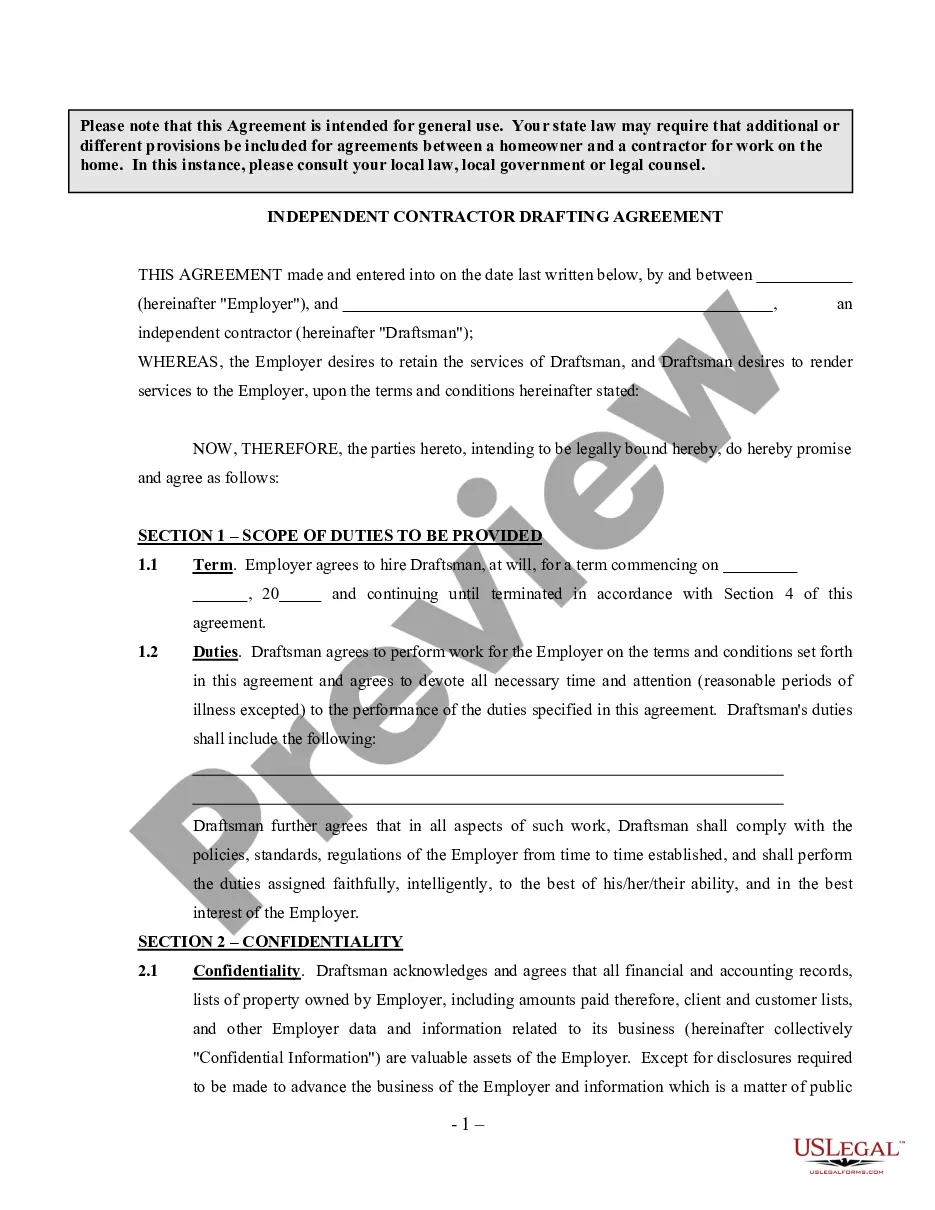
Company or individual hires roofer as an independent contractor to perform various roofing services. Please note that this Agreement is intended for general use. Your state law may require that additional or different provisions be included for agreements between a homeowner and a contractor for work on the home. In this instance, please consult your local law, local government or legal counsel.
New Jersey Self-Employed Roofing Services Agreement
State:
Multi-State
Control #:
US-INDC-54
Format:
Word;
Rich Text
Instant download
Description
Free preview
Get your form ready online
Our built-in tools help you complete, sign, share, and store your documents in one place.
Built-in online Word editor
Make edits, fill in missing information, and update formatting in US Legal Forms—just like you would in MS Word.
Export easily
Download a copy, print it, send it by email, or mail it via USPS—whatever works best for your next step.
E-sign your document
Sign and collect signatures with our SignNow integration. Send to multiple recipients, set reminders, and more. Go Premium to unlock E-Sign.
Notarize online 24/7
If this form requires notarization, complete it online through a secure video call—no need to meet a notary in person or wait for an appointment.
Store your document securely
We protect your documents and personal data by following strict security and privacy standards.

Make edits, fill in missing information, and update formatting in US Legal Forms—just like you would in MS Word.

Download a copy, print it, send it by email, or mail it via USPS—whatever works best for your next step.

Sign and collect signatures with our SignNow integration. Send to multiple recipients, set reminders, and more. Go Premium to unlock E-Sign.

If this form requires notarization, complete it online through a secure video call—no need to meet a notary in person or wait for an appointment.

We protect your documents and personal data by following strict security and privacy standards.
Looking for another form?





How to fill out Self-Employed Roofing Services Agreement?
If you need to total, retrieve, or print legal document templates, utilize US Legal Forms, the largest assortment of legal forms available online. Take advantage of the site's user-friendly and convenient search to find the documents you need. Various templates for business and personal purposes are organized by categories and states, or keywords. Use US Legal Forms to obtain the New Jersey Self-Employed Roofing Services Agreement in just a few clicks.
If you are already a US Legal Forms customer, Log In to your account and click the Download button to acquire the New Jersey Self-Employed Roofing Services Agreement. You can also access forms you previously downloaded from the My documents section of your account.
If you are using US Legal Forms for the first time, follow the instructions below: Step 1. Ensure you have selected the form for the correct city/state. Step 2. Use the Preview option to review the form's content. Don't forget to read the description. Step 3. If you are not satisfied with the form, utilize the Search field at the top of the screen to find other options in the legal form format. Step 4. Once you have found the form you need, click the Purchase now button. Choose your preferred pricing plan and provide your details to register for an account. Step 5. Process the payment. You can use your Visa or Mastercard or PayPal account to complete the transaction. Step 6. Select the format of the legal form and download it to your device. Step 7. Complete, modify, and print or sign the New Jersey Self-Employed Roofing Services Agreement.
- Every legal document template you purchase is yours indefinitely.
- You have access to every form you downloaded with your account.
- Select the My documents section and choose a form to print or download again.
- Complete and download, and print the New Jersey Self-Employed Roofing Services Agreement with US Legal Forms.
- There are thousands of professional and state-specific forms you can use for your business or personal needs.
Form popularity
FAQ
Roofers do need a license to operate legally in New Jersey. This licensing process helps maintain quality standards within the industry and provides a level of assurance for consumers. When you engage a licensed contractor, you can feel confident about the quality of workmanship and compliance with local laws. Incorporating a New Jersey Self-Employed Roofing Services Agreement can further solidify the terms of your engagement.
Yes, roofers in New Jersey are required to be licensed. This requirement ensures that contractors meet specific standards of quality and safety. By hiring a licensed roofer, you protect yourself from potential liabilities and ensure that your roofing project complies with local regulations. A New Jersey Self-Employed Roofing Services Agreement will further reinforce the professionalism of your chosen contractor.
To write a contract for a roofing job, start by clearly defining the scope of work. Include details such as project timelines, payment terms, and materials to be used. It's essential to specify responsibilities and expectations to avoid misunderstandings. Utilizing a New Jersey Self-Employed Roofing Services Agreement can help ensure that all necessary elements are included and legally binding.
To create a roofing contract, you should start by outlining the scope of work clearly. Specify the materials, labor, and timeline required for the project. It’s also important to include payment terms and any warranties associated with the work. Using a New Jersey Self-Employed Roofing Services Agreement template from USLegalForms can simplify this process, ensuring you cover all necessary legal aspects while saving time.
Yes, roofers in New Jersey are required to be licensed to operate legally. This licensing ensures that contractors meet specific standards and regulations, providing you with peace of mind when hiring a professional. To formalize your agreement with a licensed roofer, consider using a New Jersey Self-Employed Roofing Services Agreement. This contract will clearly stipulate the responsibilities and expectations for both parties involved.
Writing a roofing contract involves several key components, including the scope of work, payment terms, deadlines, and warranties. Start by clearly defining the services to be provided and any materials needed. Including a New Jersey Self-Employed Roofing Services Agreement can help outline these expectations and protect both you and the contractor. For your convenience, US Legal Forms offers templates to simplify this process.
The 25% rule for roofing refers to the guideline that states a roofing contractor can replace up to 25% of a roof's surface without obtaining a permit. This rule helps homeowners manage minor repairs without facing regulatory hurdles. However, for larger projects or significant replacements, having a New Jersey Self-Employed Roofing Services Agreement is essential. This agreement ensures both parties understand the scope of work, protecting you from potential disputes.
Many roofers choose to work as self-employed professionals. This status grants them the freedom to operate independently, which can lead to increased job satisfaction and potentially higher earnings. If you decide to go this route, having a New Jersey Self-Employed Roofing Services Agreement can help clarify your responsibilities and protect your business interests.
Starting a roofing business without a license in New Jersey is not advisable. Operating without proper licensing can lead to legal issues and fines, jeopardizing your business. To protect yourself and your clients, secure the necessary licenses and consider utilizing a New Jersey Self-Employed Roofing Services Agreement for your contracts.
In New Jersey, you do need a license to perform roofing work legally. The state requires contractors to hold a Home Improvement Contractor Registration, which ensures that they meet specific standards. If you plan to operate as a self-employed roofer, obtaining this license is essential for compliance and credibility.