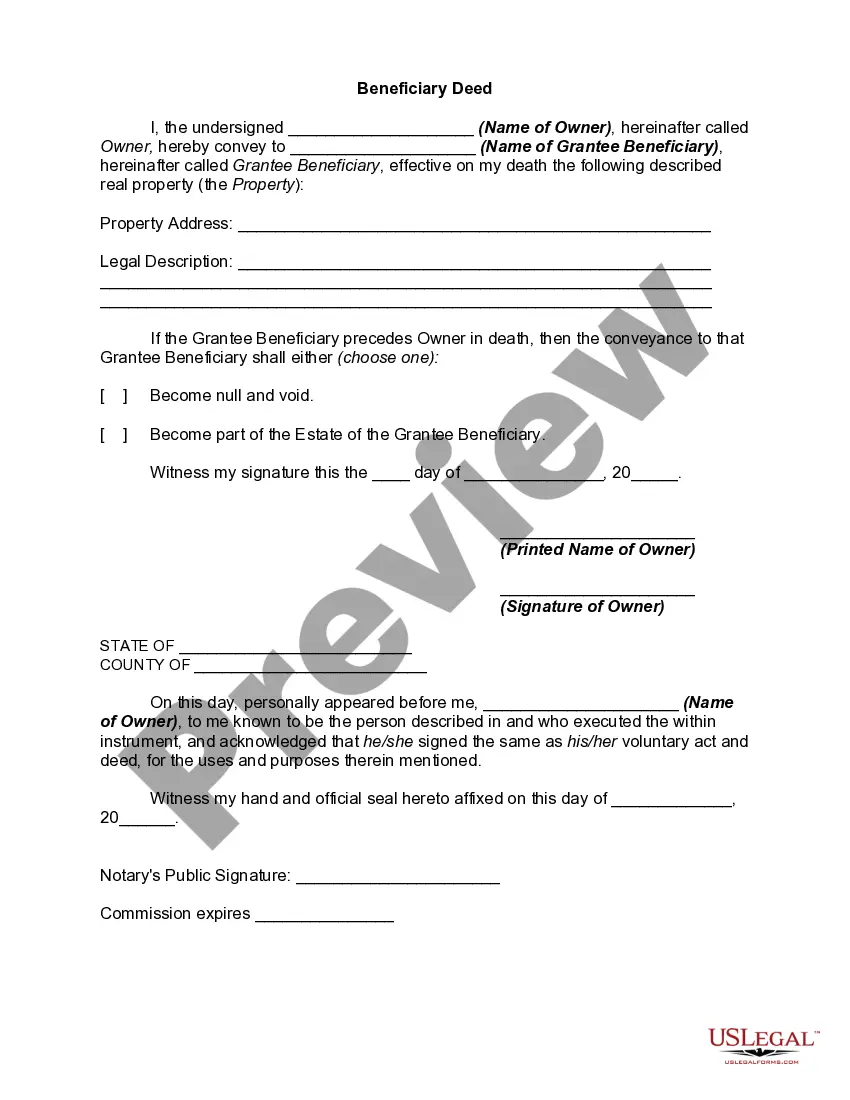
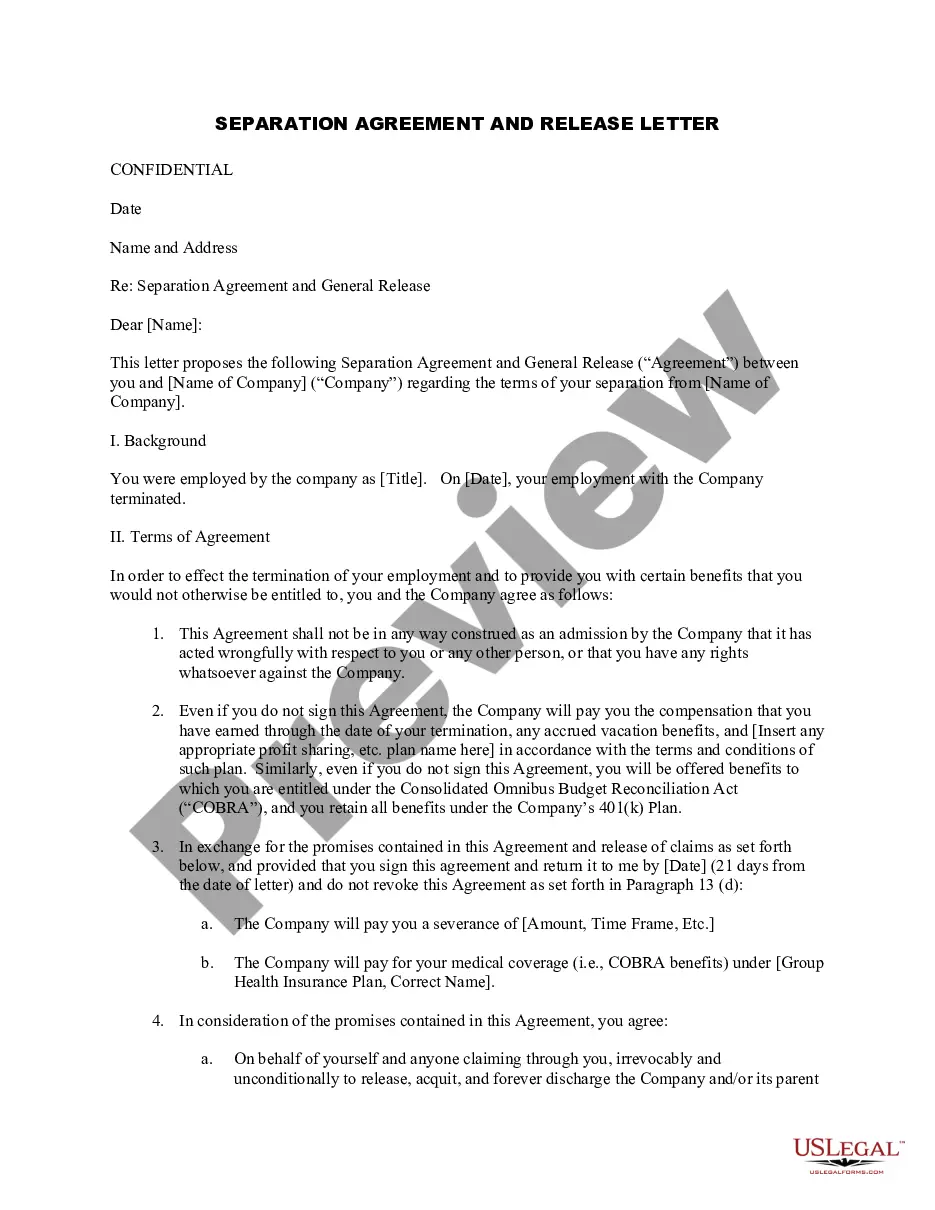
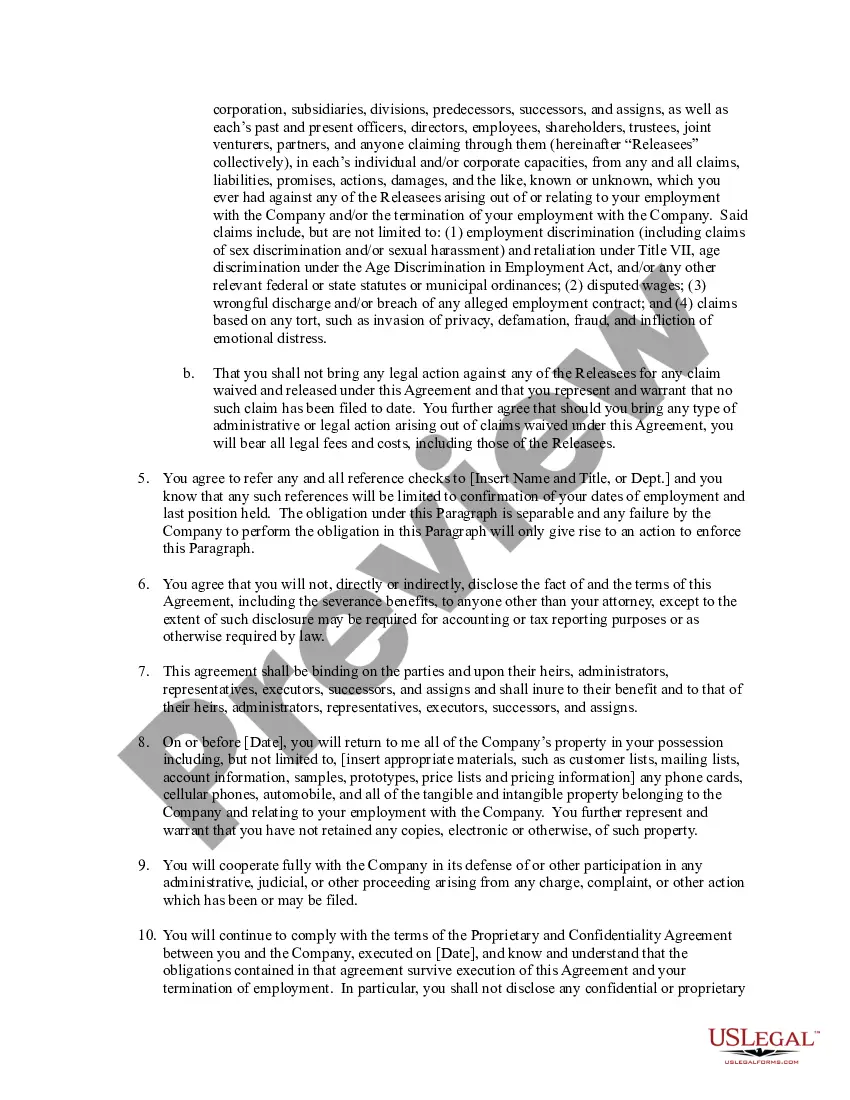
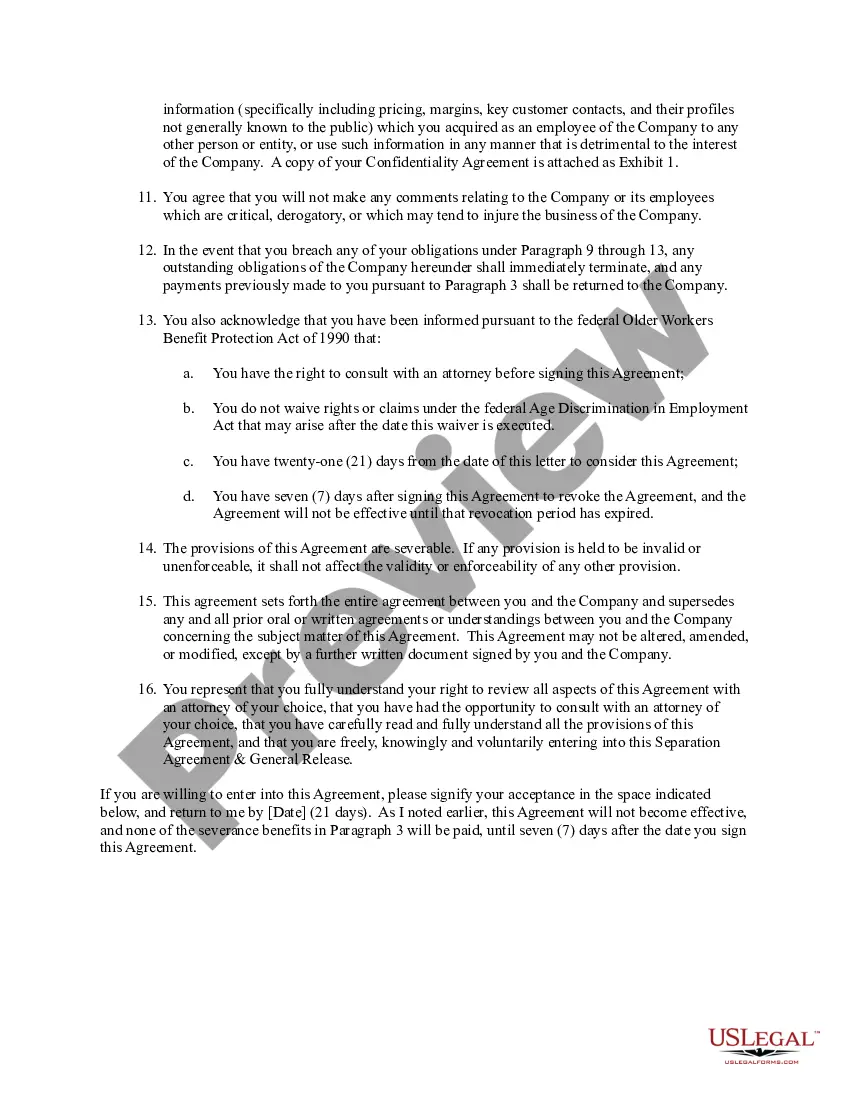
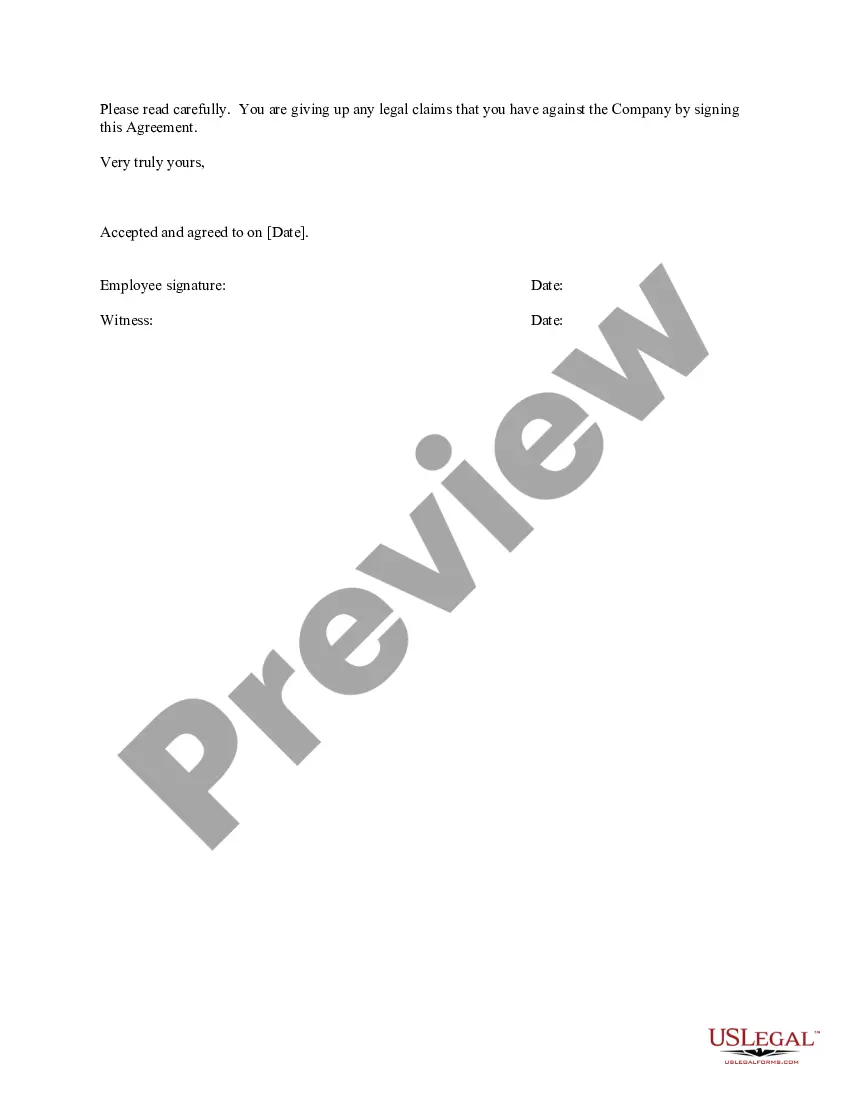
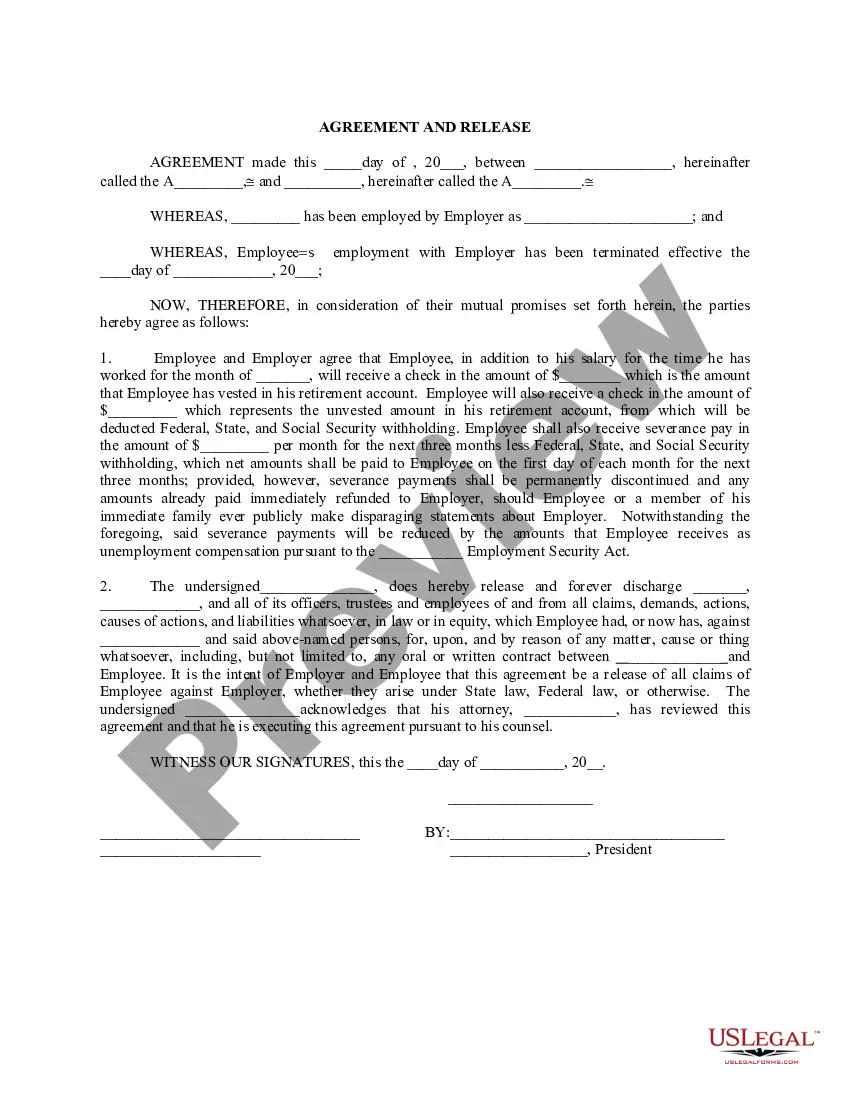
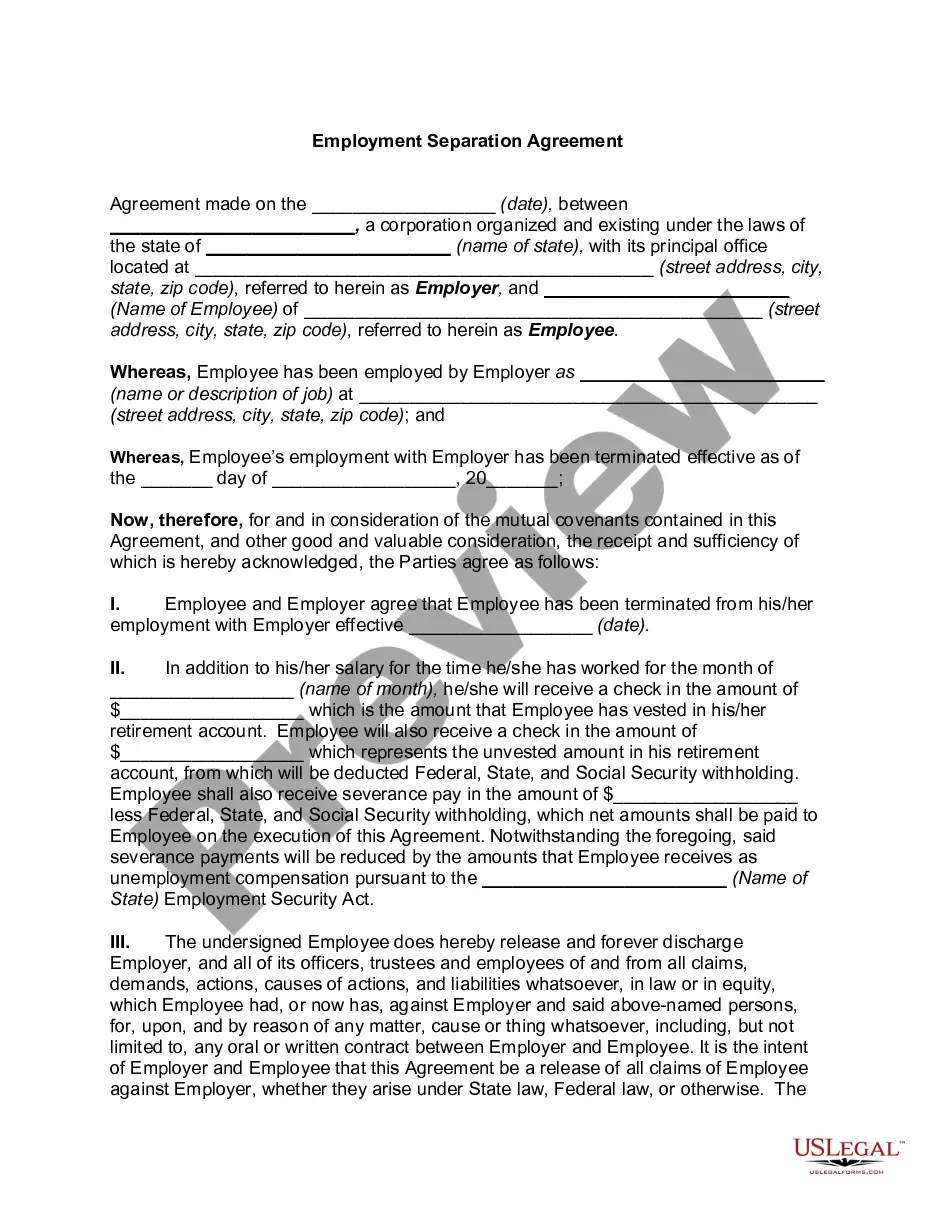
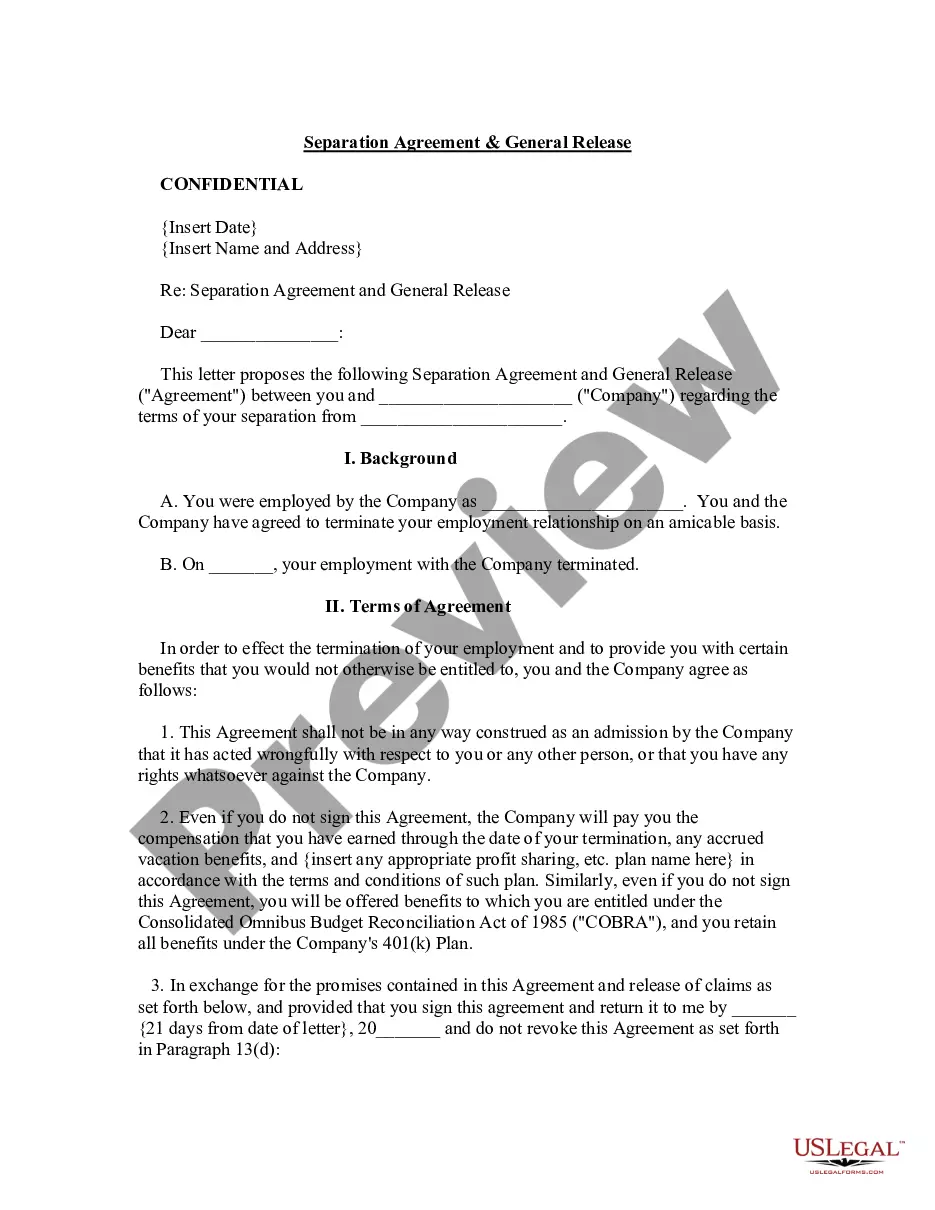
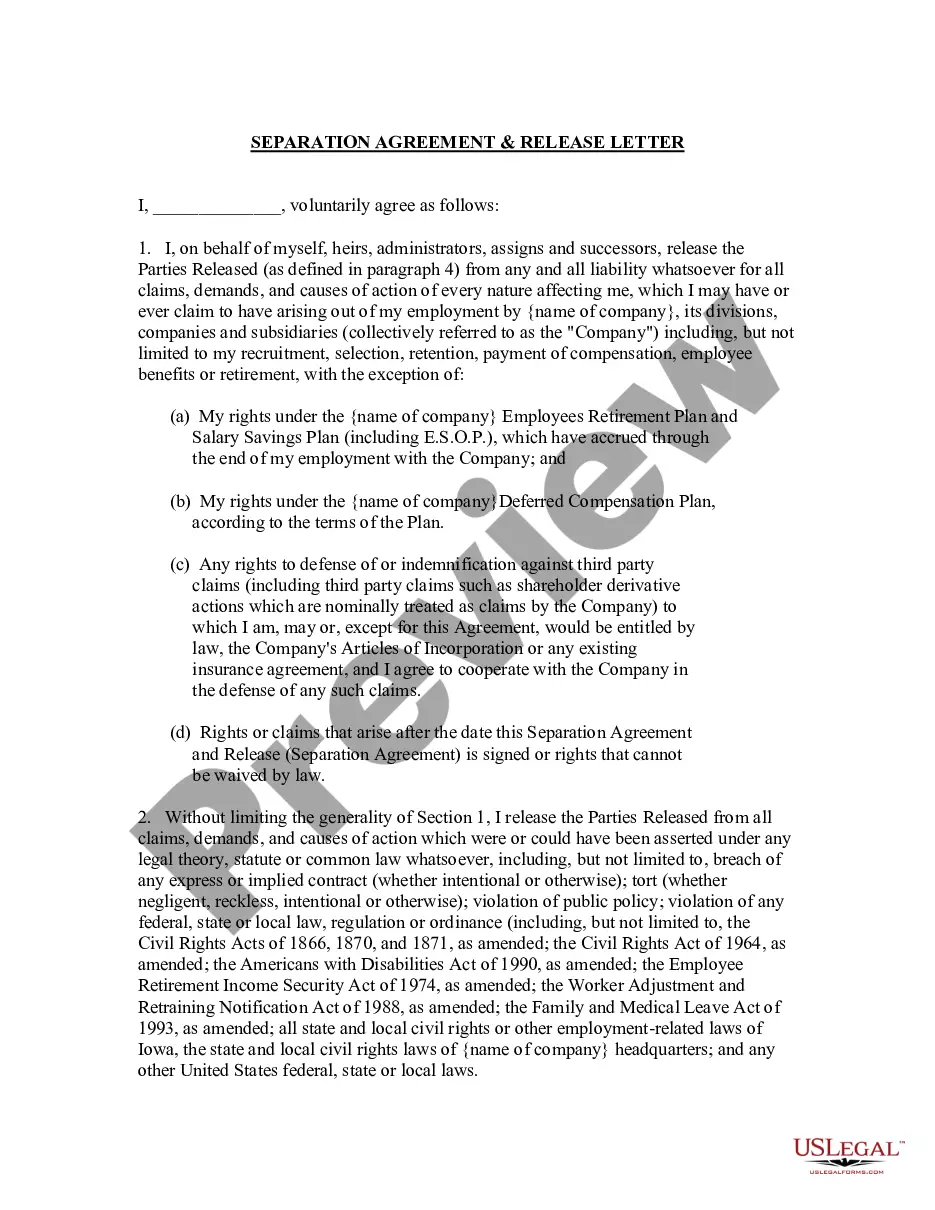
New Jersey Separation Agreement and Release Letter for Exiting Employee
Description
Get your form ready online
Our built-in tools help you complete, sign, share, and store your documents in one place.
Make edits, fill in missing information, and update formatting in US Legal Forms—just like you would in MS Word.
Download a copy, print it, send it by email, or mail it via USPS—whatever works best for your next step.
Sign and collect signatures with our SignNow integration. Send to multiple recipients, set reminders, and more. Go Premium to unlock E-Sign.
If this form requires notarization, complete it online through a secure video call—no need to meet a notary in person or wait for an appointment.
We protect your documents and personal data by following strict security and privacy standards.

Make edits, fill in missing information, and update formatting in US Legal Forms—just like you would in MS Word.

Download a copy, print it, send it by email, or mail it via USPS—whatever works best for your next step.

Sign and collect signatures with our SignNow integration. Send to multiple recipients, set reminders, and more. Go Premium to unlock E-Sign.

If this form requires notarization, complete it online through a secure video call—no need to meet a notary in person or wait for an appointment.

We protect your documents and personal data by following strict security and privacy standards.
Looking for another form?





How to fill out Separation Agreement And Release Letter For Exiting Employee?
Selecting the appropriate legal document template can be a challenge.
Indeed, there are numerous templates accessible on the internet, but how do you acquire the legal form you require.
Utilize the US Legal Forms website.
Firstly, ensure that you have selected the correct form for your town/state. You can review the form using the Preview button and check the form details to confirm it is appropriate for you.
- This service offers thousands of templates, including the New Jersey Separation Agreement and Release Letter for Departing Employee, suitable for both business and personal purposes.
- All documents are reviewed by experts and comply with federal and state regulations.
- If you are already registered, Log In to your account and click on the Download button to find the New Jersey Separation Agreement and Release Letter for Departing Employee.
- Use your account to browse the legal forms you have purchased previously.
- Go to the My documents section of your account to download another copy of the required document.
- If you are a new user of US Legal Forms, here are simple steps you can follow.
Form popularity
FAQ
A separation and release agreement is a contract between a company and a departing worker, usually an employee. A properly-drafted separation and release agreement can greatly benefit the company. It can minimize the threat of litigation, guard against the loss of clients or staff, and protect good-will and reputation.
How do I write a termination letter to an employee?Add the employee name, ID number, position, and department.Add the name of manager or supervisor handling termination.Include any severance, benefits, and compensation the employee is entitled to.Detail any company property employee is expected to return.More items...
A separated employee is one who leaves an employment situation for any reason, whether voluntary or involuntary. A terminated employee is involuntarily let go, usually because of poor performance or lack of work.
A separated employee is one who leaves an employment situation for any reason, whether voluntary or involuntary. A terminated employee is involuntarily let go, usually because of poor performance or lack of work.
When a company ends an employee's job, they typically provide a termination letter, also called a letter of separation, stating the reason for termination and next steps. A termination letter is an official and professional way to document and describe the separation between the employee and employer.
There are three types of separation: trial, permanent, and legal. In most states, only one (legal separation) changes your legal statusbut all three have the potential to affect your legal rights.
Quitting is still a separation of employment even though it is typically your decision to quit. If your employer asks you to resign your position, you can still list voluntary resignation as the reason for the separation on future applications.
The agreement that records a mutual termination of employment and a waiver and release of claims (in consideration of receipt of an ex gratia payment) is known as a mutual separation agreement. For former employees, a waiver and release of claims letter is typically used instead of a mutual separation agreement.
When a company ends an employee's job, they typically provide a termination letter, also called a letter of separation, stating the reason for termination and next steps. A termination letter is an official and professional way to document and describe the separation between the employee and employer.
Why use a termination letter? When terminating an employee at will (or if they are being laid off), the termination letter can provide the employee with documentation in support of an unemployment claim.