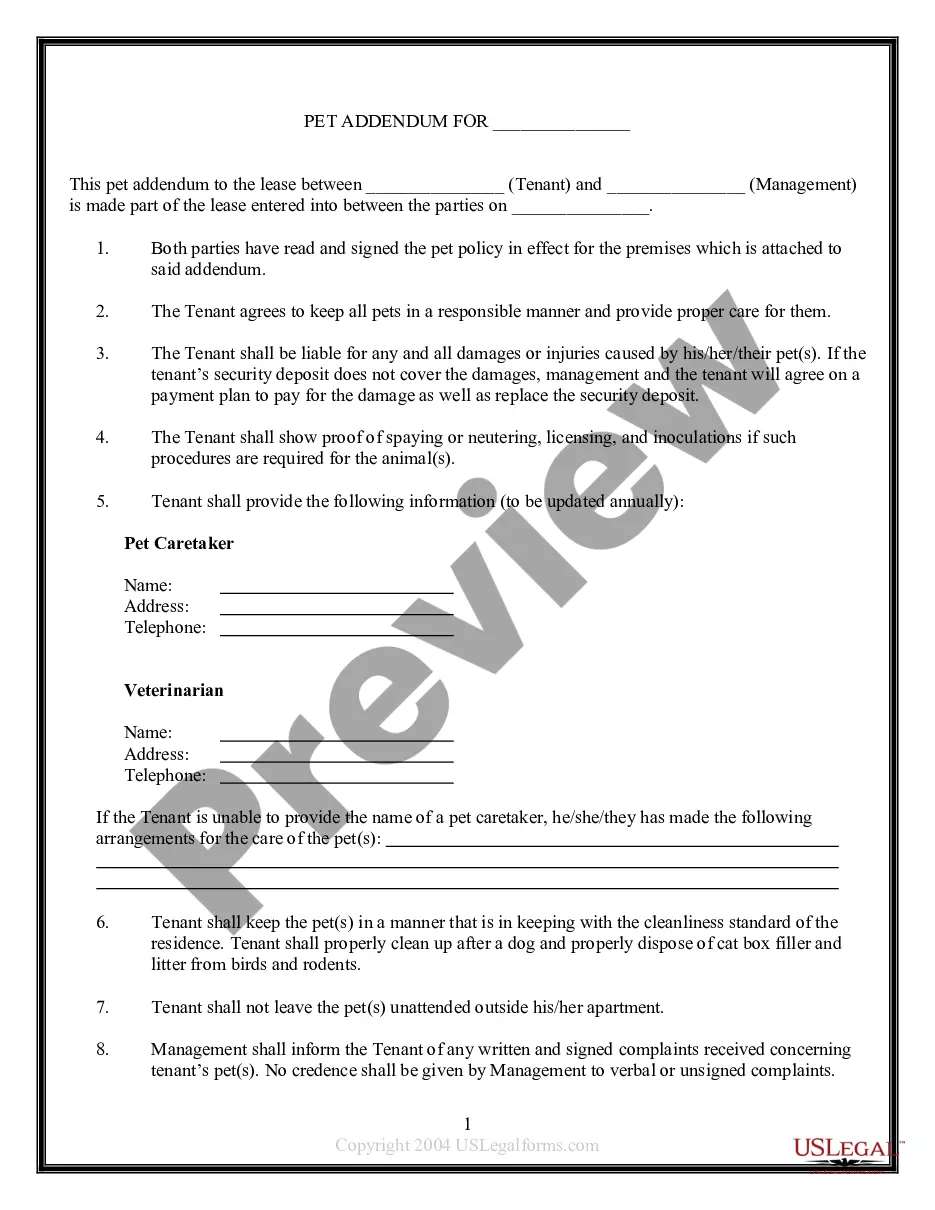
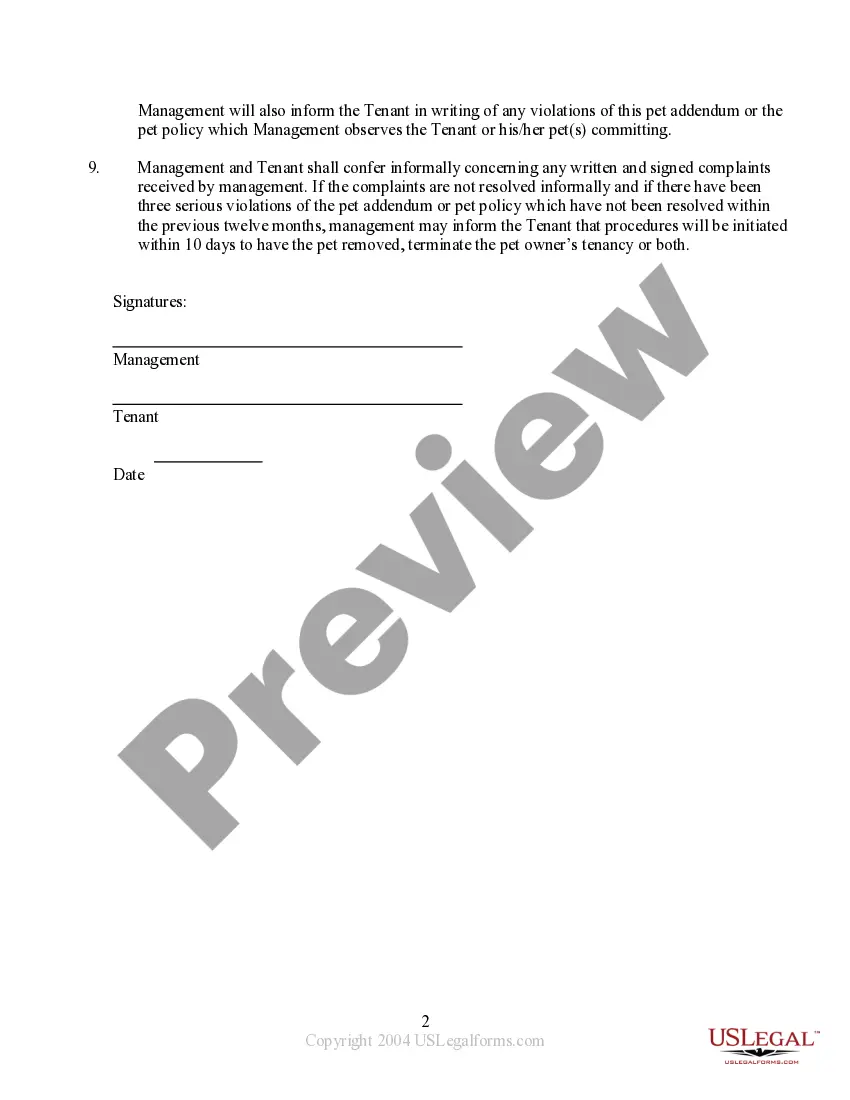
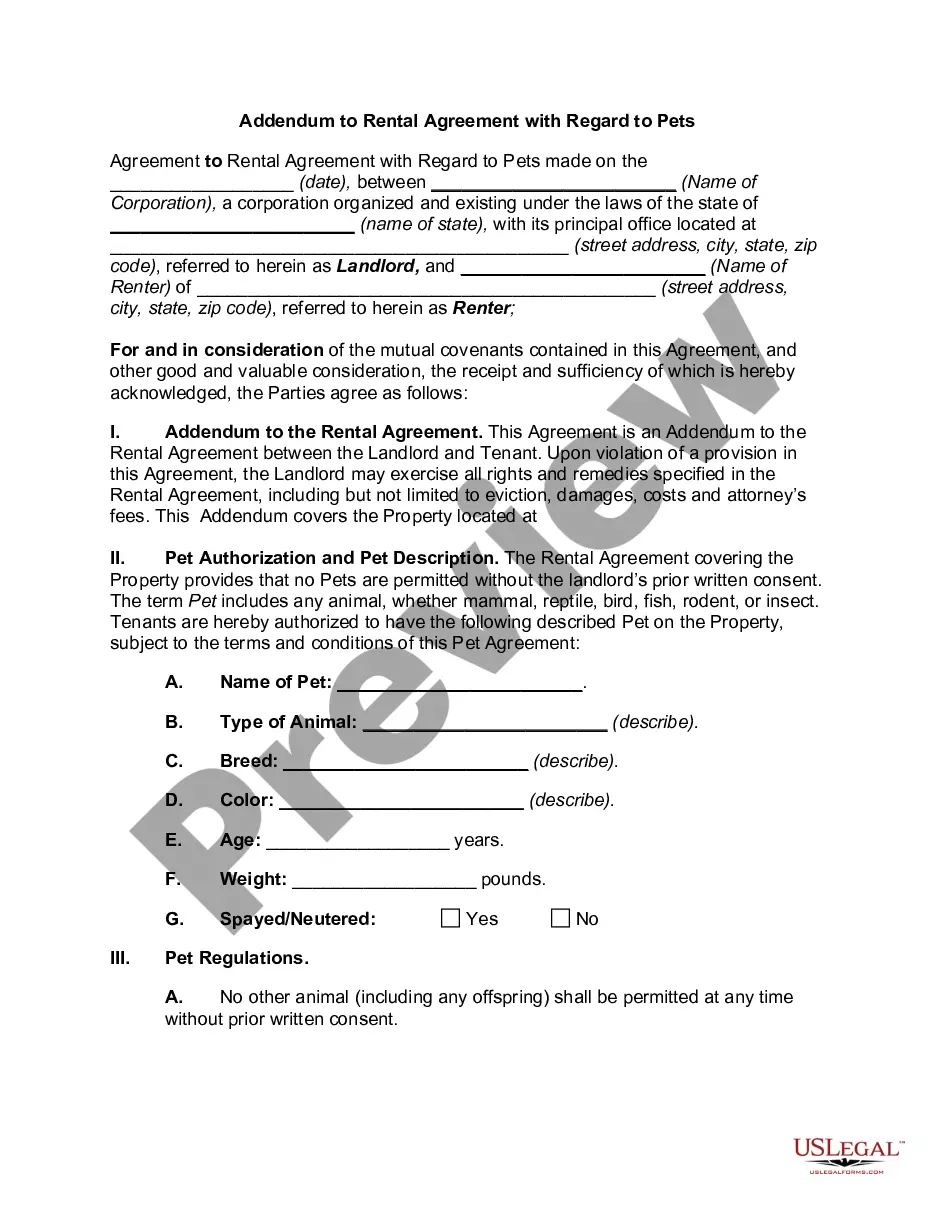
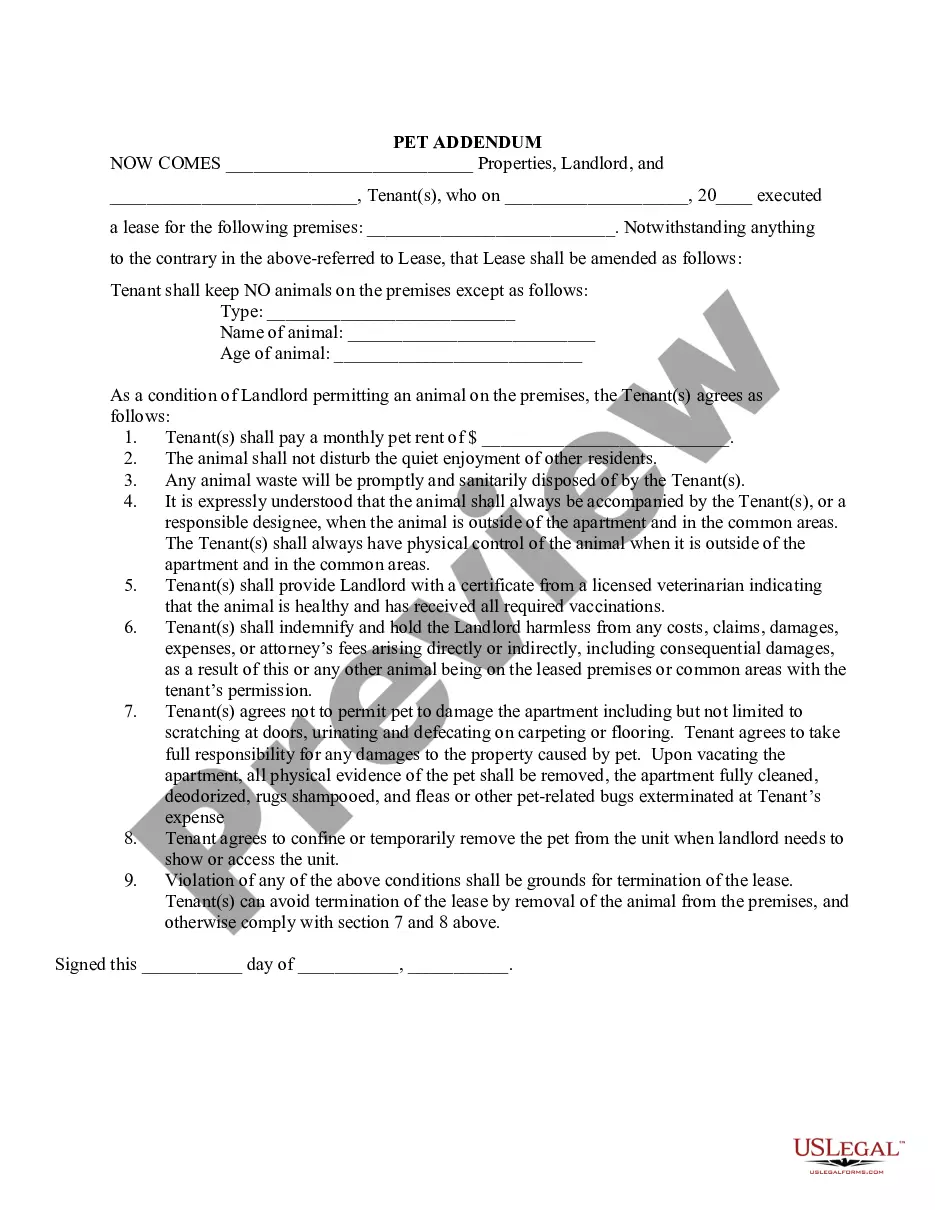
Apartment lease addendum concerning the keeping of pets in the complex units.
New Jersey Addendum To Apartment Lease regarding Pets
State:
Multi-State
Control #:
US-902LT
Format:
Word;
Rich Text
Instant download
Description
Free preview
Get your form ready online
Our built-in tools help you complete, sign, share, and store your documents in one place.
Built-in online Word editor
Make edits, fill in missing information, and update formatting in US Legal Forms—just like you would in MS Word.
Export easily
Download a copy, print it, send it by email, or mail it via USPS—whatever works best for your next step.
E-sign your document
Sign and collect signatures with our SignNow integration. Send to multiple recipients, set reminders, and more. Go Premium to unlock E-Sign.
Notarize online 24/7
If this form requires notarization, complete it online through a secure video call—no need to meet a notary in person or wait for an appointment.
Store your document securely
We protect your documents and personal data by following strict security and privacy standards.

Make edits, fill in missing information, and update formatting in US Legal Forms—just like you would in MS Word.

Download a copy, print it, send it by email, or mail it via USPS—whatever works best for your next step.

Sign and collect signatures with our SignNow integration. Send to multiple recipients, set reminders, and more. Go Premium to unlock E-Sign.

If this form requires notarization, complete it online through a secure video call—no need to meet a notary in person or wait for an appointment.

We protect your documents and personal data by following strict security and privacy standards.
Looking for another form?


How to fill out Addendum To Apartment Lease Regarding Pets?
Finding the correct legal document format may be challenging.
Certainly, there are numerous templates available online, but how do you obtain the legal form you require.
Utilize the US Legal Forms website. This service offers a wide variety of templates, such as the New Jersey Addendum To Apartment Lease concerning Pets, suitable for both business and personal use.
If the form does not meet your requirements, utilize the Search field to find the correct one. When you are confident that the form is accurate, click the Purchase now button to obtain the form. Choose your preferred pricing plan and fill in the required information. Create your account and pay for the order using your PayPal account or credit card. Select the document format and download the legal document template to your device. Complete, modify, and print and sign the acquired New Jersey Addendum To Apartment Lease concerning Pets. US Legal Forms is the largest library of legal forms where you can find various document templates. Take advantage of the service to download professionally crafted documents that adhere to state requirements.
- All of the forms are reviewed by professionals and comply with federal and state regulations.
- If you are already registered, Log In to your account and click the Acquire button to obtain the New Jersey Addendum To Apartment Lease concerning Pets.
- Use your account to browse through the legal documents you have purchased in the past.
- Go to the My documents section of your account and download another copy of the document you need.
- If you are a new user of US Legal Forms, here are straightforward steps you should follow.
- First, ensure you select the correct form for your specific area/state. You can preview the form by clicking the Preview button and read the form description to verify it’s the right one for you.
Form popularity
FAQ
If the tenant does not remove the pet, the landlord may file for an eviction for violating the lease due to a continuing nuisance created by the pet. The landlord has the burden of proving that the pet is a continuing nuisance.
Landlords are prohibited from requesting the occupants of their rental property pay an additional deposit in order to move in with their pets, resulting in many now charging pet rent.
The Tenant hereby undertakes and agrees to remedy and pay for any damage caused to The Property and/or contents of The Property which shall have been caused by The Pet residing in The Property. For the avoidance of doubt any such damage shall not be deemed to be fair wear and tear.
Pet Deposits: No statute. Therefore, pet deposits are allowed, as long as the total deposit does not exceed one and one-half months rent (N.J. Stat. Ann.
Landlords can no longer issue a blanket ban on tenants having pets. Instead, under the government issued model tenancy agreement, the default position on rental property and pets is that a landlord will rent to tenants with pets.
A landlord would need a good reason to refuse. For instance, if a home is too small for a pet to be feasible. The government's new model tenancy agreement is its recommended contract for landlords. But there is no obligation to use it and most landlords don't.
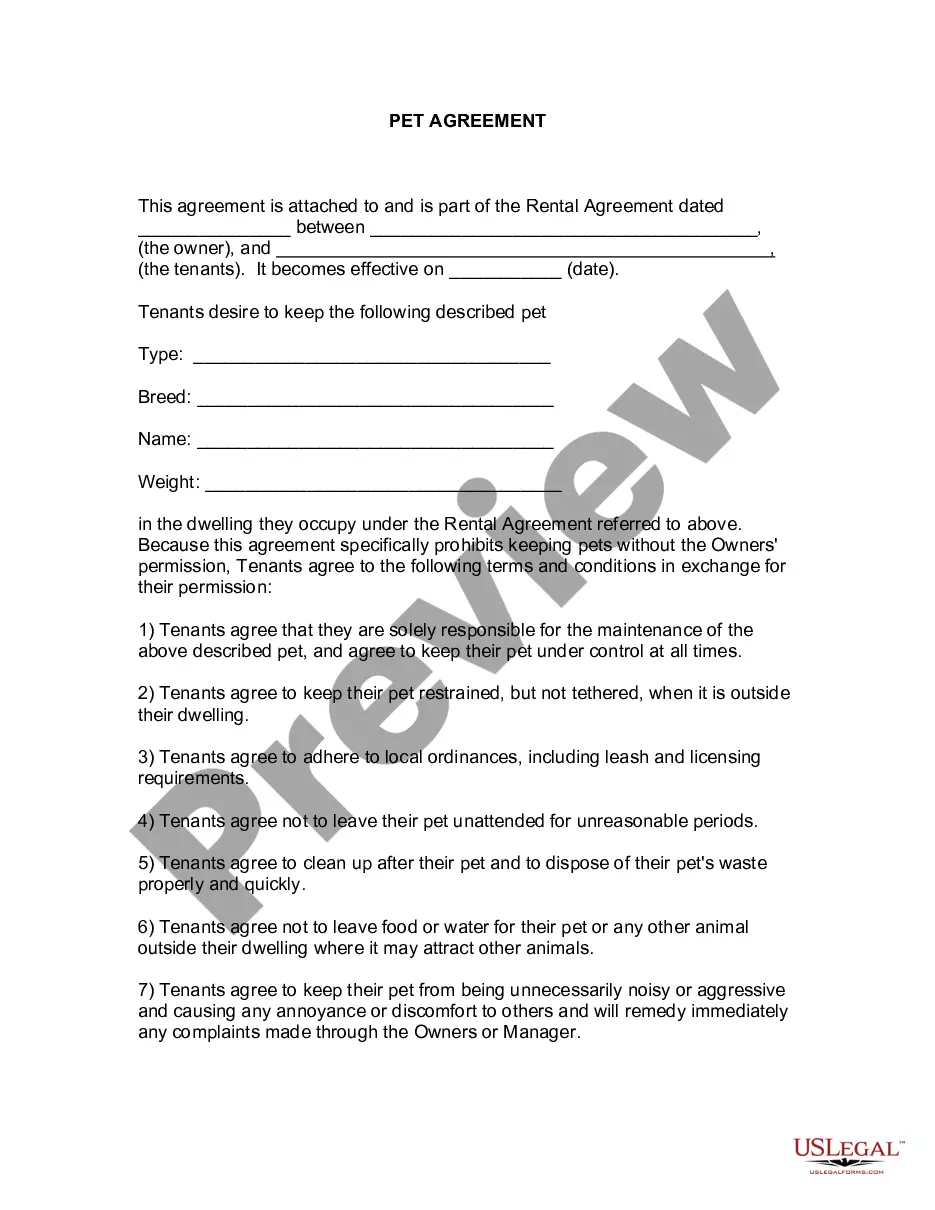
A pet addendum is used by the landlord to give the tenant written permission to have one or more pets on the property. The pet addendum usually requires the tenant to take responsibility for the behavior of their pet, to avoid excessive noise, and to pay for any damages caused by their pet.
The landlord may charge a reasonable, nonrefundable fee for pets kept by the tenant on the premises.
With a Lease Addendum, a landlord and tenant can add new or update existing lease terms without having to terminate their original agreement and create a new one. A Lease Addendum is also known as a: Tenancy addendum. Lease amendment.
Pet Deposits: No statute. Therefore, pet deposits are allowed, as long as the total deposit does not exceed one and one-half months rent (N.J. Stat.