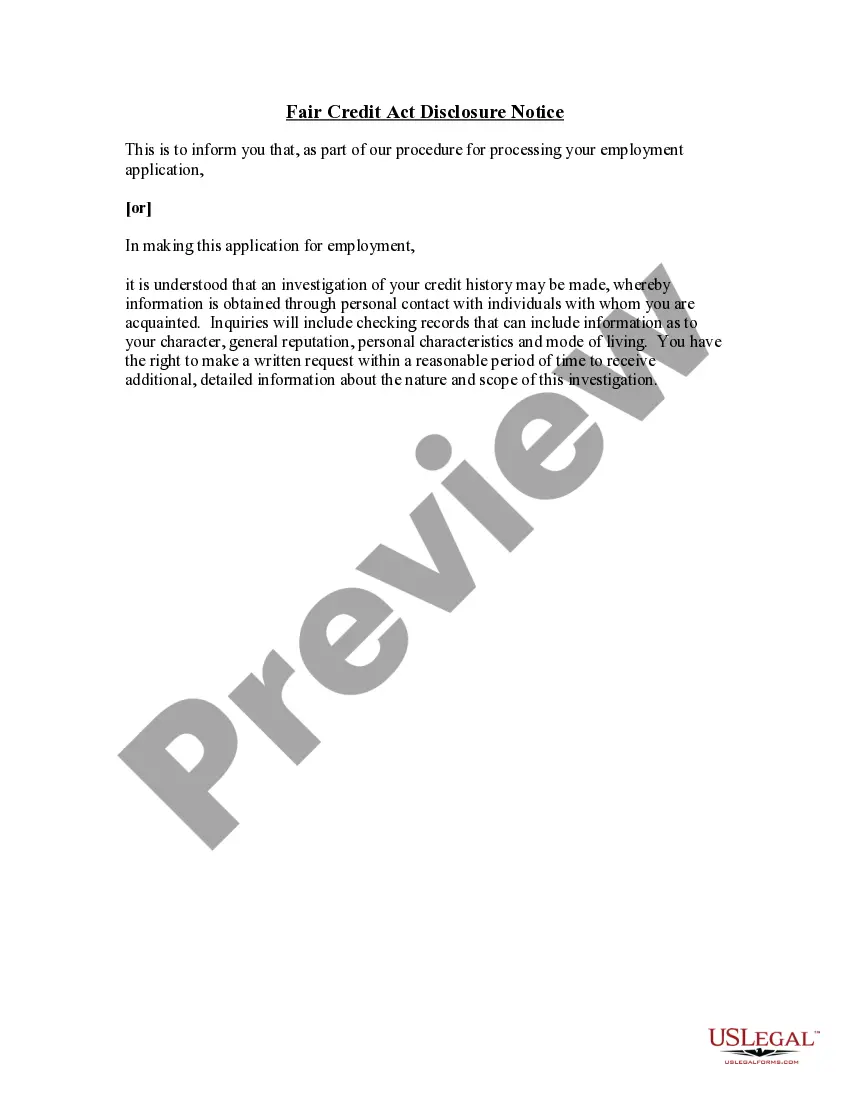
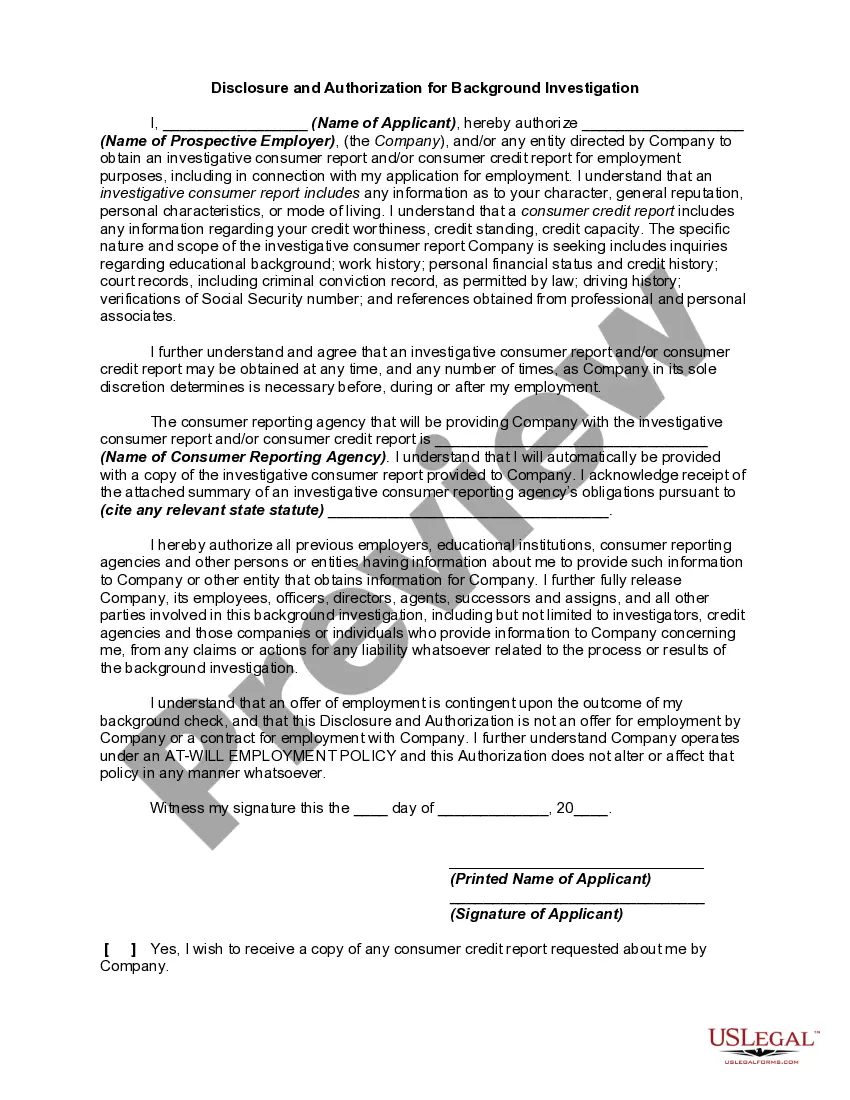
New Jersey Fair Credit Act Disclosure Notice
Description
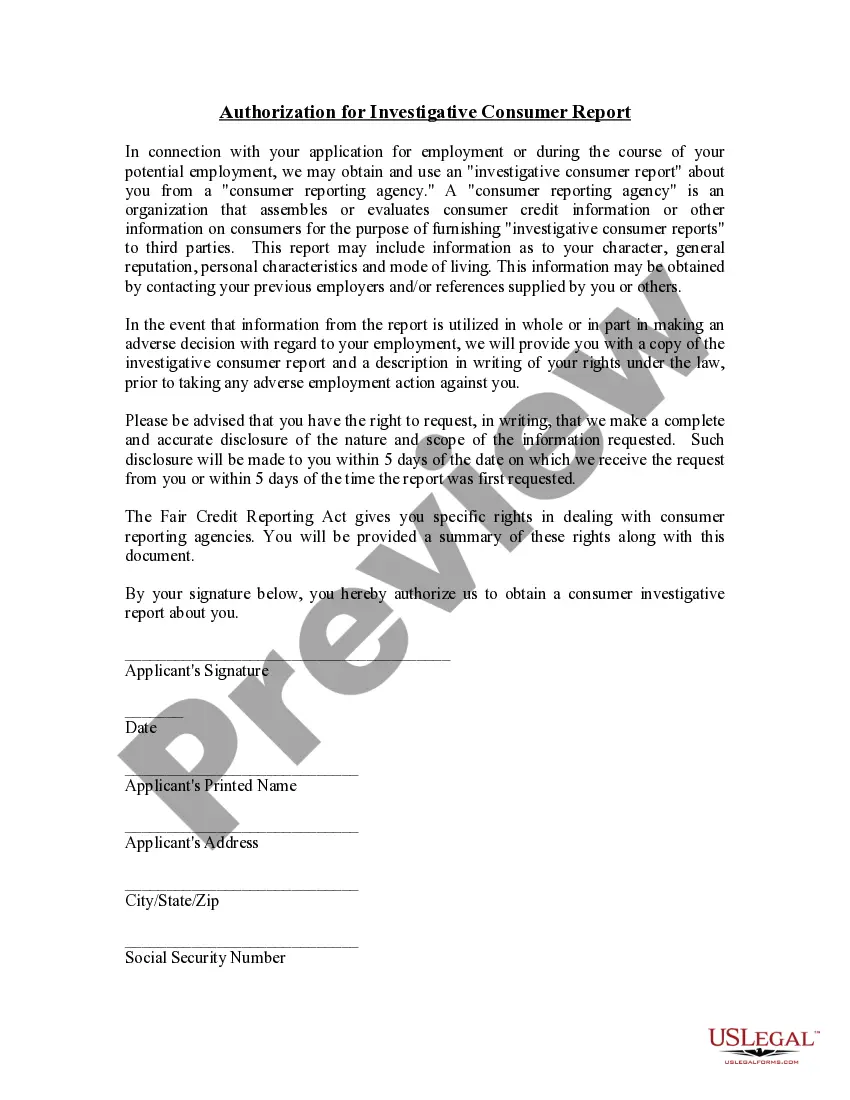
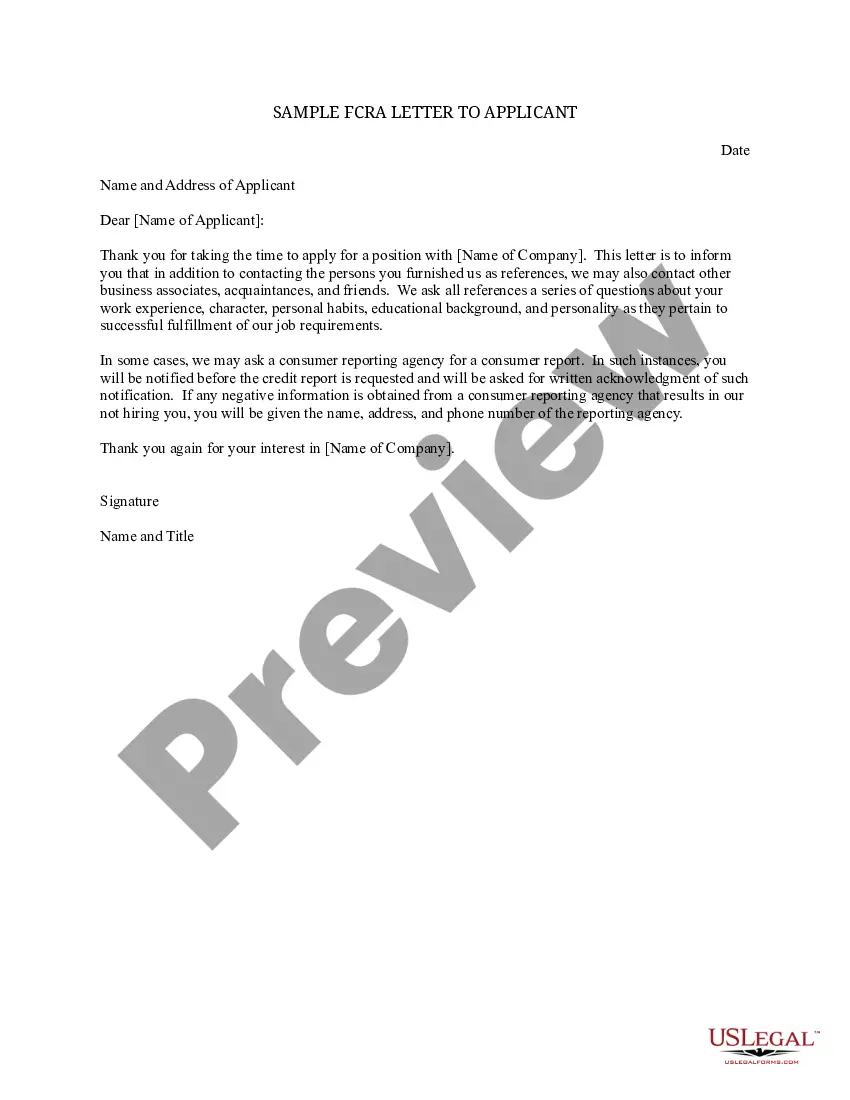
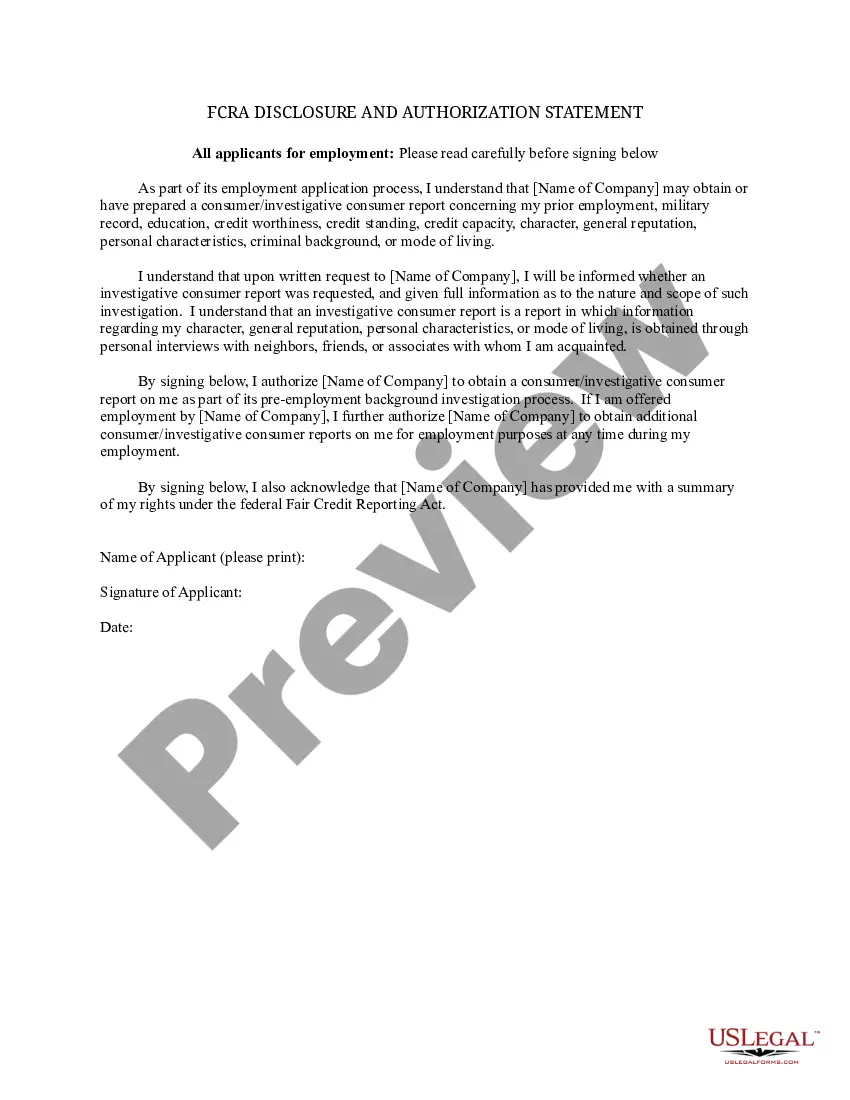

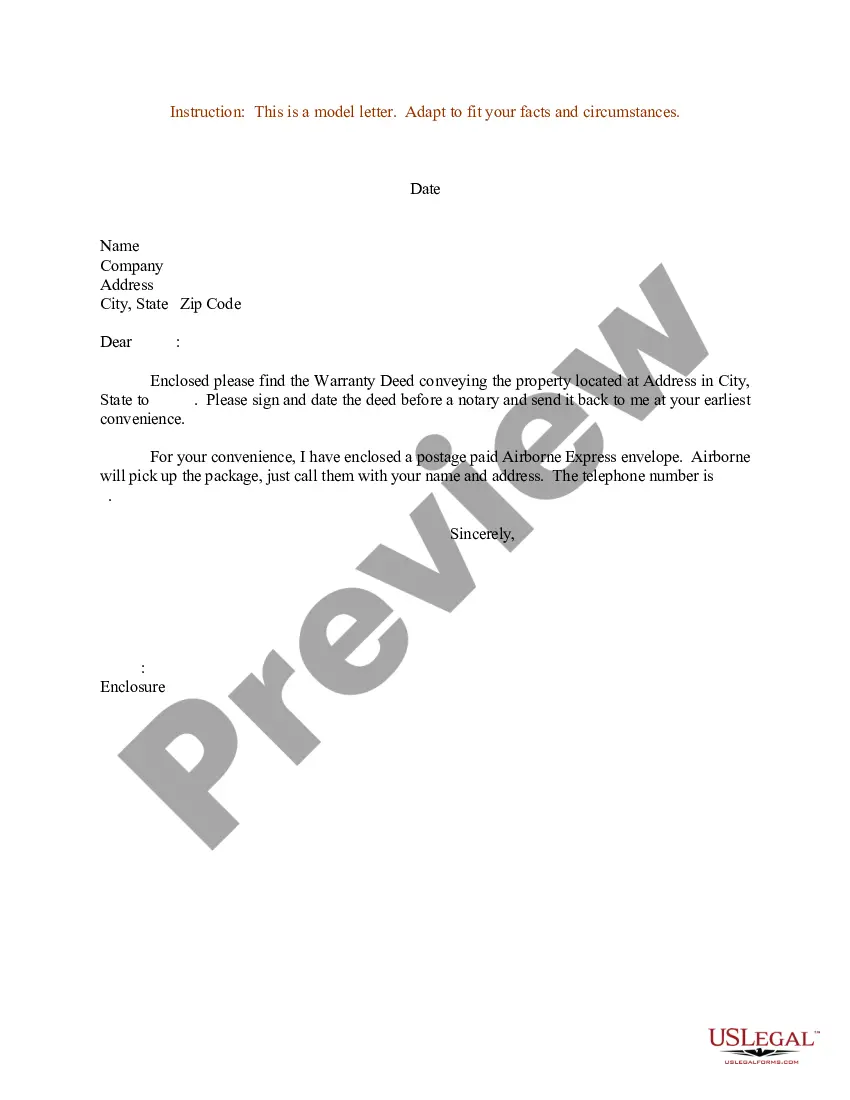
How to fill out Fair Credit Act Disclosure Notice?
If you require to compile, obtain, or produce official document templates, utilize US Legal Forms, the largest selection of legal forms available online.
Make use of the site's simple and convenient search to locate the documents you need.
Numerous templates for business and personal purposes are organized by categories and states, or keywords.
Step 4. Once you have identified the form you need, click the Acquire now button. Select the pricing plan you prefer and enter your information to create an account.
Step 5. Complete the payment. You can use your credit card or PayPal account to finalize the transaction.
- Utilize US Legal Forms to find the New Jersey Fair Credit Act Disclosure Notice in just a few clicks.
- If you are already a US Legal Forms user, Log In to your account and click the Download button to obtain the New Jersey Fair Credit Act Disclosure Notice.
- You can also access forms you have previously downloaded in the My documents tab of your account.
- If you are using US Legal Forms for the first time, follow these steps.
- Step 1. Ensure that you have chosen the form for your correct city/state.
- Step 2. Use the Review feature to examine the form's content. Remember to read the details.
- Step 3. If you are not satisfied with the form, use the Search box at the top of the page to find alternative versions of the legal document template.
Form popularity
FAQ
Thus, under the FCRA, certain consumer information will be subject to two opt-out notices, a sharing opt-out notice (Section 603(d)) and a marketing use opt-out notice (Section 624). These two opt-out notices may be consolidated.
A credit file disclosure provides you with all of the information in your credit file maintained by a consumer reporting company that could be provided by the consumer reporting company in a consumer report about you to a third party, such as a lender.
Two federal laws the Equal Credit Opportunity Act (ECOA), as implemented by Regulation B, and the Fair Credit Reporting Act (FCRA) reflect Congress's determination that consumers and businesses applying for credit should receive notice of the reasons a creditor took adverse action on the application or on an
The FCRA gives you the right to be told if information in your credit file is used against you to deny your application for credit, employment or insurance. The FCRA also gives you the right to request and access all the information a consumer reporting agency has about you (this is called "file disclosure").
A creditor must disclose a consumer's credit score and information relating to a credit score on a risk-based pricing notice when the score of the consumer to whom the creditor extends credit or whose extension of credit is under review is used in setting the material terms of credit.
If you deny a consumer credit based on information in a consumer report, you must provide an adverse action notice to the consumer. if you grant credit, but on less favorable terms based on information in a consumer report, you must provide a risk-based pricing notice.
The Act (Title VI of the Consumer Credit Protection Act) protects information collected by consumer reporting agencies such as credit bureaus, medical information companies and tenant screening services. Information in a consumer report cannot be provided to anyone who does not have a purpose specified in the Act.
Under the FCRA, an employer may not run a background check on a prospective employee without first providing "a clear and conspicuous disclosure . . . in a document that consists solely of that disclosure, that a consumer report may be obtained for employment purposes." For efficiency, many employers include all
Consumer reporting agencies must correct or delete inaccurate, incomplete, or unverifiable information. Inaccurate, incomplete, or unverifiable information must be removed or corrected, usually within 30 days. However, a consumer reporting agency may continue to report information it has verified as accurate.
Updated April 29, 2022. An adverse action notice is sent to an individual when rejected based on information in a credit report or background check (consumer report). It is required when a person is denied employment, housing, credit, or insurance. Federal Laws Fair Credit Reporting Act (FCRA)