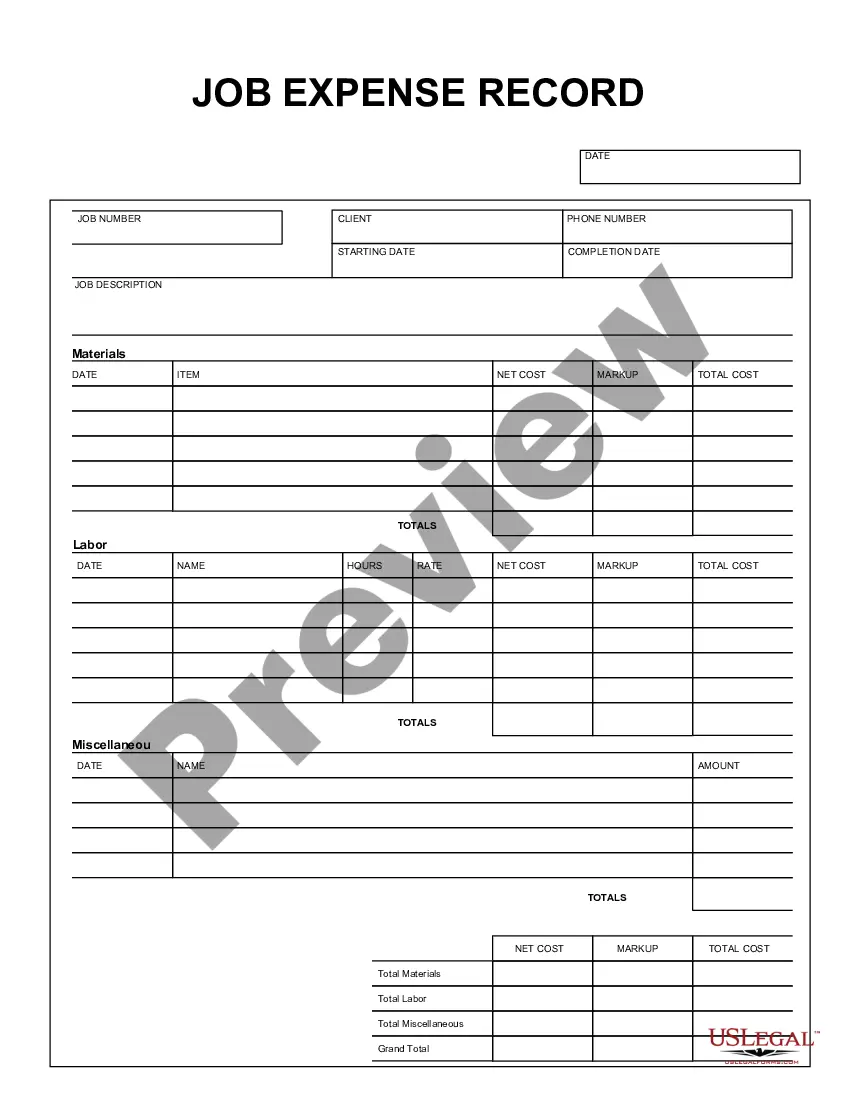
This form is a business type form that is formatted to allow you to complete the form using Adobe Acrobat or Word. The word files have been formatted to allow completion by entry into fields. Some of the forms under this category are rather simple while others are more complex. The formatting is worth the small cost.
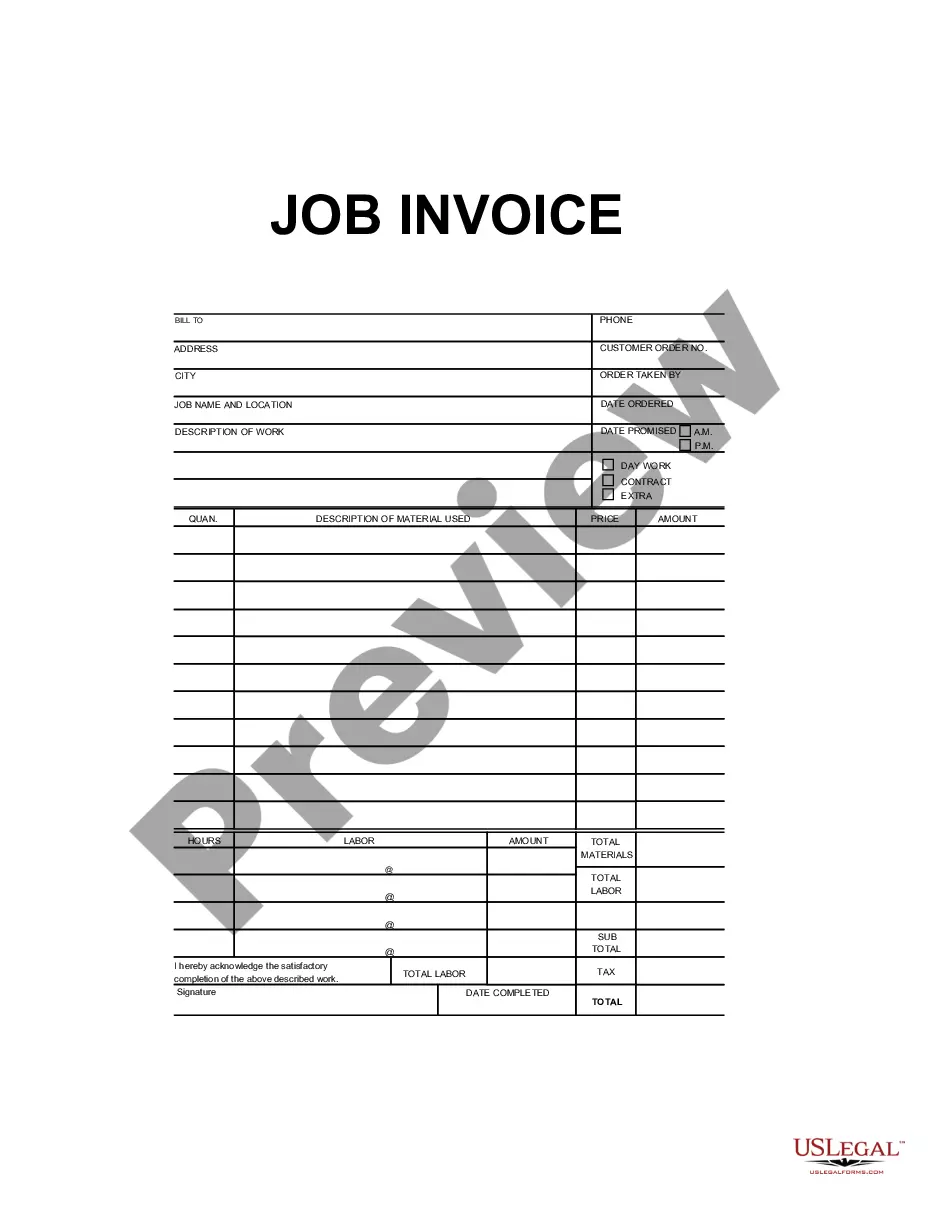
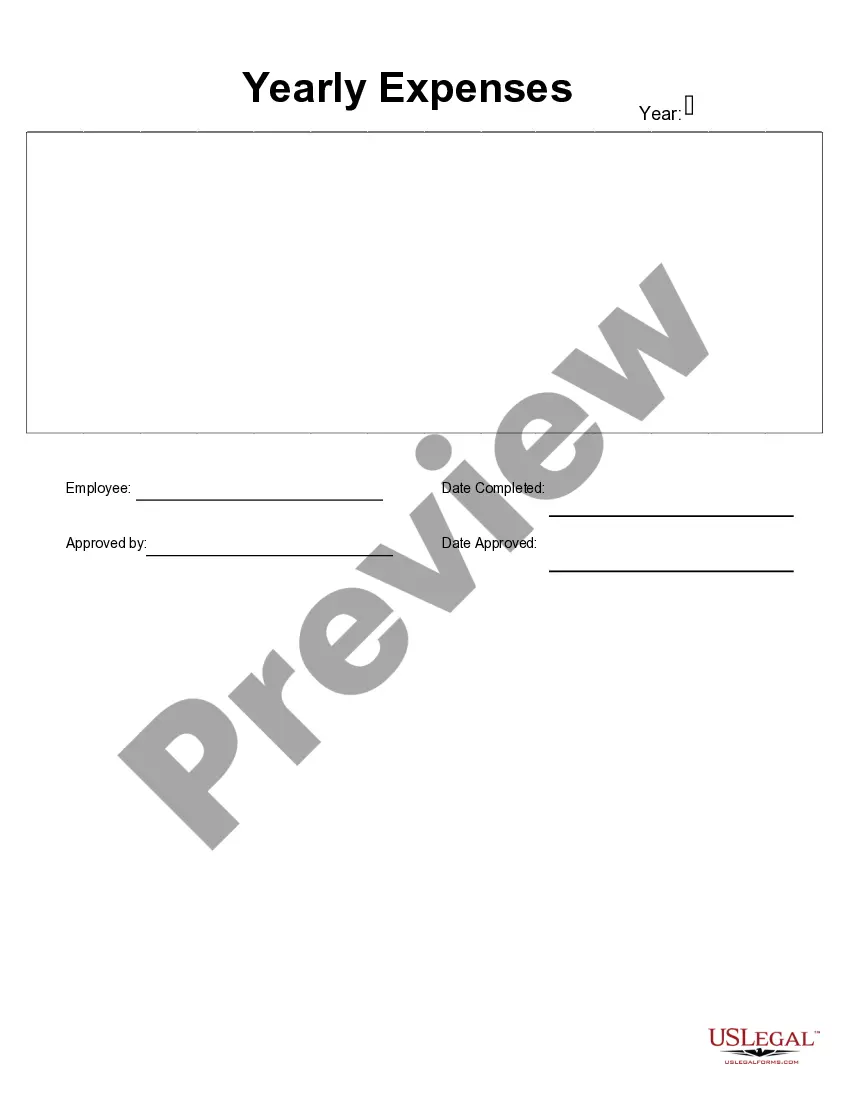
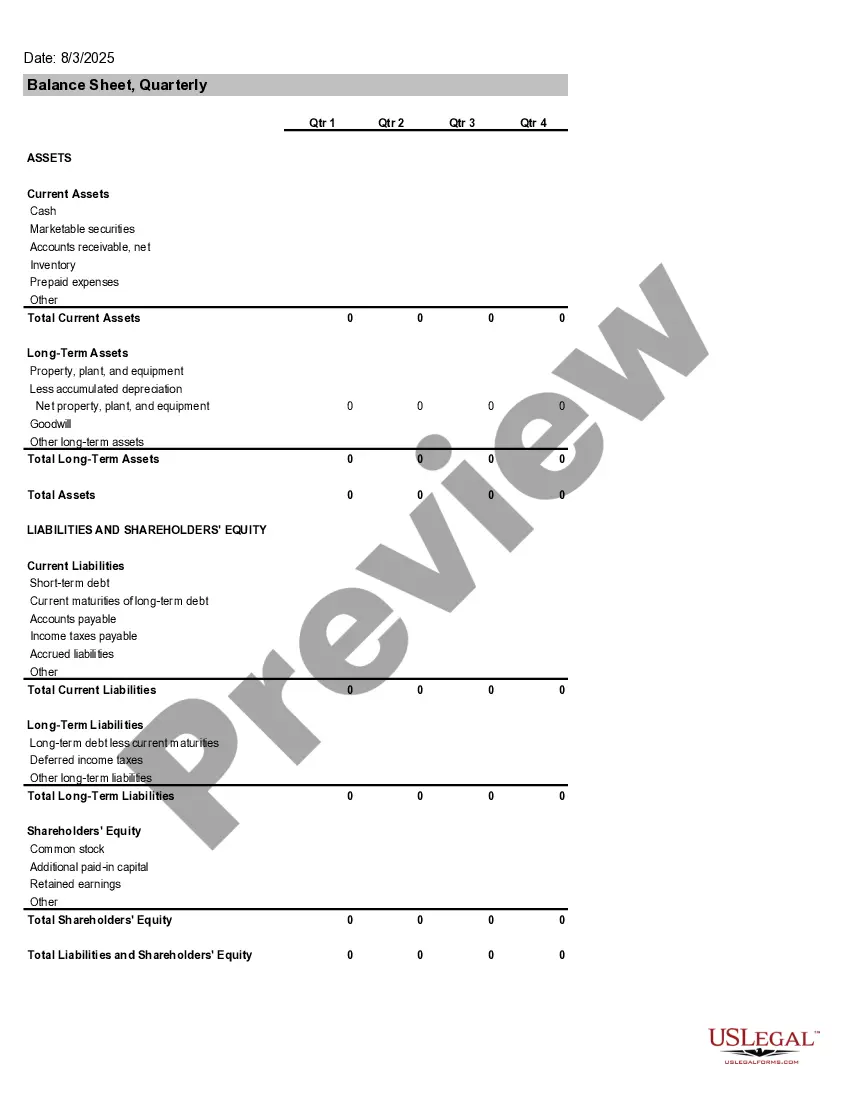
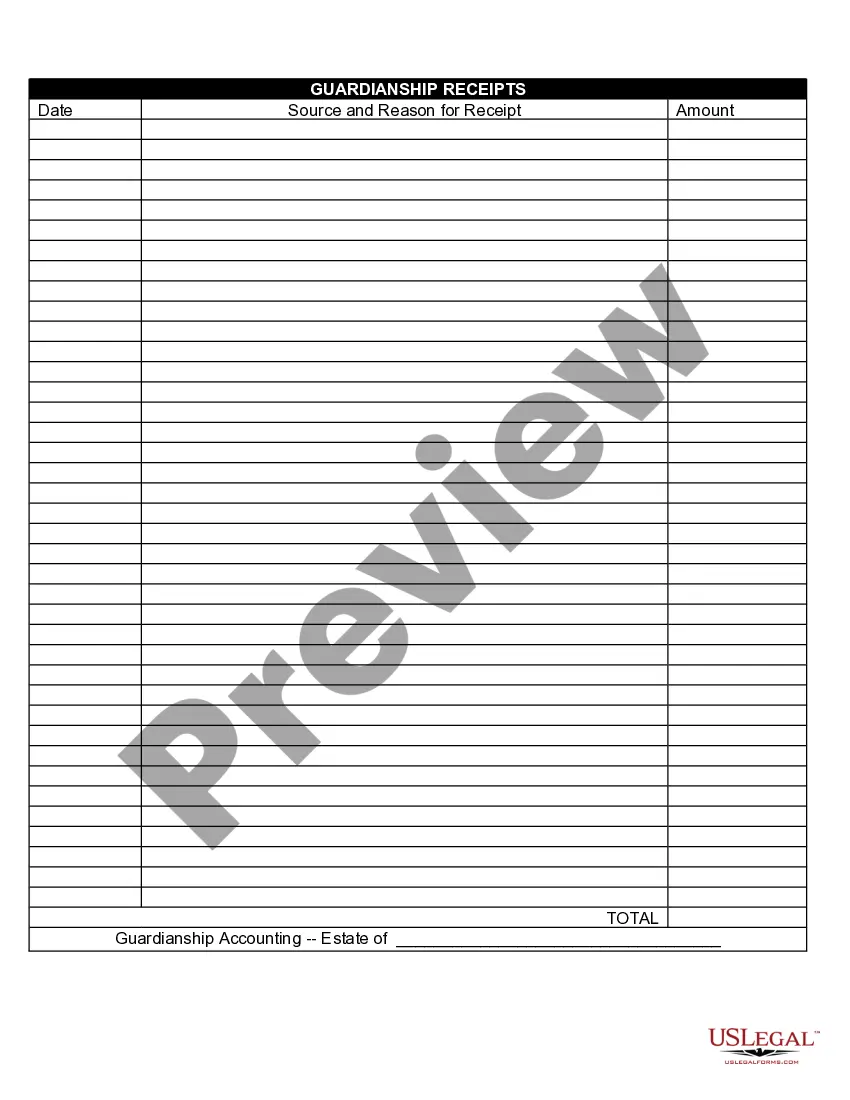
New Jersey Job Expense Record
Category:
State:
Multi-State
Control #:
US-150-AZ
Format:
Word;
PDF;
Rich Text
Instant download
Description
Get your form ready online
Our built-in tools help you complete, sign, share, and store your documents in one place.
Built-in online Word editor
Make edits, fill in missing information, and update formatting in US Legal Forms—just like you would in MS Word.
Export easily
Download a copy, print it, send it by email, or mail it via USPS—whatever works best for your next step.
E-sign your document
Sign and collect signatures with our SignNow integration. Send to multiple recipients, set reminders, and more. Go Premium to unlock E-Sign.
Notarize online 24/7
If this form requires notarization, complete it online through a secure video call—no need to meet a notary in person or wait for an appointment.
Store your document securely
We protect your documents and personal data by following strict security and privacy standards.

Make edits, fill in missing information, and update formatting in US Legal Forms—just like you would in MS Word.

Download a copy, print it, send it by email, or mail it via USPS—whatever works best for your next step.

Sign and collect signatures with our SignNow integration. Send to multiple recipients, set reminders, and more. Go Premium to unlock E-Sign.

If this form requires notarization, complete it online through a secure video call—no need to meet a notary in person or wait for an appointment.

We protect your documents and personal data by following strict security and privacy standards.
Looking for another form?




How to fill out Job Expense Record?
Finding the appropriate legal document template can be a challenge. Of course, there are numerous formats available online, but how do you locate the legal form you require.
Utilize the US Legal Forms website. This service offers a plethora of templates, including the New Jersey Job Expense Record, that can be utilized for both business and personal purposes. All templates are verified by professionals and adhere to state and federal requirements.
If you are already registered, Log In to your account and click on the Download button to retrieve the New Jersey Job Expense Record. Use your account to review the legal forms you have previously obtained. Navigate to the My documents tab in your account and obtain another copy of the document you need.
Select the file format and download the legal document template to your device. Complete, edit, print, and sign the acquired New Jersey Job Expense Record. US Legal Forms is the largest collection of legal forms where you can find numerous document templates. Leverage the service to obtain professionally crafted documents that meet state requirements.
- First, ensure you have selected the correct form for your city/county.
- You can preview the form using the Review button and read the form description to confirm it is suitable for you.
- If the form does not meet your requirements, utilize the Search field to find the appropriate form.
- Once you are sure the form is suitable, select the Get now button to acquire the form.
- Choose the pricing plan you prefer and enter the required information.
- Create your account and process the order using your PayPal account or credit card.
Form popularity
FAQ
Employee business expenses can be deducted as an adjustment to income only for specific employment categories and eligible educators. Taxpayers can no longer claim unreimbursed employee expenses as miscellaneous itemized deductions, unless they are a qualified employee or an eligible educator.
New Jersey does not allow federal deductions, such as mortgage interest, employee business expenses, and IRA and Keogh Plan contributions. Full-year residents can only deduct amounts paid during the tax year.
New Jersey's state employers have been under a salary history ban since Feb. 1, 2018. It prohibits state entities from inquiring into a job applicant's current or previous salaries until the organization has made a conditional offer of employment and provided its compensation package.
New Jersey does not allow you to deduct moving expenses or employee business expenses from wages, although you can exclude reimbursements for certain expenses if they are included in wages on your W-2.
How long should I keep employee personnel files? You should keep an employee's personnel files for six years after the employee has left your organisation. The reason for this is that up until six years has passed, the former employee may sue you for breach of contract in the county court.
Federal and State law dictate how long employers must retain certain employee related records. For instance, Form I-9 should be retained for either three (3) years after the date of hire or for one (1) year after employment is terminated, whichever is later.
A deduction can be claimed for any expense that meets the 'wholly, exclusively and necessarily' test. Examples include professional fees and subscriptions, travel and subsistence costs, additional costs of working from home, cost of repairing tools or specialist clothing, phone calls, etc.
New Jersey does not allow you to deduct moving expenses or employee business expenses from wages, although you can exclude reimbursements for certain expenses if they are included in wages on your W-2.
Are unreimbursed employee expenses deductible in 2020? The vast majority of W-2 workers can't deduct unreimbursed employee expenses in 2020. The Tax Cut and Jobs Act (TCJA) eliminated unreimbursed employee expense deductions for all but a handful of protected groups.
The employer must keep the wage and hour records described above for a period of six years. The employer must keep the wage and hour records described above at the place of employment or in a central office in New Jersey.