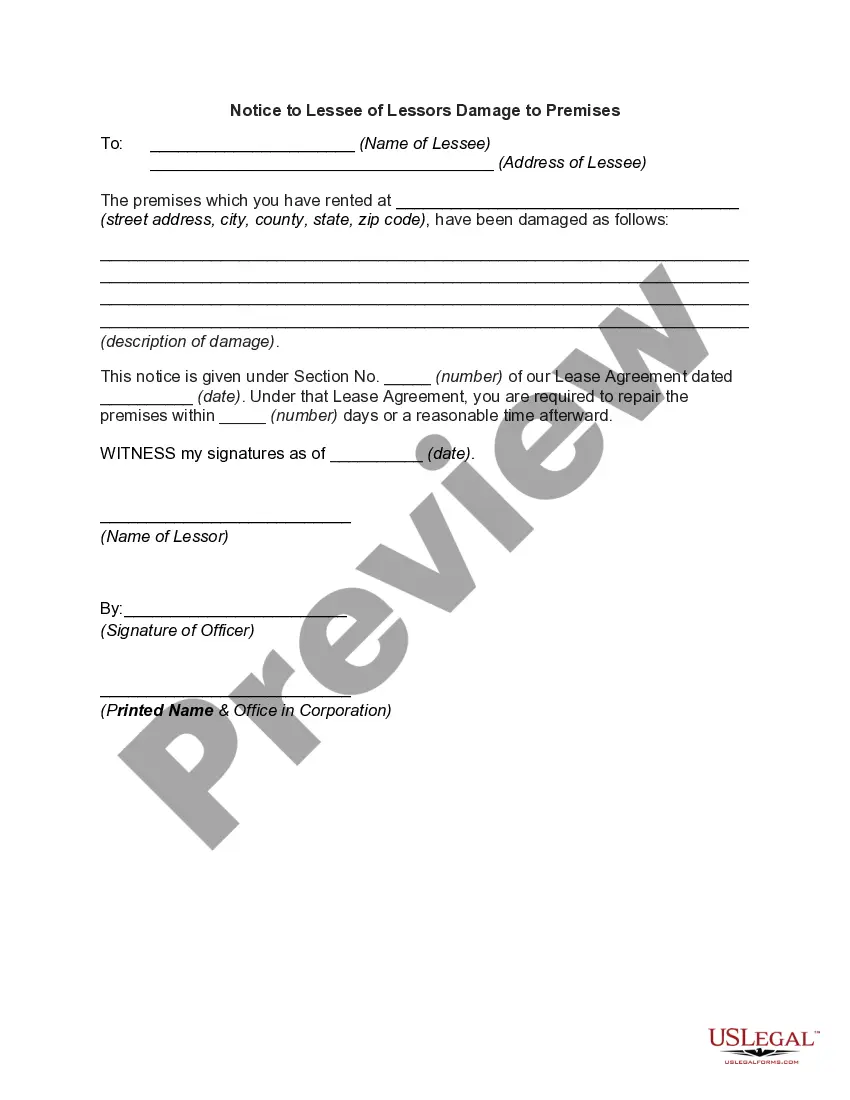
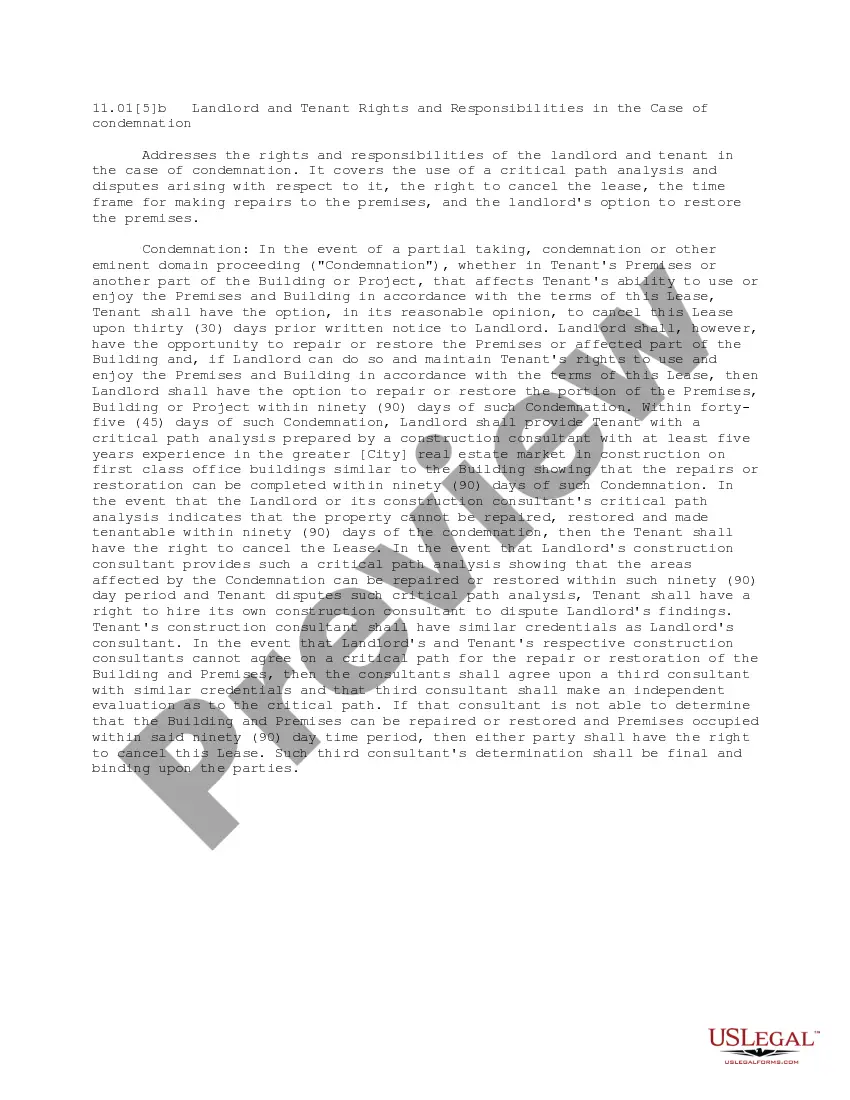
New Jersey Notice to Lessee of Lessor of Damage to Premises
Description
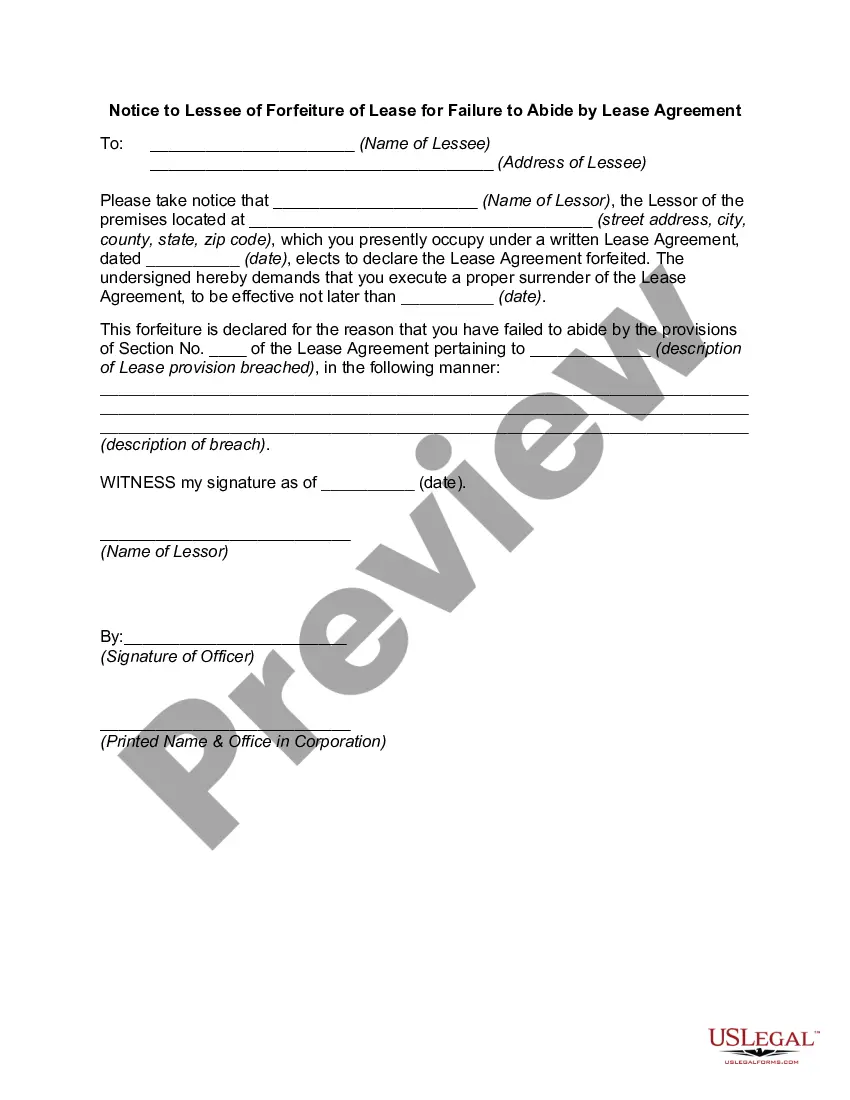
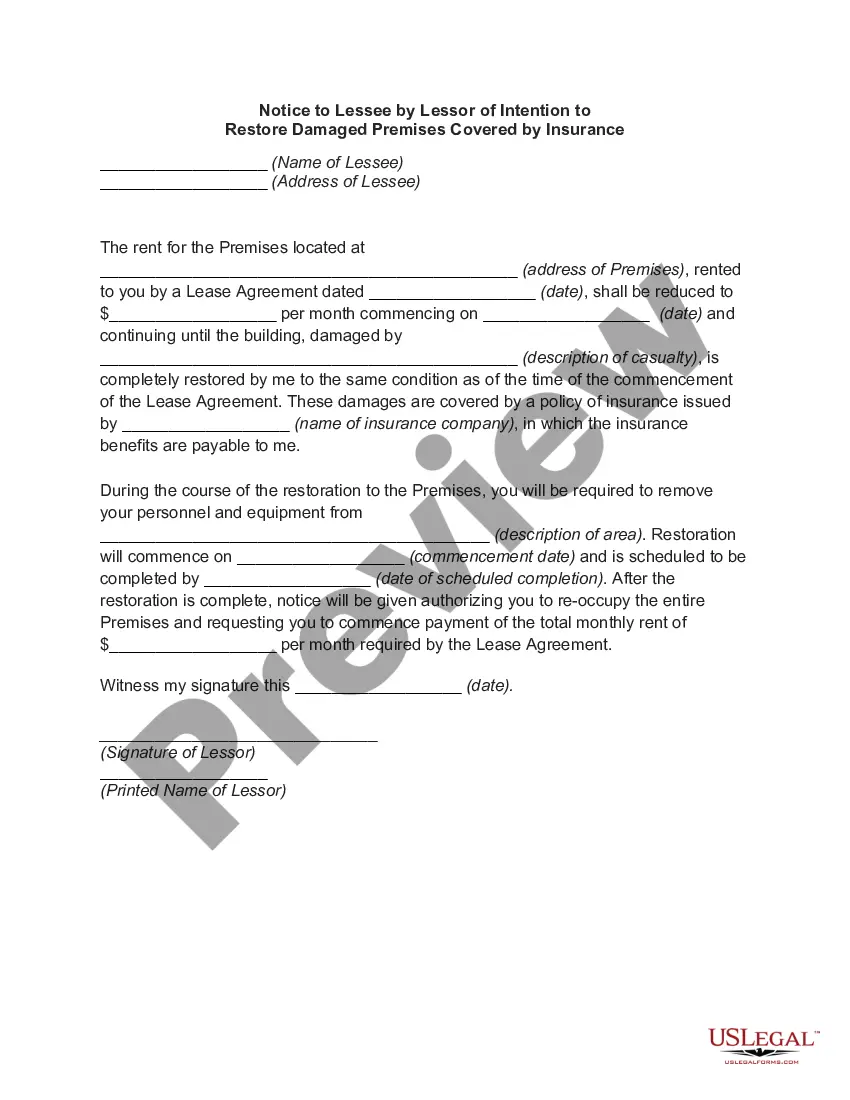
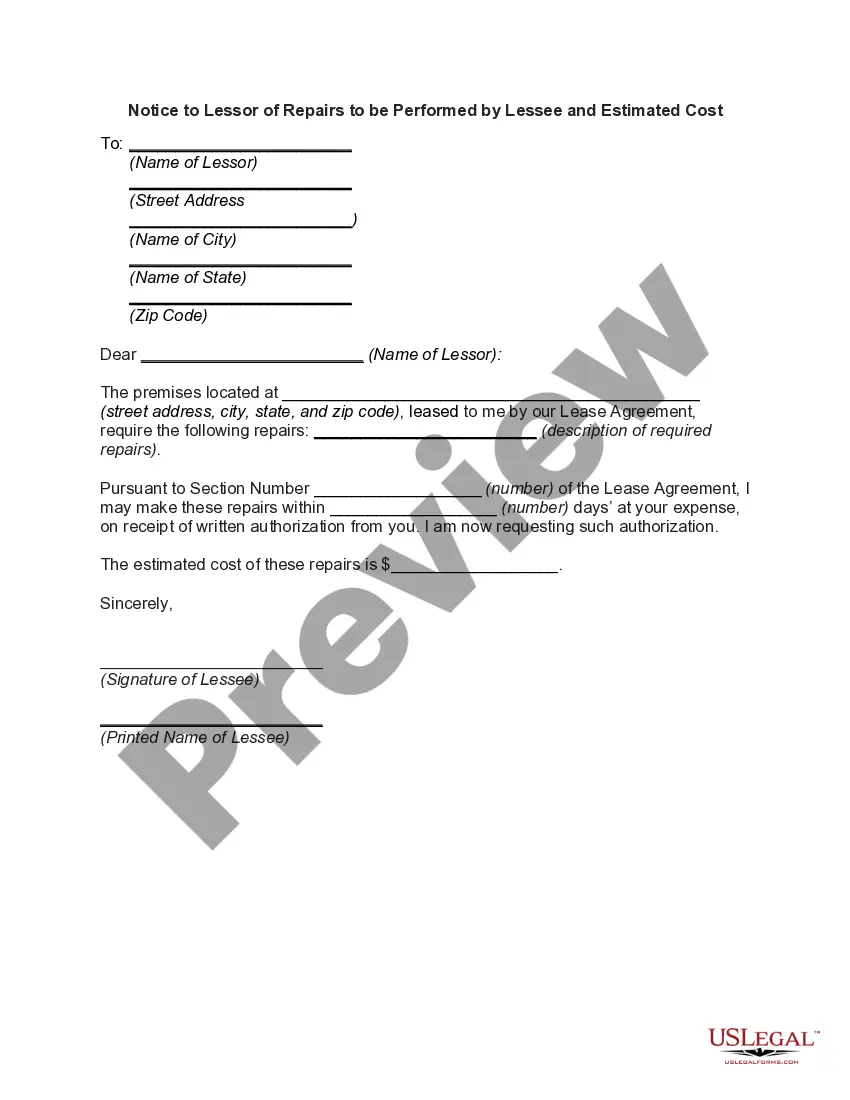
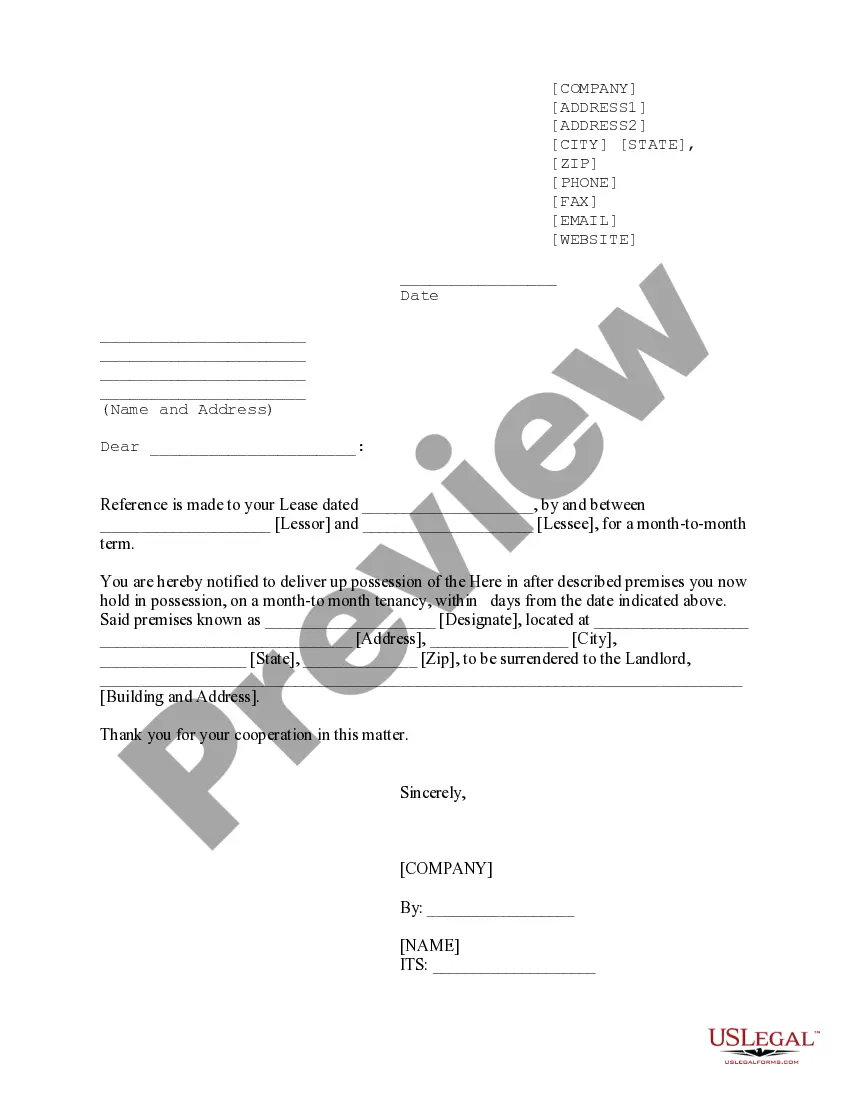
How to fill out Notice To Lessee Of Lessor Of Damage To Premises?
Are you facing a scenario where you require documents for various corporate or personal tasks almost every day.
There are numerous official document templates available online, but locating trustworthy ones can be challenging.
US Legal Forms provides a vast collection of form templates, including the New Jersey Notice to Lessee of Lessor of Damage to Premises, which are designed to comply with state and federal regulations.
Once you find the appropriate form, click on Buy now.
Select your desired payment plan, provide the necessary information to create your account, and pay for your order using PayPal or a credit card. Choose a suitable document format and download your copy. All the document templates you have purchased can be accessed in the My documents section. You can obtain another copy of the New Jersey Notice to Lessee of Lessor of Damage to Premises at any time if needed. Just click on the necessary form to download or print the document template. Leverage US Legal Forms, the most extensive collection of legal forms, to save time and avoid errors. This service offers professionally crafted legal document templates that can be utilized for a variety of purposes. Create your account on US Legal Forms and start simplifying your life.
- If you are already familiar with the US Legal Forms website and possess an account, simply Log In.
- After logging in, you can download the New Jersey Notice to Lessee of Lessor of Damage to Premises template.
- If you don’t have an account and want to start using US Legal Forms, follow these steps.
- Locate the form you require and verify it is for the right city/area.
- Use the Review button to evaluate the form.
- Check the description to confirm you have selected the correct form.
- If the form does not meet your needs, utilize the Search field to find the form that fits your requirements.
Form popularity
FAQ
Under the terms of the Act, when a residential lease term ends, the landlord is required to provide a tenant with a list of damages caused to the premises within 30 days of the termination of the lease or repossession of the property.
Under the terms of the Act, when a residential lease term ends, the landlord is required to provide a tenant with a list of damages caused to the premises within 30 days of the termination of the lease or repossession of the property.
It is the biggest nightmare for any landlord to get to know that his property has been damaged by the tenant. The Landlord can deduct the amount from the security deposit, can sue the tenant, and can evict the property, depending upon case to case and tenancy agreement.
As nouns the difference between lessor and landlord is that lessor is the owner of property that is leased while landlord is a person who owns and rents land such as a house, apartment, or condo.
An owner of real property, who allows another to take temporary possession through a lease. landlord & tenant. property & real estate law.
How can I ensure a good relationship with my tenant when it comes to gaining access to the property? There's one golden rule you should always stick by: always provide your tenants with written notice at least 24 hours before any planned visits.
Whether any damage is caused inside or outside the property, the landlord should have buildings and contents insurance to cover it. If the insurer will not pay for the remedial repairs, ultimately it is still the landlord's responsibility to pay, unless it can be proven that the damage is caused by the tenant.
A lessor is the owner of an asset that is leased, or rented, to another party, known as the lessee. Lessors and lessees enter into a binding contract, known as the lease agreement, that spells out the terms of their arrangement.
In the event of any assignment of a Leasehold Mortgage or in the event of a change of address of a Leasehold Mortgagee or of an assignee of a Leasehold Mortgage, notice of the new name and address shall be provided to Lessor. See All (23) Notice to Lessor.
Landlords must provide tenants with a document called Notice of Landlord, which contains contact information for the landlord or someone who is acting on the landlord's behalf (such as a property manager). The notice must be written, dated, and signed.