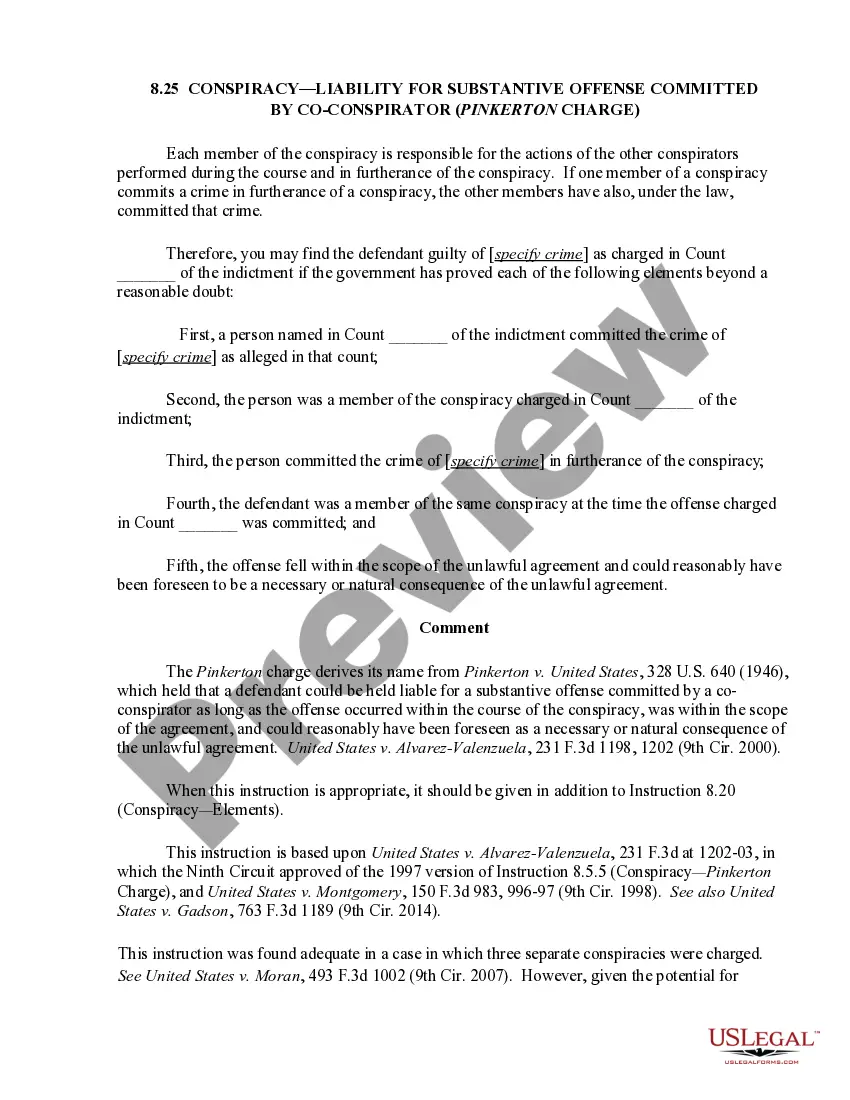
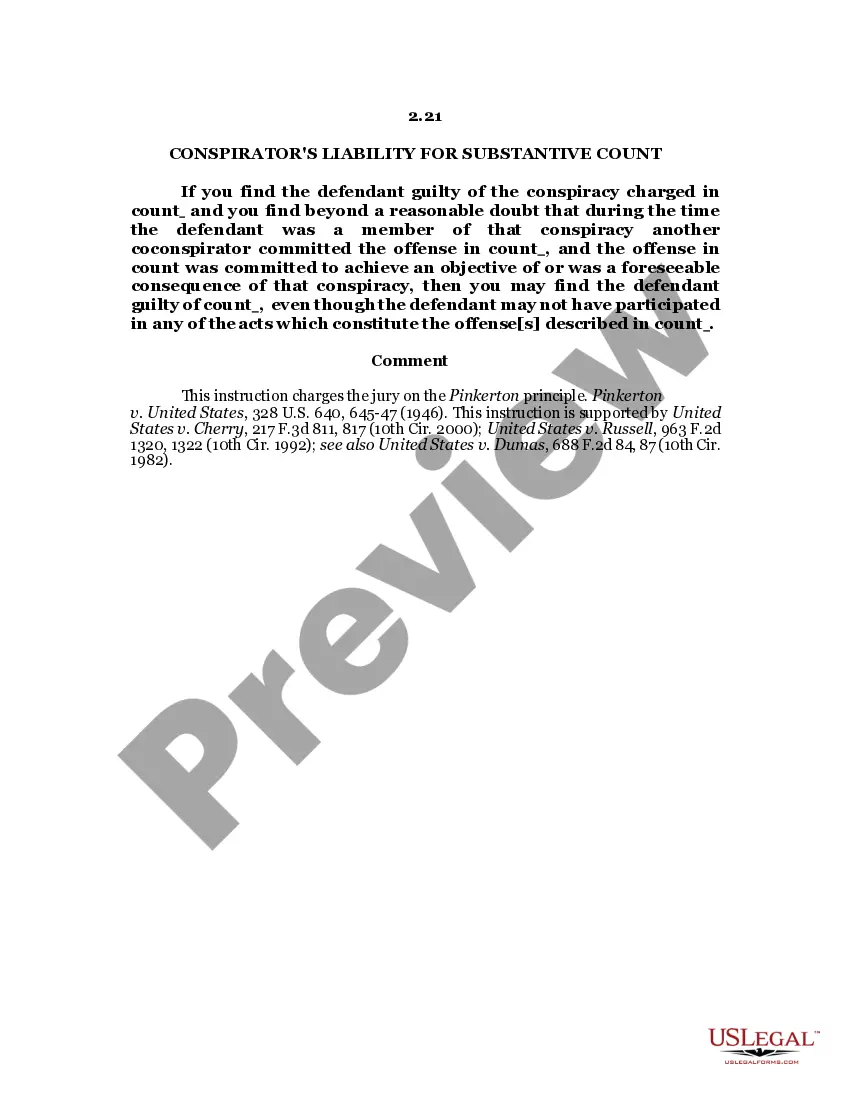
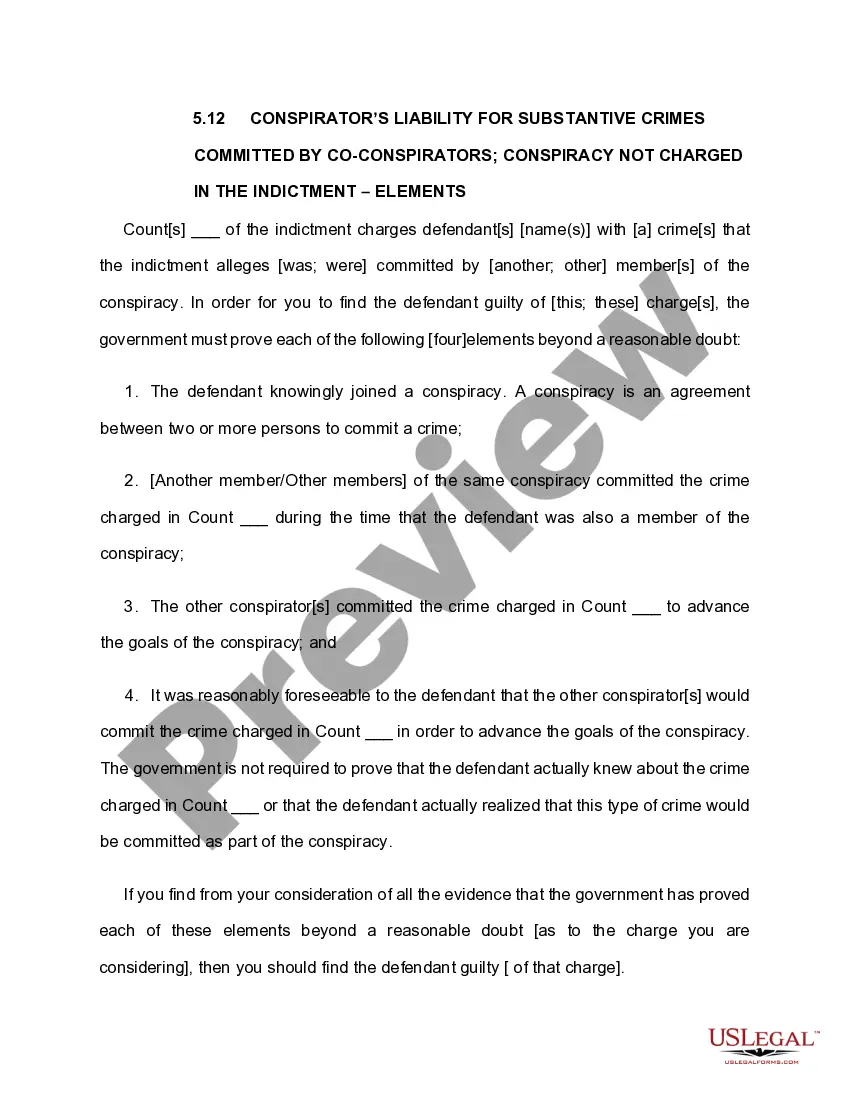
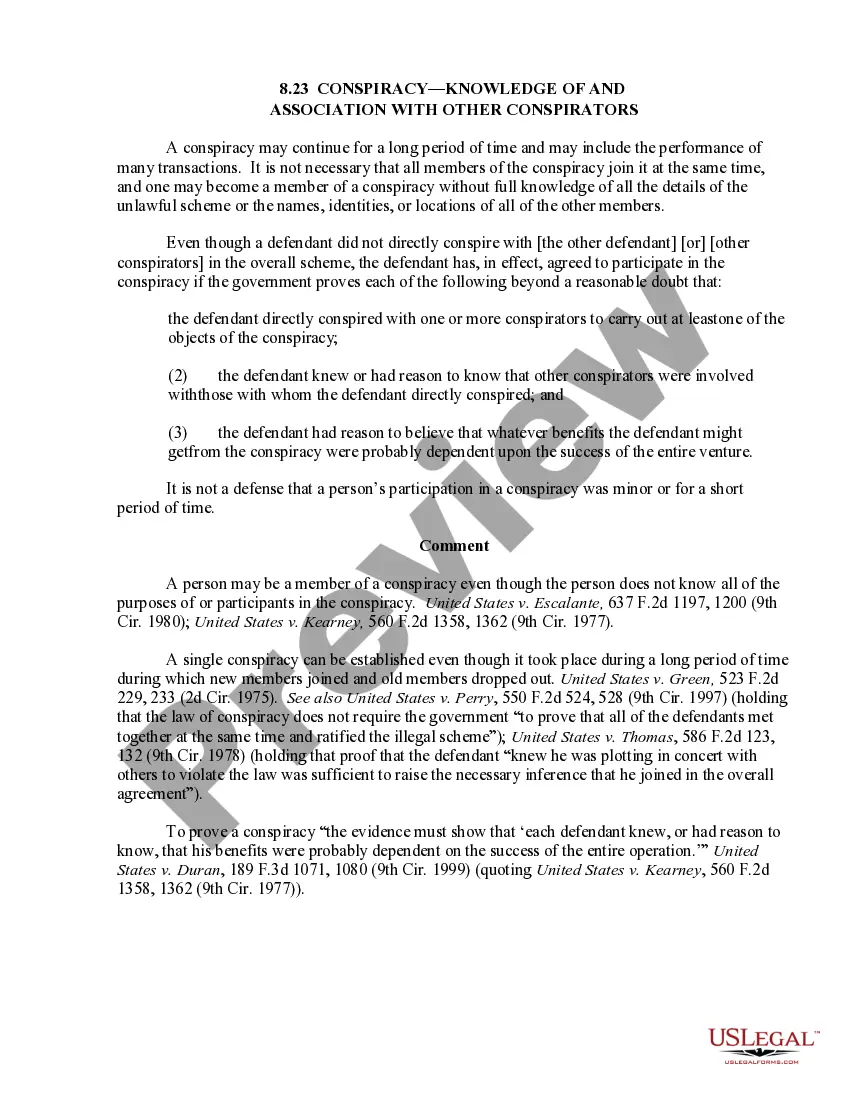
8.25 Conspiracy-Liability for Substantive Offense Committed by Co-conspirator

Is notarization required?
In most cases, this form does not require notarization. However, some jurisdictions or signing circumstances might. US Legal Forms offers online notarization powered by Notarize, accessible 24/7 for a quick, remote process.
Get your form ready online
Our built-in tools help you complete, sign, share, and store your documents in one place.
Make edits, fill in missing information, and update formatting in US Legal Forms—just like you would in MS Word.
Download a copy, print it, send it by email, or mail it via USPS—whatever works best for your next step.
Sign and collect signatures with our SignNow integration. Send to multiple recipients, set reminders, and more. Go Premium to unlock E-Sign.
If this form requires notarization, complete it online through a secure video call—no need to meet a notary in person or wait for an appointment.
We protect your documents and personal data by following strict security and privacy standards.

Make edits, fill in missing information, and update formatting in US Legal Forms—just like you would in MS Word.

Download a copy, print it, send it by email, or mail it via USPS—whatever works best for your next step.

Sign and collect signatures with our SignNow integration. Send to multiple recipients, set reminders, and more. Go Premium to unlock E-Sign.

If this form requires notarization, complete it online through a secure video call—no need to meet a notary in person or wait for an appointment.

We protect your documents and personal data by following strict security and privacy standards.
Looking for another form?


Form popularity
FAQ
Aiding and Abetting Liability Aiding and abetting is defined as intentionally aiding, advising, hiring, counseling, conspiring with, or otherwise procuring the other person to commit a crime. This means that if someone helps a friend plan a burglary, they can also be held criminally liable for the burglary.
The Pinkerton rule determines when an individual can be convicted of a substantive crime they didn't directly commit. It upholds that all conspiracy members are liable for their co-conspirators' substantive crimes intended to further the conspiracy.
When a conspiracy is entered into to do an unlawful act, the conspirators are responsible for all that is said and done in furtherance of the conspiracy by their co-conspirators.
A conspirator may be charged with ?conspiracy,? which is its own independent crime. Further, a conspirator may be held liable, or legally responsible, for the crimes committed by their co-conspirators, even if they did not personally commit the crimes.
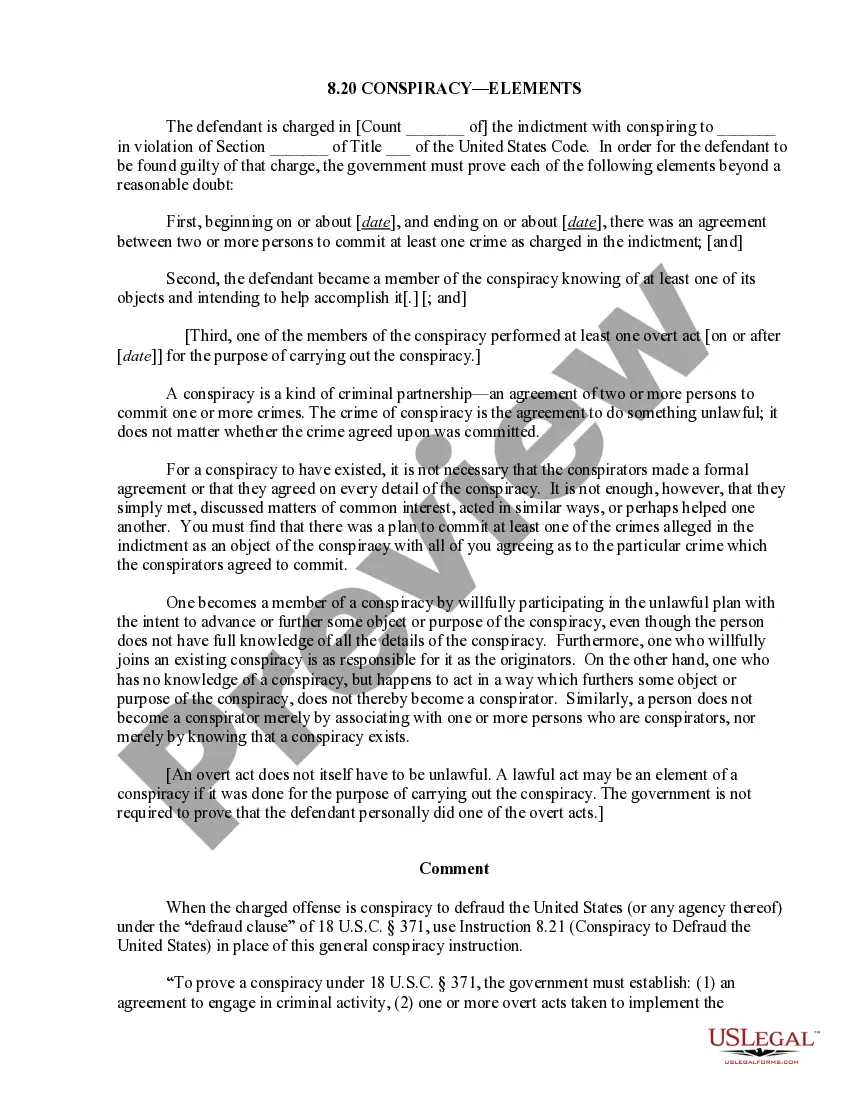
What is an example of a conspiracy charge? An example of a conspiracy charge could be two people that make an agreement to kill someone and buy the weapons to do it. They are charged with conspiracy, even if they never fully follow through on killing the person.
Questions that feature multiple bad actors often ask you to determine who is a conspirator and who is an accomplice. The #1 difference is that conspiracy is a crime, while accomplice liability is a method of holding someone liable for another's crime.
In a legal context, conspiracy refers to an agreement by two or more people to commit a crime. In any of these cases, the people involved can be called conspirators. The word co-conspirator refers to a conspirator conspiring with one or more other conspirators in the same conspiracy.
An accomplice is defined as a person who knowingly, voluntarily, or intentionally gives assistance to another in (or in some cases fails to prevent another from) the commission of a crime. An accomplice is criminally liable to the same extent as the principal.