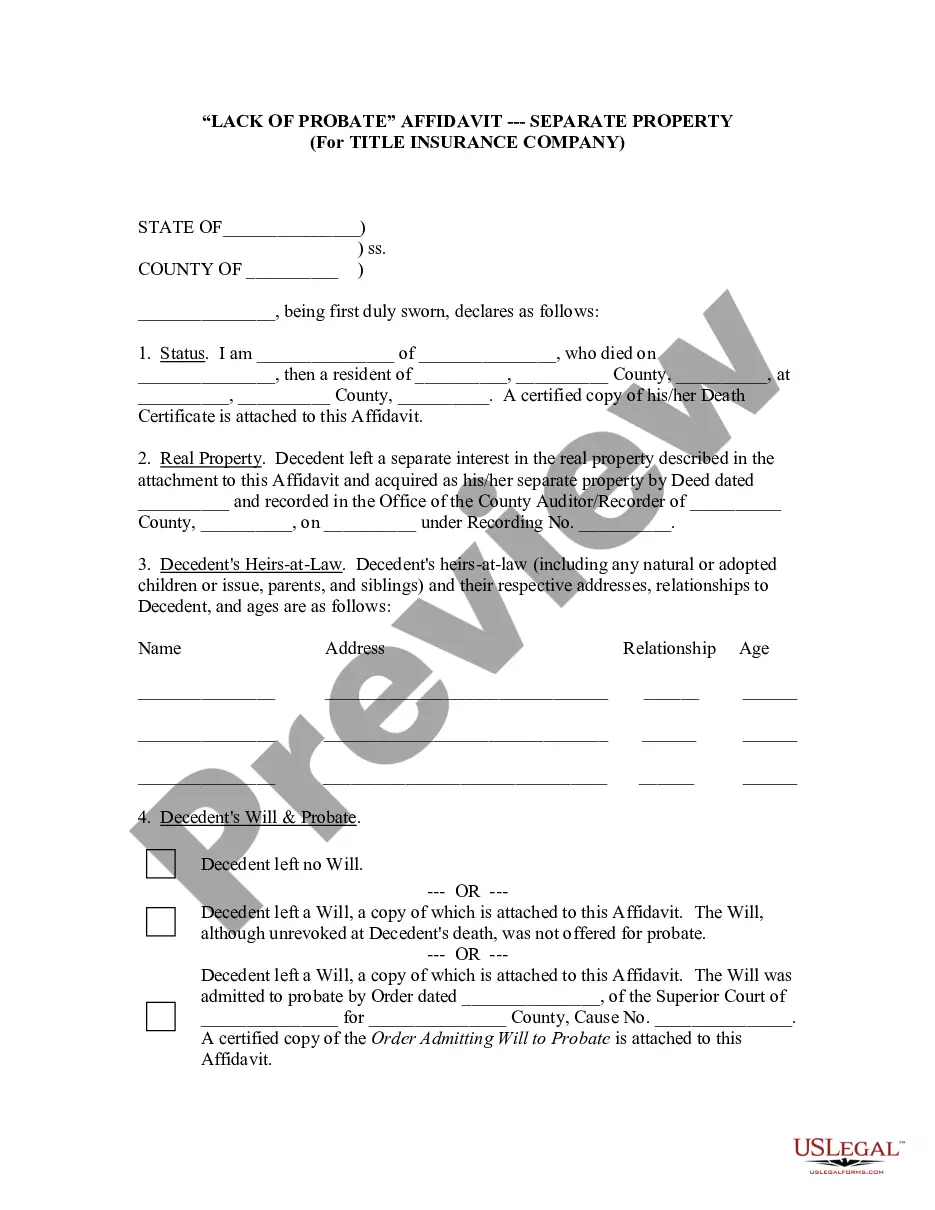
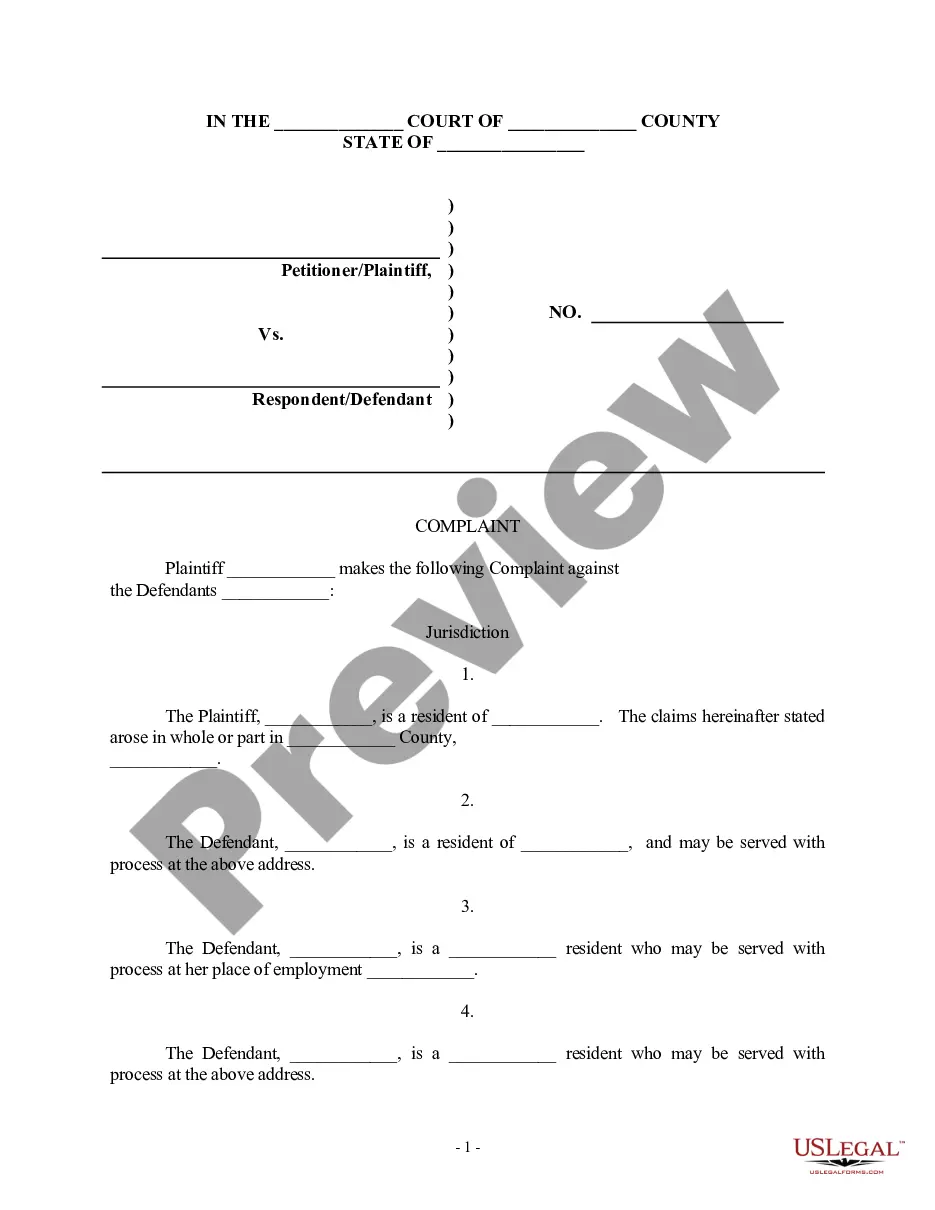
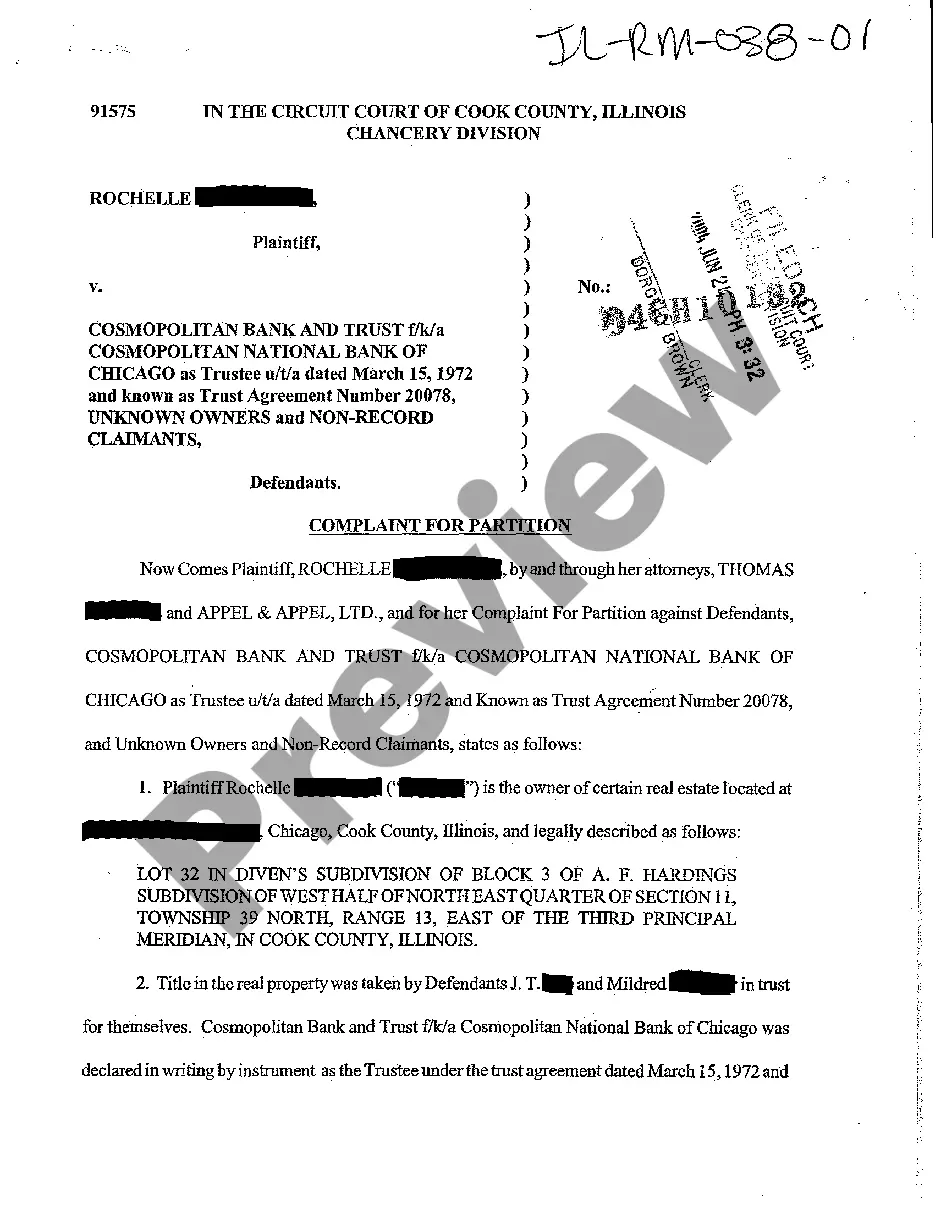
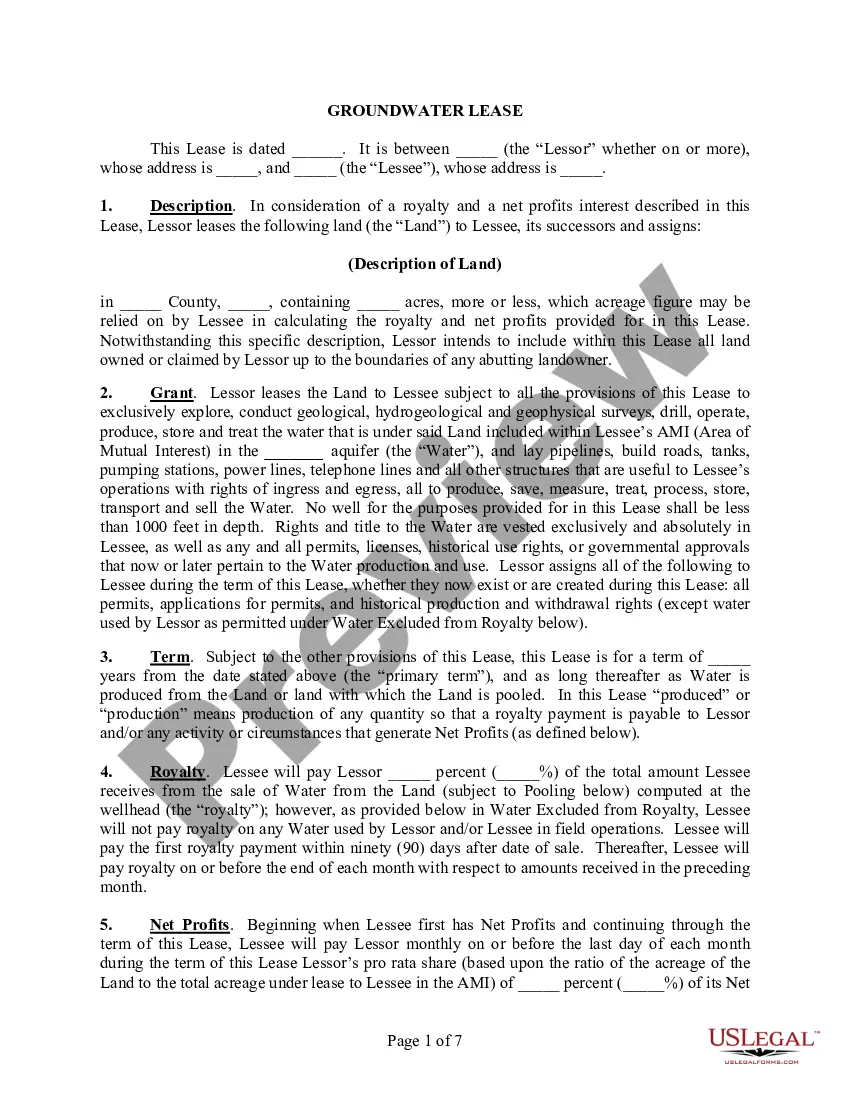
This is a multi-state form covering the subject matter of the title.
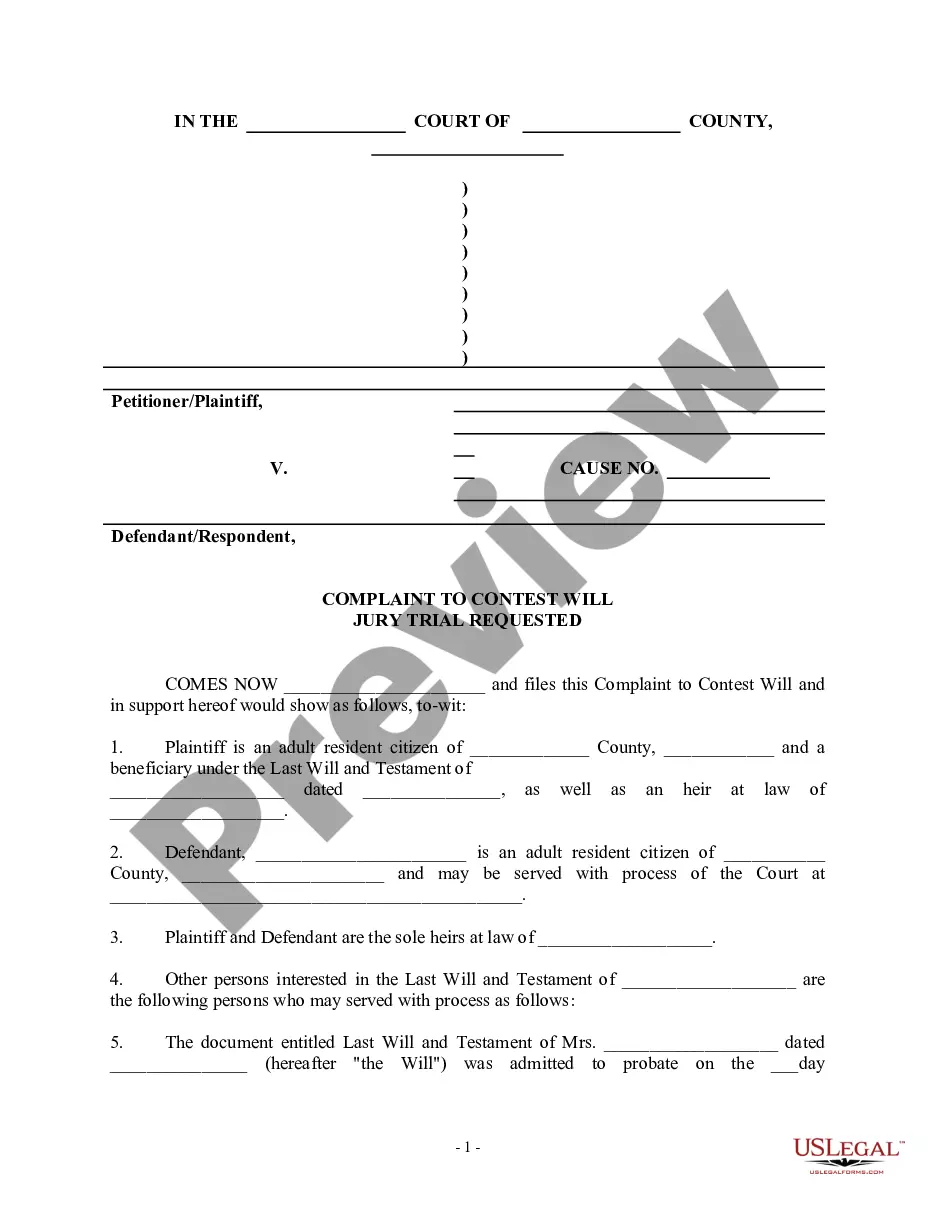
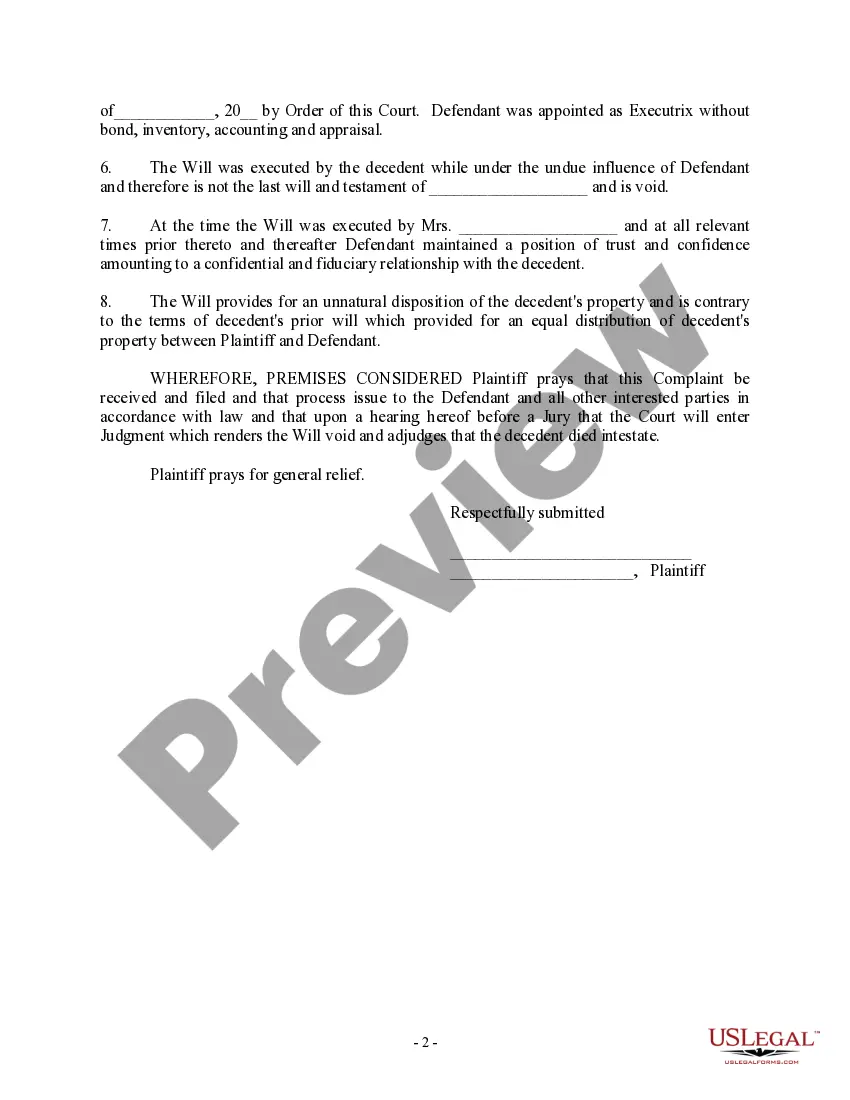
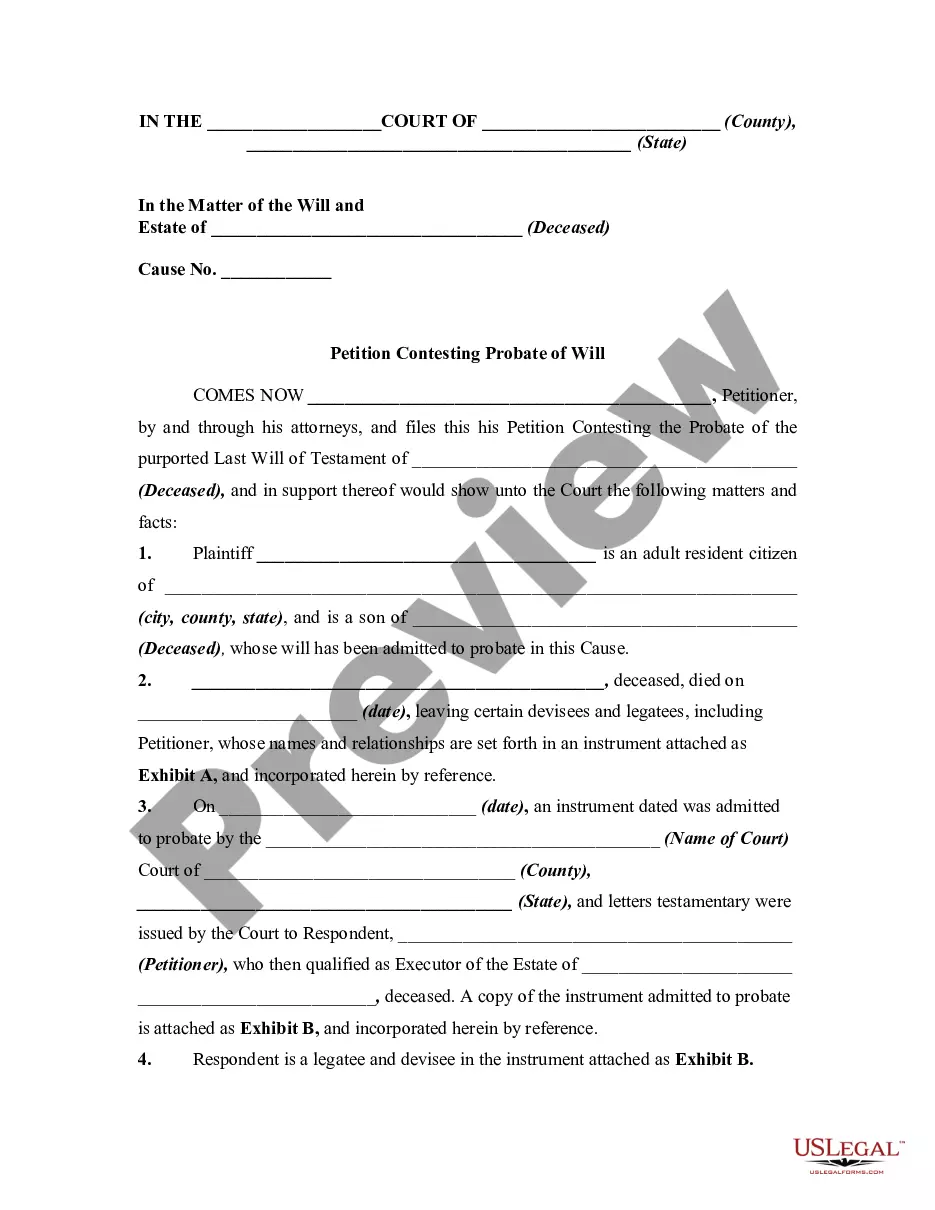
New Jersey Complaint to Contest Will
343 downloads
Description
Free preview
Get your form ready online
Our built-in tools help you complete, sign, share, and store your documents in one place.
Built-in online Word editor
Make edits, fill in missing information, and update formatting in US Legal Forms—just like you would in MS Word.
Export easily
Download a copy, print it, send it by email, or mail it via USPS—whatever works best for your next step.
E-sign your document
Sign and collect signatures with our SignNow integration. Send to multiple recipients, set reminders, and more. Go Premium to unlock E-Sign.
Notarize online 24/7
If this form requires notarization, complete it online through a secure video call—no need to meet a notary in person or wait for an appointment.
Store your document securely
We protect your documents and personal data by following strict security and privacy standards.

Make edits, fill in missing information, and update formatting in US Legal Forms—just like you would in MS Word.

Download a copy, print it, send it by email, or mail it via USPS—whatever works best for your next step.

Sign and collect signatures with our SignNow integration. Send to multiple recipients, set reminders, and more. Go Premium to unlock E-Sign.

If this form requires notarization, complete it online through a secure video call—no need to meet a notary in person or wait for an appointment.

We protect your documents and personal data by following strict security and privacy standards.
Looking for another form?

How to fill out Complaint To Contest Will?
If you want to obtain, acquire, or print official document templates, utilize US Legal Forms, the largest collection of legal forms, available online.
Take advantage of the site's simple and user-friendly search to find the documents you need. Various templates for business and personal purposes are organized by category and state, or keywords.
Use US Legal Forms to locate the New Jersey Complaint to Contest Will in just a few clicks.
Every legal document template you purchase is yours forever. You will have access to every form you acquired in your account. Go to the My documents section and select a form to print or download again.
Stay competitive and acquire, and print the New Jersey Complaint to Contest Will with US Legal Forms. There are millions of professional and state-specific forms you can use for your business or personal needs.
- If you are already a US Legal Forms customer, Log In to your account and click the Download button to find the New Jersey Complaint to Contest Will.
- You can also access forms you have previously obtained in the My documents section of your account.
- If you are using US Legal Forms for the first time, follow the instructions below.
- Step 1. Ensure you have selected the form for your correct city/state.
- Step 2. Use the Preview option to review the form's details. Remember to read the description.
- Step 3. If you are unsatisfied with the form, use the Search field at the top of the screen to find other versions of the legal form template.
- Step 4. Once you have found the form you need, click the Download now button. Choose the pricing plan you prefer and enter your information to register for an account.
- Step 5. Complete the transaction. You can use your credit card or PayPal account to finalize the purchase.
- Step 6. Choose the format of the legal form and download it to your device.
- Step 7. Complete, edit, and print or sign the New Jersey Complaint to Contest Will.
Form popularity
FAQ
In general, there are three grounds for challenging a will. (1) The will was signed improperly and not in compliance with the statutory requirements; (2) the testator lacked the testamentary capacity to execute the will; and (3) the will was the product of undue influence.
The procedure for challenging a will in New Jersey is not complicated, but overturning a will requires solid evidence and testimony ? and knowledgeable legal assistance.
The answer is yes? your omitted and/or disinherited spouse can challenge the Will or Trust (sometimes) and collect about one-third of your estate under New Jersey law, with a few exceptions.
Include a No Contest Clause in the Will Another strategy to avoid a Will contest includes a ?no-contest? or ?in terrorem? clause in your Will. A typical ?no-contest? clause states that if an heir challenges your Will and loses, then he or she gets nothing.
The statute of limitations for the challenge of probate is one of the shortest in New Jersey law: the action must be commenced within four months after the Will is admitted to probate (or 6 months if the person bringing the action lives out-of-state).
The following elements of undue influence must be present in order for it to be presumed: (1) a confidential relationship existed between the testator and the party who benefitted as a result of undue influence; and (2) there are suspicious circumstances, even if slight.