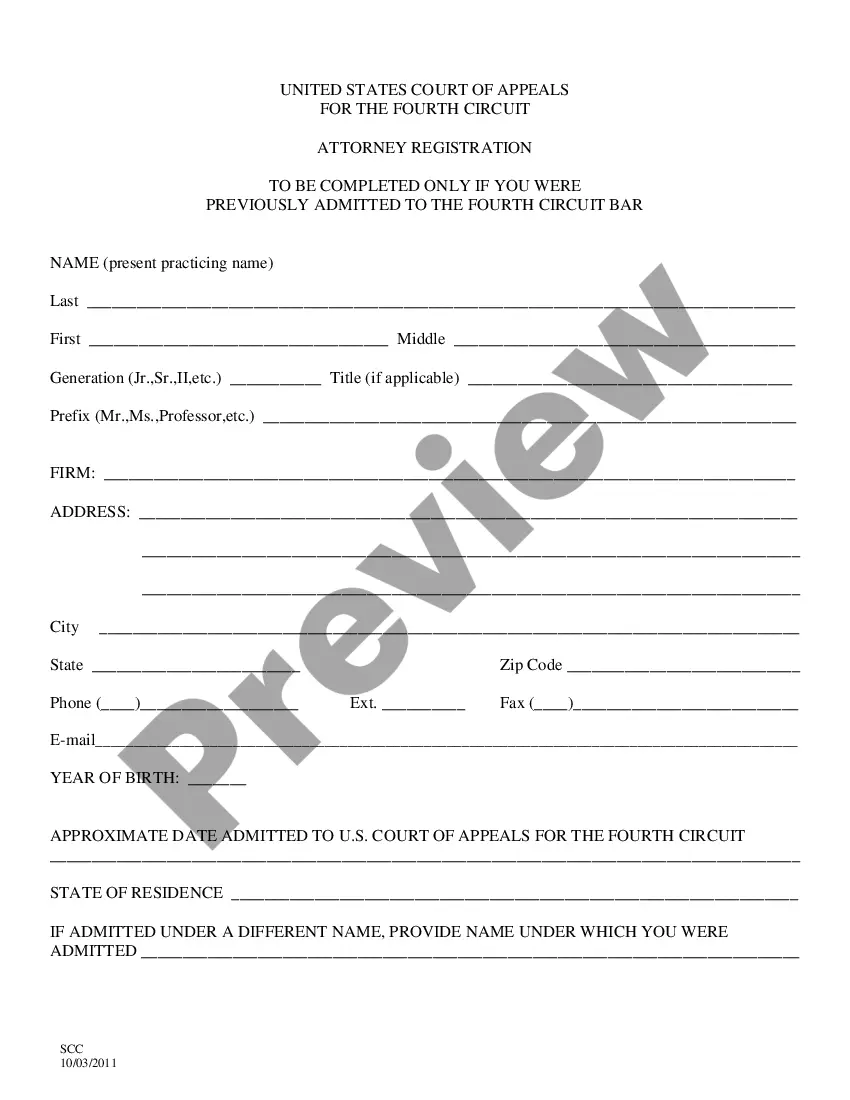
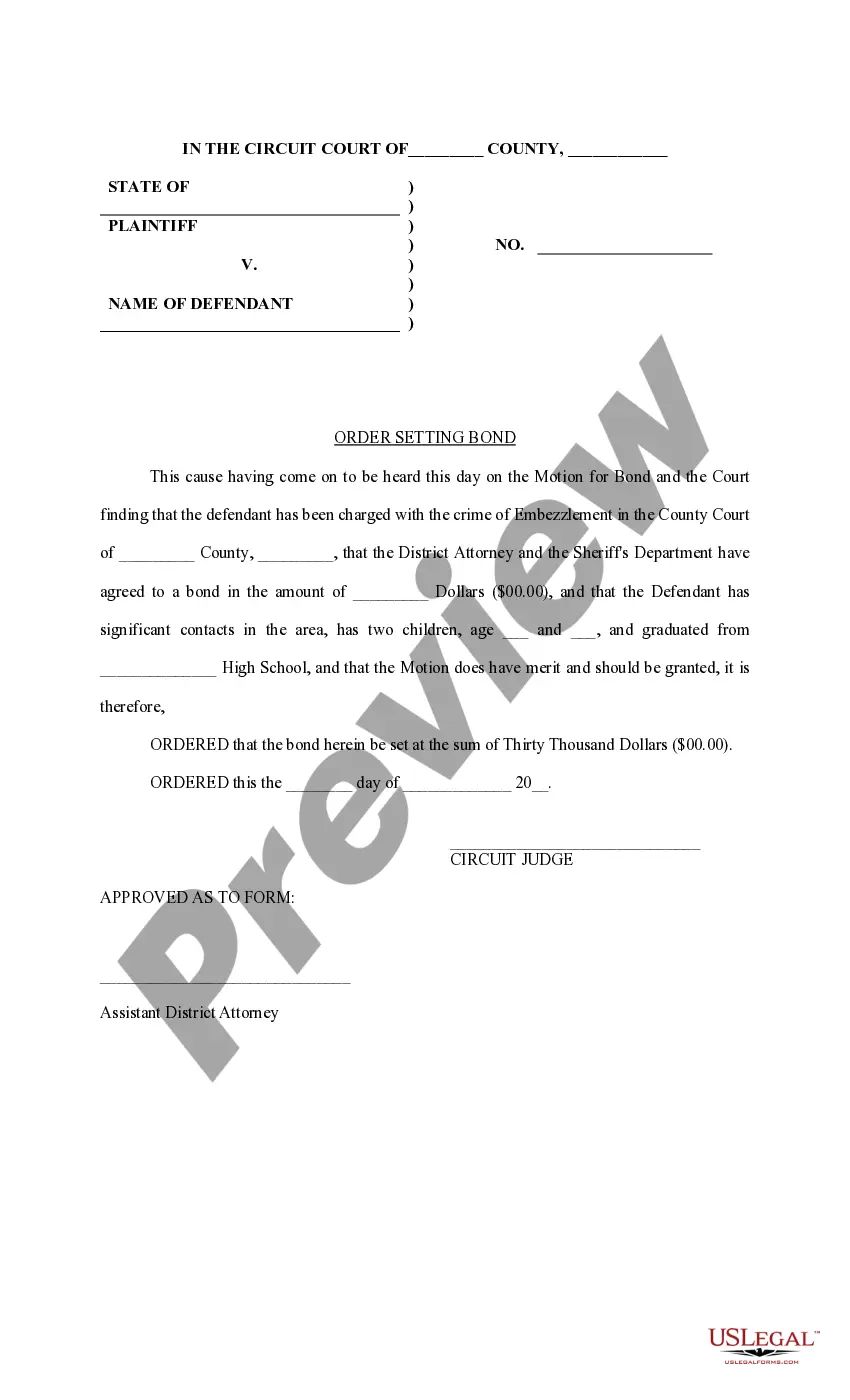
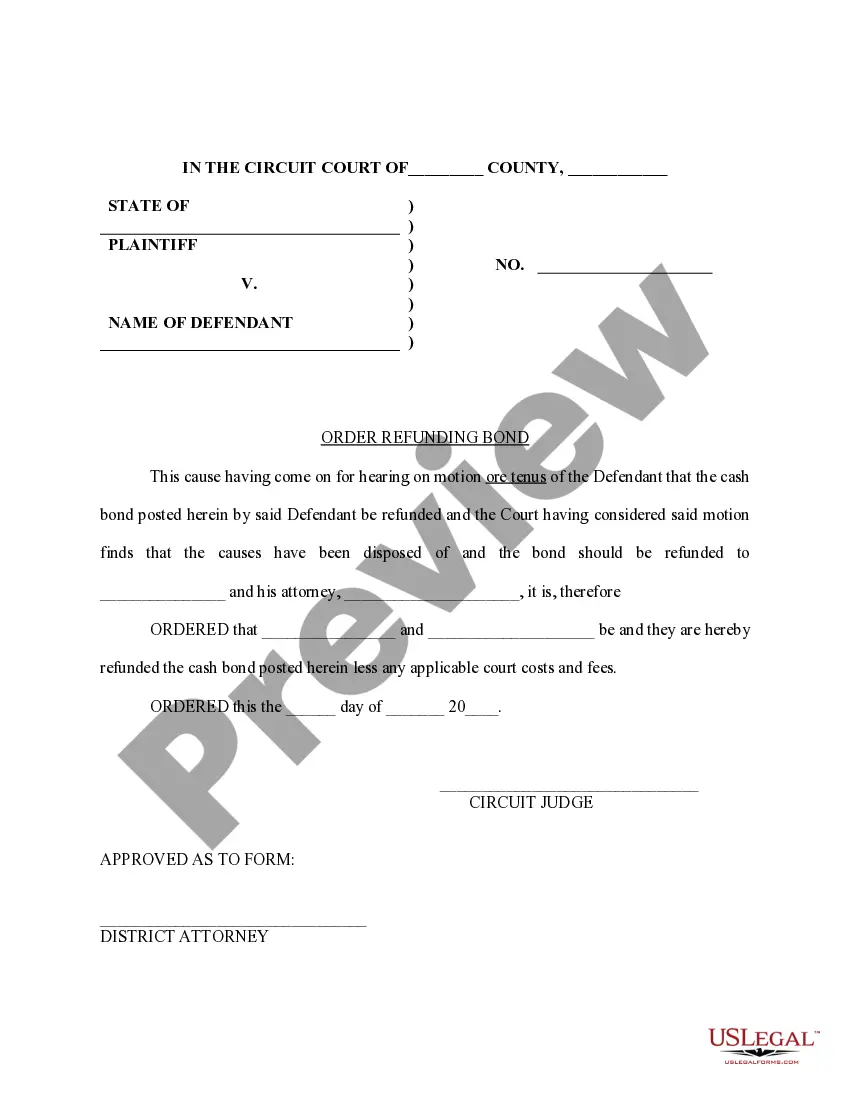
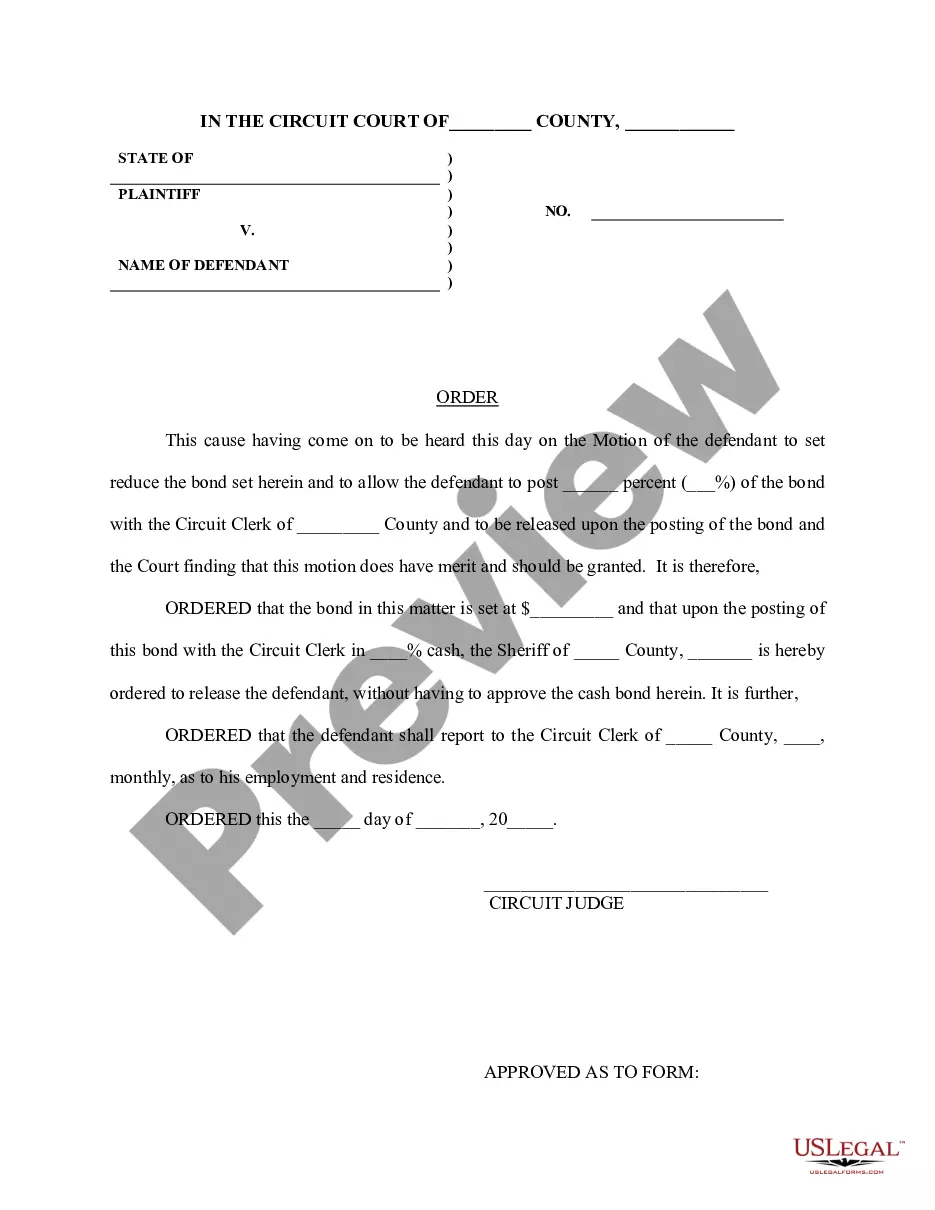
New Jersey Order Setting Bond
Description
Get your form ready online
Our built-in tools help you complete, sign, share, and store your documents in one place.
Make edits, fill in missing information, and update formatting in US Legal Forms—just like you would in MS Word.
Download a copy, print it, send it by email, or mail it via USPS—whatever works best for your next step.
Sign and collect signatures with our SignNow integration. Send to multiple recipients, set reminders, and more. Go Premium to unlock E-Sign.
If this form requires notarization, complete it online through a secure video call—no need to meet a notary in person or wait for an appointment.
We protect your documents and personal data by following strict security and privacy standards.

Make edits, fill in missing information, and update formatting in US Legal Forms—just like you would in MS Word.

Download a copy, print it, send it by email, or mail it via USPS—whatever works best for your next step.

Sign and collect signatures with our SignNow integration. Send to multiple recipients, set reminders, and more. Go Premium to unlock E-Sign.

If this form requires notarization, complete it online through a secure video call—no need to meet a notary in person or wait for an appointment.

We protect your documents and personal data by following strict security and privacy standards.
Looking for another form?


How to fill out Order Setting Bond?
If you wish to finalize, obtain, or create legitimate document templates, utilize US Legal Forms, the largest assortment of legal forms available online.
Employ the site's straightforward and convenient search to find the documents you need. Various templates for business and personal purposes are organized by categories and states, or keywords.
Utilize US Legal Forms to acquire the New Jersey Order Setting Bond with just a few clicks.
Step 5. Process the transaction. You may use your credit card or PayPal account to complete the transaction.
Step 6. Select the format of the legal form and download it to your device. Step 7. Complete, edit, and print or sign the New Jersey Order Setting Bond. Every legal document template you purchase is yours permanently. You will have access to every form you acquired in your account. Visit the My documents section and select a form to print or download again. Stay competitive and obtain, and print the New Jersey Order Setting Bond with US Legal Forms. There are numerous professional and state-specific forms available for your business or personal requirements.
- If you are already a US Legal Forms user, Log In to your account and click on the Download button to retrieve the New Jersey Order Setting Bond.
- You can also access forms you have previously obtained in the My documents section of your account.
- If you are using US Legal Forms for the first time, follow the instructions below.
- Step 1. Ensure you have selected the form for the correct city/state.
- Step 2. Use the Review feature to browse the form's content. Remember to read the summary.
- Step 3. If you are not satisfied with the form, utilize the Search box at the top of the screen to find other forms in the legal template category.
- Step 4. Once you have found the form you need, click on the Buy now button. Choose the pricing plan you prefer and enter your details to register for an account.
Form popularity
FAQ
Under the new risk-based system, access to money will no longer determine pretrial detainment. Defendants with a serious risk of danger or flight can be detained pending trial. Low-risk defendants who can't afford bail will be released.
In this paper, we look at bail reform through the lens of New Jersey, the first state to fully implement cash bail reform. Passed in 2014 under Republican Governor Chris Christie, reforms went into effect in 2017, giving us several years of data to look at.
The bail bond serves as surety that the defendant will appear for trial. Judges typically have wide latitude in setting bail amounts. Bail bondsmen generally charge 10% of the bail amount up front in return for their service and may charge additional fees. Some states have put a cap of 8% on the amount charged.
If you do not post bond, you can be held until your trial is over. How long defendants can be held without bond might vary from case to case, but it could be anywhere from several weeks to months or longer.
Following bipartisan legislation and a constitutional amendment supported by 62% of voters, New Jersey essentially eliminated cash bail and instituted a risk assessment approach in which judges consider community safety and other factors before deciding whether to detain or release someone before trial.
New Jersey Bail and Bond Process For many, this involves securing bail. After the arrest, the suspect is booked and then bail will be set. This must be done within twelve hours after the complaint is issued. The bail amount will be set by a magistrate or judge.
Under the old law, a defendant is released or detained based on their ability to post bail. Under the new law, there is no bail. The New Jersey court looks at whether or not the defendant will appear in court, the community is safe, and whether the defendant will obstruct the criminal justice process.
Eight years ago, then-Republican Gov. Chris Christie teamed up with Democrats to pass a major overhaul of New Jersey's criminal justice system, ushering through legislation that made the state among the first in the nation to effectively eliminate cash bail. There was little political uproar.