New Jersey General or Common Law Affidavit

State:
Multi-State
Control #:
US-00479BG
Format:
Word; 
Rich Text
Instant download

Description

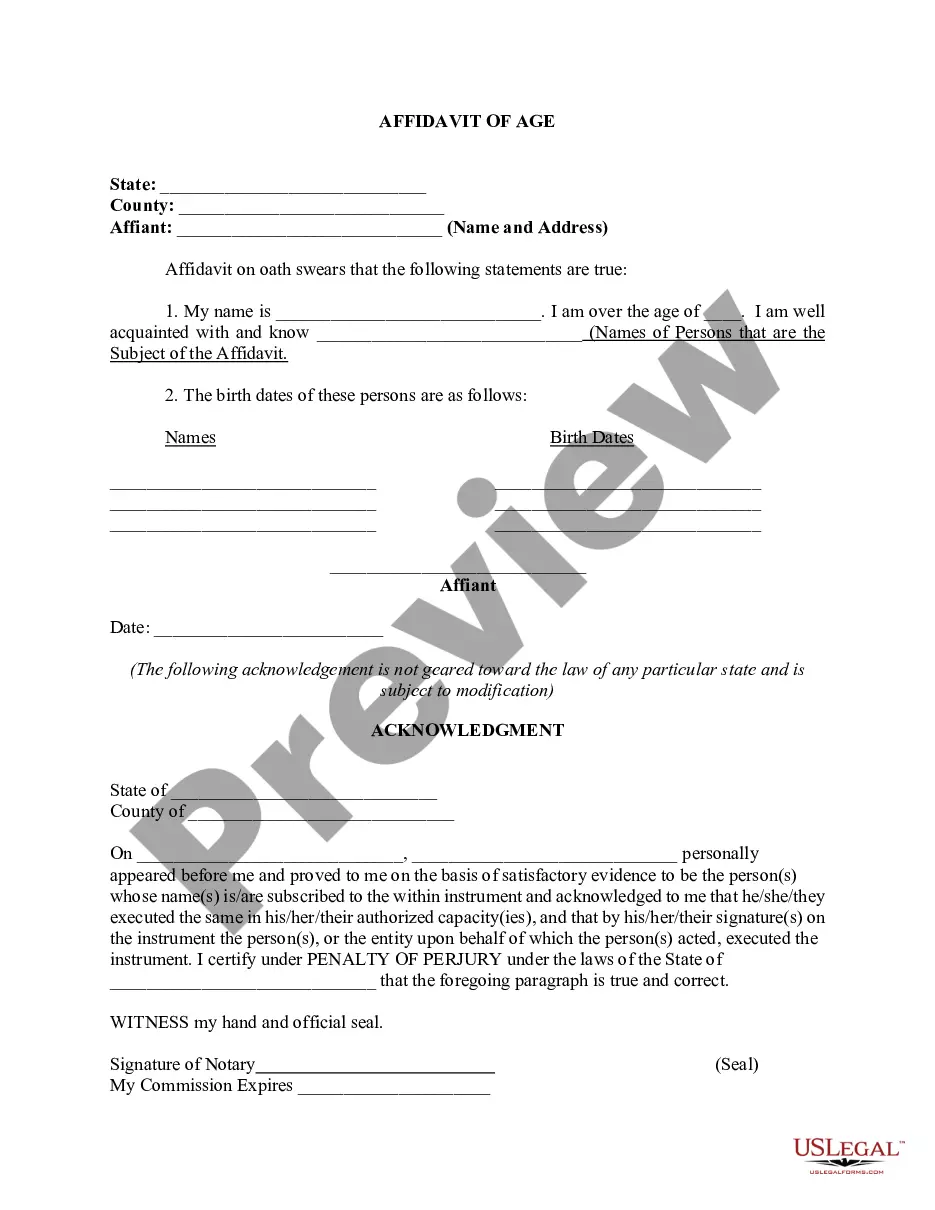
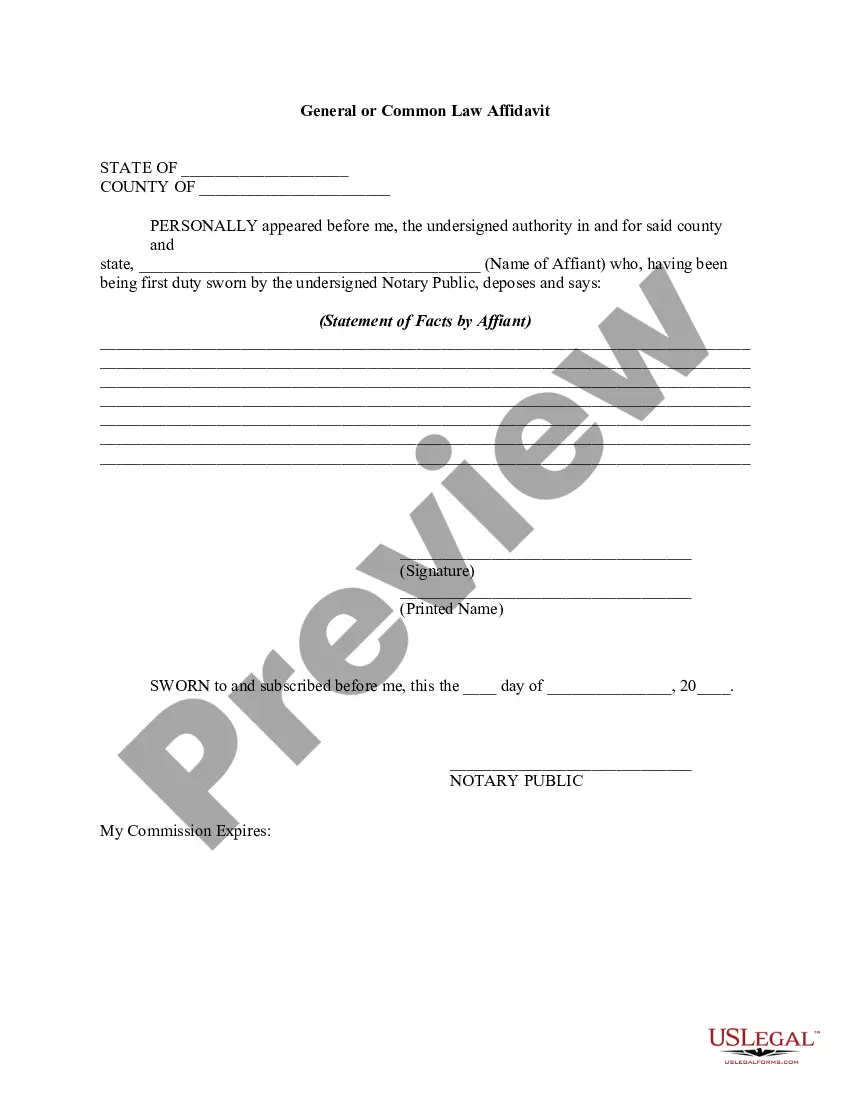
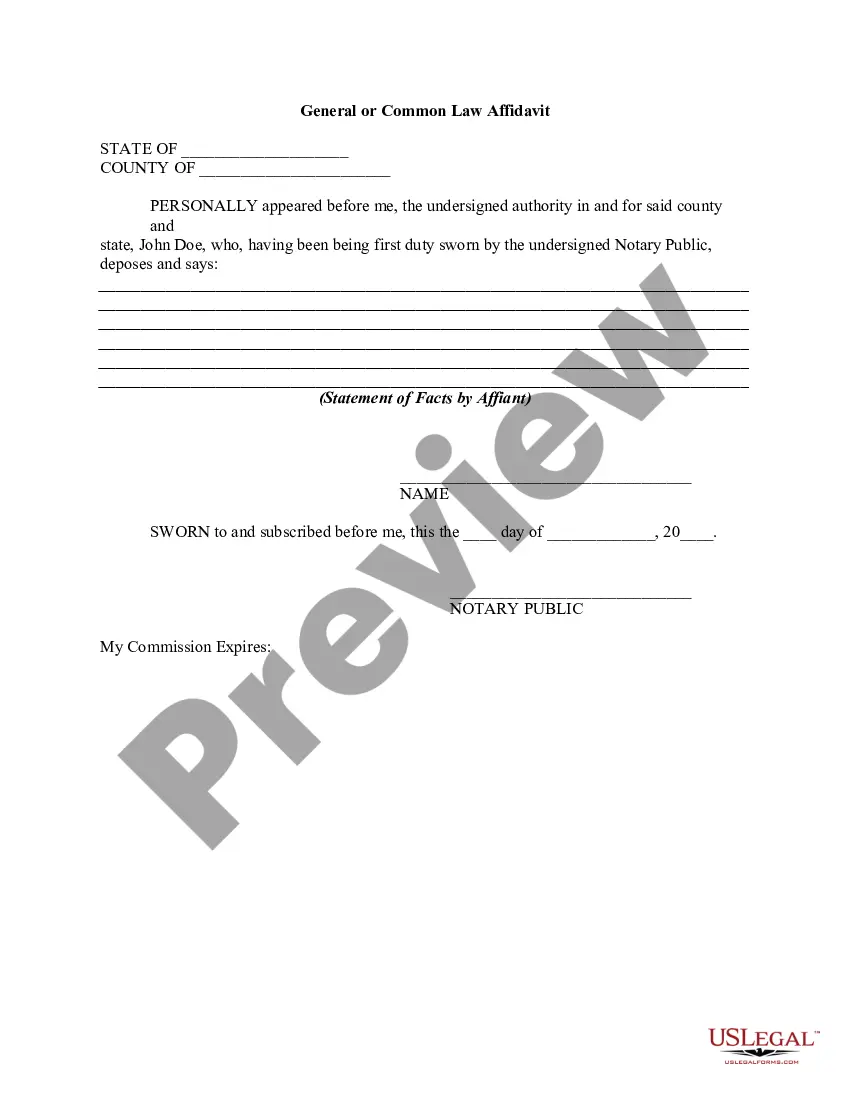
An affidavit must be in writing and be sworn to or affirmed before some legally authorized officer. Statutes of various jurisdictions ordinarily prescribe various formal requirements for the affidavits. These requirements may be just proper form or may be essential as to the legal effect of the affidavit.


The formal requirements of an affidavit usually are:

1. The identification of the place where the affidavit was taken (i.e., the venue);

2. The signature of the affiant (i.,e., the person giving the affidavit); and

3. The certificate evidencing the fact that the affidavit was properly made before a duly authorized officer (i.e. the jurat), which includes the proper authentication by the authorized officer.


It is essential to the validity of an affidavit that it be sworn to, or affirmed before, a notary public or some other officer authorized to administer oaths or affirmations. This may be done by having the officer administer the oath to the affiant or by having the affiant affirm to the officer, with the officers consent, the truth of the matters contained in the affidavit. It is also essential that the affiant be identified as to name, residence and, where appropriate or required by law, as to status or capacity. This is ordinarily done in the introductory paragraph to the affidavit.


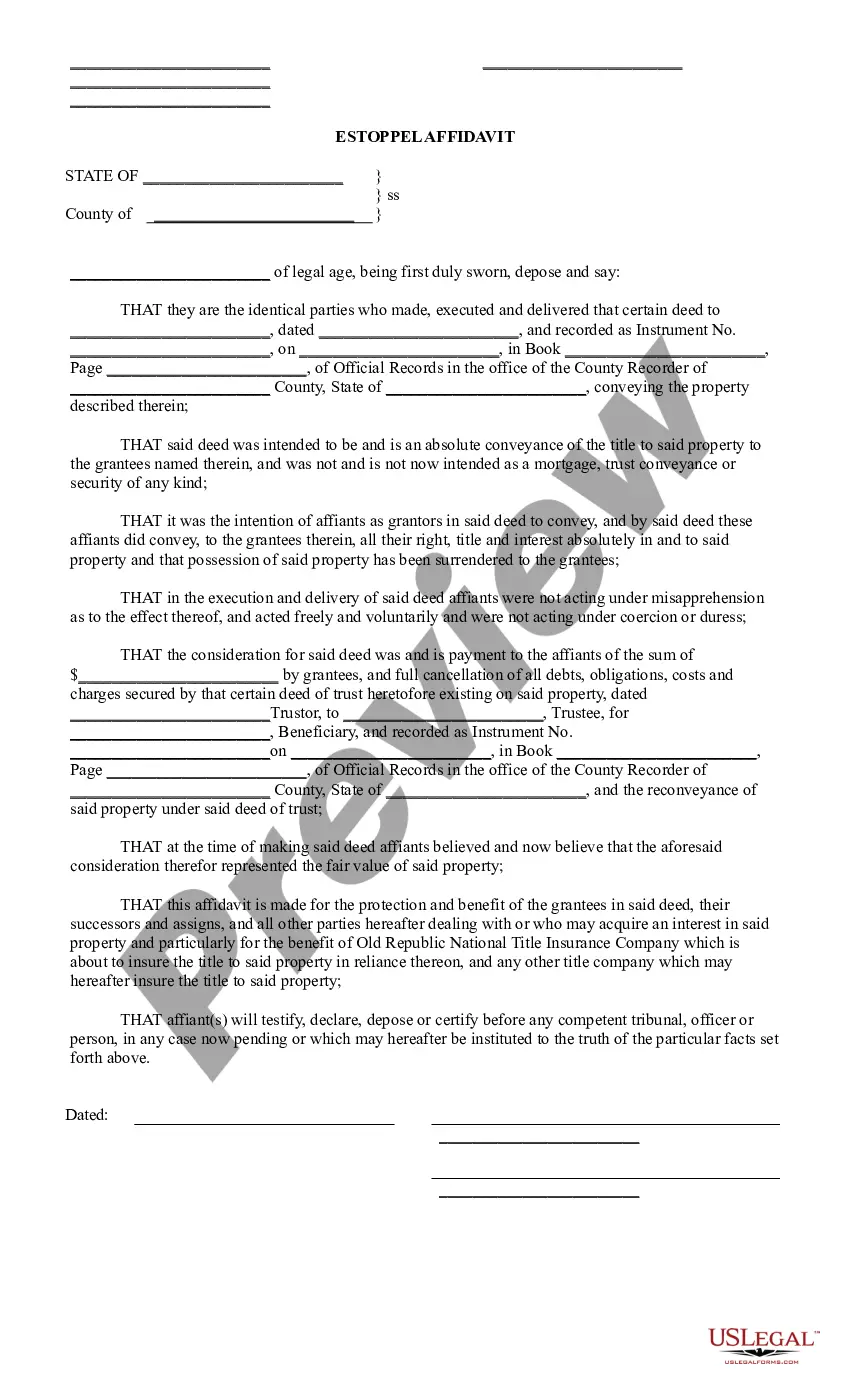
The following form is a very basic and general form which can be used in most jurisdictions if properly completed.

How to fill out General Or Common Law Affidavit?

You have the capacity to dedicate time online trying to locate the legal document template that satisfies the state and federal criteria you require.

US Legal Forms provides a vast array of legal forms that are reviewed by professionals.

You can download or print the New Jersey General or Common Law Affidavit from our service.

If available, utilize the Preview button to view the document template as well.

  1. If you possess a US Legal Forms account, you can Log In and then click the Obtain button.
  2. Subsequently, you can complete, modify, print, or sign the New Jersey General or Common Law Affidavit.
  3. Every legal document template you purchase is yours permanently.
  4. To acquire an additional copy of any purchased form, visit the My documents section and click the corresponding button.
  5. If you are utilizing the US Legal Forms website for the first time, follow the simple instructions below.
  6. First, ensure that you have selected the correct document template for the region/city of your choice.
  7. Review the form details to confirm you have chosen the appropriate form.

Form popularity

FAQ

Yes, New Jersey recognizes common law, especially in the context of marriage and certain legal agreements. However, understanding the specific requirements and implications is crucial for your situation. Utilizing a New Jersey General or Common Law Affidavit can help you formally assert your rights and responsibilities under common law, making it easier to navigate legal scenarios.

Obtaining an affidavit of common law in New Jersey requires you to gather necessary documentation and complete the affidavit form accurately. You can create a professionally crafted New Jersey General or Common Law Affidavit through platforms like uslegalforms, where you can find templates tailored to your needs. Once completed, you must sign it in front of a notary to give it legal weight.

To prove common law in New Jersey, you need specific evidence, such as documents showing mutual consent and intent to create a partnership or marriage. This may include witness statements, joint property ownership, or cohabitation records. Having a well-prepared New Jersey General or Common Law Affidavit can significantly strengthen your case by formally documenting the relationship and supporting evidence.

No, common law marriage does not apply in New Jersey. The state abolished common law marriage in 1939, and couples are required to marry through traditional legal processes to receive any legal benefits associated with marriage. If you need to document a cohabitation arrangement effectively, consider using a New Jersey General or Common Law Affidavit to outline your relationship and rights.

In New Jersey, the state does not recognize common law marriage regardless of how long a couple has lived together. This means that cohabiting couples must take additional steps to establish legal status, such as creating a New Jersey General or Common Law Affidavit to affirm their relationship. If you are seeking legal recognition for your partnership, we recommend using the affidavit as a formal assertion of your intentions.

Yes, New Jersey honors domestic partnerships and provides legal recognition to qualifying couples. The state allows couples to register their partnership officially, granting them certain rights and benefits. Utilizing a New Jersey General or Common Law Affidavit can facilitate this process and ensure you meet the necessary criteria.

Yes, many insurance providers require proof of domestic partnership to extend benefits to partners. A New Jersey General or Common Law Affidavit can serve as essential documentation, affirming your relationship. Always check with your insurance company about their specific requirements and accepted forms of proof.

To prove your domestic partnership in New Jersey, you must present a New Jersey General or Common Law Affidavit. This affidavit should detail your relationship and be accompanied by supporting evidence such as utility bills, shared leases, or other documents that verify joint responsibilities. Together, these components help establish your partnership legally.

An Affidavit confirming that you meet the criteria of a domestic partnership is a sworn statement that outlines your eligibility based on New Jersey's domestic partnership laws. This document affirms the existence of your relationship and must include pertinent information about both partners. Using a reliable resource like USLegalForms can simplify the process of obtaining this affidavit.

New Jersey does not recognize common law marriage established after 1939. However, if you entered a common law marriage before this date, you can prove it by presenting a New Jersey General or Common Law Affidavit along with other supporting documents that show cohabitation and shared life, which might include joint financial statements.

Trusted and secure by over 3 million people of the world’s leading companies

New Jersey General or Common Law Affidavit