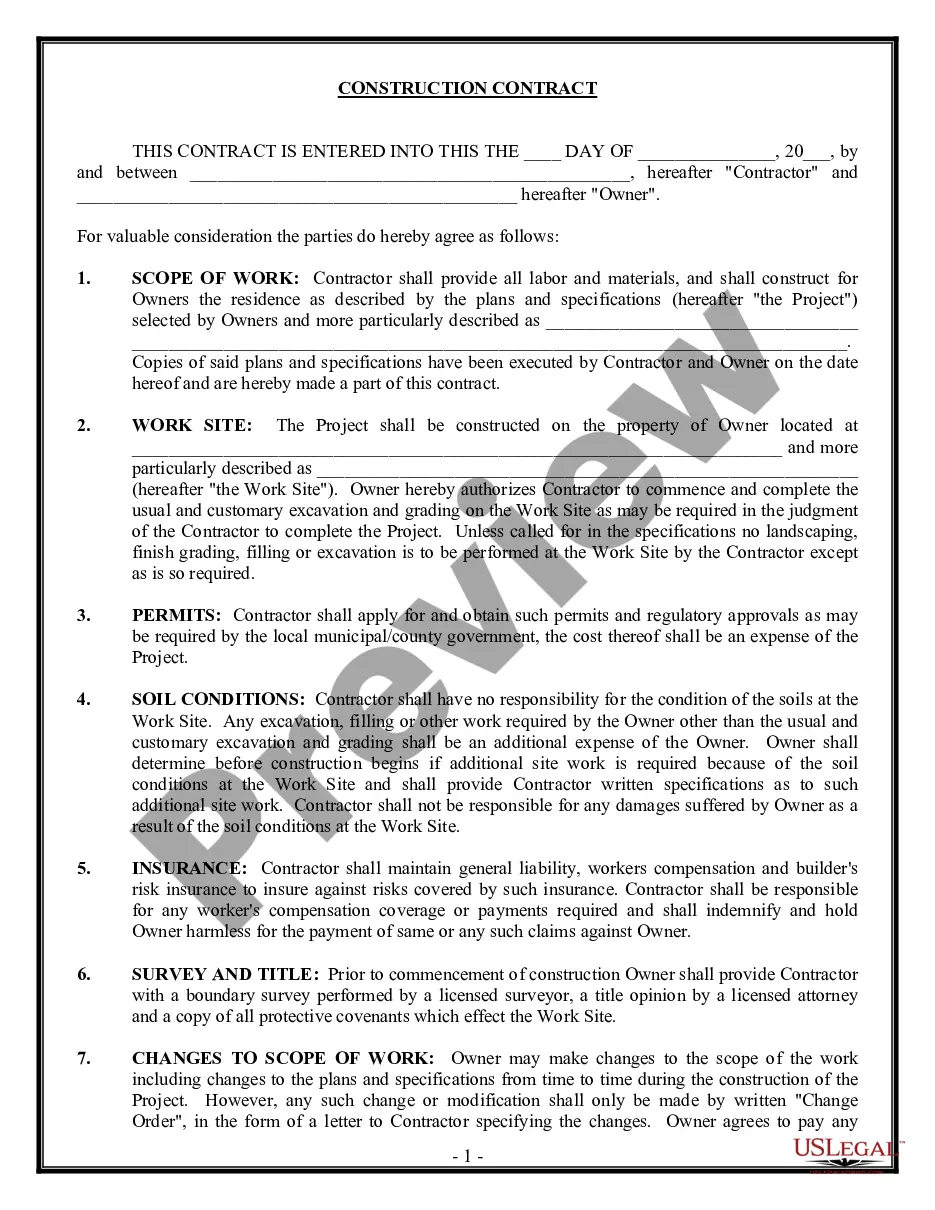
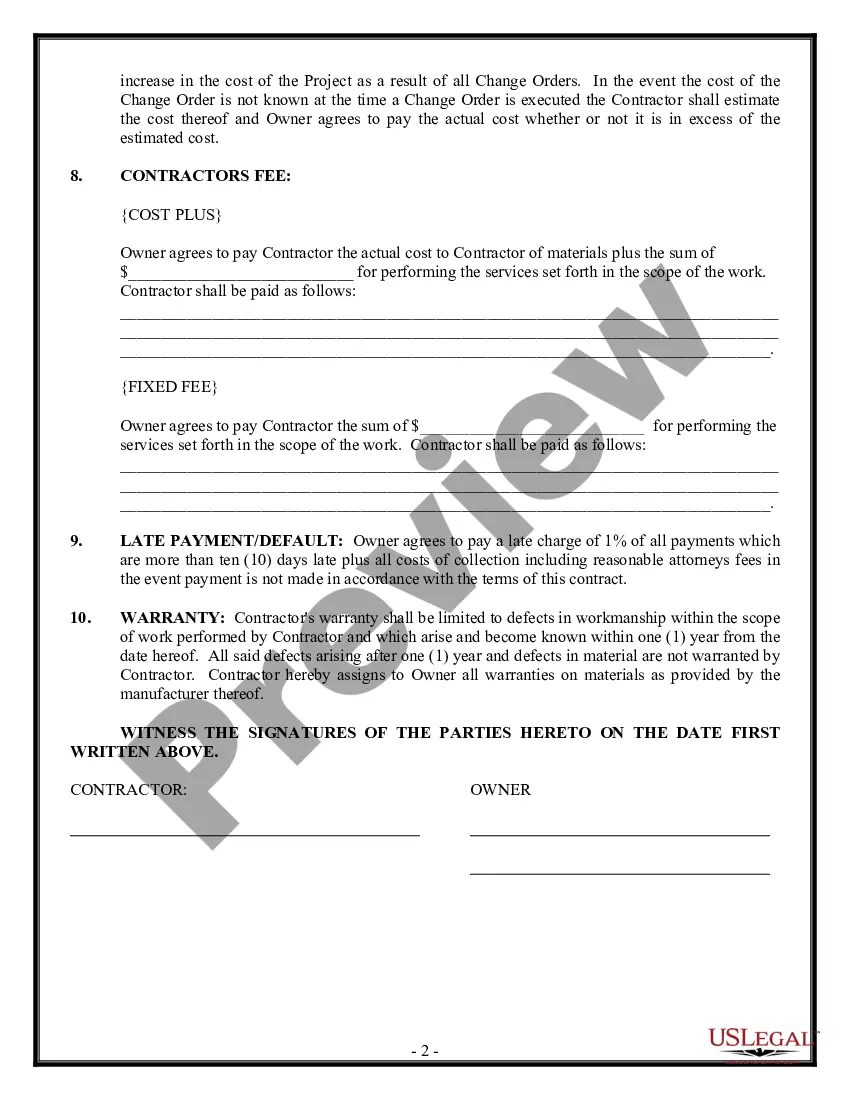
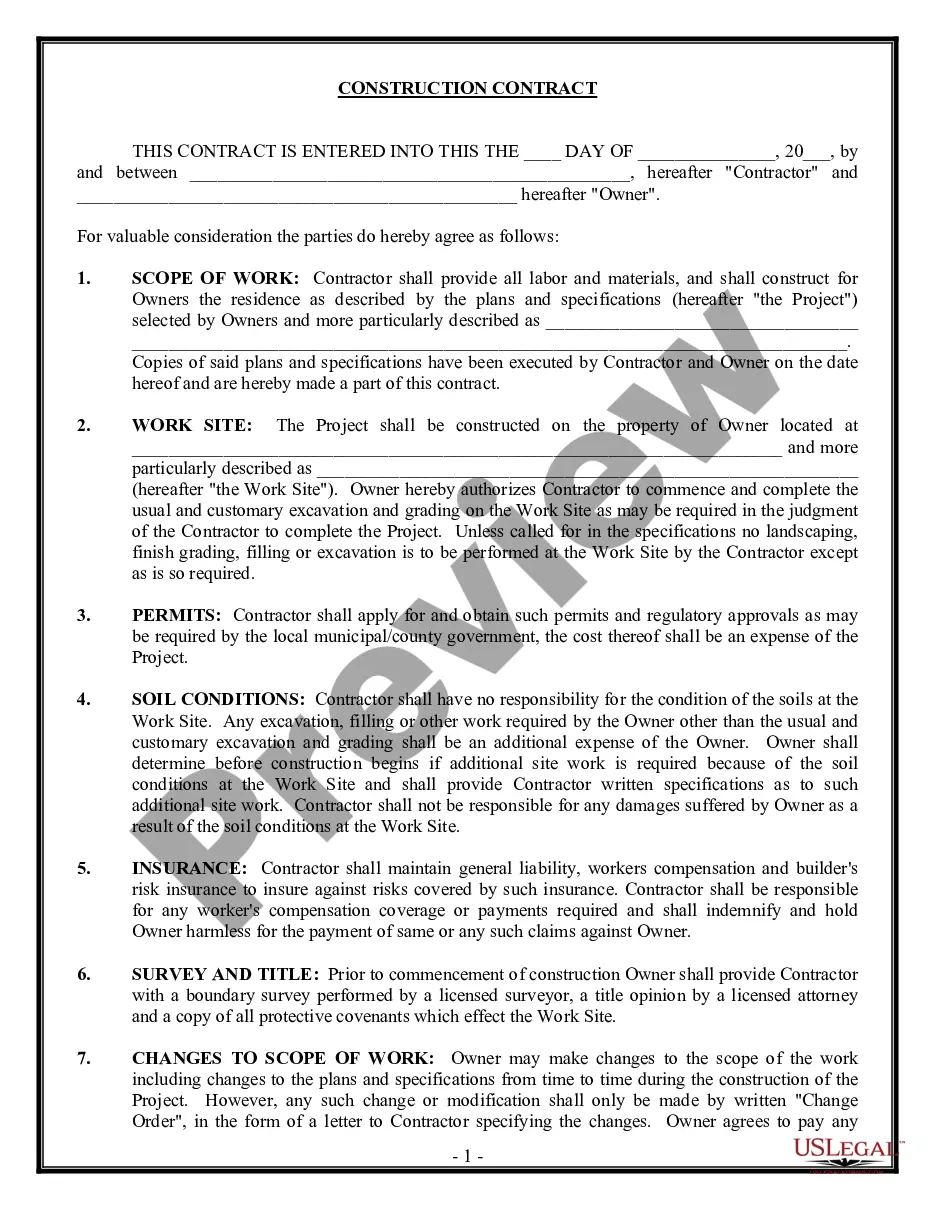
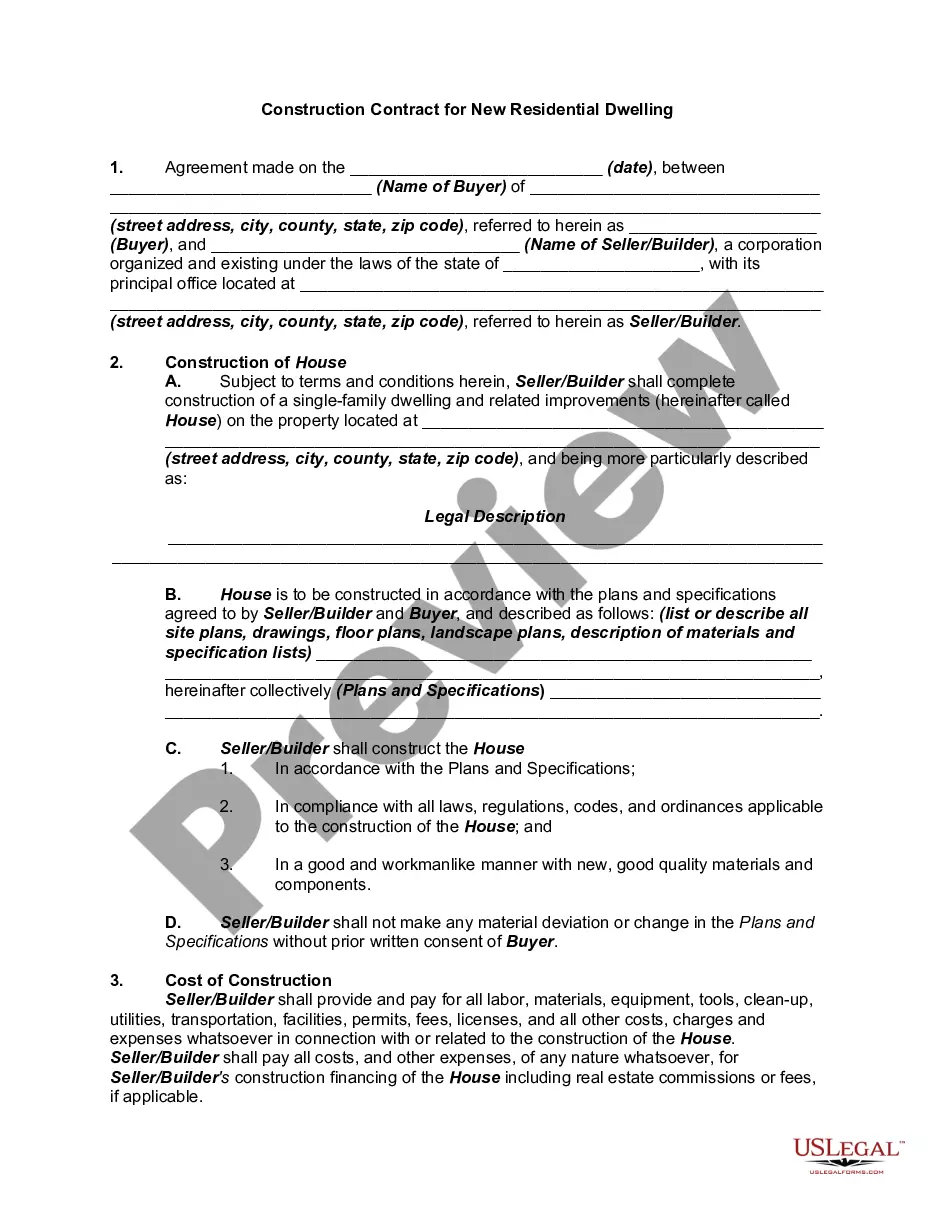
New Jersey Construction Contract for Residential Construction
Description

Get your form ready online
Our built-in tools help you complete, sign, share, and store your documents in one place.
Make edits, fill in missing information, and update formatting in US Legal Forms—just like you would in MS Word.
Download a copy, print it, send it by email, or mail it via USPS—whatever works best for your next step.
Sign and collect signatures with our SignNow integration. Send to multiple recipients, set reminders, and more. Go Premium to unlock E-Sign.
If this form requires notarization, complete it online through a secure video call—no need to meet a notary in person or wait for an appointment.
We protect your documents and personal data by following strict security and privacy standards.

Make edits, fill in missing information, and update formatting in US Legal Forms—just like you would in MS Word.

Download a copy, print it, send it by email, or mail it via USPS—whatever works best for your next step.

Sign and collect signatures with our SignNow integration. Send to multiple recipients, set reminders, and more. Go Premium to unlock E-Sign.

If this form requires notarization, complete it online through a secure video call—no need to meet a notary in person or wait for an appointment.

We protect your documents and personal data by following strict security and privacy standards.
Looking for another form?



How to fill out Construction Contract For Residential Construction?
You might spend multiple hours online searching for the proper legal document template that fulfills both state and federal requirements.
US Legal Forms offers a vast array of legal forms that are reviewed by professionals.
You can download or print the New Jersey Construction Contract for Residential Construction from this platform.
If available, utilize the Preview button to view the document template as well.
- If you already possess a US Legal Forms account, you can Log In and click on the Download button.
- Then, you can fill out, modify, print, or sign the New Jersey Construction Contract for Residential Construction.
- Every legal document template you buy is yours indefinitely.
- To obtain another copy of any purchased form, visit the My documents section and click the corresponding button.
- If this is your first time using the US Legal Forms website, follow the simple instructions below.
- First, ensure you have selected the correct document template for your chosen area/city.
- Review the form description to confirm that you have chosen the right one.
Form popularity
FAQ
The four classifications of contracts are unilateral contracts, bilateral contracts, express contracts, and implied contracts. Each classification impacts how agreements are formed and executed. When drafting a New Jersey Construction Contract for Residential Construction, knowing these classifications can help you create a more effective and binding agreement.
The four main types of construction include residential, commercial, industrial, and infrastructure. Each type addresses specific needs and regulatory requirements. For residential construction, understanding the various types of contracts available through a New Jersey Construction Contract for Residential Construction can streamline your project management.
The four valid contracts generally recognized are written contracts, verbal contracts, implied contracts, and express contracts. Each type has varying degrees of enforceability and applicability in legal matters. When creating a New Jersey Construction Contract for Residential Construction, it is vital to ensure the contract is valid to protect your interests.
The time to get a building permit approved in New Jersey can vary based on the complexity of the project and local regulations. Generally, it can take anywhere from a few weeks to several months. To streamline the process, ensure that your New Jersey Construction Contract for Residential Construction is thorough and meets all requirements laid out by local authorities.
Building without a permit in New Jersey can lead to serious consequences, such as fines and the potential requirement to demolish unauthorized work. Homeowners may face legal issues and complications when trying to sell their property in the future. To avoid these problems, always use a New Jersey Construction Contract for Residential Construction and ensure all necessary permits are obtained.
Getting a construction permit in New Jersey involves several straightforward steps. Start by contacting your local building department to learn about their specific guidelines. As you prepare your New Jersey Construction Contract for Residential Construction, be sure to include all necessary details that may assist in the approval of your permit application.
To obtain a construction permit in New Jersey, first check with your local municipality for specific requirements. Generally, you'll need to prepare your construction plans, fill out an application, and submit any required documents. The New Jersey Construction Contract for Residential Construction is an essential tool that can guide you through the process, ensuring you meet all necessary regulations.
The most ignored clause in a construction contract is often the dispute resolution clause. Many parties overlook the importance of outlining how to handle conflicts that may arise during the project. This clause is essential for maintaining a positive working relationship and ensuring that conflicts are resolved efficiently and fairly. Including this in your New Jersey Construction Contract for Residential Construction can save time and resources.
To fill out a contractor agreement, start by entering the project information, including address and scope of work. Next, specify the payment terms and the timeline for completion. Make sure to include both parties' names and contact information, then sign the agreement. Resources like US Legal can guide you through this process, especially for a New Jersey Construction Contract for Residential Construction.
A construction contract may be considered invalid if any of the essential elements are missing, such as an offer, acceptance, or consideration. Moreover, if the contract cannot fulfill legal requirements or involves illegal activities, it is void. Additionally, if one party lacks the mental capacity or is under duress when signing, it could render the contract unenforceable. Therefore, it is vital to craft a detailed New Jersey Construction Contract for Residential Construction that meets legal standards.