New Jersey Assignment of Mortgage Package
What is this form package?
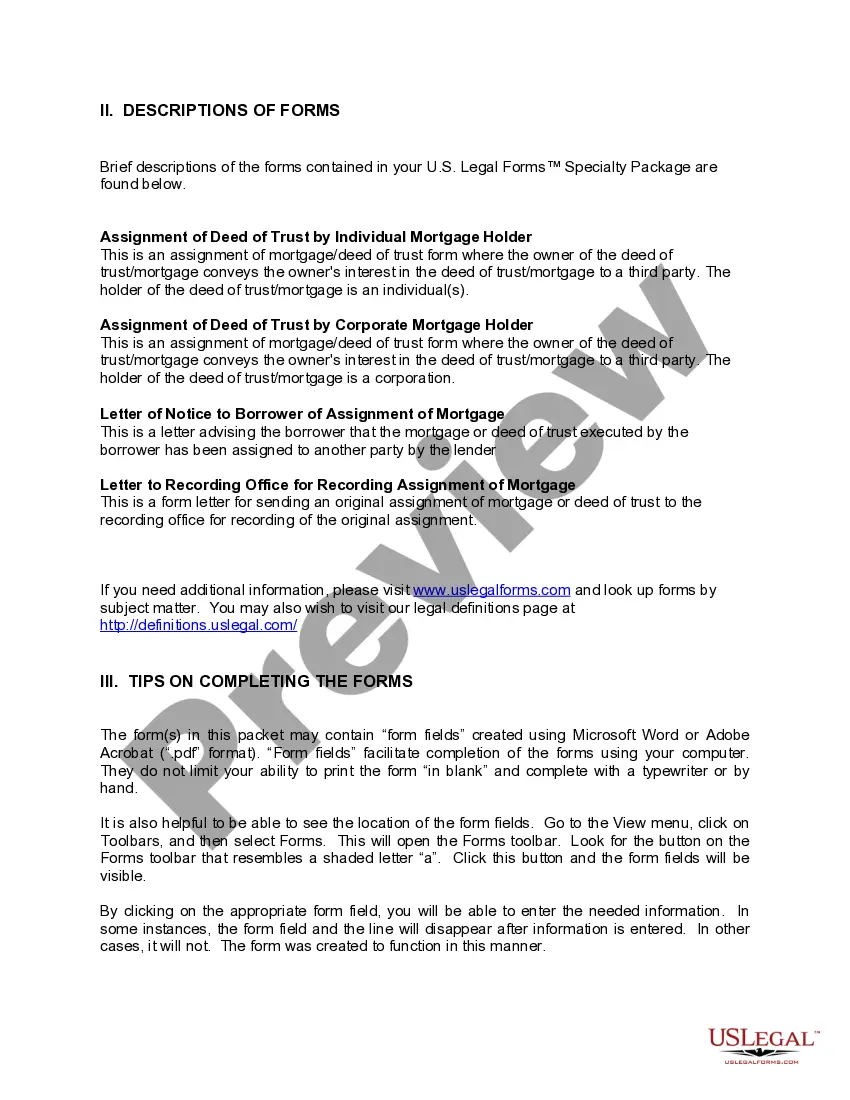
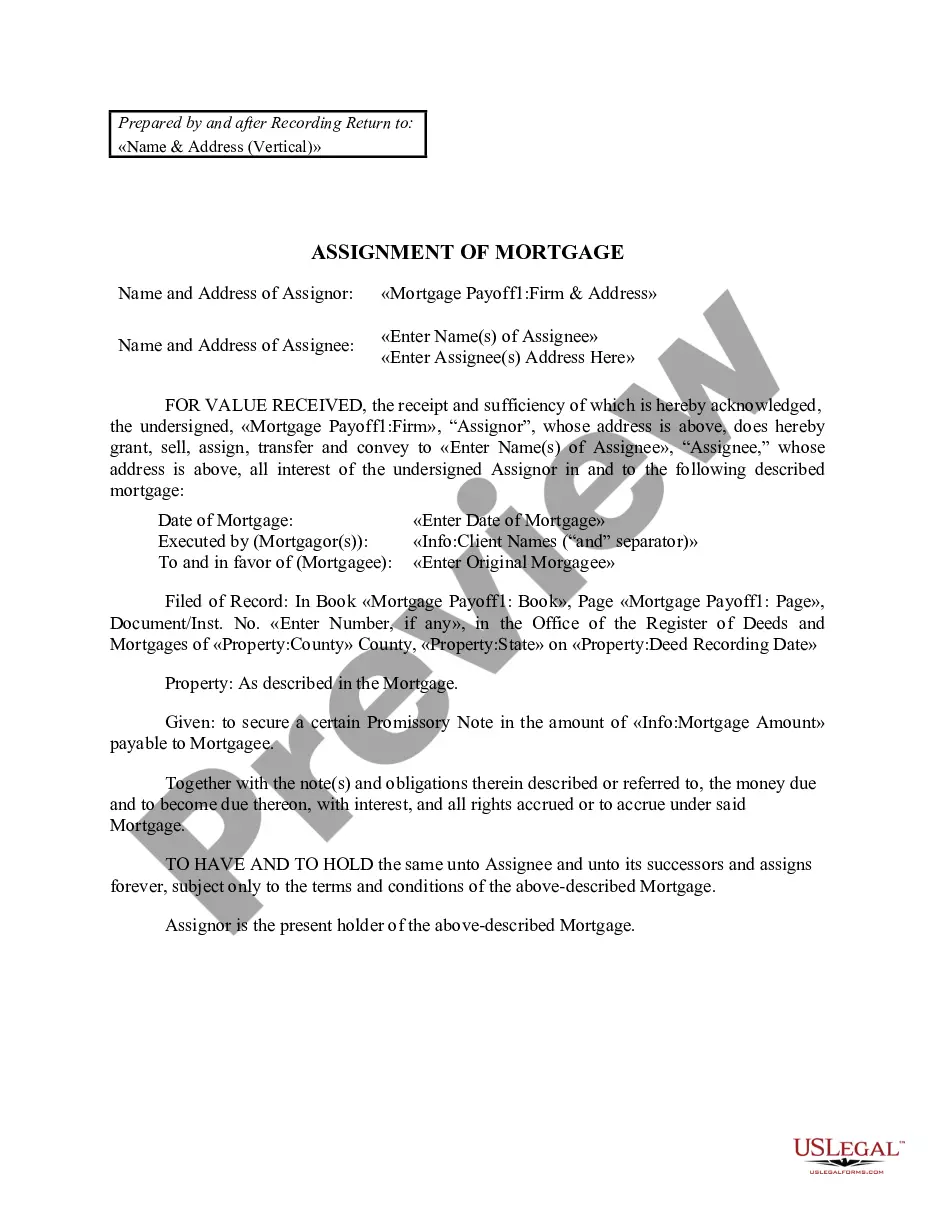
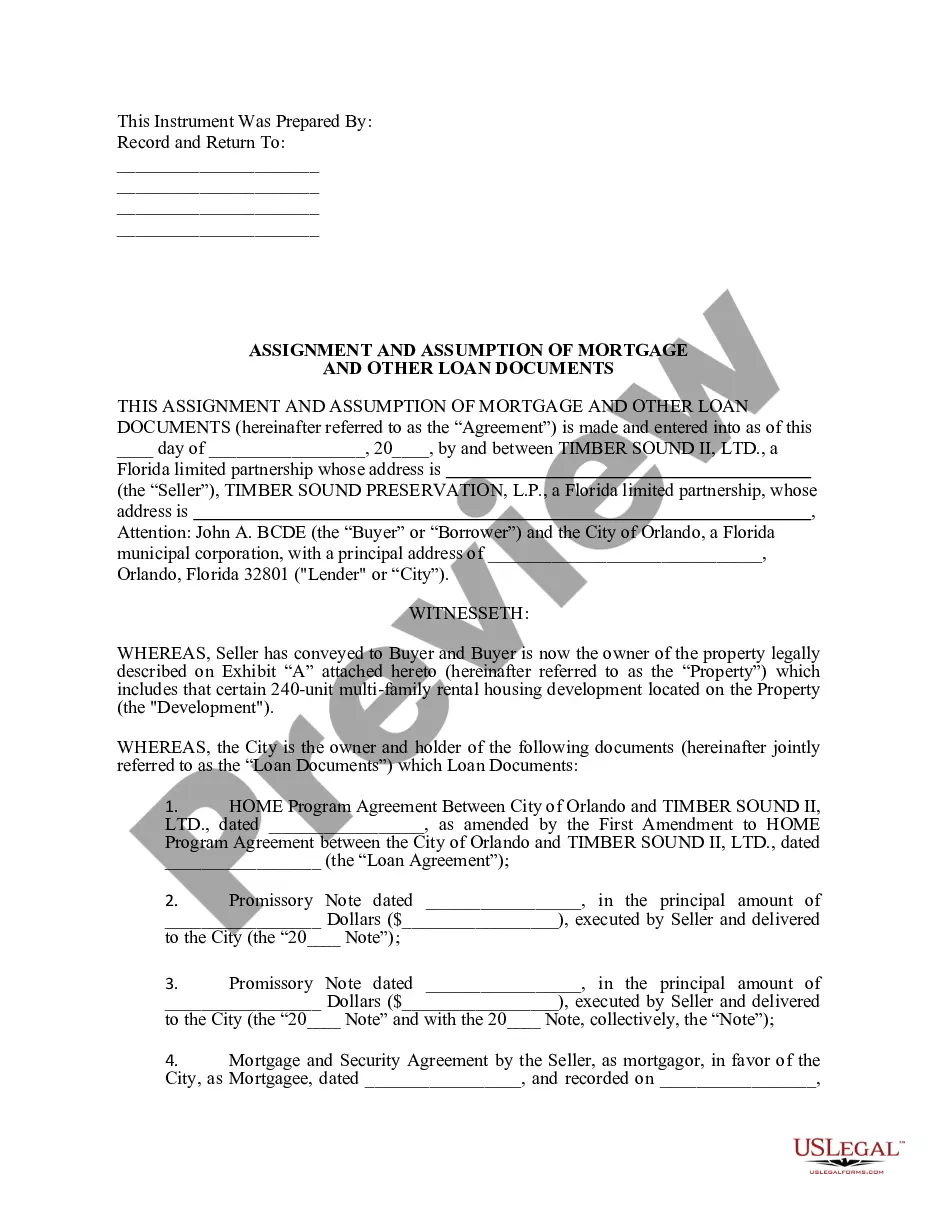
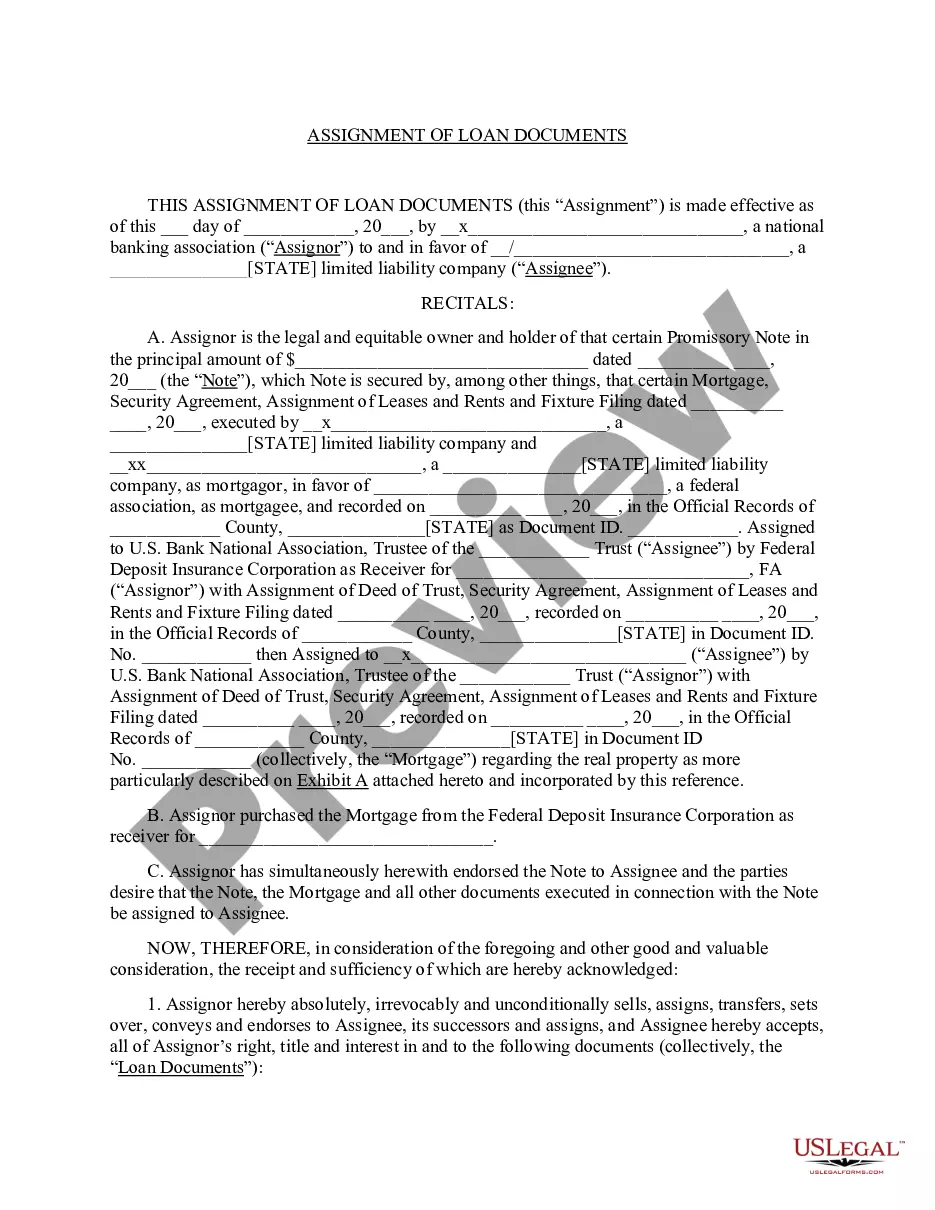
The New Jersey Assignment of Mortgage Package is a comprehensive collection of forms designed to assist the owner of a mortgage in transferring their interest in the mortgage to a third party. This package includes various forms tailored to convey ownership rights in a deed of trust or mortgage, ensuring legal compliance and clarity in the assignment process. Unlike other mortgage-related packages, this one specifically addresses both individual and corporate mortgage holders, making it versatile for different scenarios.
Forms provided in this package
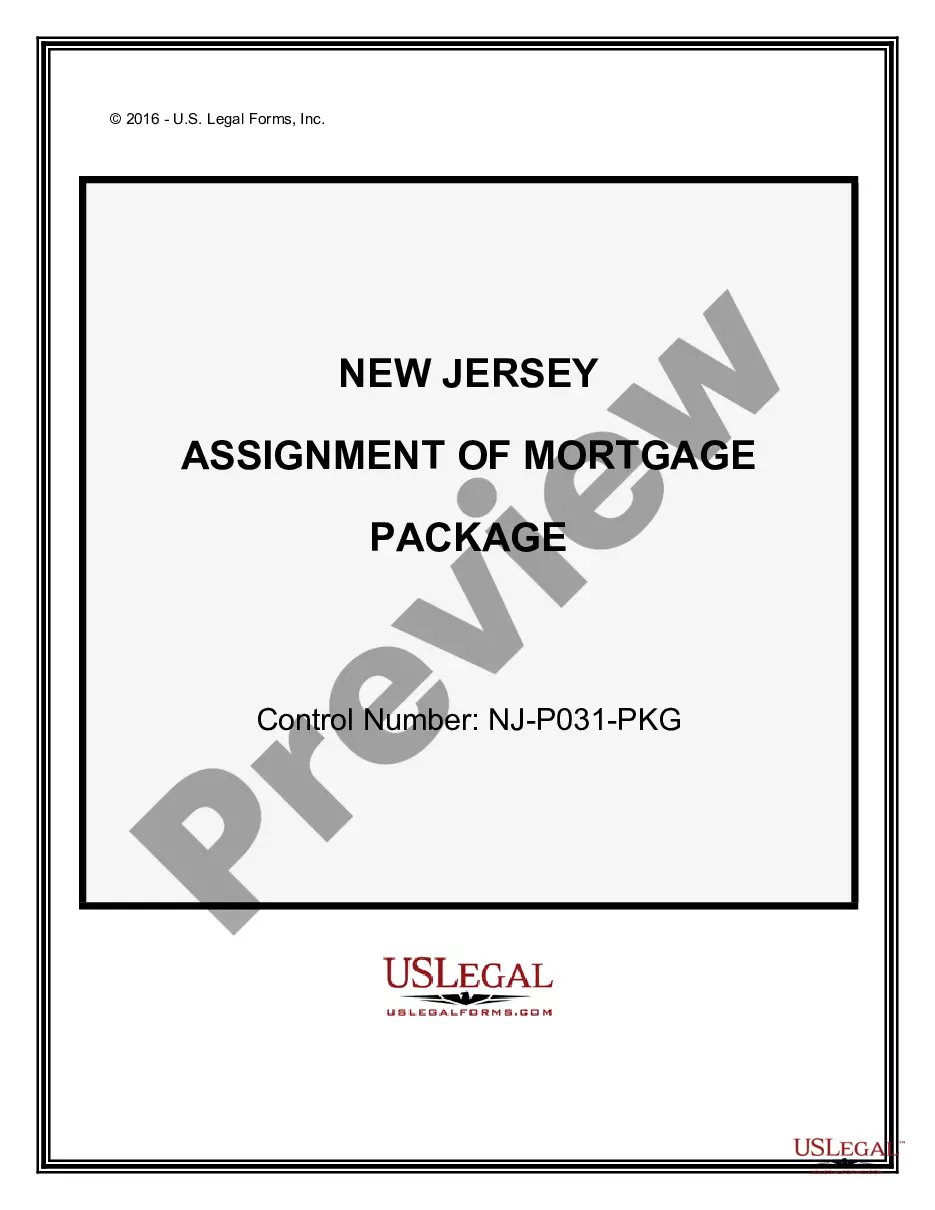
When to use this document
This form package is useful in several scenarios, including:
- When an individual or corporation wants to assign their mortgage to another party.
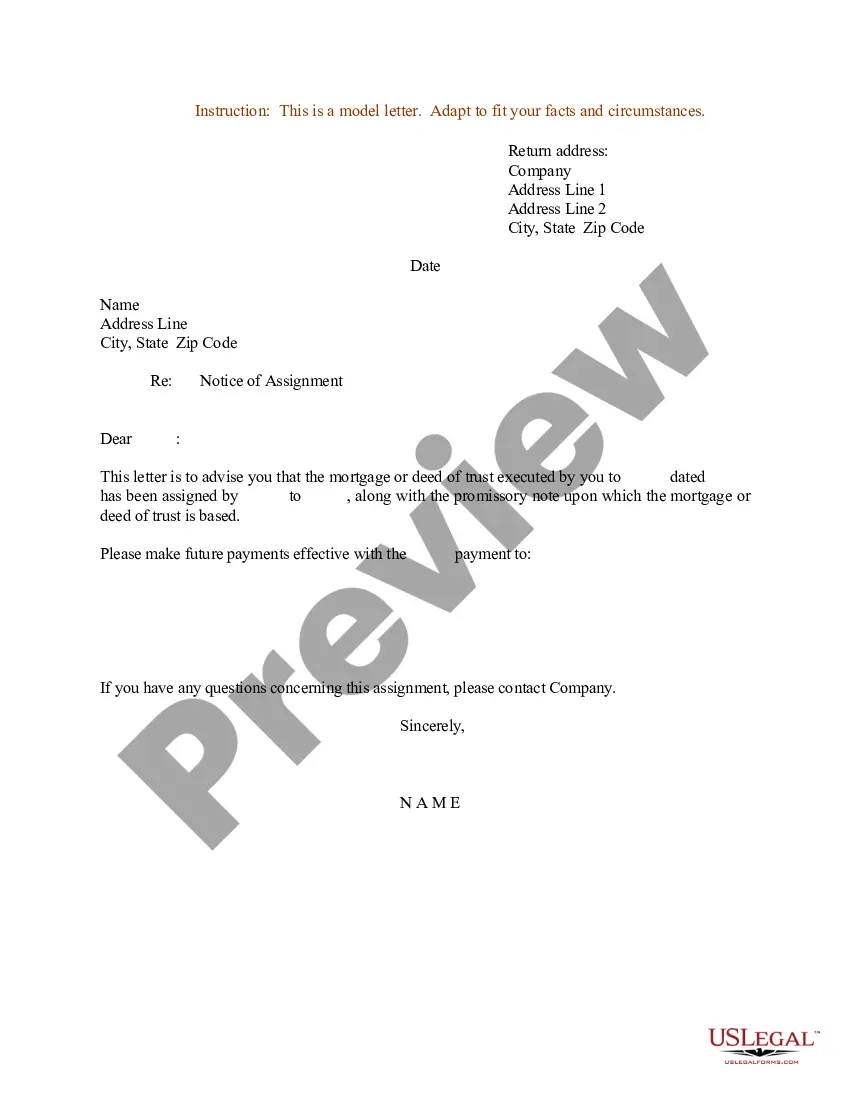
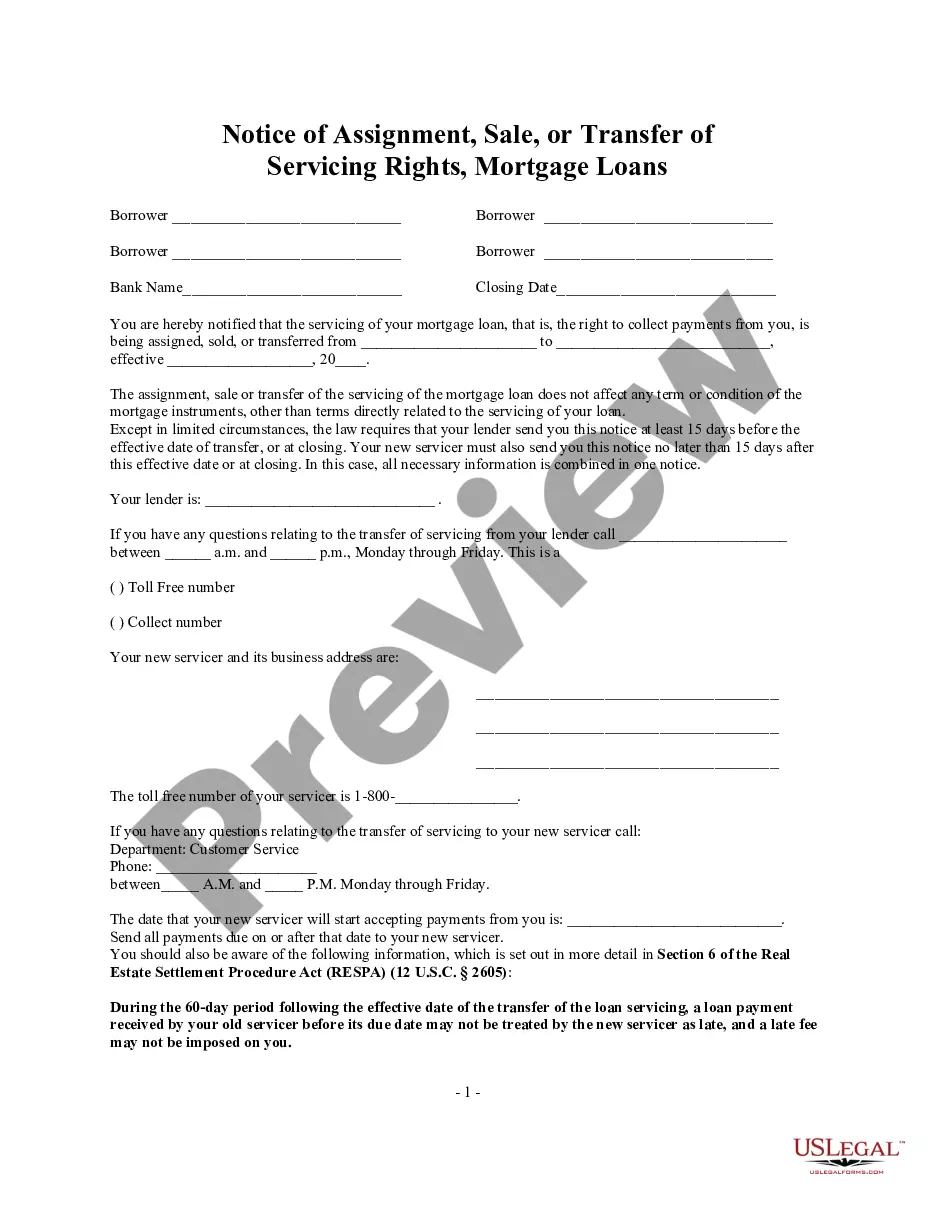
- When notifying the borrower about the assignment of their mortgage.
- When you need to record the assignment with the appropriate office to establish legal ownership.
Who should use this form package
- Homeowners who wish to transfer their mortgage to a third party.
- Corporations that hold mortgages and need to assign them to another entity.
- Real estate professionals seeking to facilitate mortgage assignments on behalf of clients.
Instructions for completing these forms
- Review all included forms to understand their purpose and requirements.
- Identify the parties involved in the mortgage assignment, including the original mortgage holder and the new assignee.
- Fill out the Assignment of Deed of Trust forms accurately with all required details.
- Draft the Letter of Notice to inform the borrower about the assignment.
- Prepare the Letter to Recording Office, ensuring it is addressed to the correct office for recording.
- Sign and date all documents as necessary, following any additional instructions in the forms.
Do documents in this package require notarization?
Yes, forms in this package must be notarized to be legally valid. U.S. Legal Forms offers integrated online notarization, allowing you to complete the process securely via video call, ensuring compliance without the need to travel.
Get your form ready online
Our built-in tools help you complete, sign, share, and store your documents in one place.
Make edits, fill in missing information, and update formatting in US Legal Forms—just like you would in MS Word.
Download a copy, print it, send it by email, or mail it via USPS—whatever works best for your next step.
Sign and collect signatures with our SignNow integration. Send to multiple recipients, set reminders, and more. Go Premium to unlock E-Sign.
If this form requires notarization, complete it online through a secure video call—no need to meet a notary in person or wait for an appointment.
We protect your documents and personal data by following strict security and privacy standards.

Make edits, fill in missing information, and update formatting in US Legal Forms—just like you would in MS Word.

Download a copy, print it, send it by email, or mail it via USPS—whatever works best for your next step.

Sign and collect signatures with our SignNow integration. Send to multiple recipients, set reminders, and more. Go Premium to unlock E-Sign.

If this form requires notarization, complete it online through a secure video call—no need to meet a notary in person or wait for an appointment.

We protect your documents and personal data by following strict security and privacy standards.
Typical mistakes to avoid
- Failing to include complete information about both the assignor and assignee.
- Not notifying the borrower about the assignment as required.
- Neglecting to sign and date the documents, which can lead to disputes over validity.
- Forgetting to record the assignment with the appropriate recording office.
Advantages of online completion
- Convenience of downloading and completing forms at your own pace.
- Editability allows you to fill out forms digitally, ensuring accuracy.
- Reliable access to legally compliant forms created by licensed attorneys.
Looking for another form?
Form popularity
FAQ
An assignment of mortgage gives the loan seller's rights under the mortgage, including the right to foreclose if the borrower doesn't make payments, to the new owner of the loan.
An assignment transfers all of the original mortgagee's interest under the mortgage or deed of trust to the new bank. Generally, the mortgage or deed of trust is recorded shortly after the mortgagors sign it and, if the mortgage is subsequently transferred, each assignment is to be recorded in the county land records.
A mortgage lender can transfer a mortgage to another company using an assignment agreement.Many banks and mortgage lenders sell outstanding loans in order to free up money to lend to new borrowers, and use an assignment of mortgage to legally grant the loan obligation to the new mortgage holder.
Corporate mortgage assignment defined. An assignment of a mortgage occurs when a loan for a piece of property (home or otherwise) is assigned to another party.A corporate assignment of a mortgage occurs when the third party that assumes the obligation for the loan is a corporation.
An assignment transfers all of the original mortgagee's interest under the mortgage or deed of trust to the new bank. Generally, the mortgage or deed of trust is recorded shortly after the mortgagors sign it and, if the mortgage is subsequently transferred, each assignment is to be recorded in the county land records.
Realty Transfer Fee: Sellers pay a 1% Realty Transfer Fee on all home sales. The buyer is not responsible for this fee. However, buyers may pay an additional 1% fee on all home sales of $1 million or more. You can find more information on the Realty Transfer Fee, including rates and exemptions, here.
In New Jersey, the deed must be in English, identify the seller/buyer (grantor/grantee), name the person that prepared the deed, state the consideration (amount paid) for the transfer, contain a legal description of the property (a survey), include the signature of the grantor and be signed before a notary.
1Discuss property ownership interests.2Access a copy of your title deed.3Complete, review and sign the quitclaim or warranty form.4Submit the quitclaim or warranty form.5Request a certified copy of your quitclaim or warranty deed.
1Retrieve your original deed.2Get the appropriate deed form.3Draft the deed.4Sign the deed before a notary.5Record the deed with the county recorder.6Obtain the new original deed.