New Jersey Verified Counterclaim
What is this form?
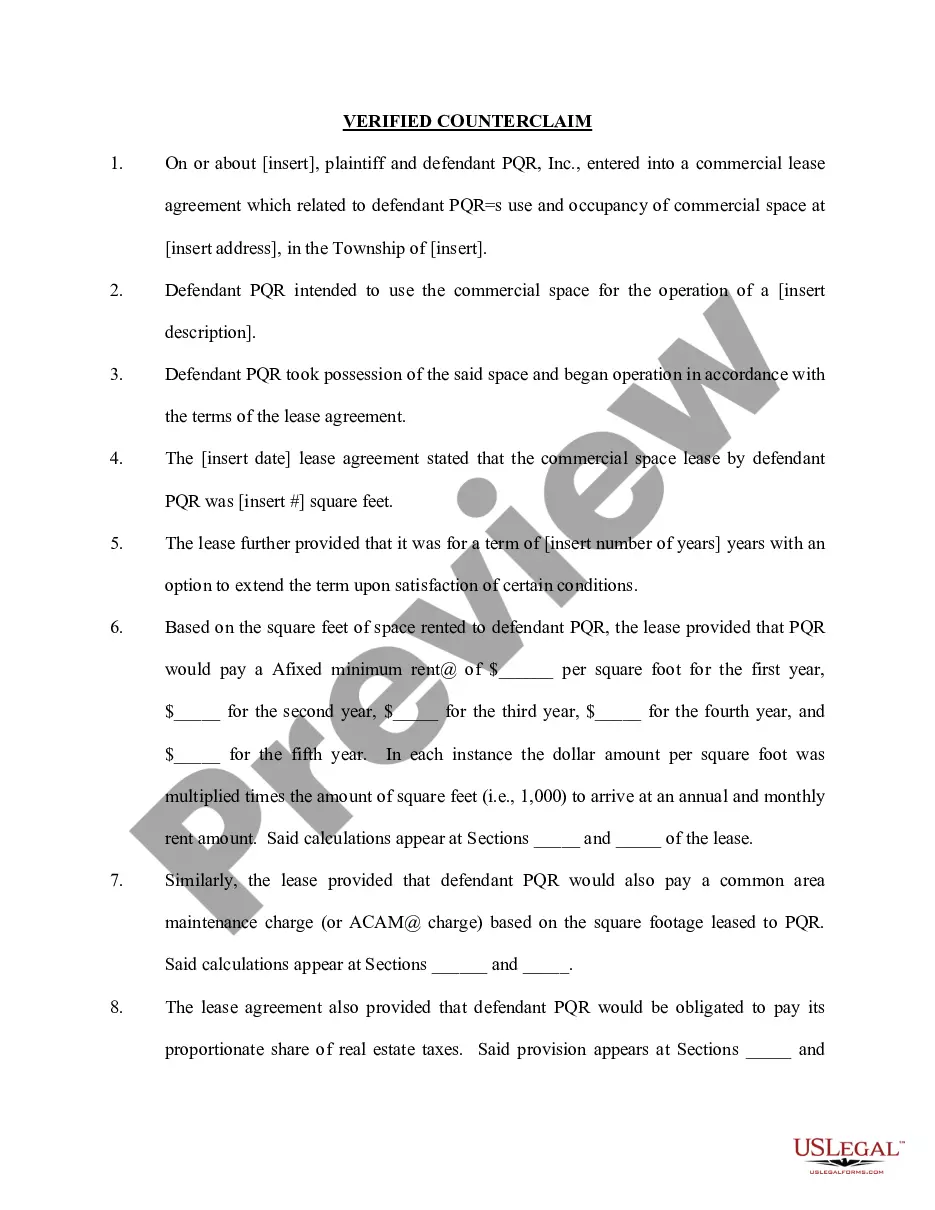
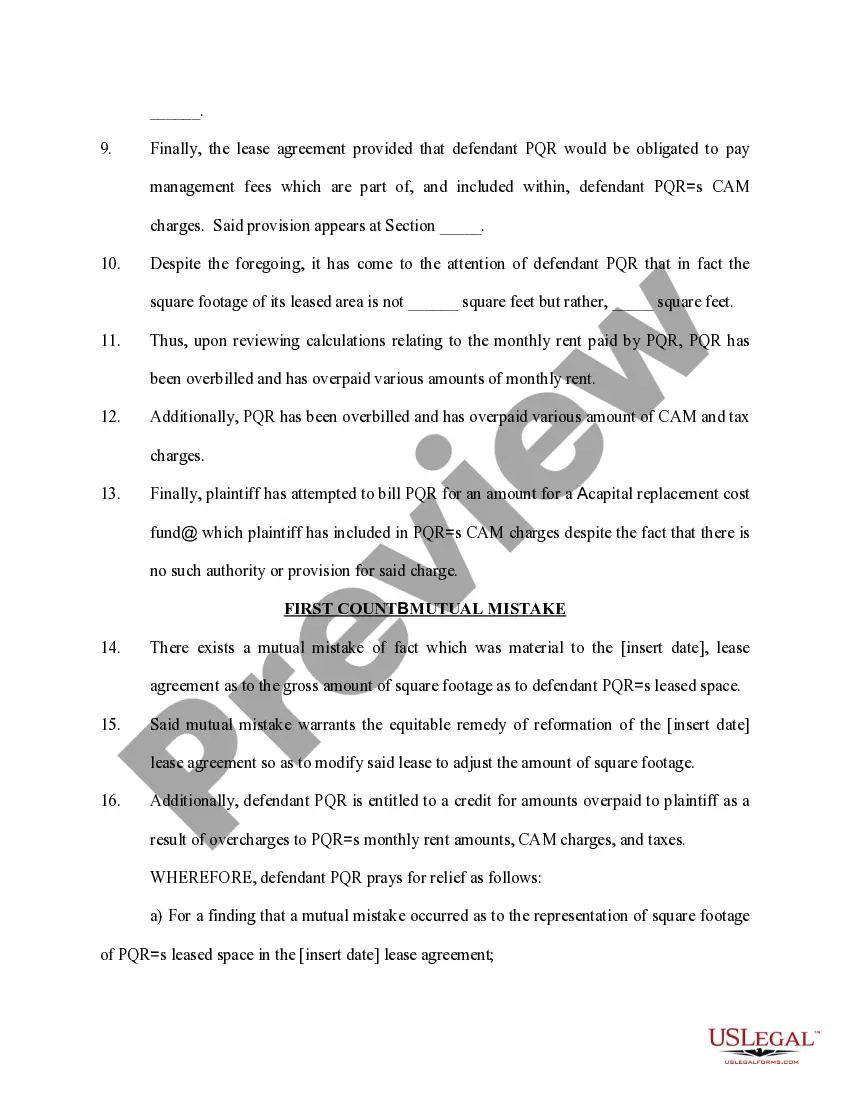
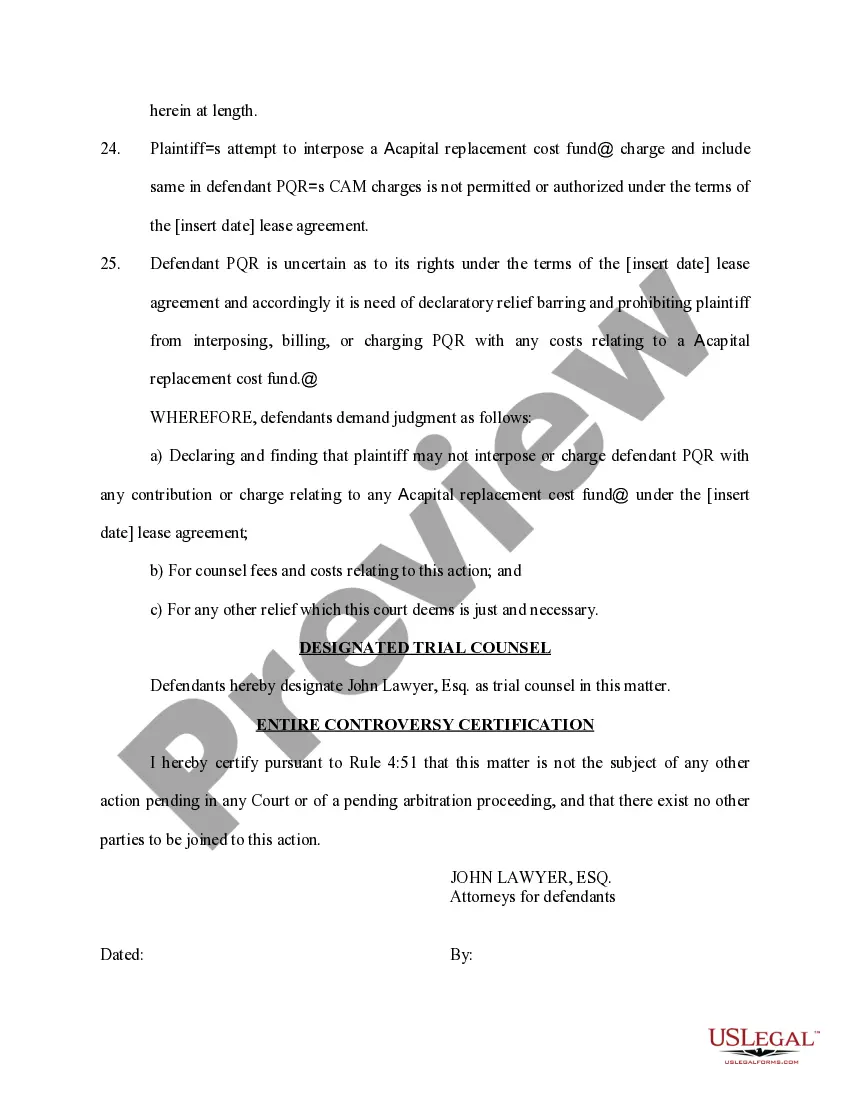
The Verified Counterclaim is a legal form used in New Jersey to file a counterclaim against a plaintiff, typically in response to a complaint regarding commercial lease agreements. This form is distinct as it allows the defendant to assert claims such as mutual mistakes, overbilling, and breaches of contract in a structured manner. Utilizing this form ensures that all relevant claims are officially documented in the court system, aiming for remedies or adjustments as necessary.
Main sections of this form
- Party Information: Includes details of both plaintiff and defendant, identifying their roles in the lease agreement.
- Lease Agreement Details: Describes the commercial lease, including the size of the leased space and payment obligations.
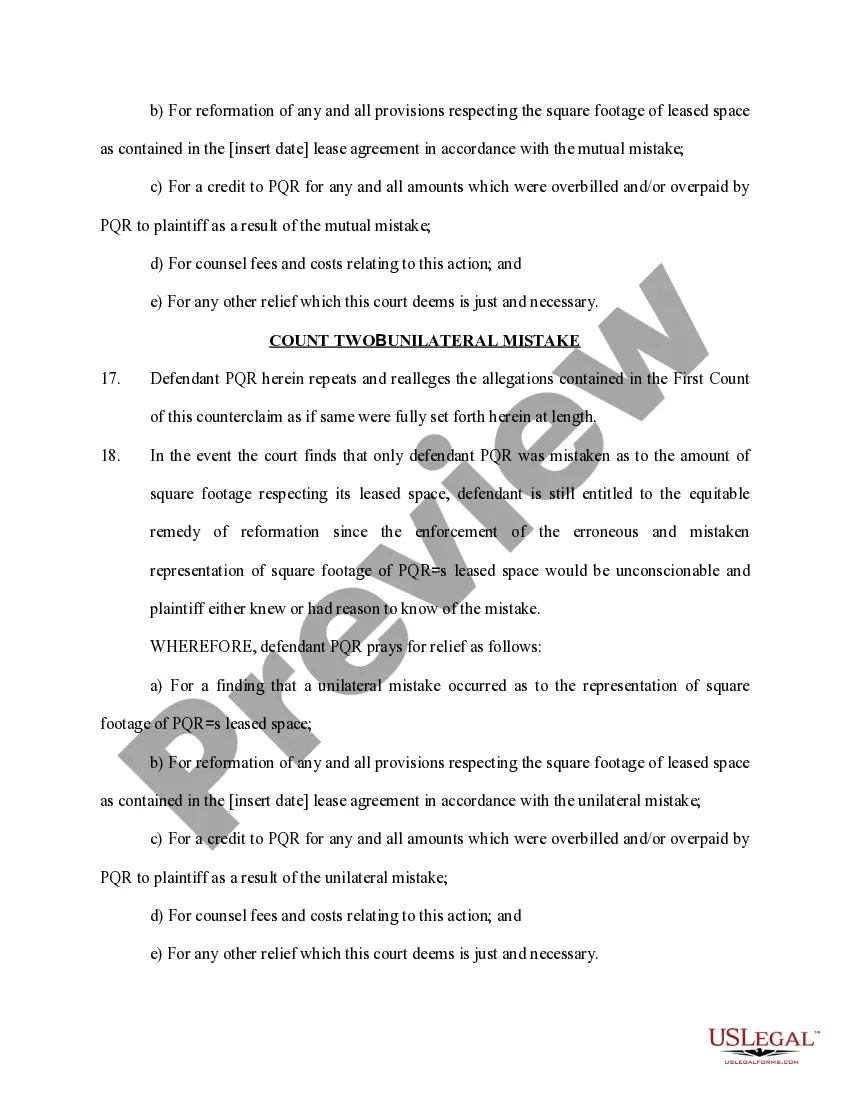
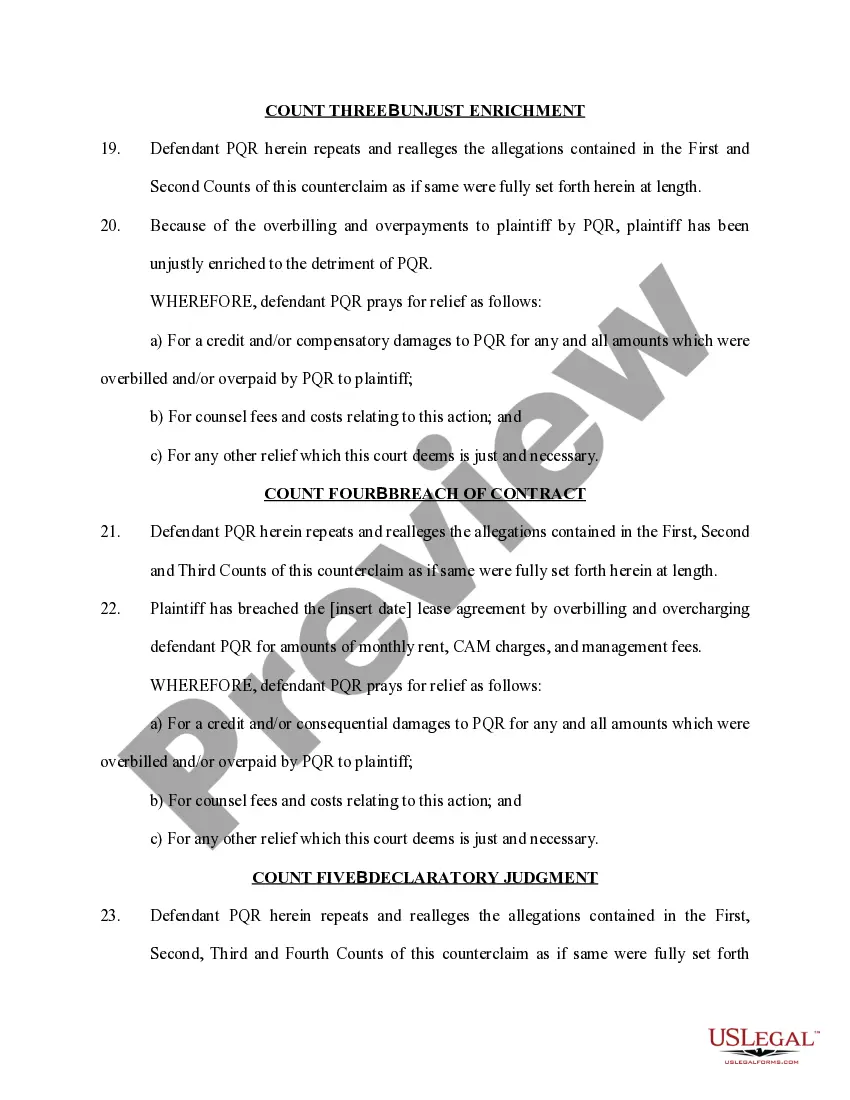
- Claims for Relief: Multiple counts addressing mutual mistake, unilateral mistake, unjust enrichment, breach of contract, and requests for declaratory judgment.
- Trial Counsel Designation: Indicates the attorney representing the defendant in the matter.
- Entire Controversy Certification: Certifies that the matter is not under any other pending litigation.
Situations where this form applies
This form should be used when a defendant needs to respond to a complaint regarding a commercial lease. It is particularly applicable if the defendant believes there was an error in the representation of the leased space, resulting in overbilling and other claims. The Verified Counterclaim allows the defendant to address these issues formally within the court's processes.
Who this form is for
- Commercial tenants involved in disputes related to lease agreements.
- Defendants who wish to assert counterclaims against plaintiffs in eviction or lease disputes.
- Business owners seeking to rectify overbilling and other discrepancies in their lease agreements.
How to complete this form
- Identify and clearly list the parties involved, including their roles as plaintiff and defendant.
- Enter the details of the lease agreement, specifying the leased space, duration, and rental amounts.
- Document all claims and the reasoning behind each, such as mutual mistake and unjust enrichment.
- Specify the relief sought, including any credits for overpayments or declarations against improper charges.
- Have a legal representative review the form for accuracy before submission.
Notarization guidance
In most cases, this form does not require notarization. However, some jurisdictions or signing circumstances might. US Legal Forms offers online notarization powered by Notarize, accessible 24/7 for a quick, remote process.
Get your form ready online
Our built-in tools help you complete, sign, share, and store your documents in one place.
Make edits, fill in missing information, and update formatting in US Legal Forms—just like you would in MS Word.
Download a copy, print it, send it by email, or mail it via USPS—whatever works best for your next step.
Sign and collect signatures with our SignNow integration. Send to multiple recipients, set reminders, and more. Go Premium to unlock E-Sign.
If this form requires notarization, complete it online through a secure video call—no need to meet a notary in person or wait for an appointment.
We protect your documents and personal data by following strict security and privacy standards.

Make edits, fill in missing information, and update formatting in US Legal Forms—just like you would in MS Word.

Download a copy, print it, send it by email, or mail it via USPS—whatever works best for your next step.

Sign and collect signatures with our SignNow integration. Send to multiple recipients, set reminders, and more. Go Premium to unlock E-Sign.

If this form requires notarization, complete it online through a secure video call—no need to meet a notary in person or wait for an appointment.

We protect your documents and personal data by following strict security and privacy standards.
Common mistakes to avoid
- Failing to provide accurate details of the lease agreement and claims may weaken the counterclaim.
- Not listing all relevant sections pertaining to the overbilling could lead to incomplete claims.
- Omitting the trial counsel designation might complicate court processes.
Why complete this form online
- Convenience of downloading and completing from anywhere.
- Editable fields allow customization to fit specific circumstances.
- Access to templates created by licensed attorneys ensures accuracy and compliance with legal standards.
Main things to remember
- The Verified Counterclaim is essential for tenants contesting lease-related disputes in New Jersey.
- It allows for various claims related to overbilling, breaches of lease, and asks for appropriate legal remedies.
- Completing the form accurately is crucial for a successful counterclaim.
Looking for another form?

Form popularity
FAQ
Definition. A claim for relief filed against an opposing party after the original claim is filed. Most commonly, a claim by the defendant against the plaintiff.
When you sue someone in small claims court, the person you are suing can turn around and sue you by filing a counterclaim. A counterclaim allows the defendant (now called the counterclaimant) to have his claim against the plaintiff (now called the counterdefendant) decided along with the plaintiff's claim in the
Examples of counterclaims include:After a bank has sued a customer for an unpaid debt, the customer counterclaims (sues back) against the bank for fraud in procuring the debt. The court will sort out the different claims in one lawsuit (unless the claims are severed).
Definition. A claim for relief filed against an opposing party after the original claim is filed. Most commonly, a claim by the defendant against the plaintiff.
The counterclaim must be filed at least seven (7) days before the trial date. If you decide to file a counterclaim less than seven days before the trial date, you must contact the magistrate to whom the case is assigned and obtain permission to file your counterclaim.
In order to make a counterclaim, you first draft your response to the lawsuit. Then you need to describe the factual circumstances surrounding your claim and make a demand for compensation or other relief. Be sure you do not confuse counterclaims with cross-complaints.
In a court of law, a party's claim is a counterclaim if one party asserts claims in response to the claims of another. In other words, if a plaintiff initiates a lawsuit and a defendant responds to the lawsuit with claims of his or her own against the plaintiff, the defendant's claims are counterclaims.
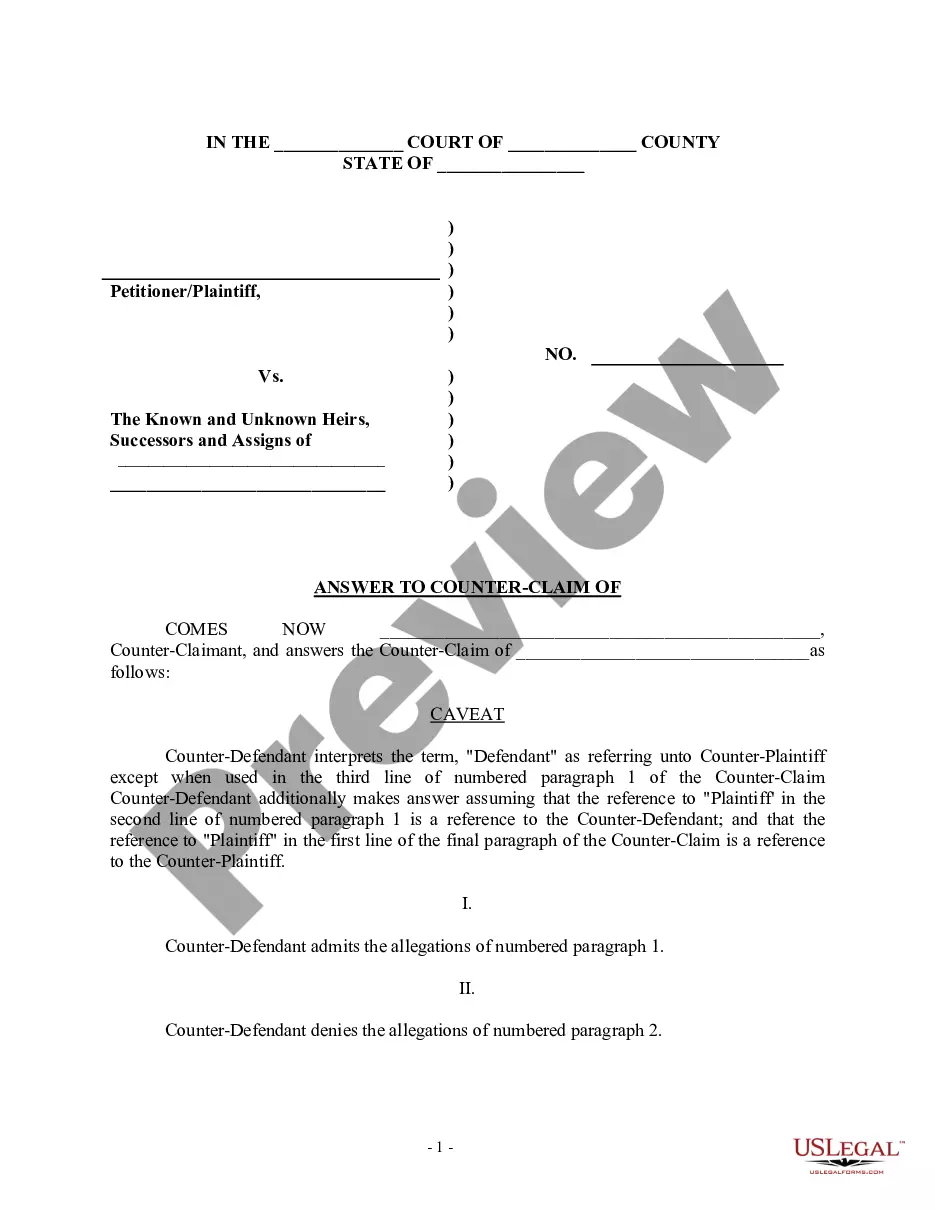
If a defendant does raise counterclaims in her answer, the plaintiff must respond to those counterclaims with a pleading called an "answer to a counterclaim." The form and content of an "answer to a counterclaim" is similar to that of an answer.
Critics argue that. while it might be true that... still all in all... others may say that... but I argue that... A common argument against this position is... but.... It may be true... It's easy to think... but when you look at the facts... While some researchers say... It is often thought...