New Jersey Complaint to Enforce Settlement
What is this form?
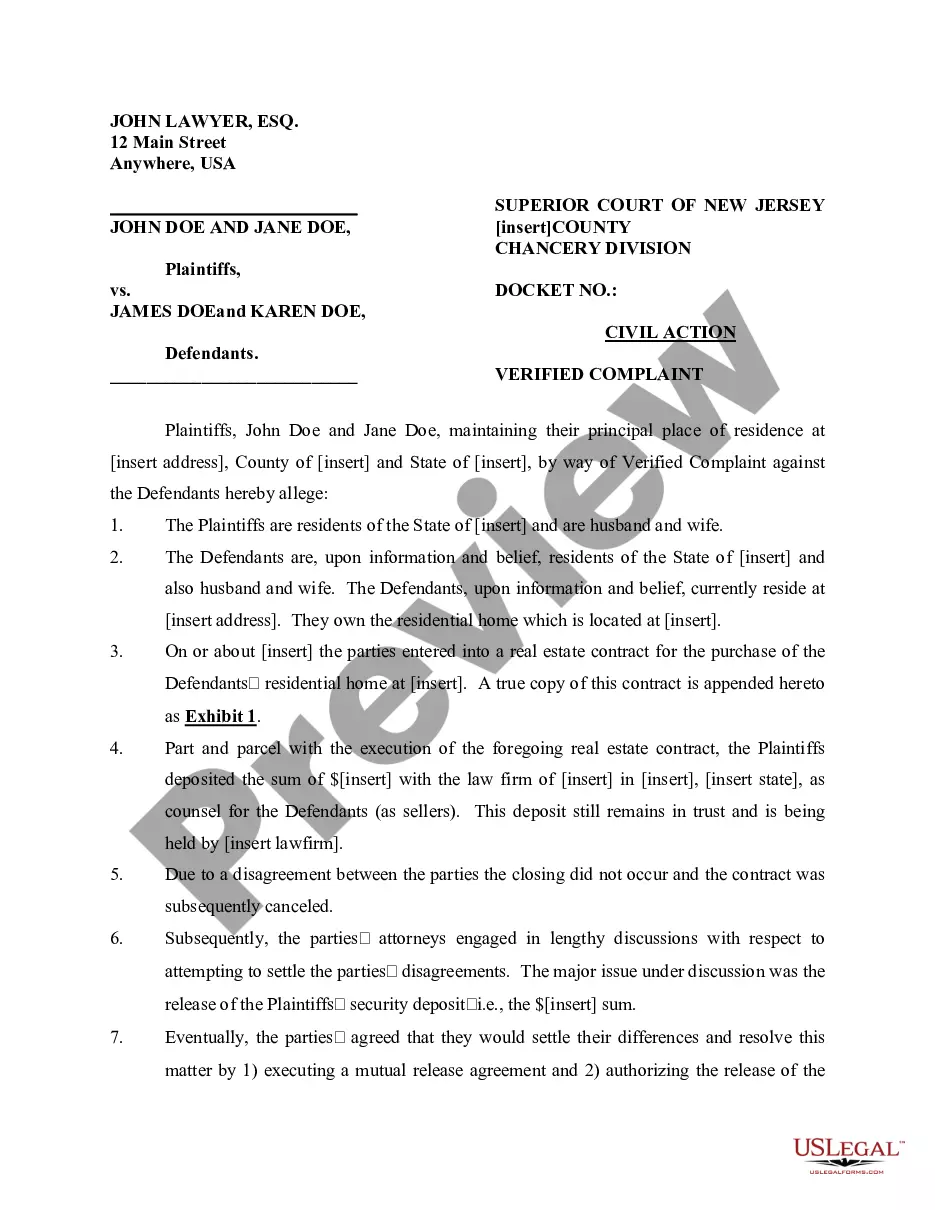
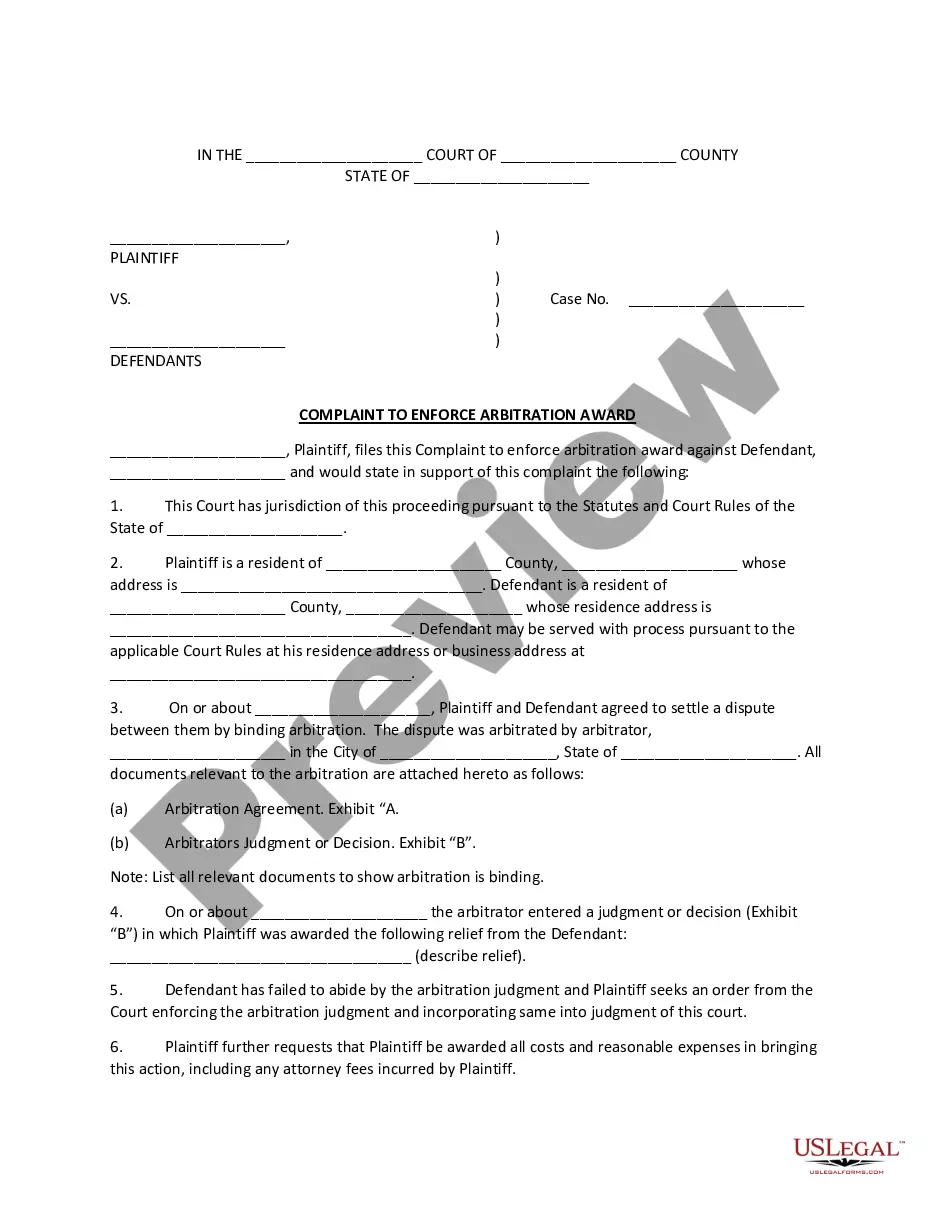
The Complaint to Enforce Settlement is a legal document used in civil proceedings within New Jersey when parties have previously reached a settlement agreement. This form is specifically designed to address instances where one party fails to honor the terms of a settlement, ensuring that the agreed-upon terms are enforced. Unlike other legal forms, this complaint initiates a court action to compel compliance with the settlement agreement.
Key parts of this document
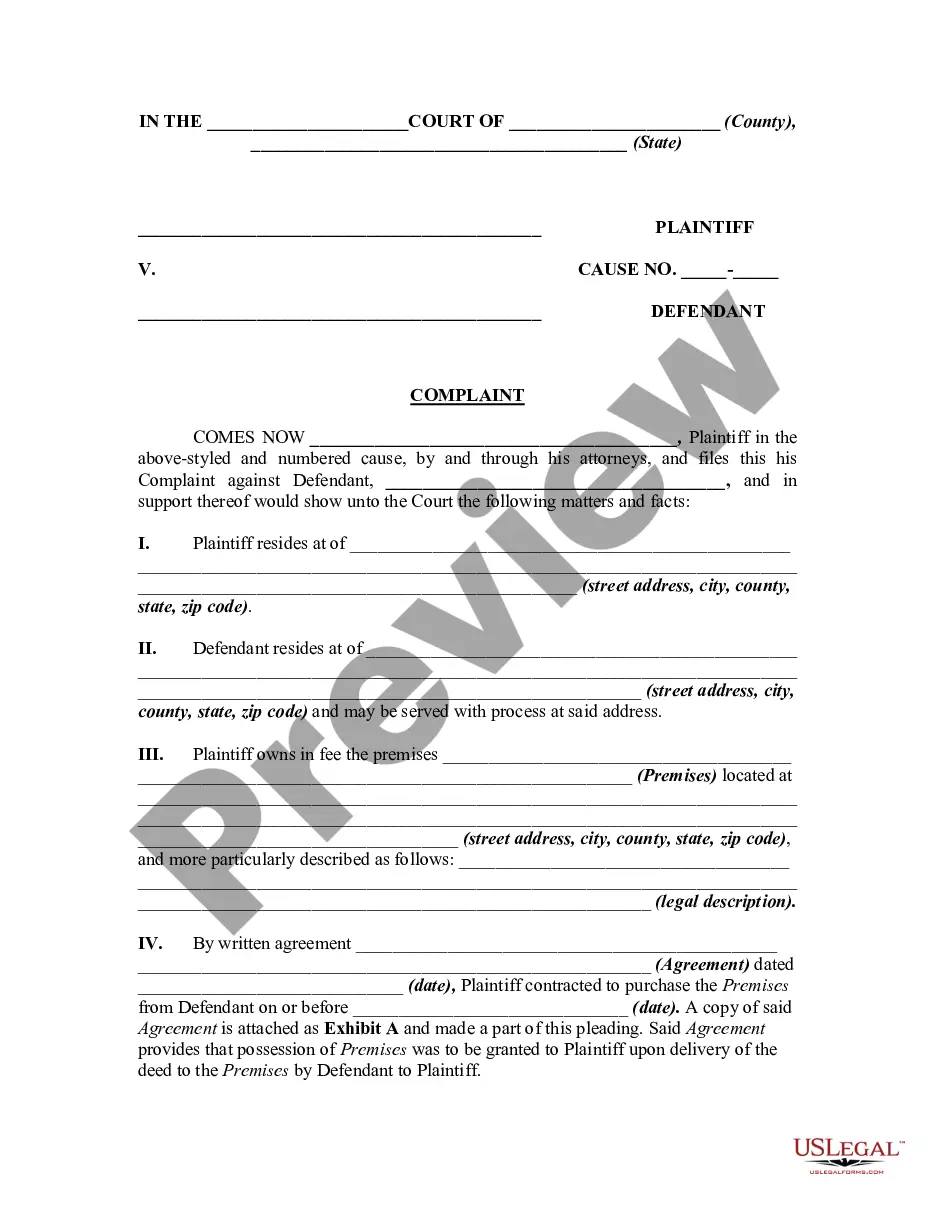
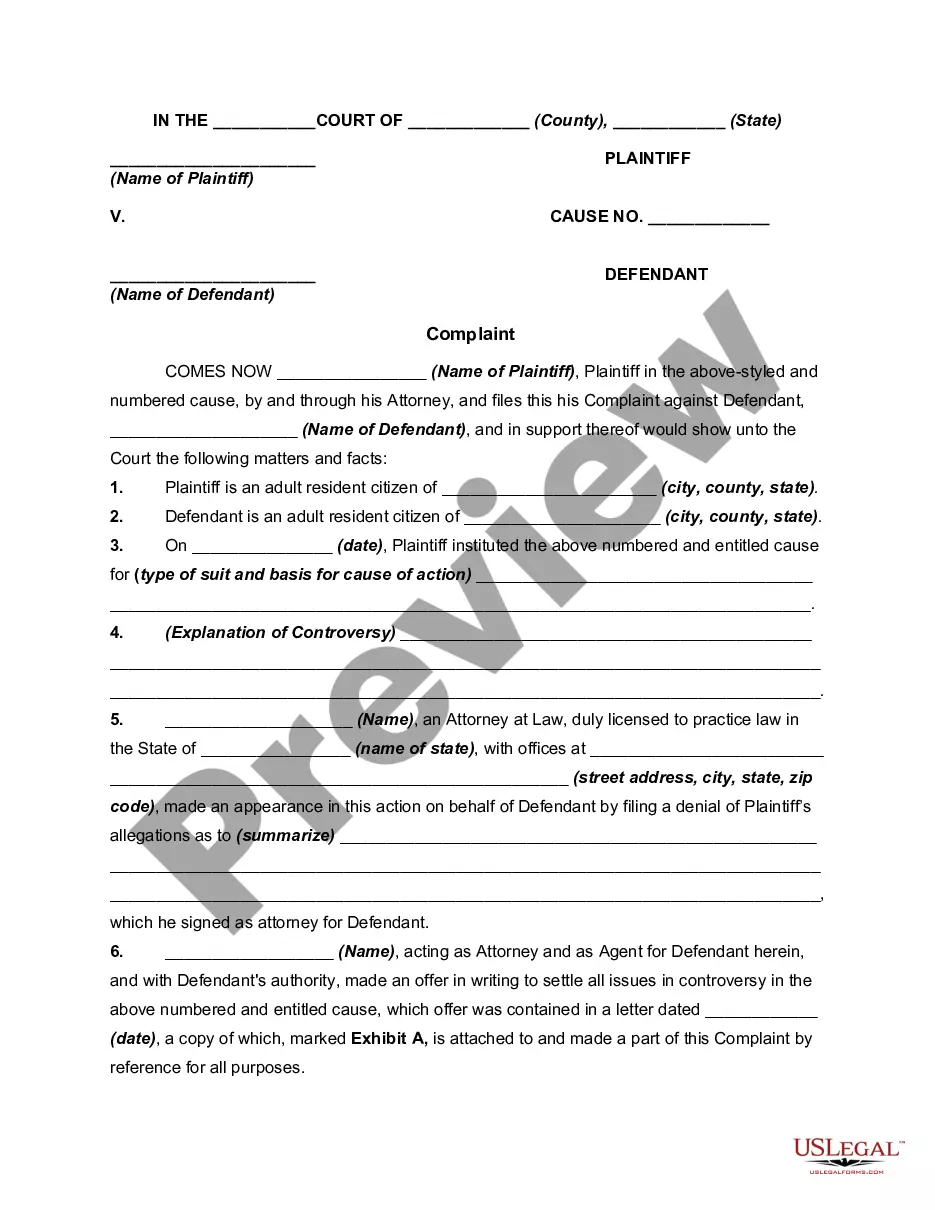
- The names and addresses of the plaintiffs and defendants.
- A statement of the parties' prior agreements and obligations.
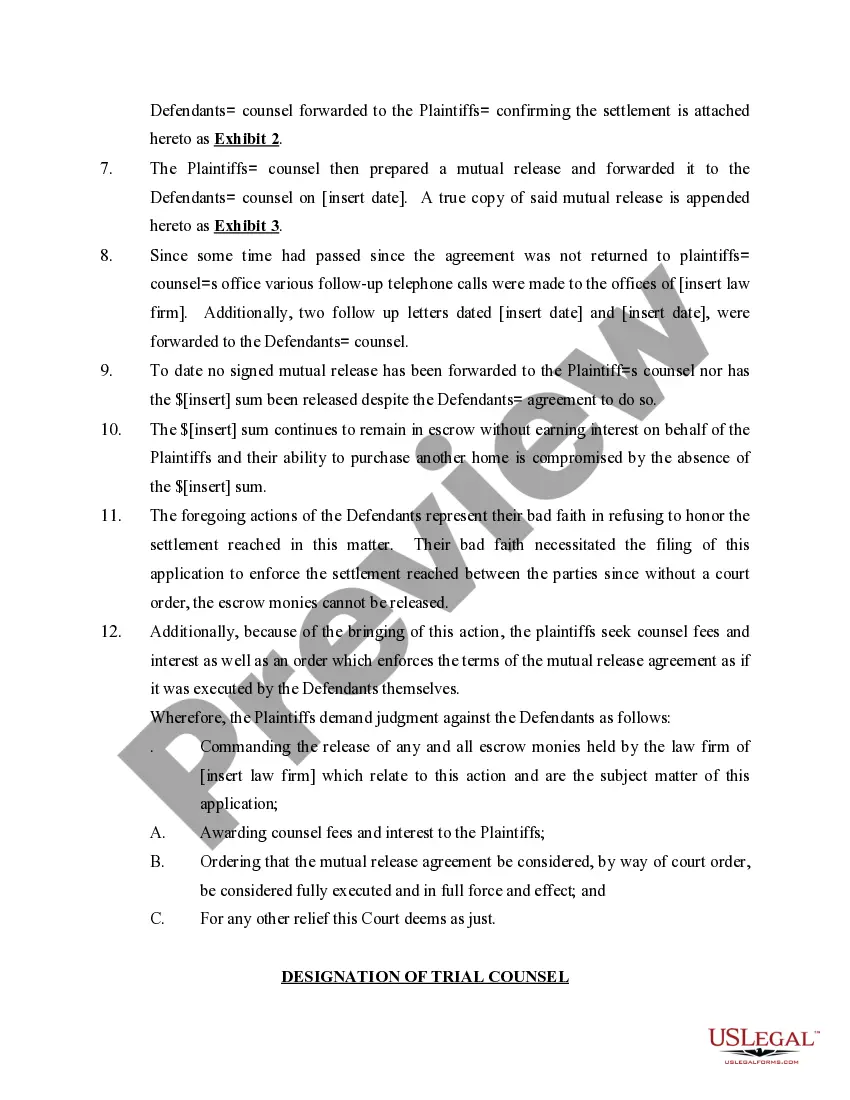
- Details of the settlement reached, including the financial terms.
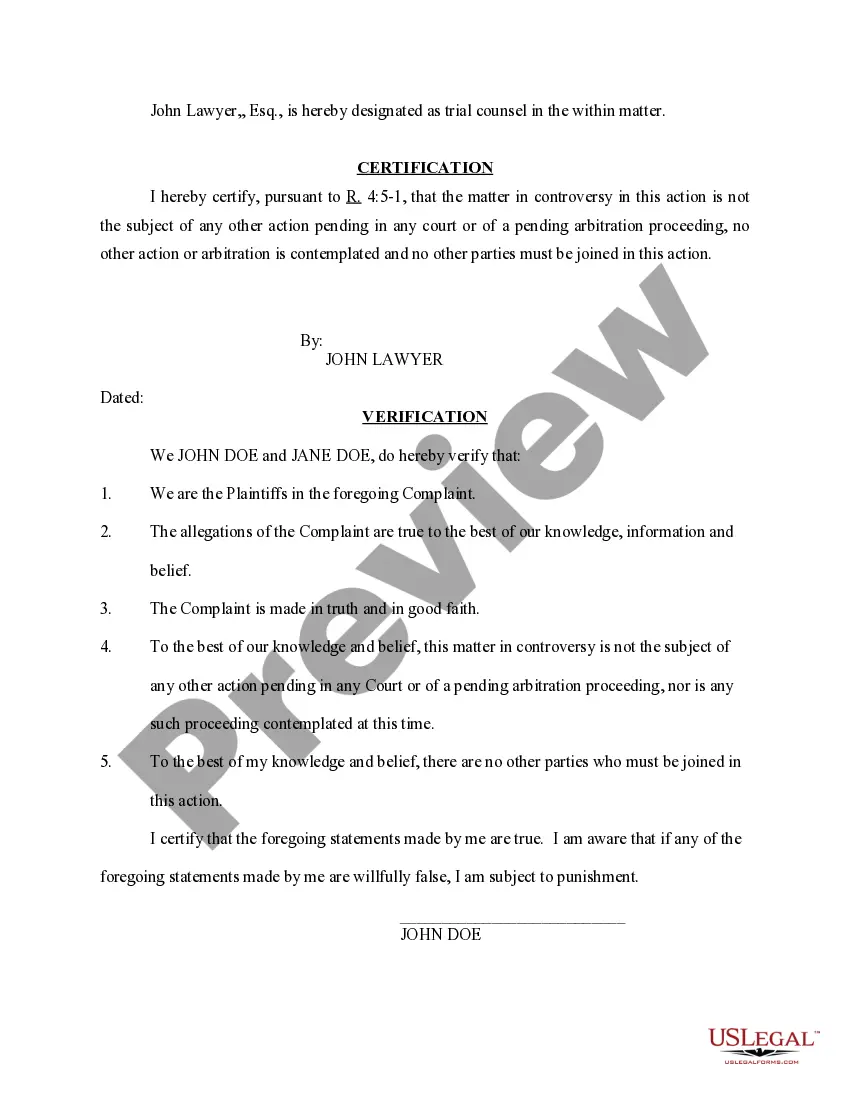
- Certification by the plaintiffs affirming the truthfulness of their claims.
- A request for court intervention to enforce the settlement terms.
- Designation of trial counsel for the plaintiffs.

Situations where this form applies
This form should be used when there has been a settlement agreement between parties involved in a civil case, but one party is not complying with the terms. It is particularly appropriate when funds, such as an escrow deposit, are withheld despite an agreement for their release. By filing this complaint, the plaintiffs seek to enforce the settlement in court, making it crucial for situations where financial loss is occurring due to non-compliance.
Who should use this form
This form is suitable for:
- Individuals or couples (the plaintiffs) who have reached a settlement but have not received what was agreed upon.
- Those who seek court intervention to compel compliance with a settlement.
- Parties involved in real estate transactions where escrow deposits are at stake.
Instructions for completing this form
- Identify the parties by entering the names and addresses of the plaintiffs and defendants.
- Specify the details of the settlement, including the date it was reached and the agreed amounts.
- Attach copies of any relevant contracts or settlement agreements as exhibits.
- Include a certification affirming that the allegations are true to the best of your knowledge.
- Designate trial counsel by providing their name and contact information.
Does this document require notarization?
This form does not typically require notarization unless specified by local law. It's recommended to consult with an attorney to ensure all necessary steps are taken before filing.
Get your form ready online
Our built-in tools help you complete, sign, share, and store your documents in one place.
Make edits, fill in missing information, and update formatting in US Legal Forms—just like you would in MS Word.
Download a copy, print it, send it by email, or mail it via USPS—whatever works best for your next step.
Sign and collect signatures with our SignNow integration. Send to multiple recipients, set reminders, and more. Go Premium to unlock E-Sign.
If this form requires notarization, complete it online through a secure video call—no need to meet a notary in person or wait for an appointment.
We protect your documents and personal data by following strict security and privacy standards.

Make edits, fill in missing information, and update formatting in US Legal Forms—just like you would in MS Word.

Download a copy, print it, send it by email, or mail it via USPS—whatever works best for your next step.

Sign and collect signatures with our SignNow integration. Send to multiple recipients, set reminders, and more. Go Premium to unlock E-Sign.

If this form requires notarization, complete it online through a secure video call—no need to meet a notary in person or wait for an appointment.

We protect your documents and personal data by following strict security and privacy standards.
Mistakes to watch out for
- Failing to include all necessary exhibits which support the claims.
- Not accurately identifying the parties involved in the complaint.
- Missing the deadline for filing the complaint after a settlement is breached.
Benefits of using this form online
- Convenience: Download and complete the form from anywhere at any time.
- Editability: Easily modify the templates to suit your specific situation.
- Reliability: The forms are drafted by licensed attorneys, ensuring compliance with legal standards.
Legal use & context
- This form is legally recognized within New Jersey courts for enforcing settlement agreements.
- It must be filed in the appropriate court to ensure that the plaintiffsâ rights are protected and that obligations are enforced.
- Failure to properly execute this complaint may lead to issues in obtaining relief or delays in the judicial process.
Summary of main points
- The Complaint to Enforce Settlement is essential for ensuring settlement terms are met.
- Proper completion and submission of this form can lead to resolution in disputes over settlements.
- This form is specific to New Jersey, reflecting the stateâs legal requirements.
Looking for another form?
Form popularity
FAQ
A breach is when either party refuses to adhere to the agreed terms and conditions outlined in the settlement contract. In brief, a party that breaches a settlement agreement will risk being forced to complete the agreement and paying the legal costs of the party seeking to enforce the agreement.
A breach is when either party refuses to adhere to the agreed terms and conditions outlined in the settlement contract. In brief, a party that breaches a settlement agreement will risk being forced to complete the agreement and paying the legal costs of the party seeking to enforce the agreement.
Technically, any late payment is a breach of contract. However, the consequences can vary. In most situations, late payment will not render void the entire agreement or waiver of claims.The agreement may be void and the employee may be free to pursue the claims purportedly settled.
Yes, generally an employer can withdraw a settlement offer at any stage before a binding settlement agreement is signed by the parties. This guide is for the purpose of information only and is not intended to replace, or to constitute, legal or professional advice.
When you sign a settlement agreement, your employment is terminated. You'll typically receive a sum of money in return for losing your job and certain employment rights. If you refuse to sign, however, you may well face a disciplinary procedure or a redundancy situation.
A settlement agreement need be signed by only one of the parties to be enforceable under Code of Civil Procedure §664.6. The court can enforce a settlement pursuant to Code of Civil Procedure A§664.6 if the parties state in the settlement agreement that the court will reserve jurisdiction.
Typically, the settlement agreement will stipulate the course of action, penalties or fees that need to be paid if either party fails to follow its legal obligations under the agreement. A majority of the cases are settled out of court. There is a possibility to obtain an out of court settlement.
You can overturn a settlement agreement by demonstrating that the settlement is defective. A settlement agreement may be invalid if it's made under fraud or duress. A mutual mistake or a misrepresentation by the other party can also be grounds to overturn a settlement agreement.