New Jersey Complaint for Rent Arrearage
What is this form?
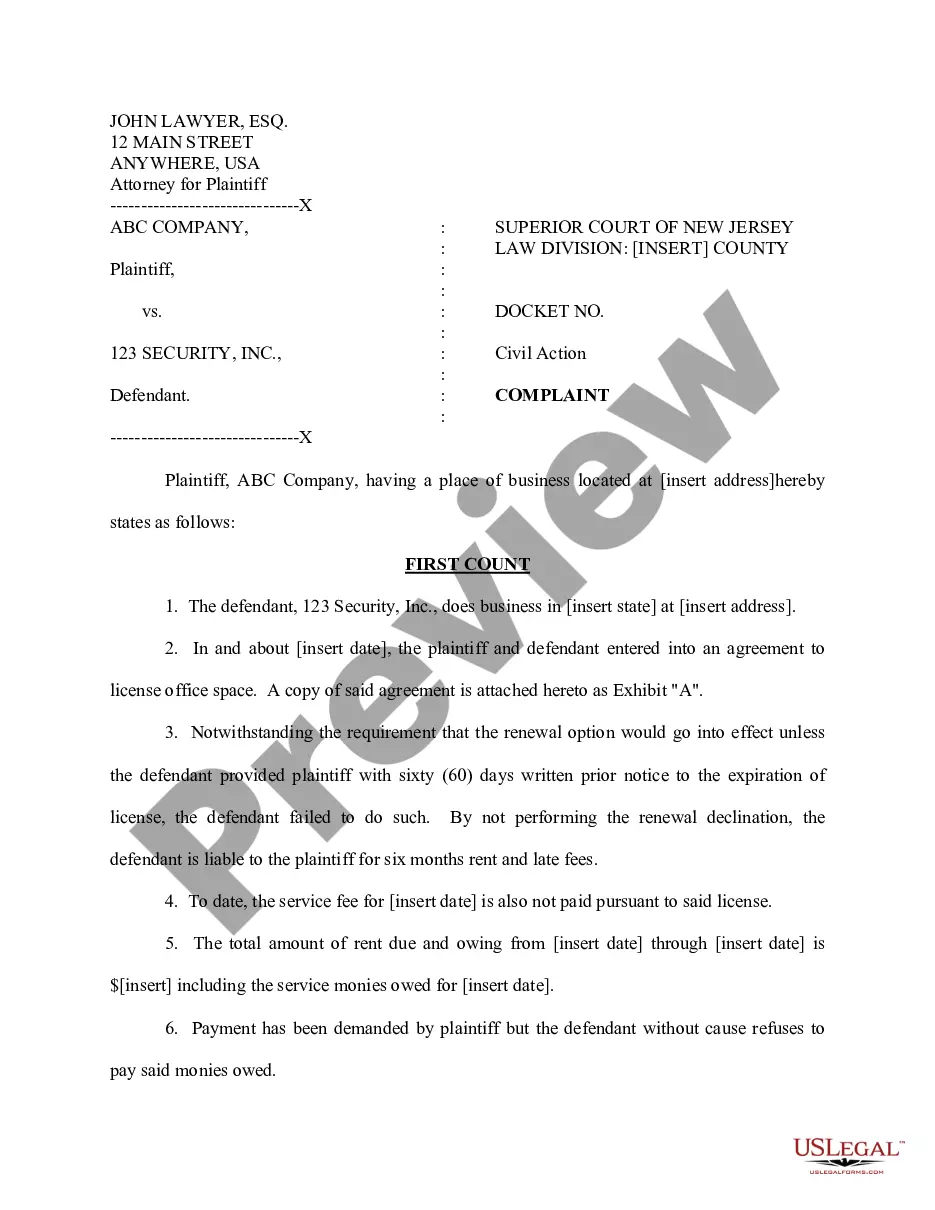
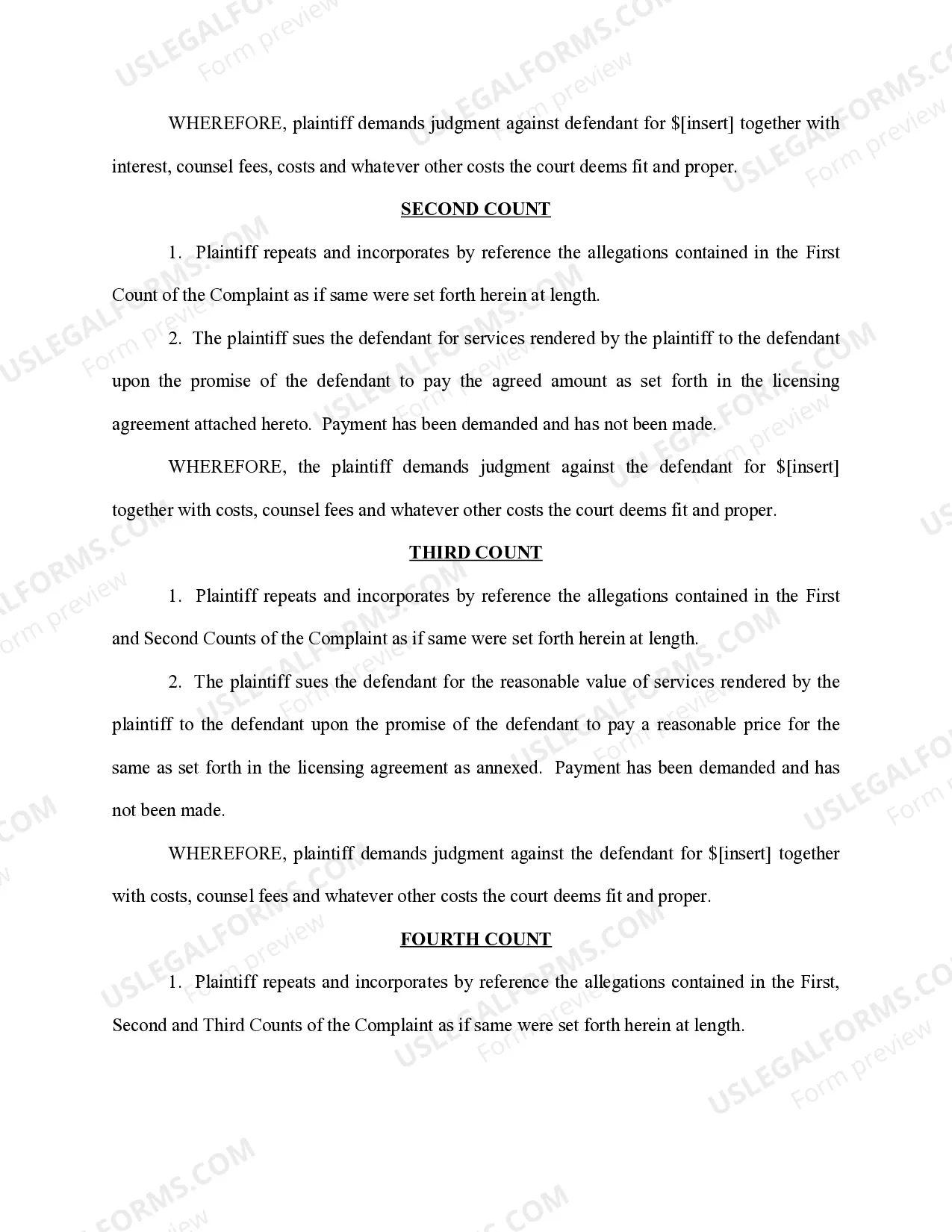
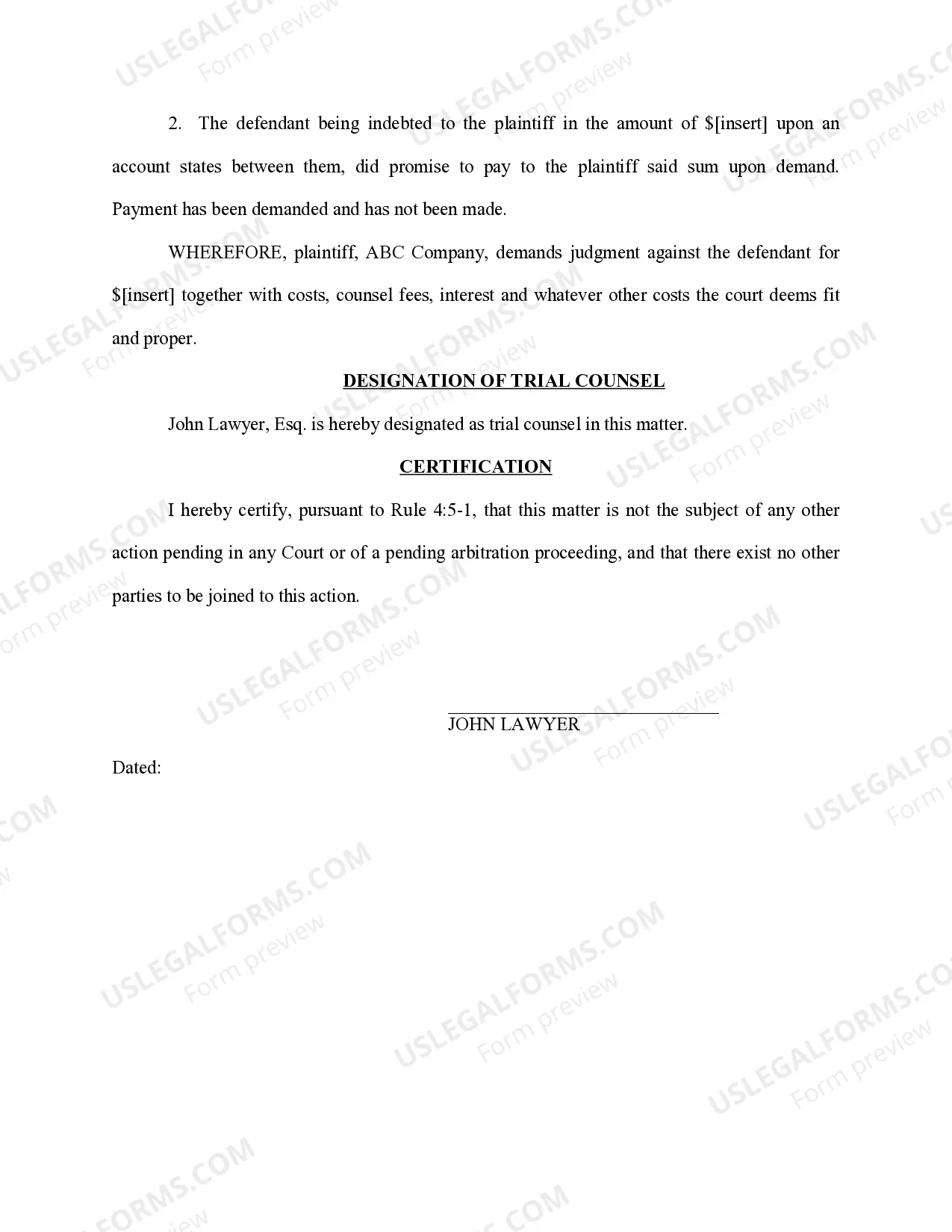
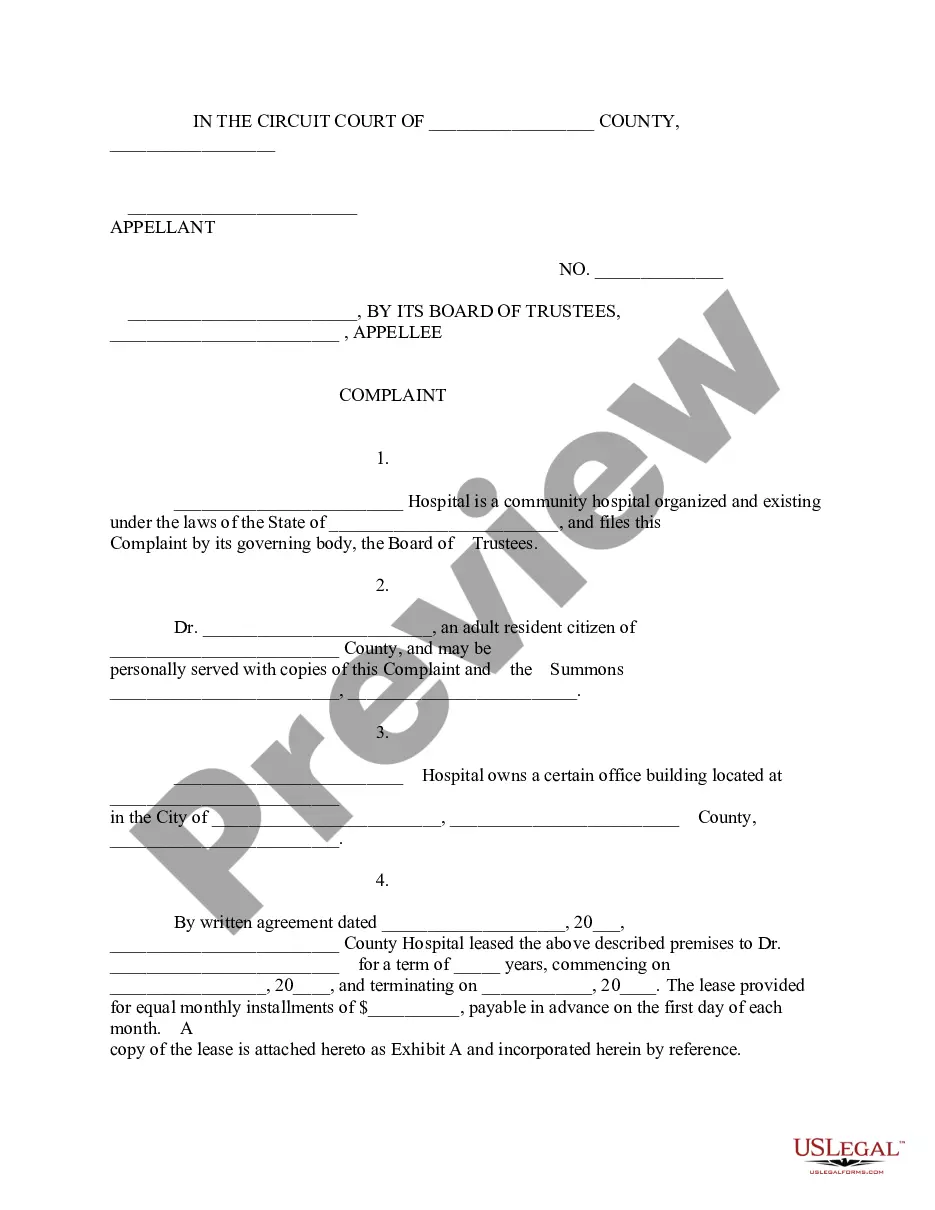
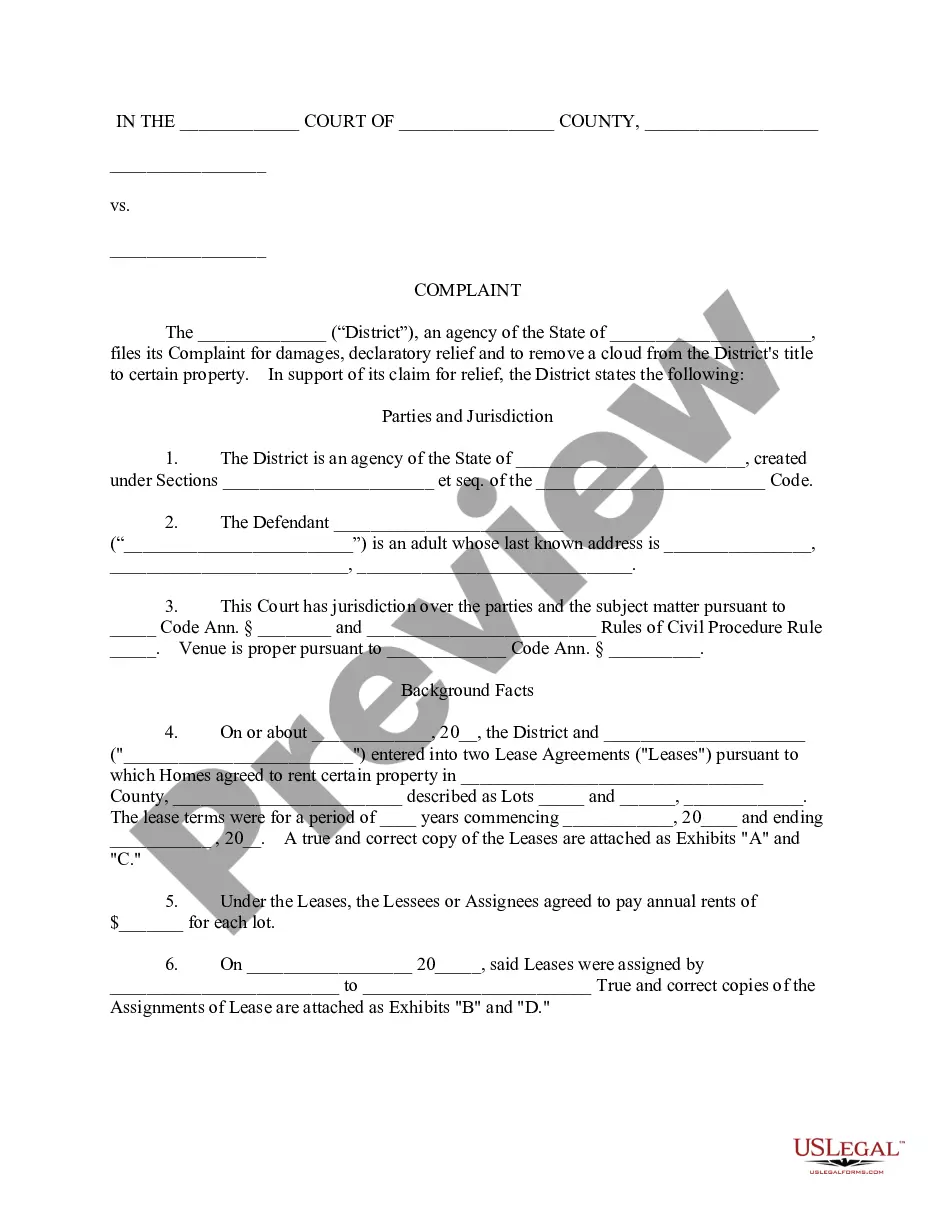
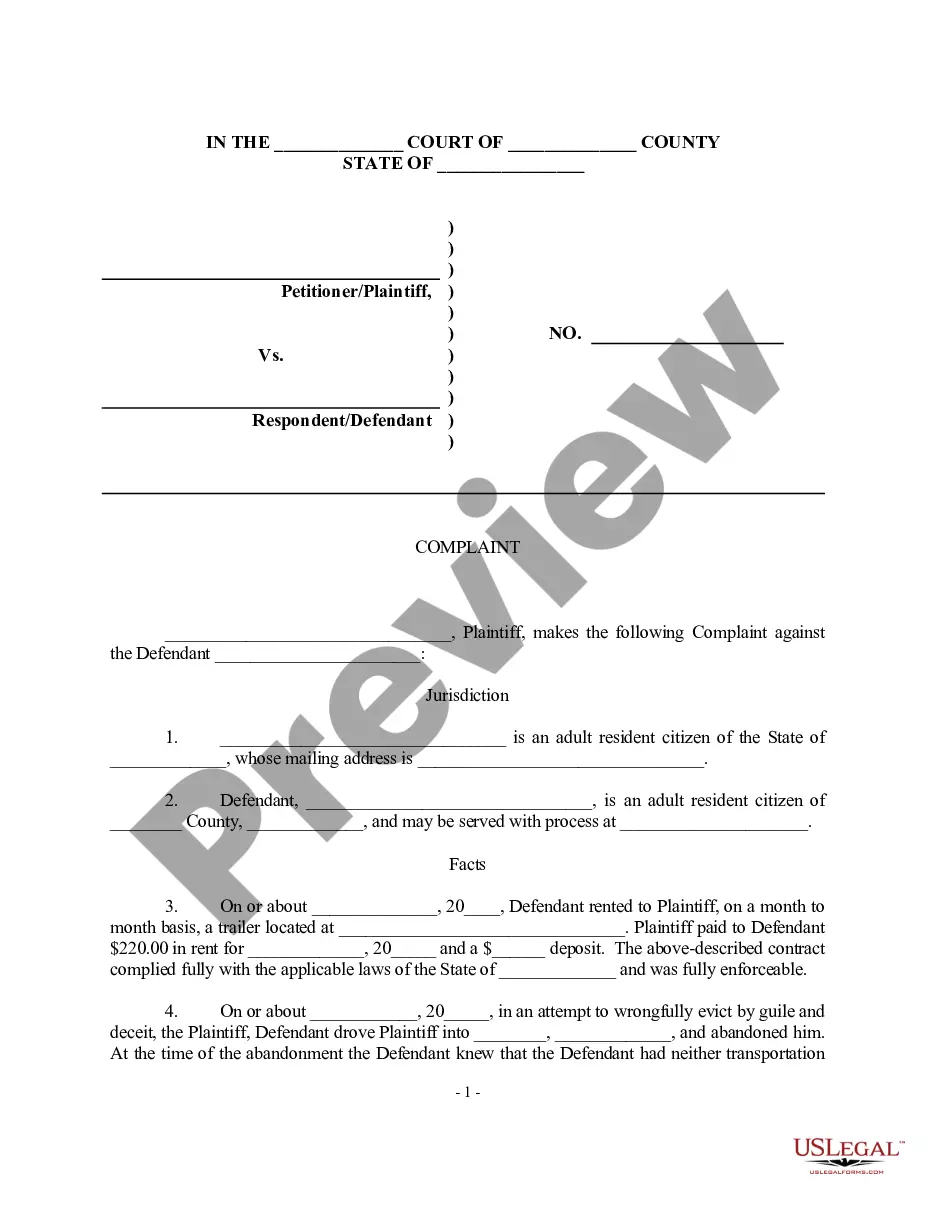
The Complaint for Rent Arrearage is a legal document used by a plaintiff to initiate a lawsuit against a defendant for unpaid rent. This form specifically outlines the plaintiff's claims regarding the amount of rent owed and provides the legal basis for recovering that debt. It differs from other legal forms related to landlord-tenant disputes as it focuses solely on rent arrears rather than other tenancy issues, like lease violations or eviction proceedings.
Key components of this form
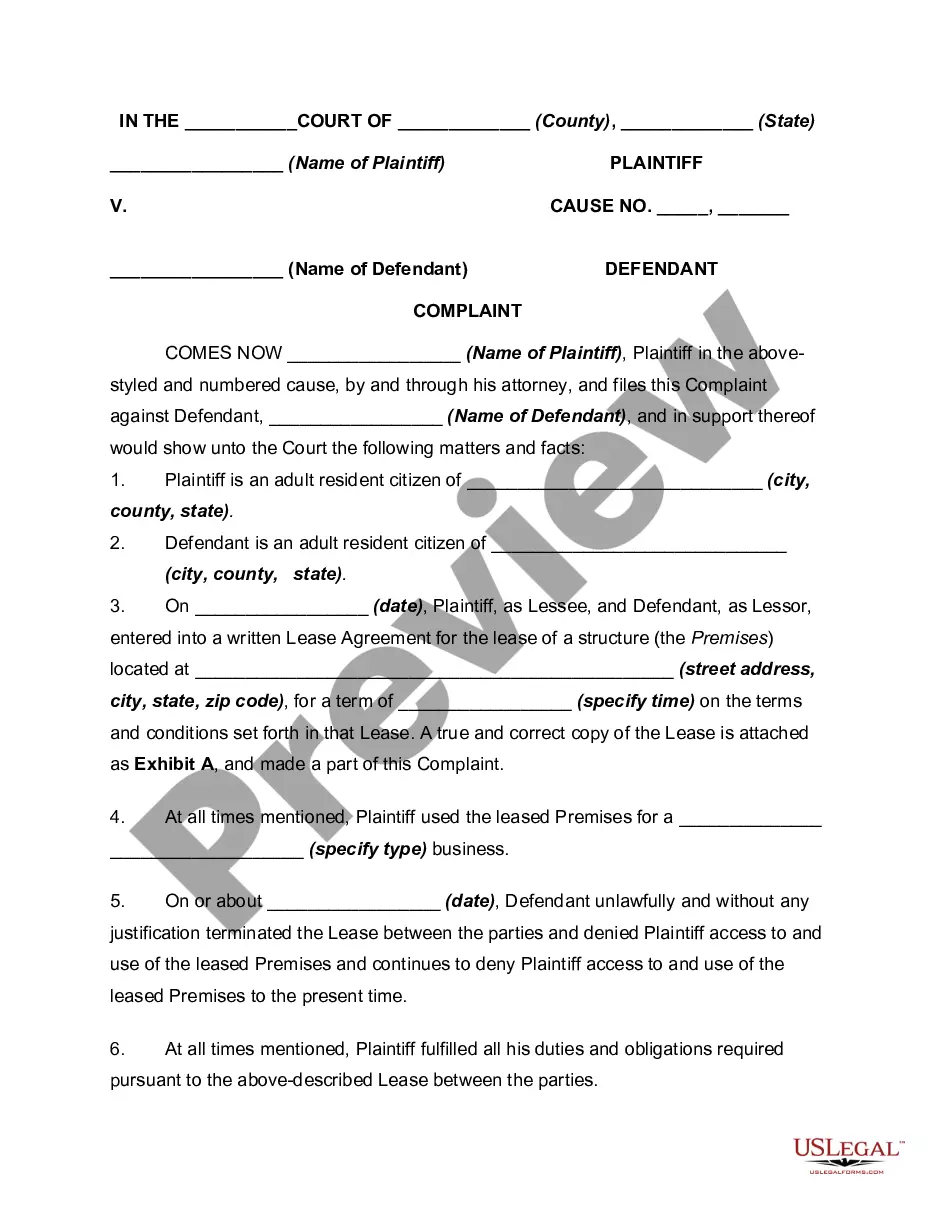
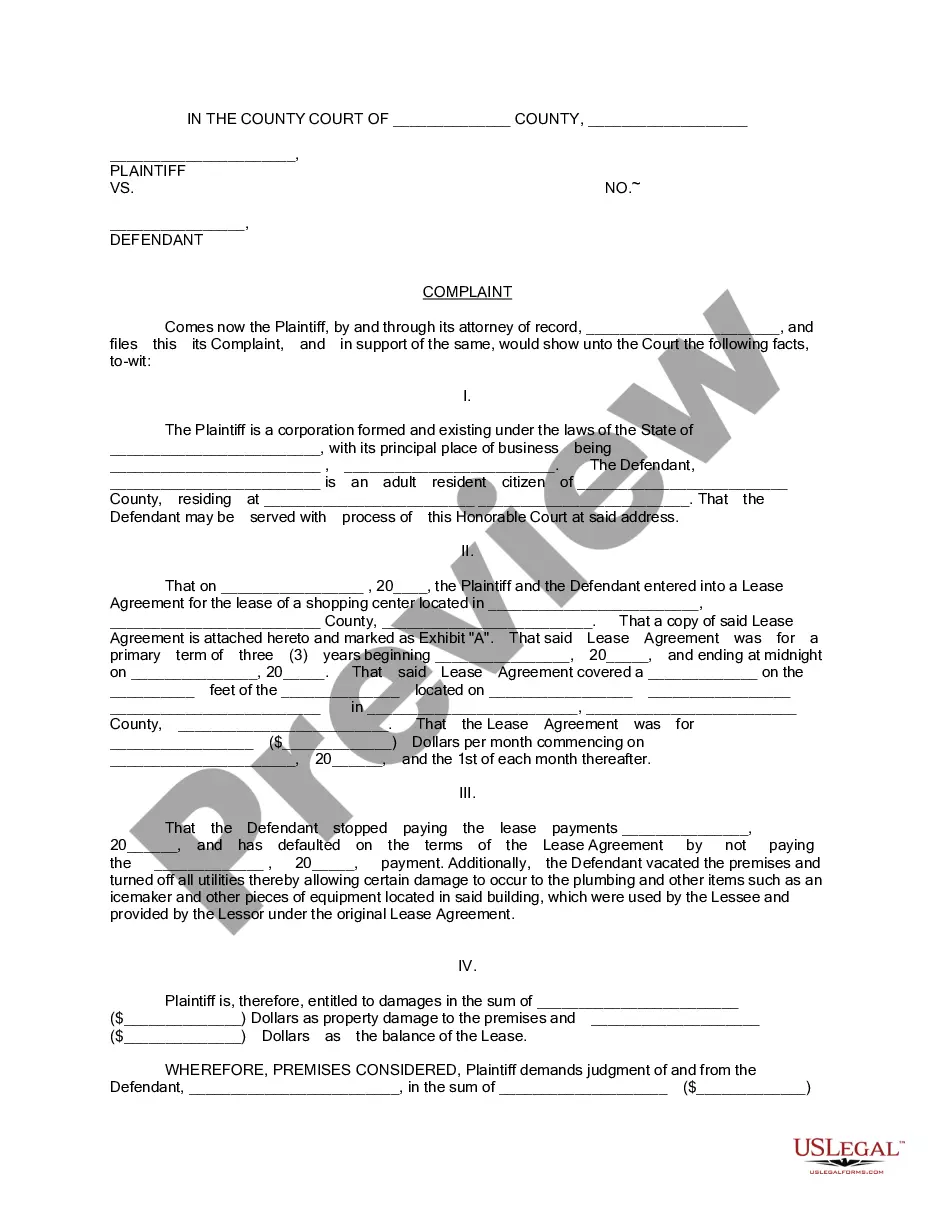
- Identification of parties involved: plaintiff and defendant names and addresses
- Details of the rental agreement: including dates and terms of the contract
- Allegations of non-payment: specific amounts due, including any late fees
- Claims and demands for judgment: outlining the total sought and additional costs
- Designation of trial counsel: attorney assigned to the case
- Certification: confirming no other related actions are pending
When to use this document
This form should be used when a landlord or property owner needs to take legal action against a tenant who has failed to pay rent as agreed in a rental agreement. It is appropriate to use this form if the tenant has not responded to payment requests or has formally defaulted on rent payments, leading the landlord to seek recovery through the courts.
Who should use this form
- Landlords seeking payment for overdue rent
- Property owners involved in leasing agreements
- Any individual or entity legally entitled to collect rent from a tenant
- Legal representatives assisting clients with rental disputes
How to prepare this document
- Identify the plaintiff and defendant, including their addresses and contact information.
- Fill in the details of the rental agreement, including the date it was established and any attached agreements.
- State the total amount of rent due, including any late fees, specifying the dates for which the rent is unpaid.
- Specify the relief sought by outlining the total amount being claimed in the judgment section.
- Designate trial counsel by providing the attorney's name and relevant information.
- Sign and date the certification to confirm no related actions are pending.
Notarization guidance
This form usually doesn’t need to be notarized. However, local laws or specific transactions may require it. Our online notarization service, powered by Notarize, lets you complete it remotely through a secure video session, available 24/7.
Get your form ready online
Our built-in tools help you complete, sign, share, and store your documents in one place.
Make edits, fill in missing information, and update formatting in US Legal Forms—just like you would in MS Word.
Download a copy, print it, send it by email, or mail it via USPS—whatever works best for your next step.
Sign and collect signatures with our SignNow integration. Send to multiple recipients, set reminders, and more. Go Premium to unlock E-Sign.
If this form requires notarization, complete it online through a secure video call—no need to meet a notary in person or wait for an appointment.
We protect your documents and personal data by following strict security and privacy standards.

Make edits, fill in missing information, and update formatting in US Legal Forms—just like you would in MS Word.

Download a copy, print it, send it by email, or mail it via USPS—whatever works best for your next step.

Sign and collect signatures with our SignNow integration. Send to multiple recipients, set reminders, and more. Go Premium to unlock E-Sign.

If this form requires notarization, complete it online through a secure video call—no need to meet a notary in person or wait for an appointment.

We protect your documents and personal data by following strict security and privacy standards.
Common mistakes
- Failing to provide correct addresses for both the plaintiff and the defendant.
- Omitting specific dates related to the rental agreement and unpaid amounts.
- Not attaching the rental agreement or related exhibits when required.
- Failing to clearly specify all relevant claims and amounts sought in the complaint.
- Neglecting to designate trial counsel in cases where legal representation is retained.
Why complete this form online
- Immediate access to a legally validated template.
- Ability to edit and customize the form to fit your specific situation.
- Convenience of completing the form from anywhere at any time.
- Guidance provided throughout the completion process to reduce errors.
- Access to a library of related legal forms and documents.
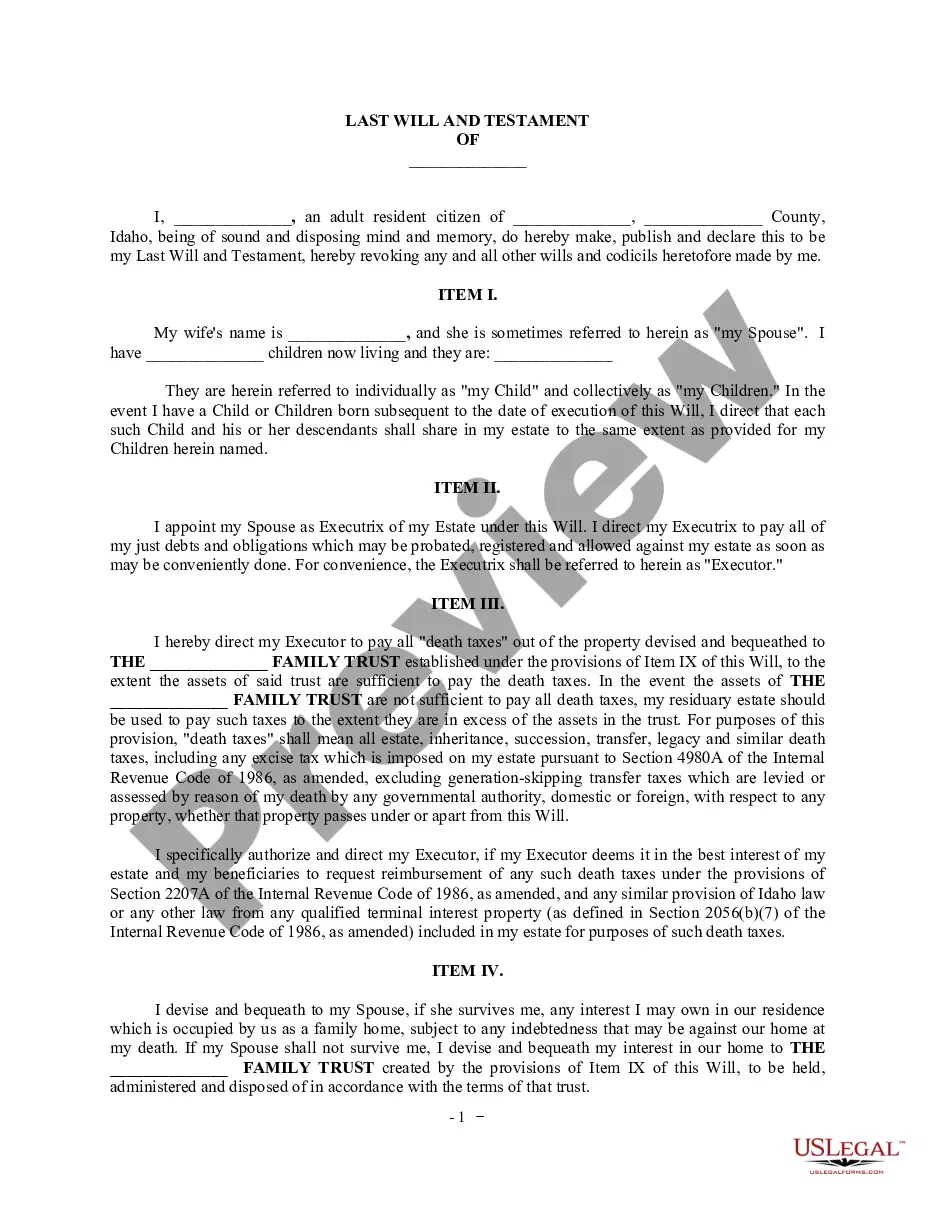
Looking for another form?

Form popularity
FAQ
For other tenant/landlord affairs information, residents may contact the NJ Department of Community Affairs, Division of Codes & Standards, Landlord/Tenant Divsion by phone 609-292-7899, on their website at www.nj.gov/dca or by mail at P.O. Box 805, Trenton NJ 08625.
About Eviction. The lengthiest and costliest method to get rid of an unwanted tenant is eviction. Raise the Rent. Under a tenancy agreement, a landlord cannot raise the rent on a whim. Negotiate. Ask Them to Leave. Be Kind & Proactive. Offer Them Cash to Leave.
Raise the Rent. Are your tenants annoying, but not actively violating your lease agreement? Non-Renew Their Lease. Help Them Find a New Home. Bring a Full Threat of Legal Pursuit. Offer Cash for Keys. Prove a Bad Tenant's Illegal Activity (If Any)
Under normal circumstances, when tenants don't pay rent, landlords have the option of terminating the tenancy (by serving the tenant with either a pay rent or quit notice or an unconditional quit notice, depending on the applicable laws).
Start a written record. The problems with my landlord started almost immediately after I moved in. Check your lease agreement. If your landlord agreed to something in your lease, he has to follow it. Send written requests. Decide if you have a case. Seek legal assistance. File a civil lawsuit. Fight discrimination.
State law regulates several rent-related issues, including late fees, the amount of notice (at least 30 days in New Jersey) landlords must give tenants to raise the rent and how much time (30 days in New Jersey) a tenant has to pay overdue rent or move before a landlord can file for eviction.
Raise the Rent. Don't Renew Their Lease. Help Them Find a New Place. Threaten Them with a Lawsuit. Buy Them Out. Find Evidence of Illegal Activity. Find More Sneaky Ways to Get Rid of Bad Tenants.
Introduce the problem clearly. Begin your letter by stating specifically why you are writing. Provide a brief description of the specific problem, then detail any efforts you have made prior to the letter to notify your landlord of the problem or to fix the problem yourself.
If making a formal complaint to your landlord doesn't solve your problem you might be able to complain to your local council. Your local council can only help with complaints about: repairs that cause a risk to your health and safety not being done (e.g faulty electrical wiring not being fixed) illegal eviction.