New Jersey Complaint Auto Negligence by Passenger
Overview of this form
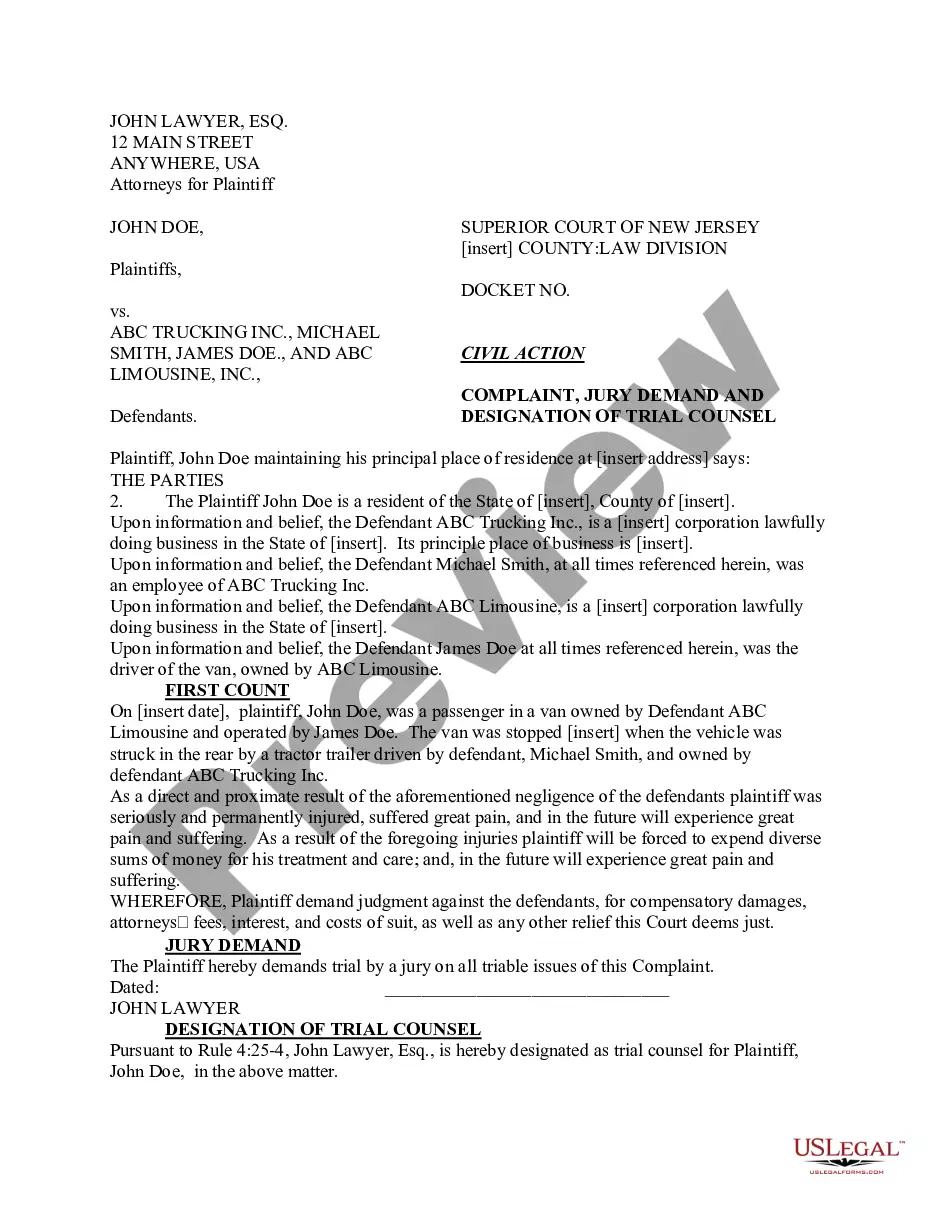
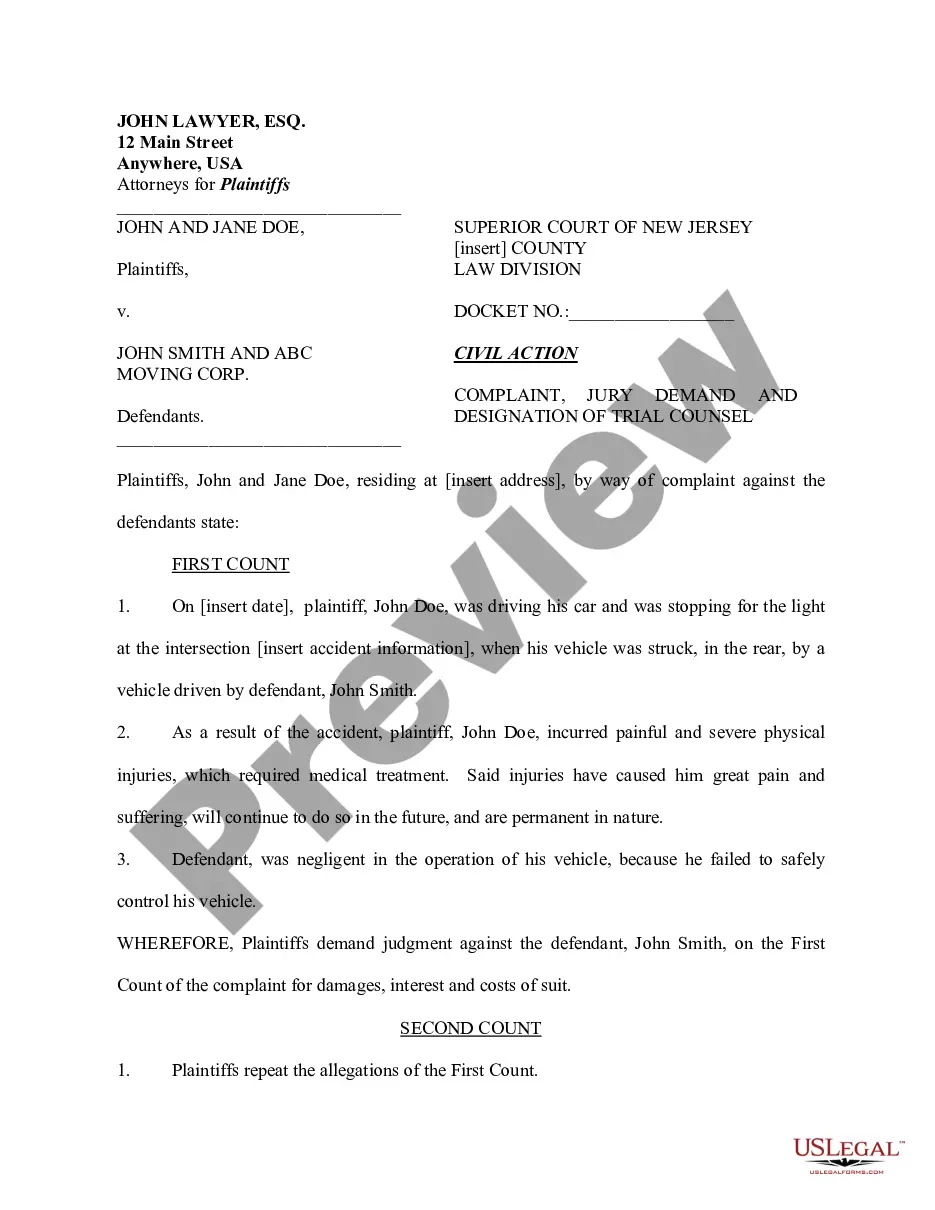
The Complaint Auto Negligence by Passenger form is a legal document used by an individual who was a passenger in a vehicle involved in an auto accident. This form allows the plaintiff to initiate a civil lawsuit against the driver and/or owner of the vehicle that caused the accident, alleging negligence. Unlike other forms related to auto accidents, this specific complaint focuses on the rights and claims of a passenger who was injured due to the actions of others involved in the accident.
Form components explained
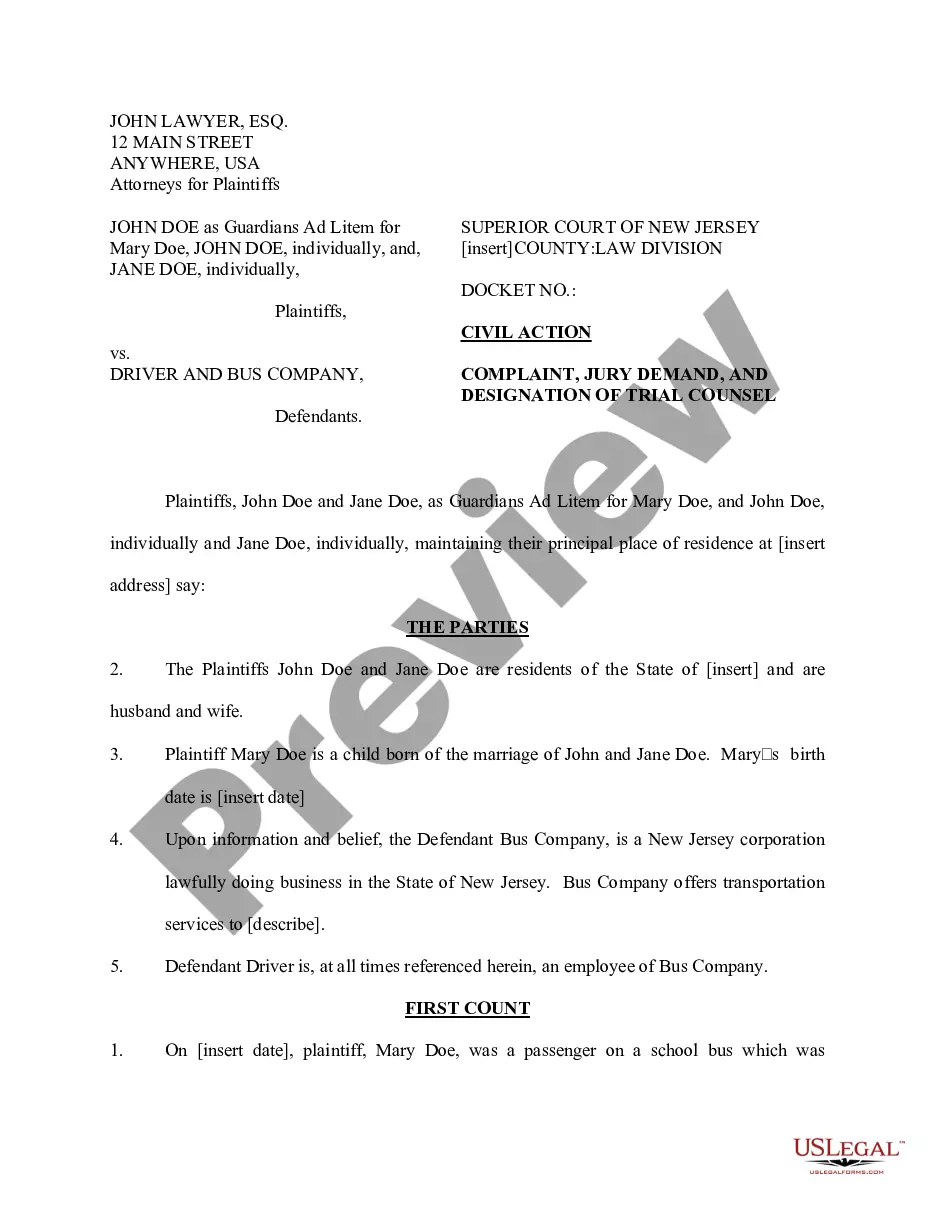
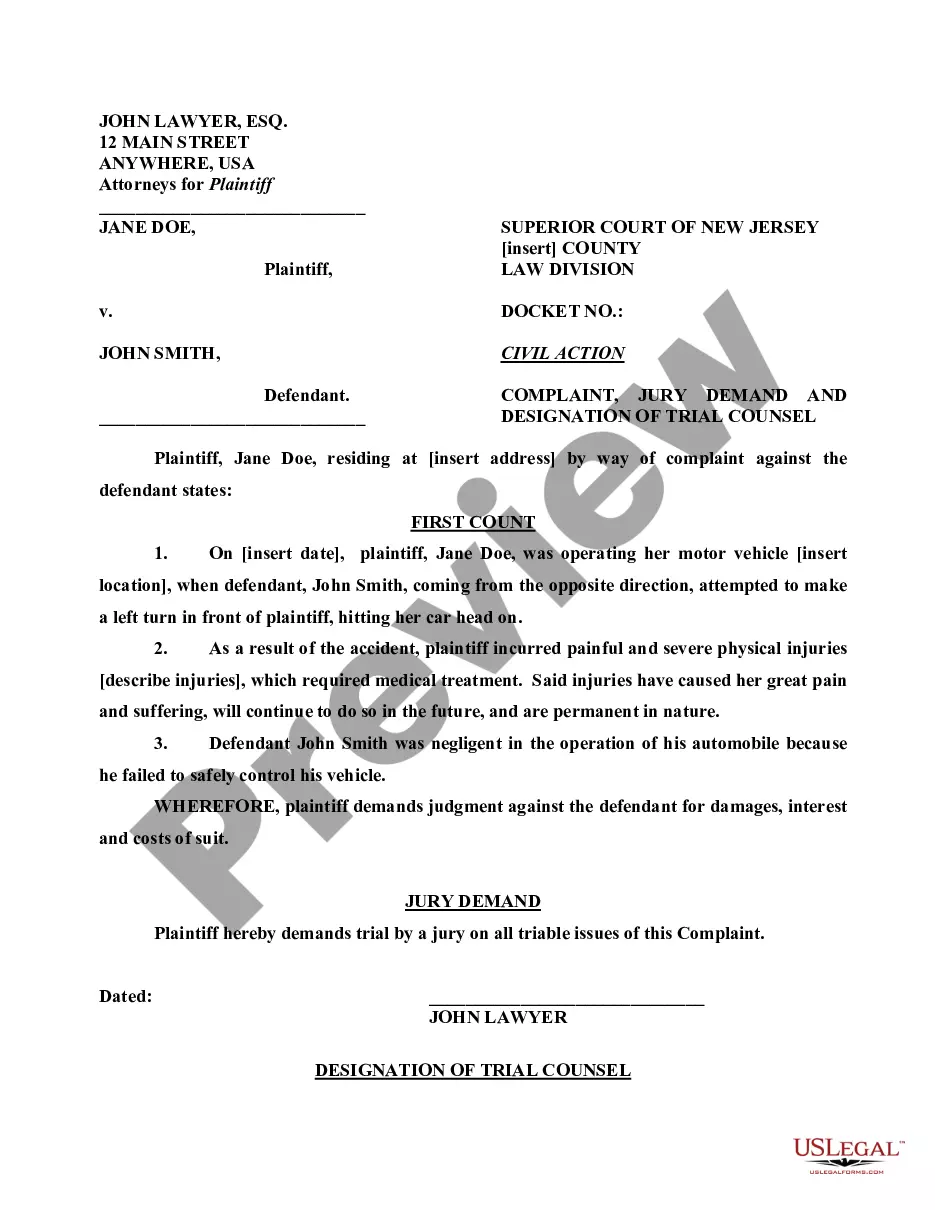
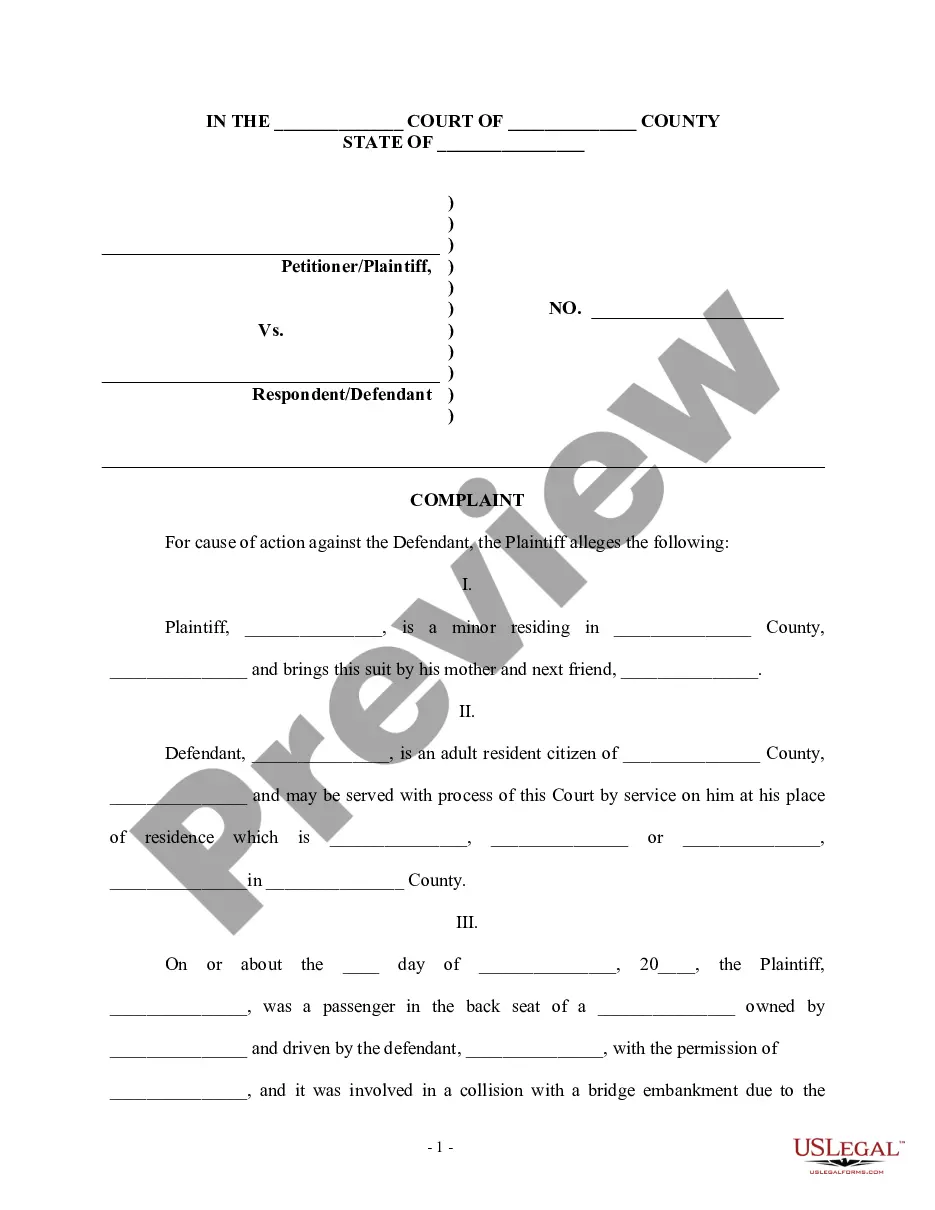
- Title and court identification, specifying the type of legal action being initiated.
- Details of the plaintiff and defendants, including names and addresses.
- Chronological description of the accident and specific allegations of negligence against the defendants.
- Demand for compensatory damages, including medical expenses and pain and suffering.
- Jury demand, indicating the desire for a jury trial on contested issues.
- Designation of trial counsel, identifying the attorney representing the plaintiff.
When this form is needed
This form should be used when a passenger in a vehicle sustains injuries due to the negligence of the driver, another vehicle, or any other party involved in an auto accident. It is appropriate to use this form when seeking compensation for medical bills, pain and suffering, and other damages resulting from the incident. Consider using this form if you have received medical treatment for injuries sustained during the accident and wish to hold the negligent parties accountable.
Who can use this document
- Individuals injured as passengers in a vehicle during an auto accident.
- Any party seeking legal recourse against other drivers or companies responsible for the accident.
- Those who have incurred medical expenses and lost wages due to injuries resulting from an auto accident.
Steps to complete this form
- Identify the plaintiff and defendants, including their full names and addresses.
- Provide the date of the accident and a brief background of the circumstances leading to the claim.
- Specify the allegations of negligence and describe how the defendants contributed to the accident.
- State the injuries suffered and detail the treatment received or expected expenses.
- Sign and date the document, including attorney representation as necessary.
Notarization requirements for this form
This form usually doesn’t need to be notarized. However, local laws or specific transactions may require it. Our online notarization service, powered by Notarize, lets you complete it remotely through a secure video session, available 24/7.
Get your form ready online
Our built-in tools help you complete, sign, share, and store your documents in one place.
Make edits, fill in missing information, and update formatting in US Legal Forms—just like you would in MS Word.
Download a copy, print it, send it by email, or mail it via USPS—whatever works best for your next step.
Sign and collect signatures with our SignNow integration. Send to multiple recipients, set reminders, and more. Go Premium to unlock E-Sign.
If this form requires notarization, complete it online through a secure video call—no need to meet a notary in person or wait for an appointment.
We protect your documents and personal data by following strict security and privacy standards.

Make edits, fill in missing information, and update formatting in US Legal Forms—just like you would in MS Word.

Download a copy, print it, send it by email, or mail it via USPS—whatever works best for your next step.

Sign and collect signatures with our SignNow integration. Send to multiple recipients, set reminders, and more. Go Premium to unlock E-Sign.

If this form requires notarization, complete it online through a secure video call—no need to meet a notary in person or wait for an appointment.

We protect your documents and personal data by following strict security and privacy standards.
Typical mistakes to avoid
- Failing to properly identify all parties involved in the accident.
- Not providing sufficient detail about the circumstances leading to the accident.
- Neglecting to include a demand for specific damages.
- Overlooking the requirement for a jury demand if seeking a trial by jury.
Why use this form online
- Convenience of accessing and downloading the form from anywhere.
- Editability, allowing you to customize the document to fit your situation before printing.
- Legal reliability, ensuring all templates are drafted by licensed attorneys.
Looking for another form?

Form popularity
FAQ
A person can sue for negligence in a car accident. In fact, most car accident lawsuits filed are due to a driver's carelessness or negligence, because intentional acts are not involved.Negligence may also stem from an omission or failure to act.
Still most no-fault states allow you to sue the other driver for severe damages. Simply put, if you've made a claim with the other party's insurance company, negotiated extensively with them, and they still aren't covering all your expenses, your next step may be to initiate a lawsuit against the other driver.
A passenger in a car accident is usually covered by the at-fault driver's bodily injury liability insurance and PIP. Depending on the circumstances, passengers in a car accident can file a claim with their driver's insurance company, the other driver's insurance provider, or their own personal insurer.
Drivers are Responsible for Their Passengers.The driver of a vehicle, as well as the vehicle's owner, is deemed responsible for any passengers.Passengers can also make a claim against the vehicle's owner for allowing the negligent driver to operate his/her vehicle.
The other driver had a duty to operate his or her vehicle in a safe manner. The other driver breached this duty. The actions of the other driver caused the accident. The accident directly caused injuries or monetary losses.
In general, insurance coverage for an insured driving someone else's vehicle is the coverage he carries for his own vehicle. The driver's personal coverage will apply in most cases when driving a vehicle he does not own.Collision and comprehensive coverage do not apply to a borrowed vehicle.
A: As a passenger, you are typically not responsible for the accident, meaning you can receive full compensation regardless of who is found at-fault for the accident. However, there are a few situations where a driver's insurance policy may decide to dismiss your claim.
Coverage SummaryCalifornia law requires you to have this coverage. See pages 67. Uninsured/Underinsured Motorist Coverage is for accidents when the other driver is at fault and does not have insurance or does not have enough insurance. Bodily injury coverage pays medical expenses for you and passengers.
Seek medical care. If you suffered any obvious injuries, you need to obtain immediate medical care. Take pictures. Obtain contact information. Get the police report. Don't talk to the drivers or other passengers.