New Jersey Refrigeration Contract for Contractor
What is this form?
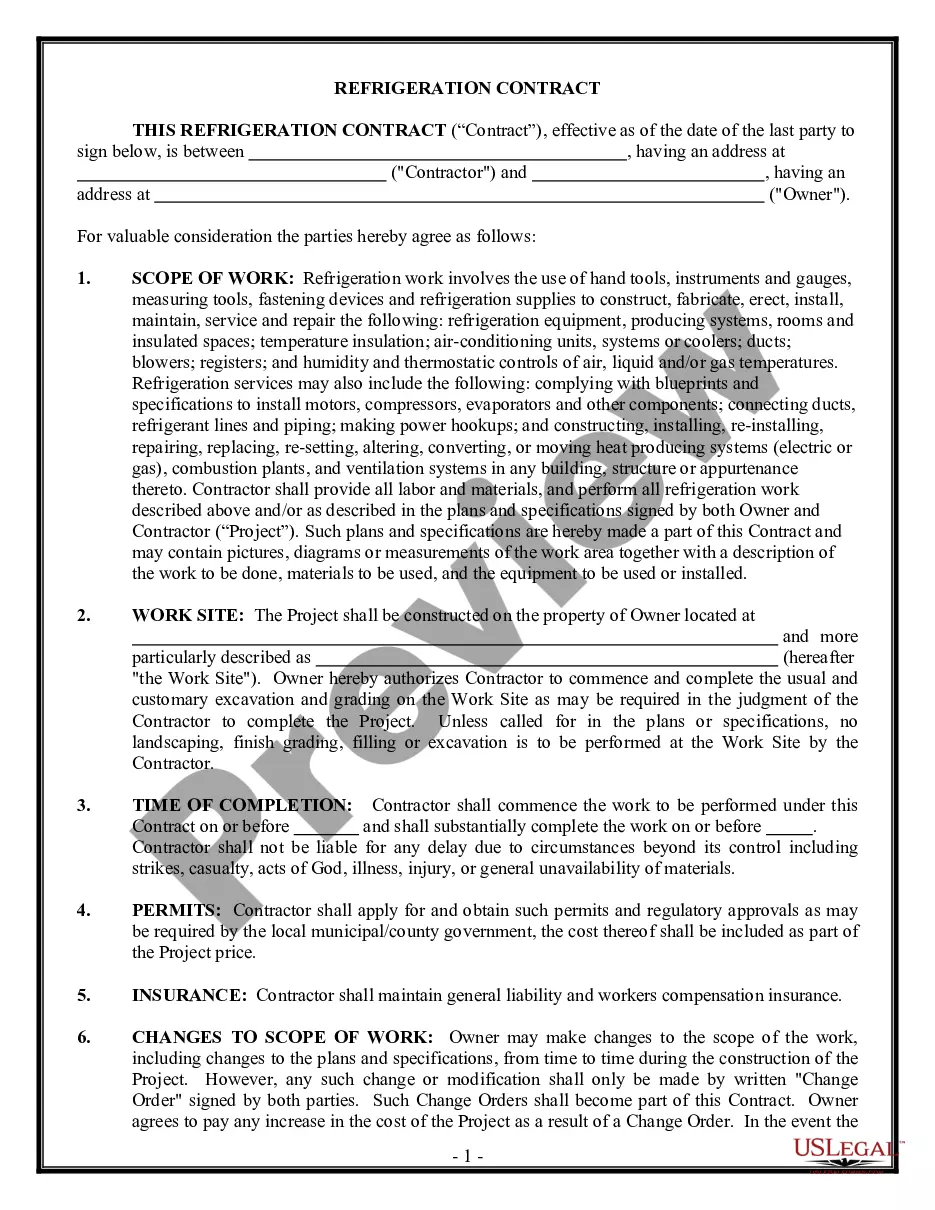
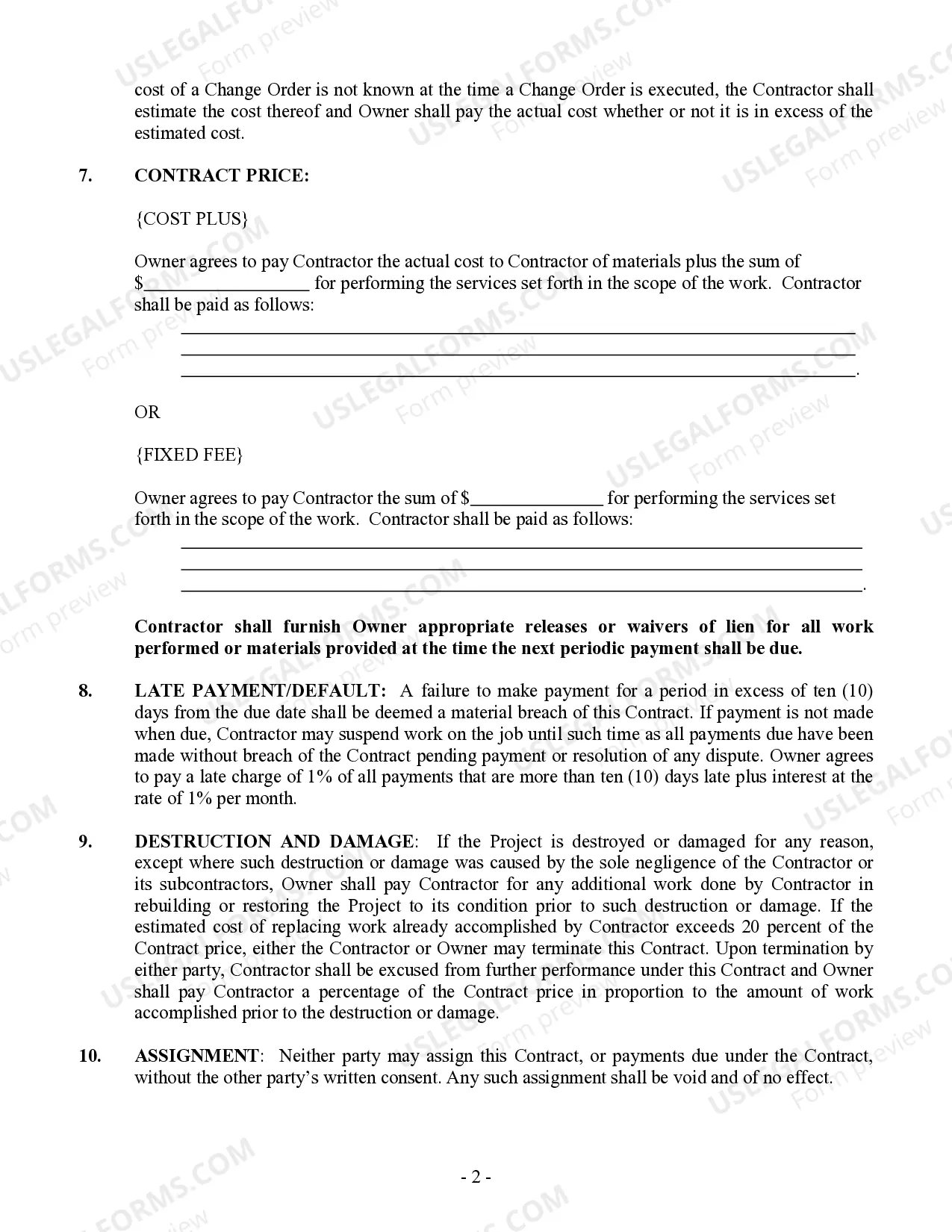
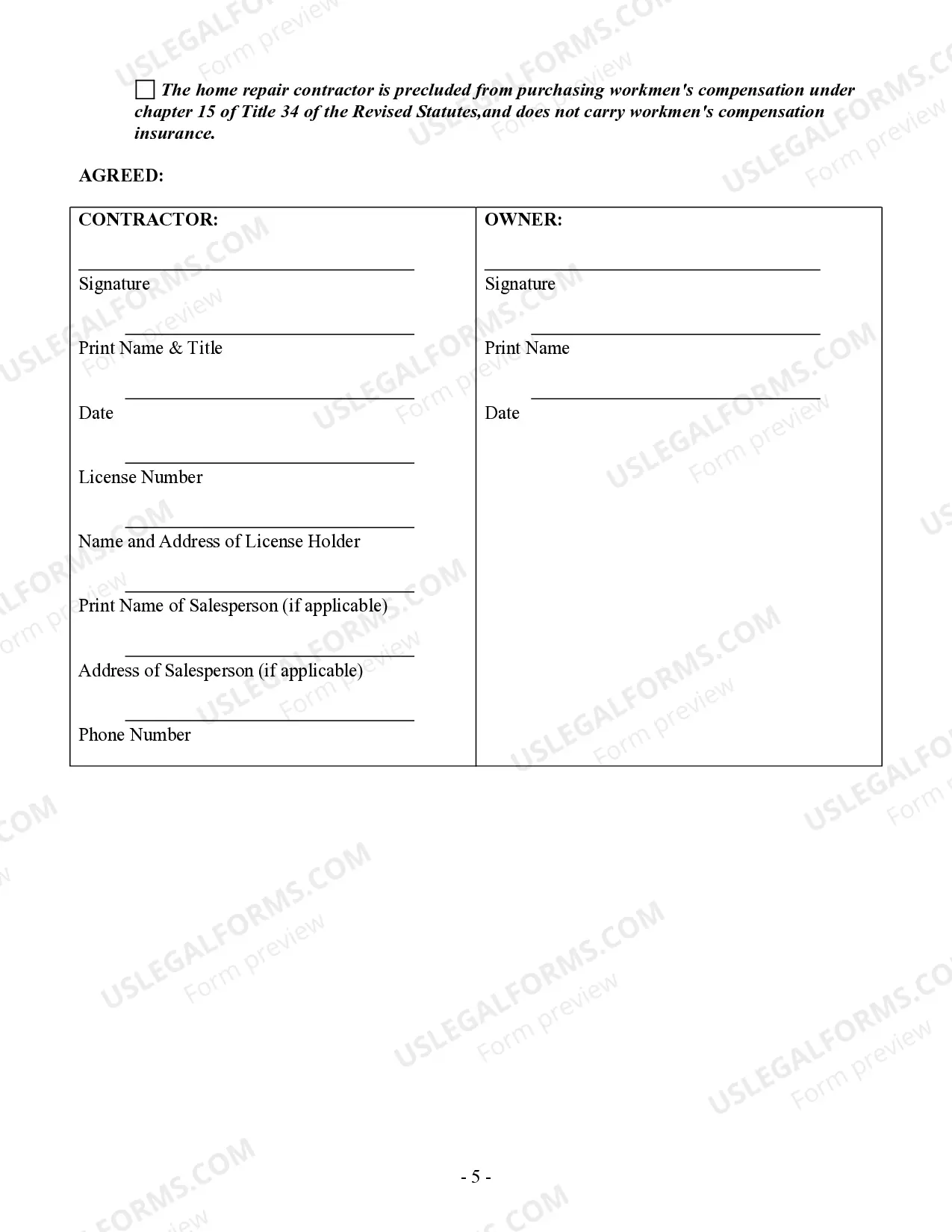
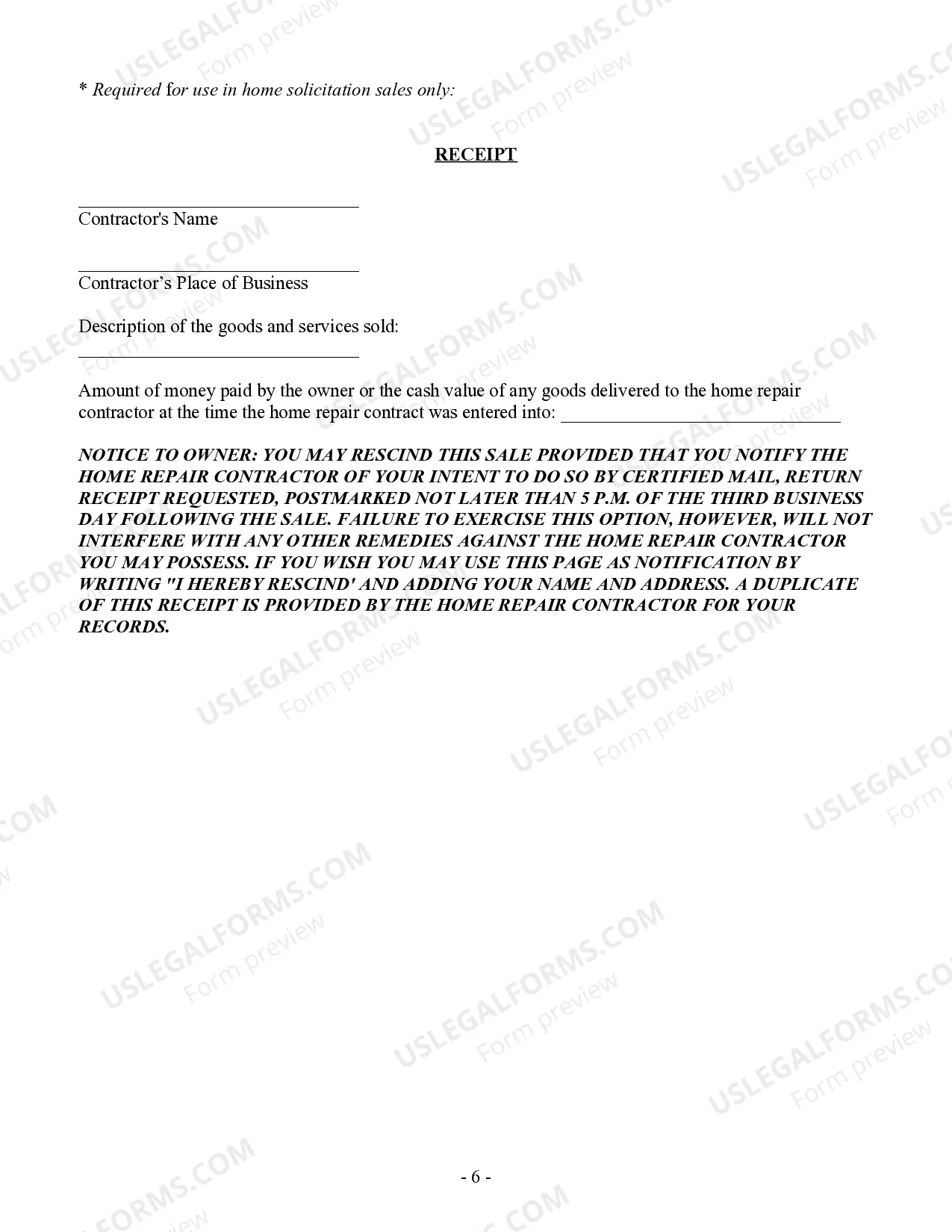
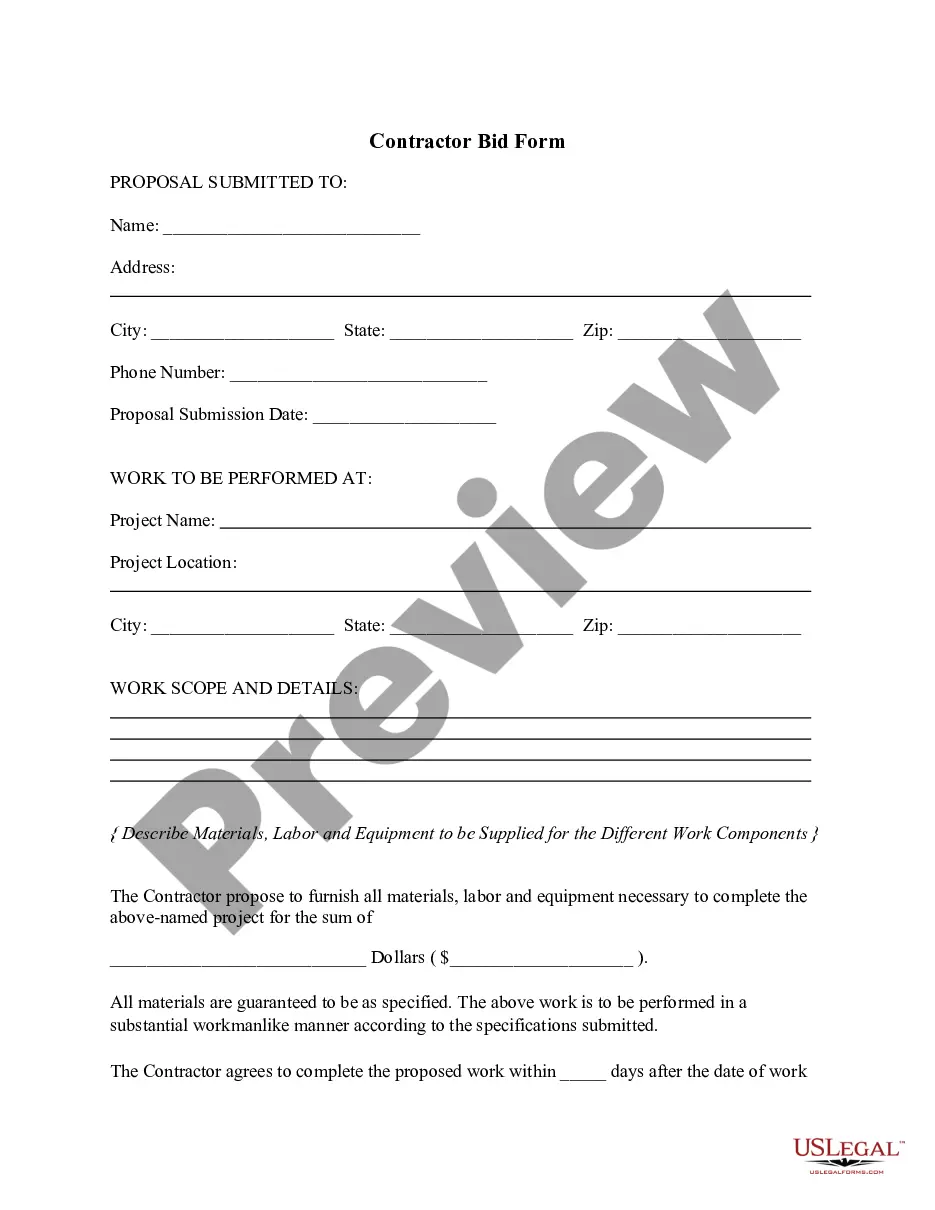
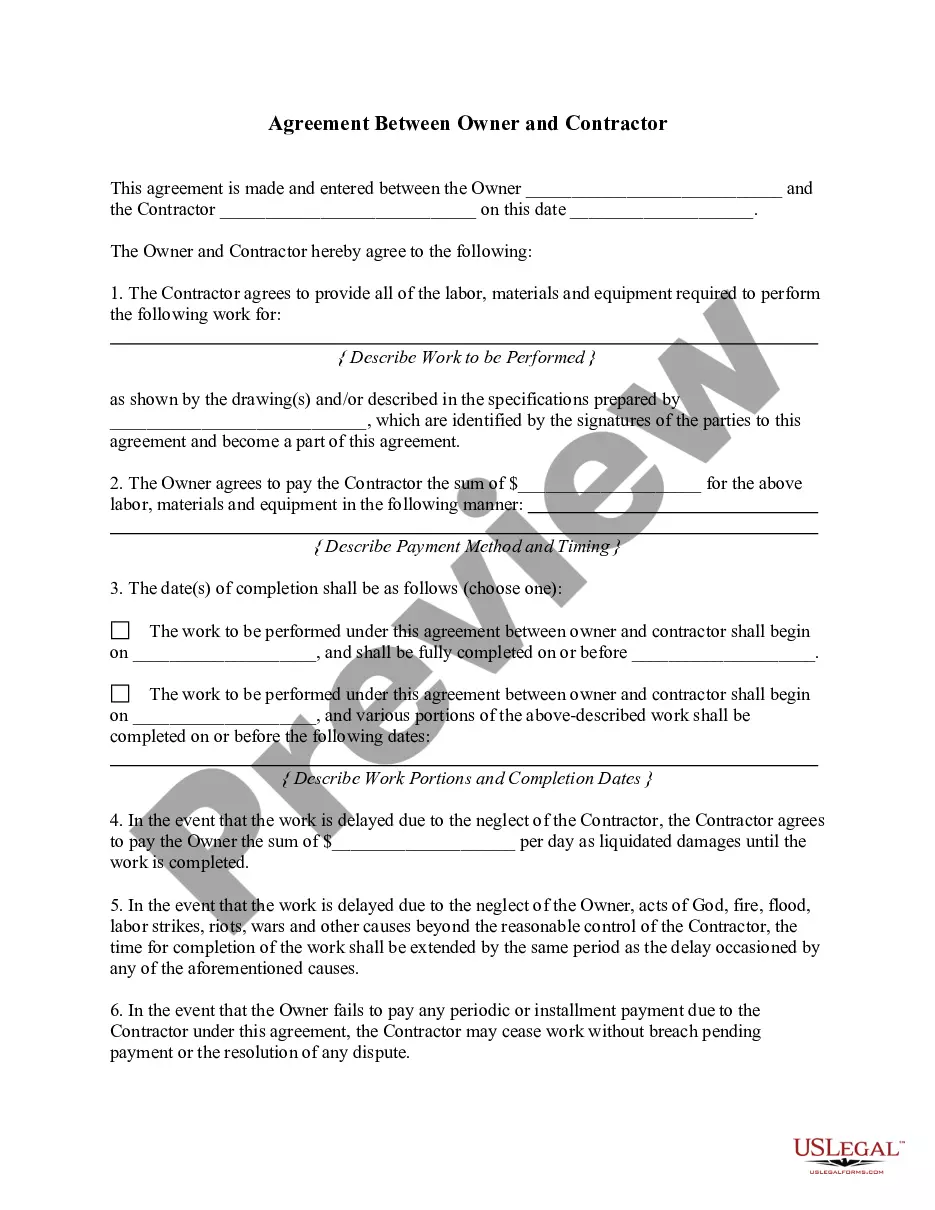
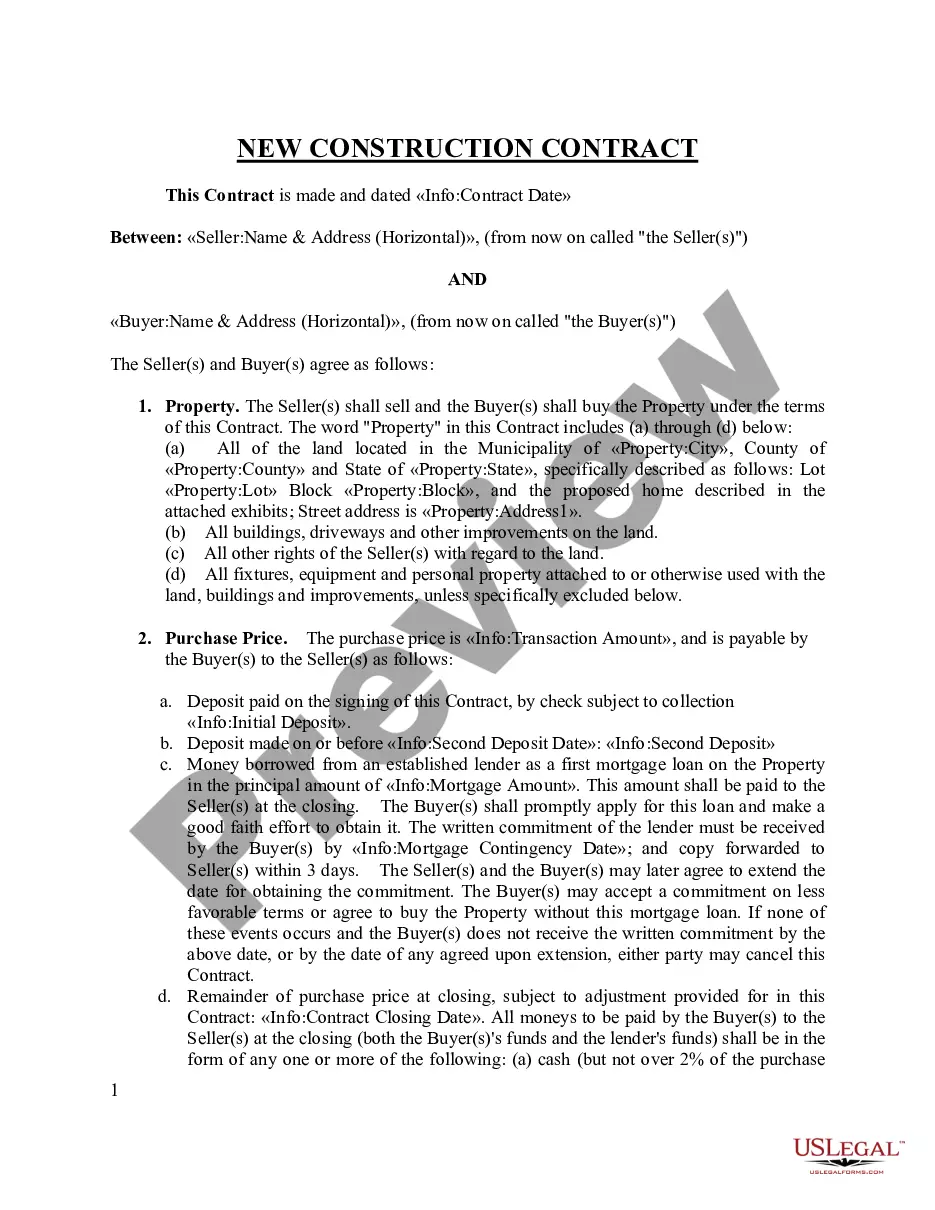
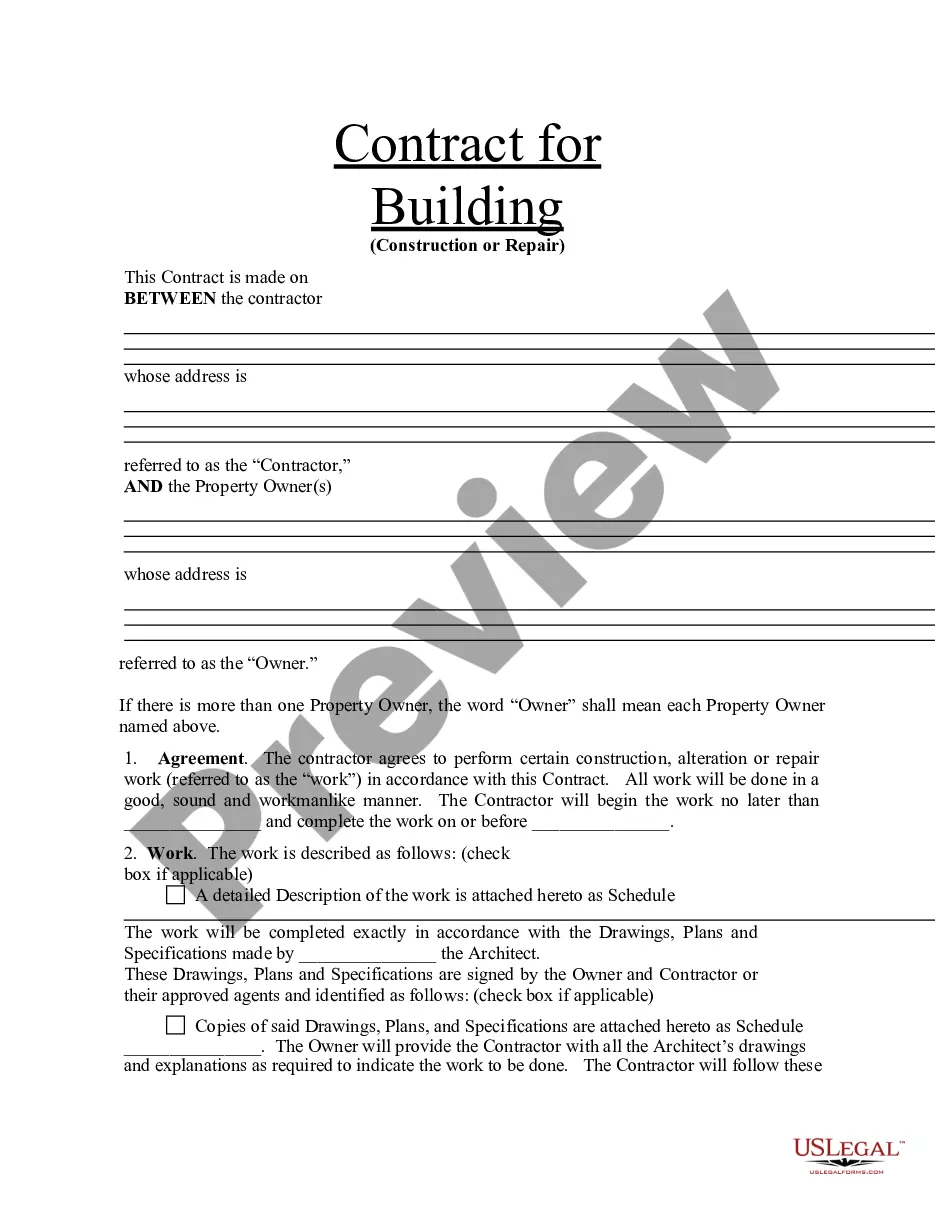
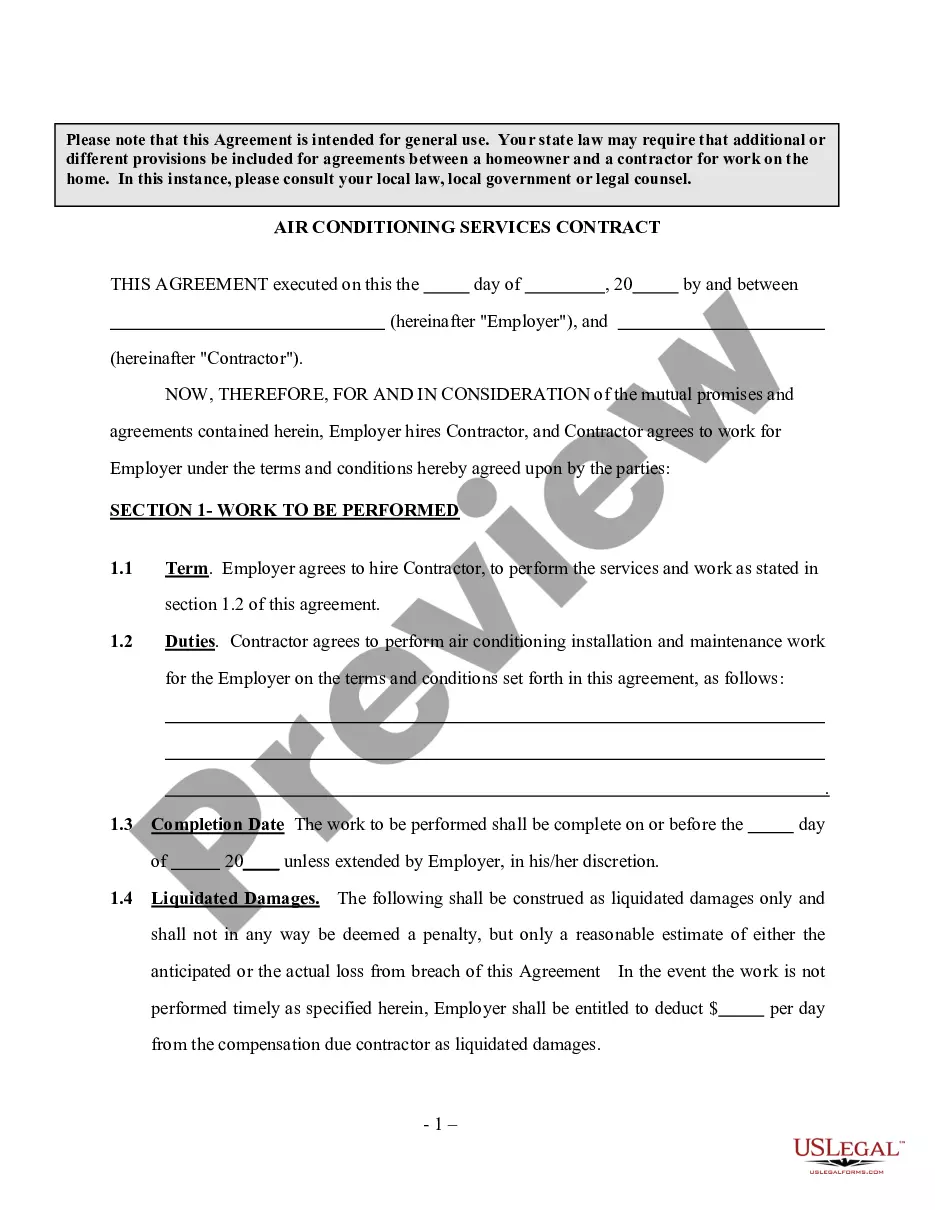
The Refrigeration Contract for Contractor is a legal document that facilitates the relationship between refrigeration contractors and property owners. This contract is structured to offer flexibility in payment termsâeither cost plus or fixed fee. It covers essential topics such as change orders, warranties, insurance requirements, and the obligations of both parties. This specific contract has been drafted to comply with New Jersey laws, making it suitable for use in that state.
What’s included in this form
- Work site location and specifications.
- Permits and regulatory approvals required for the project.
- Insurance coverage details, including general liability and workers' compensation.
- Change order procedures and cost adjustments.
- Clauses regarding contract price and payment terms.
- Provisions for damage and destruction of the project.
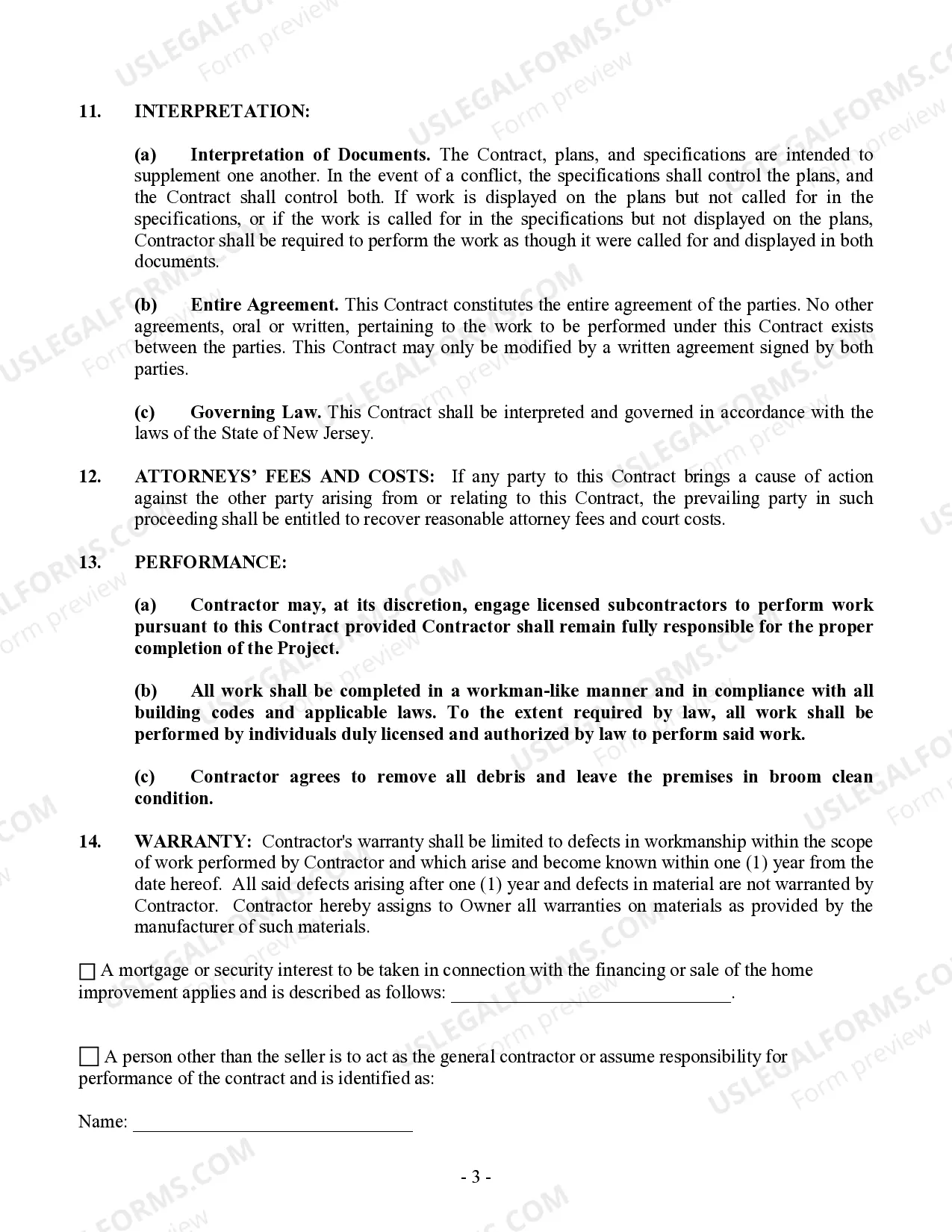
- Termination rights for both parties and assignment clauses.
- Legal interpretation, entire agreement, and governing law conditions.
When to use this form
This form should be used when a property owner engages a refrigeration contractor for installation, repair, or maintenance of refrigeration systems. It is particularly useful during situations where payment terms need to be clearly defined, especially when changes to the scope of work may occur. Use this contract to avoid disputes regarding responsibilities, project costs, and completion timelines.
Intended users of this form
- Refrigeration contractors looking to formalize agreements with property owners.
- Property owners who require refrigeration services for residential or commercial properties.
- Contractors and owners located in or operating in the state of New Jersey.
How to prepare this document
- Identify the parties involved: enter the names and addresses of both the contractor and property owner.
- Specify the project location: fill in the address or location where the work will take place.
- Detail the scope of work: clearly describe the services to be performed.
- Outline the payment arrangements: indicate whether the payment will be cost plus or fixed fee.
- Review and sign: both parties should read through the entire contract carefully before signing.
Notarization guidance
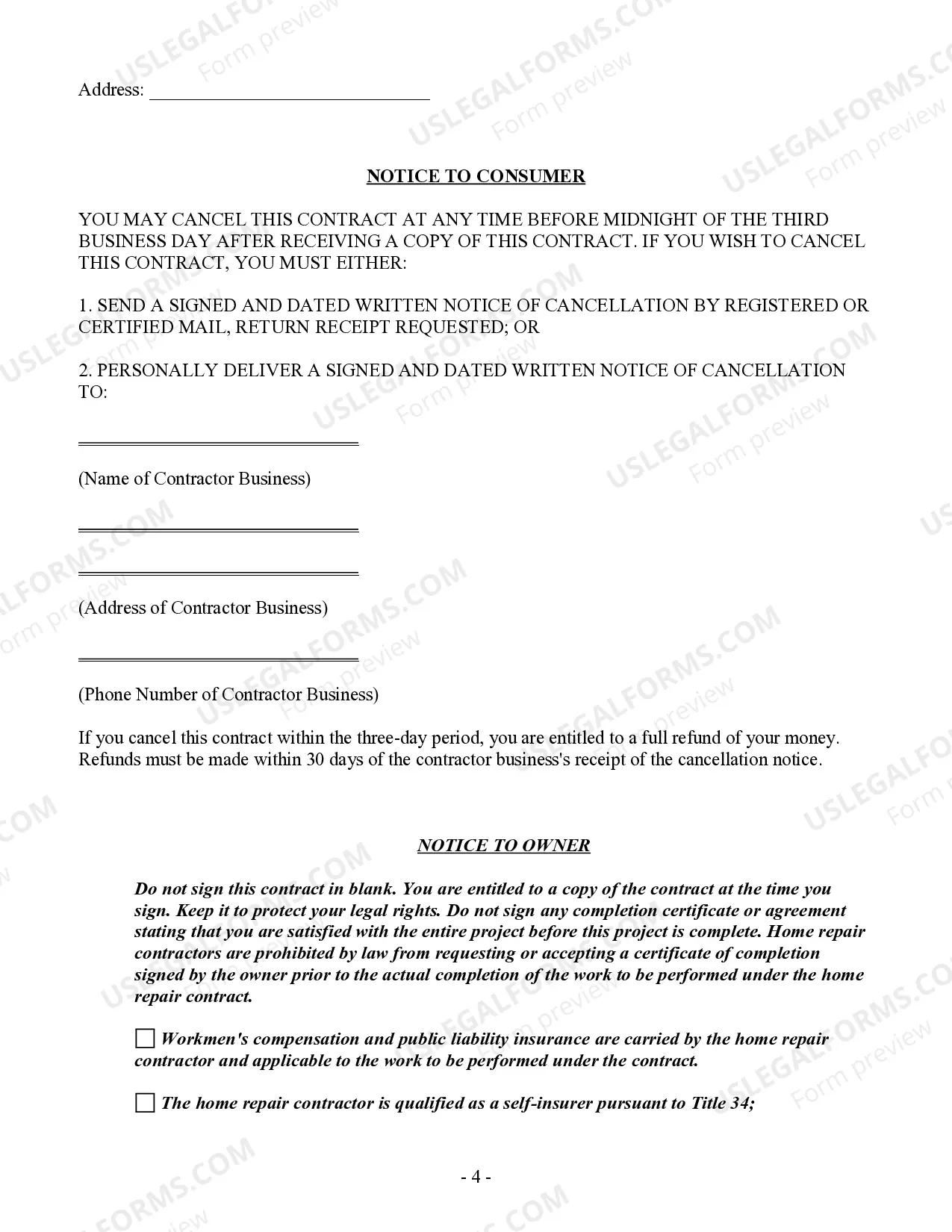
This form does not typically require notarization unless specified by local law. However, it is recommended to consult with a legal professional to ensure compliance with specific requirements.
Get your form ready online
Our built-in tools help you complete, sign, share, and store your documents in one place.
Make edits, fill in missing information, and update formatting in US Legal Forms—just like you would in MS Word.
Download a copy, print it, send it by email, or mail it via USPS—whatever works best for your next step.
Sign and collect signatures with our SignNow integration. Send to multiple recipients, set reminders, and more. Go Premium to unlock E-Sign.
If this form requires notarization, complete it online through a secure video call—no need to meet a notary in person or wait for an appointment.
We protect your documents and personal data by following strict security and privacy standards.

Make edits, fill in missing information, and update formatting in US Legal Forms—just like you would in MS Word.

Download a copy, print it, send it by email, or mail it via USPS—whatever works best for your next step.

Sign and collect signatures with our SignNow integration. Send to multiple recipients, set reminders, and more. Go Premium to unlock E-Sign.

If this form requires notarization, complete it online through a secure video call—no need to meet a notary in person or wait for an appointment.

We protect your documents and personal data by following strict security and privacy standards.
Common mistakes
- Failing to specify all the services to be provided, leading to potential disputes.
- Neglecting to discuss and clarify the payment terms before signing.
- Not obtaining the necessary permits before beginning the work.
- Signing the contract without ensuring that both parties have received a copy.
Advantages of online completion
- Convenience of downloading and completing the form at your own pace.
- Editability allows users to customize the contract to meet specific project needs.
- Reliable structure ensures all necessary legal components are included.
Legal use & context
- This contract serves as an enforceable agreement between the parties, detailing their commitments.
- It protects both parties in case of disputes regarding work, payments, and responsibilities.
- It should adhere to all relevant building codes and legal standards in New Jersey.
Main things to remember
- The Refrigeration Contract for Contractor is essential for outlining the responsibilities between contractors and property owners in New Jersey.
- It includes critical sections on permits, changes to scope, and warranty terms.
- Using this form helps prevent misunderstandings and assures compliance with state regulations.
Looking for another form?



Form popularity
FAQ
To gain the required experience, you can obtain an entry-level position or an apprenticeship. A full apprenticeship takes about five years to complete and will gain you 1,700-2,000 hours of experience. If you work in another state as a journeyman HVAC technician, five years of experience will qualify you for a license.
Do You Need a License in New Jersey to Become a Handyman? New Jersey doesn't offer handyman licenses. However, handyman professionals must apply for a home improvement contractor license to perform any type of handyman work in New Jersey.
The Board protects the public by: requiring all heating, ventilating, air conditioning and refrigeration contractors to be licensed by the state and to renew their licenses every two years.
To do home construction and many types of substantial home repairs in New Jersey, an individual must be a licensed contractor. Obtaining an NJ contractor license requires the contractor to register with the New Jersey Division of Consumer Affairs, a process that involves multiple smaller steps.
While 87 percent of U.S. households use some type of air conditioning, central AC systems are the most sought-after for both convenience and accessibility. If flipping a switch for whole-house cooling is what you're after, you may wonder whether it's possible to install your own. And the answer is, you definitely can.
In order to start an HVAC business, you will most likely spend between $2,000 to $10,000. It's crucial that you understand how to start a small business, not just how to start an HVAC business. You will need to invest in liability insurance and worker's compensation insurance if you have employees.
Step 1: Start with a Business Plan. Step 2: Determine Startup Costs For An HVAC Business. Step 3: Skills, Education, and Certification For HVAC Owners. Step 4: Make Your HVAC Business Look More Professional. Step 5: How to Make More Money By Attracting More Customers. Step 6: Plan to Scale Up.
Contractors are required to pay Sales or Use Tax on the materials, supplies, equipment, and services they purchase, rent, or use when performing work on the real property of others, except as described below. It is the general rule that the sale to the actual consumer is a retail sale.