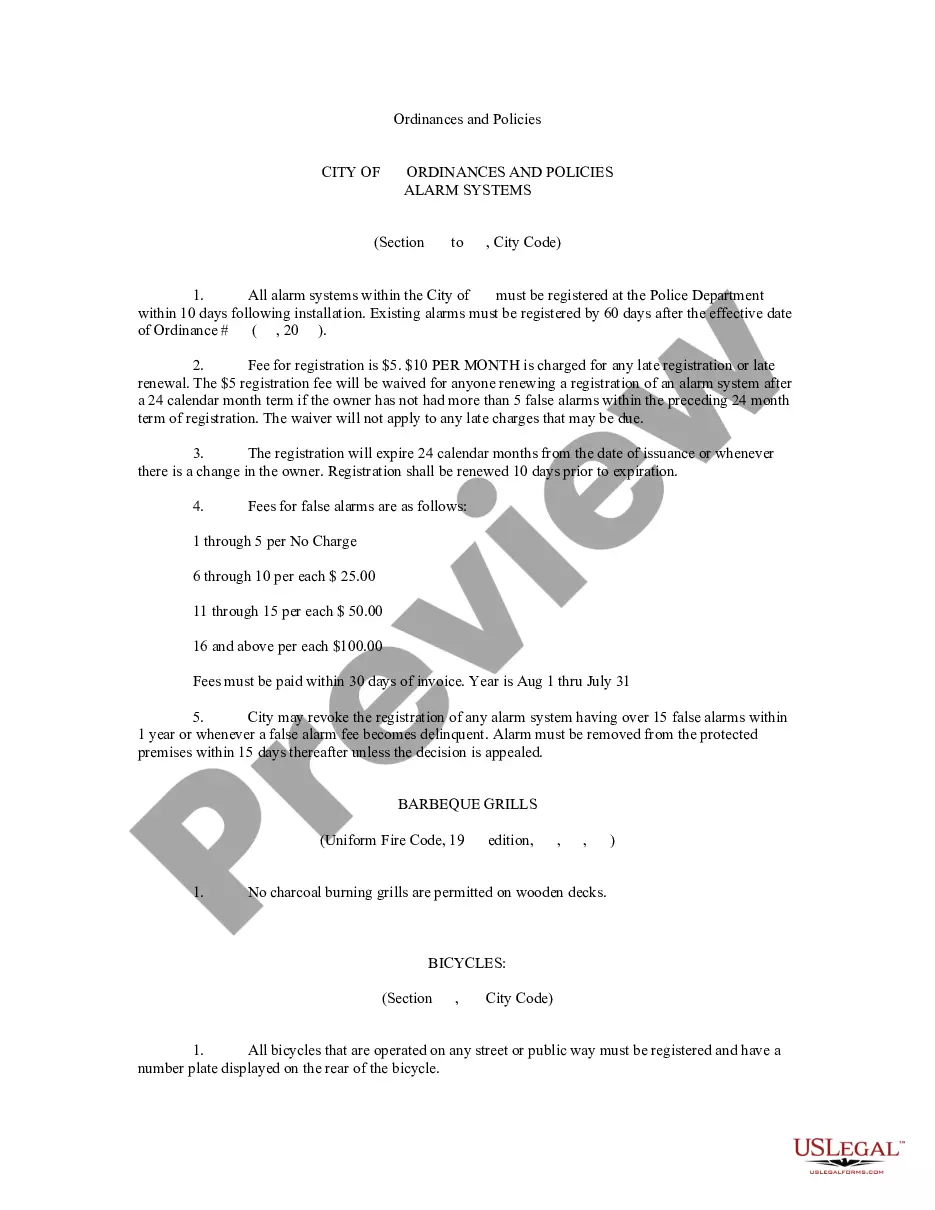
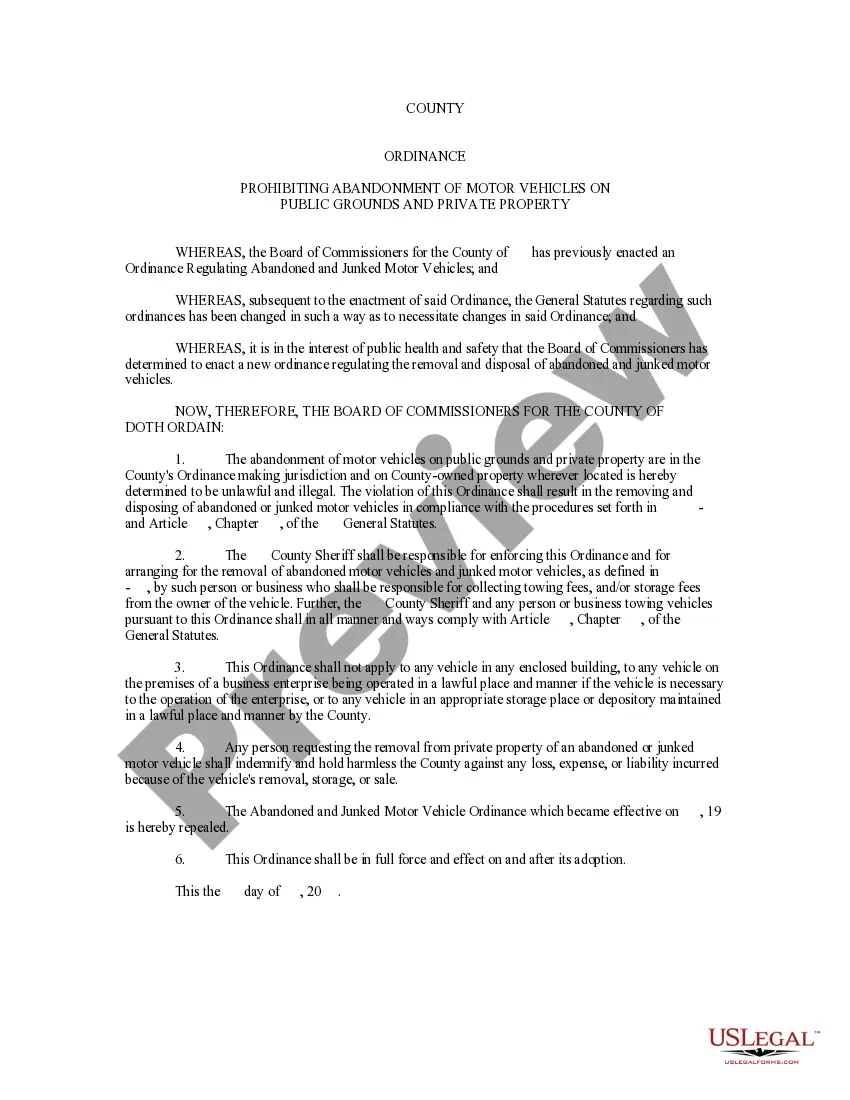
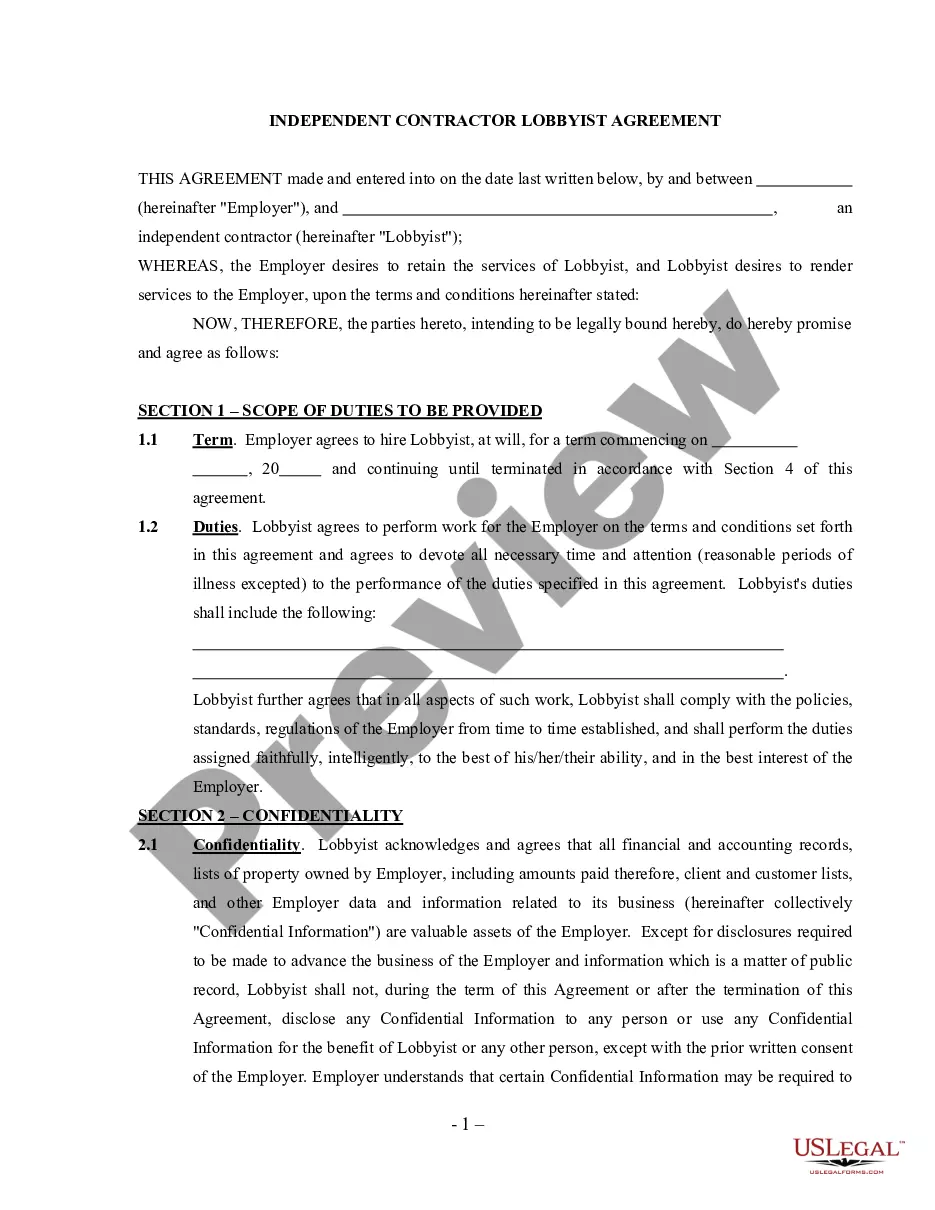
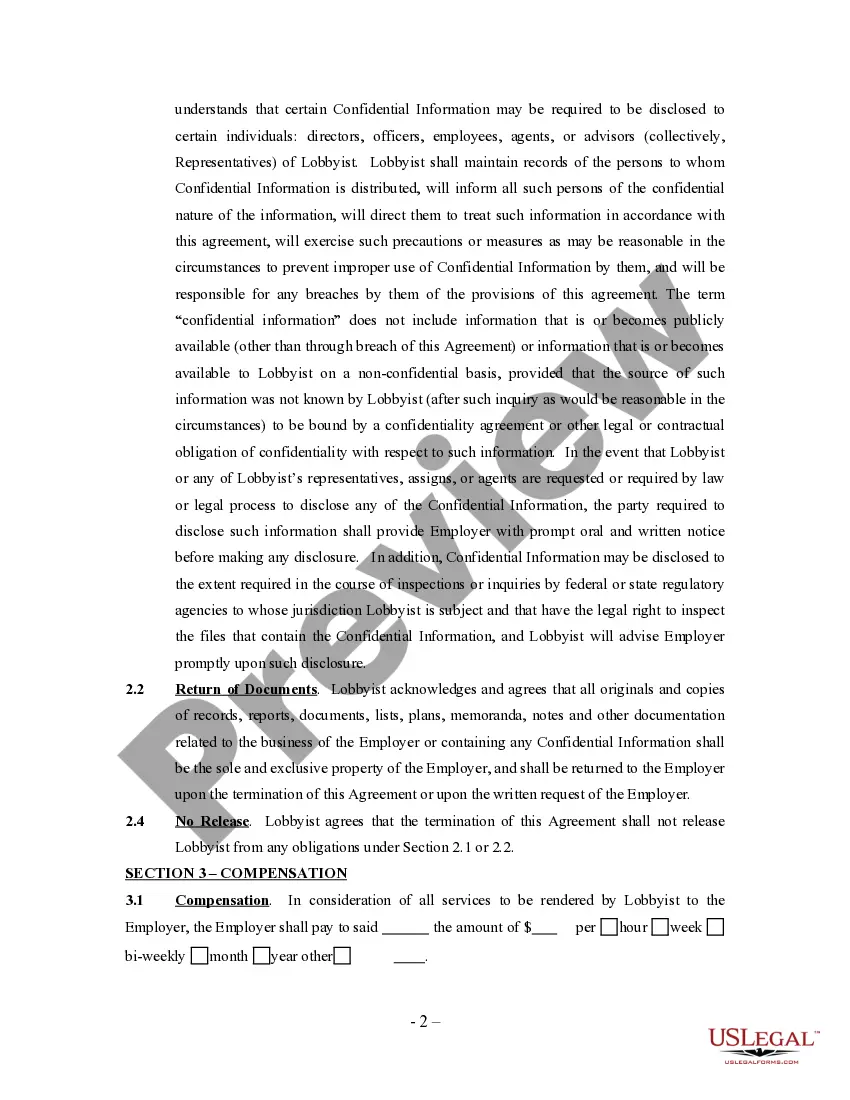
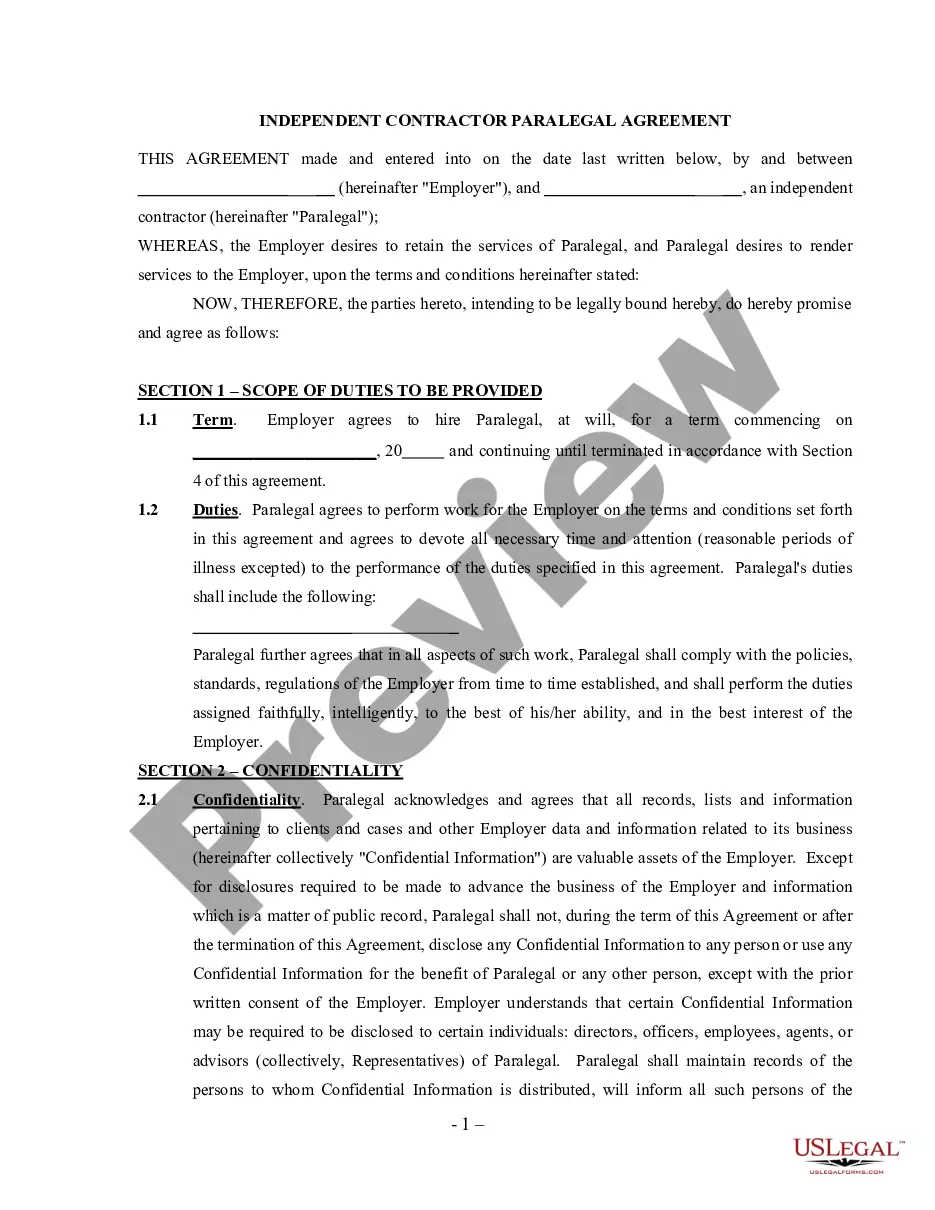
Employer hires a lobbyist as an independent contractor to provide lobbying services as specified in the contract.
New Hampshire Lobbyist Agreement - Self-Employed Independent Contractor
State:
Multi-State
Control #:
US-INDC-206
Format:
Word;
Rich Text
Instant download
Description
Free preview
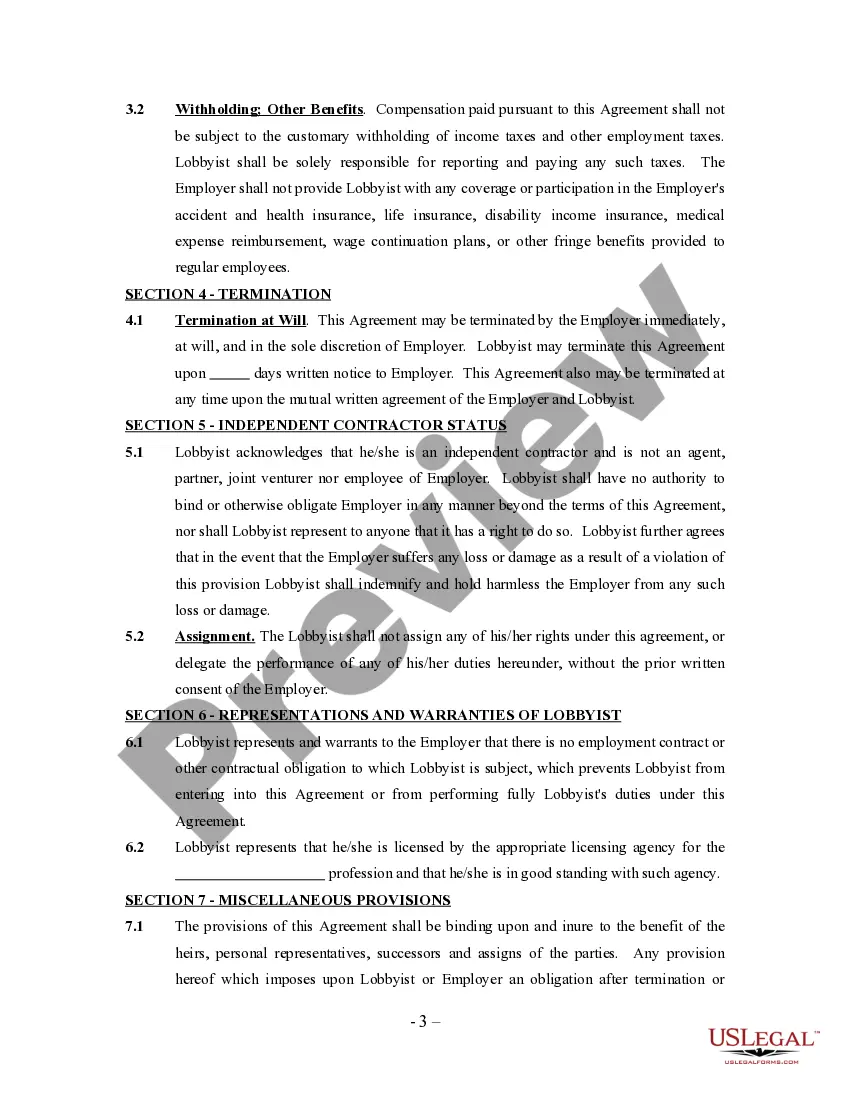
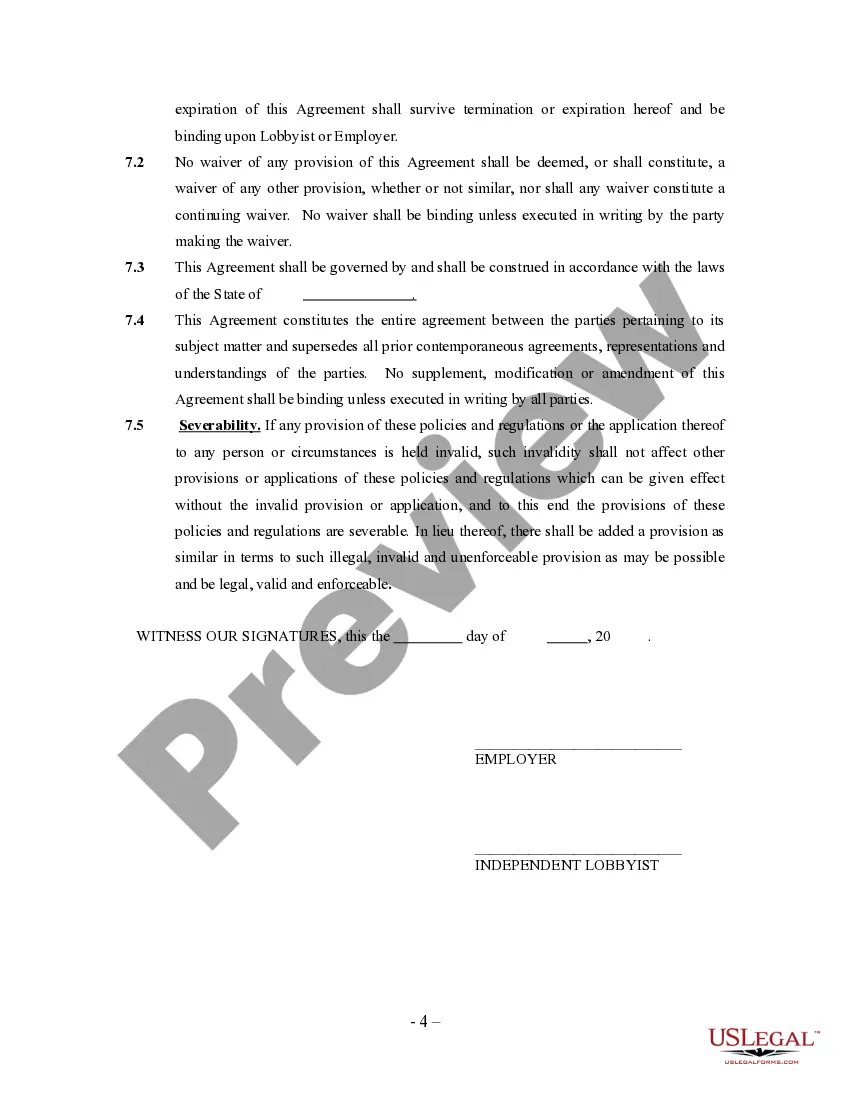
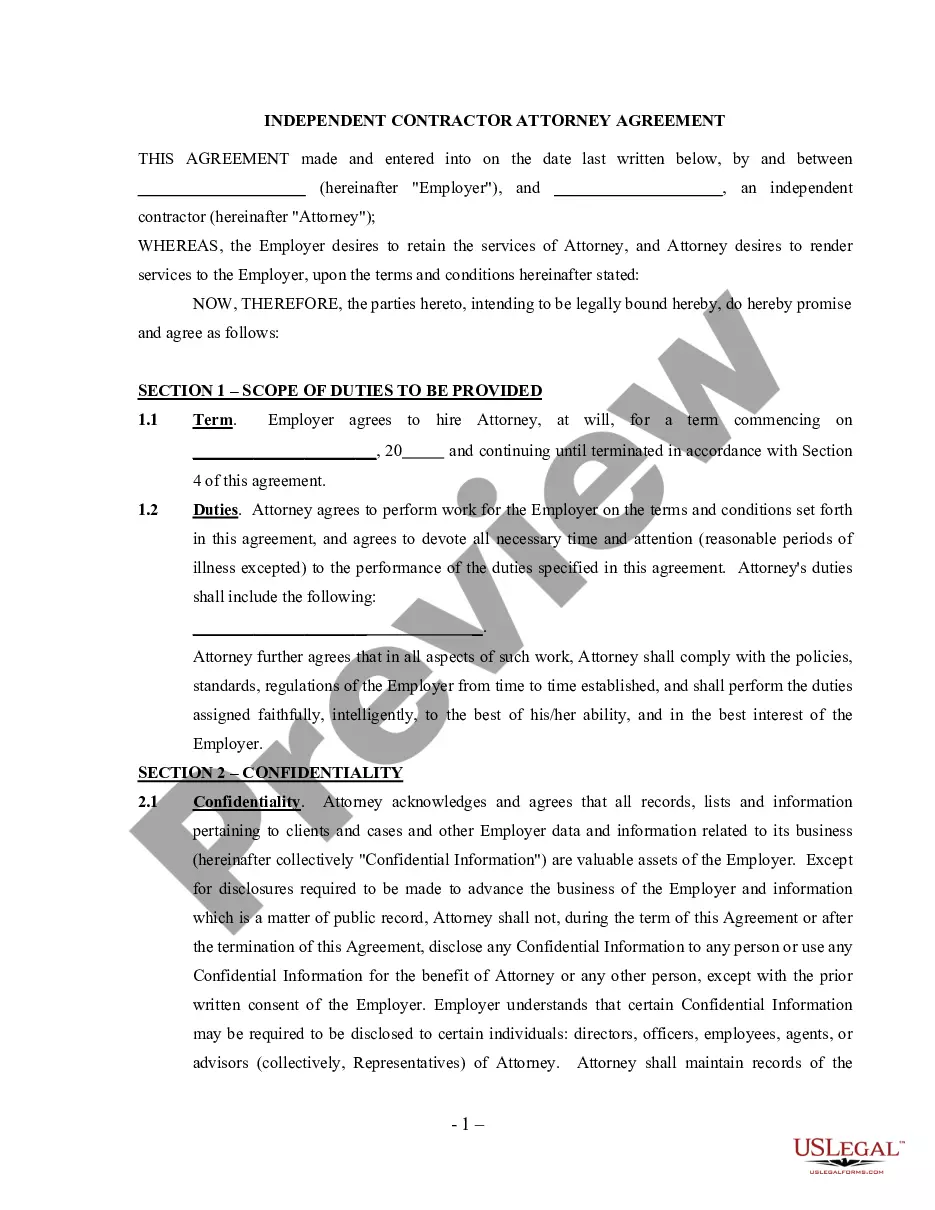
How to fill out Lobbyist Agreement - Self-Employed Independent Contractor?
Are you currently in a situation where you need documents for either business or personal purposes almost every day.
There are numerous legal document templates available online, but finding ones you can rely on is not easy.
US Legal Forms offers thousands of document templates, such as the New Hampshire Lobbyist Agreement - Self-Employed Independent Contractor, which can be printed to meet federal and state requirements.
Choose the pricing plan you prefer, fill in the necessary details to create your account, and pay for the order using your PayPal or credit card.
Select a convenient document format and download your copy. You can find all the document templates you have purchased in the My documents section. You can download another copy of the New Hampshire Lobbyist Agreement - Self-Employed Independent Contractor whenever needed. Simply click on the desired template to download or print the document template. Utilize US Legal Forms, the largest collection of legal forms, to save time and avoid errors. The service provides professionally crafted legal document templates that you can use for various purposes. Create an account on US Legal Forms and start simplifying your life.
- If you are already familiar with the US Legal Forms website and have an account, simply Log In.
- Then, you can download the New Hampshire Lobbyist Agreement - Self-Employed Independent Contractor template.
- If you do not have an account and wish to start using US Legal Forms, follow these steps.
- Find the template you need and ensure it is for the correct area/county.
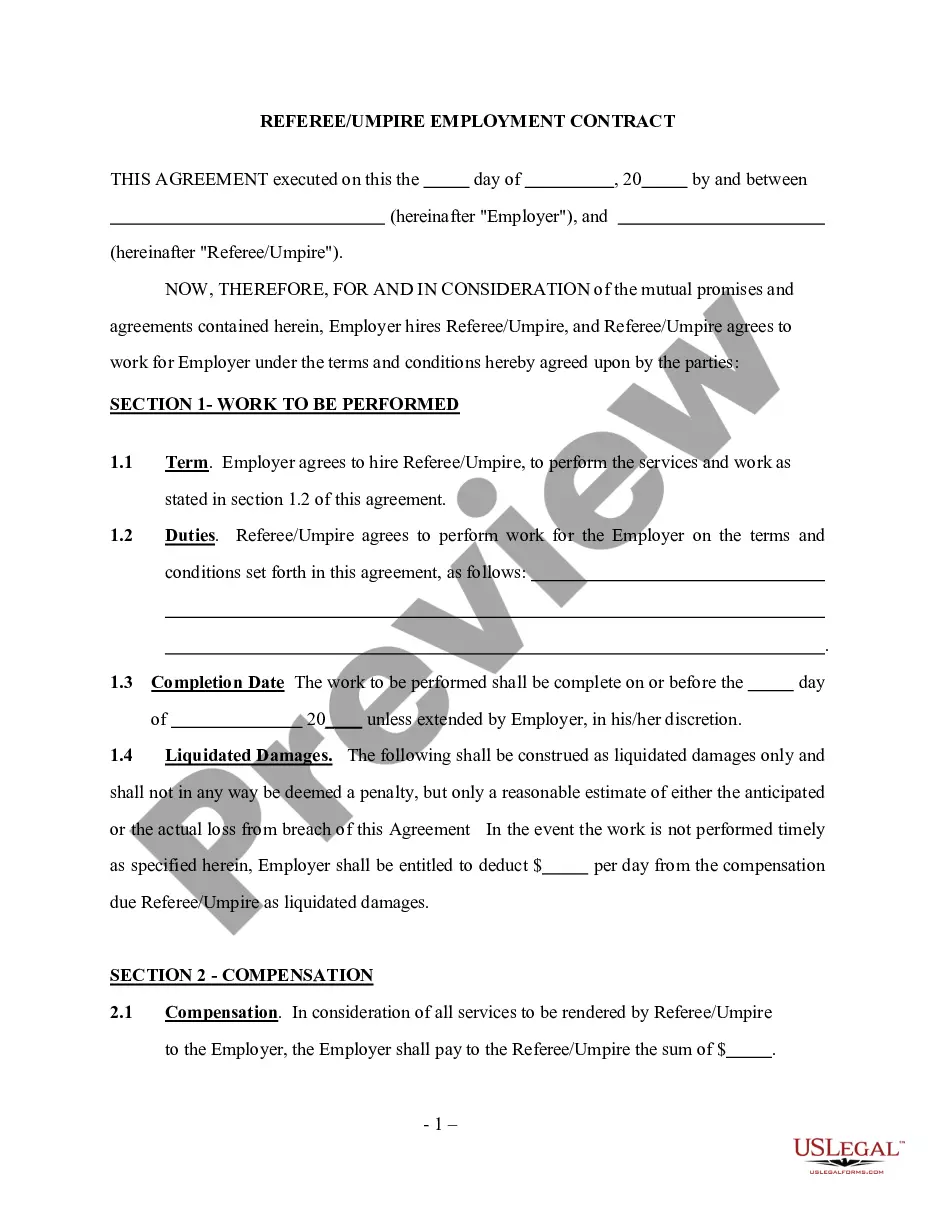
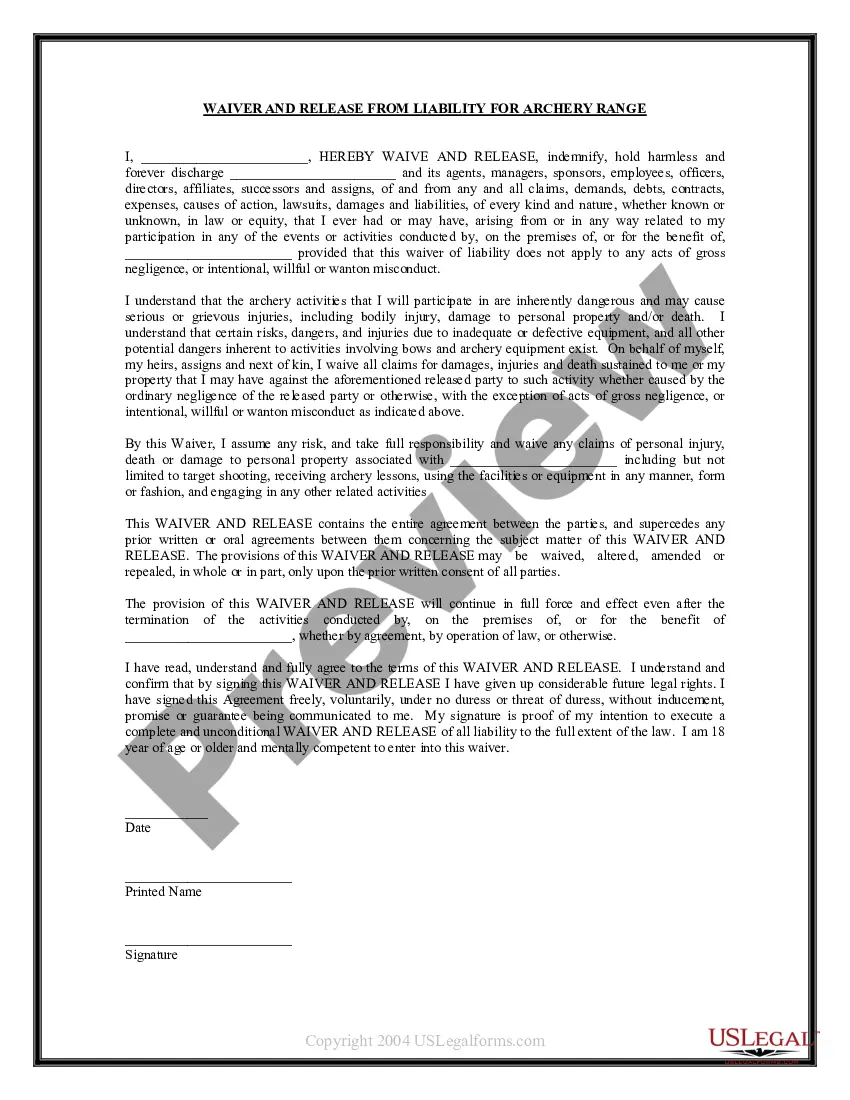
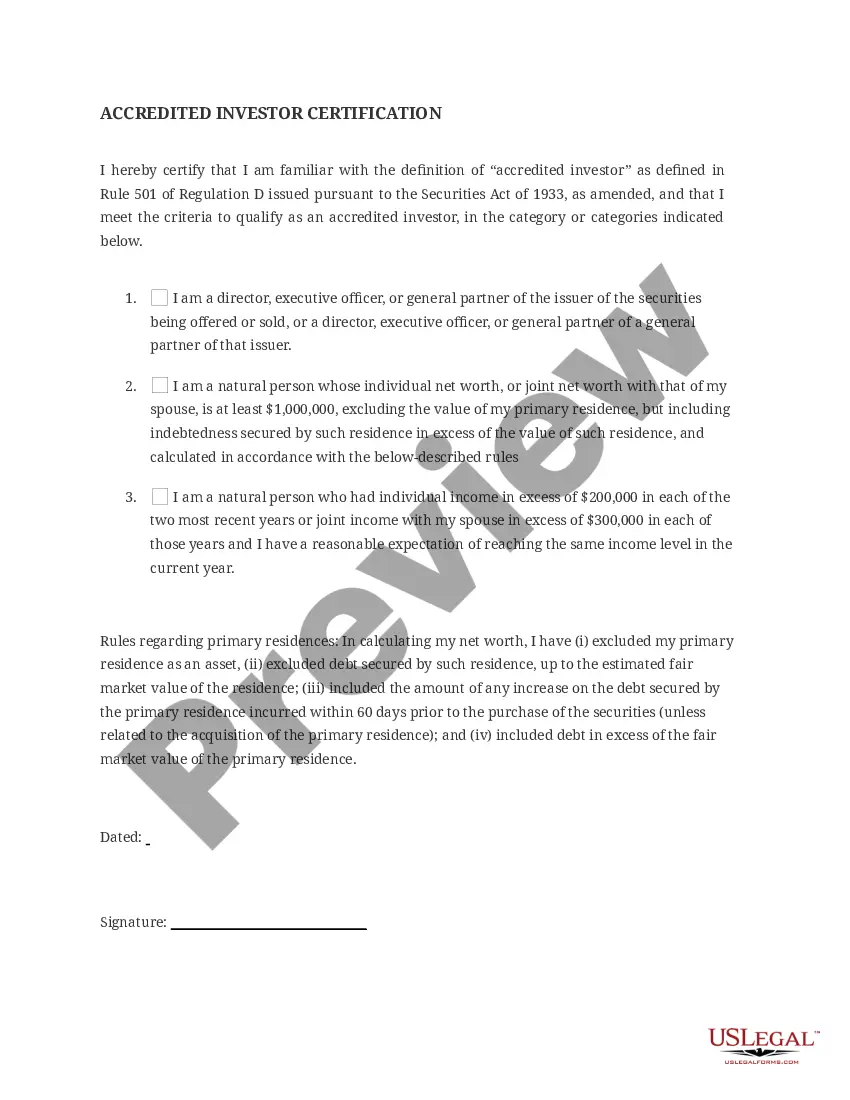
- Use the Preview button to view the form.
- Check the summary to verify you have selected the right template.
- If the template is not what you are looking for, use the Lookup section to find the form that fits your requirements.
- Once you find the right template, click Purchase now.
Form popularity
FAQ
To become a lobbyist in New Hampshire as a self-employed independent contractor, you typically need a thorough understanding of the state's legislative processes and a strong network of contacts. While there are no formal educational requirements, a degree in political science, law, or a related field can be beneficial. Additionally, familiarity with the New Hampshire Lobbyist Agreement is essential for compliance and ensuring ethical lobbying practices. Utilizing platforms like U.S. Legal Forms can simplify the process of creating your New Hampshire Lobbyist Agreement as a self-employed independent contractor, making it easier for you to start your lobbying career.
Yes, many lobbyists operate as self-employed independent contractors. This arrangement allows them to manage their workload and select their clients freely. A New Hampshire Lobbyist Agreement - Self-Employed Independent Contractor provides the framework for these professionals to outline their services and compensation. Utilizing a platform like uslegalforms can simplify the creation of this agreement, ensuring it meets all legal requirements and serves both parties effectively.
The four main types of lobbying include grassroots, astroturf, direct, and coalition lobbying. Each form serves a unique purpose, influencing decision-makers through different strategies and techniques. Specifically, in the context of a New Hampshire Lobbyist Agreement - Self-Employed Independent Contractor, knowing these types can help you choose the best approach to represent your clients effectively. Associating with the right type bolsters your advocacy efforts and strengthens your client relationships.
Lobbyists are typically employed through firms, businesses, or as independent contractors. In the context of a New Hampshire Lobbyist Agreement - Self-Employed Independent Contractor, individuals can negotiate their terms directly with clients. This flexibility allows lobbyists to work with various organizations while maintaining independence from a traditional employer. Understanding your employment model is essential for ensuring compliance with state regulations.
In New Hampshire, lobbyists must register if they engage in more than three lobbying contacts within a specific time frame. This limit helps determine when a formal registration is needed, ensuring that lobbying activities remain accountable. If you're navigating the registration process as a self-employed independent contractor, the New Hampshire Lobbyist Agreement provides clear guidelines and support through platforms like US Legal Forms.
Yes, lobbyists in New Hampshire must register to operate legally. This requirement ensures transparency in the lobbying process and allows for public awareness of lobbying activities. If you are working as a self-employed independent contractor, understanding the New Hampshire Lobbyist Agreement is essential to ensure compliance with state laws.
January 2021 The Lobbying Disclosure Act of 1995, as amended by the Honest Leadership and Open Government Act of 2007, requires all active registrants to file quarterly activity reports with the Clerk of the U.S. House of Representatives and Secretary of the U.S. Senate.
The Act requires the secretary and clerk to maintain a publicly available list of all registered lobbyists, lobbying firms, and lobbying clients. The offices also need to make registrations and reports available for public inspection and copying and retain those registrations and reports for six years.
The term lobbying activities means lobbying contacts and efforts in support of such contacts, including preparation and planning activities, research and other background work that is intended, at the time it is performed, for use in contacts, and coordination with the lobbying activities of others.
Accountability. Contract lobbyists have a vested interest in seeing their clients succeed: retaining their business. Most in-house lobbyists are judged by more than just their lobbying performance.