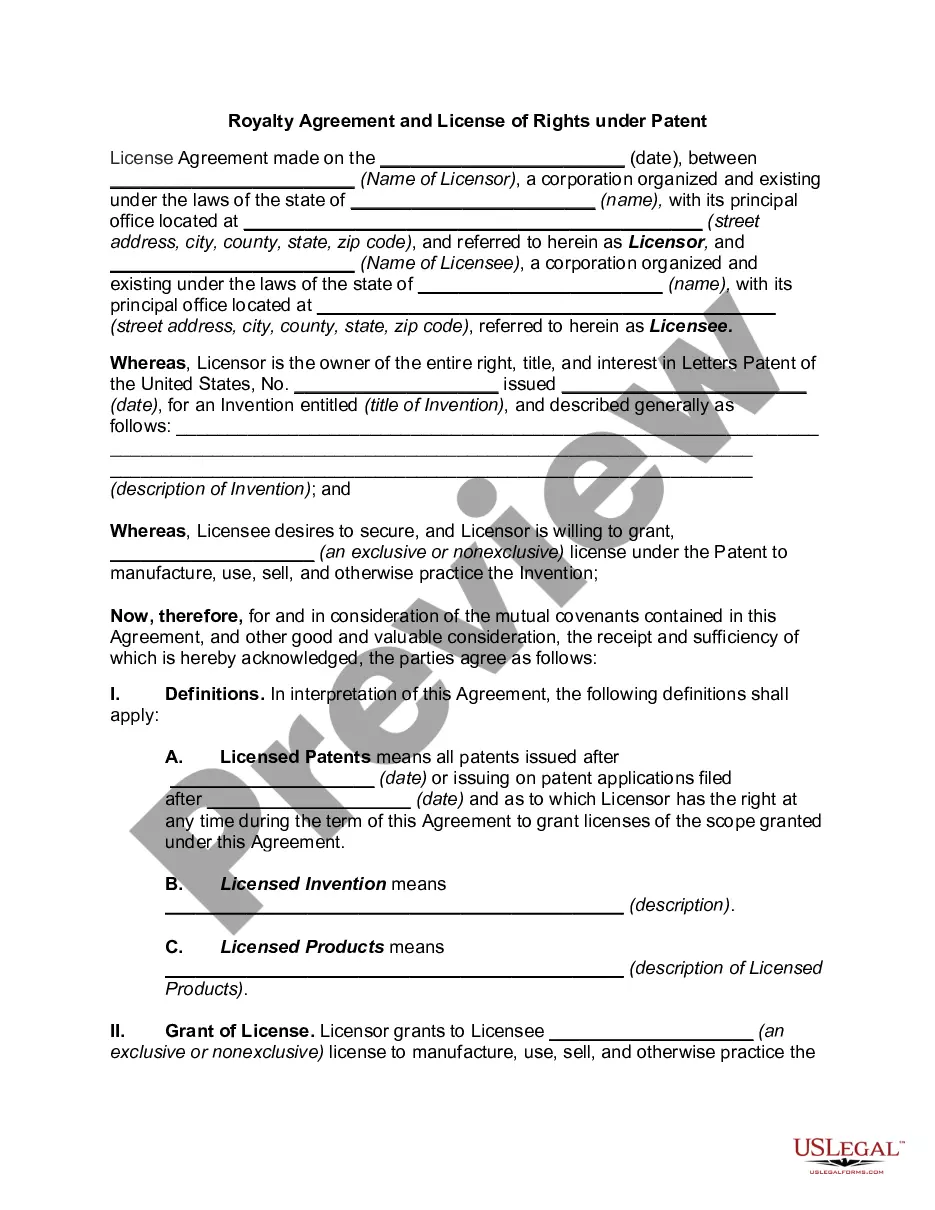
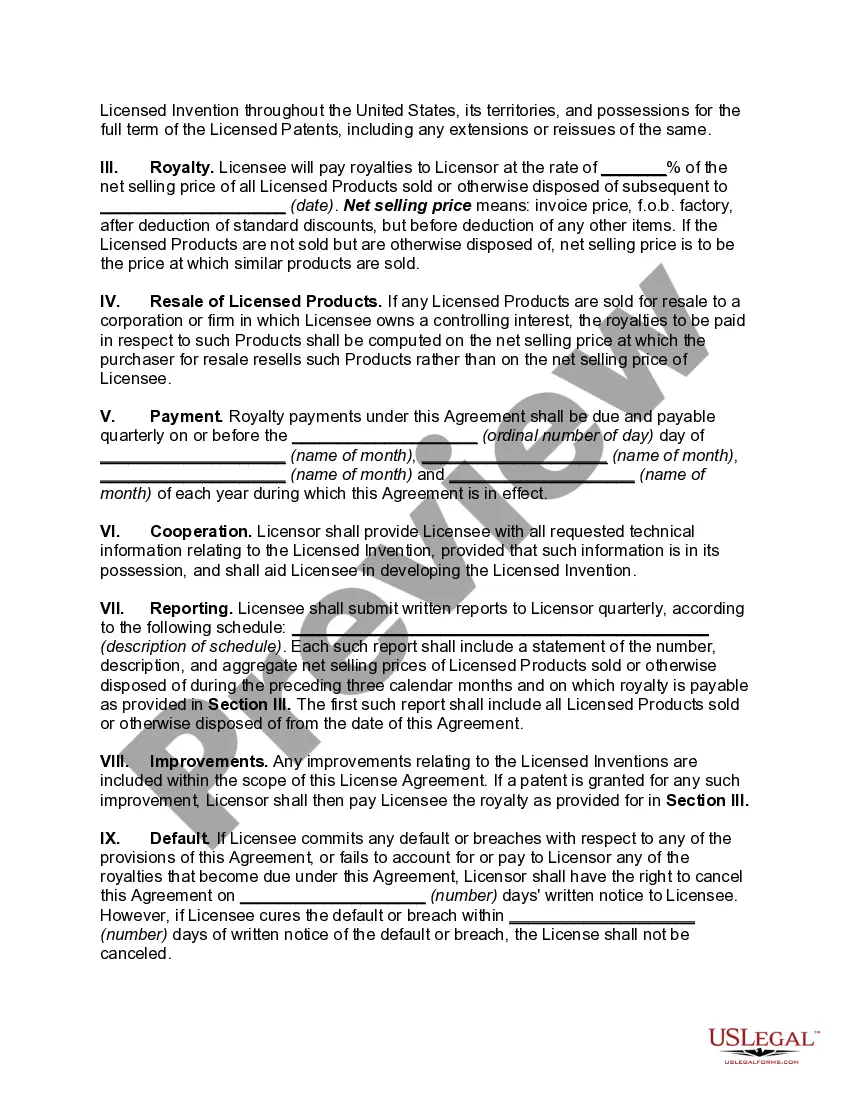
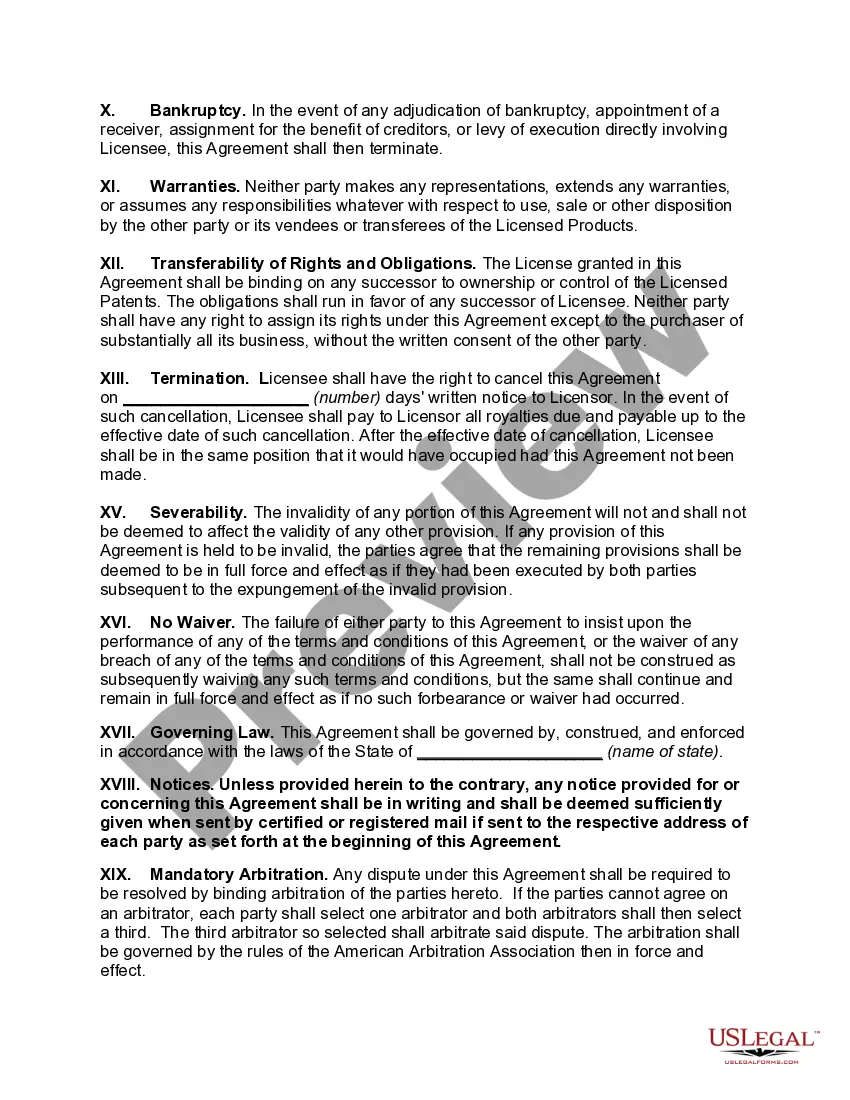
New Hampshire Royalty Agreement and License of Rights under Patent
Description
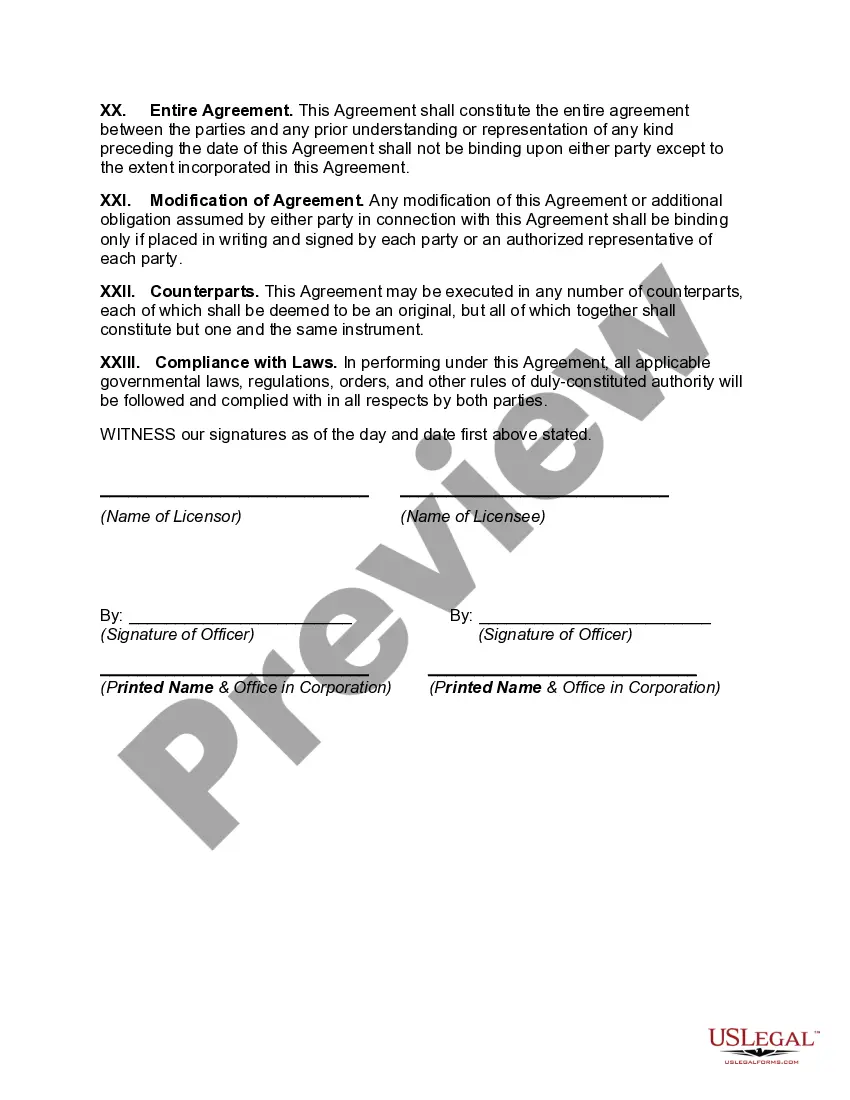
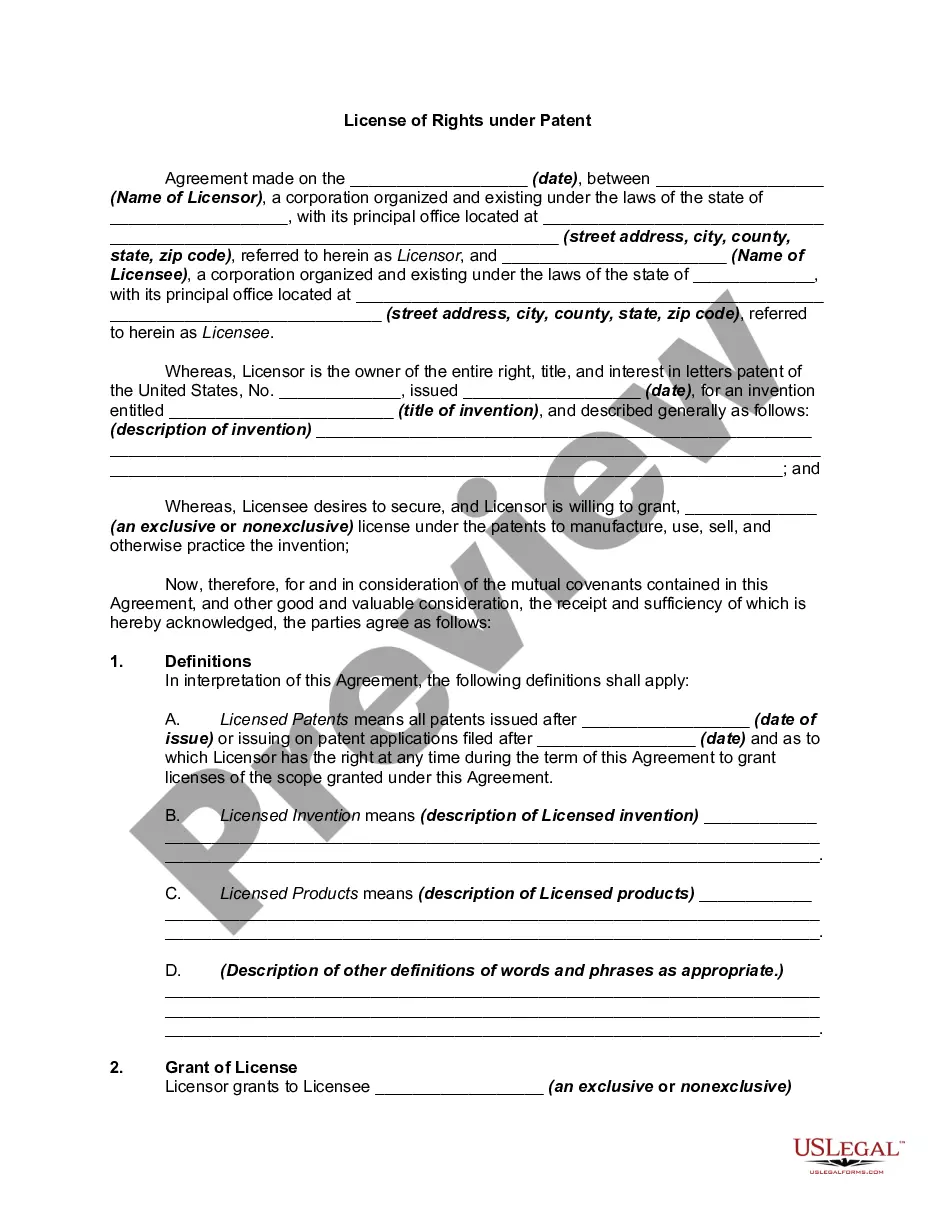
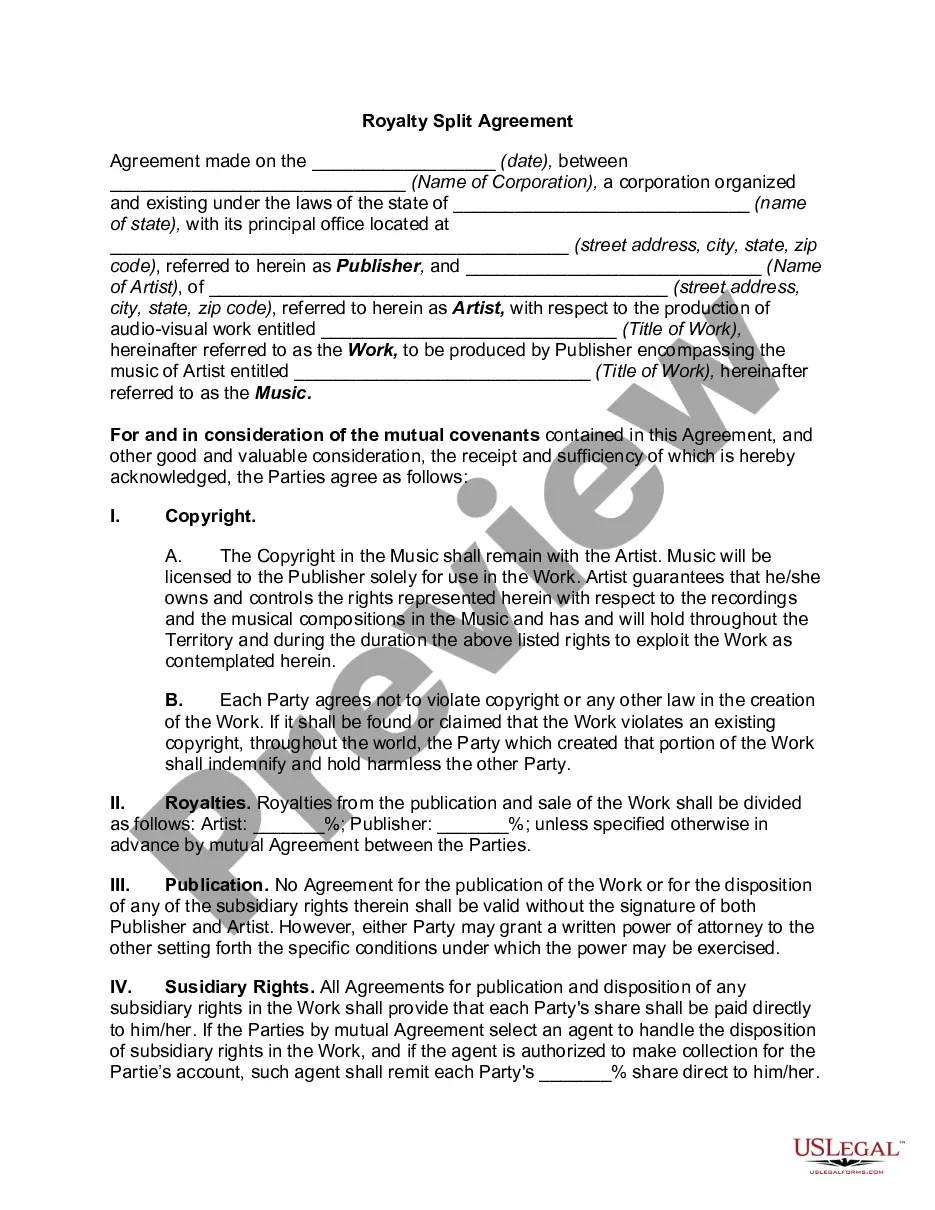
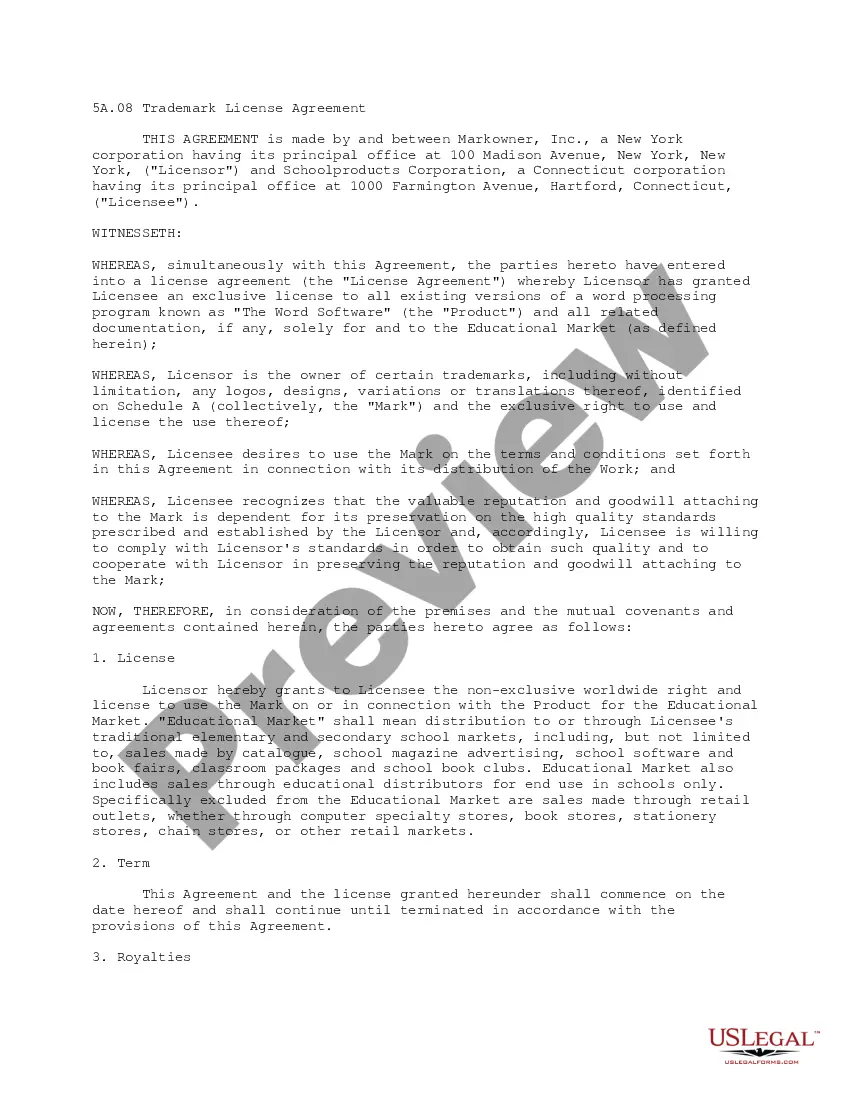
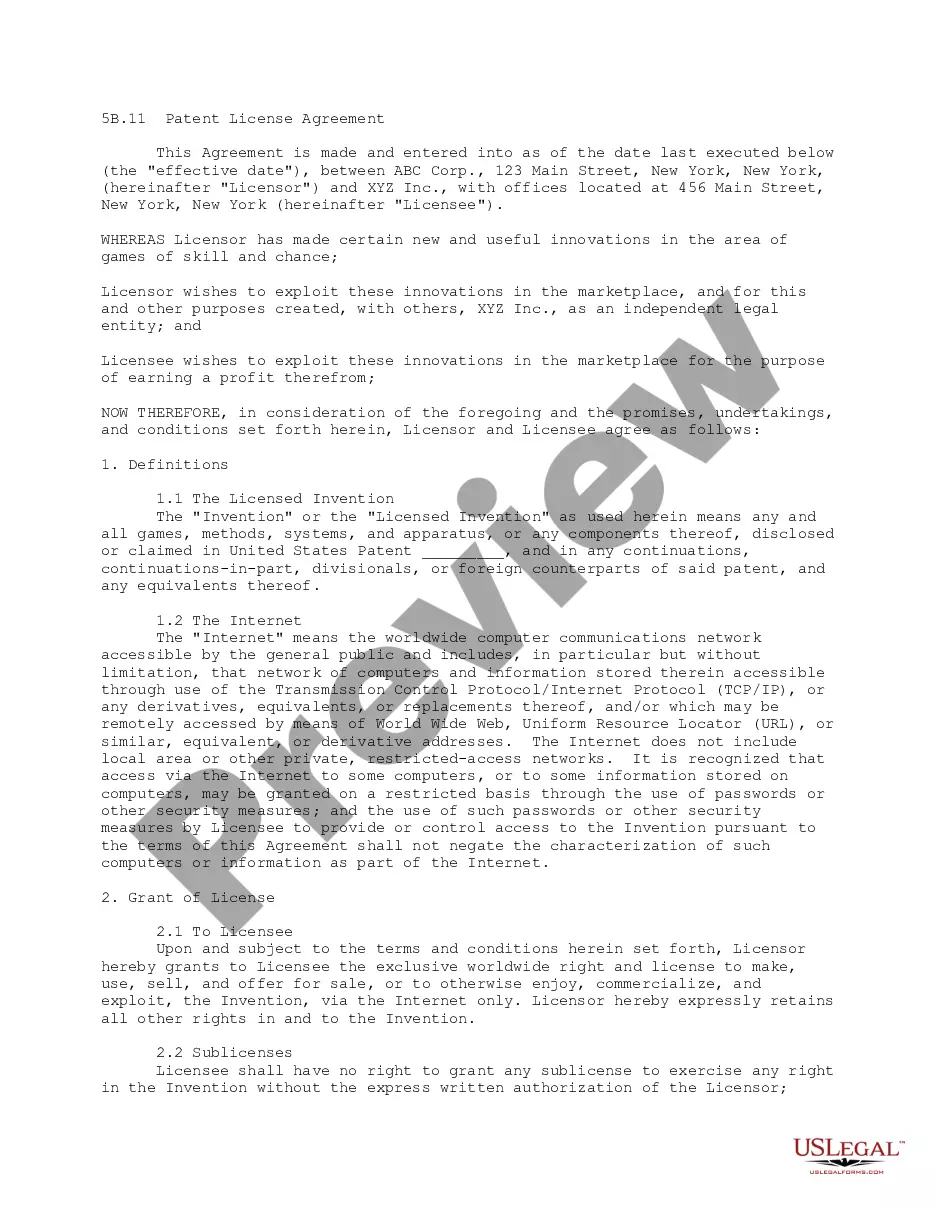
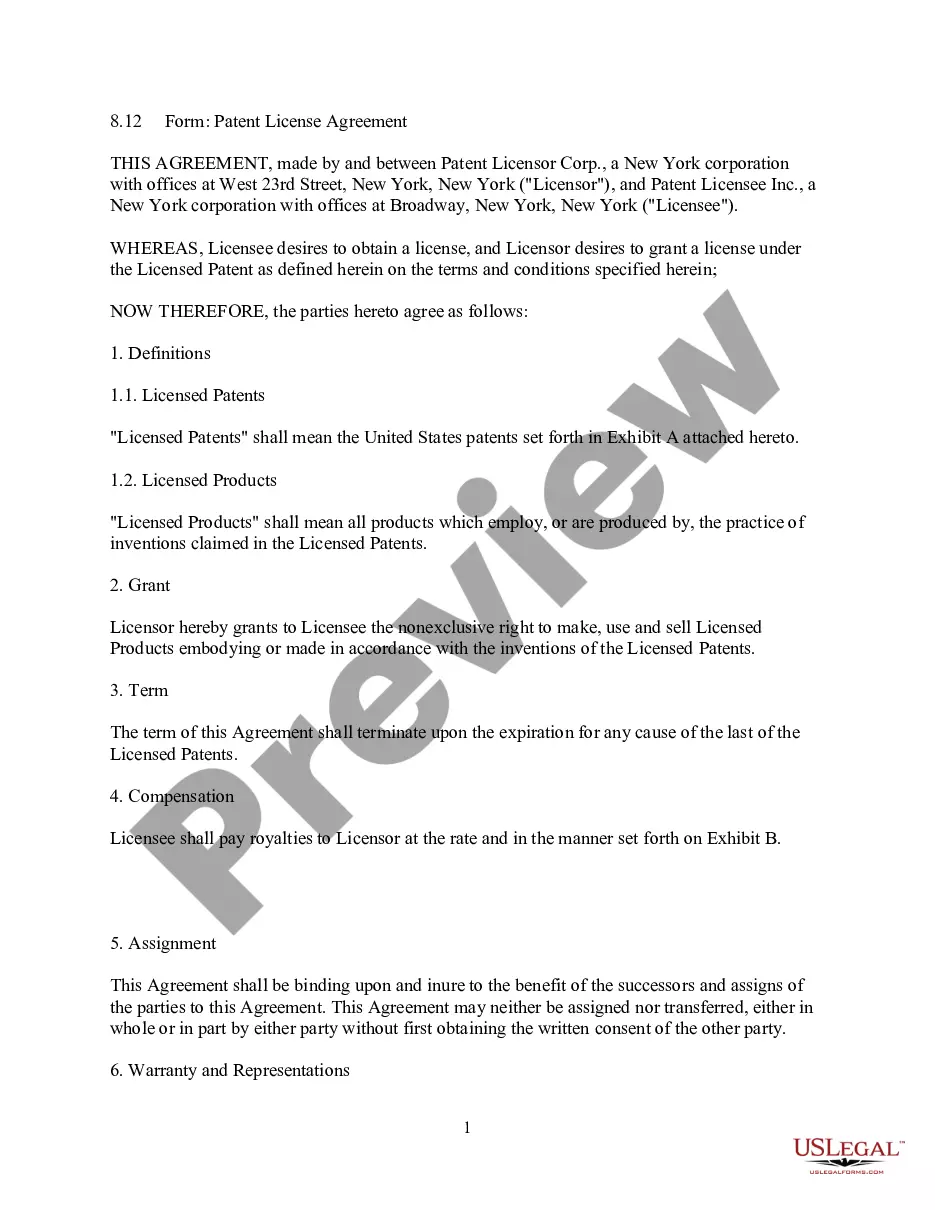
How to fill out Royalty Agreement And License Of Rights Under Patent?
Are you presently in a situation where you require documents for either business or personal requirements almost every day.
There are numerous legal document templates available online, but discovering reliable ones isn't straightforward.
US Legal Forms offers thousands of template forms, including the New Hampshire Royalty Agreement and License of Rights under Patent, that are crafted to comply with state and federal regulations.
Utilize US Legal Forms, the most extensive collection of legal forms, to save time and avoid mistakes.
The service provides professionally crafted legal document templates that you can use for a variety of purposes. Create your account on US Legal Forms and start simplifying your life.
- If you are already familiar with the US Legal Forms website and have an account, simply Log In.
- After that, you can download the New Hampshire Royalty Agreement and License of Rights under Patent template.
- If you do not have an account and wish to start using US Legal Forms, follow these steps.
- Find the form you need and ensure it corresponds to the proper city/area.
- Utilize the Preview button to review the form.
- Read the description to confirm that you have chosen the correct form.
- If the form isn’t what you’re looking for, utilize the Search field to locate the form that fits your needs.
- Once you find the appropriate form, click on Purchase now.
- Select the pricing plan you require, enter the necessary information to create your account, and complete the order using your PayPal or Visa or Mastercard.
- Choose a convenient document format and download your copy.
- Access all the document templates you have purchased in the My documents menu. You can obtain an additional copy of New Hampshire Royalty Agreement and License of Rights under Patent whenever necessary. Just click on the desired form to download or print the document template.
Form popularity
FAQ
A 'reasonable royalty rate' is an estimation of damages in patent infringement cases. It is often referred to as established royalty that a licensee would pay for the rights to the patented invention in a hypothetical negotiation.
Practitioners and licensing executives often refer to three basic types of voluntary licenses: non-exclusive, sole, and exclusive. A non-exclusive licence allows the licensor to retain the right to use the licensed property and the right to grant additional licenses to third parties.
Royalty rates vary per industry, but a good rule of thumb is between 2-3% on the low end, and 7-10% on the high end. I have licensed consumer products for as low as 3% and as high as 7%, with 5% being the most common and a generally fair number.
In short, a patent license agreement is a legal contract created to define the terms under which a licensee may create, sell, and use a patented invention from a licensor (or patent owner). This agreement also spells out how royalties will be paid to the licensor/patent owner.
Patent License Royalties The royalties typically are a percentage of the gross sales of the products using your patent. Although each situation must be evaluated separately, royalties from patent licenses are usually 3 to 6 percent of gross sales. However, some patent license royalties are set by law.
Typically, royalties are paid as a percentage of the product's gross sales. The typical percentage for royalty payments will be 3-5%.
There are five key steps in learning how to license a patent for royalties.Step 1: Understand Your Market.Step 2: Find a Licensee.Step 3: Establish License Details.Step 4: Negotiate Your License.Step 5: Draft the License Agreement.
Patent licensing royalty rates are set when professionals enter into a patent licensing deal. Patent royalties are payments made by the licensee to the licensor for the use of the patent. They are usually a percentage of the revenue generated by the patent, although they can sometimes be agreed as a fixed fee.
Because of the intellectual property rights granted to you through your patent, you can transfer or rent these intellectual property rights to others in the form of a license agreement. Patent licenses provide the license holder with the right to make, use, or sell a patented invention in exchange for royalties.