New Hampshire Land Trust Agreement

State:
Multi-State
Control #:
US-02093BG
Format:
Word; 
Rich Text
Instant download

Description

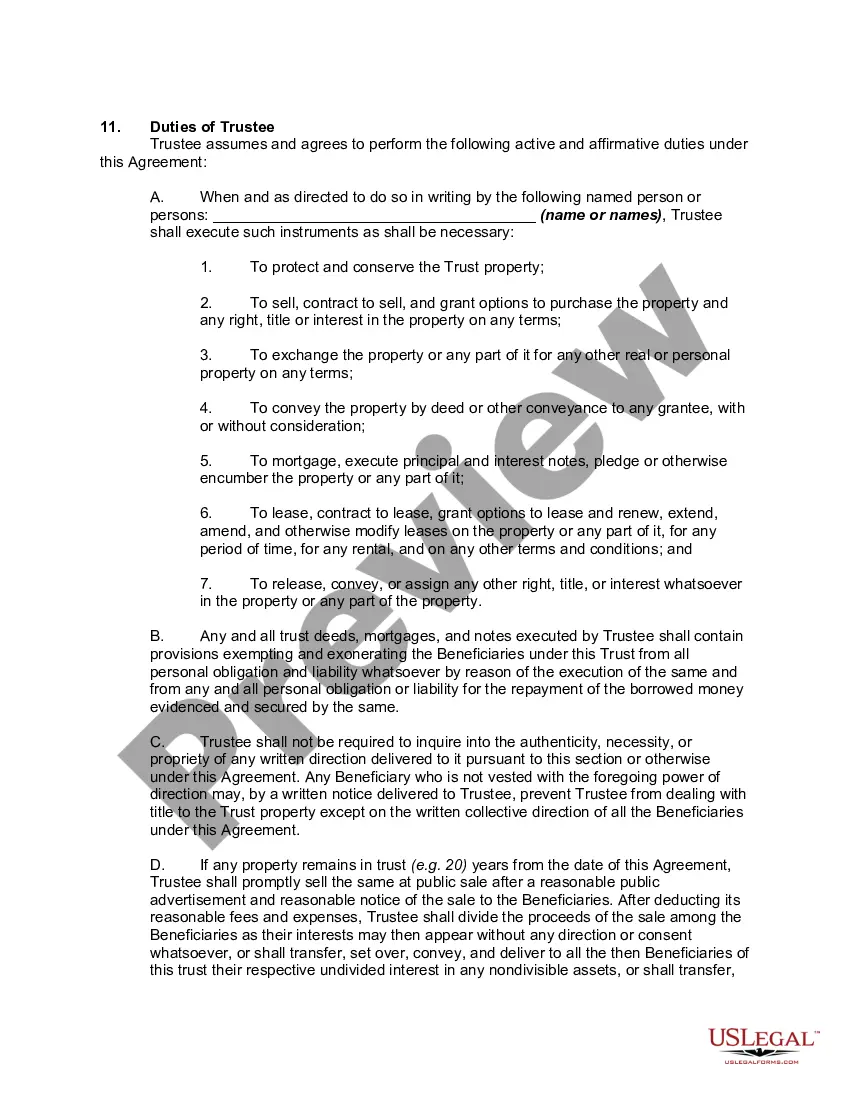
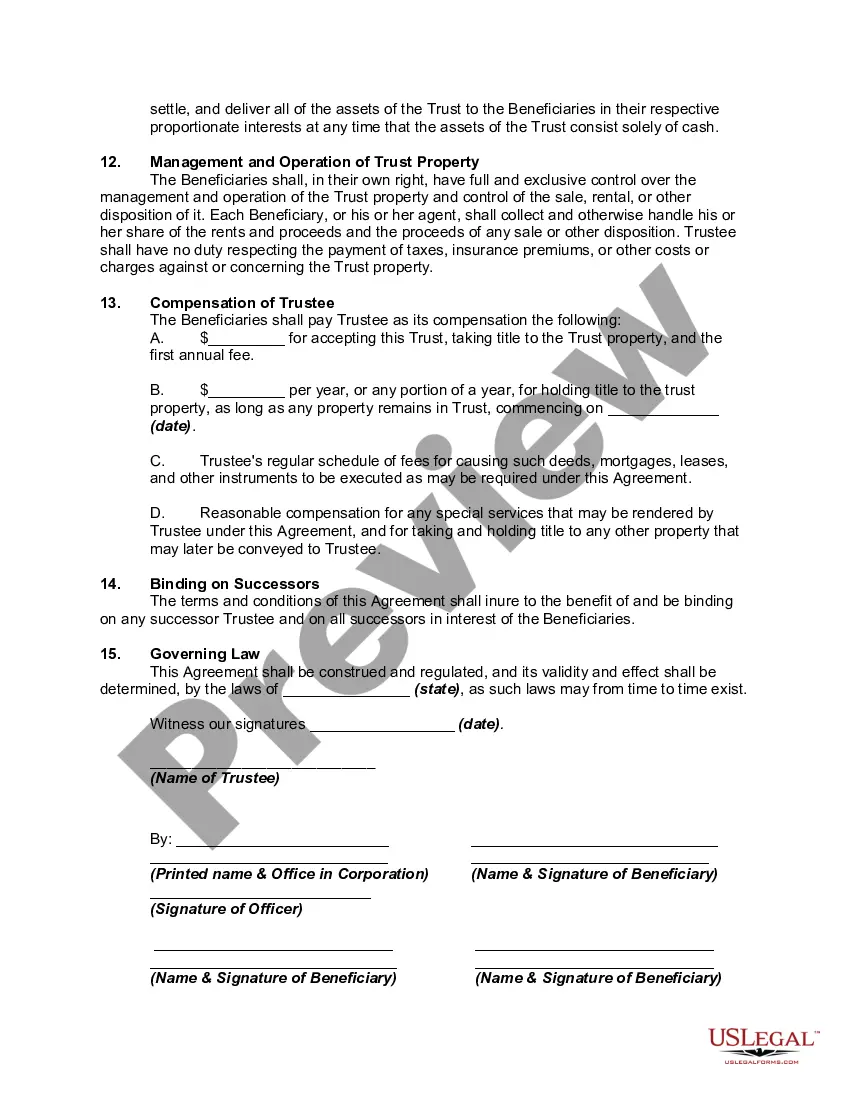
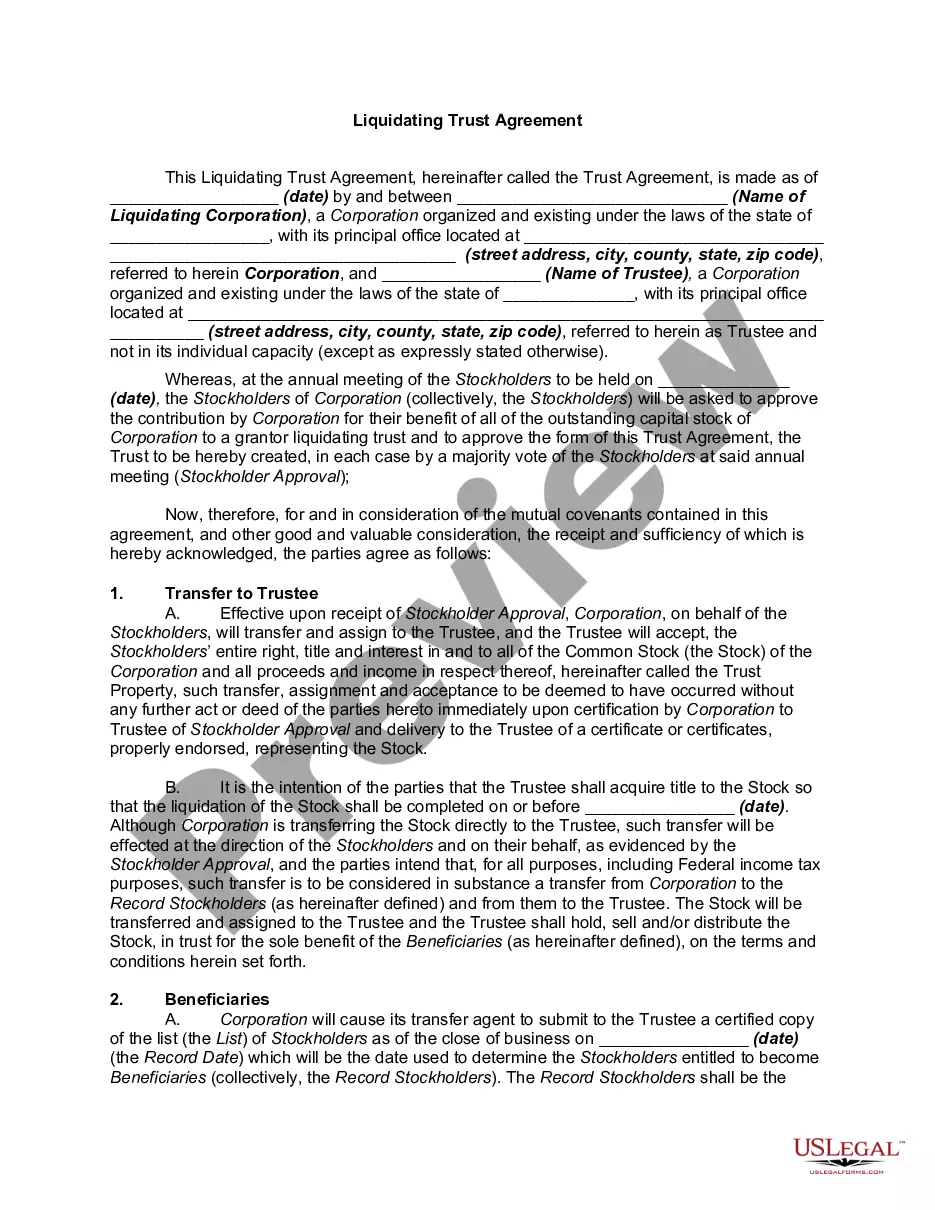
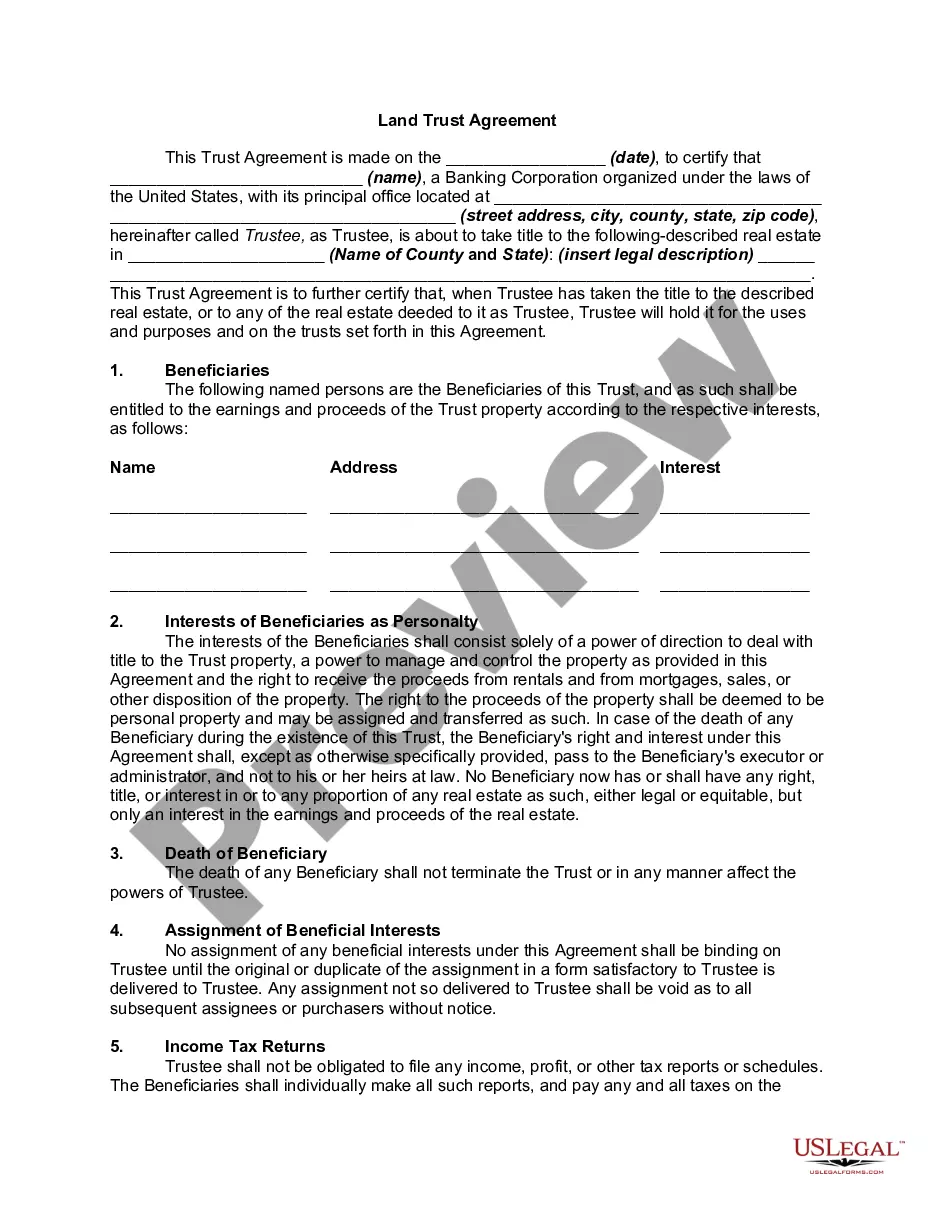
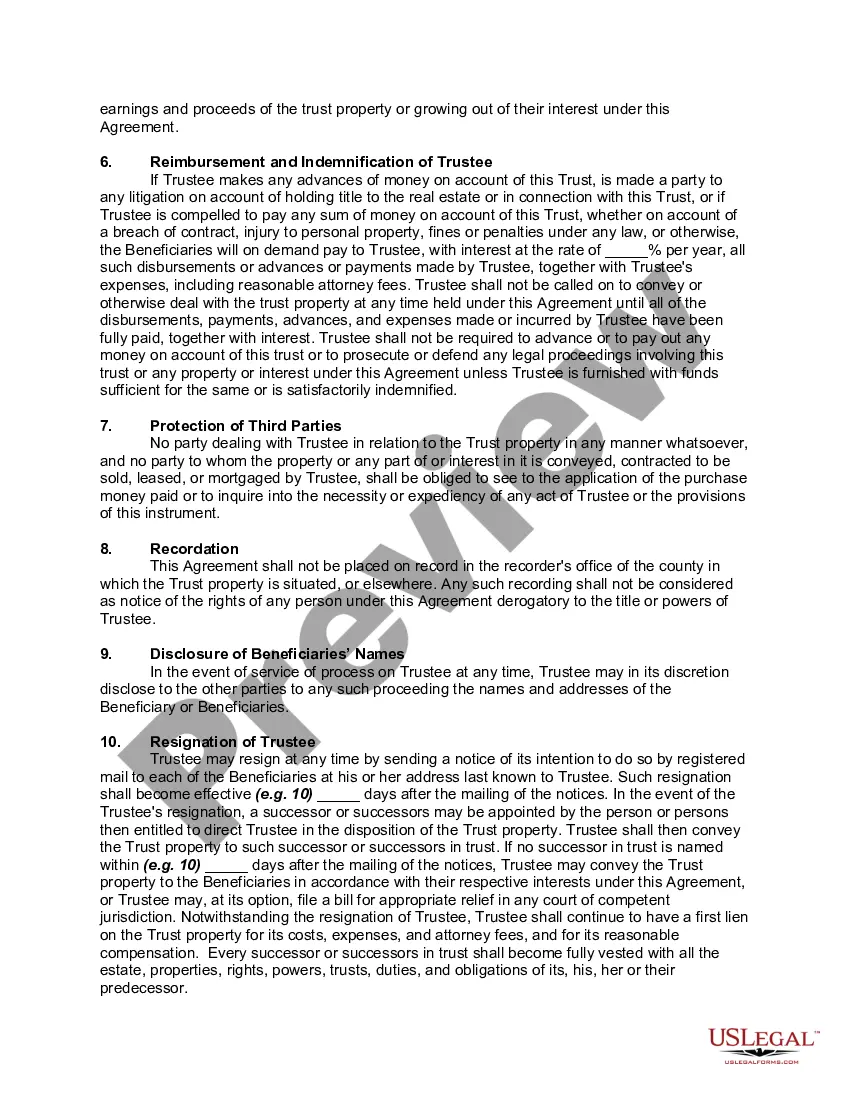
There are two basic instruments required to establish a land trust. One is a deed in trust conveying the real estate to a trustee. The other is a trust agreement defining the rights and duties of the trustee and the beneficiaries, which is mentioned in the deed of trust but is not recorded. The deed in trust should convey title to real property to a trustee and confer complete trust powers on the trustee so that the trustee can deal with third parties without reference to the trust agreement. Restrictions on the trustee's powers should be set forth in the trust agreement.


This form is a generic example that may be referred to when preparing such a form for your particular state. It is for illustrative purposes only. Local laws should be consulted to determine any specific requirements for such a form in a particular jurisdiction.
Free preview
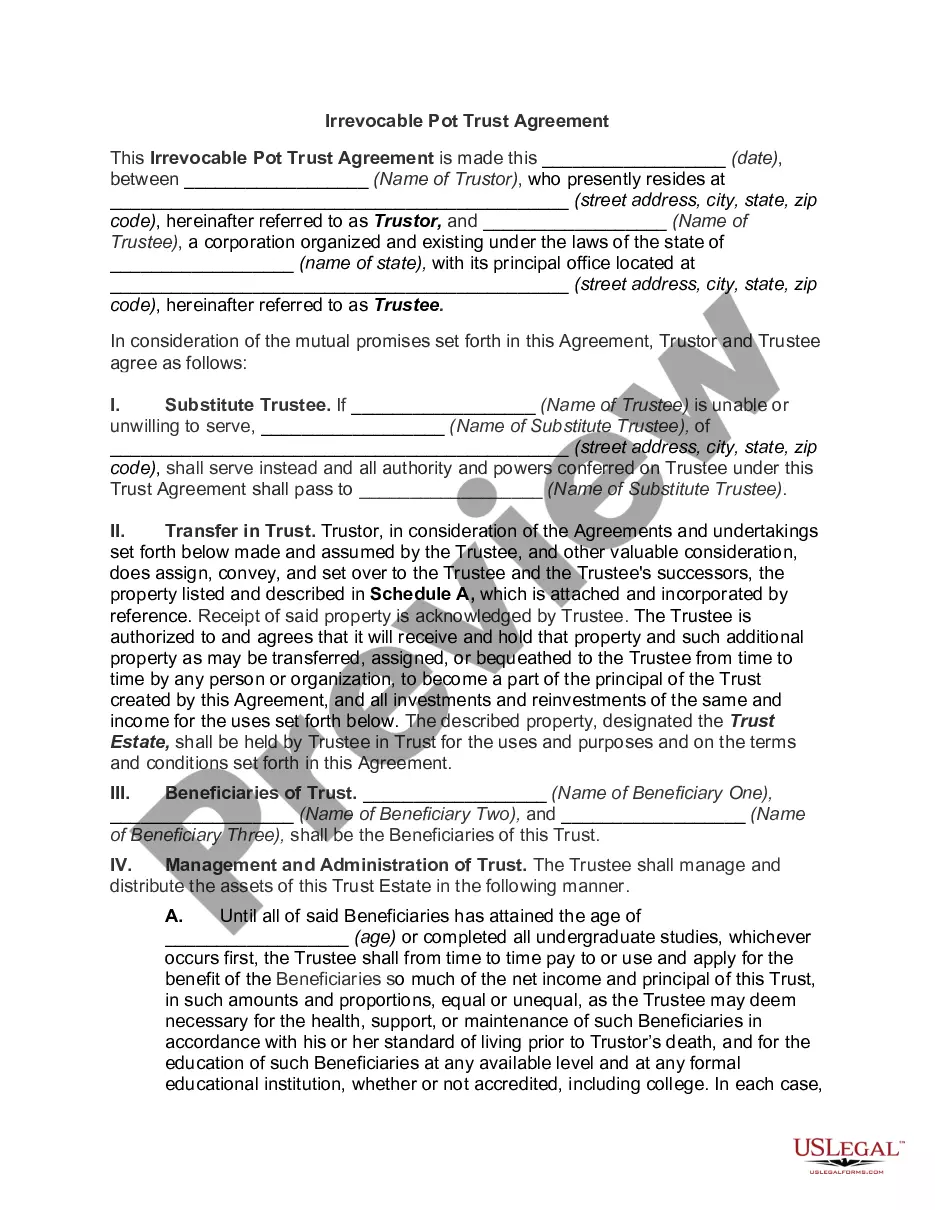
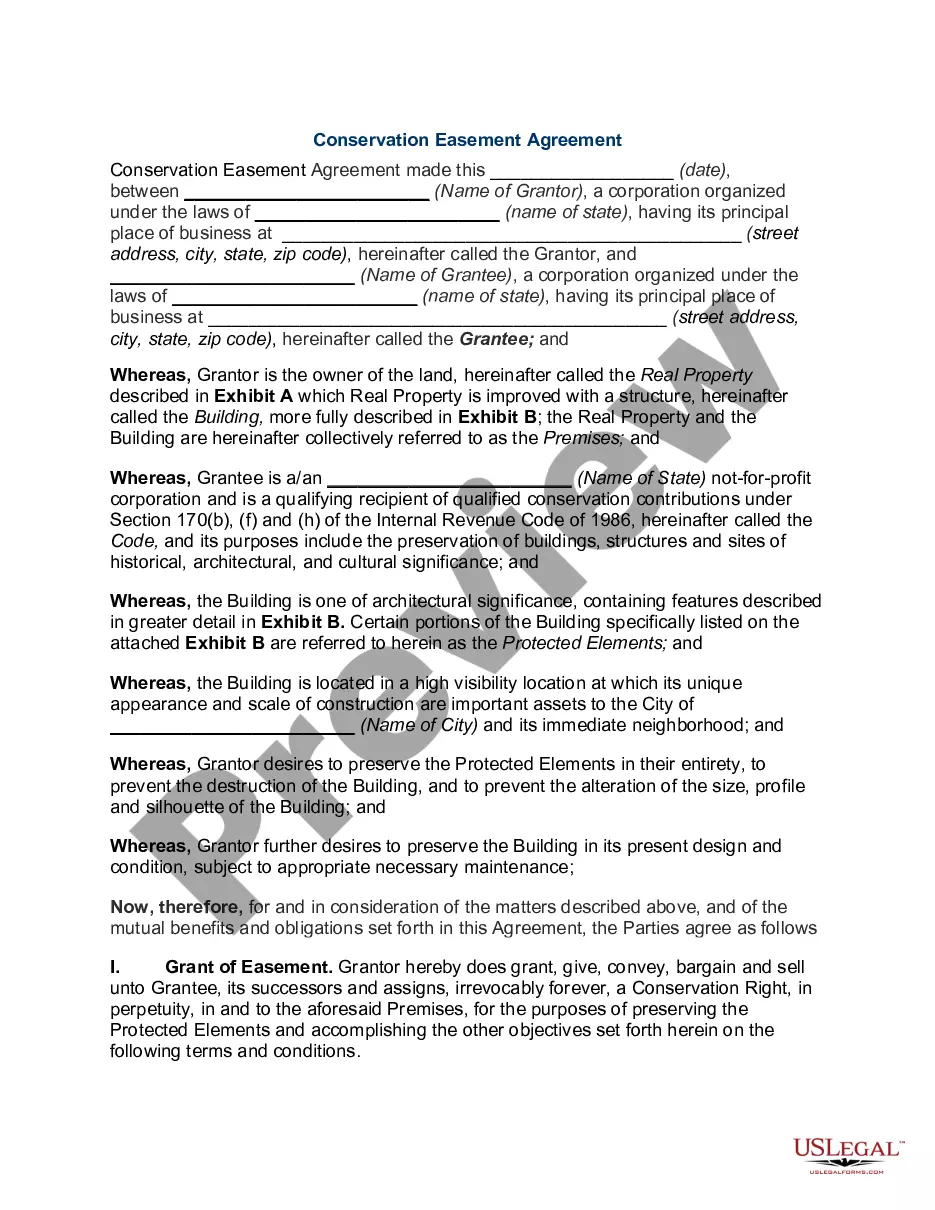
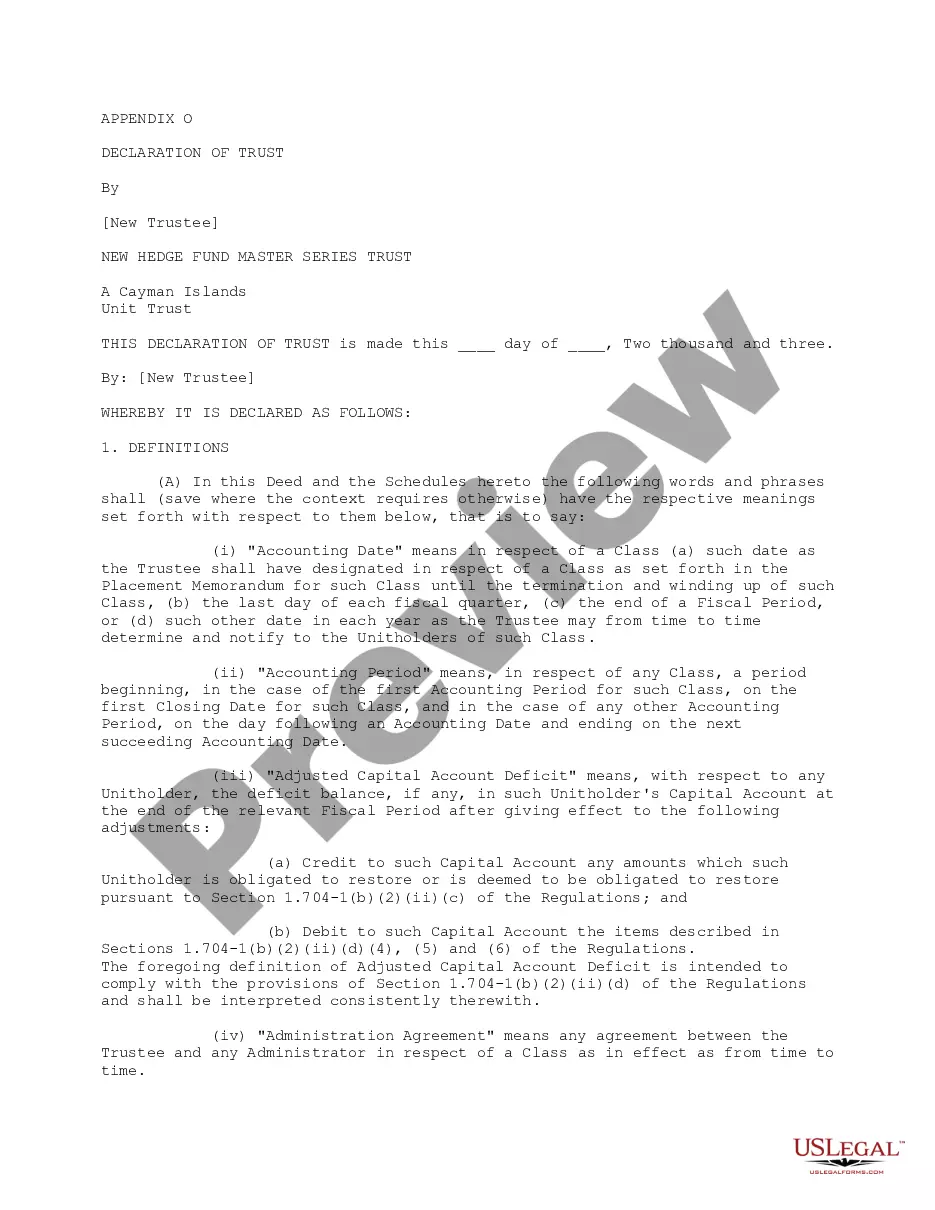
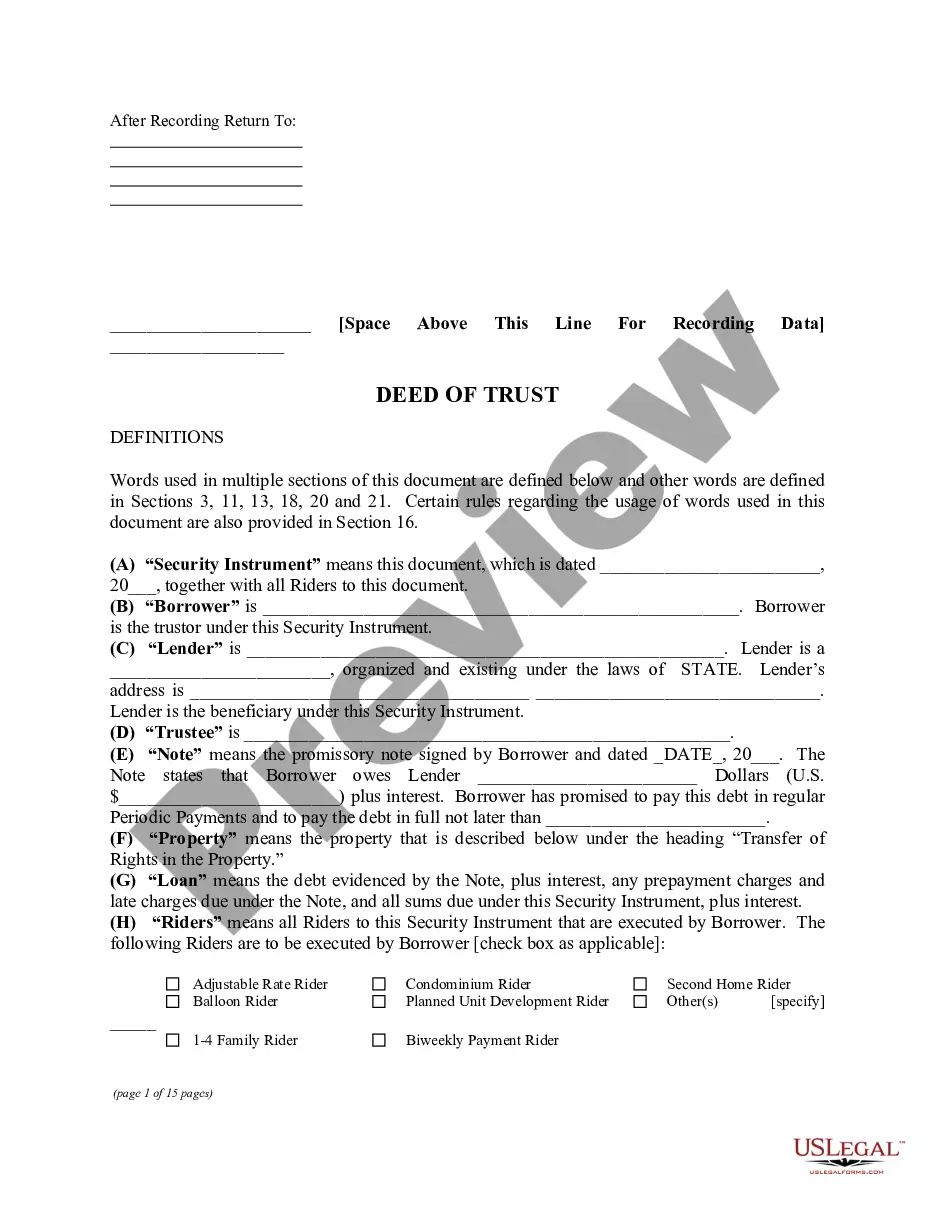
  • Preview Land Trust Agreement
  • Preview Land Trust Agreement
  • Preview Land Trust Agreement
  • Preview Land Trust Agreement
  • Preview Land Trust Agreement

How to fill out Land Trust Agreement?

It is feasible to spend several hours online searching for the legal document template that complies with the federal and state requirements you require.

US Legal Forms provides thousands of legal documents that can be evaluated by experts.

You can download or print the New Hampshire Land Trust Agreement from my service.

If available, use the Preview option to review the document template as well.

  1. If you already have a US Legal Forms account, you can Log In and select the Download option.
  2. After that, you can complete, edit, print, or sign the New Hampshire Land Trust Agreement.
  3. Every legal document template you obtain is yours permanently.
  4. To acquire yet another copy of any purchased form, navigate to the My documents tab and click on the appropriate option.
  5. If you are using the US Legal Forms website for the first time, follow the simple instructions provided below.
  6. First, make sure you have selected the correct document template for the area/town of your preference.
  7. Read the form details to ensure you have chosen the correct document.

Form popularity

FAQ

A revocable land trust, specifically a New Hampshire Land Trust Agreement, effectively avoids probate. This type of trust allows you to retain control over your assets during your lifetime while ensuring they are transferred directly to your beneficiaries after your death without going through the court system. It allows for flexibility and can be amended if your circumstances change. Consider working with uslegalforms to create a trust that meets your specific needs.

Using a trust, such as a New Hampshire Land Trust Agreement, is a proactive way to manage your assets and avoid probate. It allows you to dictate how your property is handled after your death, bypassing the lengthy probate process. Additionally, this approach can maintain your privacy, as trusts are not publicly disclosed like wills. By setting up a trust, you give your heirs a smoother transition in managing your estate.

To avoid probate in New Hampshire, consider establishing a New Hampshire Land Trust Agreement. This agreement allows you to manage your property while you are alive, and upon your passing, it can pass directly to your beneficiaries without going through probate. Utilizing a trust simplifies the transfer process, saving both time and costs for your loved ones. Consulting with a legal expert can guide you through the creation of your trust.

In New Hampshire, trusts are not typically recorded like deeds or mortgages. However, you can create a New Hampshire Land Trust Agreement to outline the terms and ownership of your property. While it's not required to record a trust, doing so can provide additional legal benefits and clarity regarding your property. It's wise to consult with a legal professional to ensure your trust is properly managed.

Yes, a trust can still be valid in New Hampshire even if it is not notarized. The essential factor is that the trust document meets the required legal standards as per state law. However, a notarized trust can provide additional assurance and help prevent future disputes. It’s wise to consult with experts familiar with the New Hampshire Land Trust Agreement for best practices in trust establishment.

To establish a trust in New Hampshire, start by defining your goals and the assets you wish to include. Next, you should draft a trust document outlining the terms and beneficiaries. Engaging with legal professionals can simplify this process, helping you create a tailored New Hampshire Land Trust Agreement that meets your specific needs and complies with local laws.

One of the biggest mistakes parents make is failing to fund the trust adequately. Simply establishing a trust does not ensure its effectiveness; transferring assets into it is crucial. Additionally, not reviewing the trust periodically to reflect changing circumstances can lead to issues. Parents should consider using a New Hampshire Land Trust Agreement to effectively manage their estate planning.

In New Hampshire, a trust does not necessarily require notarization to be valid. However, having a notarized trust can provide additional legal protections and clarify any disputes in the future. When creating a New Hampshire Land Trust Agreement, it’s advisable to consult with legal experts to ensure it meets all statutory requirements and to enhance its credibility.

The trust law in New Hampshire governs how trusts operate within the state. In essence, a trust is a legal entity that holds assets for the benefit of another. It can serve various purposes, including estate planning and asset protection. Understanding the New Hampshire Land Trust Agreement is crucial as it outlines the rules and responsibilities involved.

A trust is a broad legal arrangement to manage assets for beneficiaries, while a land trust specifically focuses on real property and land use. In a New Hampshire Land Trust Agreement, the primary aim is often conservation and property management without public disclosure of ownership. Understanding this distinction can help you choose the right option for your needs. For comprehensive guidance, consider using US Legal Forms to navigate these arrangements easily.

Trusted and secure by over 3 million people of the world’s leading companies

New Hampshire Land Trust Agreement