New Hampshire Charitable Remainder Inter Vivos Annuity Trust
Description
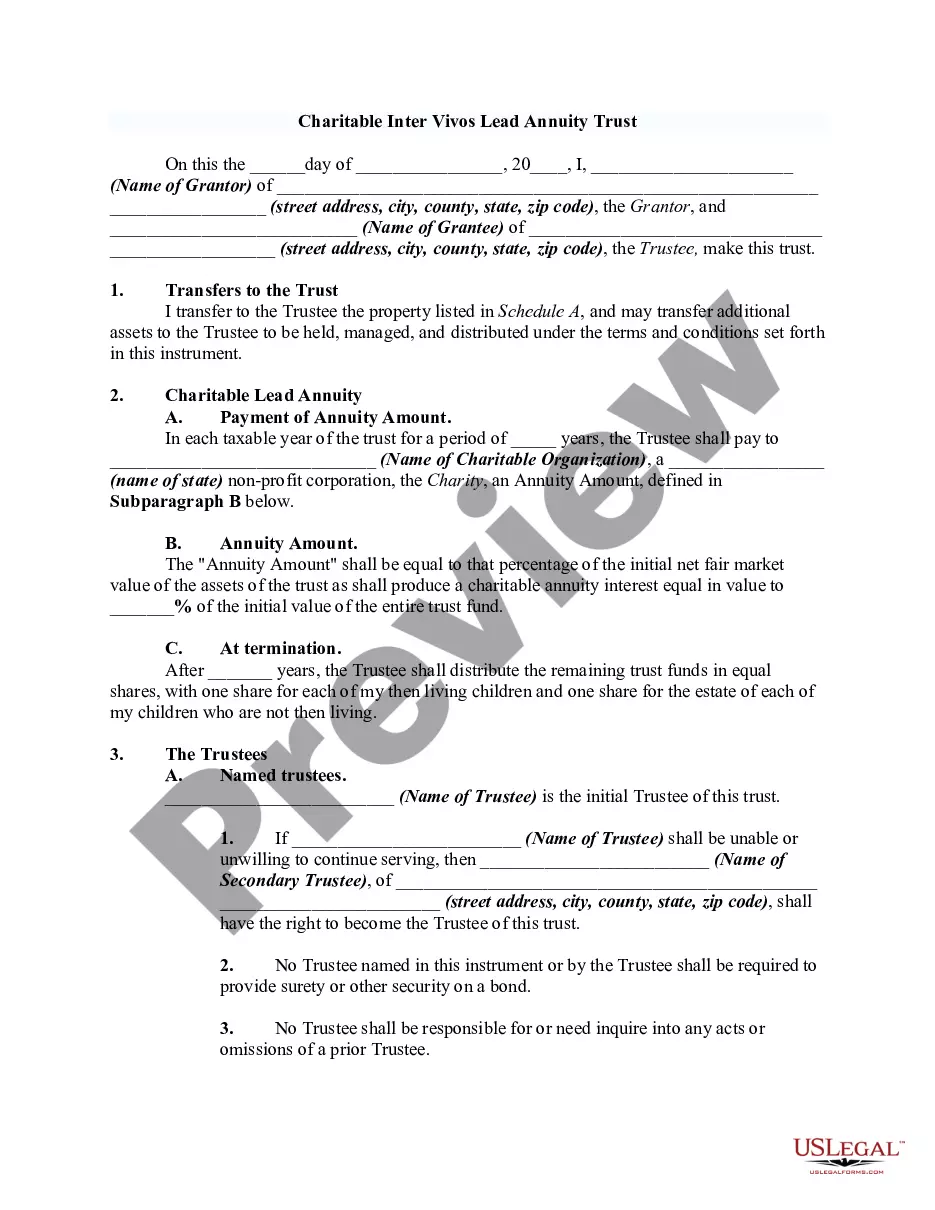
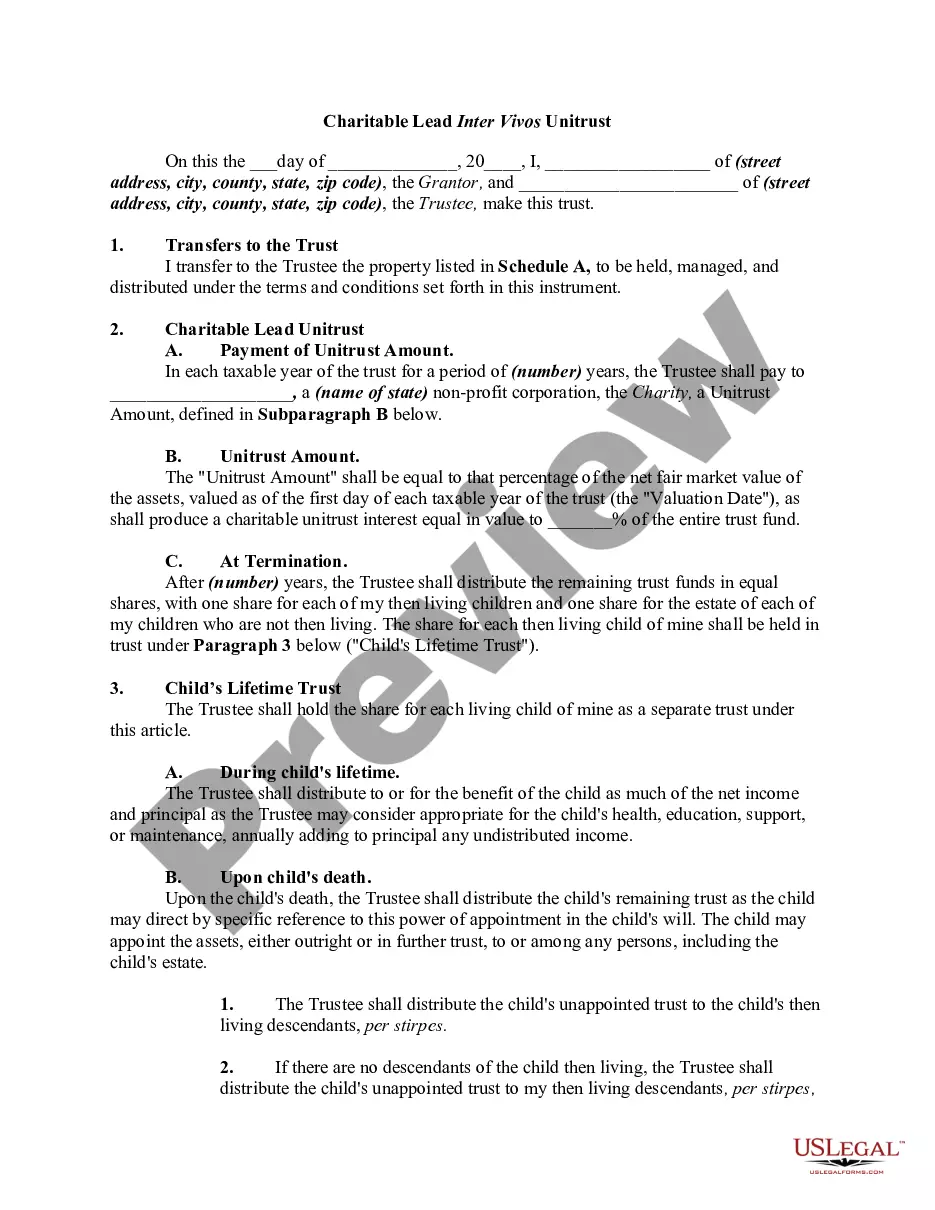
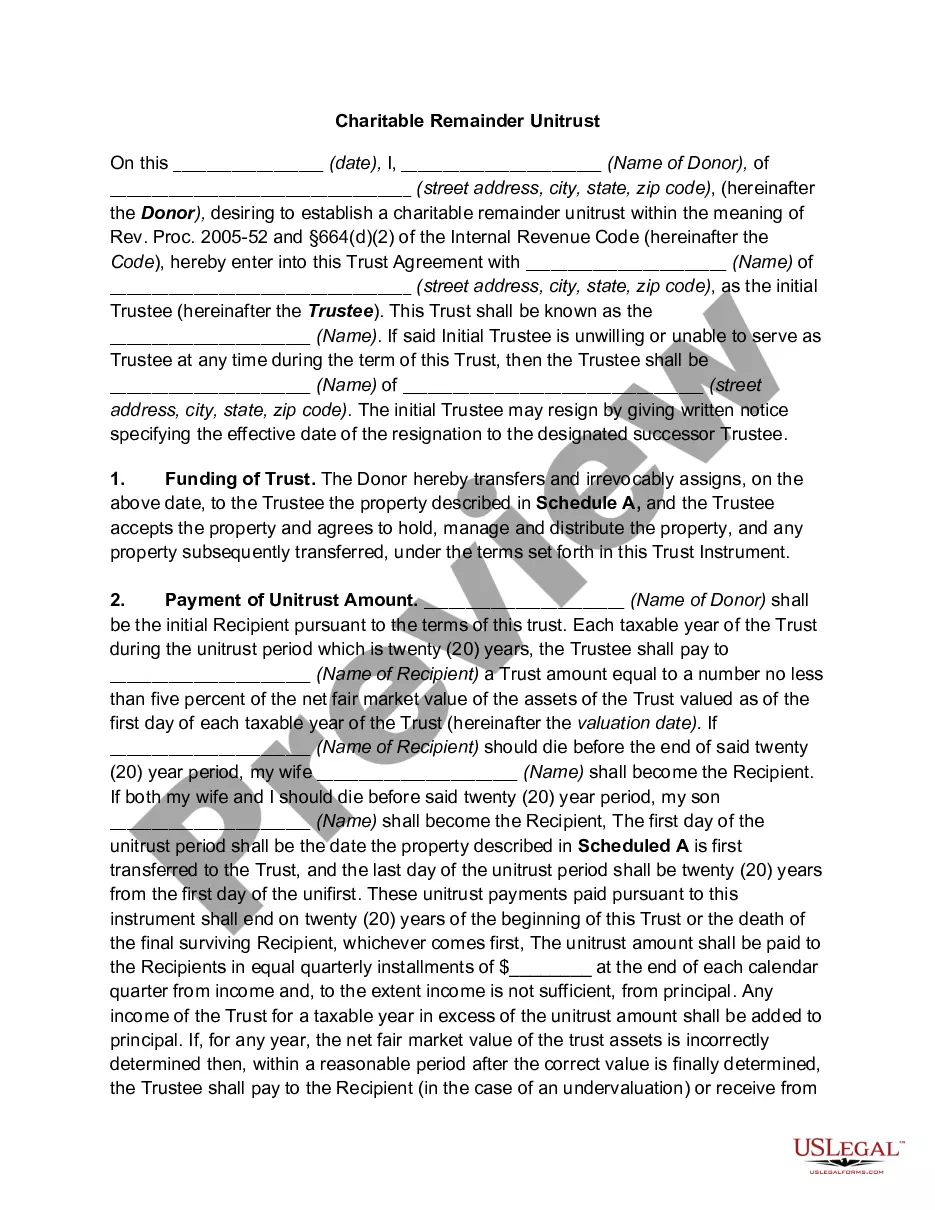
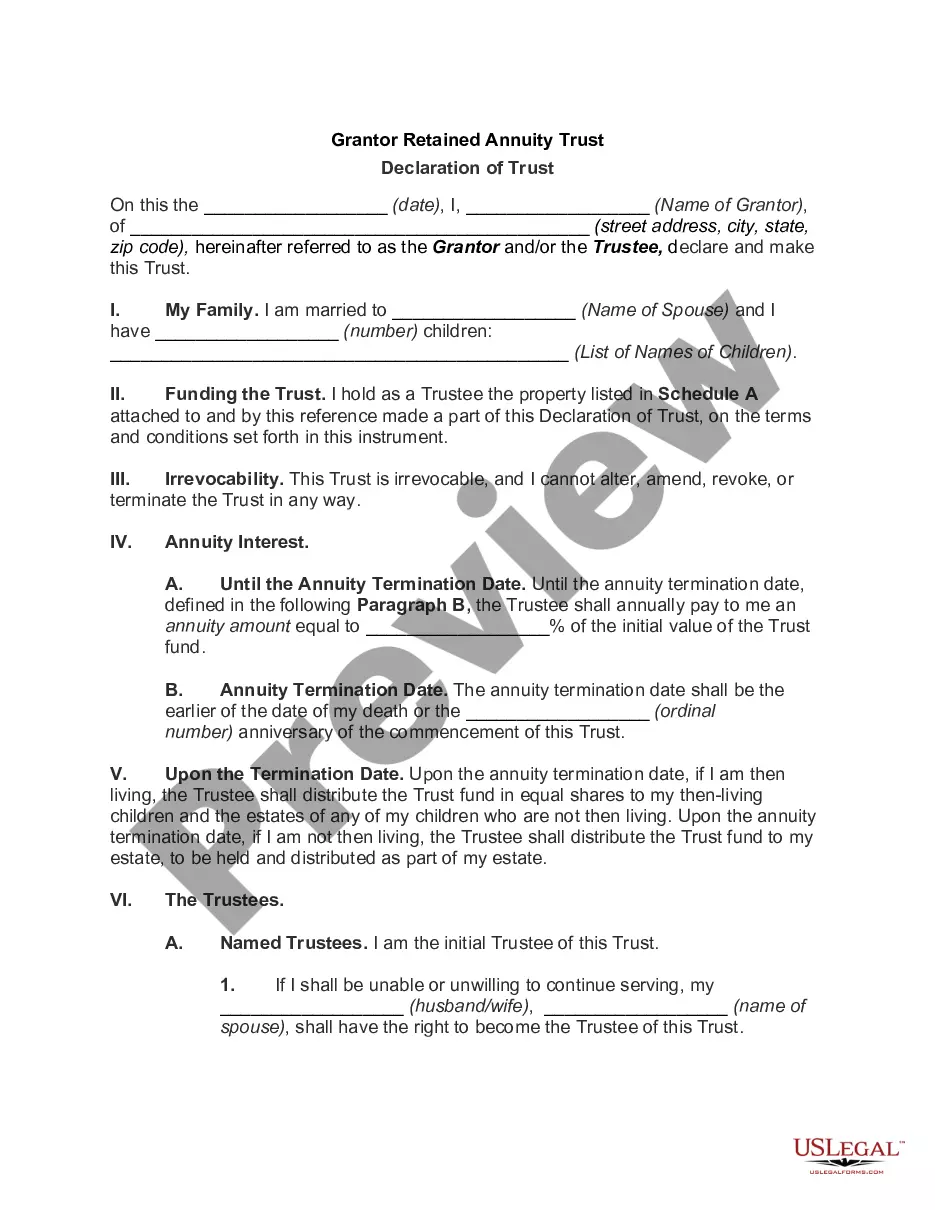
Get your form ready online
Our built-in tools help you complete, sign, share, and store your documents in one place.
Make edits, fill in missing information, and update formatting in US Legal Forms—just like you would in MS Word.
Download a copy, print it, send it by email, or mail it via USPS—whatever works best for your next step.
Sign and collect signatures with our SignNow integration. Send to multiple recipients, set reminders, and more. Go Premium to unlock E-Sign.
If this form requires notarization, complete it online through a secure video call—no need to meet a notary in person or wait for an appointment.
We protect your documents and personal data by following strict security and privacy standards.

Make edits, fill in missing information, and update formatting in US Legal Forms—just like you would in MS Word.

Download a copy, print it, send it by email, or mail it via USPS—whatever works best for your next step.

Sign and collect signatures with our SignNow integration. Send to multiple recipients, set reminders, and more. Go Premium to unlock E-Sign.

If this form requires notarization, complete it online through a secure video call—no need to meet a notary in person or wait for an appointment.

We protect your documents and personal data by following strict security and privacy standards.
Looking for another form?



How to fill out Charitable Remainder Inter Vivos Annuity Trust?
If you wish to be thorough, obtain, or print authorized document templates, utilize US Legal Forms, the largest collection of legal forms available online.
Take advantage of the site’s user-friendly and efficient search feature to find the documents you require.
Numerous templates for business and personal purposes are organized by categories and states, or keywords.
Step 4. Once you have located the form you need, click on the Get now button. Choose the pricing plan you prefer and provide your details to register for an account.
Step 5. Process the payment. You can use your credit card or PayPal account to complete the transaction.
- Utilize US Legal Forms to locate the New Hampshire Charitable Remainder Inter Vivos Annuity Trust with just a few clicks.
- If you are already a US Legal Forms member, Log In to your account and click on the Download button to access the New Hampshire Charitable Remainder Inter Vivos Annuity Trust.
- You can also retrieve forms you previously downloaded in the My documents section of your account.
- If you’re using US Legal Forms for the first time, follow the steps below.
- Step 1. Ensure you have selected the form for the correct city/state.
- Step 2. Use the Preview option to review the form’s content. Don’t forget to read the description.
- Step 3. If you’re not satisfied with the form, use the Search field at the top of the screen to find alternative versions of the legal form template.
Form popularity
FAQ
New Hampshire does not levy a sales tax or income tax, which creates an appealing financial landscape for residents. Furthermore, individuals using a New Hampshire Charitable Remainder Inter Vivos Annuity Trust can maximize their charitable contributions without worrying about inheritance taxes. This absence of taxation on significant areas of personal finance ensures that you can retain more of your wealth, whether for personal use or for charitable giving.
While New Hampshire may not be widely recognized as a traditional tax haven, it offers several tax advantages that can benefit residents and investors alike, especially those utilizing instruments like the New Hampshire Charitable Remainder Inter Vivos Annuity Trust. The absence of certain taxes, such as income tax and inheritance tax, allows for greater financial flexibility. This environment encourages individuals to consider New Hampshire for their estate planning and charitable endeavors.
New Hampshire's trust laws provide a flexible framework for the creation and management of various trusts, including the New Hampshire Charitable Remainder Inter Vivos Annuity Trust. State law outlines the rights and responsibilities of trustees and beneficiaries, ensuring that your trust functions according to your intentions. By leveraging these laws, you can establish a trust that effectively meets your philanthropic goals and financial needs.
New Hampshire does not impose an inheritance tax, which makes it an attractive state for individuals using a New Hampshire Charitable Remainder Inter Vivos Annuity Trust. This lack of tax means more of your estate can go directly to your heirs or chosen charitable organizations. As you plan your financial future, you will benefit from understanding how these tax advantages work in New Hampshire.
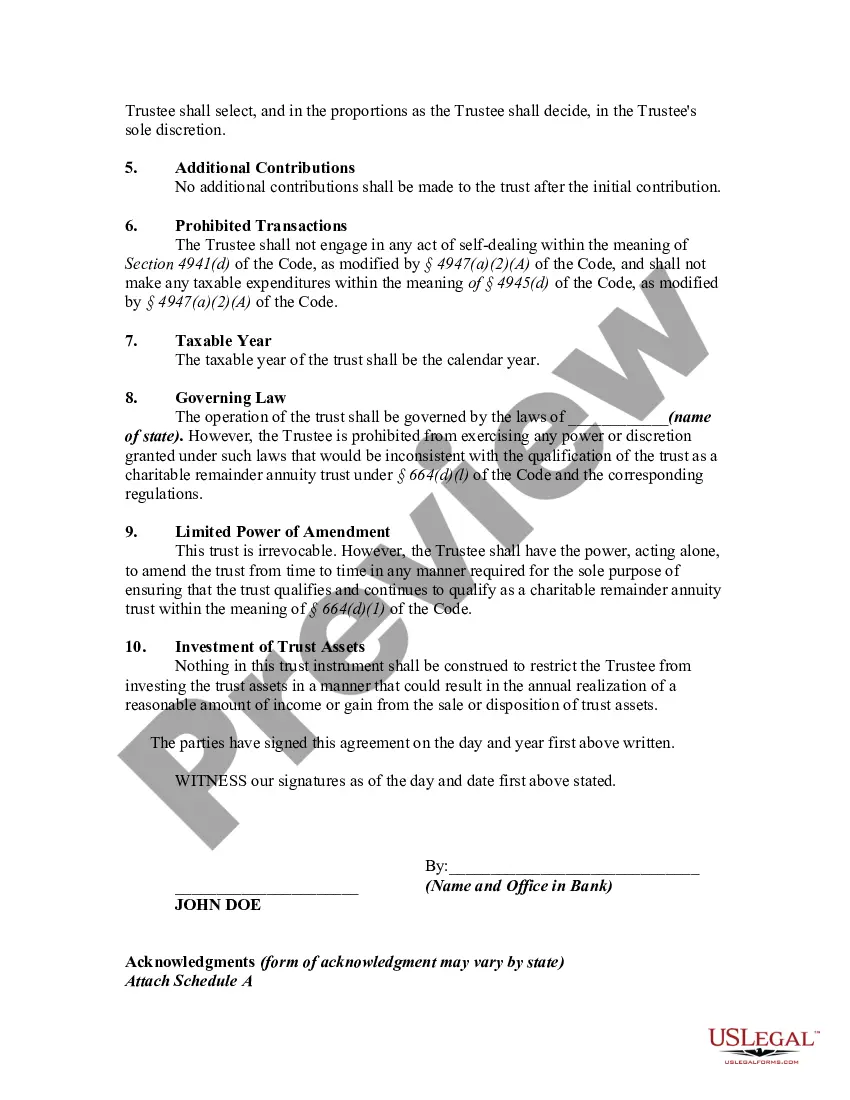
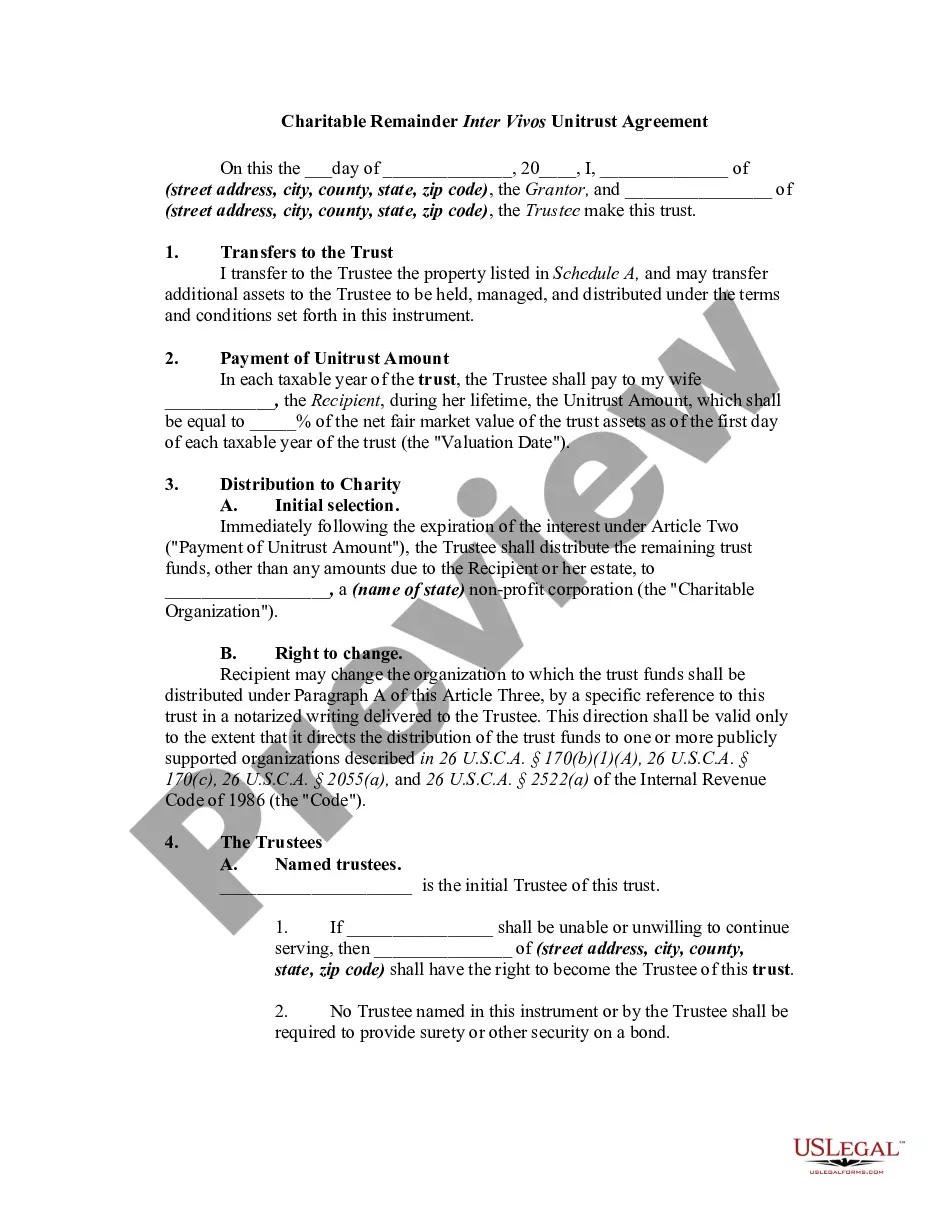
A New Hampshire Charitable Remainder Inter Vivos Annuity Trust allows you to donate assets during your lifetime while retaining income from those assets. This type of trust is established during your lifetime, and it provides you with fixed payments for a specified period. When the trust ends, the remaining assets go to the designated charity. This structure benefits both you and the charity, maximizing the impact of your philanthropy.
New Hampshire does not impose an income tax on trusts; however, it does tax certain types of income from trusts and estates. Understanding the specific tax regulations in your state is crucial when setting up a New Hampshire Charitable Remainder Inter Vivos Annuity Trust. Consulting a tax professional can help clarify any questions about tax implications.
Creating a New Hampshire Charitable Remainder Inter Vivos Annuity Trust involves a step-by-step process. First, you’ll need to consult with a qualified attorney or financial advisor to draft the trust document. After this, you can fund the trust with assets, which will provide you with a stream of income for a set period while also designating a charity to receive the remaining assets.
A New Hampshire Charitable Remainder Inter Vivos Annuity Trust must file IRS Form 5227 to report the trust's income, deductions, and contributions. This form helps the IRS track charitable contributions and ensures compliance with federal regulations. Properly completing this form is crucial to maintain the trust’s tax-exempt status.
Yes, you can include an annuity in a New Hampshire Charitable Remainder Inter Vivos Annuity Trust. This setup allows you to receive annual income while supporting a charitable cause. It’s a strategic way to ensure that you can enjoy income benefits during your lifetime while eventually benefiting a charity of your choice.
If the New Hampshire Charitable Remainder Inter Vivos Annuity Trust does not align with your goals, consider alternatives like a charitable gift annuity or a donor-advised fund. These options allow for flexibility and can provide similar benefits regarding tax deductions and charitable giving. Evaluating each option with a financial advisor is essential to determine which is best for your situation.