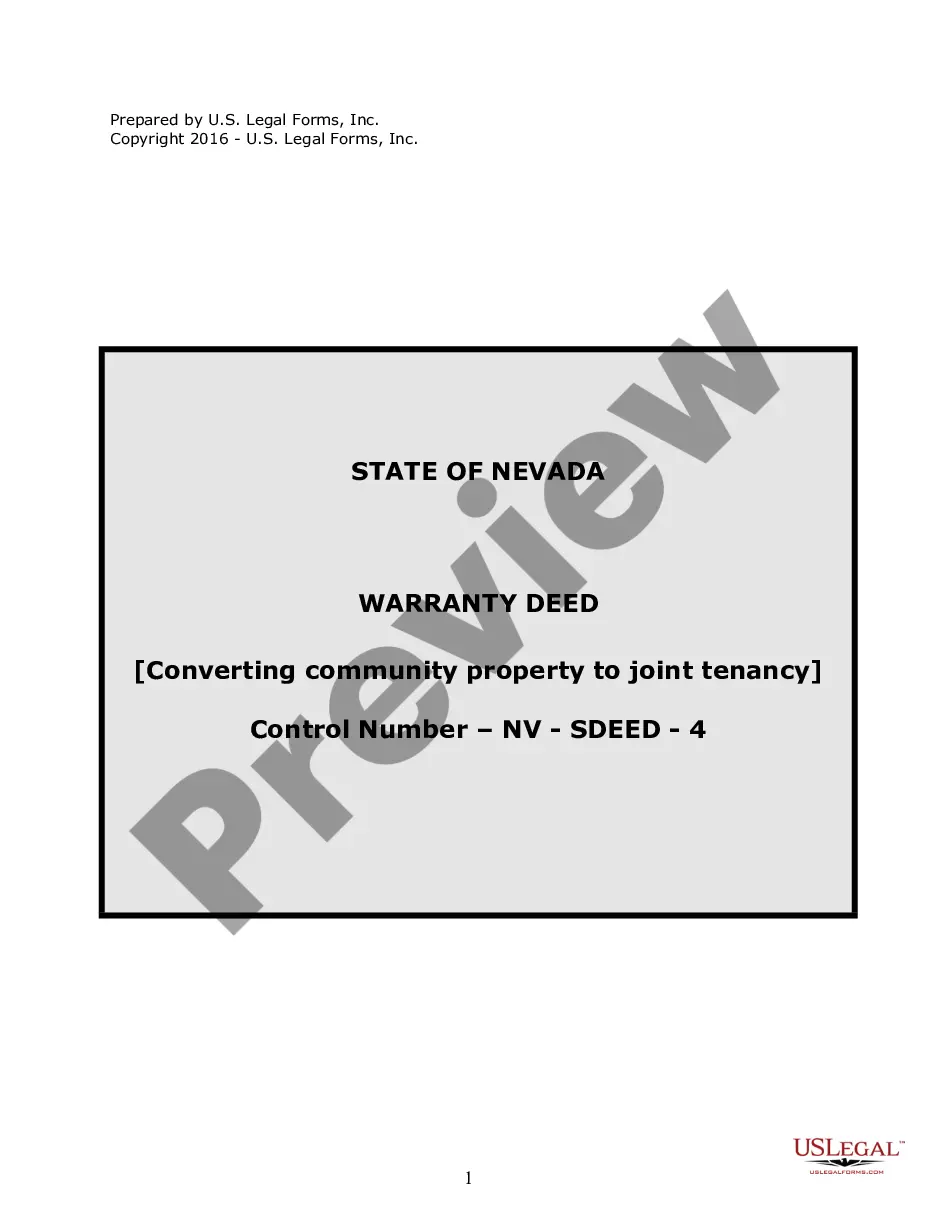
New Hampshire Living Trust for Individual Who is Single, Divorced or Widow (or Widower) with No Children

What is this form?
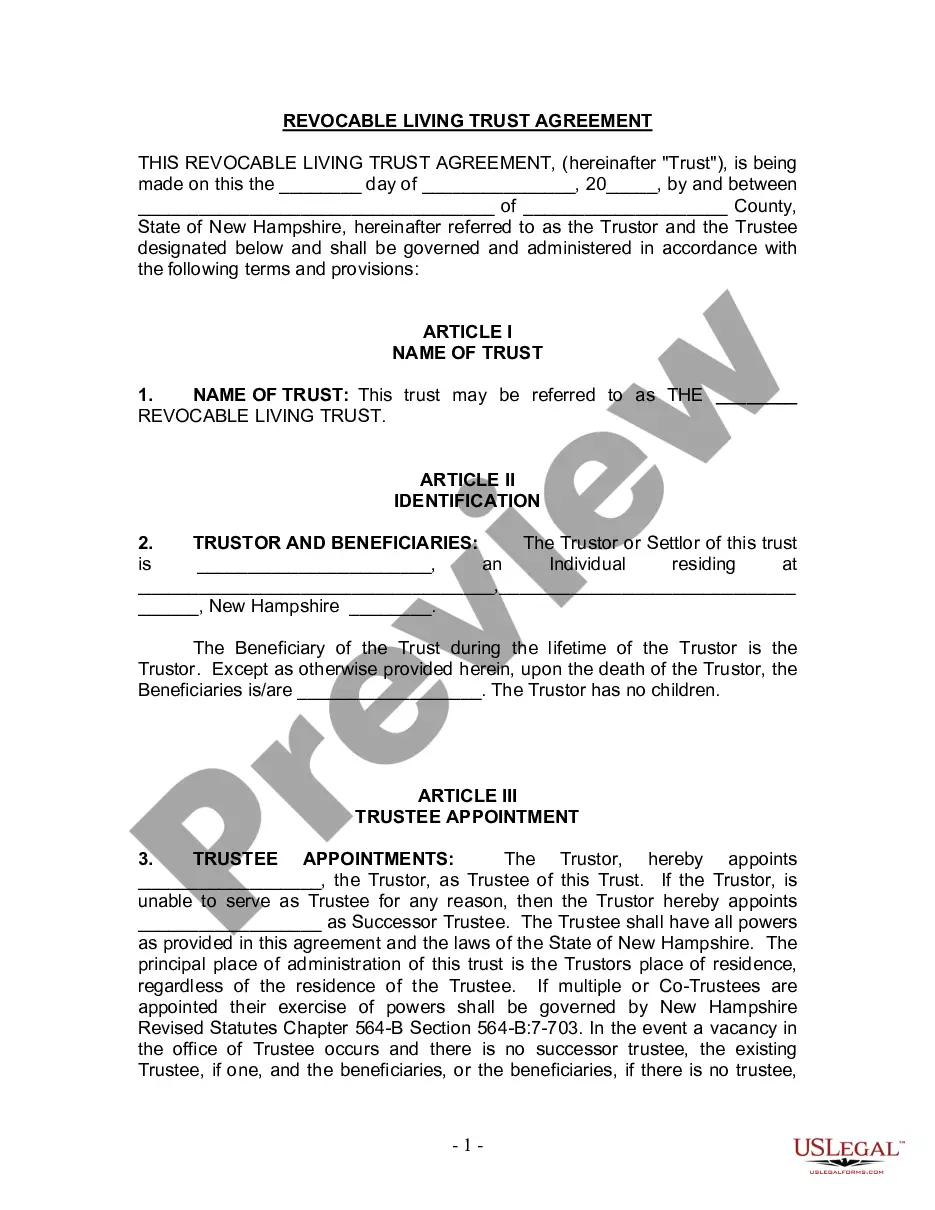
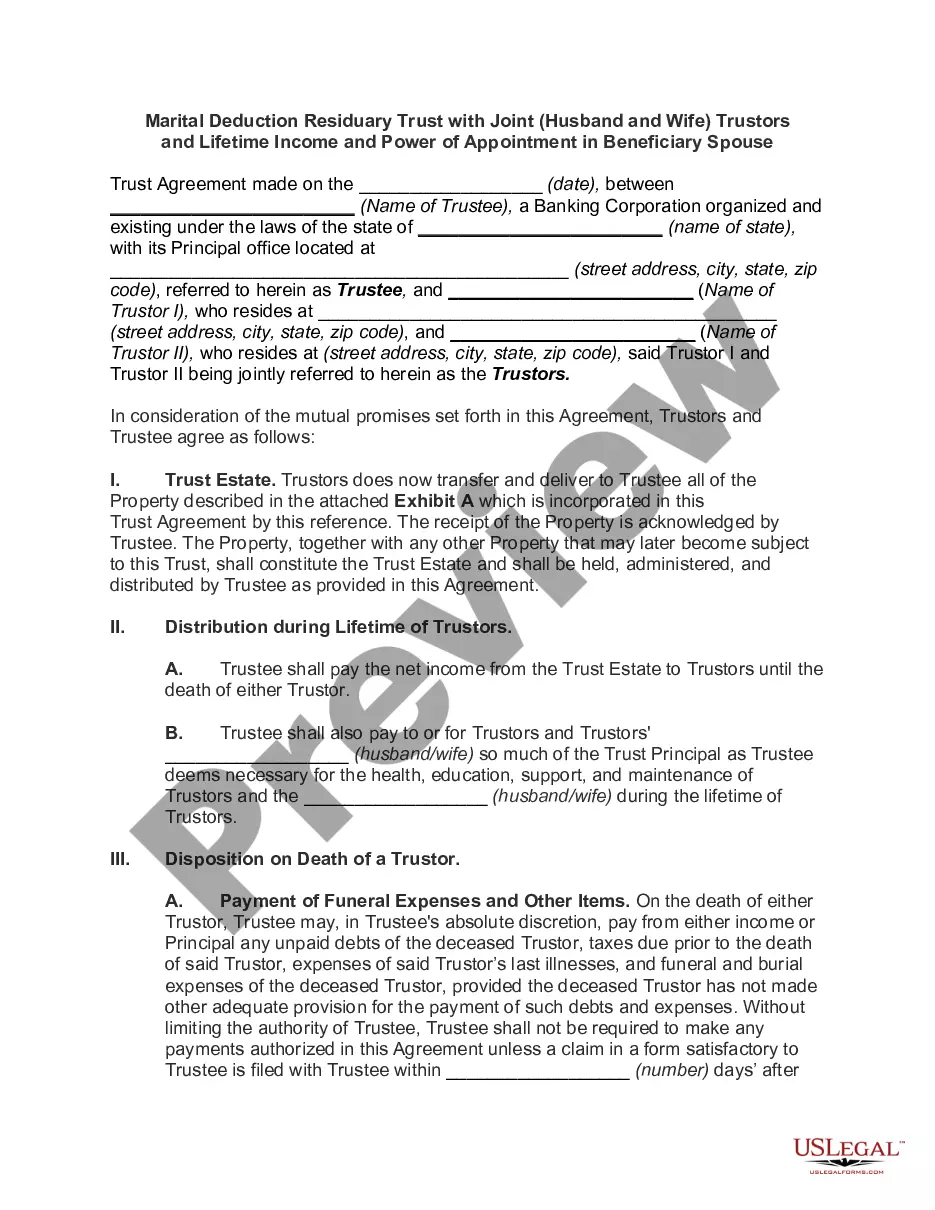
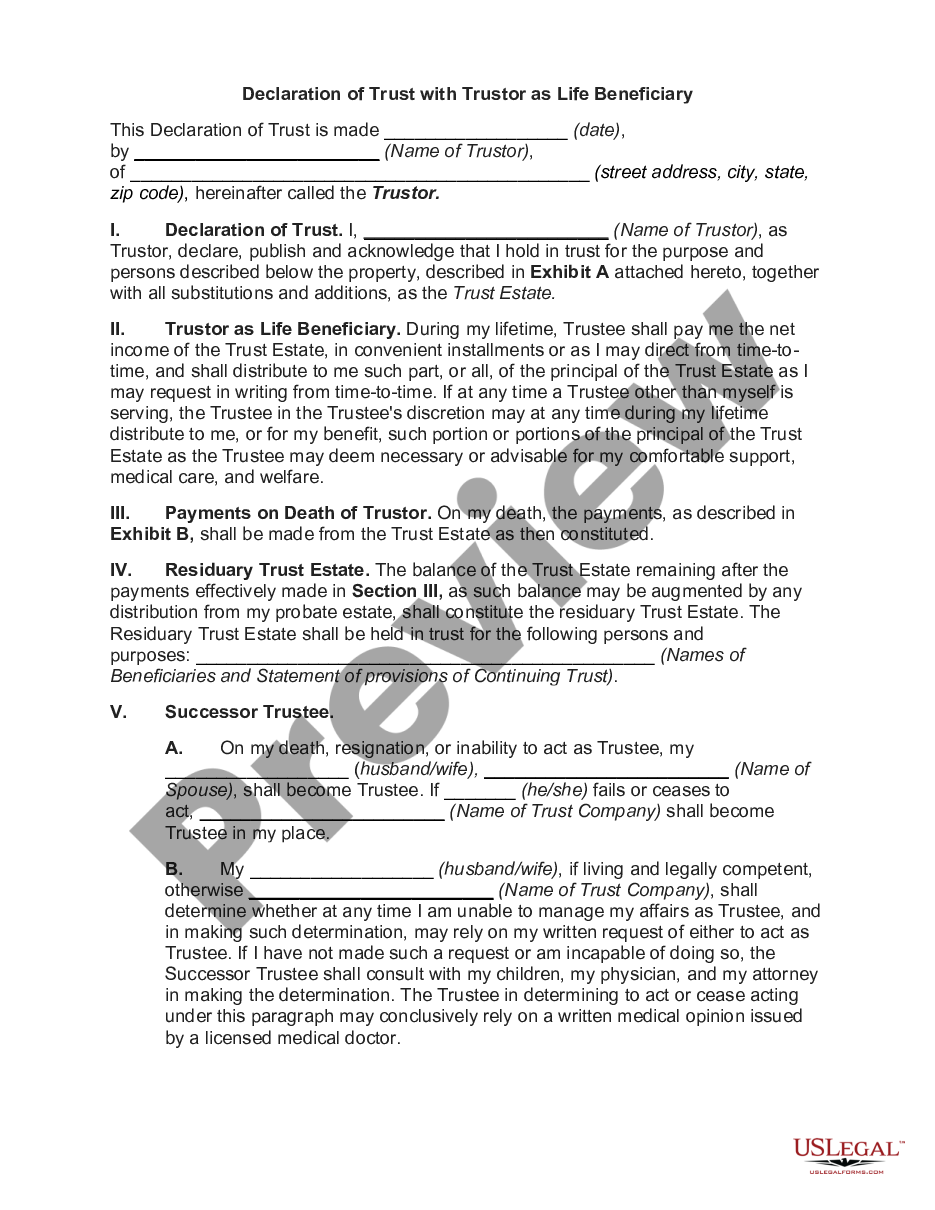
The Living Trust for Individual Who is Single, Divorced or Widow (or Widower) with No Children is a legal document that establishes a revocable living trust for individuals without children. Its primary purpose is for estate planning, allowing the trustor (the individual creating the trust) to place their assets into a trust during their lifetime while maintaining control over those assets. This form enables the trustor to manage and distribute their assets according to their wishes, avoiding the lengthy probate process that typically occurs after death.
Main sections of this form
- Identification of the Trustor, Trustee, and Beneficiaries.
- Declaration of the Trust name and the assets included in the Trust.
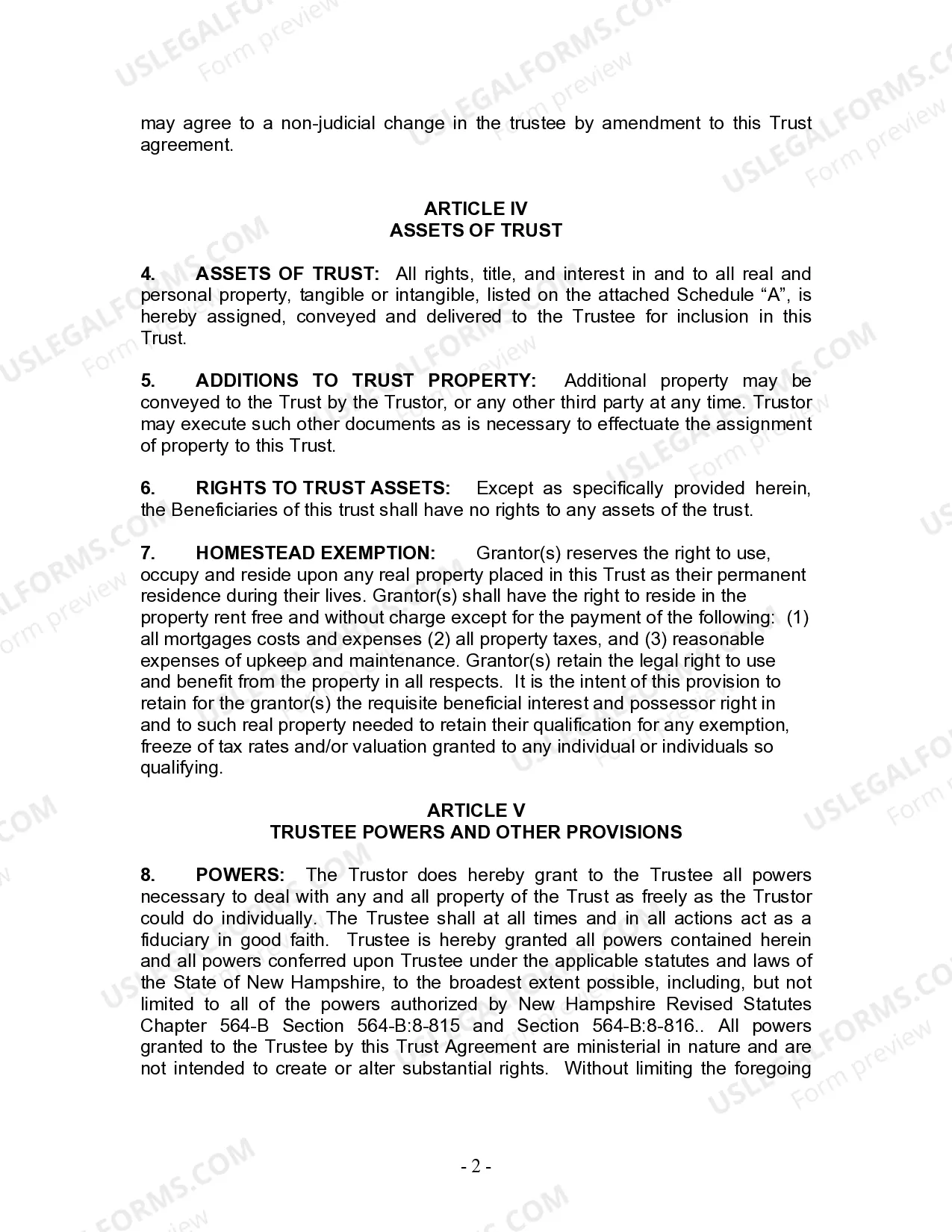
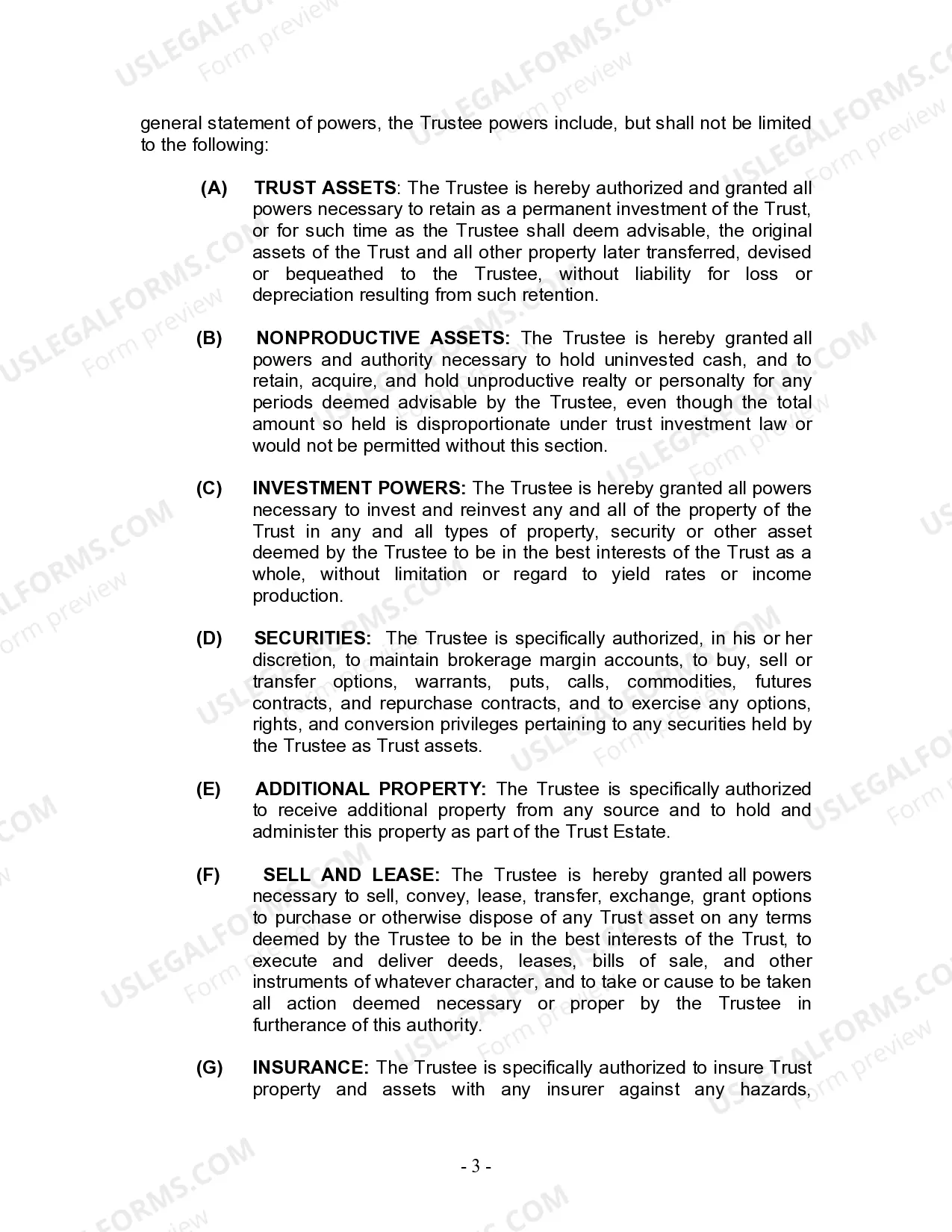
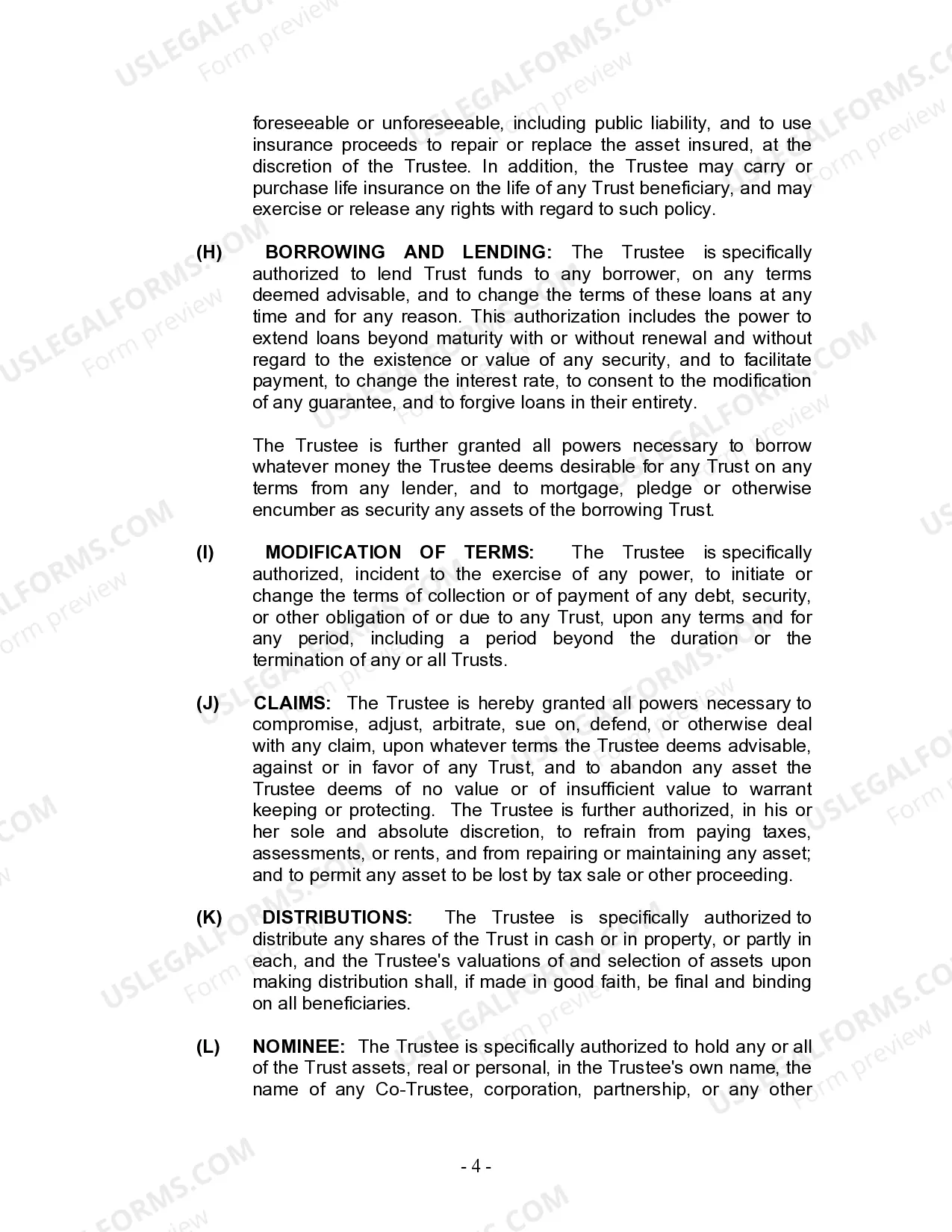
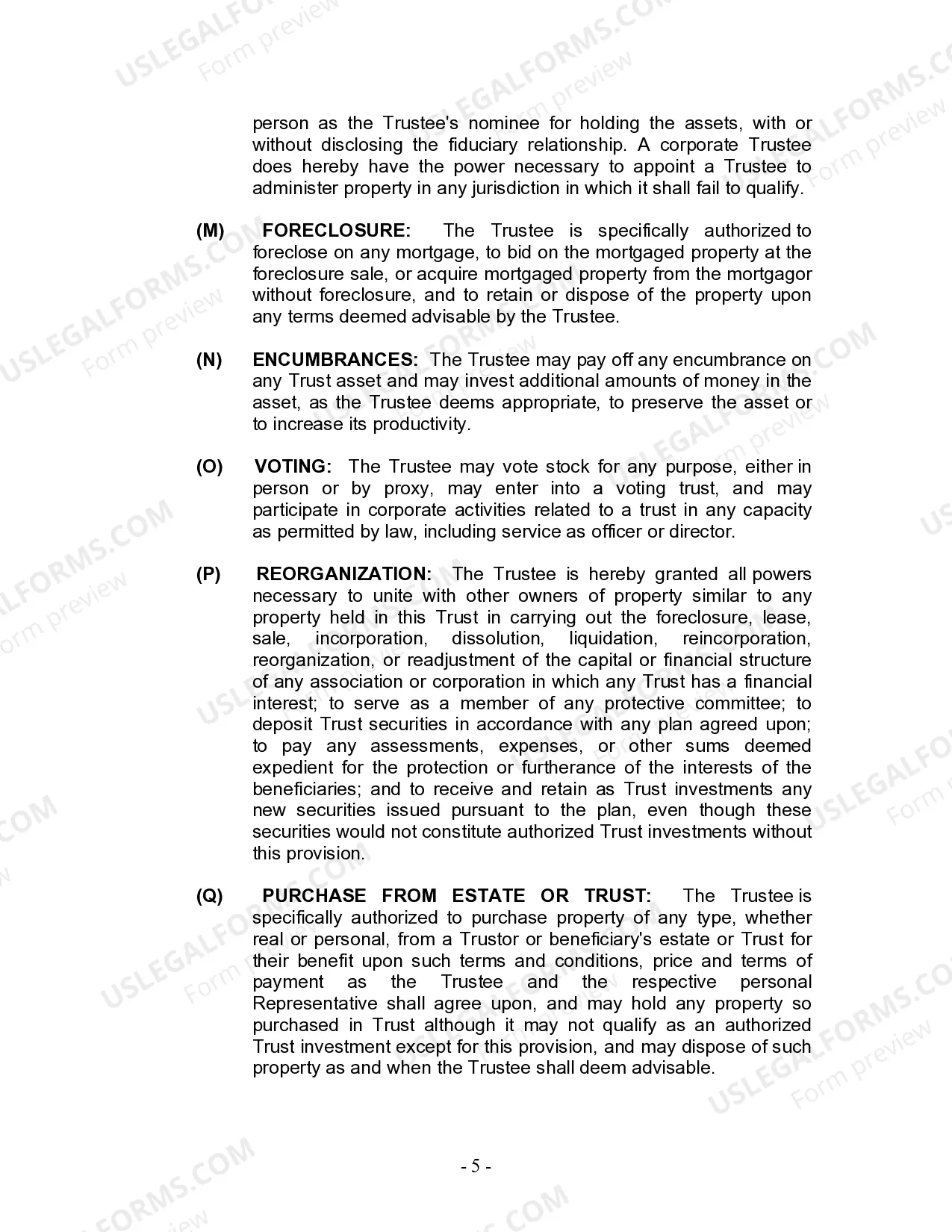
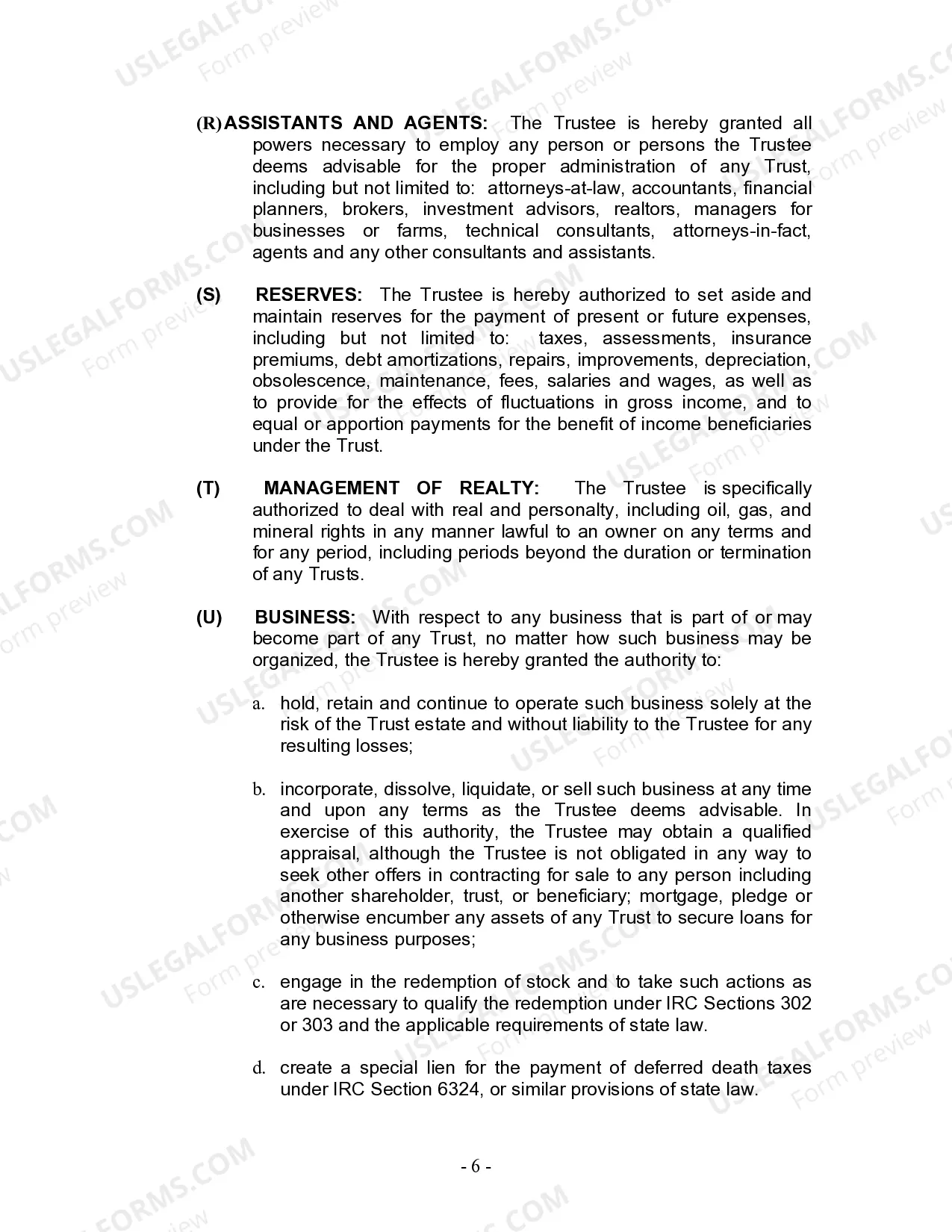
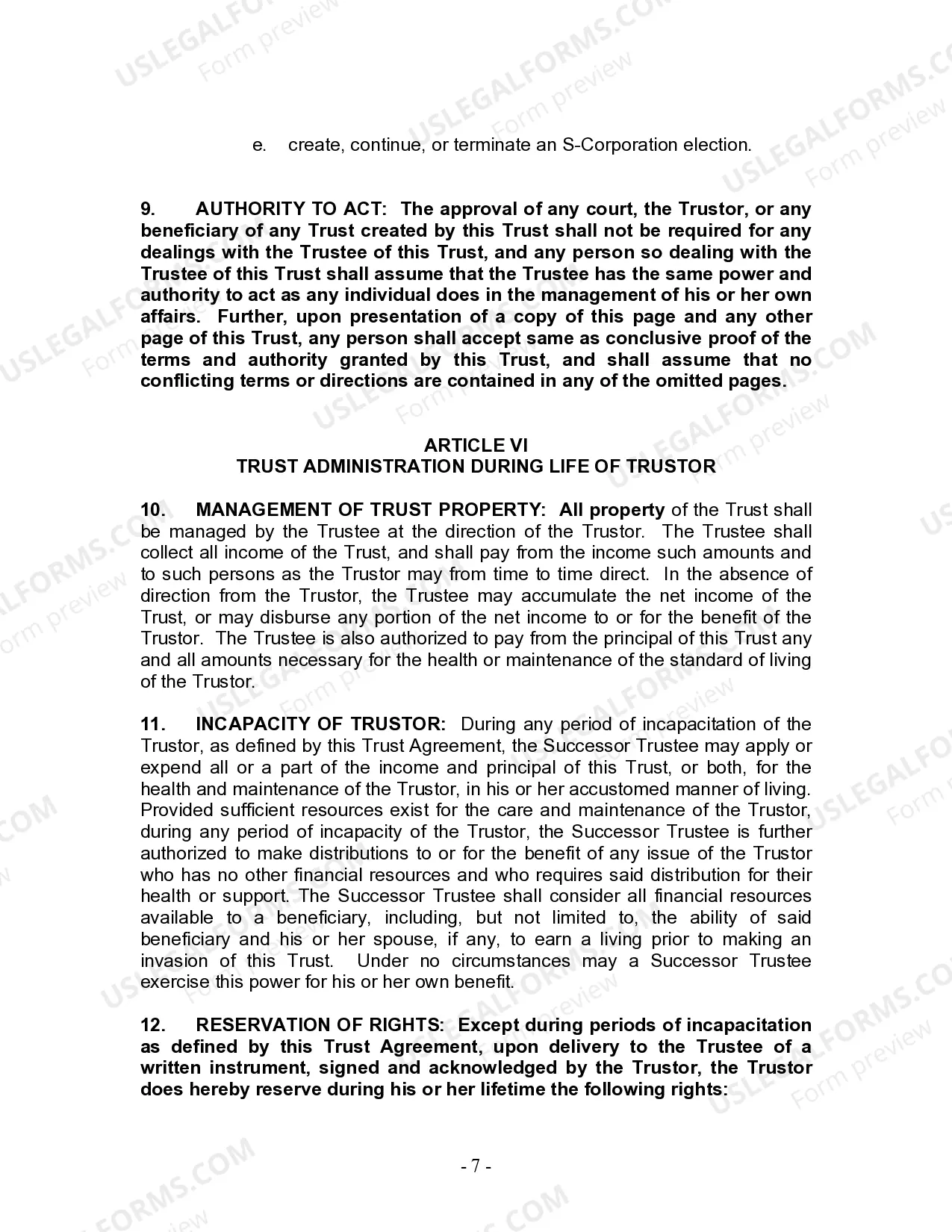
- Rights and powers assigned to the Trustee.
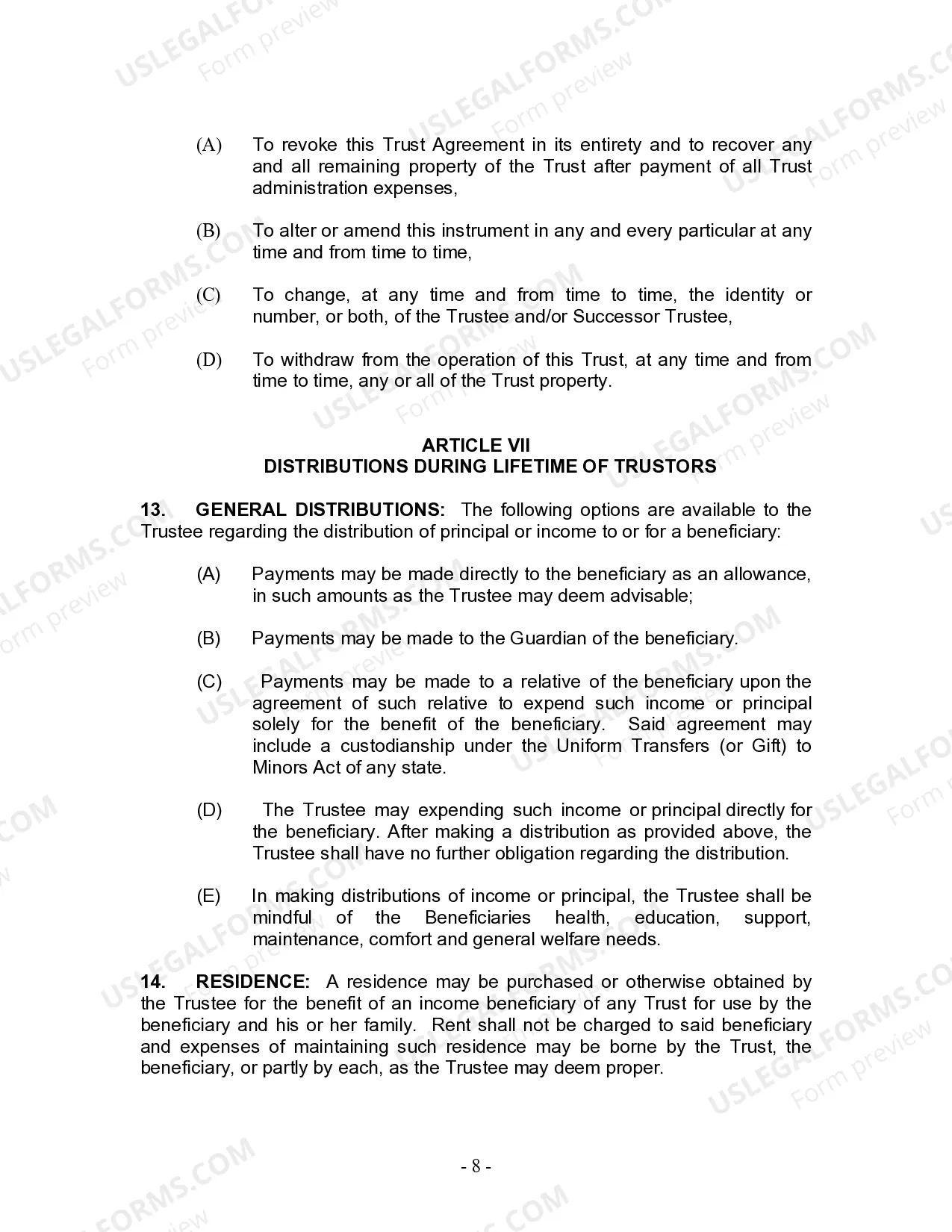
- Instructions for asset management during the Trustor's lifetime.
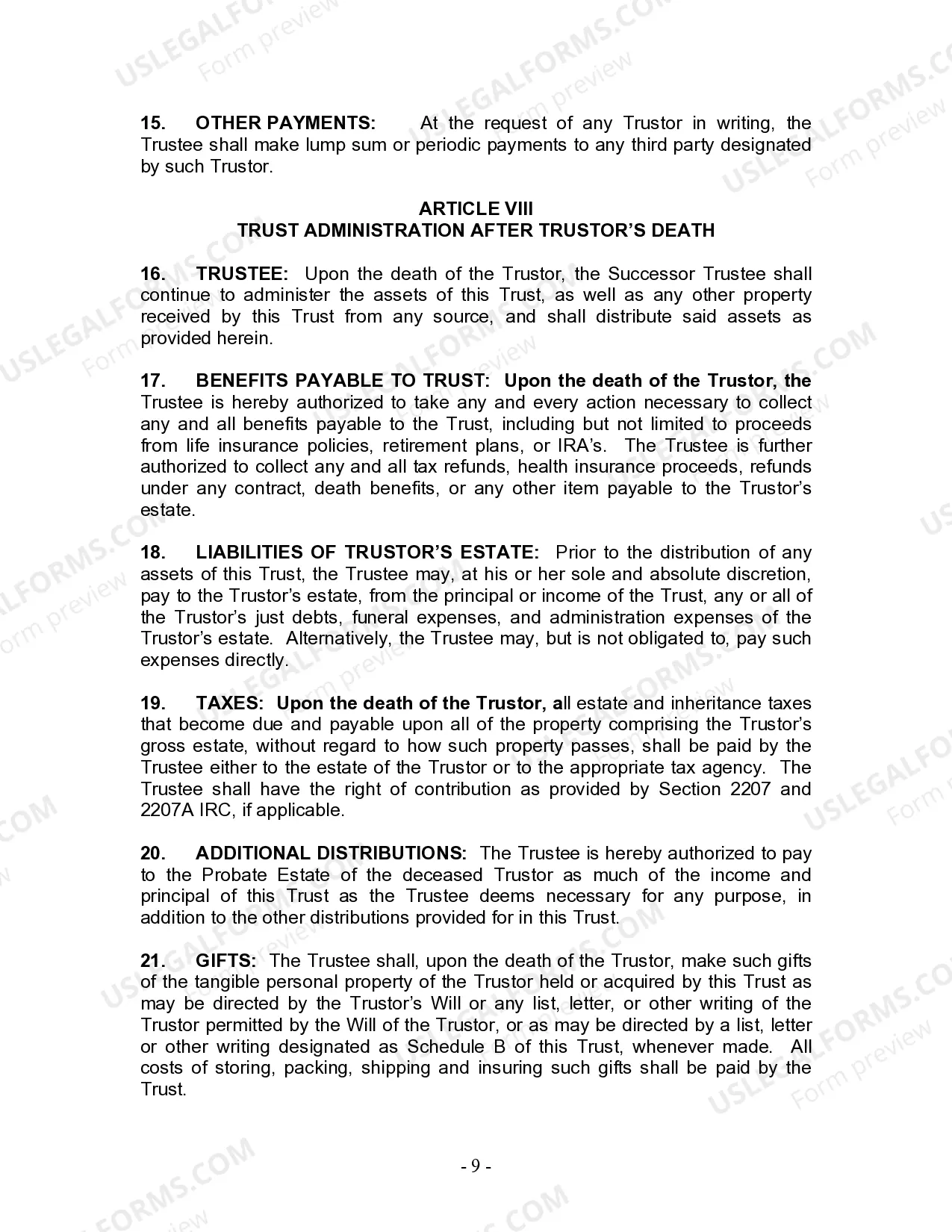
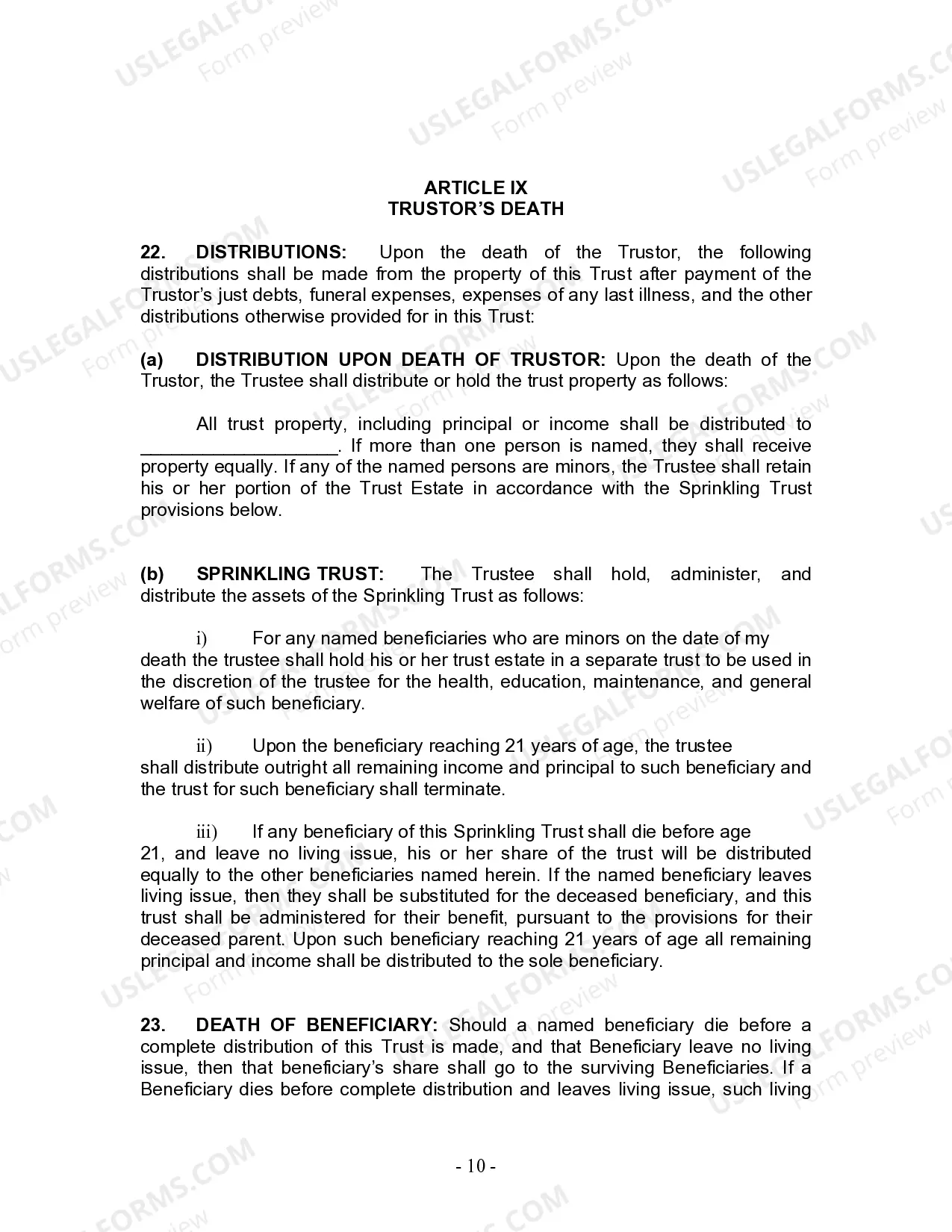
- Provisions for distributing assets upon the Trustor's death.



Common use cases
This form is ideal for individuals who are single, divorced, or widowed and have no children. It is particularly useful for those who want to ensure their assets are managed and transferred according to their specific wishes without the need for probate. This form can also be used if the trustor wishes to retain control over their assets while planning for potential incapacity.
Who this form is for
- Individuals who are single, divorced, or widowed.
- People without children who wish to plan their estate.
- Anyone who wants to avoid the probate process upon death.
- Individuals looking for control over asset management during their lifetime.
Instructions for completing this form
- Identify the Trustor by entering their name and residence address.
- Assign a Trustee, and if necessary, a Successor Trustee.
- List the assets to be included in the Trust in an attached Schedule A.
- Specify the distribution of assets after the Trustor's death.
- Sign and date the document in the presence of a notary if required.
Notarization requirements for this form
This document requires notarization to meet legal standards. US Legal Forms provides secure online notarization powered by Notarize, allowing you to complete the process through a verified video call, available 24/7.
Get your form ready online
Our built-in tools help you complete, sign, share, and store your documents in one place.
Make edits, fill in missing information, and update formatting in US Legal Forms—just like you would in MS Word.
Download a copy, print it, send it by email, or mail it via USPS—whatever works best for your next step.
Sign and collect signatures with our SignNow integration. Send to multiple recipients, set reminders, and more. Go Premium to unlock E-Sign.
If this form requires notarization, complete it online through a secure video call—no need to meet a notary in person or wait for an appointment.
We protect your documents and personal data by following strict security and privacy standards.

Make edits, fill in missing information, and update formatting in US Legal Forms—just like you would in MS Word.

Download a copy, print it, send it by email, or mail it via USPS—whatever works best for your next step.

Sign and collect signatures with our SignNow integration. Send to multiple recipients, set reminders, and more. Go Premium to unlock E-Sign.

If this form requires notarization, complete it online through a secure video call—no need to meet a notary in person or wait for an appointment.

We protect your documents and personal data by following strict security and privacy standards.
Typical mistakes to avoid
- Failing to list all assets intended for the Trust.
- Not including a Successor Trustee, which can lead to complications.
- Omitting important details such as beneficiary designations.
- Not signing the document properly or neglecting notarization when required.
Why use this form online
- Convenient access to legal forms from anywhere at any time.
- Edit and customize the form according to personal requirements easily.
- Reliable and legally compliant documents drafted by licensed attorneys.
Quick recap
- A living trust provides a method for managing assets during life and distributing them after death without probate.
- It is particularly suited for individuals who are single, divorced, or widowed with no children.
- Proper completion and management of the trust can ensure your wishes are upheld.
- Always consider legal advice to ensure compliance with state laws and to address specific personal circumstances.
Looking for another form?
Form popularity
FAQ
Anyone who is single and has assets titled in their sole name should consider a Revocable Living Trust. The two main reasons are to keep you and your assets out of a court-supervised guardianship and to allow your beneficiaries to avoid the costs and hassles of probate.
To name a special needs trust as a beneficiary, use the name of the trustee and the full legal name of the trust as beneficiary: For example: Chris Lee as the trustee of The Pat Lee Special Needs Trust
An owner of a trust account is the person who has the powers to modify or revoke the terms of the trust, referred to as the trustor/grantor/settlor within the trust.
The trustee is the legal owner of the property in trust, as fiduciary for the beneficiary or beneficiaries who is/are the equitable owner(s) of the trust property. Trustees thus have a fiduciary duty to manage the trust to the benefit of the equitable owners.
The trustee holds legal ownership of the borrower's home in trust until the loan is paid off.The lender has claim to the home if the borrower stops paying the loan before it's fully paid off because the trustee is only acting as an independent third party. A deed of trust often includes a power-of-sale clause.
A will covers any property that is only in your name when you die. It does not cover property held in joint tenancy or in a trust. A trust, on the other hand, covers only property that has been transferred to the trust. In order for property to be included in a trust, it must be put in the name of the trust.
A trust is an arrangement in which one person, called the trustee, controls property for the benefit of another person, called the beneficiary. The person who creates the trust is called the settlor, grantor, or trustor.
A trust is an arrangement in which one person, called the trustee, controls property for the benefit of another person, called the beneficiary. The person who creates the trust is called the settlor, grantor, or trustor.
The trustee acts as the legal owner of trust assets, and is responsible for handling any of the assets held in trust, tax filings for the trust, and distributing the assets according to the terms of the trust. Both roles involve duties that are legally required.