New Hampshire Letter from Tenant to Landlord responding to Notice to Terminate for Noncompliance - Noncompliant condition caused by Landlord's own deliberate or negligent act
About this form
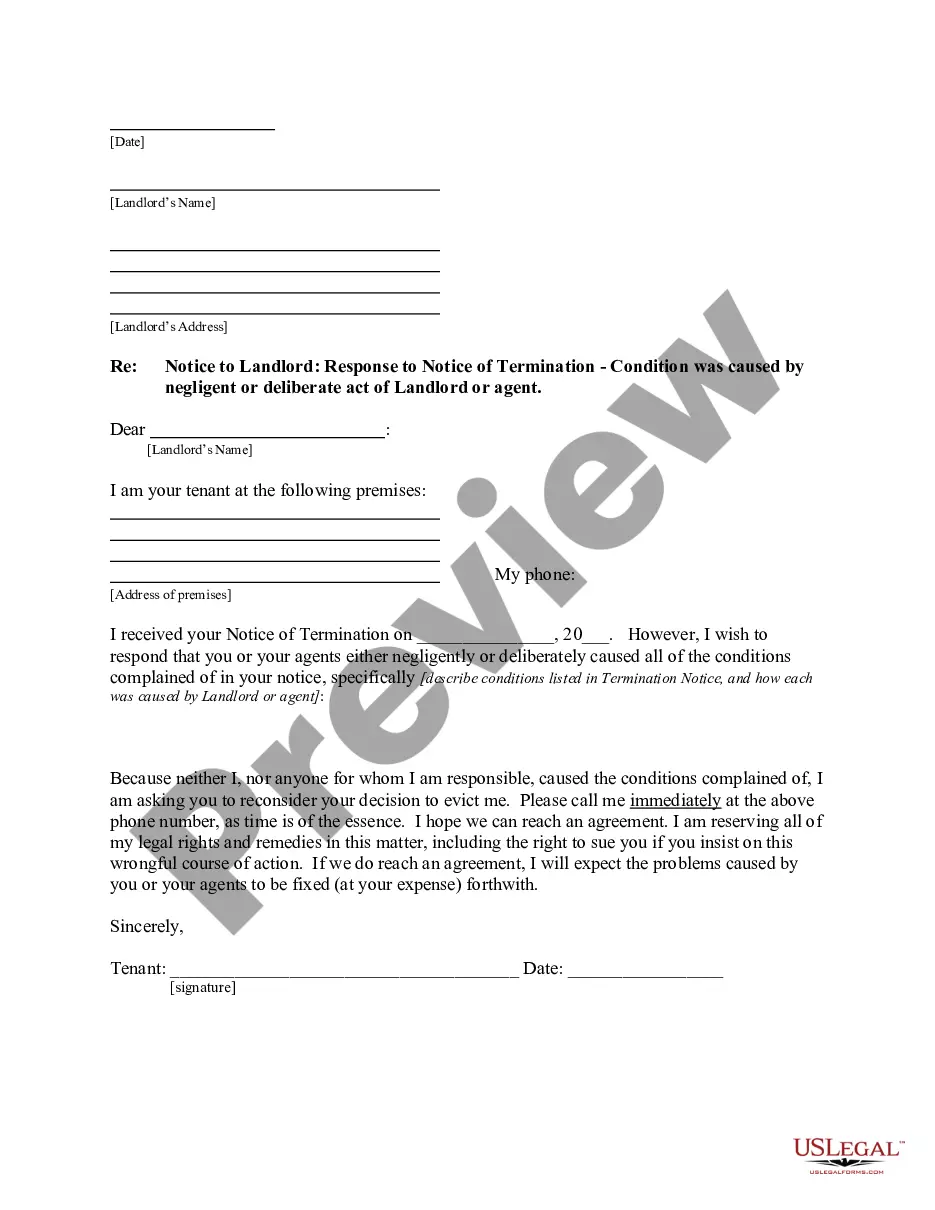
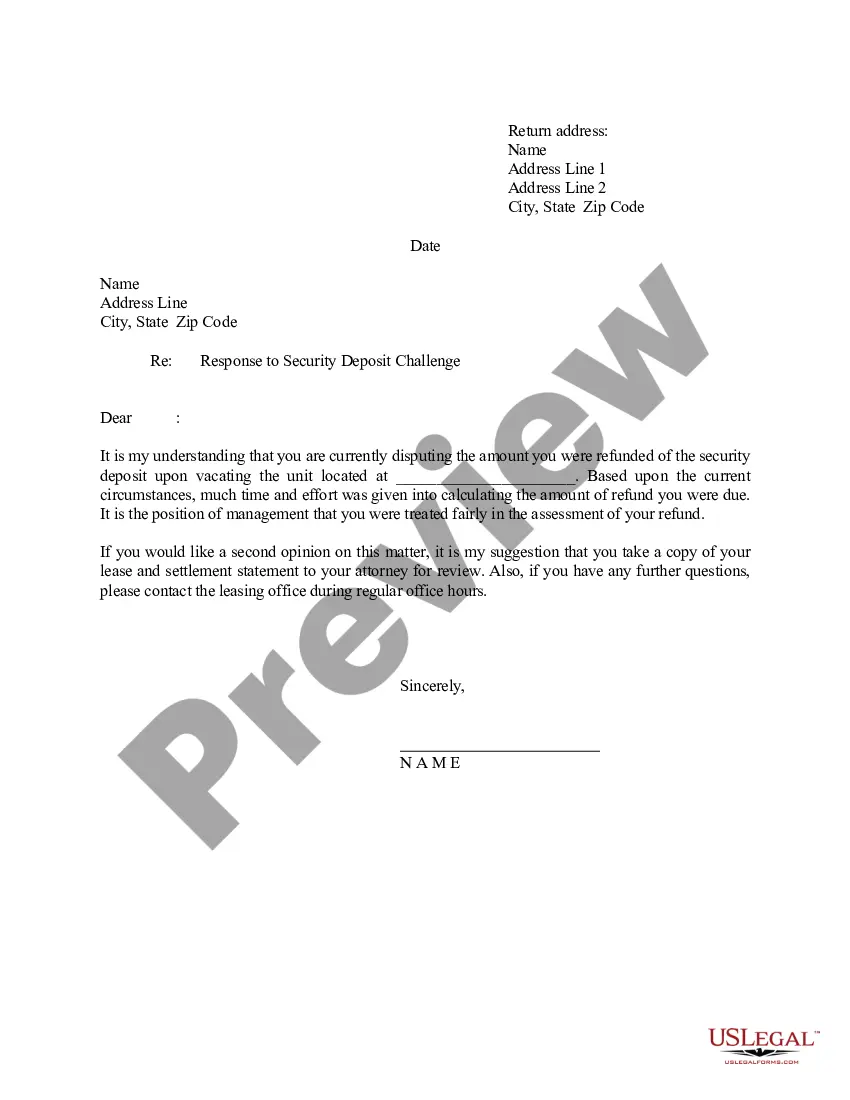
This form is a Letter from Tenant to Landlord responding to a Notice to Terminate for Noncompliance. It allows a tenant to formally address a landlord's eviction notice by asserting that the reasons for the eviction stem from the landlord's or their agent's actions. This letter emphasizes the tenant's request to avoid eviction and demand necessary repairs to the property, while reserving legal rights for potential further action.
Form components explained
- Date of the letter
- Tenant's signature
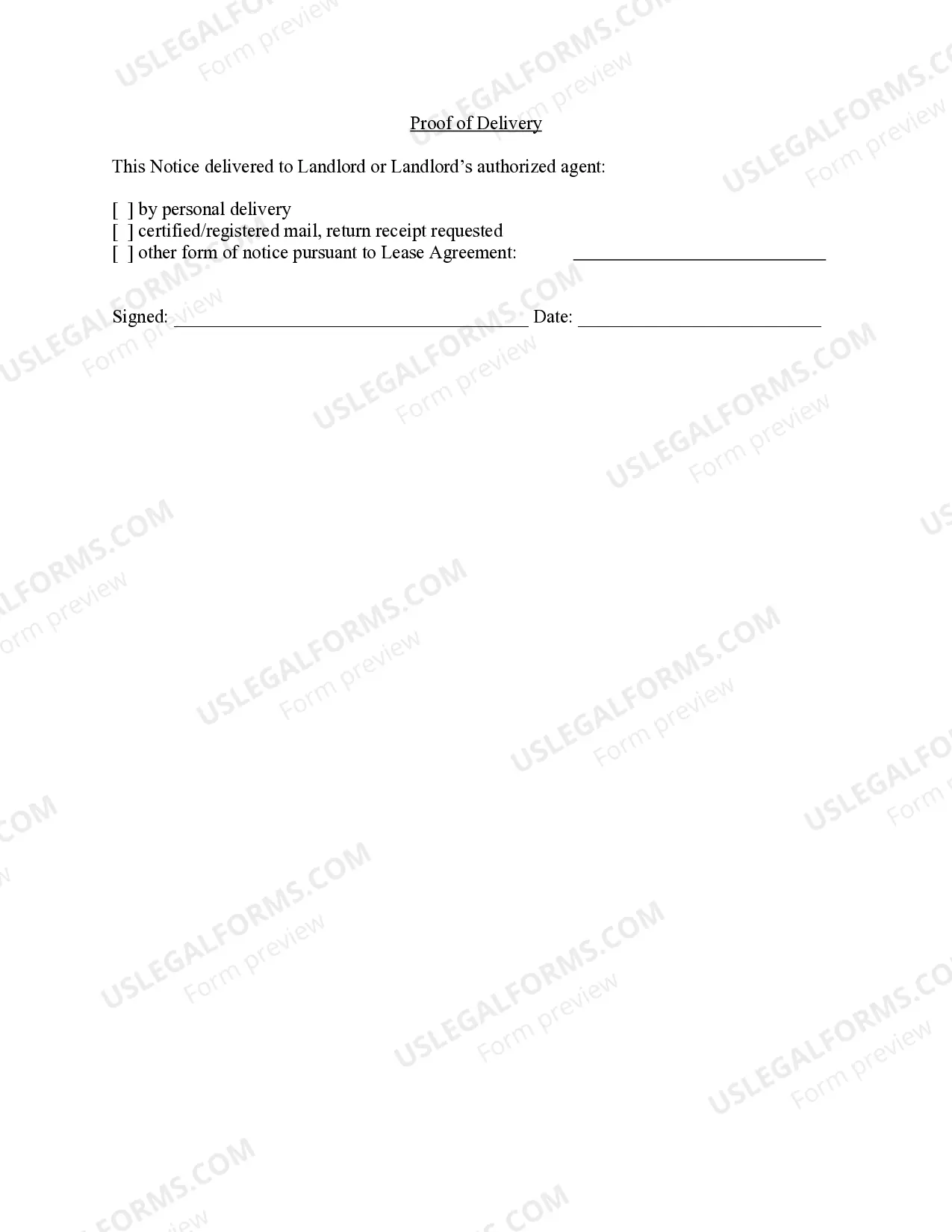
- Proof of delivery options (personal delivery or certified/registered mail)
- Statement of noncompliance caused by landlord's actions
- Request for repairs and non-eviction



Common use cases
This form is used when a tenant receives a notice of eviction for noncompliance but believes the underlying issues are due to the landlord's negligence or deliberate actions. It serves to inform the landlord of the tenant's intent to contest the eviction and request necessary repairs, providing a formal record of communication.
Who should use this form
- Tenants facing eviction notices for noncompliance
- Individuals who believe their living conditions are impacted by the landlord's actions
- Renters looking to assert their rights and request repairs
Steps to complete this form
- Enter the date of the letter at the top
- Sign the letter to confirm your identity as the tenant
- Choose a method of delivery and complete the proof of delivery section
- Clearly state the reasons for contesting the eviction
- Request specific repairs needed in the property
Does this document require notarization?
This form does not typically require notarization to be legally valid. However, some jurisdictions or document types may still require it. US Legal Forms provides secure online notarization powered by Notarize, available 24/7 for added convenience.
Get your form ready online
Our built-in tools help you complete, sign, share, and store your documents in one place.
Make edits, fill in missing information, and update formatting in US Legal Forms—just like you would in MS Word.
Download a copy, print it, send it by email, or mail it via USPS—whatever works best for your next step.
Sign and collect signatures with our SignNow integration. Send to multiple recipients, set reminders, and more. Go Premium to unlock E-Sign.
If this form requires notarization, complete it online through a secure video call—no need to meet a notary in person or wait for an appointment.
We protect your documents and personal data by following strict security and privacy standards.

Make edits, fill in missing information, and update formatting in US Legal Forms—just like you would in MS Word.

Download a copy, print it, send it by email, or mail it via USPS—whatever works best for your next step.

Sign and collect signatures with our SignNow integration. Send to multiple recipients, set reminders, and more. Go Premium to unlock E-Sign.

If this form requires notarization, complete it online through a secure video call—no need to meet a notary in person or wait for an appointment.

We protect your documents and personal data by following strict security and privacy standards.
Mistakes to watch out for
- Failing to sign the letter before delivery
- Not using a proper method of delivery that provides proof
- Leaving out important details about the noncompliance issues
- Not specifying the requested repairs clearly
Benefits of completing this form online
- Convenient access to legal forms anytime and anywhere
- Editable templates allow for customization to specific situations
- Forms drafted by licensed attorneys ensure reliability and legal compliance
Legal use & context
- This letter serves as an official response to an eviction notice and protects the tenant's rights.
- It can be used as evidence in any further legal proceedings related to the eviction.
- Noncompliance notices issued by landlords must adhere to state laws regarding tenant rights and housing conditions.
Main things to remember
- This letter is essential for tenants facing eviction due to landlord-caused issues.
- Acting quickly to respond to a notice can safeguard your rights as a tenant.
- Ensure compliance with state laws when using this form.
Looking for another form?

Form popularity
FAQ
New Hampshire is a fairly landlord-friendly state because there are no rent control policies and the state does not limit certain fees. However, there are relatively strict requirements on the handling of security deposits.
Pay any delinquent rent that is due to the landlord within the allotted time of the notice. Move out of the premises within the allotted time of the notice. File an answer with the judicial court. File a motion to stay with the court.
Unconditional quit notices are used to order the tenant to leave the premises without the chance to remedy the situation. This is used for a serious breach of the lease agreement or chronic late rent payment.
Vermont ranked first among the renter-friendly states, followed closely by Delaware and Hawaii who were tied for second place. Rhode Island, Arizona, D.C., Maine and Alaska Statutes also seem to take good care of their renters according to our analysis.
The big take-away is that in most circumstances a landlord cannot enter a property without agreement from the tenant. And If the landlord ignores the law and enters the property without permission, the tenant may be able to claim damages or gain an injunction to prevent the landlord doing it again.
There is no New Hampshire statute limiting how much a landlord can raise the rent. If your landlord tries to raise your rent by an unreasonable amount, there is a legal argument that such an increase is not enforceable by a court.
It is against the law RSA 540-A for a landlord to:Enter your residence without permission, except to make emergency repairs. (You should not refuse your landlord's reasonable request to enter with enough notice); Take any other action to force you out of your home without going through the eviction process.
Indiana. Indiana laws allow landlords to hold on to security deposits for 45 days to give them time to determine any damages caused by tenants. Colorado. Colorado is one of few states that allow landlords to access the rental property without an advance notice requirement. Georgia.