Nebraska Attachment to UCC Financing Statement for Statutory Agricultural Liens
About this form
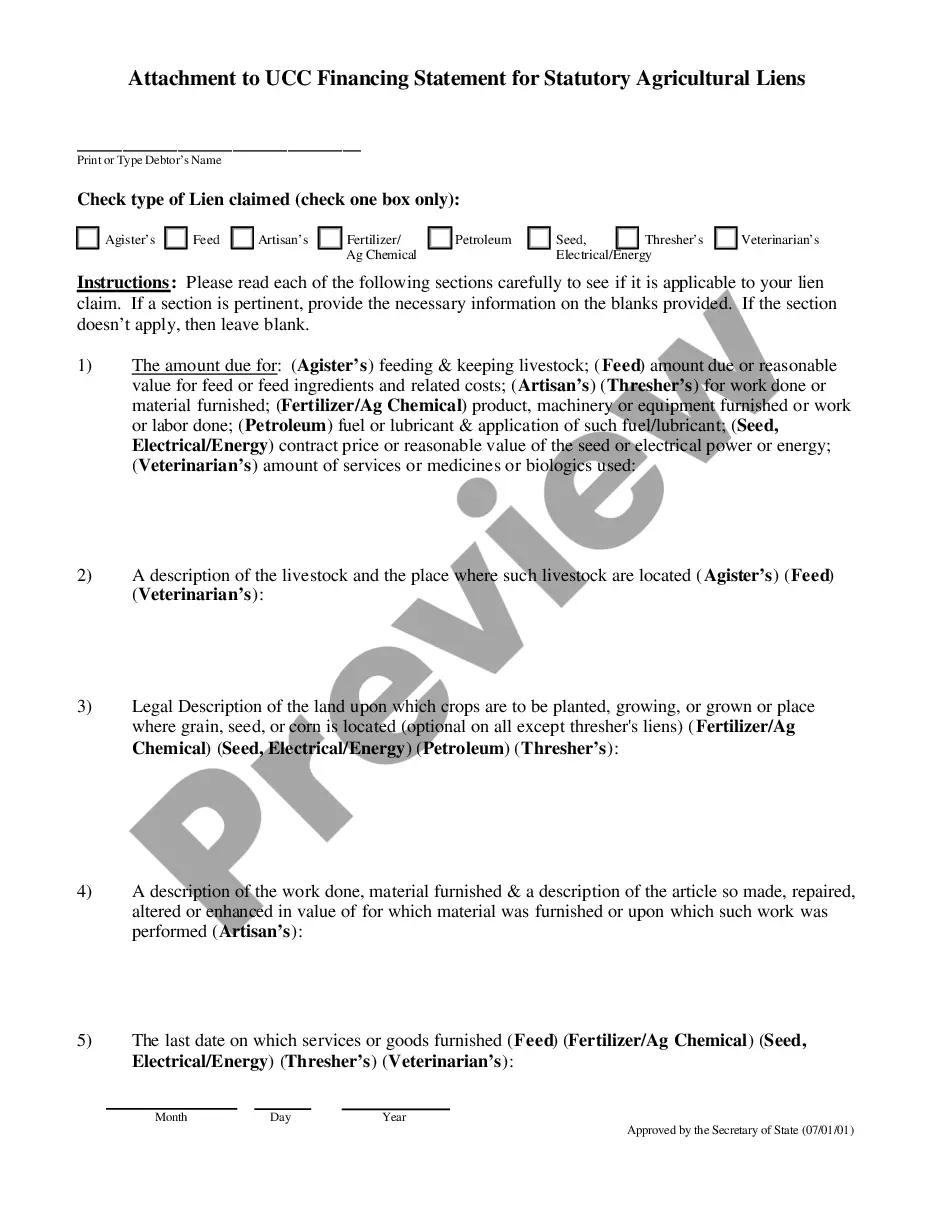
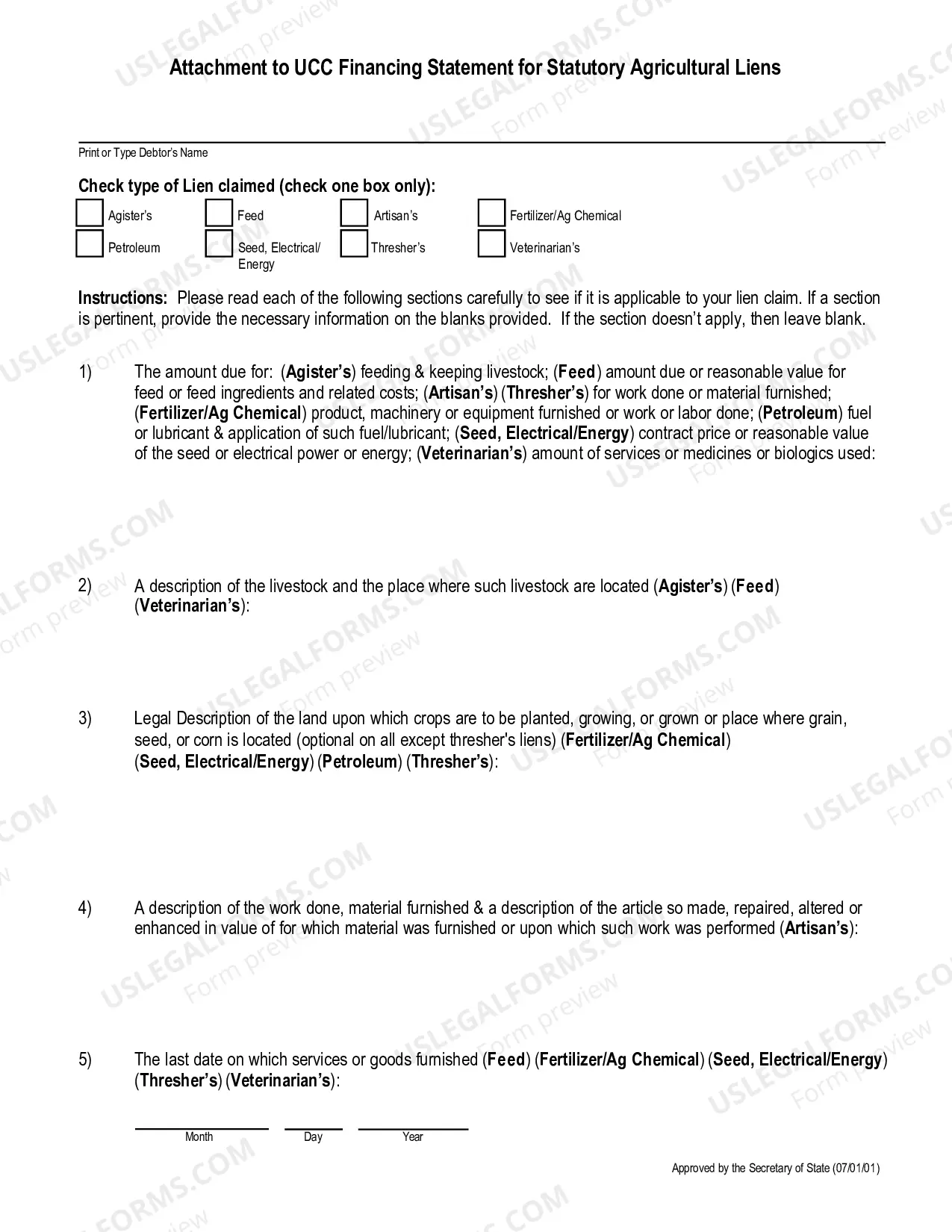
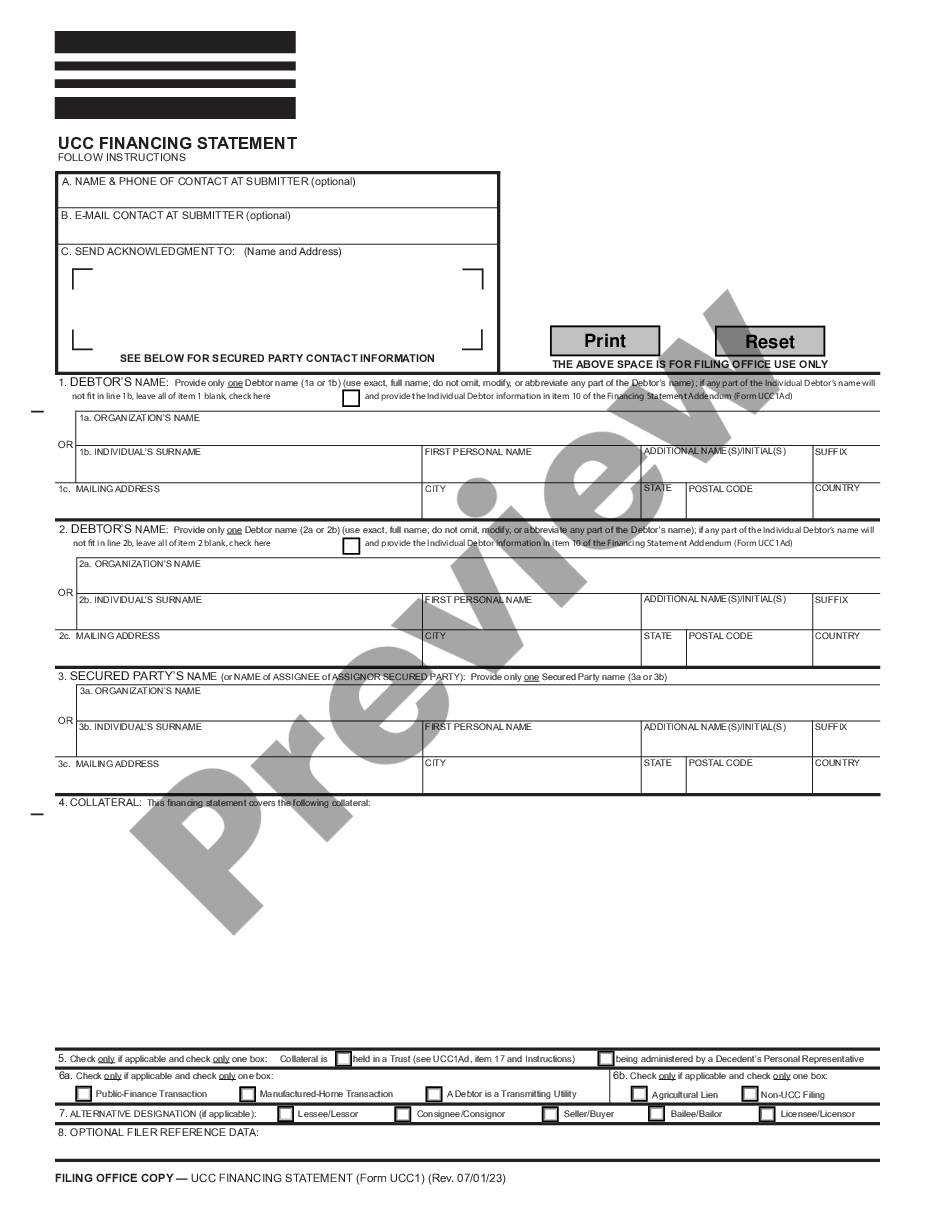
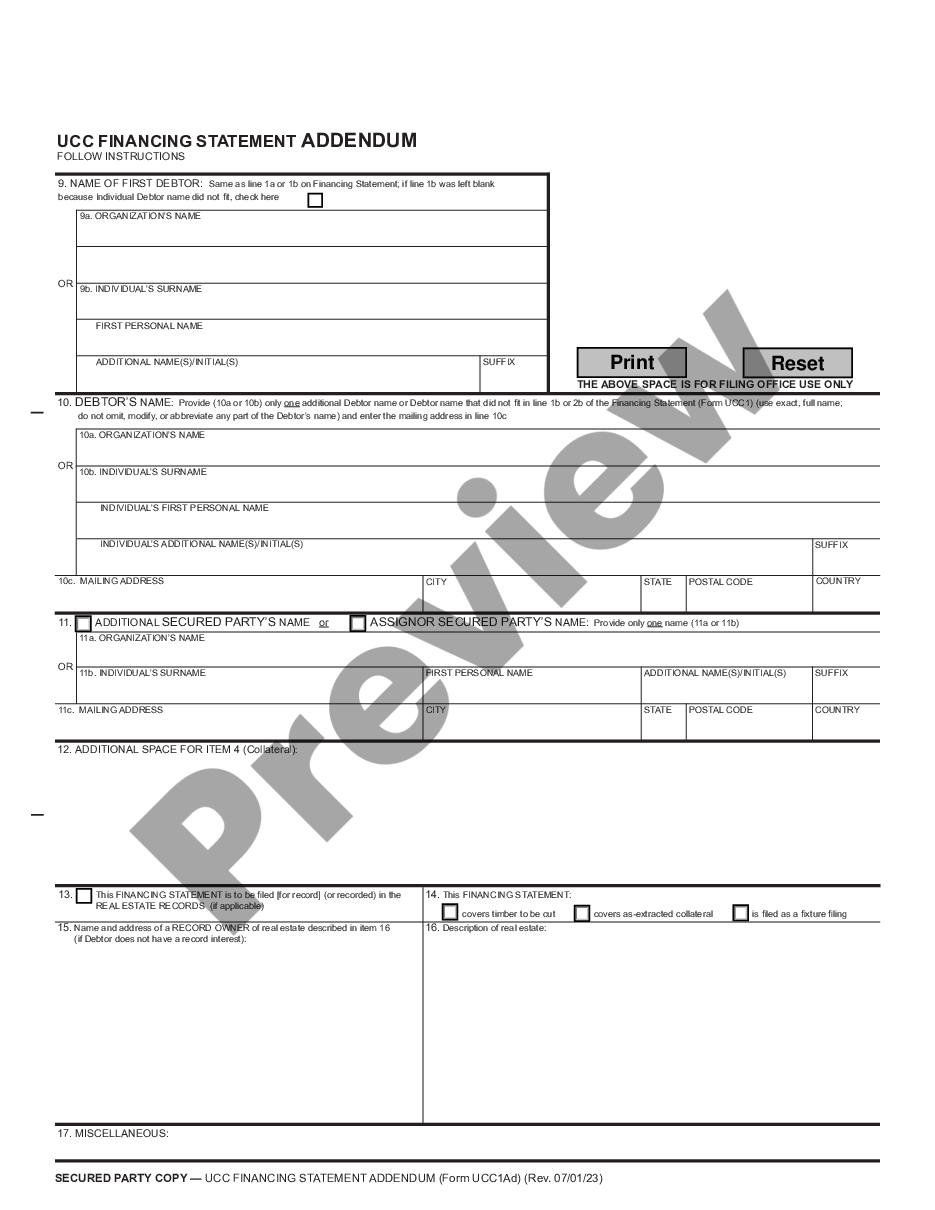
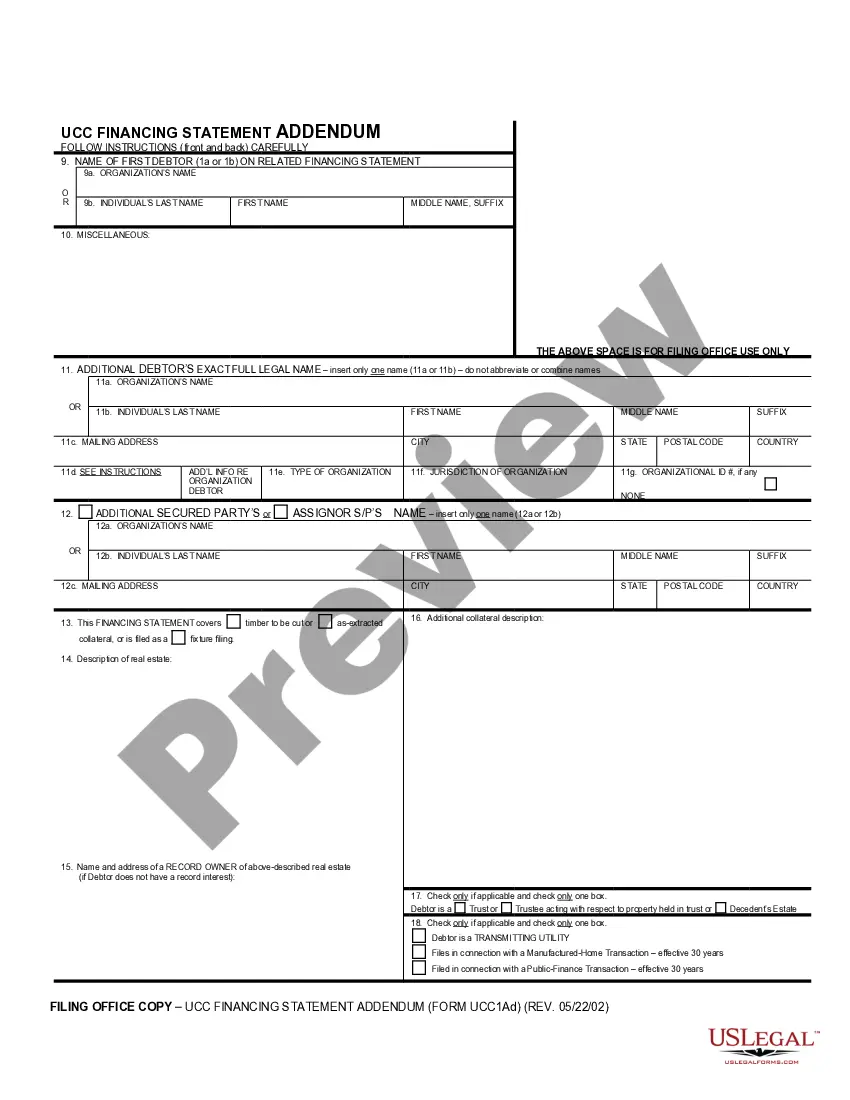
The Nebraska Attachment to UCC Financing Statement for Statutory Agricultural Liens is a specialized document used to establish a lien on agricultural products or livestock. This form is essential for creditors, such as farmers or agricultural service providers, to secure their financial interests when providing goods or services related to agriculture. Unlike other financing statements, this attachment specifically addresses statutory liens associated with agricultural activities in Nebraska.
Main sections of this form
- Debtorâs Name: Space to enter the name of the debtor.
- Type of Lien: Options to select the specific type of statutory agricultural lien being claimed.
- Amount Due: Section to provide the amount owed for services or goods provided.
- Description of Livestock: Space to describe the livestock involved and their location.
- Legal Description of Land: Optional section to detail the land related to the agricultural activity.
- Last Date of Service: Date when services or goods were last provided to the debtor.

When to use this form
This form should be used when a creditor seeks to claim a lien for unpaid agricultural services or goods. Typical scenarios for its use include when a farmer or agricultural supplier has not received payment for feed, fertilizer, veterinary services, or any other agricultural inputs, and intends to secure their rights over the crops or livestock until the debt is paid.
Who should use this form
- Agricultural suppliers providing goods like feed, chemicals, or seed.
- Veterinarians offering services or medicines to livestock owners.
- Farmers or agisters who have provided care or feed to livestock.
- Contractors performing agricultural tasks that require payment for labor or materials.
How to complete this form
- Print or type the debtorâs name clearly at the top of the form.
- Select the type of lien you are claiming by checking the appropriate box.
- Fill in the amount due for services or goods provided.
- Provide a detailed description of the livestock and their location if applicable.
- Include the legal description of the land if you are claiming a lien linked to land-based agricultural products.
- Enter the last date on which the services or goods were furnished.
Notarization requirements for this form
This form does not typically require notarization unless specified by local law. It is advisable to check with local regulations to confirm if notarization is required for the specific context in which the lien is being used.
Get your form ready online
Our built-in tools help you complete, sign, share, and store your documents in one place.
Make edits, fill in missing information, and update formatting in US Legal Forms—just like you would in MS Word.
Download a copy, print it, send it by email, or mail it via USPS—whatever works best for your next step.
Sign and collect signatures with our SignNow integration. Send to multiple recipients, set reminders, and more. Go Premium to unlock E-Sign.
If this form requires notarization, complete it online through a secure video call—no need to meet a notary in person or wait for an appointment.
We protect your documents and personal data by following strict security and privacy standards.

Make edits, fill in missing information, and update formatting in US Legal Forms—just like you would in MS Word.

Download a copy, print it, send it by email, or mail it via USPS—whatever works best for your next step.

Sign and collect signatures with our SignNow integration. Send to multiple recipients, set reminders, and more. Go Premium to unlock E-Sign.

If this form requires notarization, complete it online through a secure video call—no need to meet a notary in person or wait for an appointment.

We protect your documents and personal data by following strict security and privacy standards.
Mistakes to watch out for
- Failing to provide the debtor's full name or incorrect spelling.
- Not checking the correct type of lien for the claim.
- Omitting the required amount due section.
- Not supplying the necessary descriptions of livestock or property.
- Submitting the form without ensuring it is filed within the required time frame.
Benefits of using this form online
- Convenient access to essential agricultural lien documentation.
- Easy to fill out and edit while ensuring compliance with Nebraska laws.
- Guaranteed reliability through templates prepared by licensed attorneys.
Looking for another form?


Form popularity
FAQ
By filing a financing statement with the appropriate public office. by possessing the collateral. by controlling the collateral; or. it's done automatically upon attachment of the security interest.
A UCC filing is a legal notice a lender files with the secretary of state when they have a security interest against one of your assets. It gives notice that the lender has an interest, or lien, against the asset being used by you to secure the financing. The term UCC filing comes from the uniform commercial code.
Why file a UCC-3 form? The UCC-3 is the Swiss-Army-Knife of forms. Unlike a UCC 1, a UCC 3 can be used for multiple purposes. The actions one can take are Amendment, Assignment, Continuation, and Termination.
A UCC-1 financing statementalso sometimes referred to as a 'UCC-1 filing,' a 'UCC lien,' or simply a 'UCC-1'is a form that creditors use to create a lien against a debtor's property.
UCC-1 Financing Statements do not have to be signed by either the Debtor or Secured Party; however, they must be authorized.Although the UCC-1 Financing Statement does not require signatures, any attachment such as the legal description or special terms and conditions may require the signature of the Debtor.
UCC filings or liens are legal forms that a creditor files to give notice that it has an interest in the personal or business property of a debtor. Essentially, UCC lien filings allow a lender to formally lay claim to collateral that a debtor pledges to secure their financing.
Filer Information. Name and phone number of contact at filer. Email contact at filer. Debtor Information. Organization or individual's name. Mailing address. Secured Party Information. Organization or individual's name. Mailing address. Collateral Information. Description of collateral.
In all cases, you should file a UCC-1 with the secretary of state's office in the state where the debtor is incorporated or organized (if a business), or lives (if an individual).