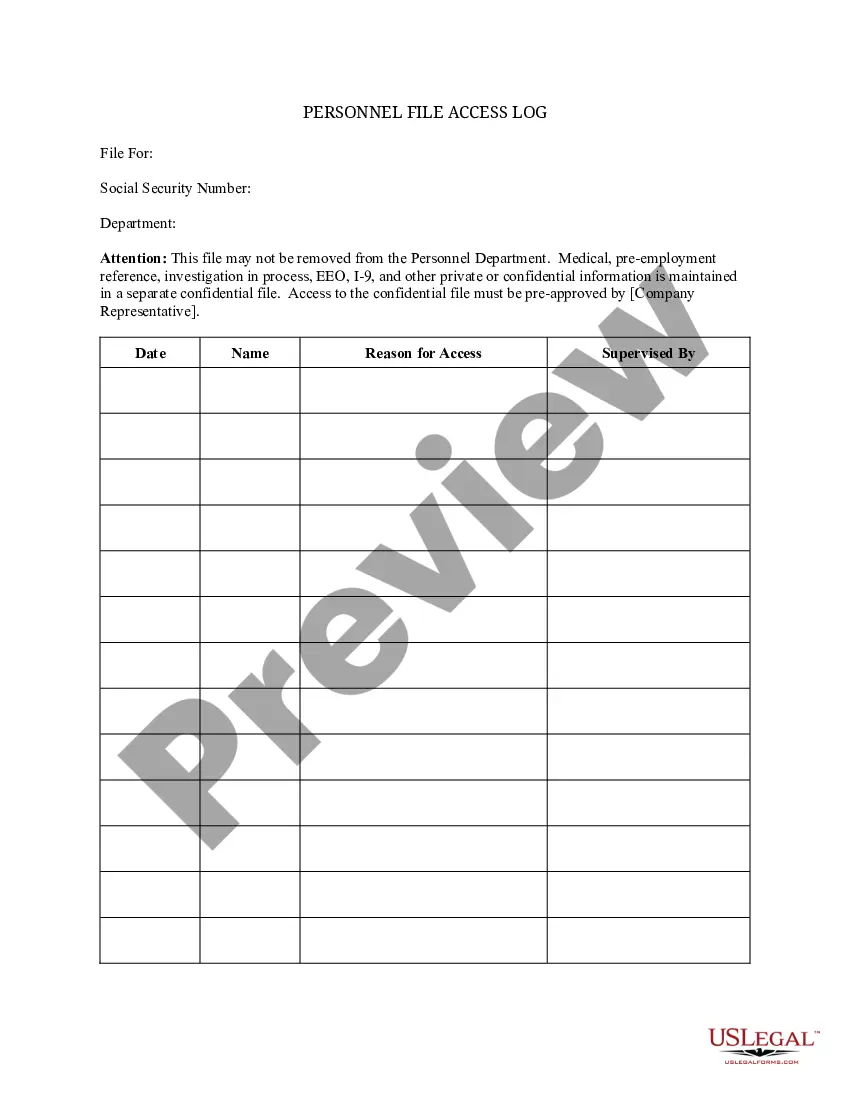
Nebraska Personnel File Access Log
Description
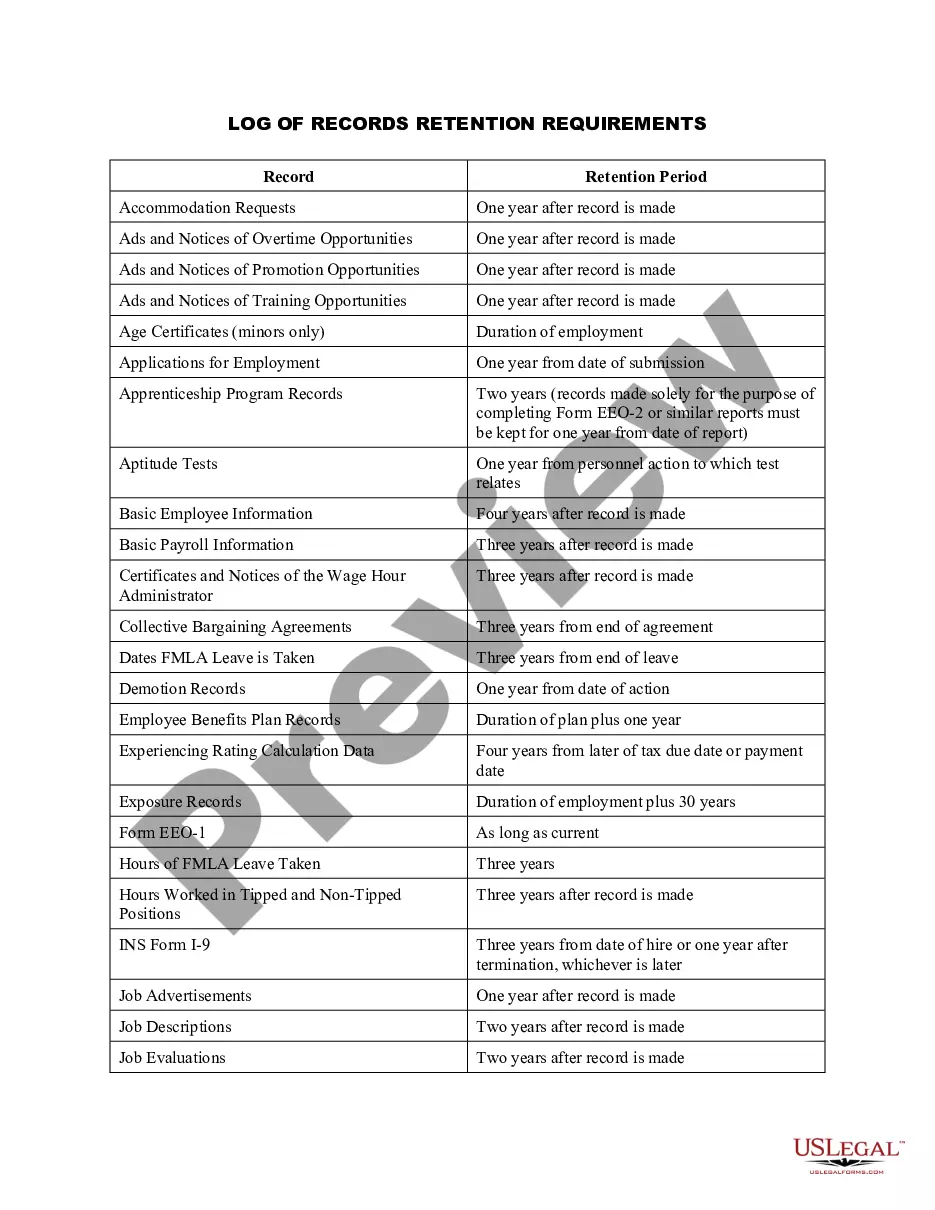
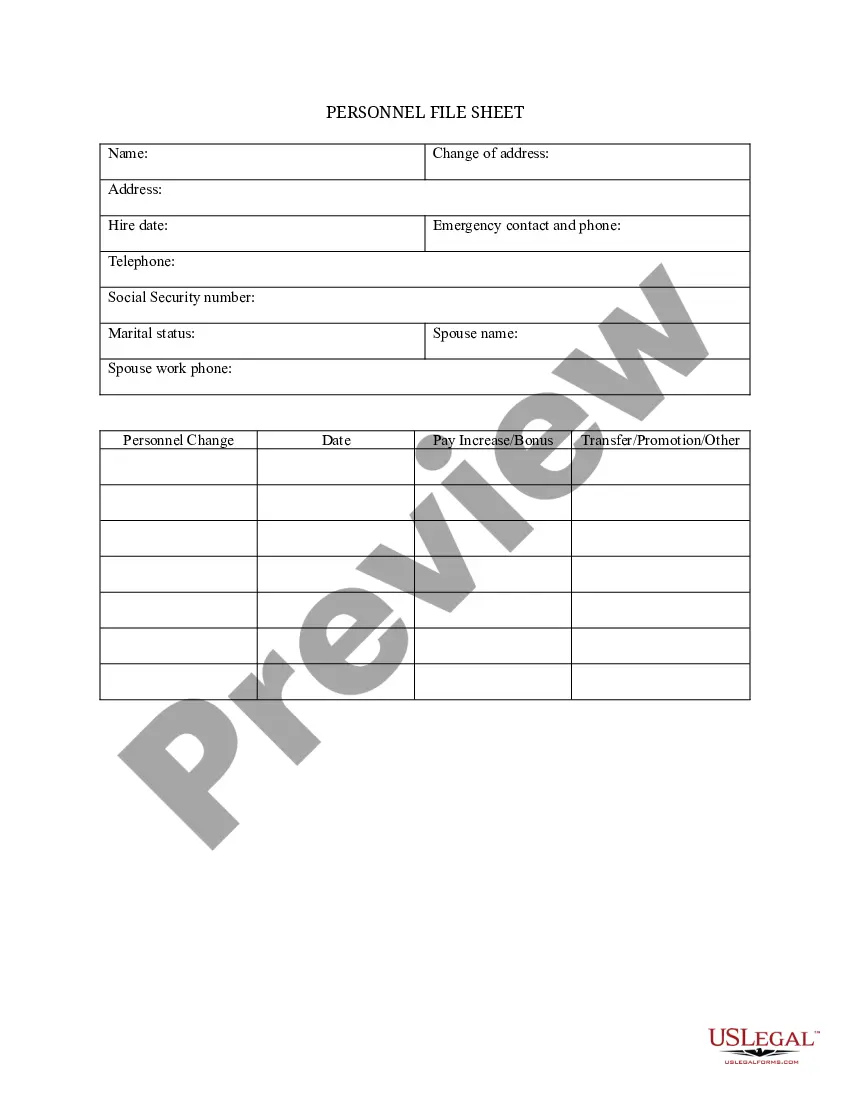
Get your form ready online
Our built-in tools help you complete, sign, share, and store your documents in one place.
Make edits, fill in missing information, and update formatting in US Legal Forms—just like you would in MS Word.
Download a copy, print it, send it by email, or mail it via USPS—whatever works best for your next step.
Sign and collect signatures with our SignNow integration. Send to multiple recipients, set reminders, and more. Go Premium to unlock E-Sign.
If this form requires notarization, complete it online through a secure video call—no need to meet a notary in person or wait for an appointment.
We protect your documents and personal data by following strict security and privacy standards.

Make edits, fill in missing information, and update formatting in US Legal Forms—just like you would in MS Word.

Download a copy, print it, send it by email, or mail it via USPS—whatever works best for your next step.

Sign and collect signatures with our SignNow integration. Send to multiple recipients, set reminders, and more. Go Premium to unlock E-Sign.

If this form requires notarization, complete it online through a secure video call—no need to meet a notary in person or wait for an appointment.

We protect your documents and personal data by following strict security and privacy standards.
Looking for another form?






How to fill out Personnel File Access Log?
You can spend hours online trying to locate the legal document template that fulfills the state and federal criteria you require.
US Legal Forms offers a plethora of legal documents that have been reviewed by experts.
You can download or print the Nebraska Personnel File Access Log from their services.
If available, utilize the Preview option to review the document template as well.
- If you possess a US Legal Forms account, you can Log In and select the Download option.
- Subsequently, you can complete, edit, print, or sign the Nebraska Personnel File Access Log.
- Every legal document template you obtain is yours indefinitely.
- To acquire an additional copy of a purchased form, navigate to the My documents section and select the relevant option.
- If you are using the US Legal Forms website for the first time, follow the simple instructions outlined below.
- First, confirm that you have selected the correct document format for your county/city of choice.
- Review the form description to ensure you have selected the appropriate one.
Form popularity
FAQ
The Nebraska Personnel Records Act governs how employers maintain and manage employee records. This law ensures employees have access to their personnel files, which can include evaluations, disciplinary records, and other essential documents. Understanding this act helps you navigate your rights regarding the Nebraska Personnel File Access Log effectively.
Here are some key steps to help you organize employees' personnel files in your organization:Determine which documents to store.Choose a filing method.Format your documents.Learn who can access the files.Create a file retention policy.Update the files as needed.
What to Keep in a Personnel Filejob description for the position.job application and/or resume.offer of employment.IRS Form W-4 (the Employee's Withholding Allowance Certificate)receipt or signed acknowledgment of employee handbook.performance evaluations.forms relating to employee benefits.More items...
Personal employee information will be considered confidential and as such will be shared only as required and with those who have a need to have access to such information. All hard copy records will be maintained in locked, secure areas with access limited to those who have a need for such access.
If the company inquires further about salary, HR can give out that information as well, but it has the right to ask for express consent from the applicant. You do not have to give out any information whatsoever, including employment verification data and salary information.
As an employee, do I have a right to see my personnel files? The short answer is 'yes'. You have a right to make a SAR to your employer, asking to see your personnel files, at any time. Your employer has the right to ask why you want to see your files, but must then provide all your records to you.
As a suggestion, you may want to set up a company policy that the only people that are allowed to access an employee's personnel record are the human resources manager, the employee's supervisor or manager, and the employee himself.
An employee's personnel file usually contains information related to their performance, salary, and any investigations of misconduct or medical issues. As a result, these records are generally considered private and can be accessed by only the employer and the employee.
Company Name employee files are maintained by the human resource (HR) department and are considered confidential. Managers and supervisors, other than the HR director and his or her subordinates, may only have access to personnel file information on a need-to-know basis.
There is no Nebraska law that grants former employees the right to review or obtain a copy of their personnel file. Employee personnel files remain the sole property of the employer at all times.