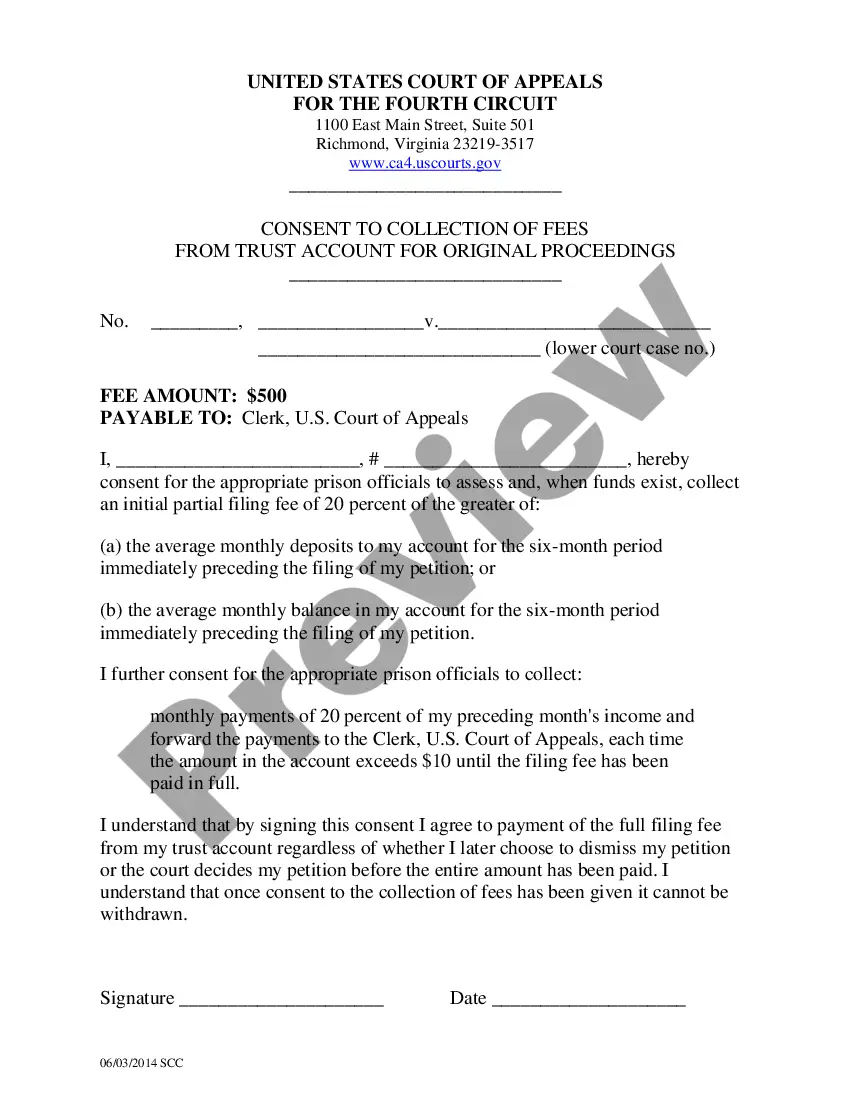
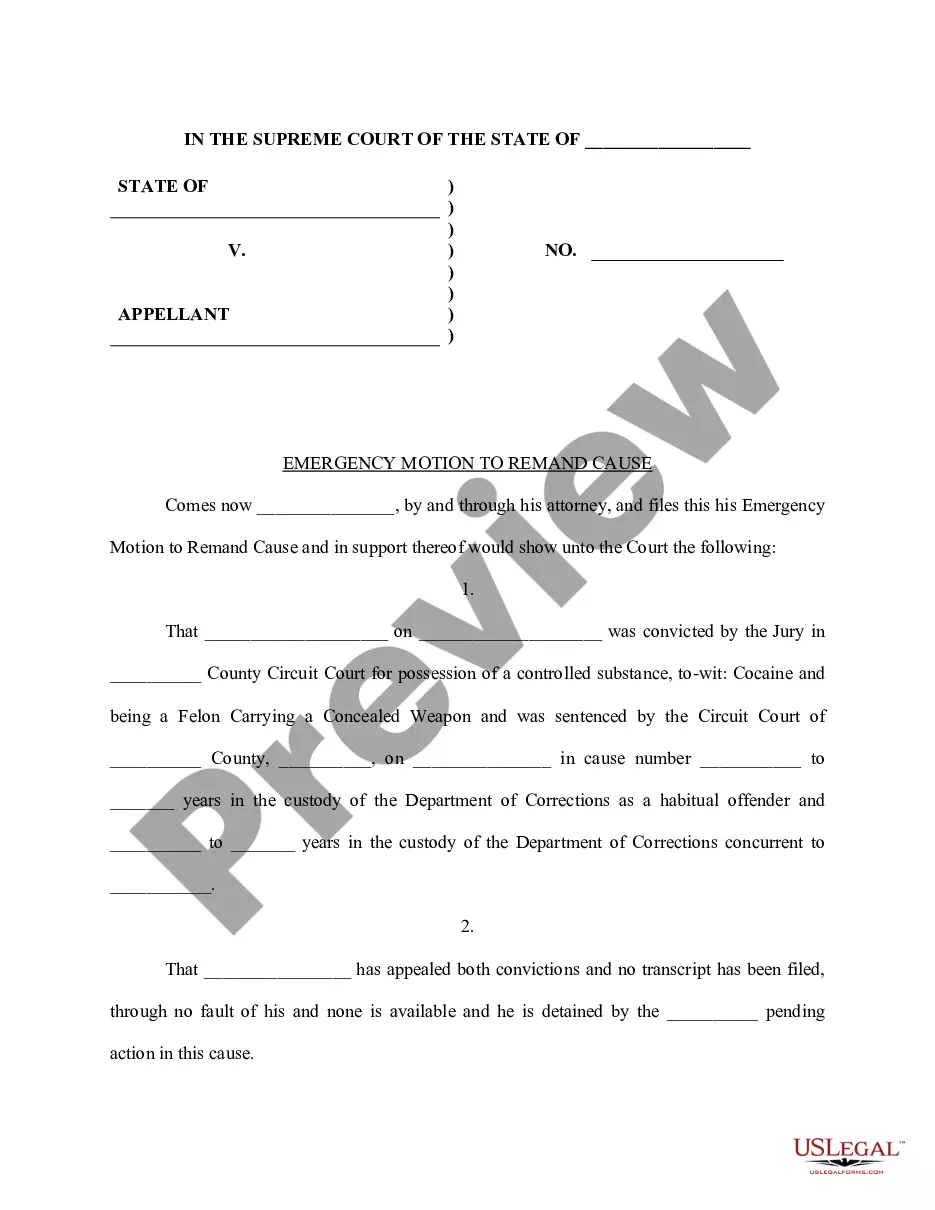
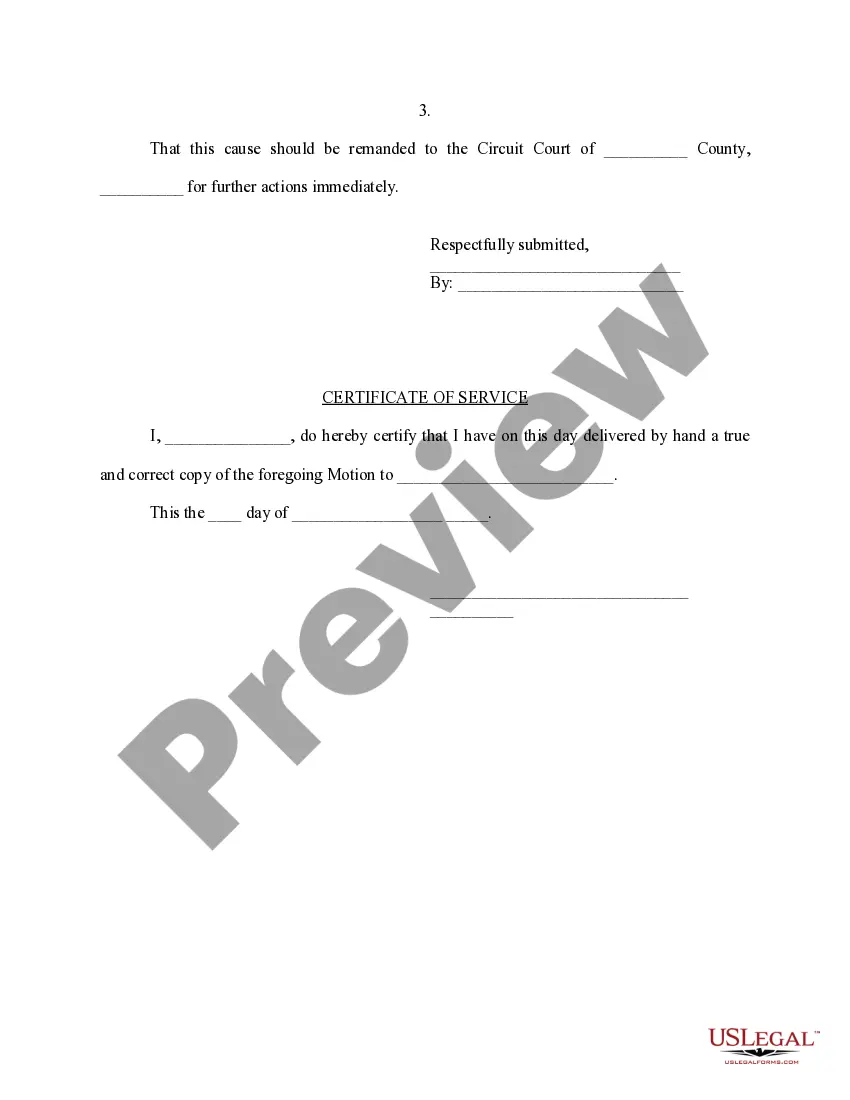
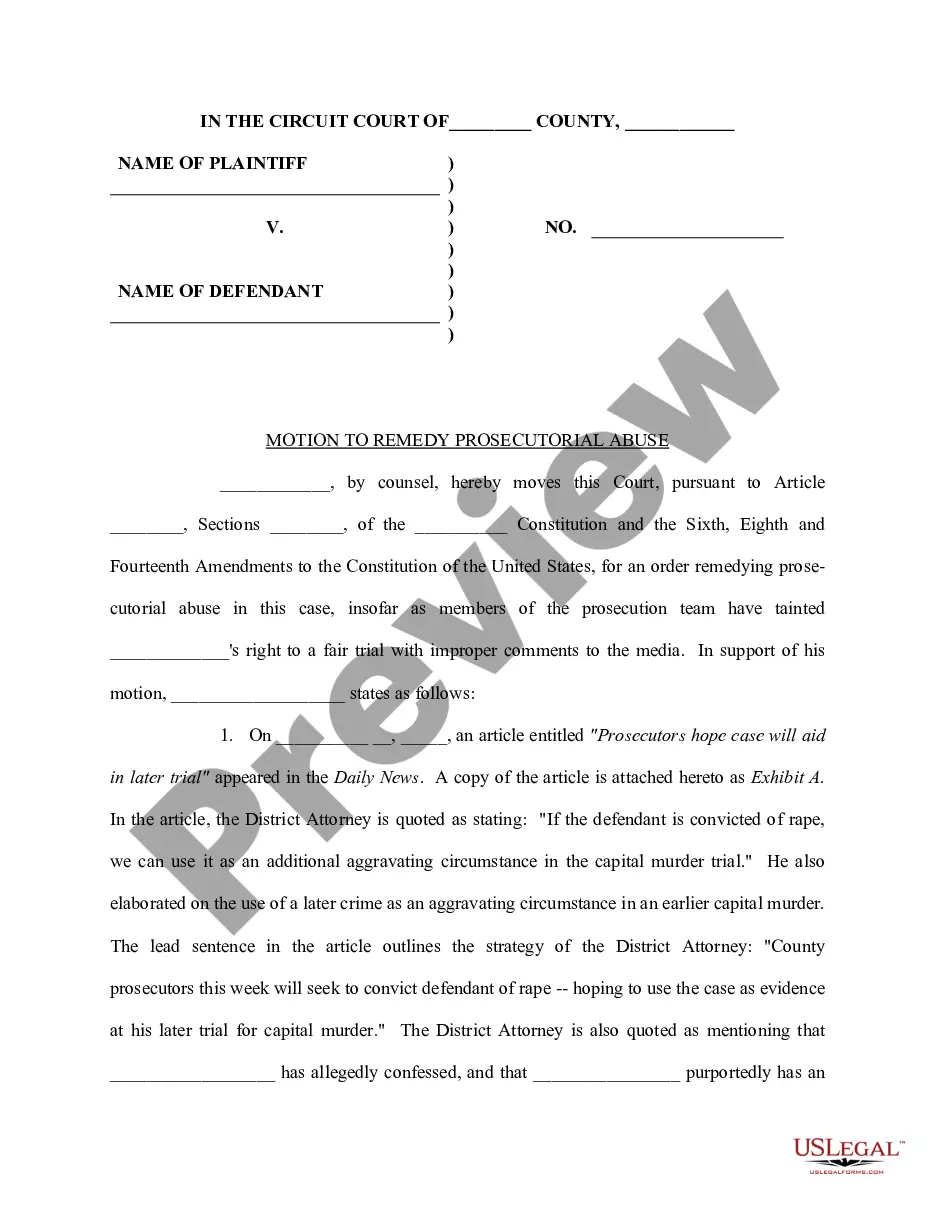
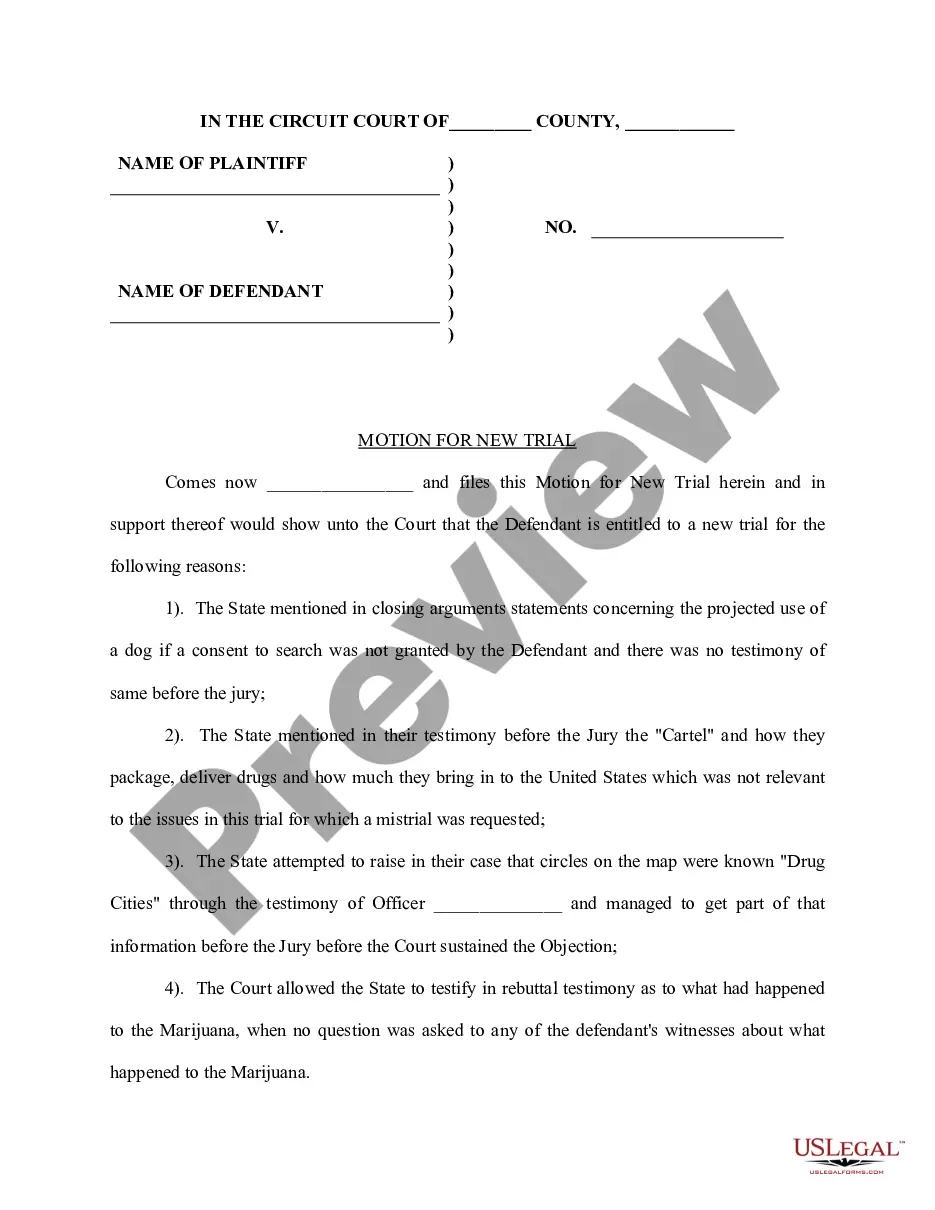
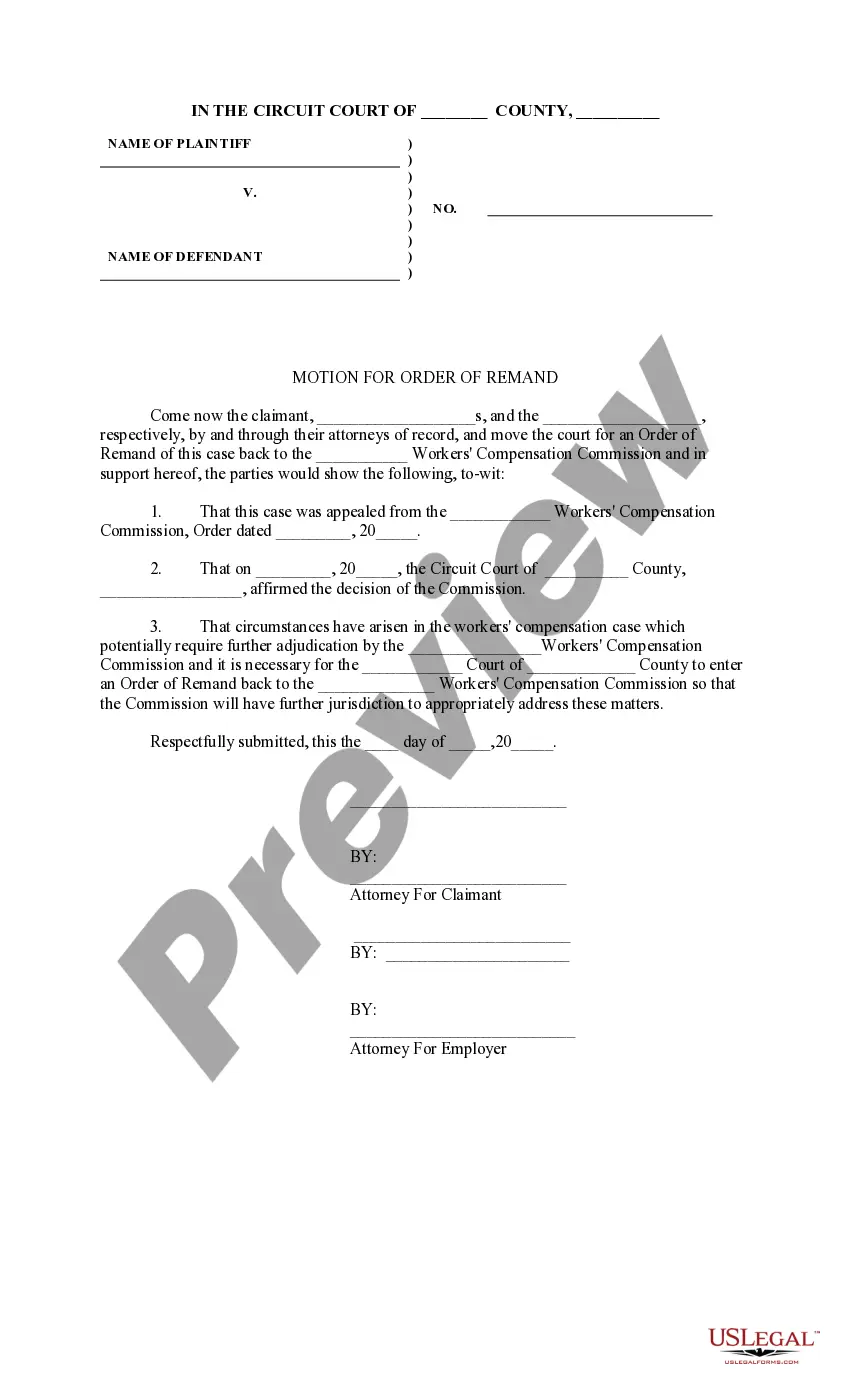
Nebraska Emergency Motion to Remand Cause
Description
Get your form ready online
Our built-in tools help you complete, sign, share, and store your documents in one place.
Make edits, fill in missing information, and update formatting in US Legal Forms—just like you would in MS Word.
Download a copy, print it, send it by email, or mail it via USPS—whatever works best for your next step.
Sign and collect signatures with our SignNow integration. Send to multiple recipients, set reminders, and more. Go Premium to unlock E-Sign.
If this form requires notarization, complete it online through a secure video call—no need to meet a notary in person or wait for an appointment.
We protect your documents and personal data by following strict security and privacy standards.

Make edits, fill in missing information, and update formatting in US Legal Forms—just like you would in MS Word.

Download a copy, print it, send it by email, or mail it via USPS—whatever works best for your next step.

Sign and collect signatures with our SignNow integration. Send to multiple recipients, set reminders, and more. Go Premium to unlock E-Sign.

If this form requires notarization, complete it online through a secure video call—no need to meet a notary in person or wait for an appointment.

We protect your documents and personal data by following strict security and privacy standards.
Looking for another form?




How to fill out Emergency Motion To Remand Cause?
It is feasible to invest hours online searching for the sanctioned document format that meets the state and federal requirements you require.
US Legal Forms offers a vast array of legal forms that are reviewed by experts.
You can download or print the Nebraska Emergency Motion to Remand Cause from their platform.
If available, use the Preview button to view the document format as well. To get an additional version of your form, use the Search field to locate the format that meets your requirements and needs. Once you find the format you need, click Buy now to proceed. Choose the pricing plan you want, enter your details, and register for an account on US Legal Forms. Complete the purchase. You can use your credit card or PayPal account to pay for the legal form. Select the format of your document and download it to the device. Make edits to the document if necessary. You can complete, edit, sign, and print the Nebraska Emergency Motion to Remand Cause. Acquire and print a vast number of document templates using the US Legal Forms website, which provides the largest selection of legal forms. Utilize professional and state-specific templates to address your business or personal needs.
- If you already have a US Legal Forms account, you can Log In and click on the Acquire button.
- After that, you can complete, edit, print, or sign the Nebraska Emergency Motion to Remand Cause.
- Each legal document format you purchase is yours permanently.
- To obtain another copy of the acquired form, visit the My documents tab and click on the relevant button.
- If you are using the US Legal Forms site for the first time, follow the simple instructions below.
- First, ensure you have selected the correct document format for your county/city of choice.
- Check the form description to confirm you have selected the right one.
Form popularity
FAQ
Reasons for dismissal without prejudice The parties came to an agreement and the plaintiff wants to end the case. The person the plaintiff sued paid you the money he or she owed you. The plaintiff cannot locate the defendant to serve him or her, but wants to reserve the right to sue at a later date.
An action may be dismissed without prejudice to a future action (1) by the plaintiff, before the final submission of the case to the jury, or to the court where the trial is by the court; (2) by the court where the plaintiff fails to appear at the trial; (3) by the court for want of necessary parties; (4) by the court ...
To obtain a reversal, vacation, or modification of judgments and decrees rendered or final orders made by the district court, a notice of appeal must be filed within 30 days after the entry of such judgment, decree, or final order. State v.
A motion to quash may be made in all cases when there is a defect apparent upon the face of the record, including defects in the form of the indictment or in the manner in which an offense is charged. G.S.1873, c. 58, § 440, p.
Dhillon's claim that "an order remanding for further proceedings necessarily implies continuing jurisdiction of the court and does not result in a final, appealable judgment unless and until the parties return to court to further litigate and resolve any remaining controversy." (ABOM 3.)
A dismissal with prejudice means that the ruling is the final judgment in the case. The dismissal prohibits the prosecutor from refiling the charges. In a dismissal without prejudice, the prosecutor can refile the charges (or file new charges based on the same circumstances) at some future time.
The progression order may include the mandatory exchange of information, discovery deadlines, provision for disclosure of expert witnesses, the date of the pretrial conference, the trial term at which the case will be tried or the trial date, together with such other provisions as the court may deem appropriate.