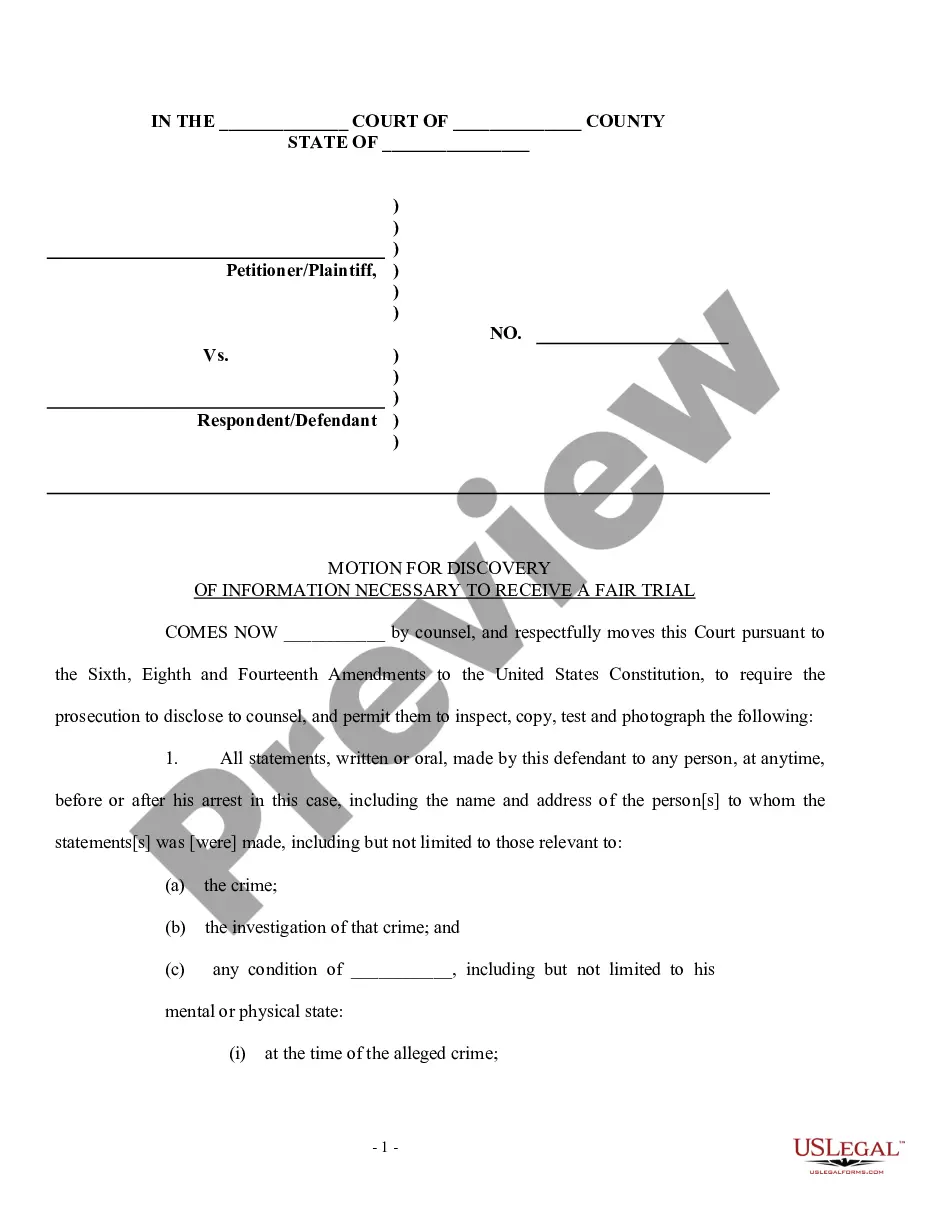
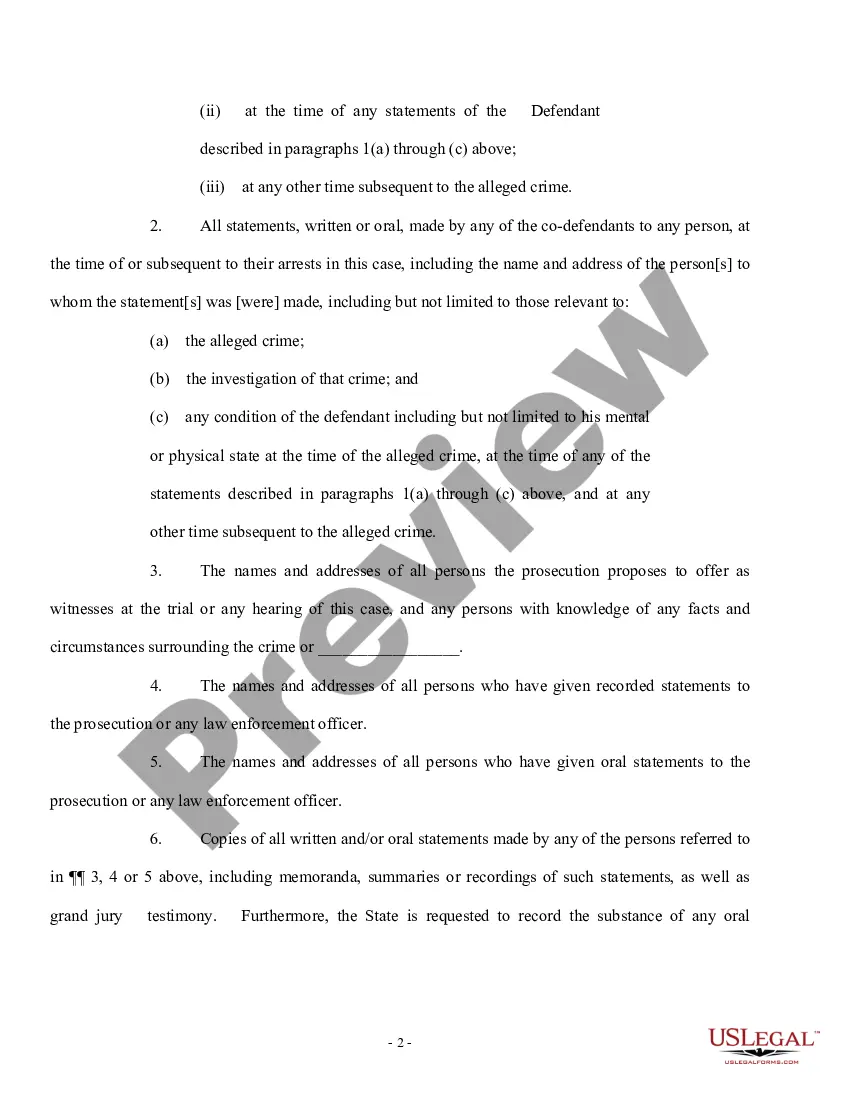
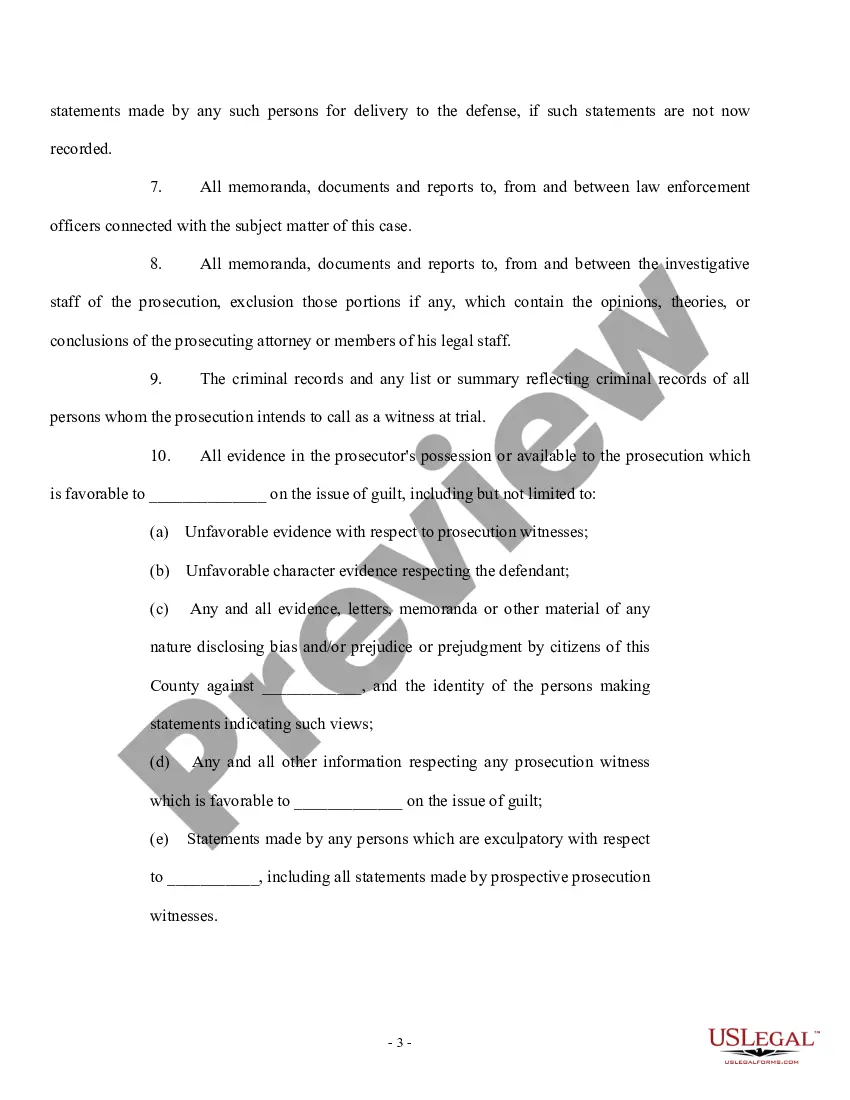
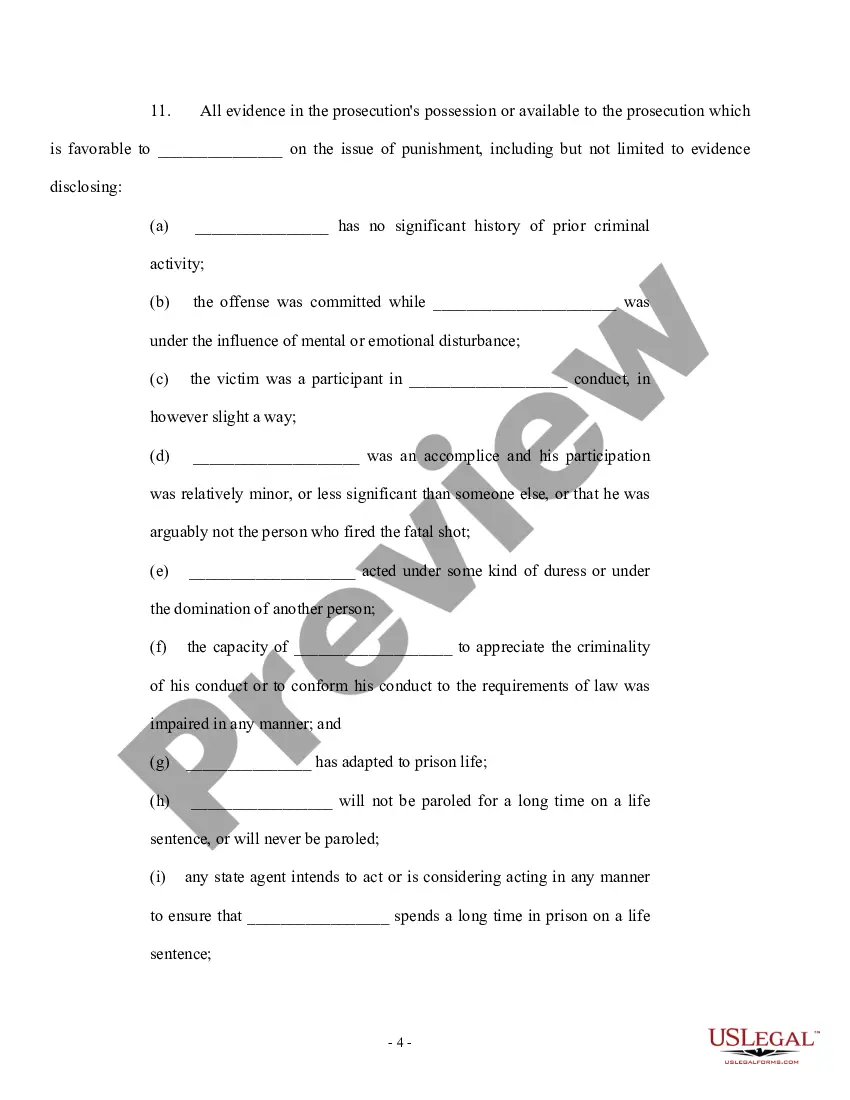
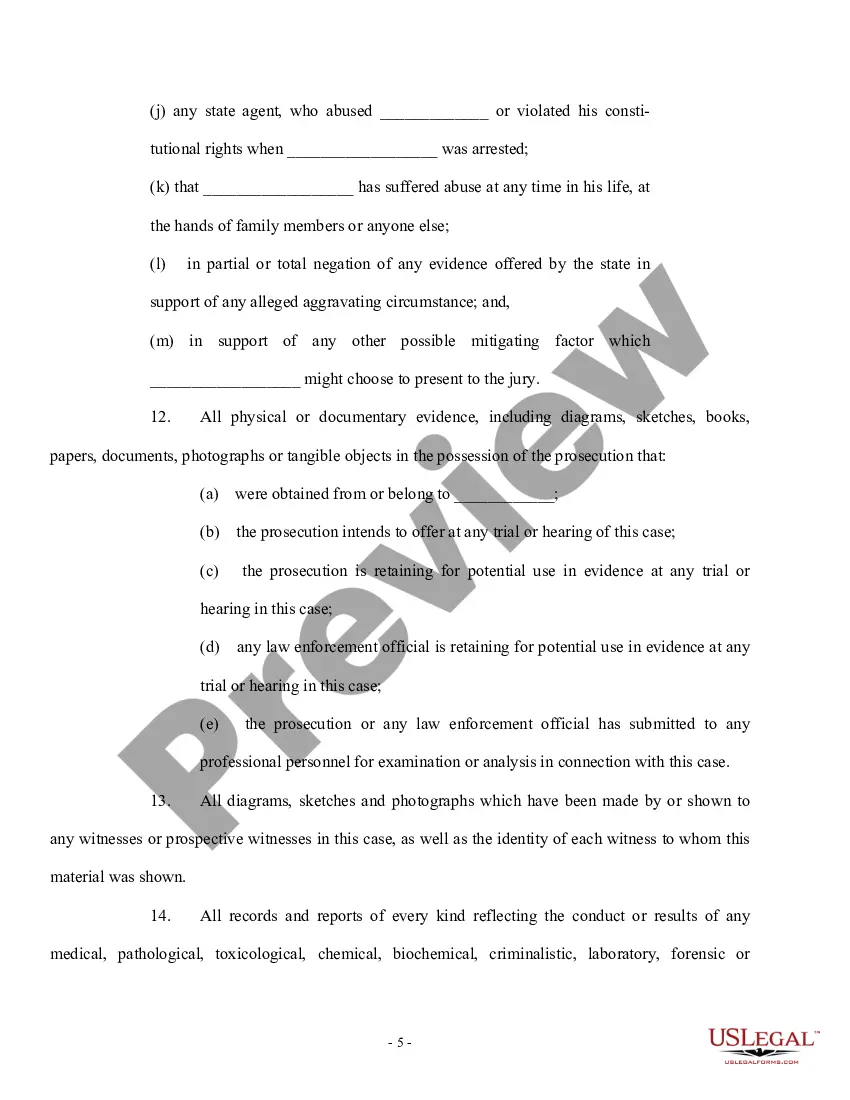
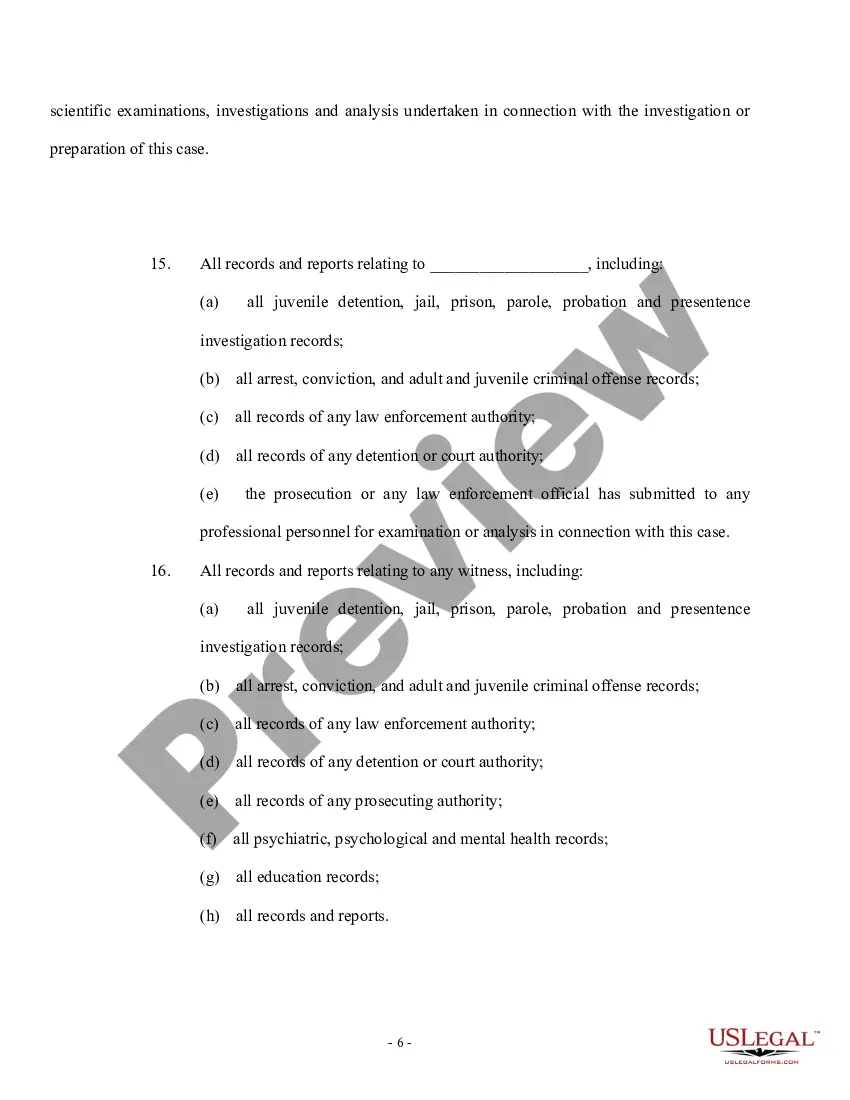
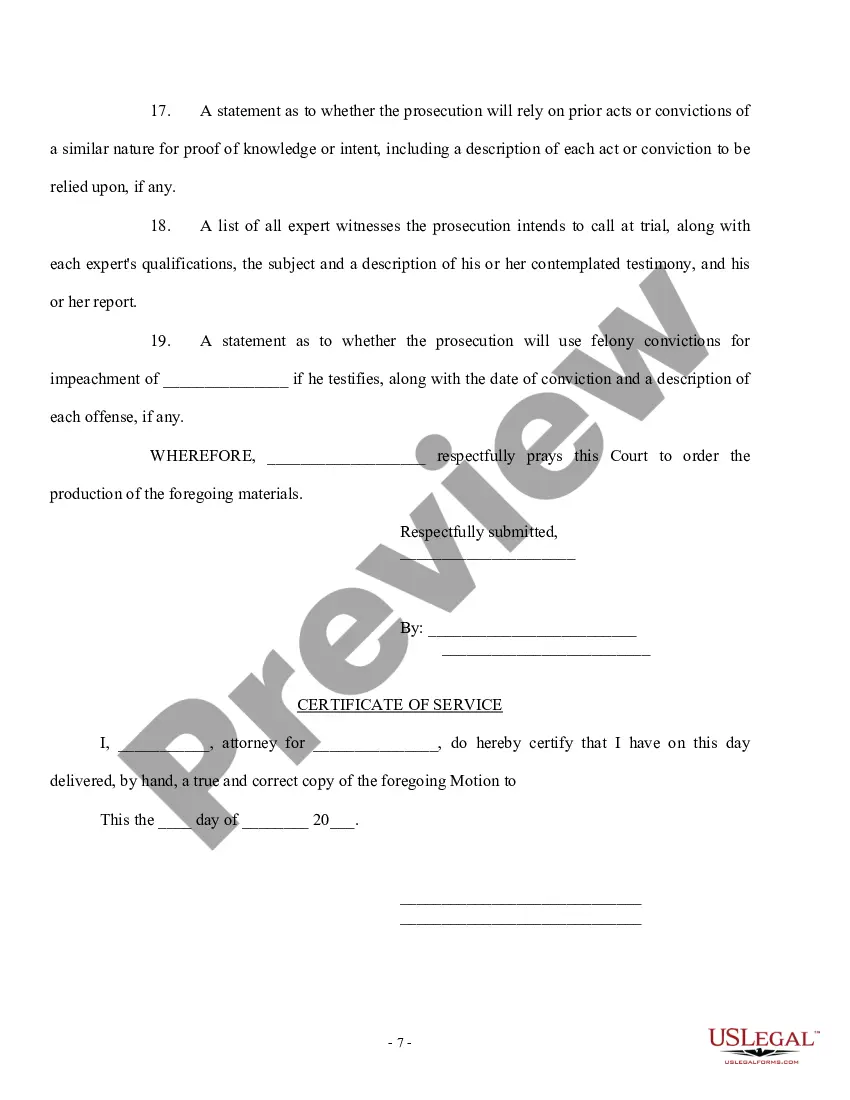
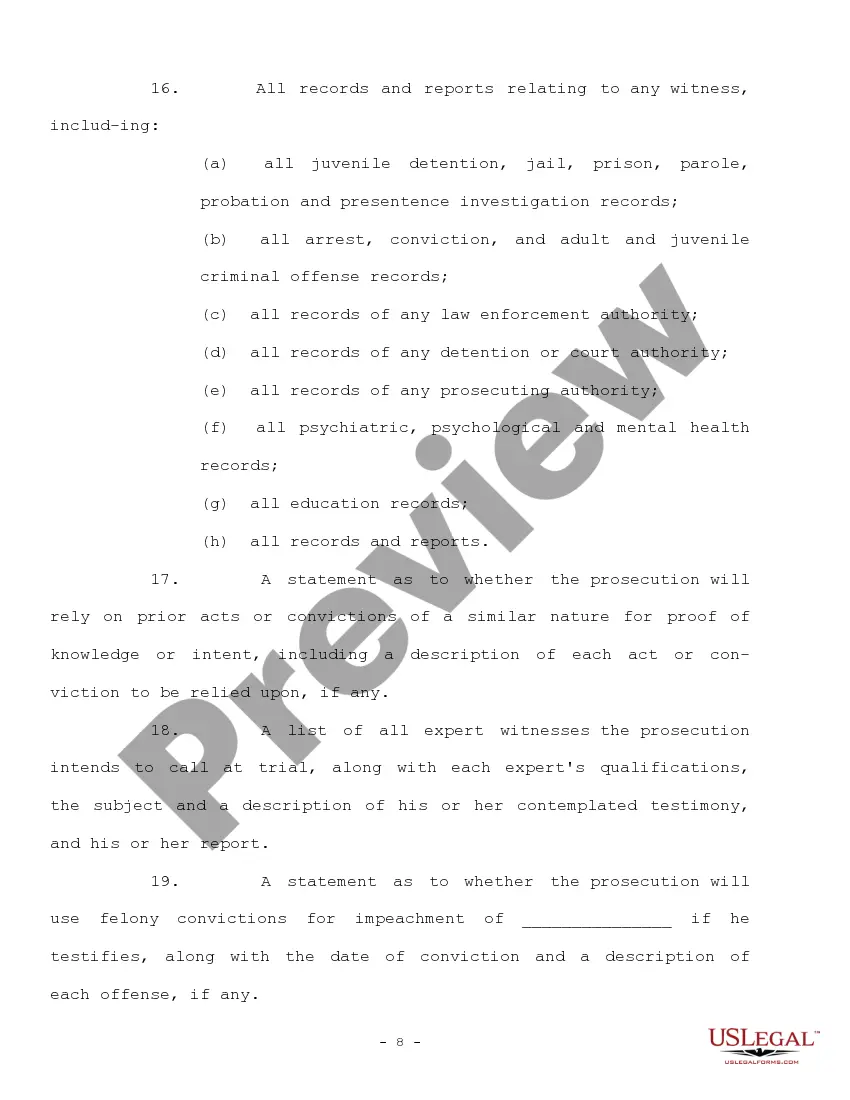
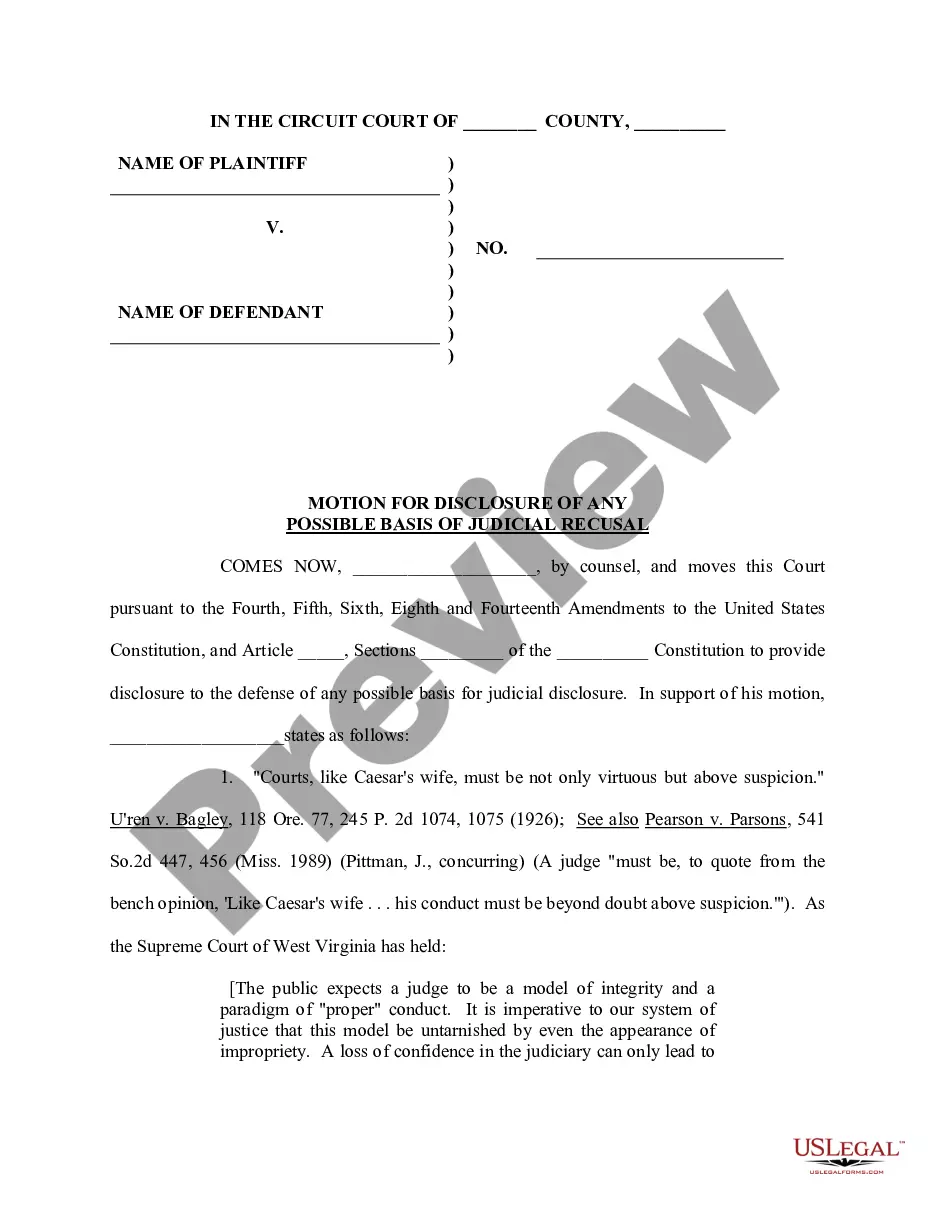
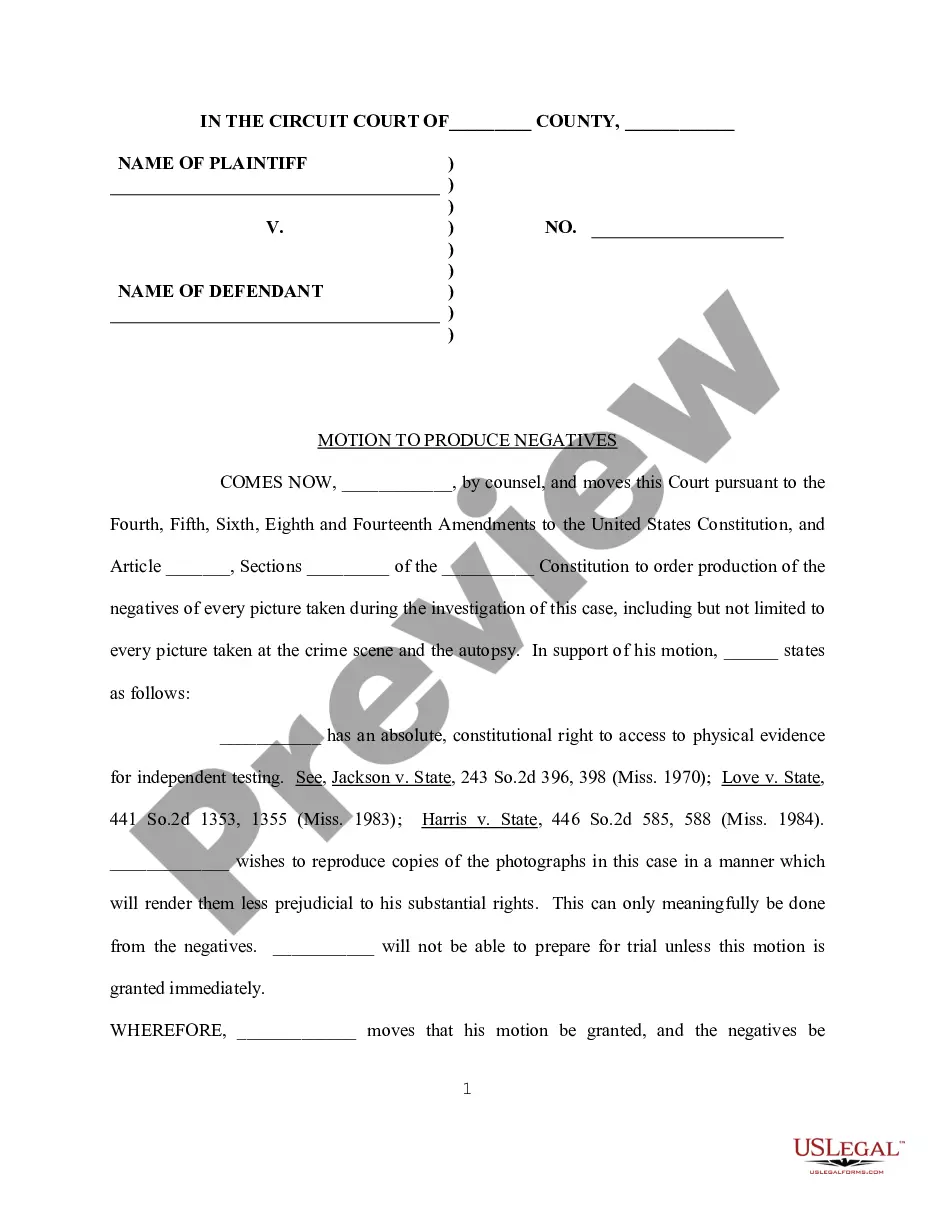
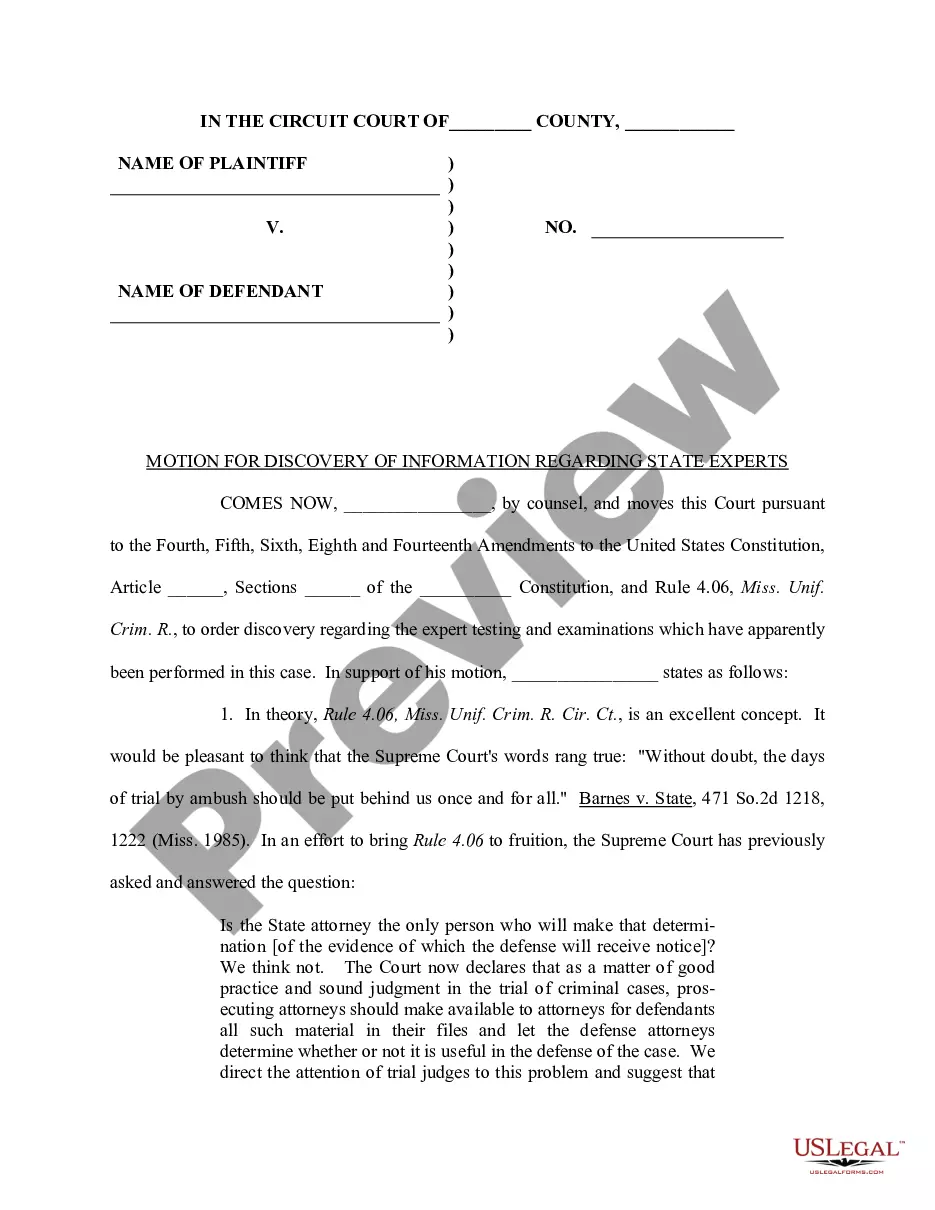
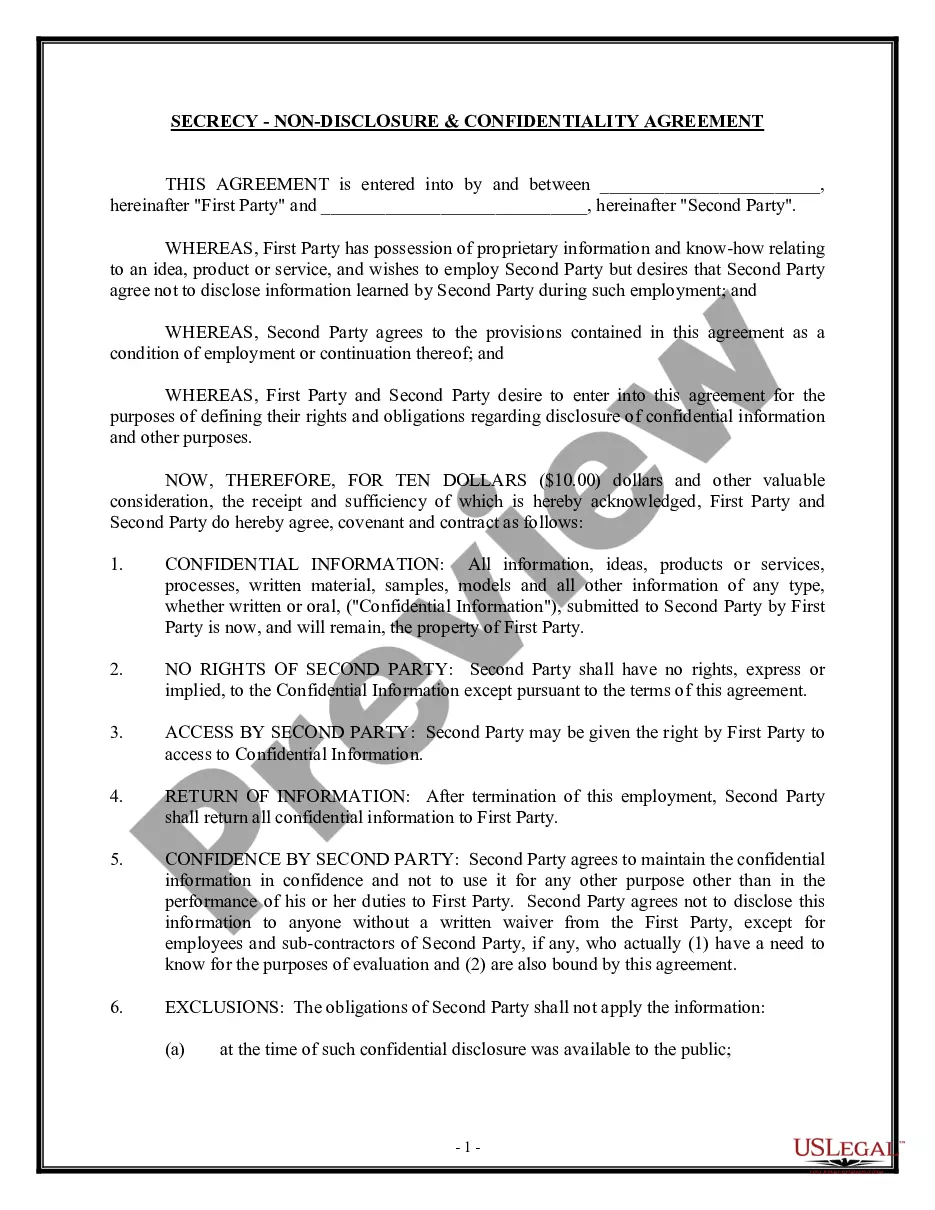
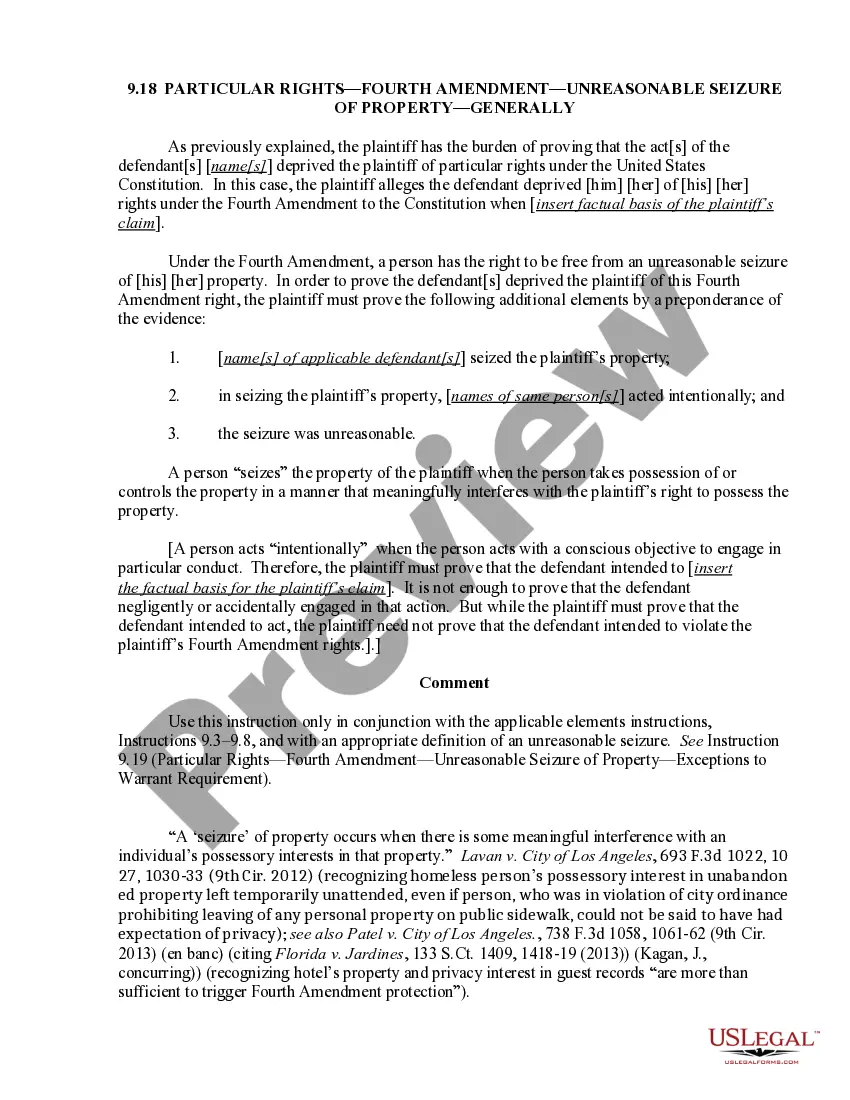
This form is a Motion for Discovery of Information Necessary to Receive a Fair Trial. Defendant's counsel requests that the prosecution disclose, and permit an inspection of all statements, written or oral, made by the defendant to any person, at anytime, before or after his arrest, including the name and address of the person(s) to whom the statement(s)were made.
Nebraska Motion for Discovery of Information Necessary to Receive a Fair Trial
Instant download
Description
Free preview
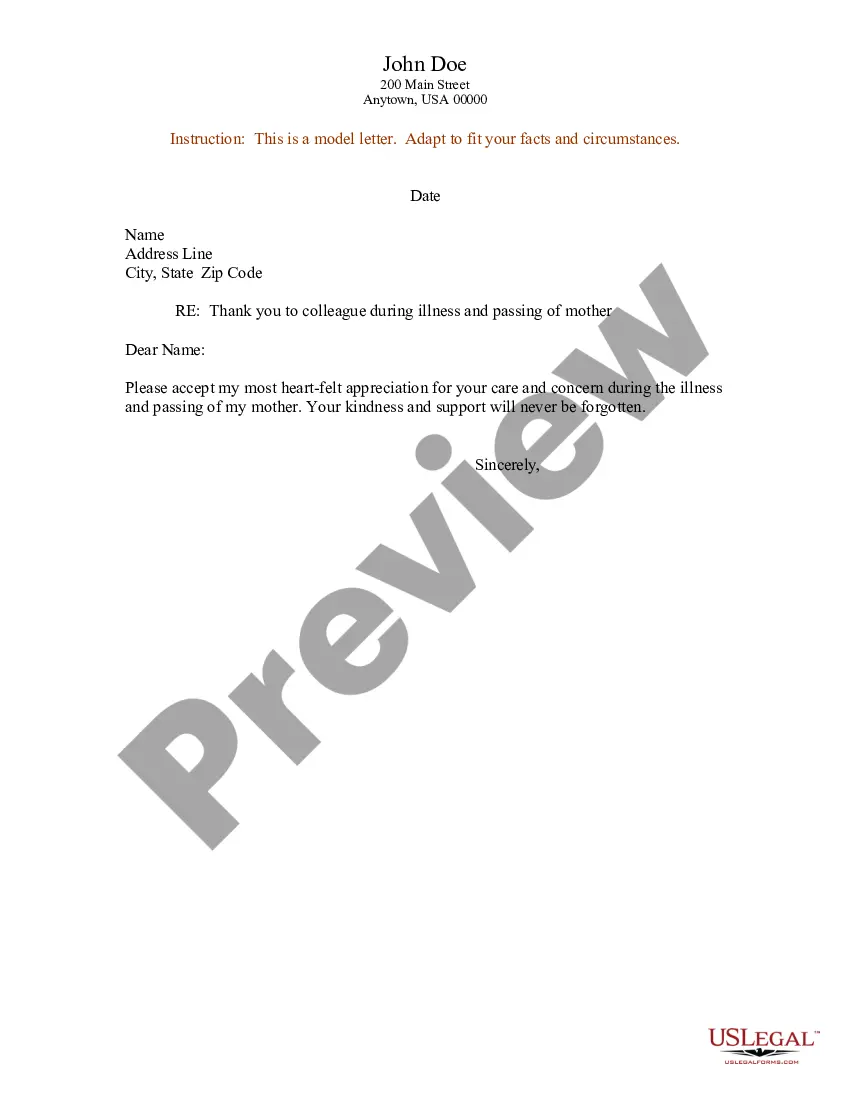
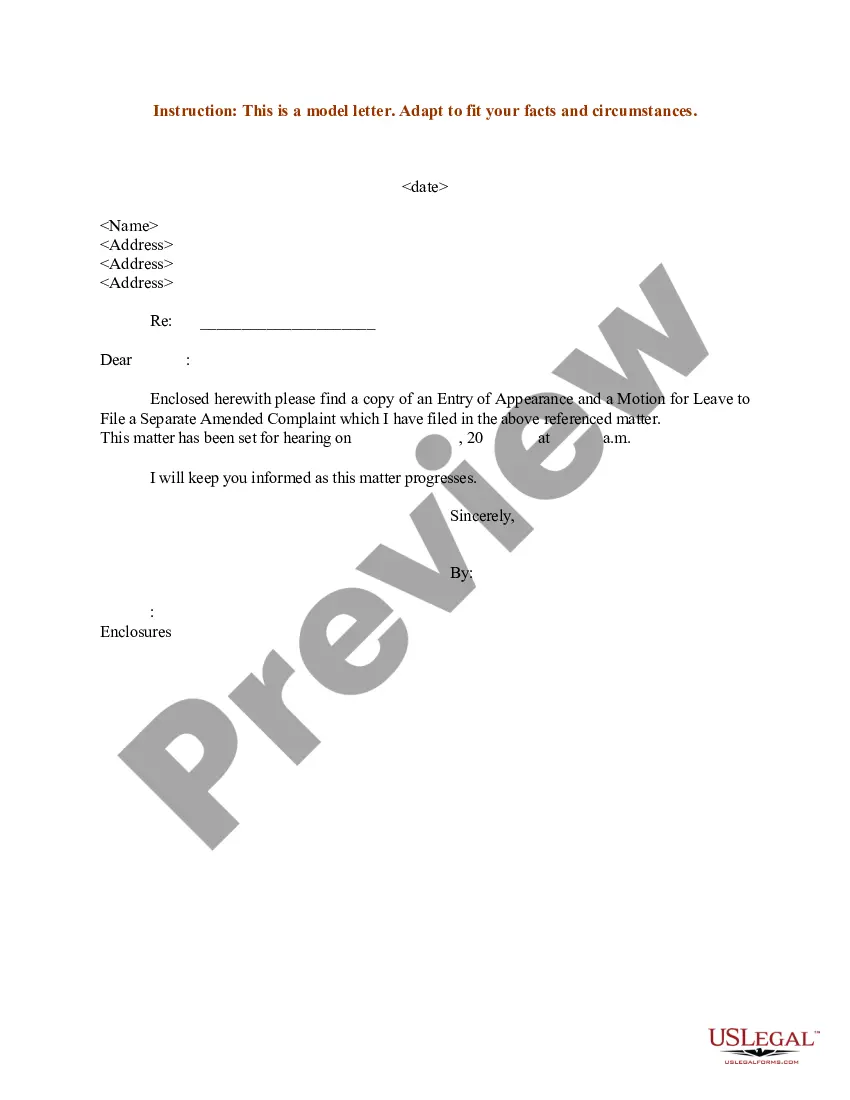

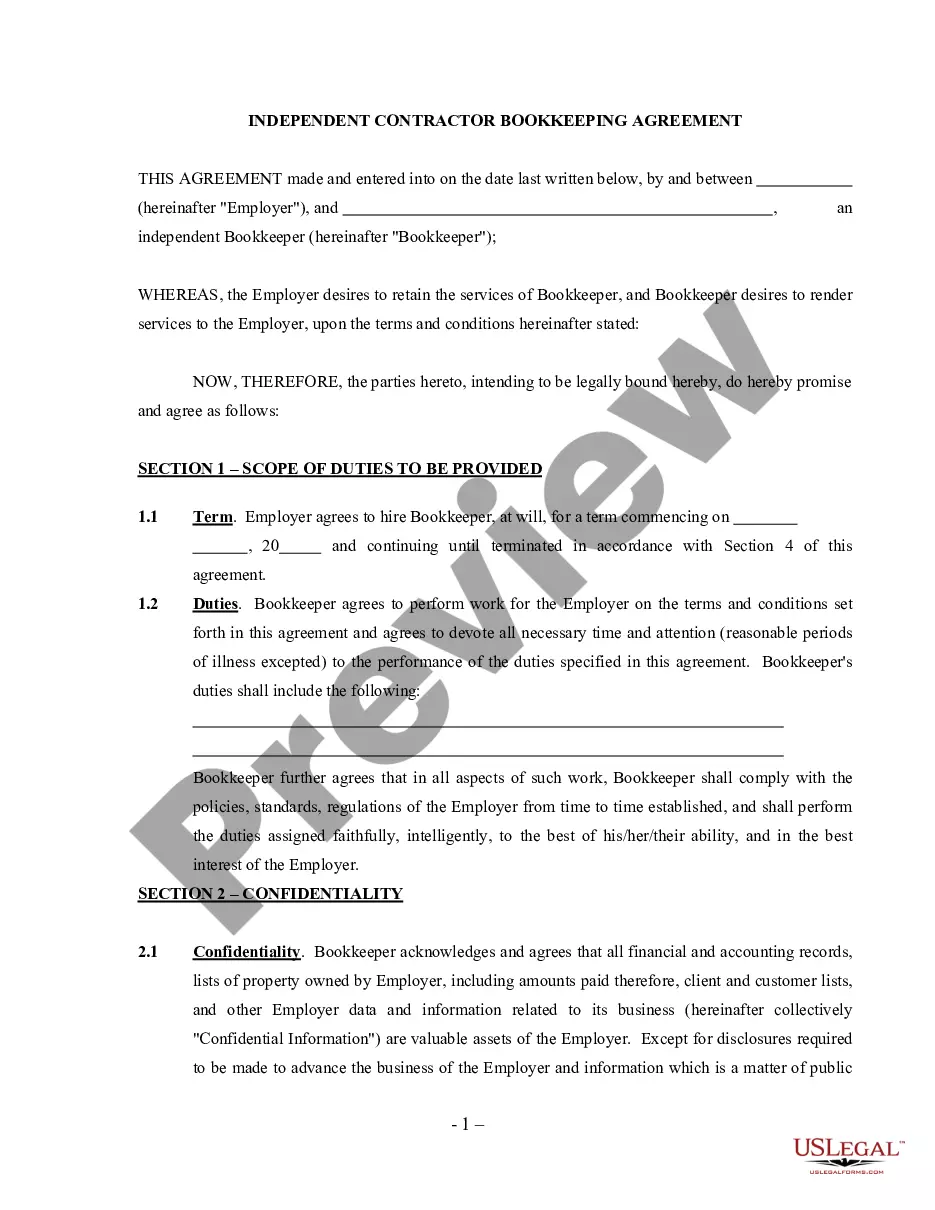
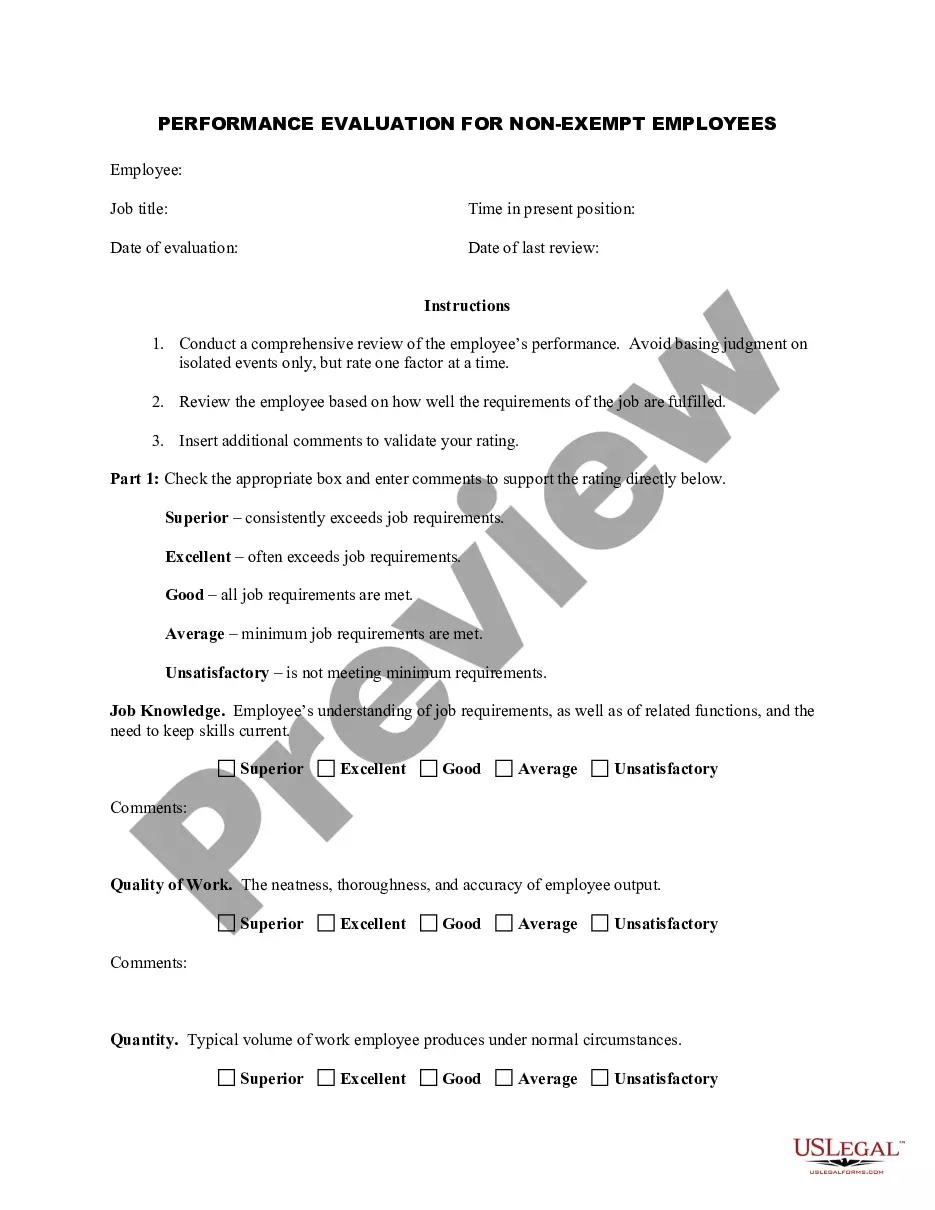
How to fill out Motion For Discovery Of Information Necessary To Receive A Fair Trial?
Selecting the optimal legal documents web template can be a challenge. Certainly, there are numerous designs available online, but how do you locate the legal form you require? Utilize the US Legal Forms website. The platform offers a vast array of templates, such as the Nebraska Motion for Discovery of Information Necessary to Ensure a Fair Trial, which can be utilized for both business and personal purposes. All of the documents are reviewed by professionals and conform to federal and state regulations.
If you are currently a member, sign in to your account and click on the Download button to obtain the Nebraska Motion for Discovery of Information Necessary to Ensure a Fair Trial. Use your account to search for the legal forms you have previously purchased. Go to the My documents section of your account and retrieve another copy of the documents you need.
If you are a new user of US Legal Forms, here are simple steps for you to follow: First, ensure you have selected the correct form for your jurisdiction/county. You can review the form using the Preview button and read the form description to confirm it is suitable for you. If the form does not meet your needs, utilize the Search field to find the appropriate form. Once you are sure that the form is suitable, click on the Acquire now button to obtain the form. Choose the pricing plan you desire and enter the required information. Create your account and pay for the order using your PayPal account or credit card. Select the file format and download the legal documents web template to your device. Complete, edit, print, and sign the acquired Nebraska Motion for Discovery of Information Necessary to Ensure a Fair Trial.
In conclusion, whether you are a returning user or new to US Legal Forms, the platform provides essential tools and resources to help you obtain the legal documents necessary for your situations.
- US Legal Forms is the premier repository of legal documents where you can find various paper templates.
- Utilize the service to download properly-crafted documents that adhere to state requirements.
- The platform offers a wide selection of legal forms for various needs.
- All documents are vetted for compliance with legal standards.
- The user interface is designed for easy navigation and access to forms.
- New users can swiftly find the documents they need with guided instructions.
Form popularity
FAQ
Discovery is how you gather the evidence you will need to prove your case as plaintiff, or defeat the plaintiff's case as a defendant. You use discovery to find out things like: What the other side plans to say about an issue in your case. What facts or witnesses support their side.
The three forms of discovery are: Written - This form of discovery takes place on paper. ... Document Production - This form of discovery involves an exchange of documents. ... Oral - Sometimes known as depositions, this form of discovery allows parties to gain sworn statements from involved individuals.
(1) Examination and cross-examination of witnesses may proceed as permitted at the trial under the provisions of the Nebraska Evidence Rules. The officer before whom the deposition is to be taken shall put the witness under oath and, if an interpreter is used, also put the interpreter under oath.
Here are some of the things lawyers often ask for in discovery: anything a witness or party saw, heard, or did in connection with the dispute. anything anyone said at a particular time and place (for example, in a business meeting related to the dispute or after a car accident that turned into a lawsuit)
This is the formal process of exchanging information between the parties about the witnesses and evidence they ll present at trial. Discovery enables the parties to know before the trial begins what evidence may be presented.
Unless otherwise permitted by the court for good cause shown, no party shall serve upon any other party more than fifty interrogatories. Each question, subquestion, or subpart shall count as one interrogatory.
Discovery is how you gather the evidence you will need to prove your case as plaintiff, or defeat the plaintiff's case as a defendant. You use discovery to find out things like: What the other side plans to say about an issue in your case. What facts or witnesses support their side.
(A) A person served with a subpoena pursuant to this rule shall permit inspection, copying, testing, or sampling either where the documents or tangible things are regularly kept or at some other reasonable place designated by that person.