Nebraska Revocable Living Trust for Husband and Wife with No Children
What is this form?
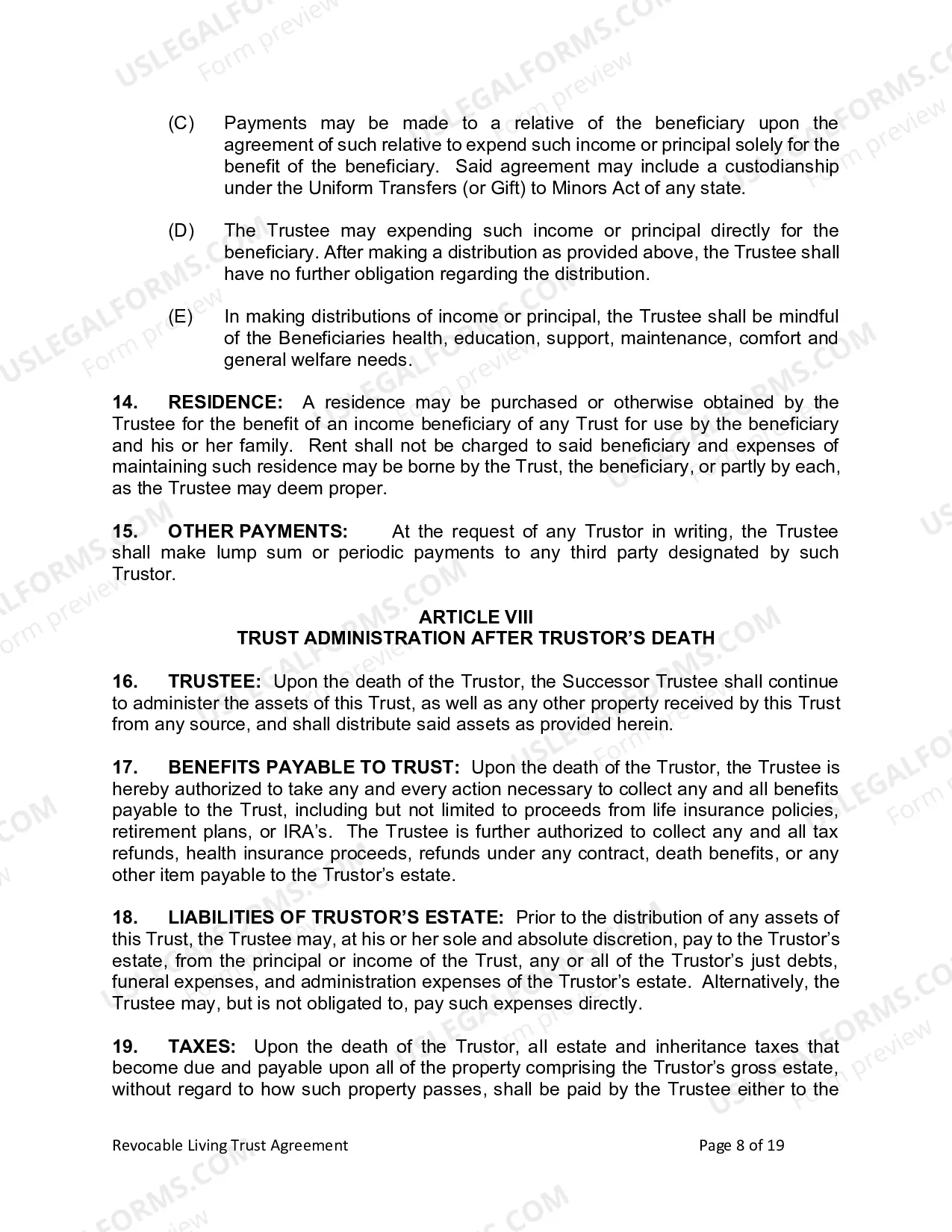
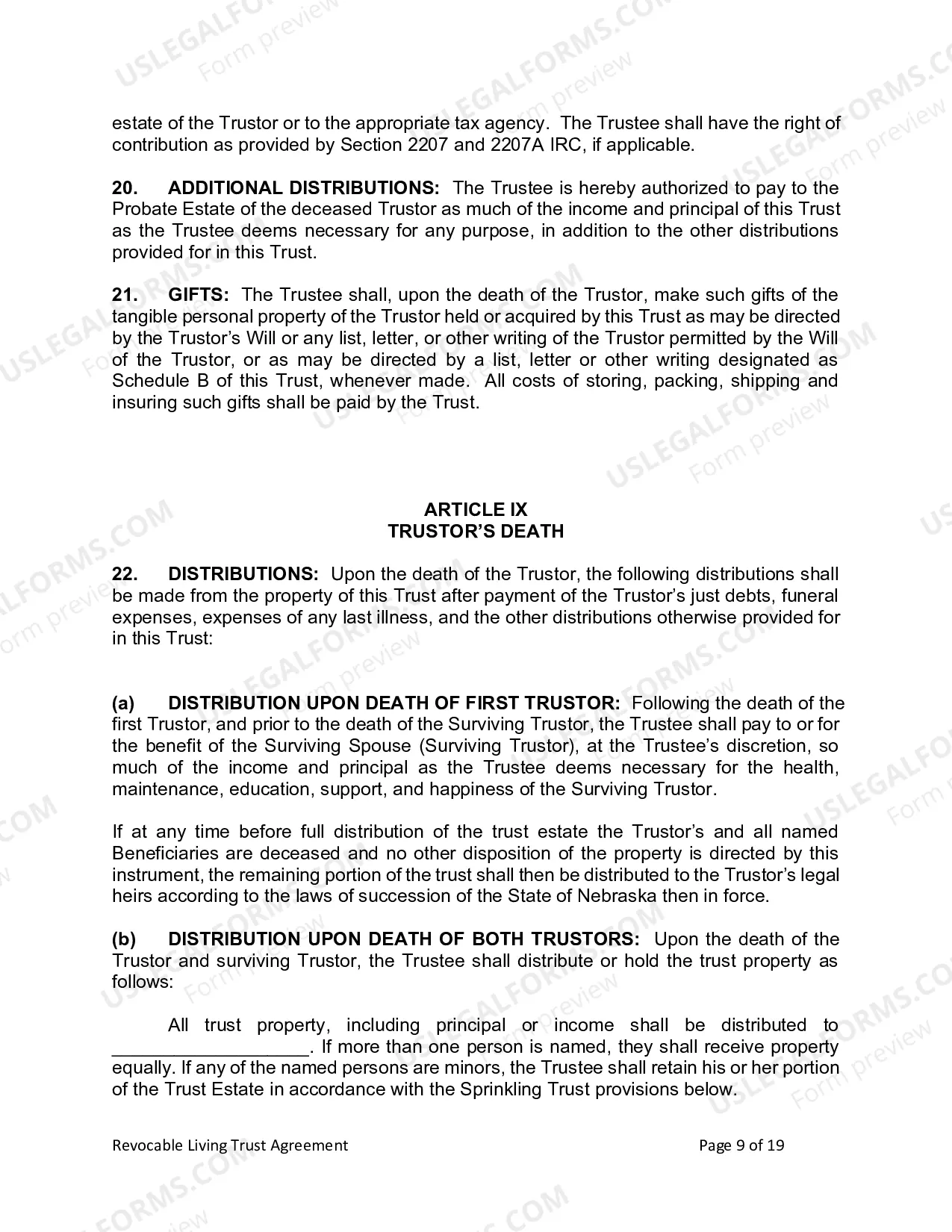
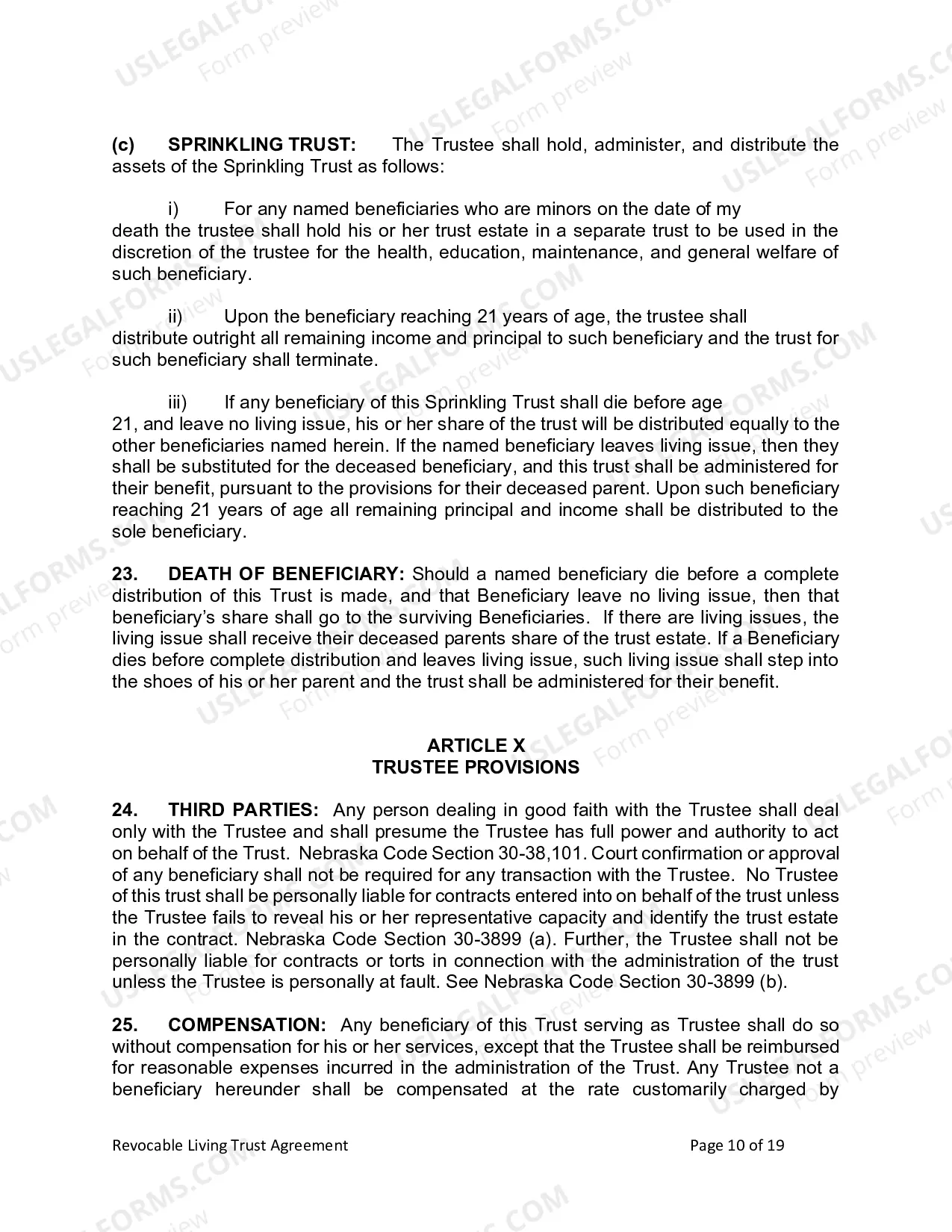
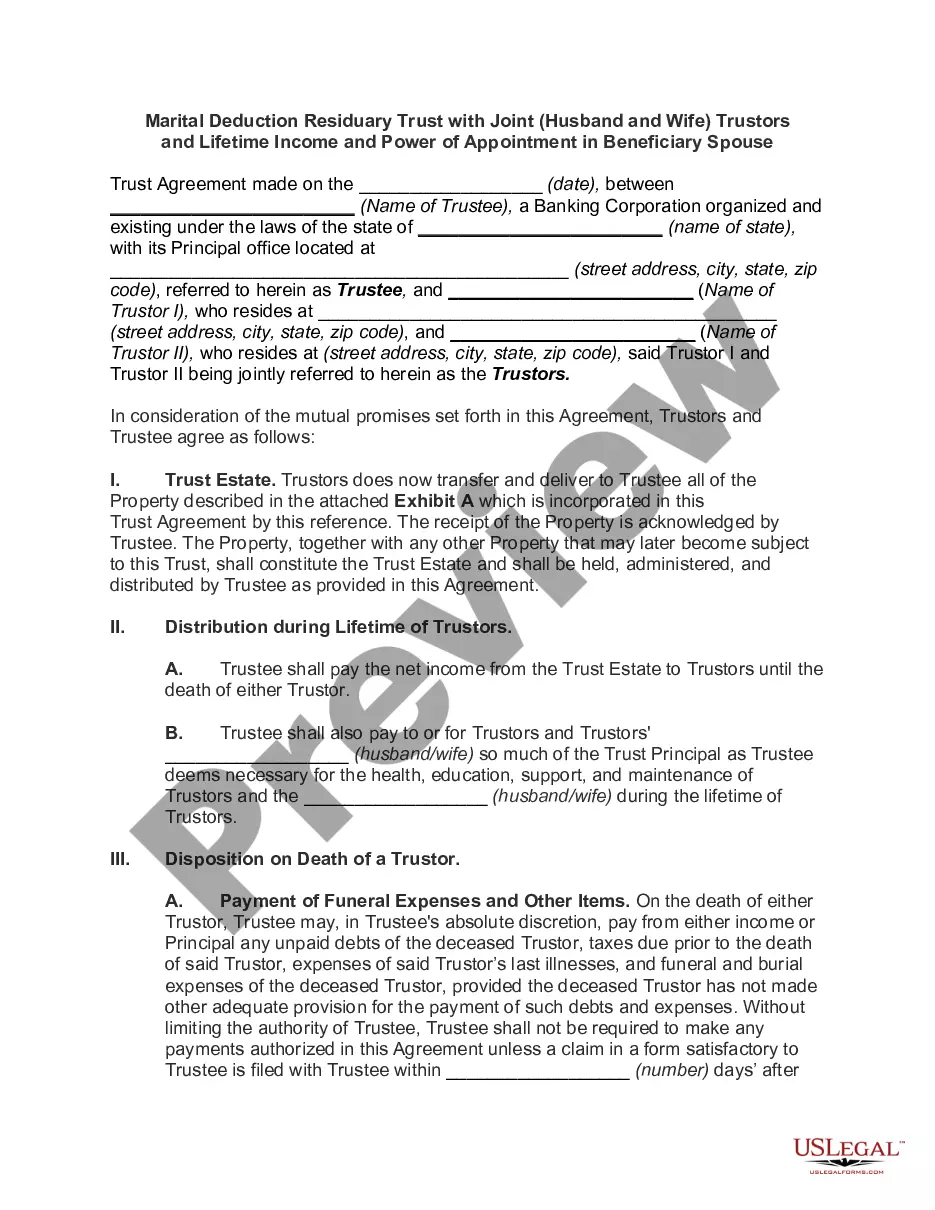
The Revocable Living Trust for Husband and Wife is a legal document that allows a married couple without children to create a trust during their lifetime. This type of living trust holds and manages their assets, offering a flexible method for estate planning. Unlike a will, assets in a revocable trust do not go through probate upon death, allowing for a quicker transfer to beneficiaries and maintaining privacy.
What’s included in this form
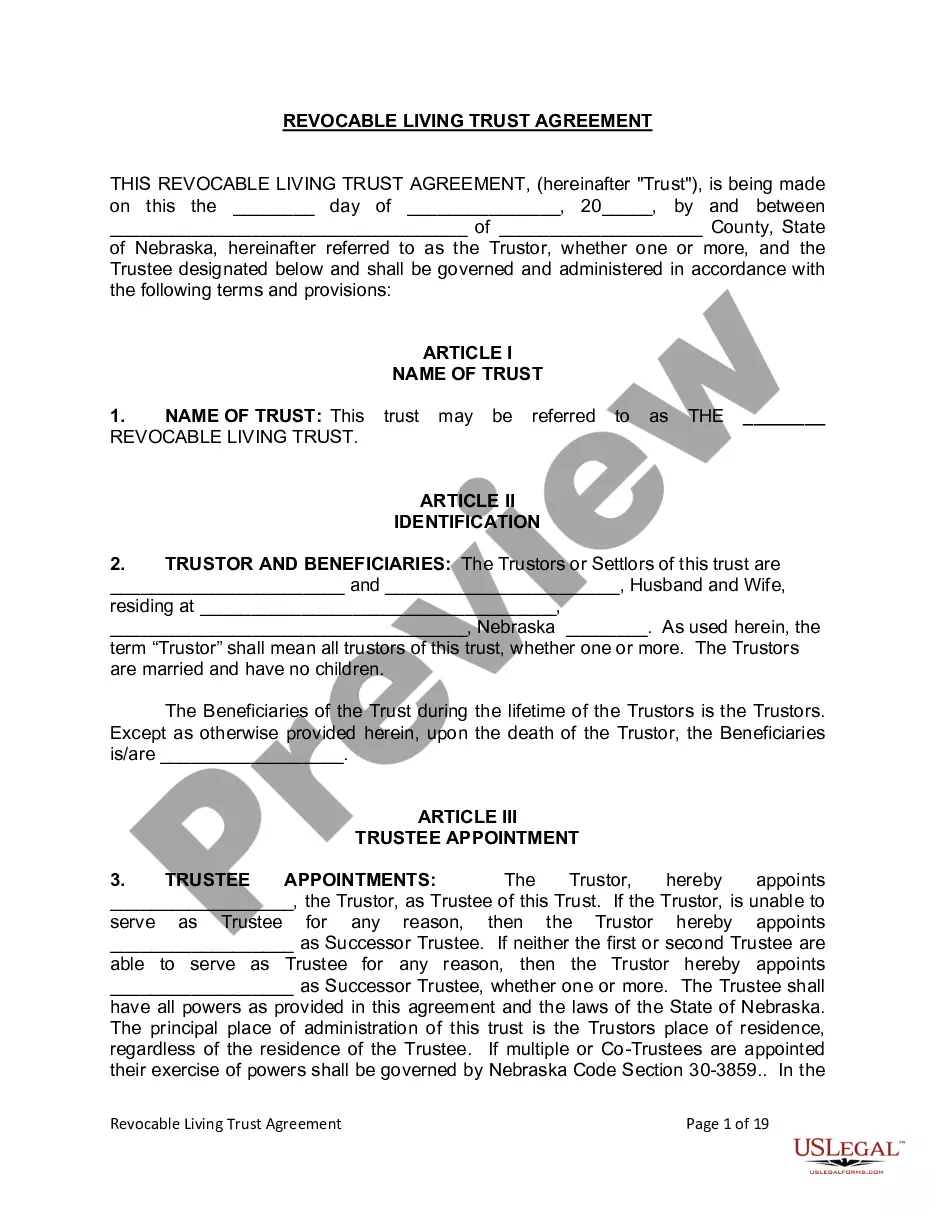
- Trustor and Beneficiaries: Identifies the husband and wife as trustors and beneficiaries during their lifetime.
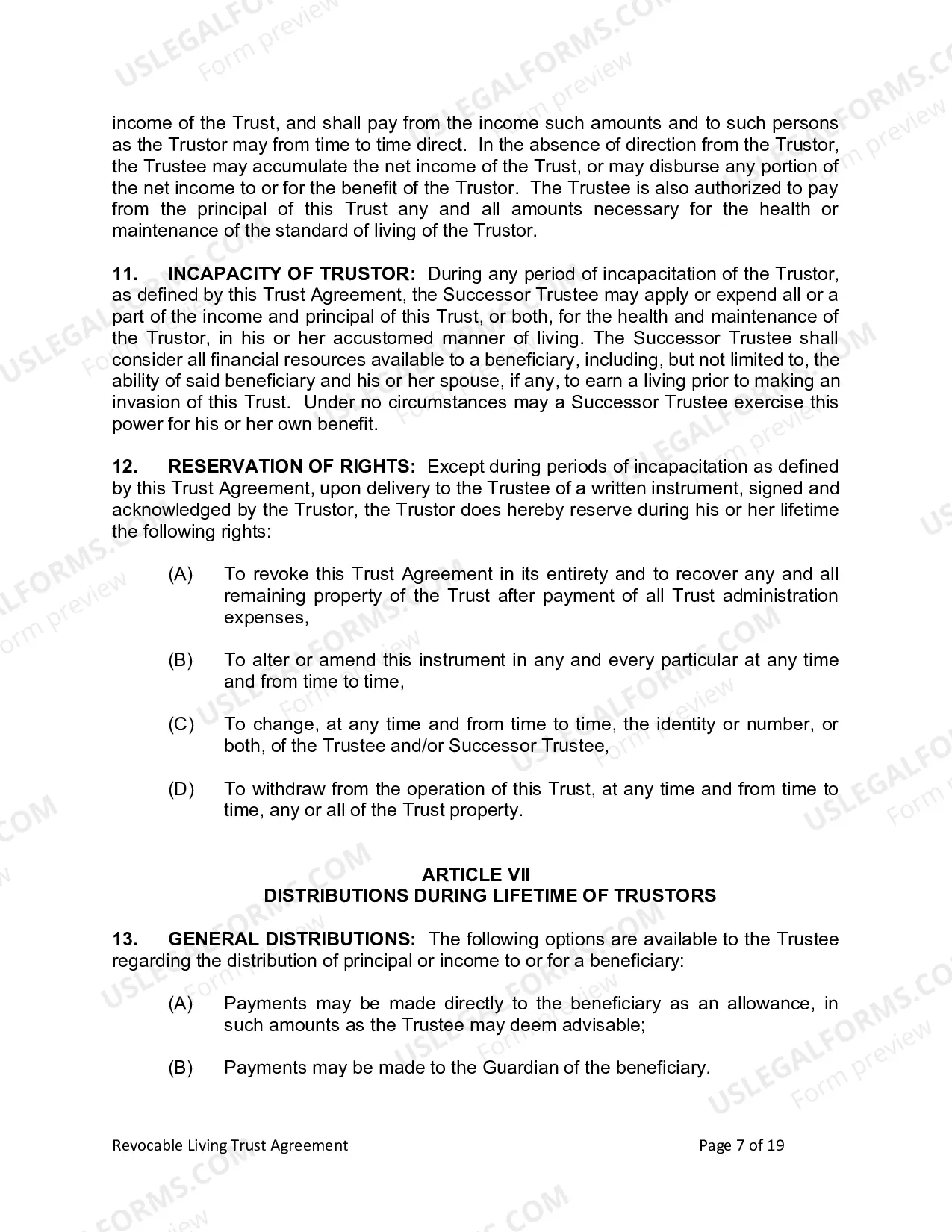
- Trustee Appointment: Designates one or both trustors as trustees, with provisions for successor trustees.
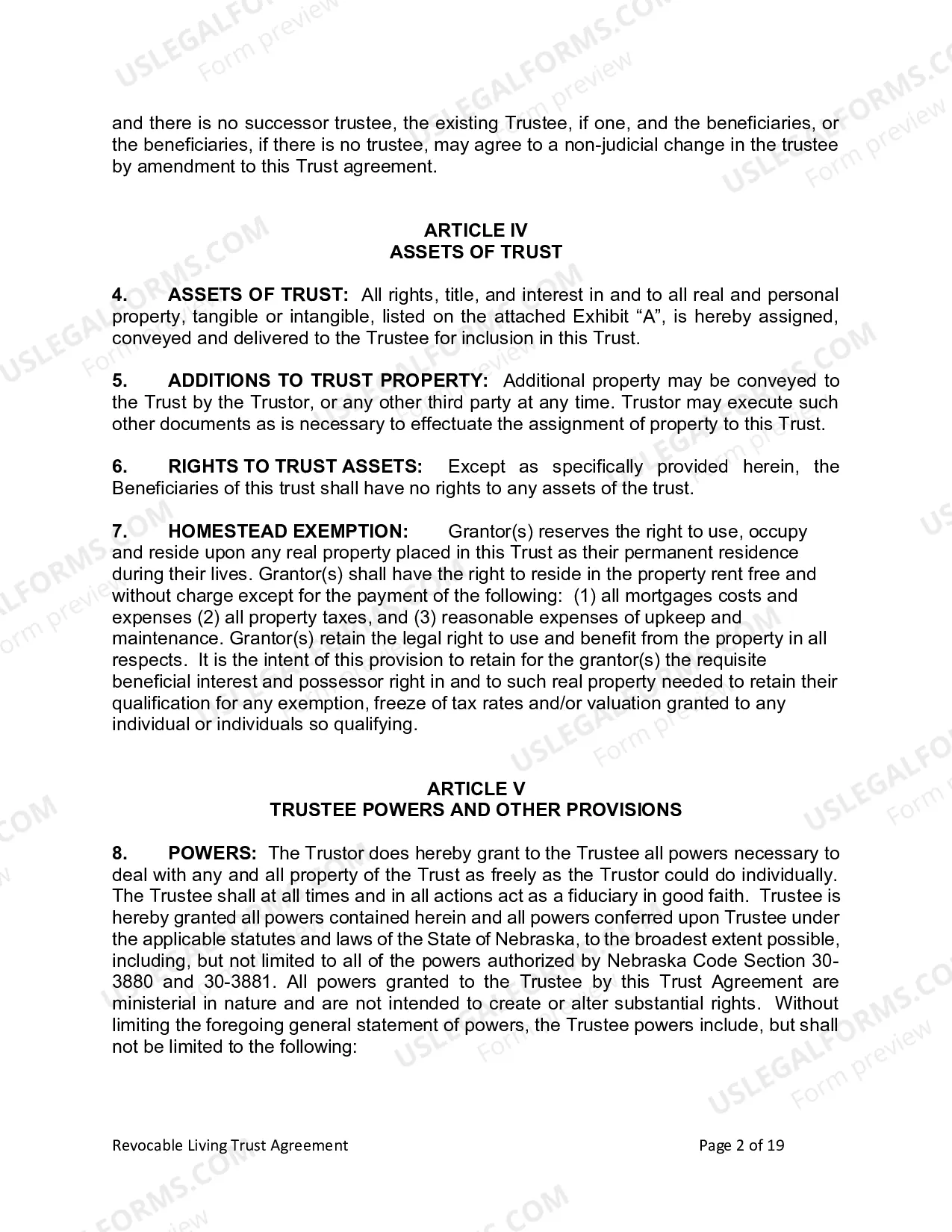
- Assets of Trust: Specifies the assets included in the trust, which can be modified during the trustors' lifetime.
- Distribution Provisions: Outlines how trust assets will be distributed upon the death of the trustors.
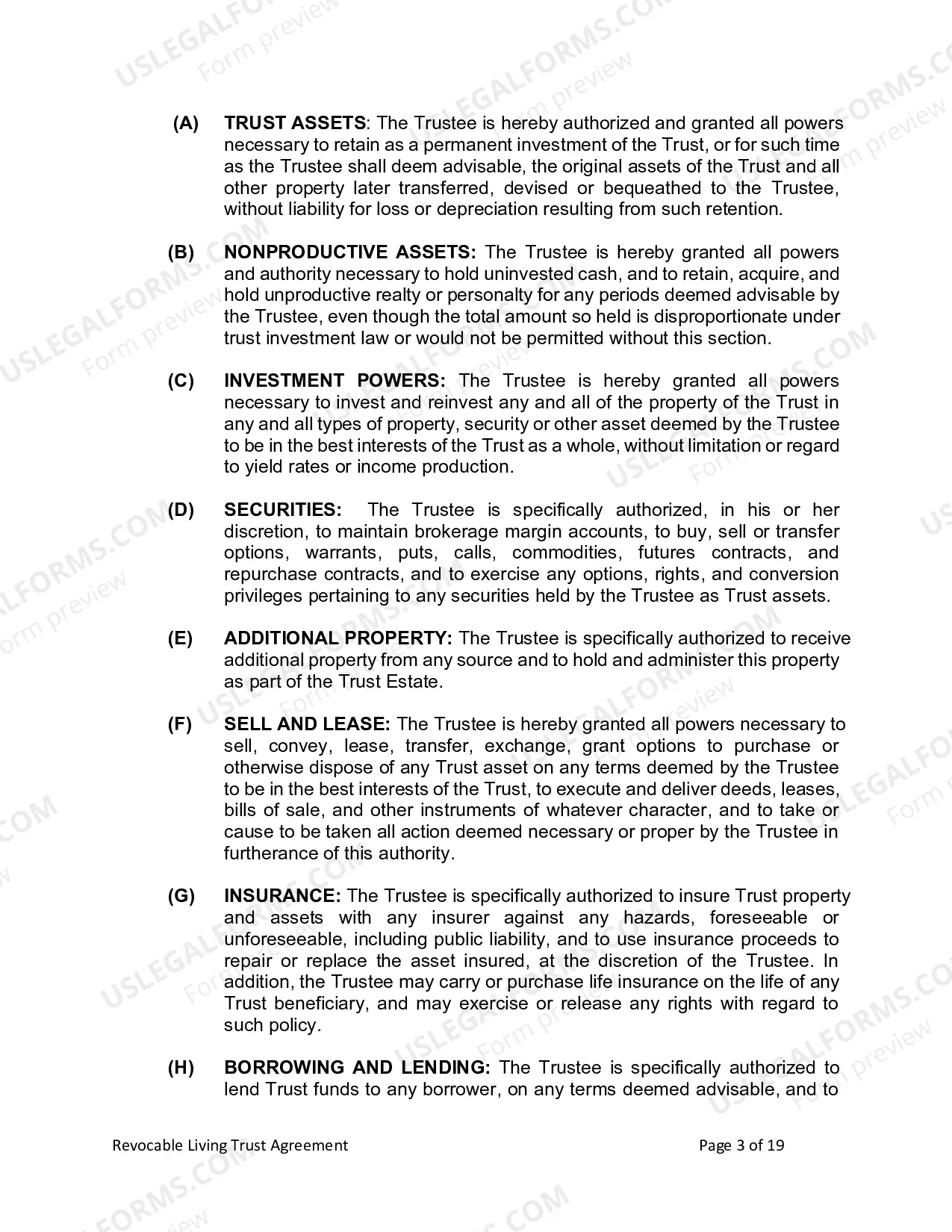
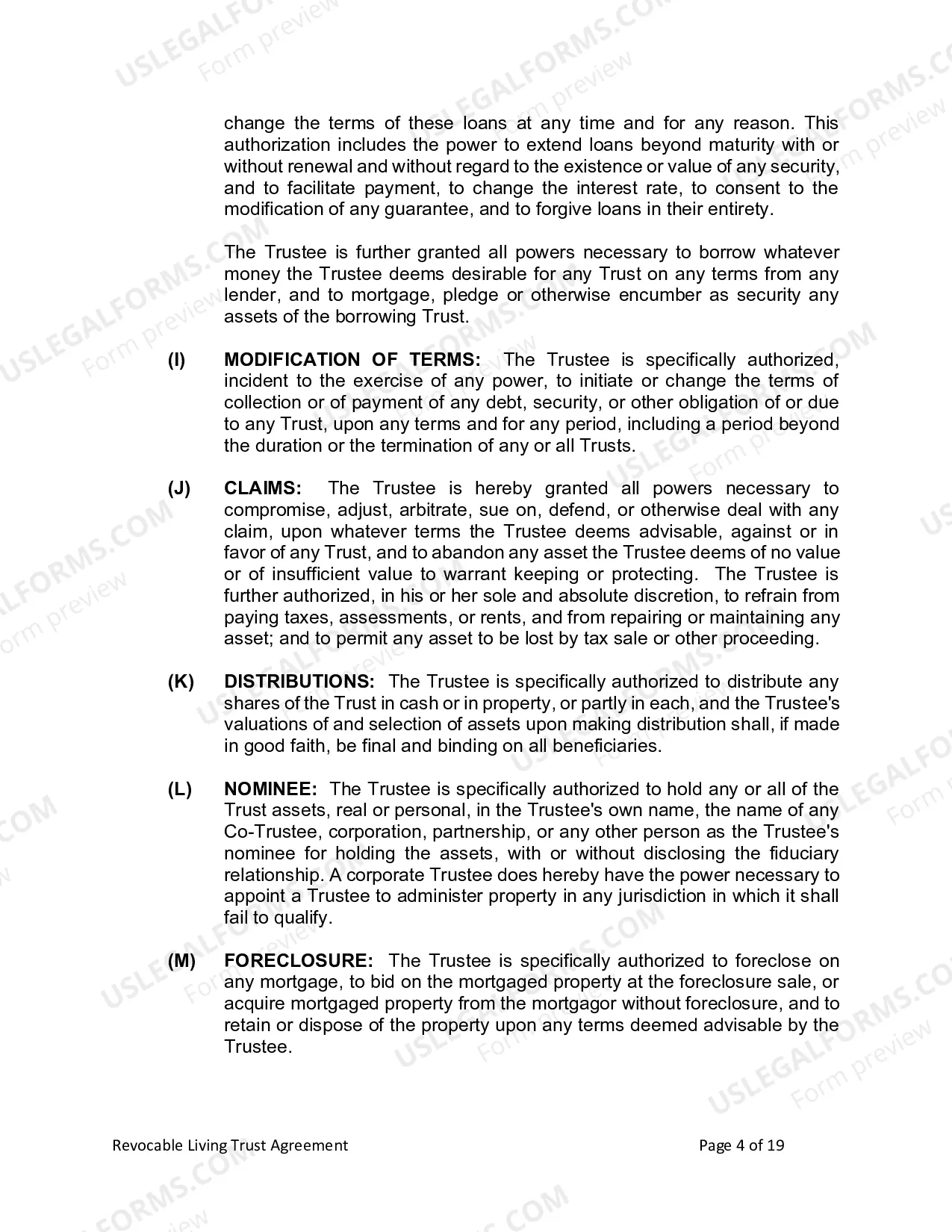
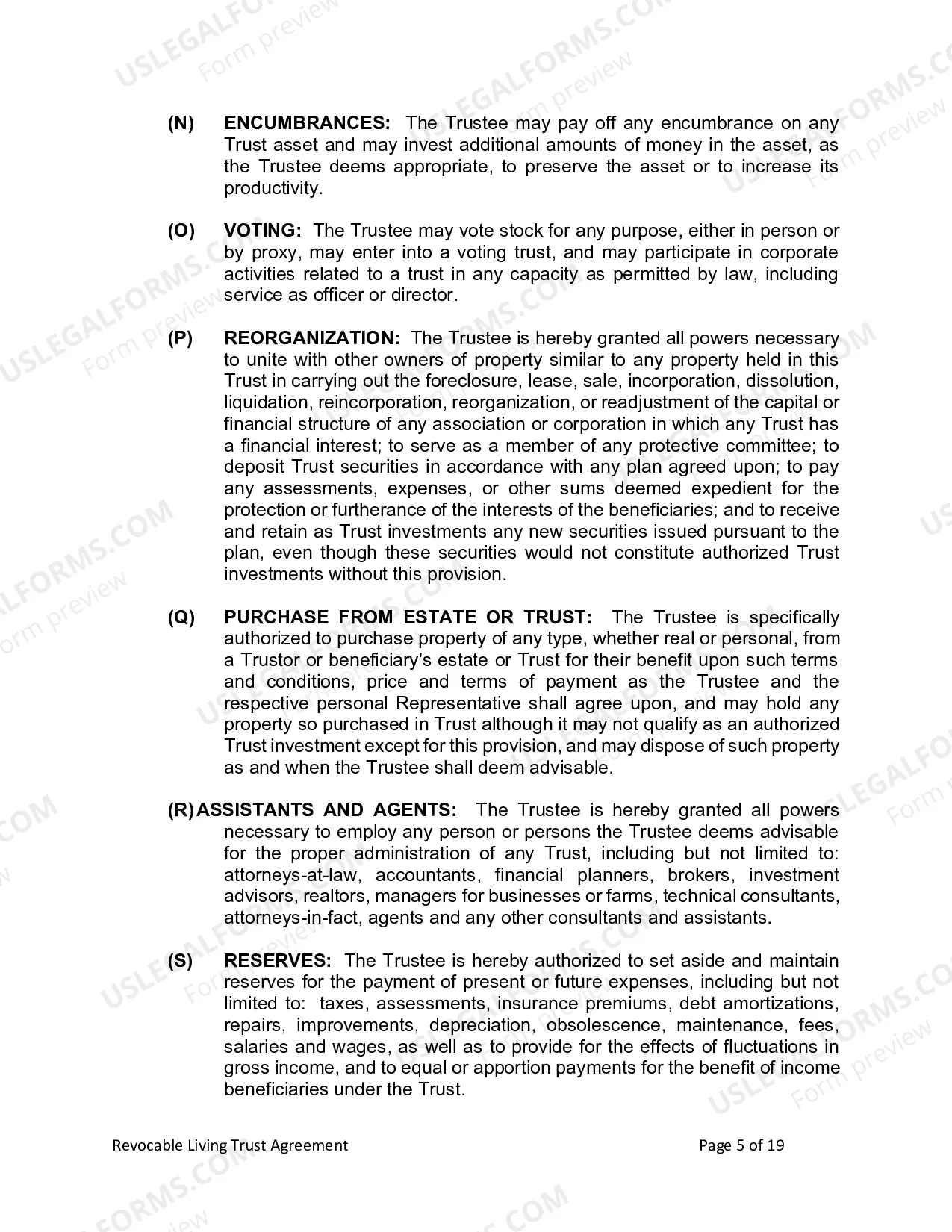
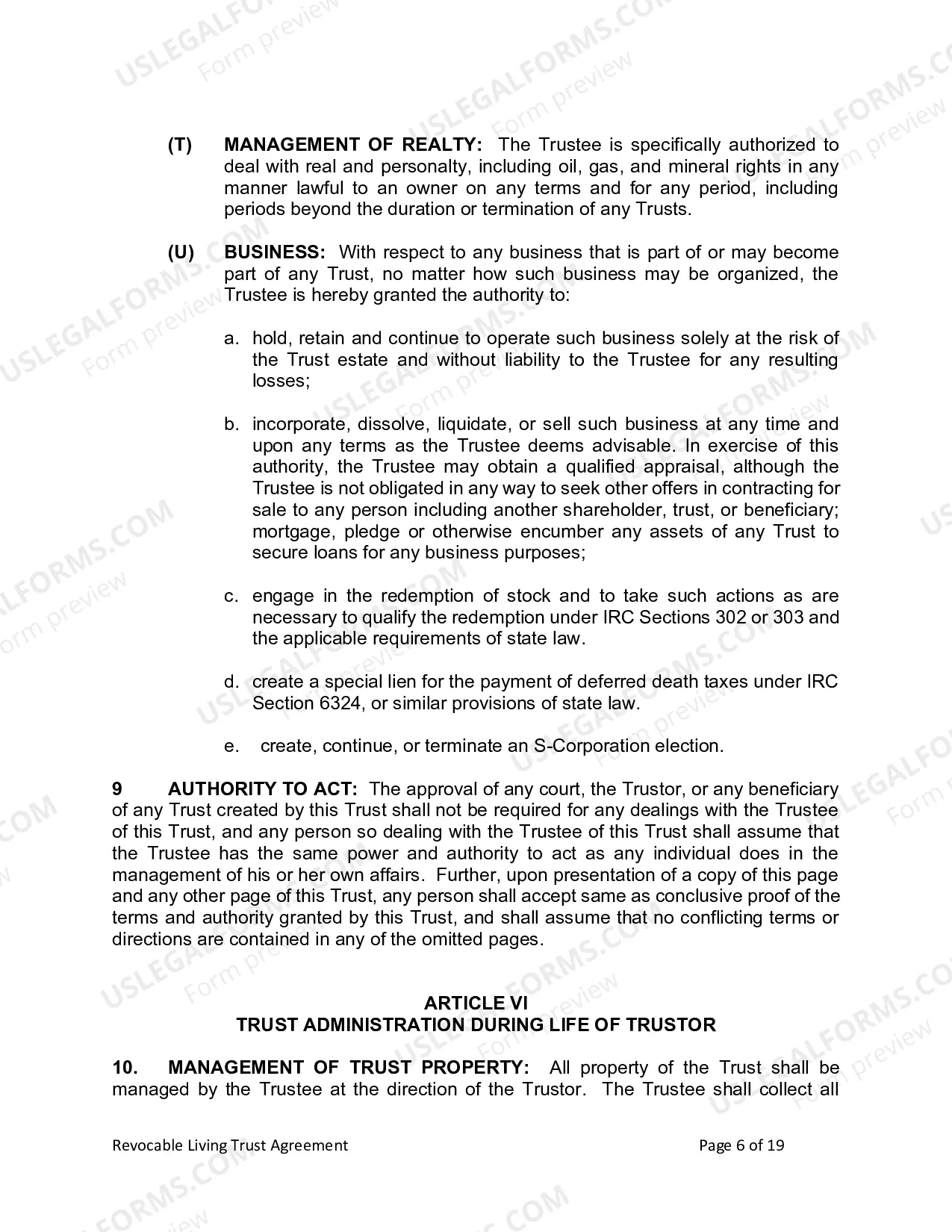
- Trustee Powers: Grants trustees broad powers to manage and invest trust assets.




Situations where this form applies
This form is suitable for married couples without children who wish to streamline their estate planning. It is particularly useful for those who want to manage their assets during their lifetime and ensure a smooth transition of those assets to designated beneficiaries after their death.
Who should use this form
- Married couples residing in Nebraska without children.
- Individuals looking for an efficient estate planning tool that avoids probate.
- Couples wanting more control over their assets during their lifetime.
Completing this form step by step
- Identify the parties involved: Enter the names and addresses of both trustors.
- Assign a trustee: Designate one or both trustors as the trustee and provide successor trustee information.
- List assets: Clearly detail all assets included in the trust.
- Specify distribution instructions: Outline instructions for asset distribution upon the death of the trustors.
- Sign and acknowledge: Ensure signatures are provided and acknowledged according to Nebraska law.
Notarization requirements for this form
This form must be notarized to be legally valid. US Legal Forms provides secure online notarization powered by Notarize, allowing you to complete the process through a verified video call.
Get your form ready online
Our built-in tools help you complete, sign, share, and store your documents in one place.
Make edits, fill in missing information, and update formatting in US Legal Forms—just like you would in MS Word.
Download a copy, print it, send it by email, or mail it via USPS—whatever works best for your next step.
Sign and collect signatures with our SignNow integration. Send to multiple recipients, set reminders, and more. Go Premium to unlock E-Sign.
If this form requires notarization, complete it online through a secure video call—no need to meet a notary in person or wait for an appointment.
We protect your documents and personal data by following strict security and privacy standards.

Make edits, fill in missing information, and update formatting in US Legal Forms—just like you would in MS Word.

Download a copy, print it, send it by email, or mail it via USPS—whatever works best for your next step.

Sign and collect signatures with our SignNow integration. Send to multiple recipients, set reminders, and more. Go Premium to unlock E-Sign.

If this form requires notarization, complete it online through a secure video call—no need to meet a notary in person or wait for an appointment.

We protect your documents and personal data by following strict security and privacy standards.
Avoid these common issues
- Failing to list all assets intended for the trust.
- Not designating a successor trustee if the primary trustee is unable to serve.
- Neglecting to update the trust after major life changes, such as moving or acquiring new property.
Why complete this form online
- Convenience: Download the form from anywhere, anytime.
- Editability: Easily customize the document to suit your specific needs.
- Reliability: Forms are drafted by licensed attorneys, ensuring legal compliance.
Quick recap
- The Revocable Living Trust for Husband and Wife allows for efficient management and transfer of assets without probate.
- This trust is specifically designed for married couples with no children.
- Completing the document requires identifying trustees, assets, and executing the trust in front of a notary.
Looking for another form?
Form popularity
FAQ
Community Property in California Inheritance LawsCalifornia is a community property state, which is a policy that only applies to spouses and domestic partners.The only property that doesn't become community property automatically are gifts and inheritances that one spouse receives.
Many married couples own most of their assets jointly with the right of survivorship. When one spouse dies, the surviving spouse automatically receives complete ownership of the property. This distribution cannot be changed by Will.
Most married couples own most of their assets jointly. Assets owned jointly between husband and wife pass automatically to the survivor.This requires the will to be probated and an executor to be appointed in order to secure the assets. There are exceptions to the probate requirement for estates of $50,000 or less.
If one dies, the other partner will automatically inherit the whole of the money. Property and money that the surviving partner inherits does not count as part of the estate of the person who has died when it is being valued for the intestacy rules.
But to protect spouses from being disinherited, most of these states give a surviving spouse the right to claim one-third to one-half of the deceased spouse's estate, no matter what the will provides. (For other limitations on what a will can do, see What a Will Won't Do.)
If you die without a will in Nebraska, your children will receive an intestate share of your property.For children to inherit from you under the laws of intestacy, the state of Nebraska must consider them your children, legally. For many families, this is not a confusing issue.
If you and your spouse own your house jointly, the responsibility for the mortgage will pass to your surviving spouse. Your surviving spouse, who will now be the sole owner of the house, will also be responsible for the entire mortgage.
Property owned by the deceased husband alone: Any asset that is owned by the husband in his name alone becomes part of his estate. Intestacy: If a deceased husband had no will, then his estate passes by intestacy.and also no living parent, does the wife receive her husband's whole estate.
California is a community property state, which means that following the death of a spouse, the surviving spouse will have entitlement to one-half of the community property (i.e., property that was acquired over the course of the marriage, regardless of which spouse acquired it).