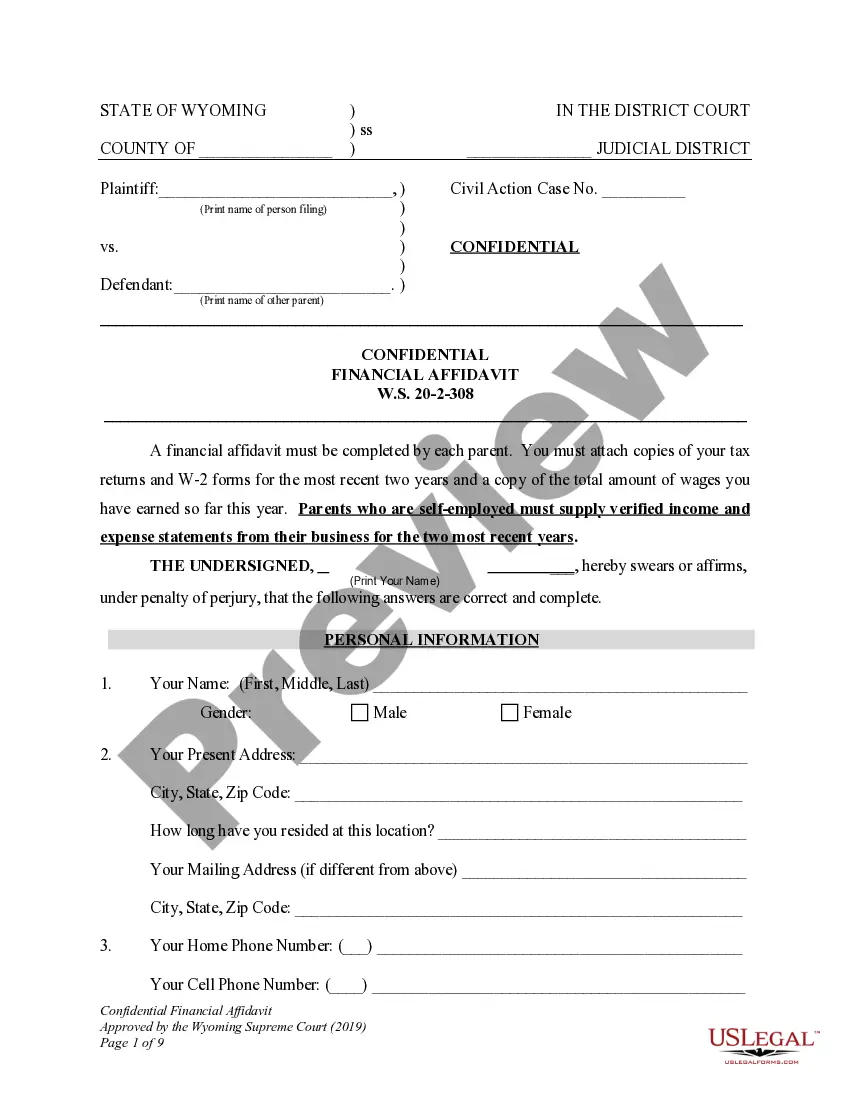
Nebraska Release of Liability Parent Minor - Horse Equine Forms
What this document covers
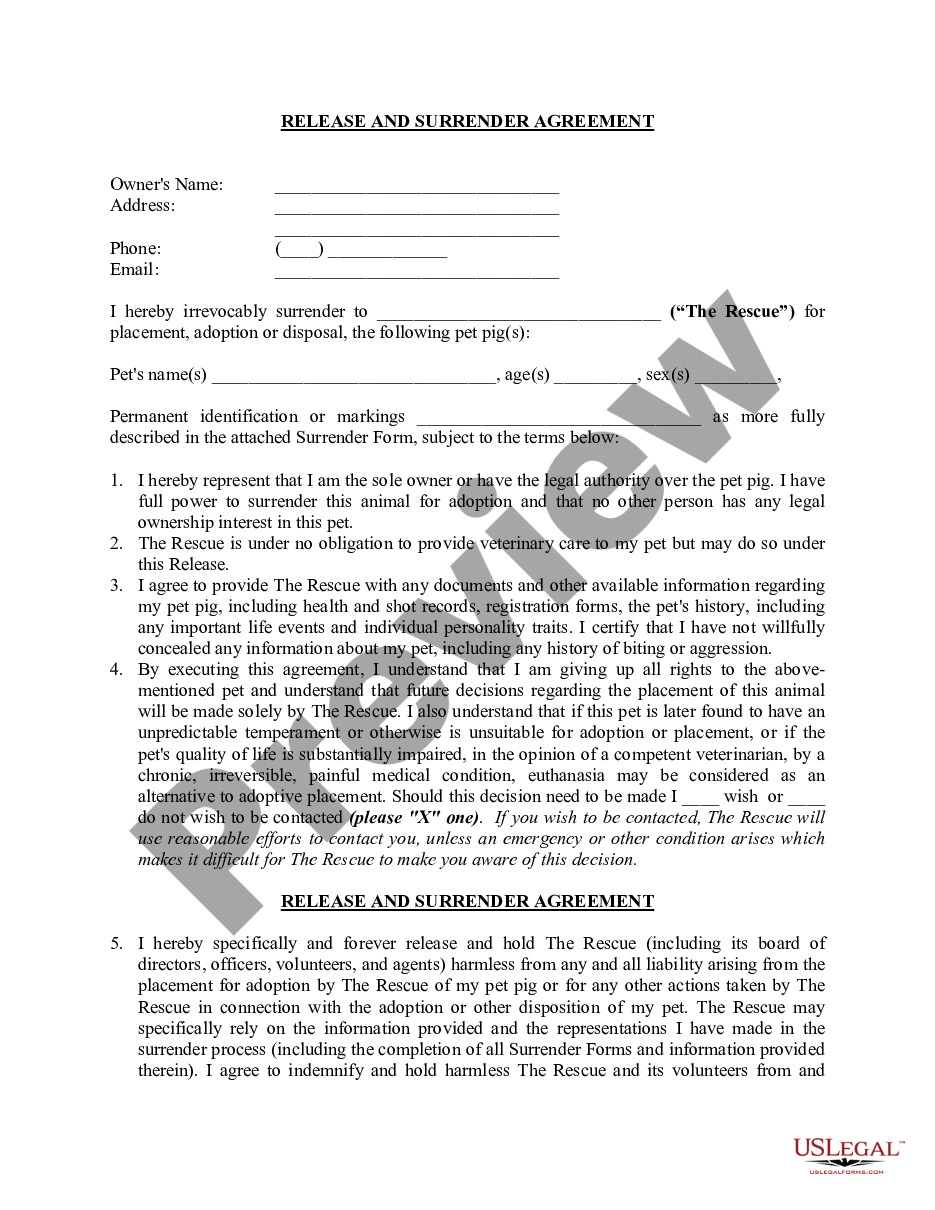
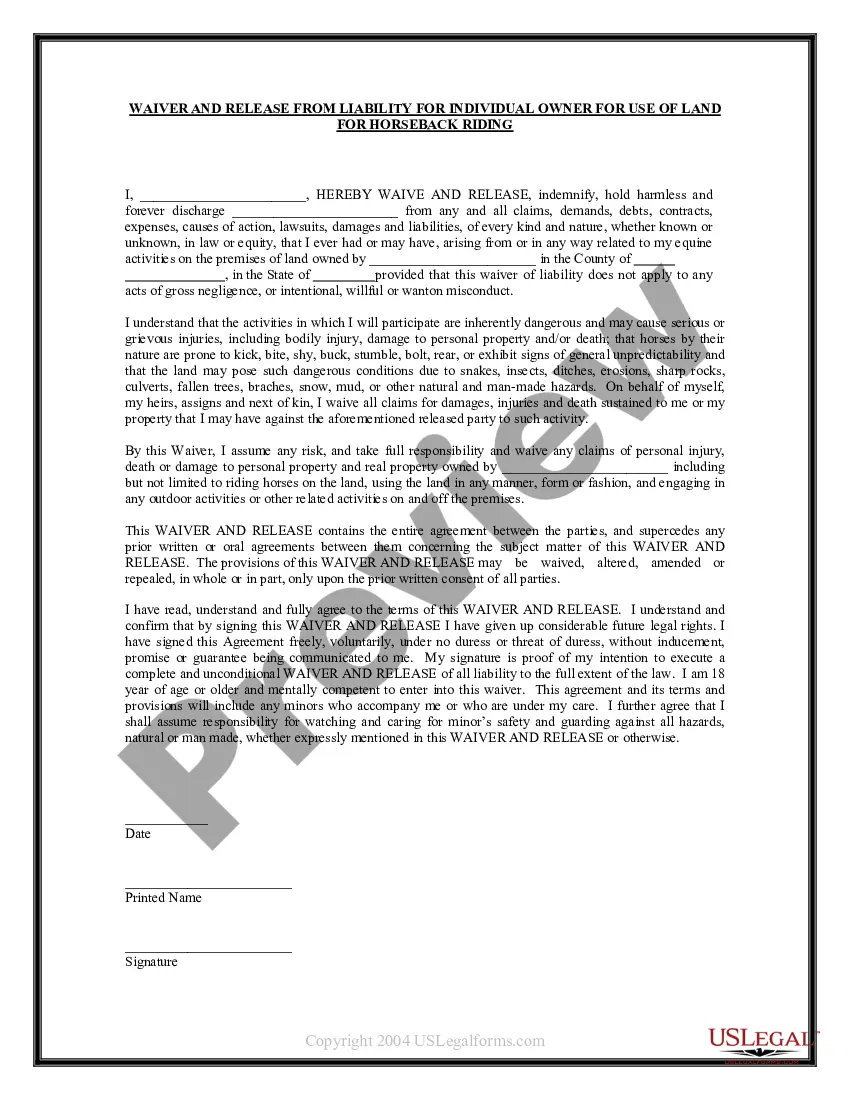
The Release of Liability Parent-Minor Horse Equine form is a legal document that protects equine professionals from liability associated with horse riding lessons or training involving minors. This form requires a parent or guardian to sign on behalf of a minor, explicitly acknowledging the risks of horse riding and releasing the equine professional from liability claims, even in cases of negligence. It differs from other liability waivers by specifically addressing the unique aspects of equine activities and the responsibility of guardians for minors.
Form components explained
- Identification of the parties involved: the equine professional (Manager) and the rider, including the parent or guardian if the rider is a minor.
- Explicit agreement that the rider releases the manager from liability for personal injury or property damage.
- A warning specifying that equine professionals are not liable for injuries resulting from inherent risks of equine activities as per relevant state law.
- Conditions regarding the health and safety of the horse used by the rider.
- Limitations on the time frame to file claims and caps on damage recovery.
- A waiver of certain legal protections concerning unknown claims at the time of signing.

When to use this form
This form should be used when a minor participates in horse riding lessons, training sessions, or any equine activities under the supervision of a professional. It serves as a protective measure for the equine professional while ensuring that the parent or guardian understands the risks involved in equine activities. It is essential to have this form completed before any riding or training begins.
Who can use this document
- Parents or guardians of minors who are enrolling their children in horse riding lessons or training.
- Equine professionals who conduct riding lessons, training sessions, or equine activities with minors.
- Organizations or facilities that offer equine activities and need to limit their liability and ensure informed consent from guardians of minor participants.
Steps to complete this form
- Identify the parties: Clearly state the names of the equine professional, the minor rider, and the parent or guardian.
- Review the risk warning provided in the form to ensure understanding of inherent risks associated with equine activities.
- Check the condition of the horse being used and confirm it is in good health.
- Sign and date the form as the parent or guardian, ensuring that all parties have signed if necessary.
- Keep a copy of the signed form for your records and provide one to the equine professional.
Does this form need to be notarized?
This form does not typically require notarization unless specified by local law. However, having a notarized signature can serve as additional proof of consent and authenticity.
Get your form ready online
Our built-in tools help you complete, sign, share, and store your documents in one place.
Make edits, fill in missing information, and update formatting in US Legal Forms—just like you would in MS Word.
Download a copy, print it, send it by email, or mail it via USPS—whatever works best for your next step.
Sign and collect signatures with our SignNow integration. Send to multiple recipients, set reminders, and more. Go Premium to unlock E-Sign.
If this form requires notarization, complete it online through a secure video call—no need to meet a notary in person or wait for an appointment.
We protect your documents and personal data by following strict security and privacy standards.

Make edits, fill in missing information, and update formatting in US Legal Forms—just like you would in MS Word.

Download a copy, print it, send it by email, or mail it via USPS—whatever works best for your next step.

Sign and collect signatures with our SignNow integration. Send to multiple recipients, set reminders, and more. Go Premium to unlock E-Sign.

If this form requires notarization, complete it online through a secure video call—no need to meet a notary in person or wait for an appointment.

We protect your documents and personal data by following strict security and privacy standards.
Common mistakes
- Failing to fully read and understand the risks outlined in the form.
- Not having the parent or guardian sign if the rider is a minor.
- Omitting to check the health status of the horse before signing the form.
- Not keeping a copy of the completed form for personal records.
Benefits of using this form online
- Convenience of instant download and completion, saving time compared to traditional methods.
- Editable fields allow personalized information to be entered with ease.
- Reliability of using professionally drafted documents, ensuring legal compliance.
Looking for another form?

Form popularity
FAQ
In California, a liability waiver must be clear, unambiguous, and explicit. In other words, waivers cannot be printed in faded ink, in small font, on the back of a paper, or in an otherwise ambiguous form. If the waiver that you sign is not represented clearly, it may not hold up in the event of a lawsuit.
A release is a type of contract in which you agree that you have no claims of any type against the party named in the release. Releases are often used in connection with a settlement of legal claims.Another type of release is also sometimes referred to as a waiver; a release of liability and waiver of claims.
In many cases, the waiver is not enforceable.If you've been injured due to negligent actions, you can sue even if you signed a waiver. Winning a lawsuit concerning negligence is not uncommon. Many celebrities have sued for negligence even though they signed documents stating they understood the risks.
Release Form Enforceability A minor usually cannot legally release his or her rights.So, a release signed only by the minor is not enforceable. In addition, the release must be signed before any injury has occurred.
Whether you can sue after signing a release depends on the facts, the wording of the release, and your state's law, among other things. A court will first look to whether you specifically gave up your right to bring a discrimination, harassment, or retaliation claim in the release. If so, you may be out of luck.
A waiver of liability (AKA a release or disclaimer) will be upheld if the following is found to have occurred:The waiver is properly worded according to contract law in the state in which it was drafted; and. The injury arises from risks stated in the contract or from the disclaiming company's simple negligence.