North Dakota Exclusive License Agreement between Individual Inventor and Corporation
Description
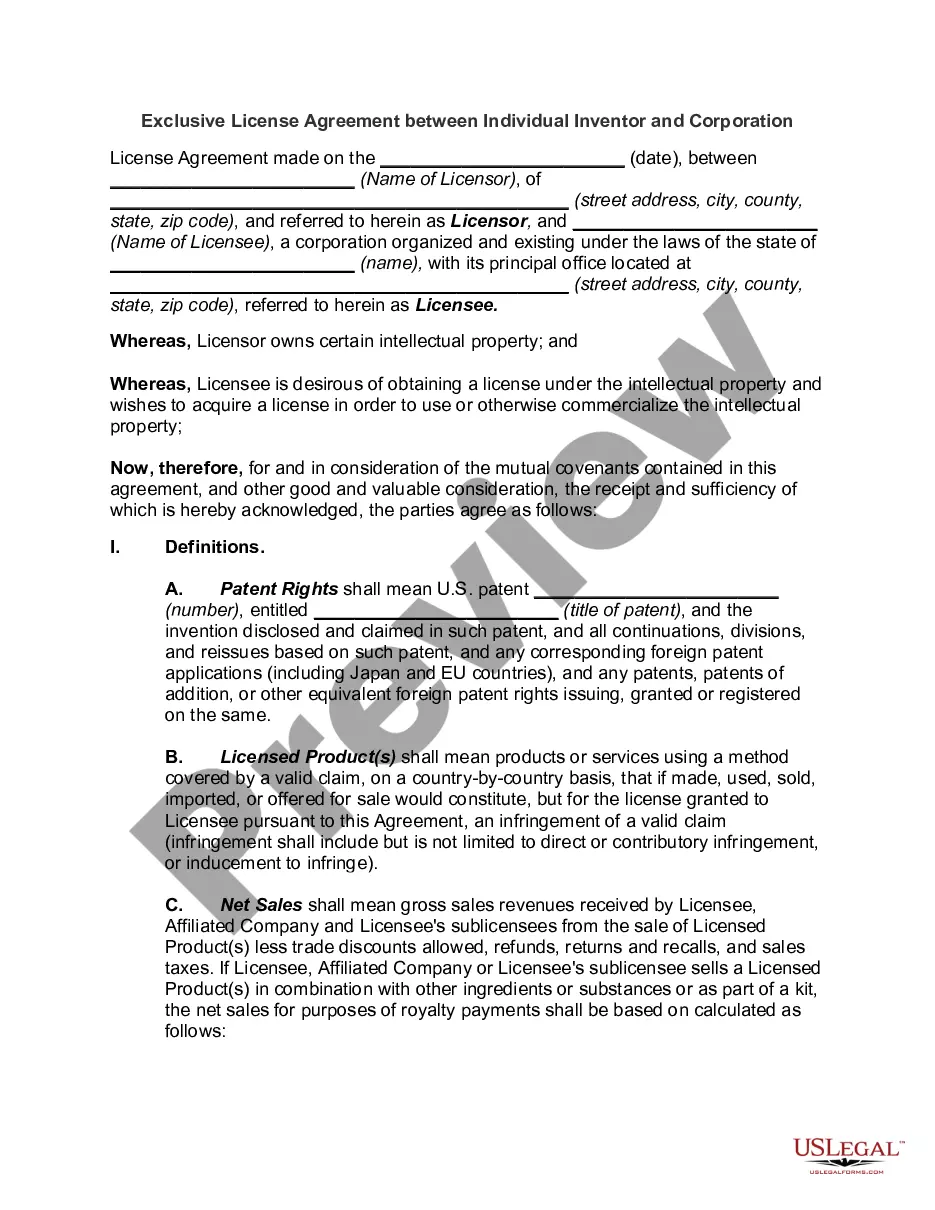


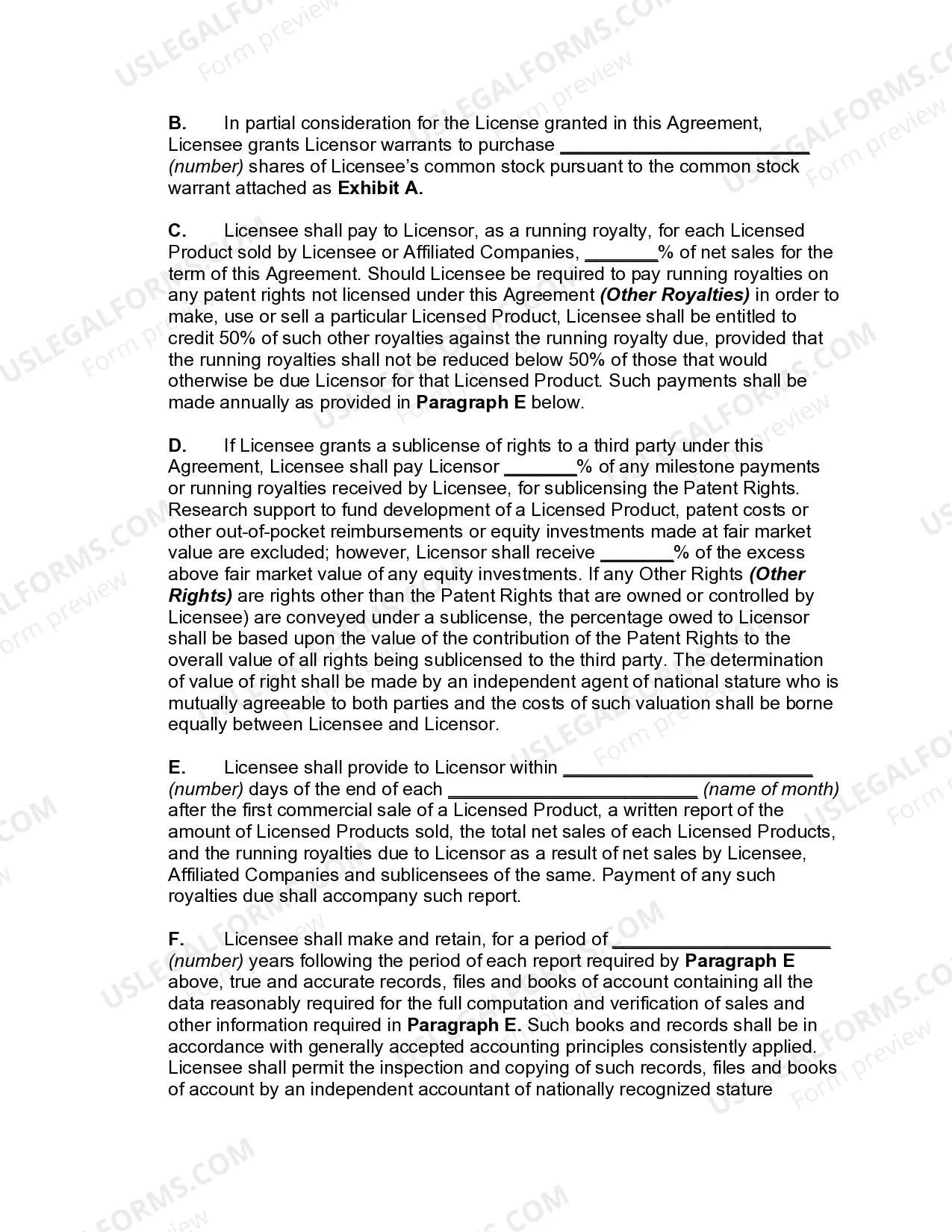
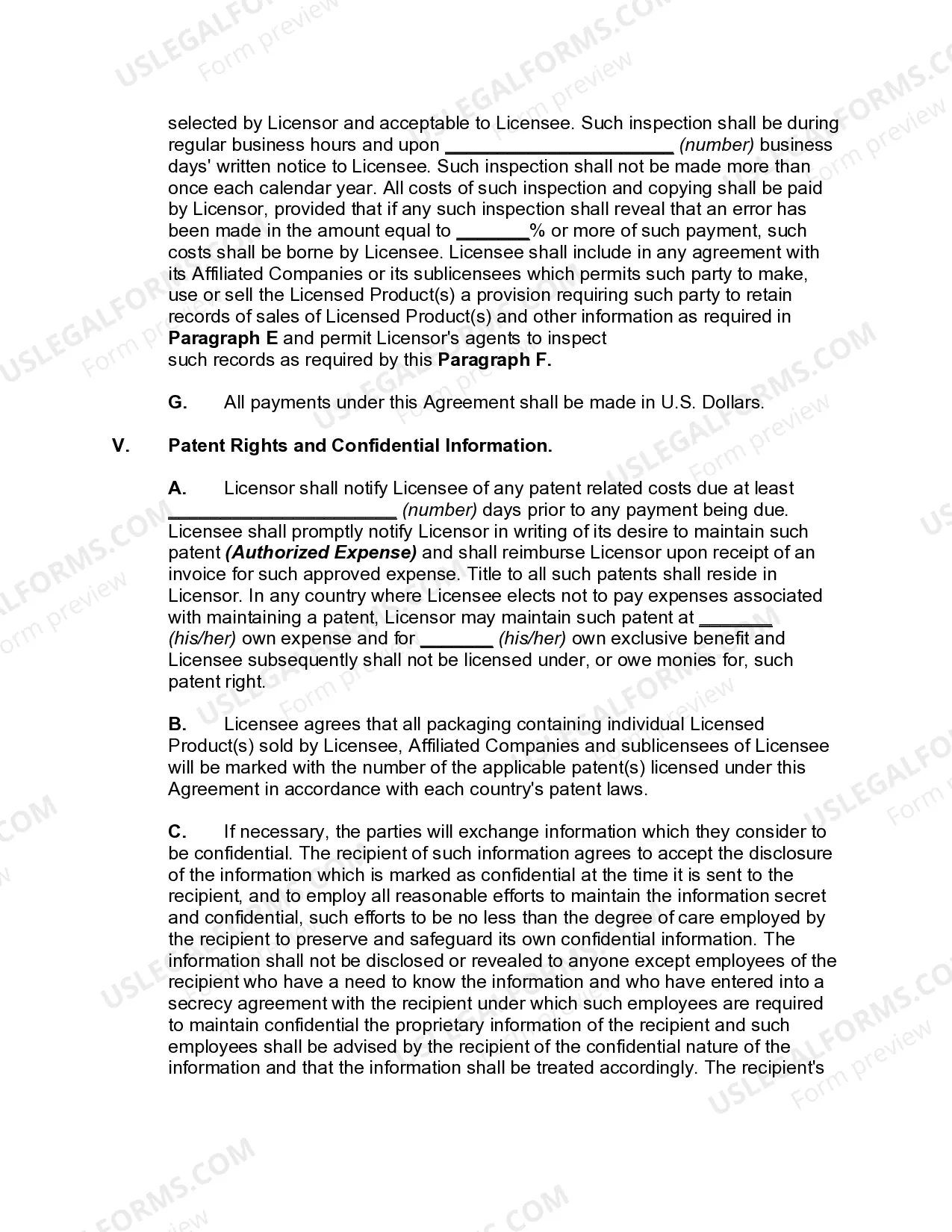
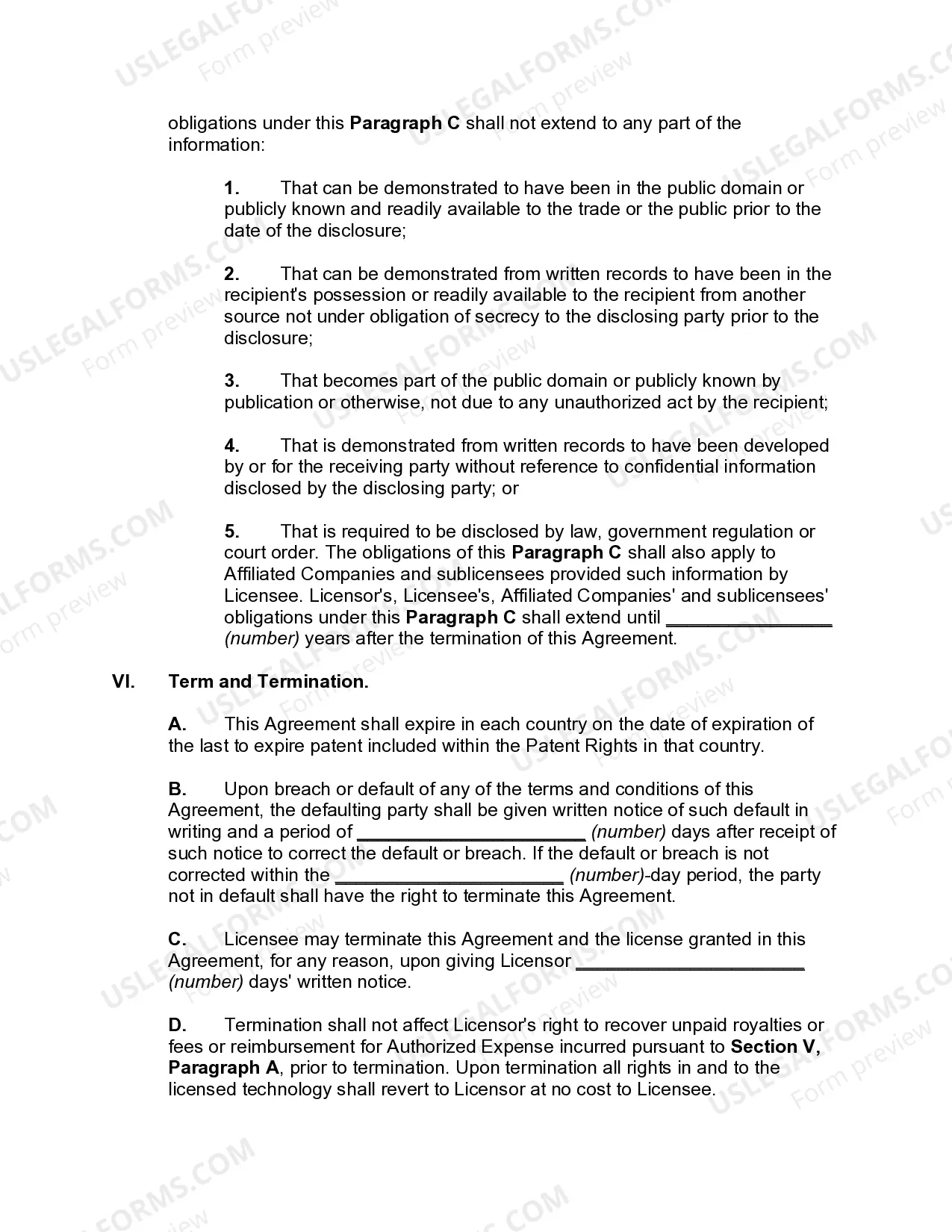
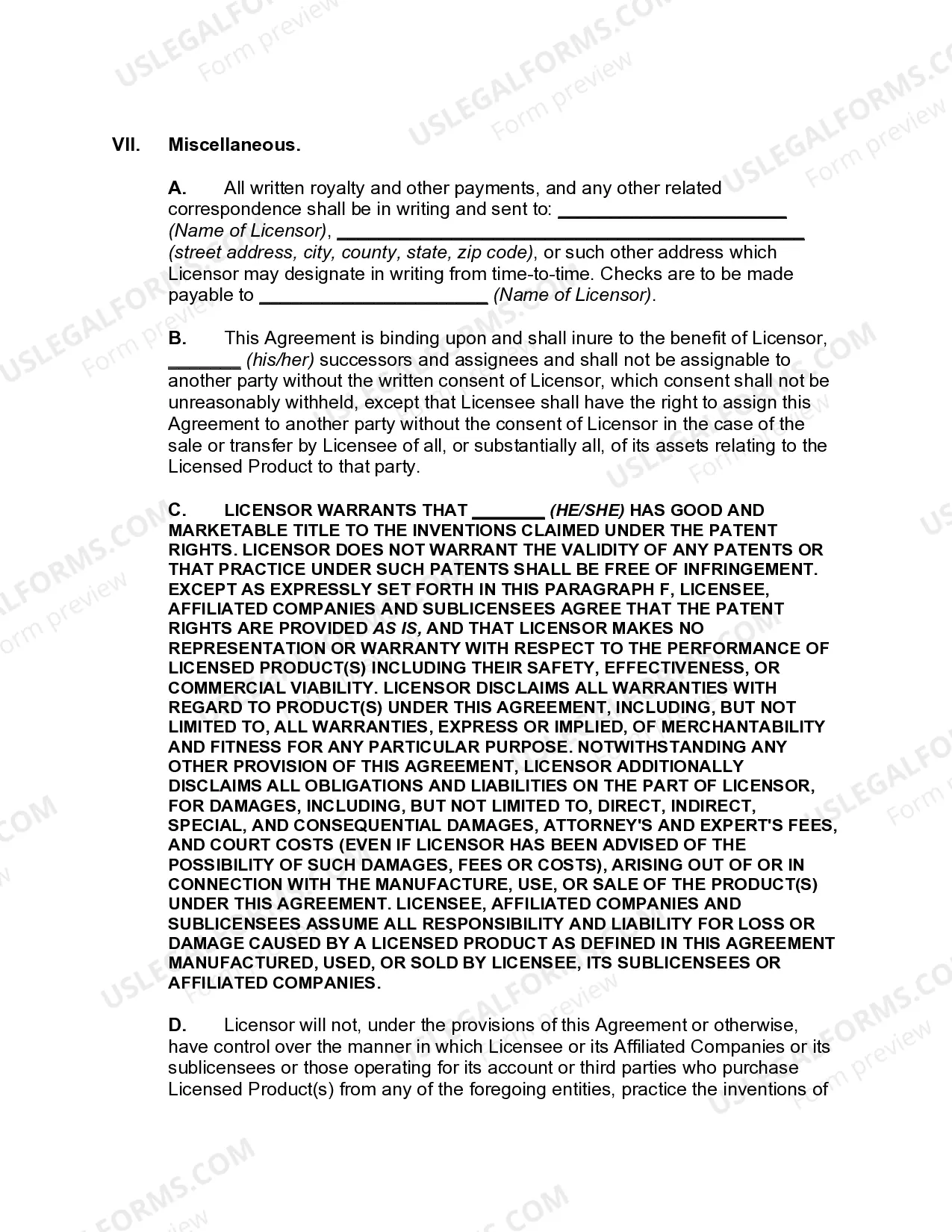
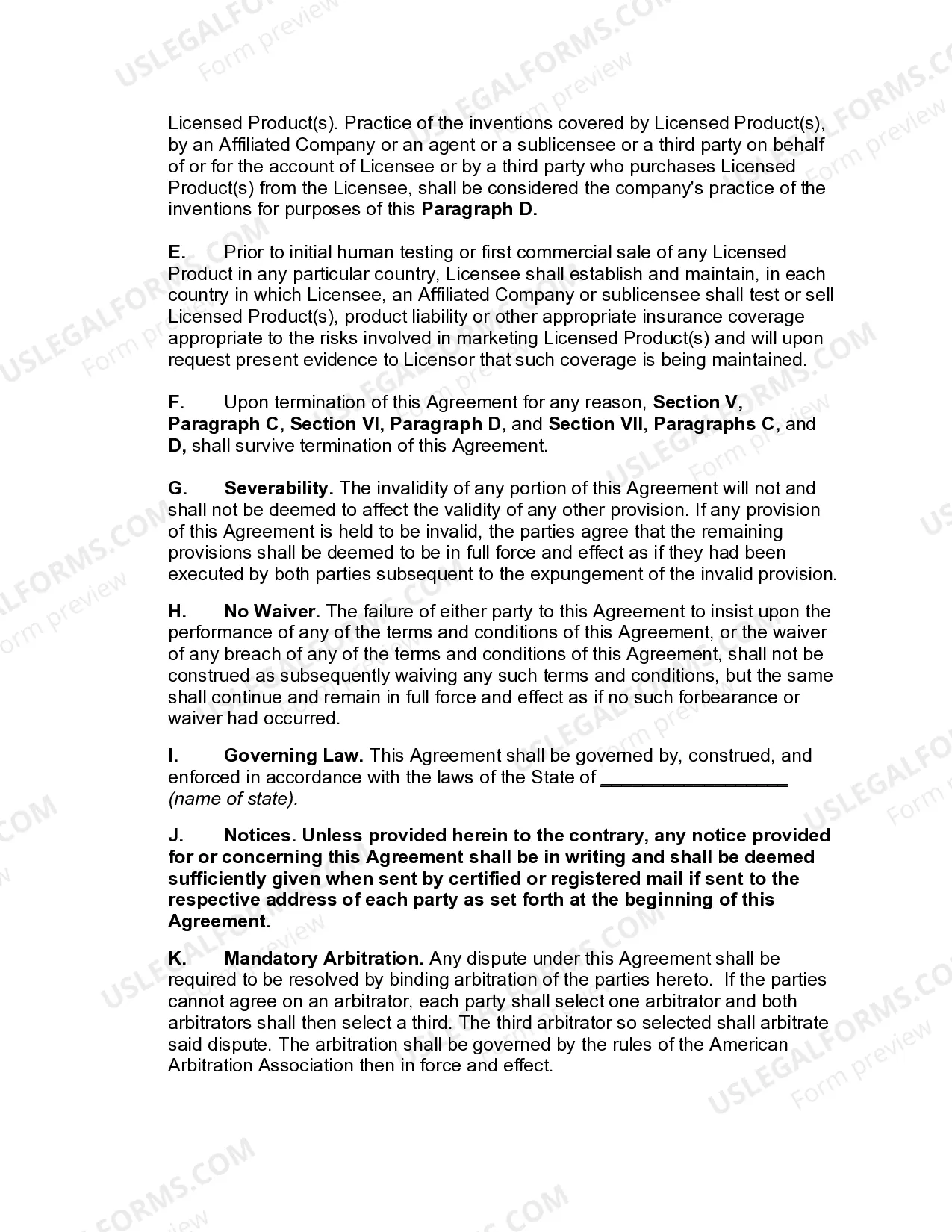
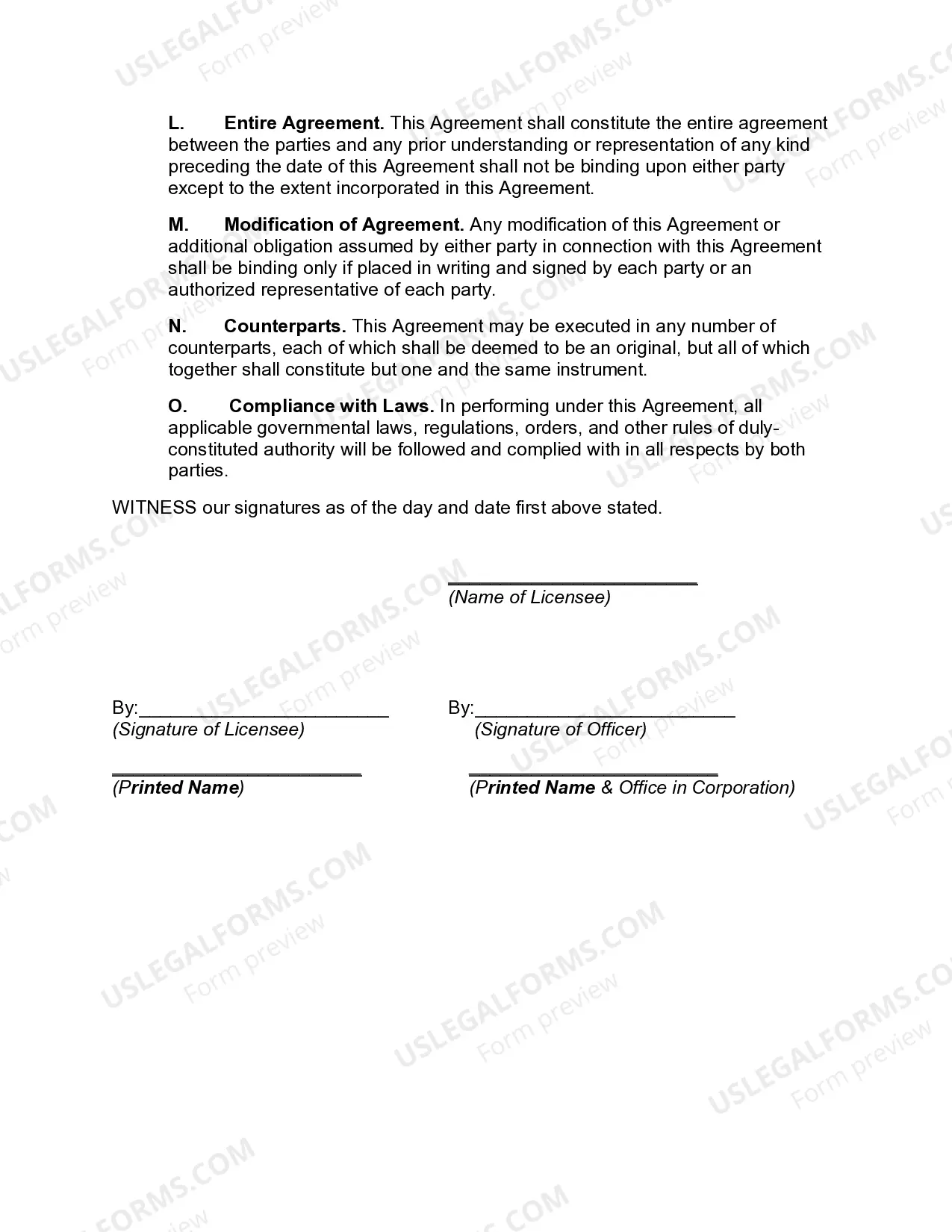
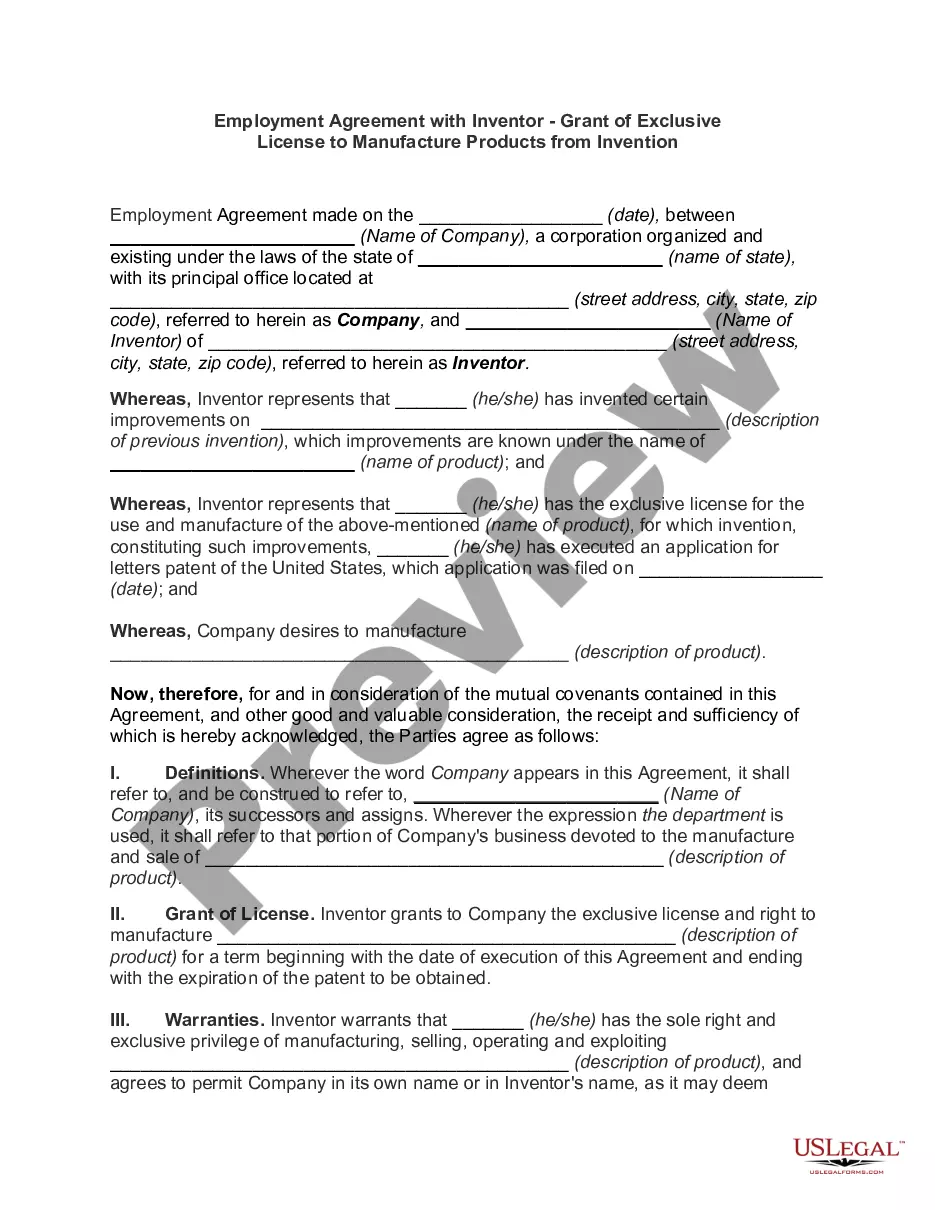
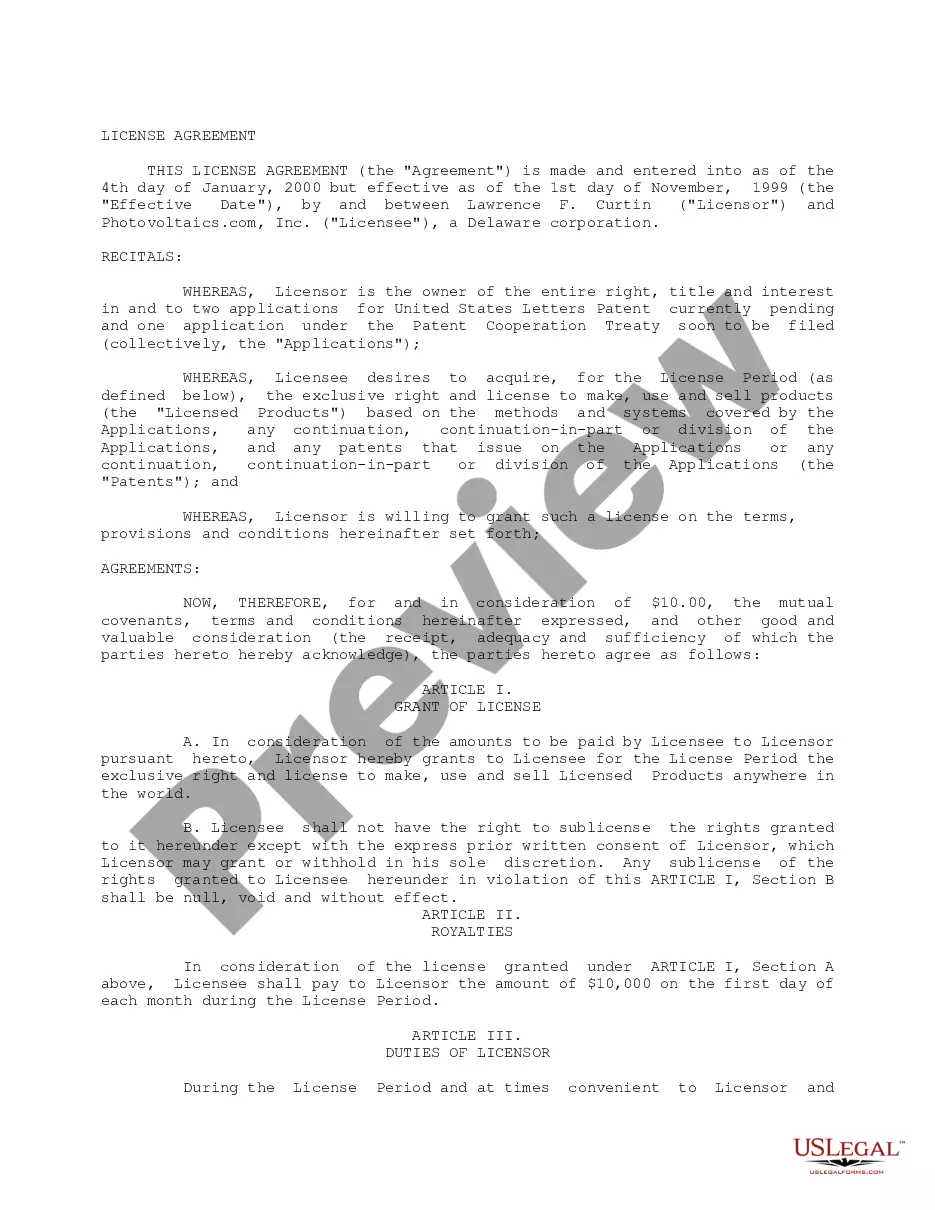
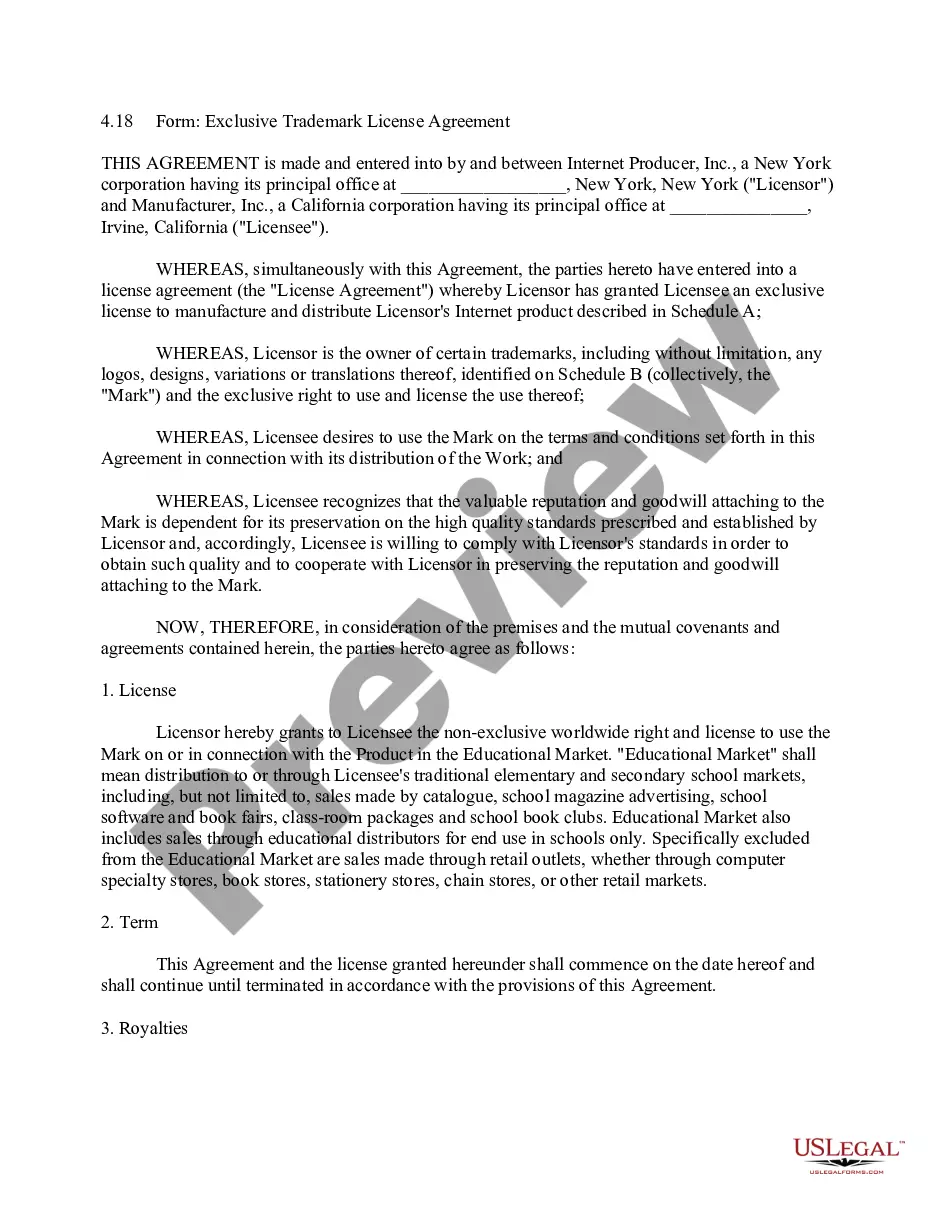
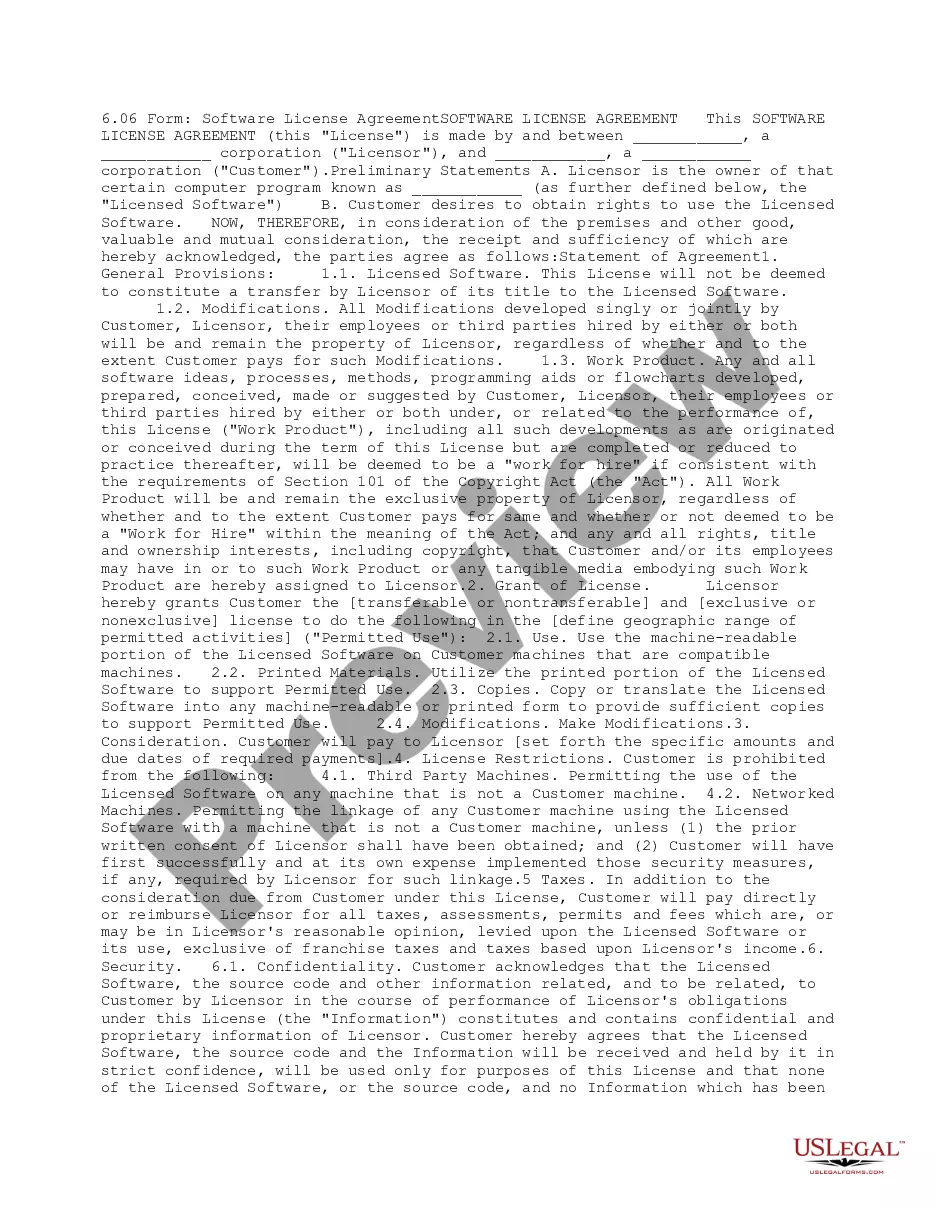


How to fill out Exclusive License Agreement Between Individual Inventor And Corporation?
If you need to compile, obtain, or print legal document templates, utilize US Legal Forms, the largest assortment of legal forms, accessible online.
Employ the site’s straightforward and efficient search to locate the documents you require.
A variety of templates for business and personal purposes are organized by categories and states, or keywords.
Step 4. Once you find the form you need, click on the Buy now option. Select the pricing plan you prefer and enter your details to create an account.
Step 5. Complete the transaction. You can use your Visa or Mastercard or PayPal account to finalize the payment. Step 6. Choose the format of the legal form and download it to your device. Step 7. Fill out, modify, and print or sign the North Dakota Exclusive License Agreement between Individual Inventor and Corporation. Each legal document template you purchase is yours forever. You have access to every form you downloaded within your account. Click the My documents section and choose a form to print or download again. Be proactive and obtain, and print the North Dakota Exclusive License Agreement between Individual Inventor and Corporation with US Legal Forms. There are millions of specialized and state-specific forms you can utilize for your business or personal needs.
- Use US Legal Forms to find the North Dakota Exclusive License Agreement between Individual Inventor and Corporation in just a few clicks.
- If you are already a US Legal Forms member, Log In to your account and select the Download option to obtain the North Dakota Exclusive License Agreement between Individual Inventor and Corporation.
- You can also access forms you previously acquired in the My documents tab of your account.
- If this is your first time using US Legal Forms, follow the instructions below.
- Step 1. Ensure you have selected the form for the correct city/state.
- Step 2. Use the Preview option to review the content of the form. Don’t forget to read the description.
- Step 3. If you are not satisfied with the form, use the Search area at the top of the screen to find other variations of the legal form template.
Form popularity
FAQ
Company: A company can never be listed as an inventor; only its employees can be. But a company can be the owner of a patent2026 which leads us to the concept of ownership.
Patents and the Employment Relationship: Who Owns Them? The general rule is that, in the absence of an agreement to the contrary, an employer is entitled to a nonexclusive license to use an invention devised by an employee while he or she was working for the employer.
Types of licensing agreement The unique feature of this type of agreement is that even the licensor is excluded to use or exploit the licensed property during the term of the agreement. Copyright, trademark and patent licenses are the best examples of an exclusive license agreement.
If the employee was hired for the specific purpose of inventing a defined product or process, the invention belongs to the employer. General inventions made at the employer's expense but not at the employer's specification are often not the property of the employer.
Licensing agreements are found in many different industries. An example of a licensing agreement is a contract between the copyright holders of software and another company, allowing the latter to use the computer software for their daily business operations.
Practitioners and licensing executives often refer to three basic types of voluntary licenses: non-exclusive, sole, and exclusive. A non-exclusive licence allows the licensor to retain the right to use the licensed property and the right to grant additional licenses to third parties.
The agreement with AutoPartsCo said that all inventions made by the PTU and Professor Milbourne's lab during the course of the project would be owned by PTU and a royalty-free licence given to AutoPartsCo.
Employers typically own intellectual property developed by their employees, but there is room for negotiation. Intellectual property rights can be a concern for employees regarding works created or developed within the workplace context.
Under the law, the general rule is that the copyright in and to the work product of an individual employee or independent contractor is owned by that individual unless an exception applies.
Although the employer is afforded a nonexclusive license to use the invention without paying royalties to the employee, the invention actually is owned by the employee. This employee has the right to exploit it commercially, typically by selling or licensing it to other users.