North Dakota Identity Theft Recovery Package
What this form package covers
The North Dakota Identity Theft Recovery Package includes essential forms that assist victims of identity theft in addressing issues with creditors and government agencies after their identification has been lost or stolen. This package is tailored to help clear your name and streamline the process of dealing with identity thieves, safeguarding your financial standing and employment opportunities. Unlike other document bundles, this package features a comprehensive set of tools designed to specifically target the aftermath of identity theft, making it a crucial resource for recovery.
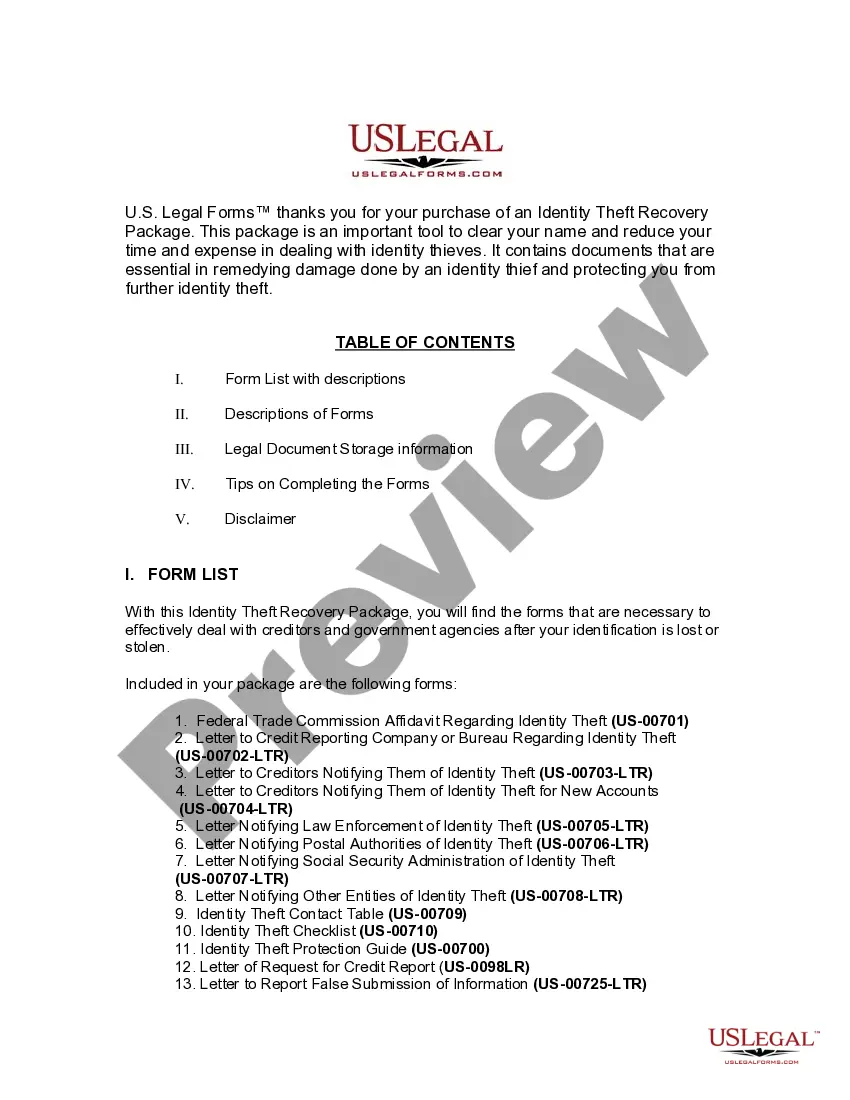
Forms provided in this package
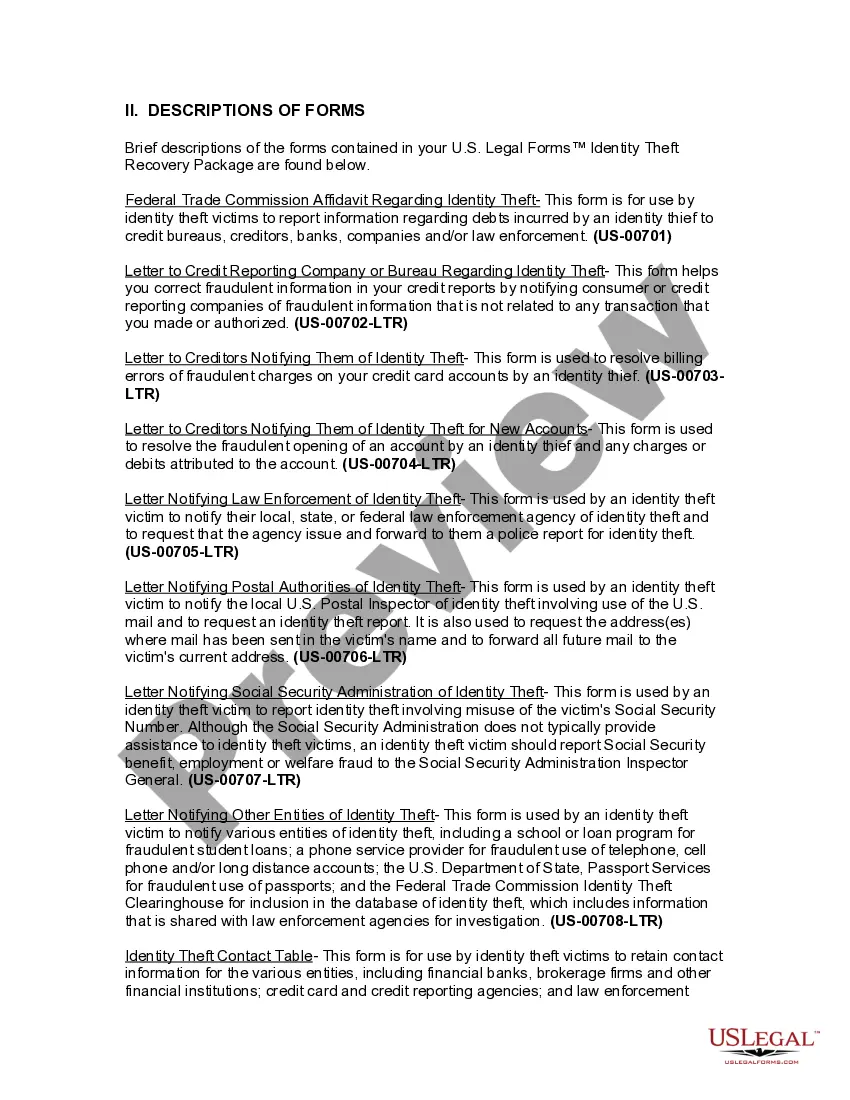
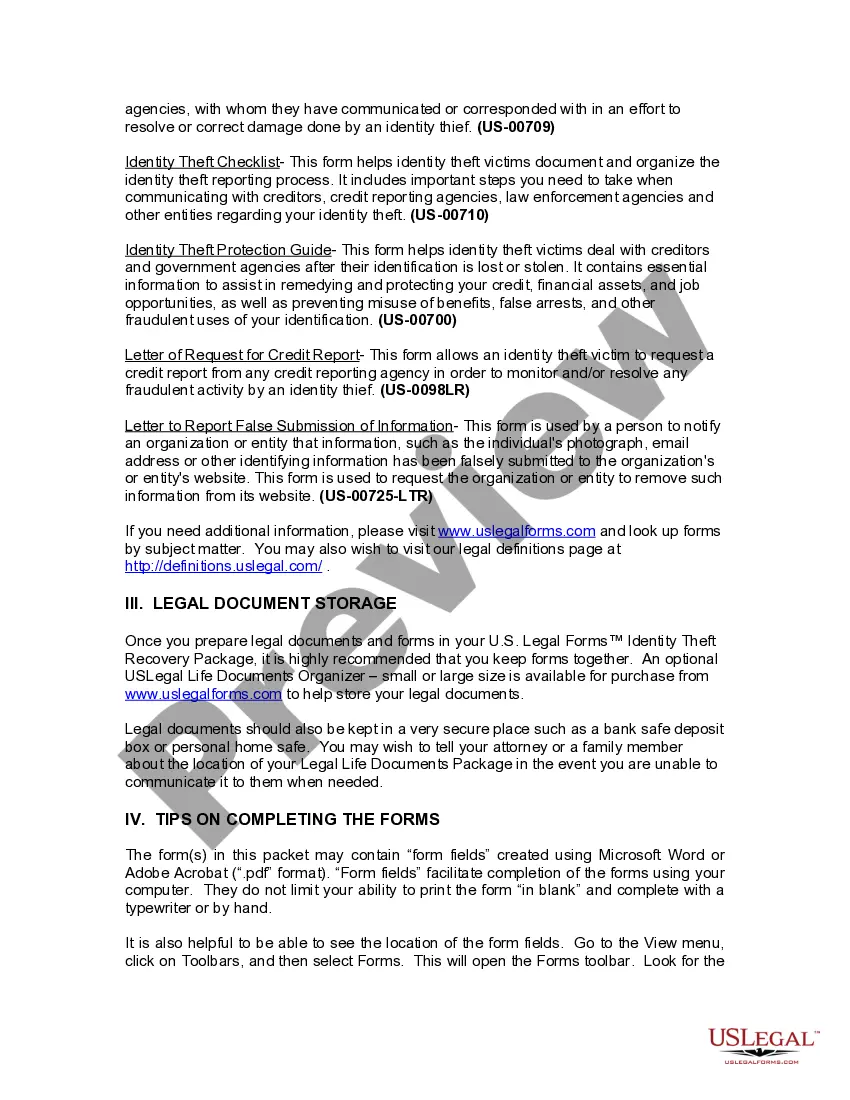
- Identity Theft Protection Guide
- Federal Trade Commission Affidavit regarding Identity Theft
- Letter to Credit Reporting Company or Bureau regarding Identity Theft
- Letter to Creditors notifying them of Identity Theft
- Letter to Creditors Notifying Them of Identity Theft for New Accounts
- Letter Notifying Law Enforcement of Identity Theft
- Letter Notifying Postal Authorities of Identity Theft
- Letter Notifying Social Security Administration of Identity Theft
- Letter to Other Entities Notifying Them of Identity Theft
- Identity Theft Contact Table
- Identity Theft Checklist
- Sample Letter to Report False Submission of Information
- Sample Letter for Request for Free Credit Report Allowed by Federal Law
When to use this form package
This package is particularly useful in situations where your identity has been compromised. Consider using this package if you:
- Discover unauthorized transactions on your credit cards or bank statements.
- Receive notices from creditors about accounts you did not open.
- Become aware of issues with your credit report related to identity theft.
- Need to report theft involving your Social Security number or personal information.
Who needs this form package
- Individuals whose identification has been lost, stolen, or misused.
- Victims of identity theft seeking to restore their credit and protect their financial assets.
- Anyone looking for a straightforward way to communicate with creditors and agencies regarding identity theft issues.
How to prepare this document
- Review the forms included in the package carefully.
- Identify the specific forms that apply to your situation (e.g., notifying creditors or law enforcement).
- Fill in the required information in each form, using your computer or writing by hand.
- Ensure all forms are signed and dated as required.
- Keep copies of all documents for your records before sending them to relevant entities.
- Follow the provided checklist to monitor your progress in resolving identity theft issues.
Notarization requirements for forms in this package
Forms in this package typically do not require notarization unless required by local law. Ensure you check any specific requirements for the entities you are contacting.
Get your form ready online
Our built-in tools help you complete, sign, share, and store your documents in one place.
Make edits, fill in missing information, and update formatting in US Legal Forms—just like you would in MS Word.
Download a copy, print it, send it by email, or mail it via USPS—whatever works best for your next step.
Sign and collect signatures with our SignNow integration. Send to multiple recipients, set reminders, and more. Go Premium to unlock E-Sign.
If this form requires notarization, complete it online through a secure video call—no need to meet a notary in person or wait for an appointment.
We protect your documents and personal data by following strict security and privacy standards.

Make edits, fill in missing information, and update formatting in US Legal Forms—just like you would in MS Word.

Download a copy, print it, send it by email, or mail it via USPS—whatever works best for your next step.

Sign and collect signatures with our SignNow integration. Send to multiple recipients, set reminders, and more. Go Premium to unlock E-Sign.

If this form requires notarization, complete it online through a secure video call—no need to meet a notary in person or wait for an appointment.

We protect your documents and personal data by following strict security and privacy standards.
Typical mistakes to avoid
- Failing to provide complete and accurate information in the forms.
- Not keeping a copy of submitted forms for personal records.
- Overlooking the need to notify multiple agencies or creditors.
- Delaying the reporting process, which can complicate matters further.
Benefits of completing this package online
- Immediate access to forms tailored for identity theft recovery without the need for in-person visits.
- Editability allows for quick updates and customization based on your specific circumstances.
- Reliability from forms created by licensed attorneys, ensuring compliance with legal standards.
- Convenient download options for both digital and print formats, accommodating your preferred method of submission.
Legal use & context
- These forms comply with North Dakota laws regarding identity theft recovery.
- Proper use of these forms can help in mitigating damage caused by identity theft.
- These documents serve as formal notices necessary for legal recourse and securing your rights.
Main things to remember
- The North Dakota Identity Theft Recovery Package provides essential tools for recovering from identity theft.
- It is important to act quickly when your identity has been compromised to mitigate potential harm.
- The package includes comprehensive templates for communicating with various agencies and creditors.
Looking for another form?
Form popularity
FAQ
Contact all companies that have fraudulent charges or accounts in your name. Close and reissue cards for any compromised credit and deposit accounts. Put a fraud alert or a credit freeze on your credit reports. File a report with the Federal Trade Commission. Dispute fraudulent accounts on your credit report.
The FTC's IdentityTheft.gov can assist attorneys who counsel identity theft victims. The site provides victims with a personal recovery plan, walking through each step to take. It also provides pre-filed letters and forms to send to credit bureaus, businesses, and debt collectors.
The four types of identity theft include medical, criminal, financial and child identity theft.
You may be able to have your identity theft charges dropped if: You didn't obtain use a person's information unlawfully If you did not obtain or use someone else's personal information unlawfully, you are not guilty of identity theft.
Aggravated identity theft is punishable by a mandatory minimum sentence of imprisonment for two years or by imprisonment for five years if it relates to a terrorism offense. At least thus far, the government has rarely prosecuted the five-year terrorism form of the offense.
Federal identity theft charges usually carry a maximum sentence of 15 years in federal prison, but ID theft cases often include additional charges that can add to prison time.
On average, it can take between 100 and 200 hours and six months to fix. But in some cases, it can take thousands of hours and years to resolve fully. Several key factors determine the length of the recovery process, but before we review those, let's look at the steps involved in resolving identity theft.
If prosecuted as a misdemeanor, the maximum punishment for identity theft in California is a year in county jail and a $1,000 fine. As a felony, the penalty can be as high as three years in jail and a $10,000 fine.
The impact that identity theft can have on your credit score is real, but while it will take your score some time to recover, in most cases it will recover.