North Dakota Living Trust for Husband and Wife with One Child
About this form
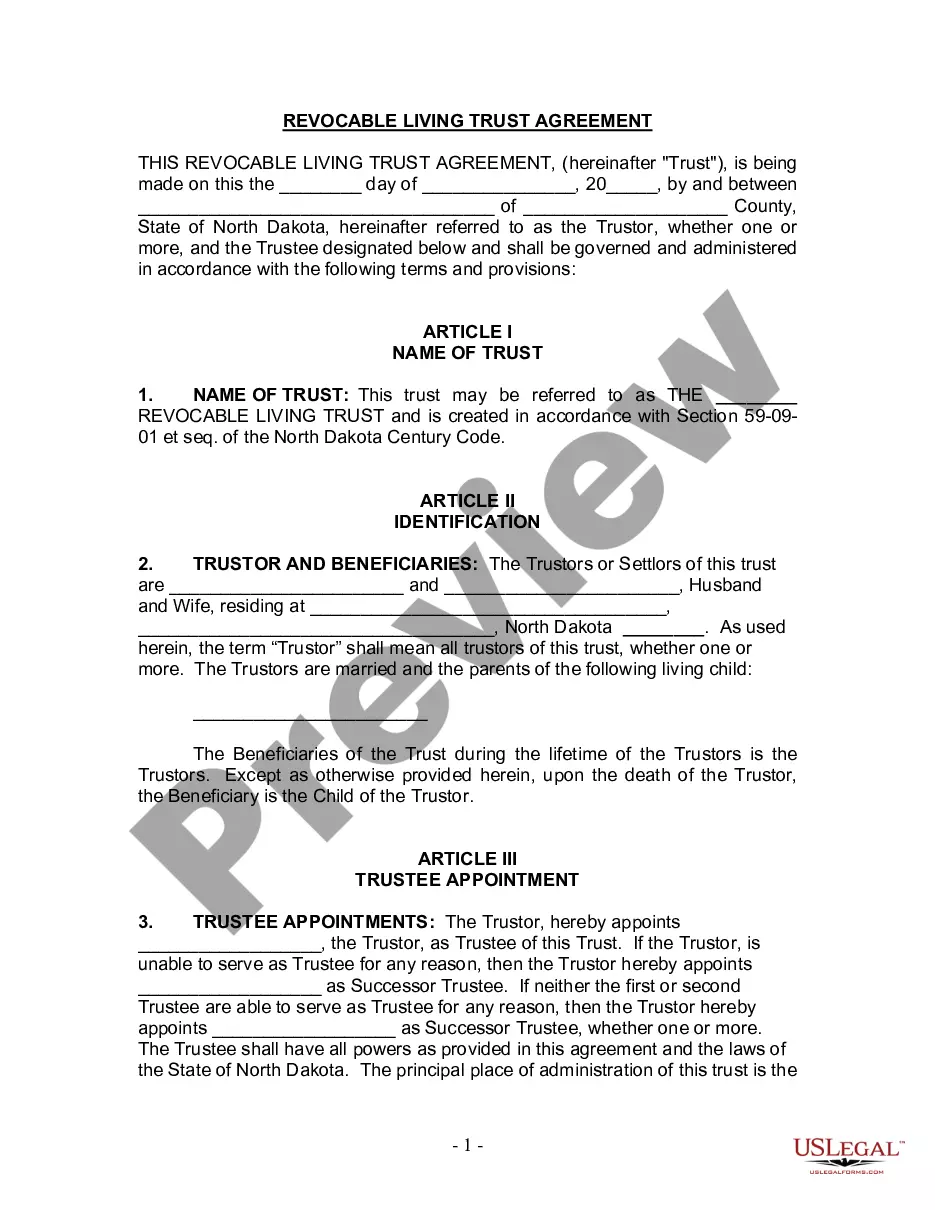
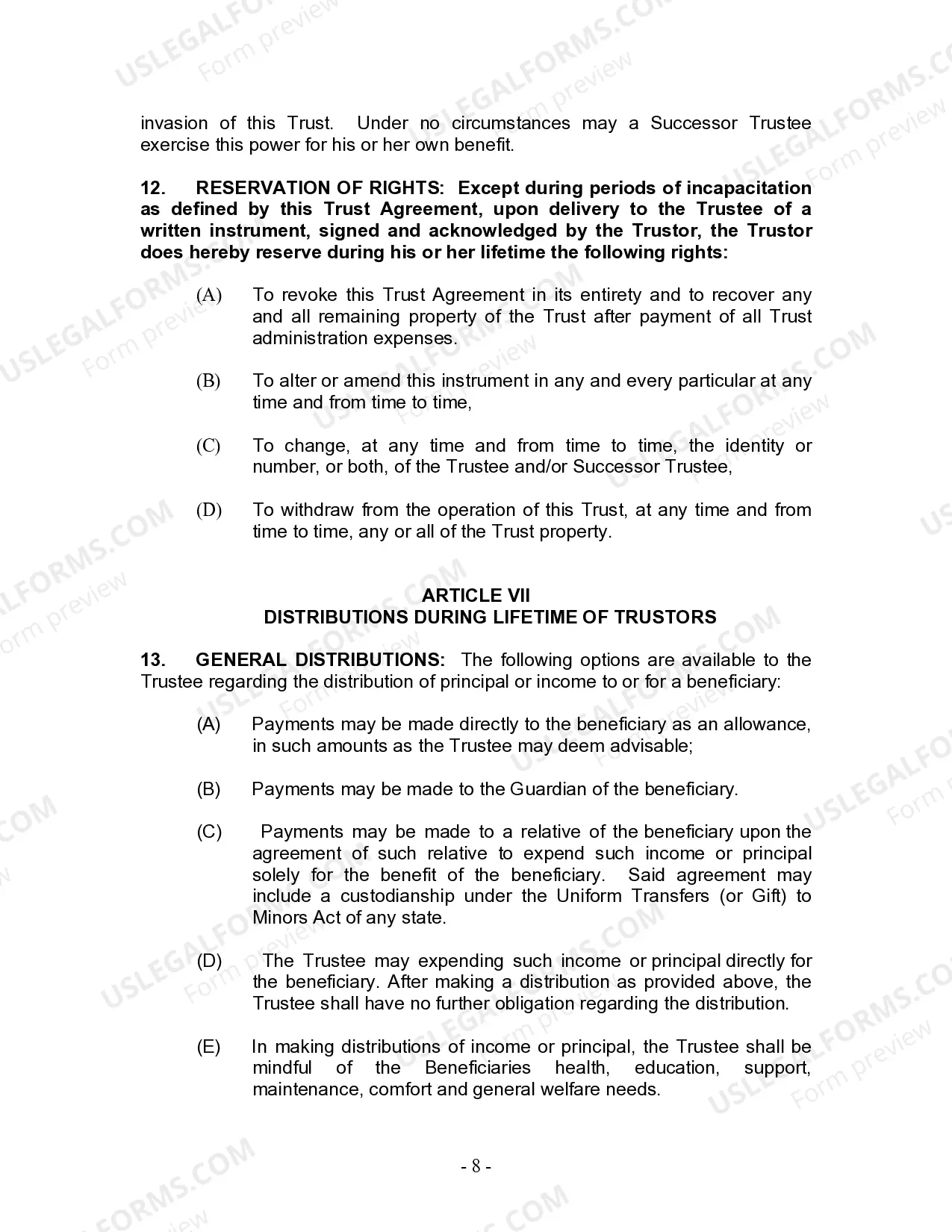
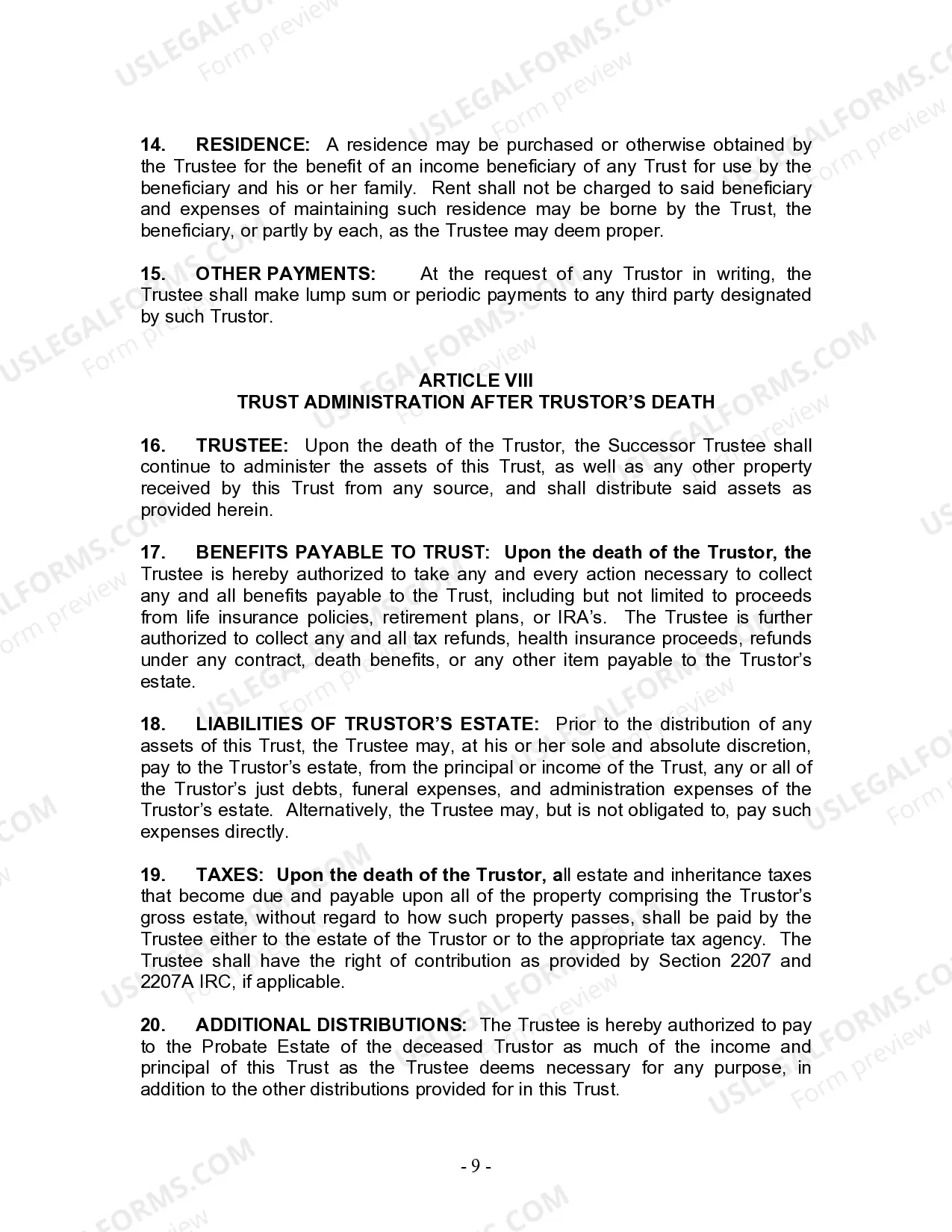
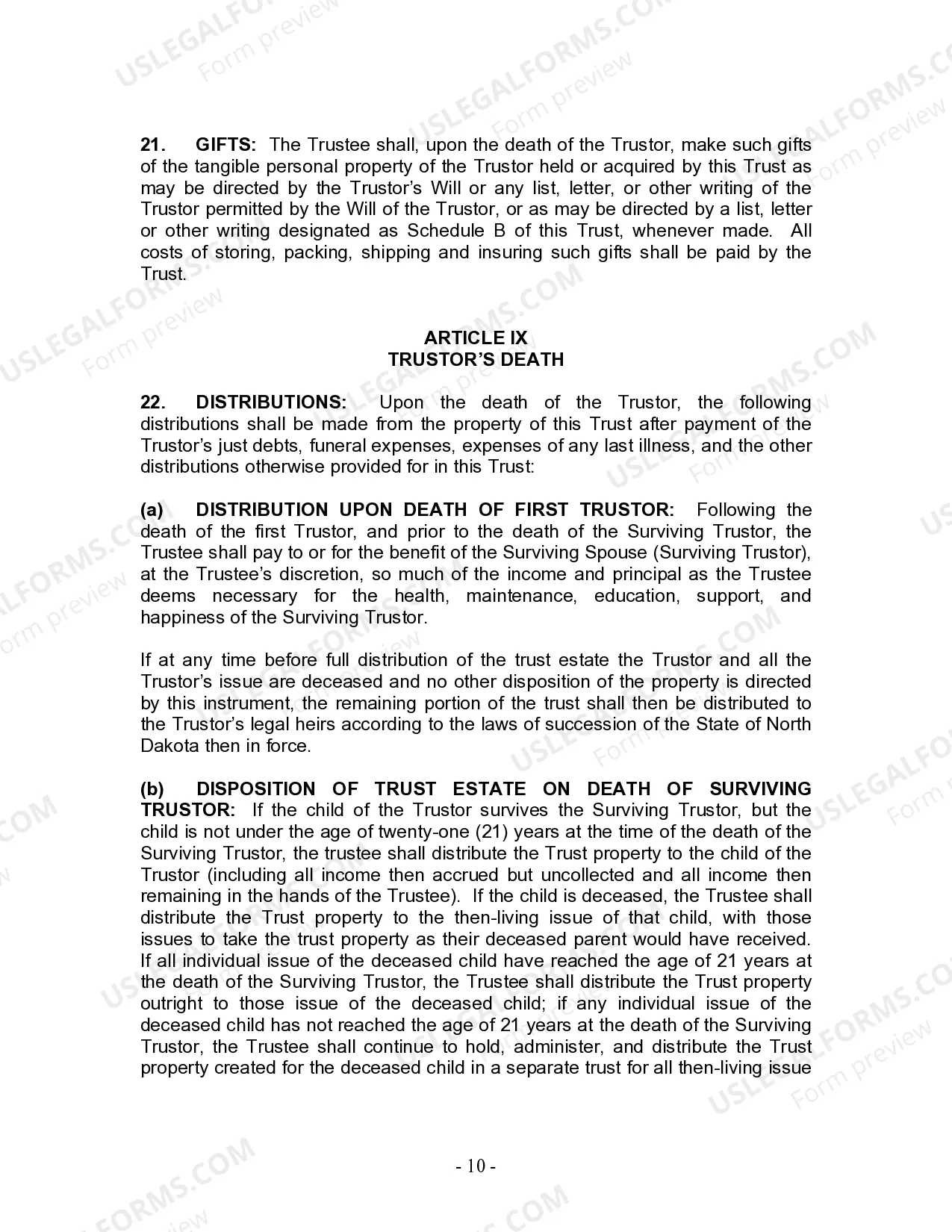
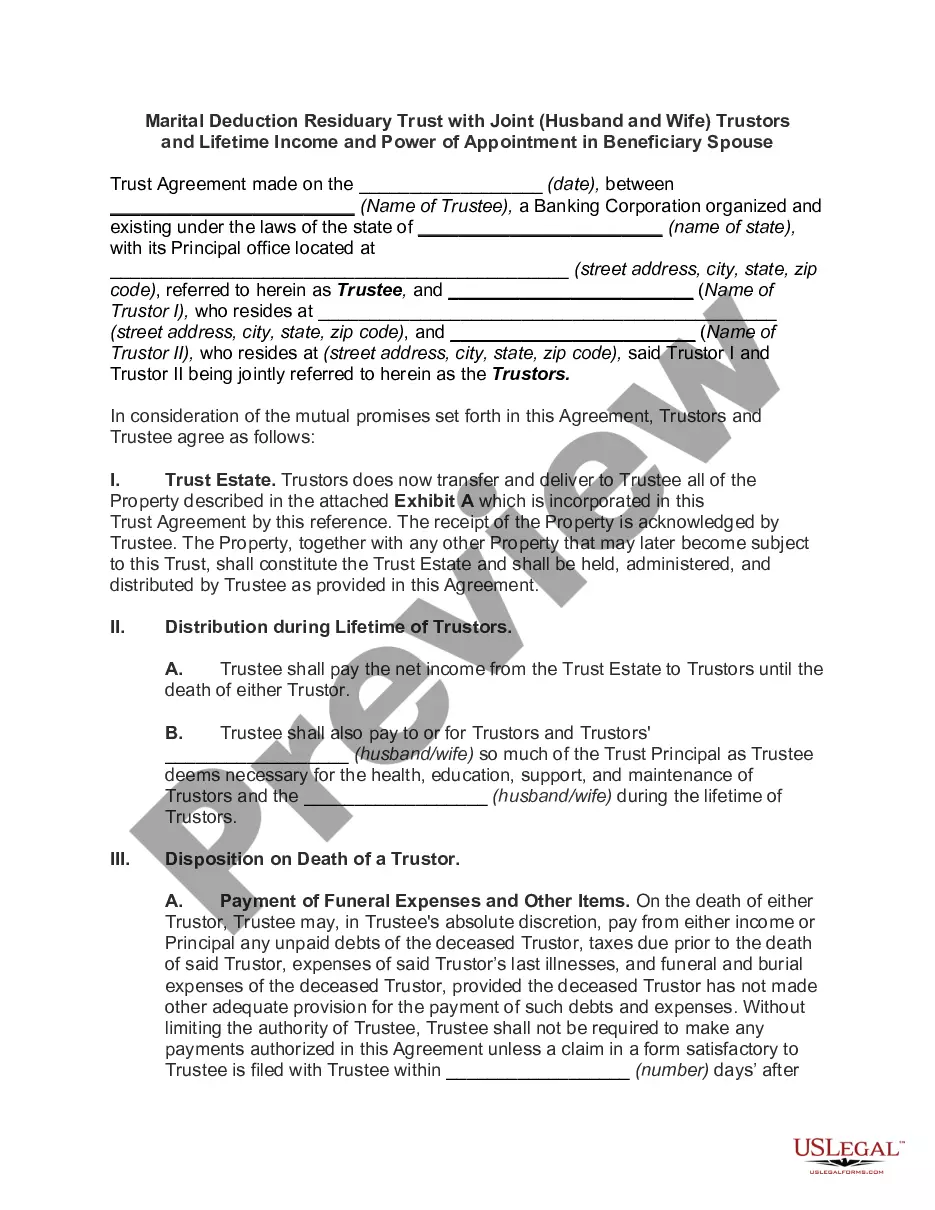
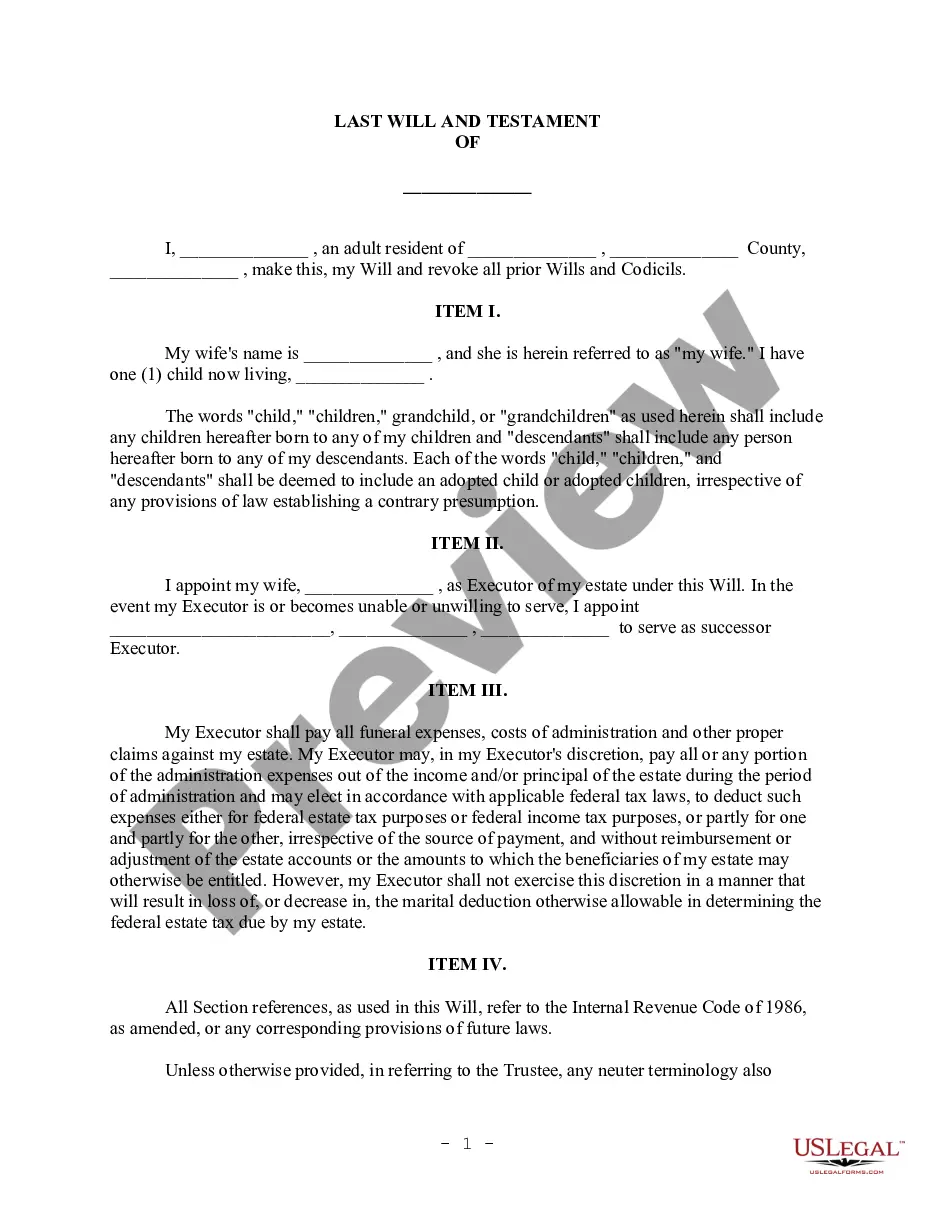
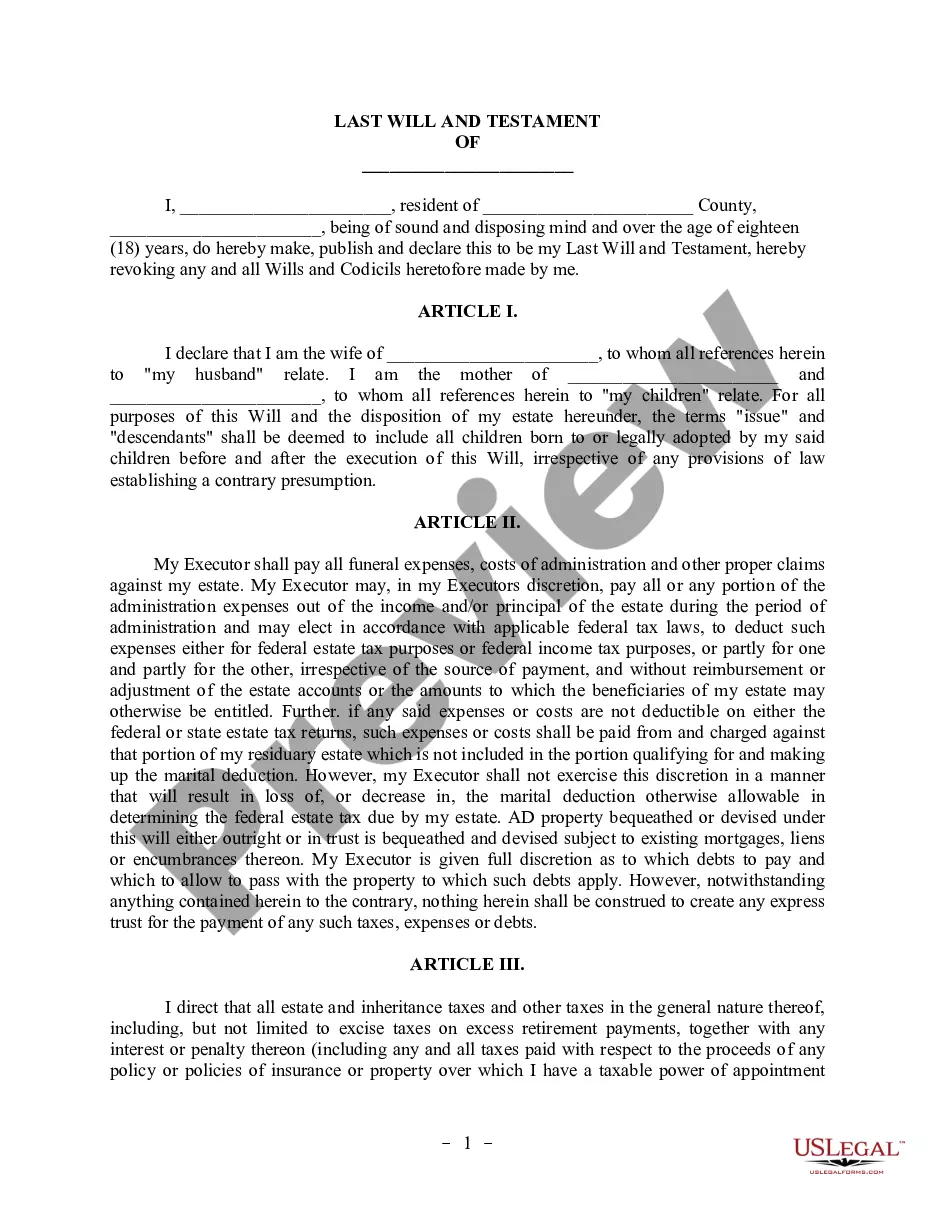
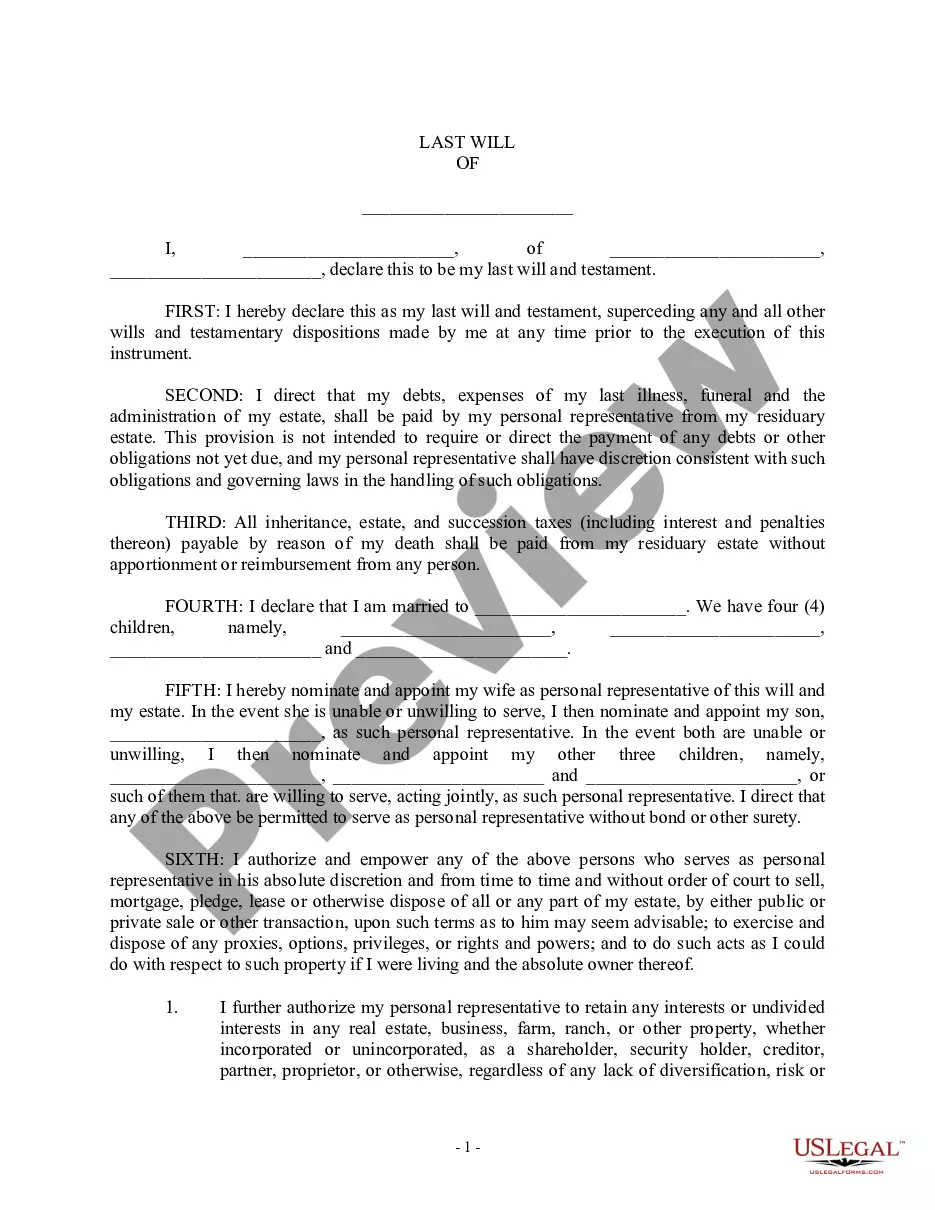
This Living Trust for Husband and Wife with One Child is a legal document designed for married couples who wish to manage their assets while alive and dictate how their property is distributed upon their death. This form allows both spouses to maintain control over their properties, avoiding the probate process upon death, which can save time and reduce costs. Unlike a will, a living trust can provide immediate benefits to beneficiaries without going through court proceedings.
Main sections of this form
- Trustor Information: Identifies the husband and wife establishing the trust.
- Trustee Designation: Appoints one or more individuals to manage the trust's assets.
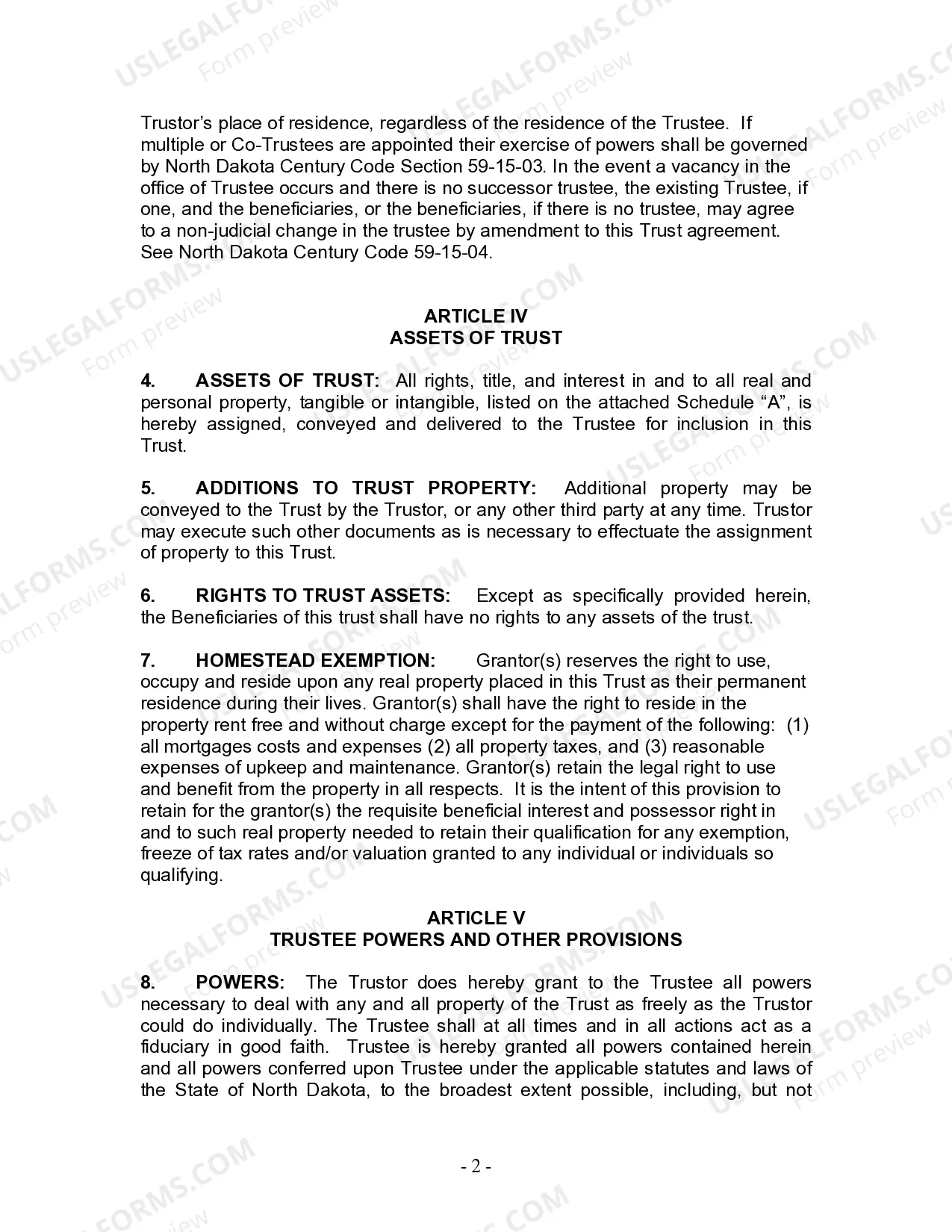
- Assets of Trust: Lists the real and personal property included in the trust.
- Beneficiary Details: Specifies the child as the primary beneficiary of the trust upon the death of the trustors.
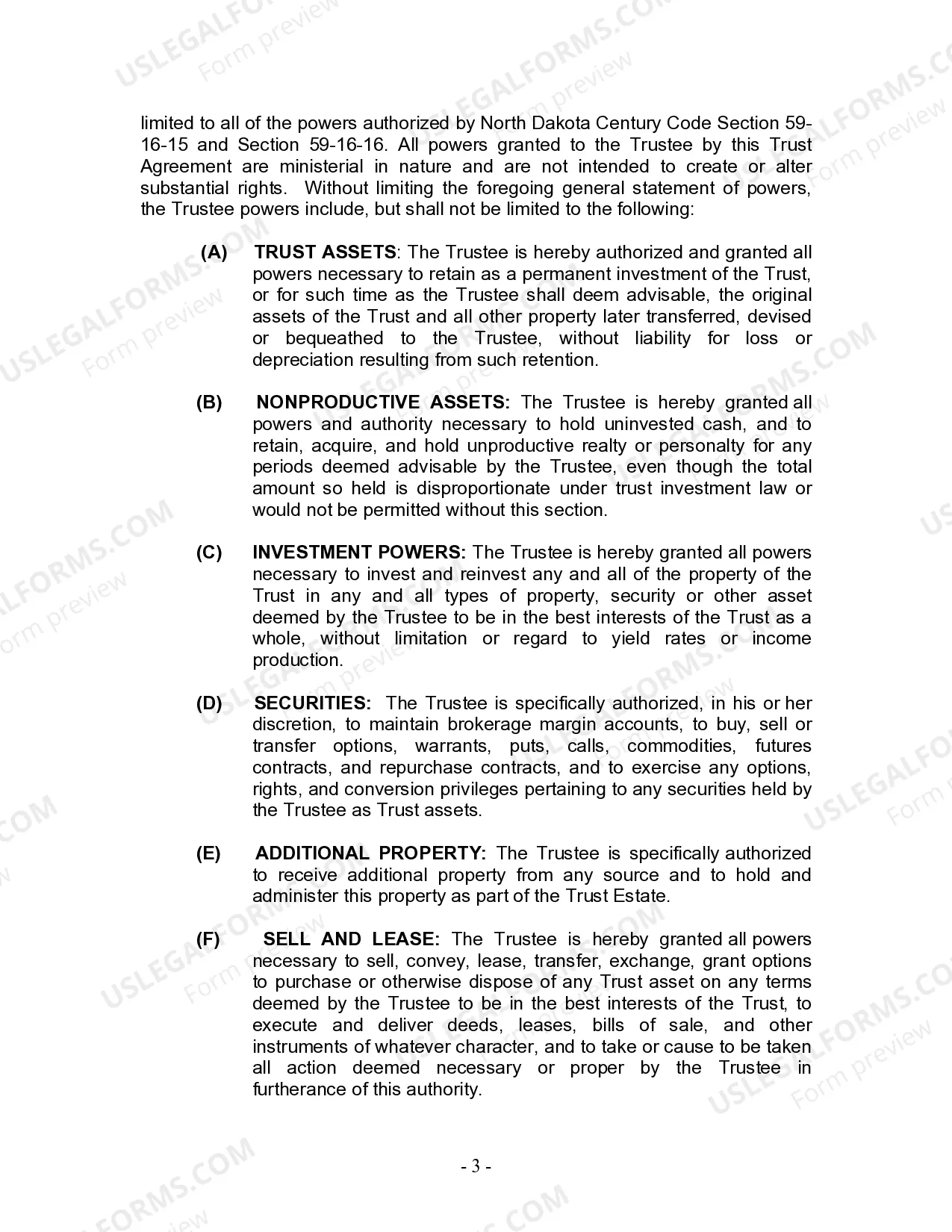
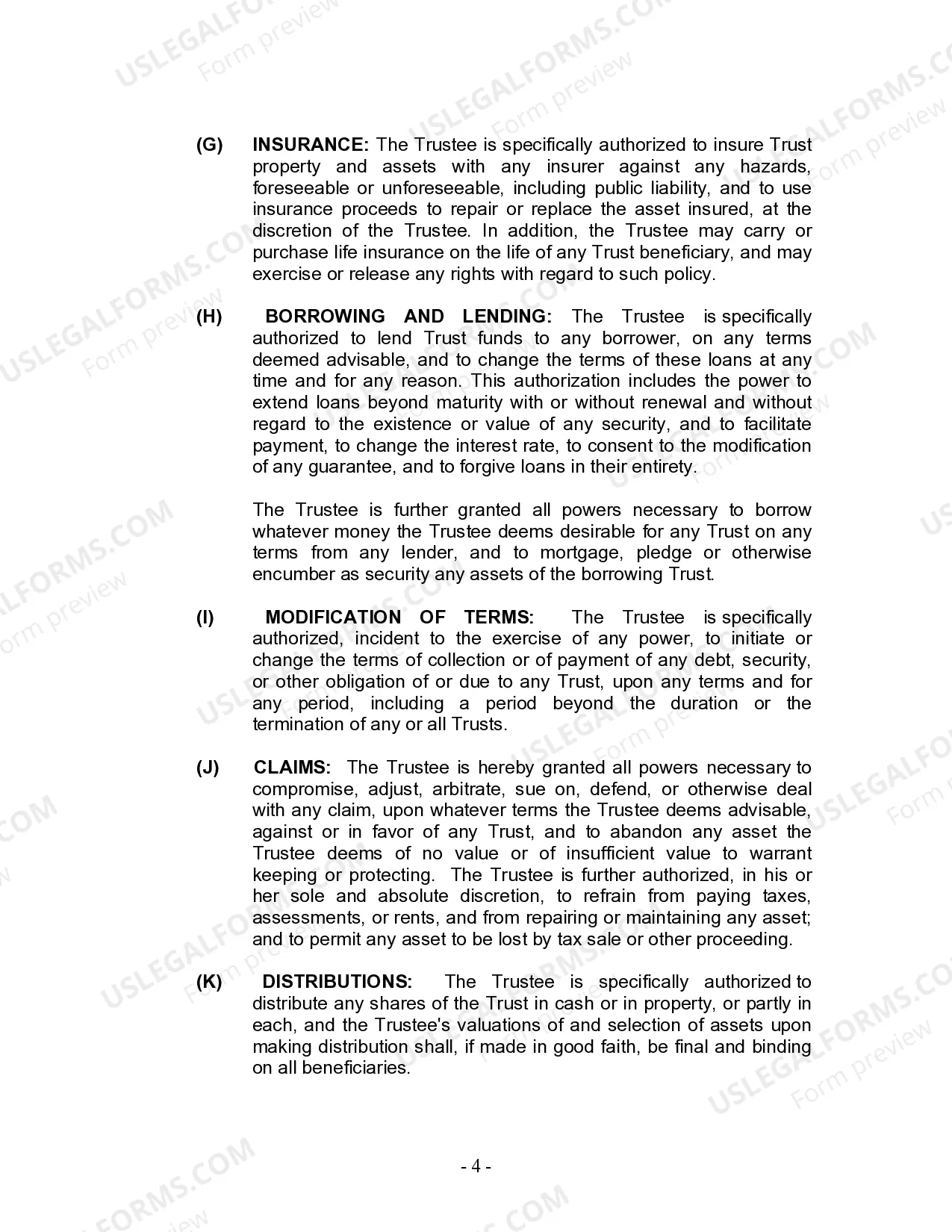
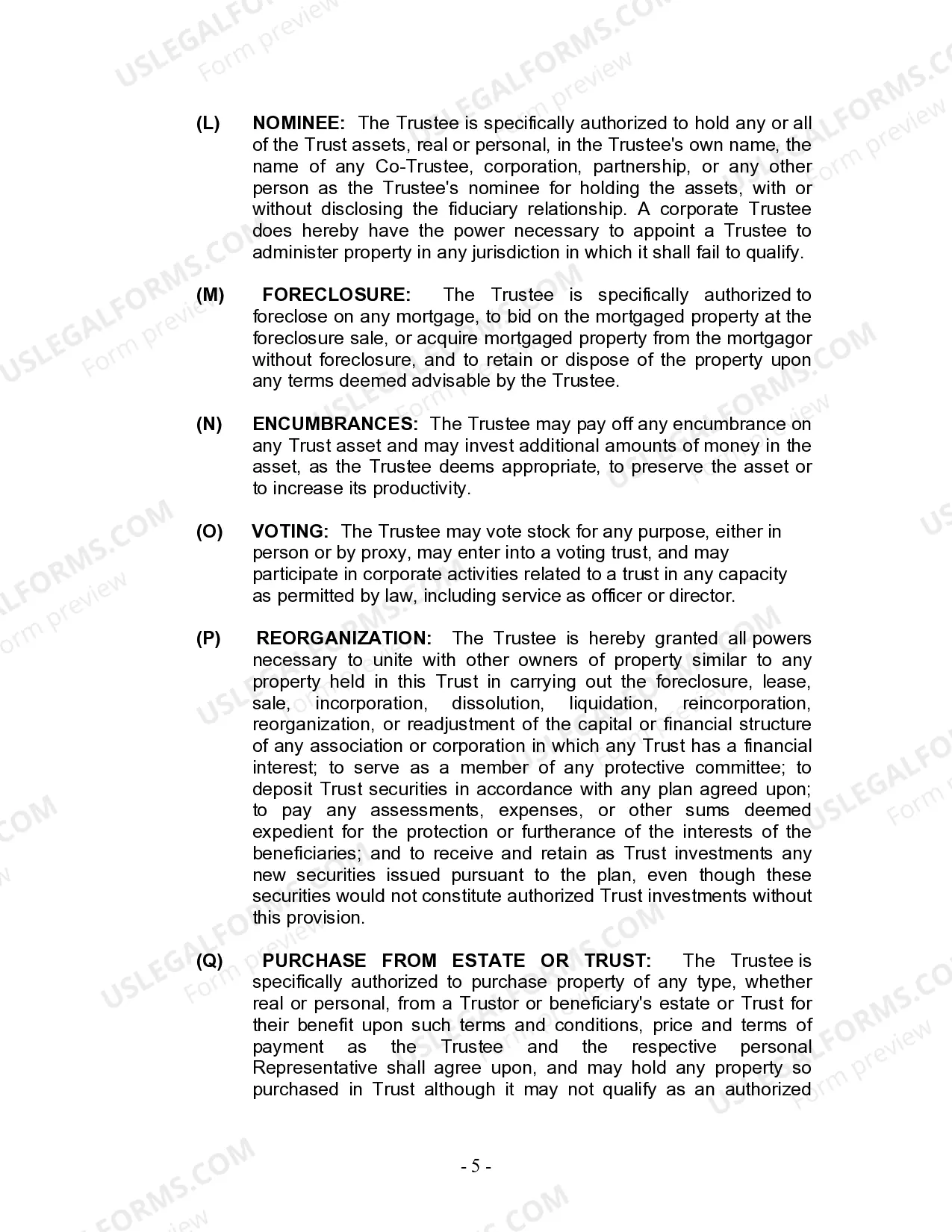
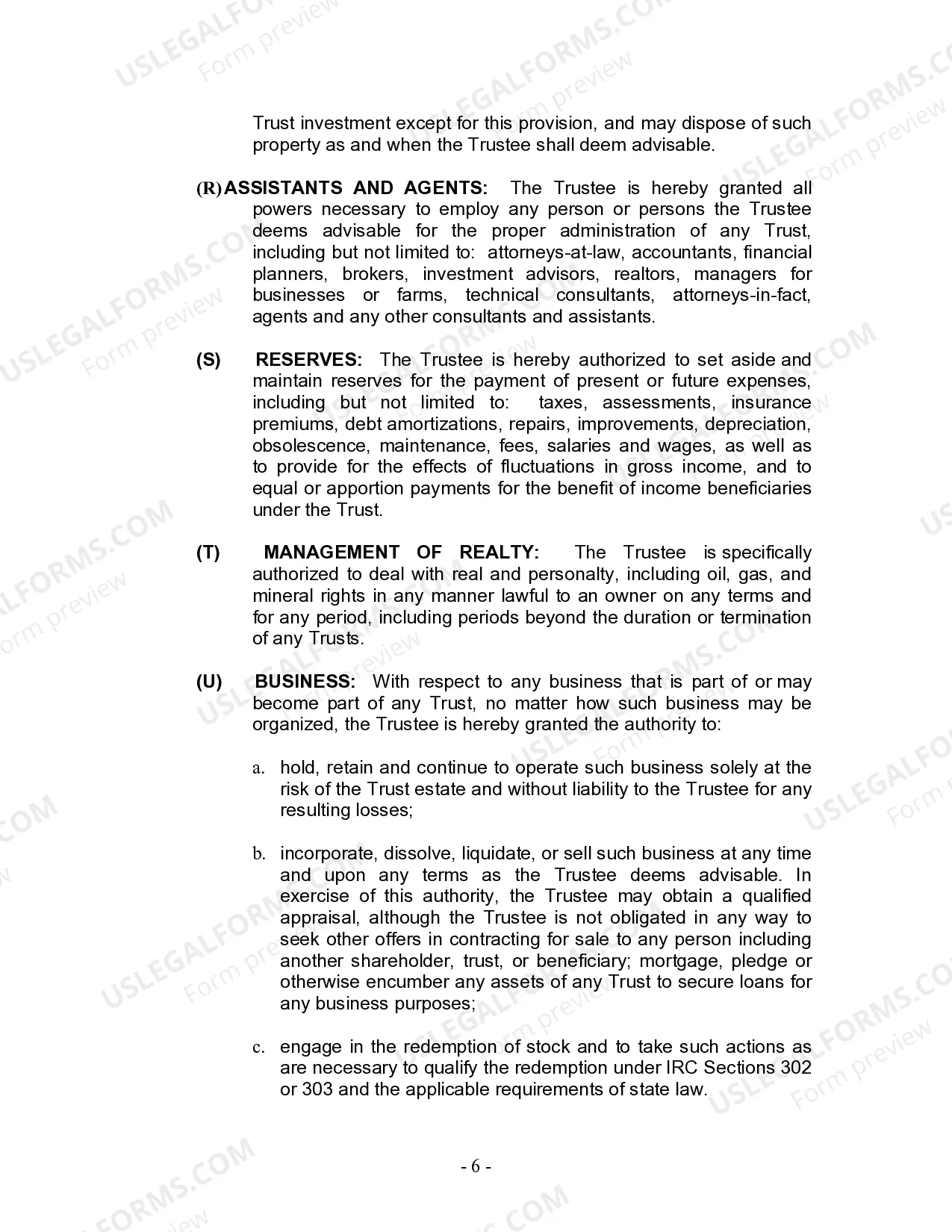
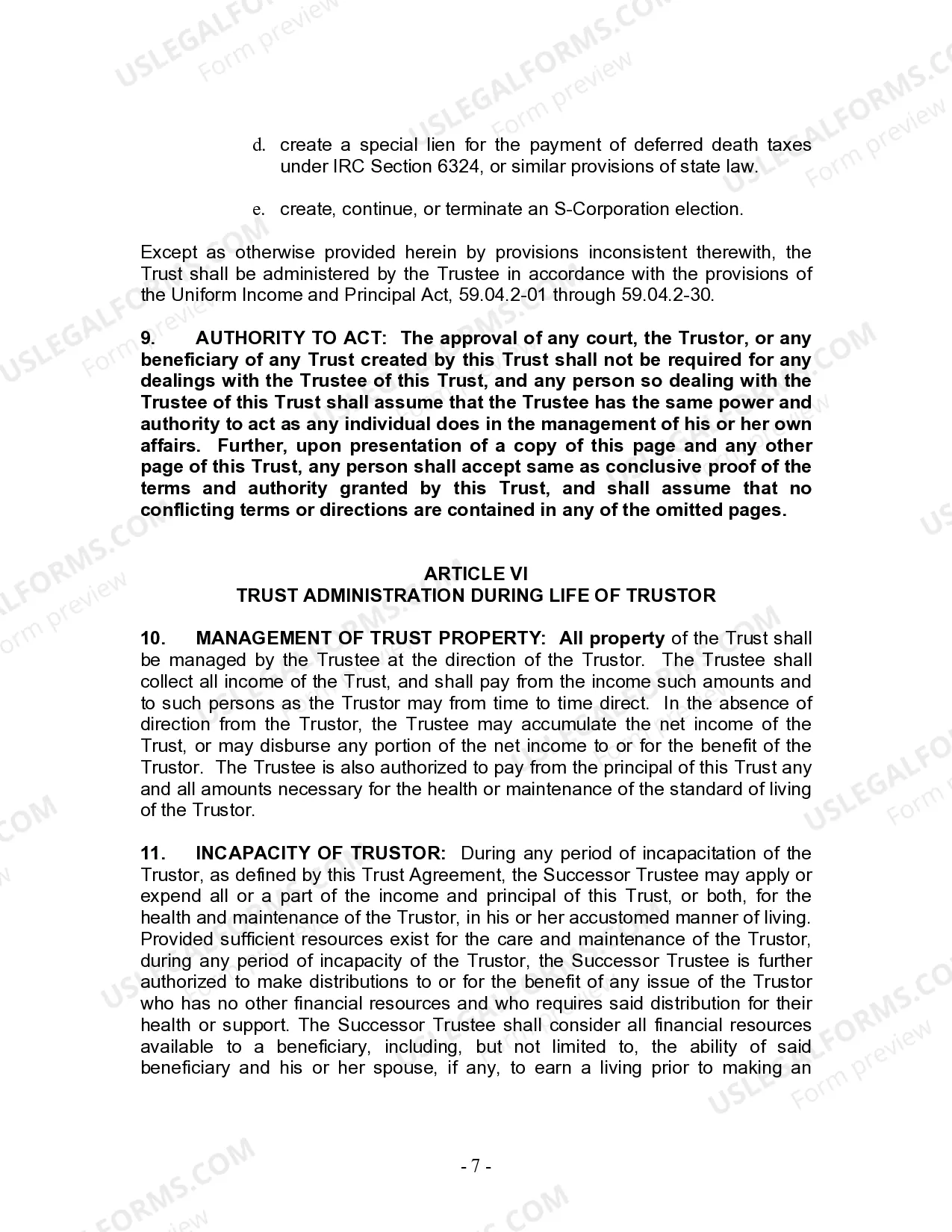
- Trustee Powers: Grants the trustee authority to manage, invest, and distribute trust assets according to the trust's terms.

Situations where this form applies
This living trust is typically used by married couples with one child who want to ensure a smooth transition of their assets after passing. It is beneficial for those seeking to avoid probate, wanting to maintain control over their assets during their lifetime, or individuals wishing to provide for their child in a structured manner following their death.
Who should use this form
- Married couples residing in North Dakota with children.
- Couples who want to manage their estates directly and avoid probate costs.
- Parents looking to secure their child's financial future after their demise.
- Individuals wanting to maintain control over how their assets are utilized during their lifetime.
Steps to complete this form
- Identify the trustors by entering the names of both spouses.
- Designate the trustee, who will manage the trust until the trustor's death.
- List the assets being transferred into the trust.
- Specify the beneficiary, which in this case should be your child.
- Sign the document in the presence of a notary public to validate the trust.
Does this document require notarization?
Yes, this form must be notarized to be legally valid. US Legal Forms provides integrated online notarization services, available 24/7 through secure video call, ensuring a hassle-free process without the need for travel.
Get your form ready online
Our built-in tools help you complete, sign, share, and store your documents in one place.
Make edits, fill in missing information, and update formatting in US Legal Forms—just like you would in MS Word.
Download a copy, print it, send it by email, or mail it via USPS—whatever works best for your next step.
Sign and collect signatures with our SignNow integration. Send to multiple recipients, set reminders, and more. Go Premium to unlock E-Sign.
If this form requires notarization, complete it online through a secure video call—no need to meet a notary in person or wait for an appointment.
We protect your documents and personal data by following strict security and privacy standards.

Make edits, fill in missing information, and update formatting in US Legal Forms—just like you would in MS Word.

Download a copy, print it, send it by email, or mail it via USPS—whatever works best for your next step.

Sign and collect signatures with our SignNow integration. Send to multiple recipients, set reminders, and more. Go Premium to unlock E-Sign.

If this form requires notarization, complete it online through a secure video call—no need to meet a notary in person or wait for an appointment.

We protect your documents and personal data by following strict security and privacy standards.
Avoid these common issues
- Omitting significant assets from the trust documentation.
- Not properly designating a successor trustee to manage the trust if the primary trustee is unable.
- Failing to update the trust after major life changes, such as the birth of another child or a change in marital status.
- Neglecting to sign the trust in front of a notary, which could compromise its validity.
Advantages of online completion
- Convenience: Access and complete the document from home at your own pace.
- Editability: Customize the trust to suit your specific needs and circumstances.
- Reliable: The form is created and reviewed by legal professionals, ensuring adherence to state laws.
Legal use & context
- A living trust allows for the direct transfer of assets to beneficiaries upon death, sidestepping probate.
- Trust management during the trustorâs lifetime ensures that assets are maintained according to the trustor's wishes.
- Properly completed and notarized living trusts hold up under scrutiny during inheritance disputes or claims against the estate.
Summary of main points
- The Living Trust for Husband and Wife with One Child streamlines the distribution of assets.
- Drafted in compliance with North Dakota law, ensuring legal validity.
- Provides control over assets during your lifetime and specifies distribution upon death.
Looking for another form?
Form popularity
FAQ
In North Dakota, you can make a living trust to avoid probate for virtually any asset you ownreal estate, bank accounts, vehicles, and so on. You need to create a trust document (it's similar to a will), naming someone to take over as trustee after your death (called a successor trustee).
Surviving spouses and domestic partners of intestate individuals will find that they are entitled to a solid portion of their deceased spouse's property, according to California inheritance laws.
Many married couples own most of their assets jointly with the right of survivorship. When one spouse dies, the surviving spouse automatically receives complete ownership of the property. This distribution cannot be changed by Will.
Community Property in California Inheritance LawsCalifornia is a community property state, which is a policy that only applies to spouses and domestic partners.The only property that doesn't become community property automatically are gifts and inheritances that one spouse receives.
The following persons are considered legal heirs and can claim a legal heir certificate under Indian Law: Spouse of the deceased. Children of the deceased (Son/ Daughter) Parents of the deceased.
An heir-at-law is anyone who's entitled to inherit from someone who dies without leaving a last will and testament or other estate plans. This status can be an important factor not only in settling an estate but in determining who might be entitled to challenge or contest a will when the deceased does leave one.
Under Hindu Law: the wife has a right to inherit the property of her husband only after his death if he dies intestate. Hindu Succession Act, 1956 describes legal heirs of a male dying intestate and the wife is included in the Class I heirs, and she inherits equally with other legal heirs.
Heirs who inherit property are typically children, descendants, or other close relatives of the decedent. Spouses typically are not legally considered to be heirs, as they are instead entitled to properties via marital or community property laws.
North Dakota residents do not need to worry about a state estate or inheritance tax. North Dakota does not have these kinds of taxes, which some states levy on people who either owned property in the state where they lived (estate tax) or who inherit property from someone who lived there (inheritance tax).